Answer
C
Mark scheme

Examiner's comment
This question was answered well with most candidates correctly selecting C.
Notes and key-term cards for this topic are being written by our tutors. The past-paper questions below are ready now.
| Series | Paper | Q | What it asks |
|---|---|---|---|
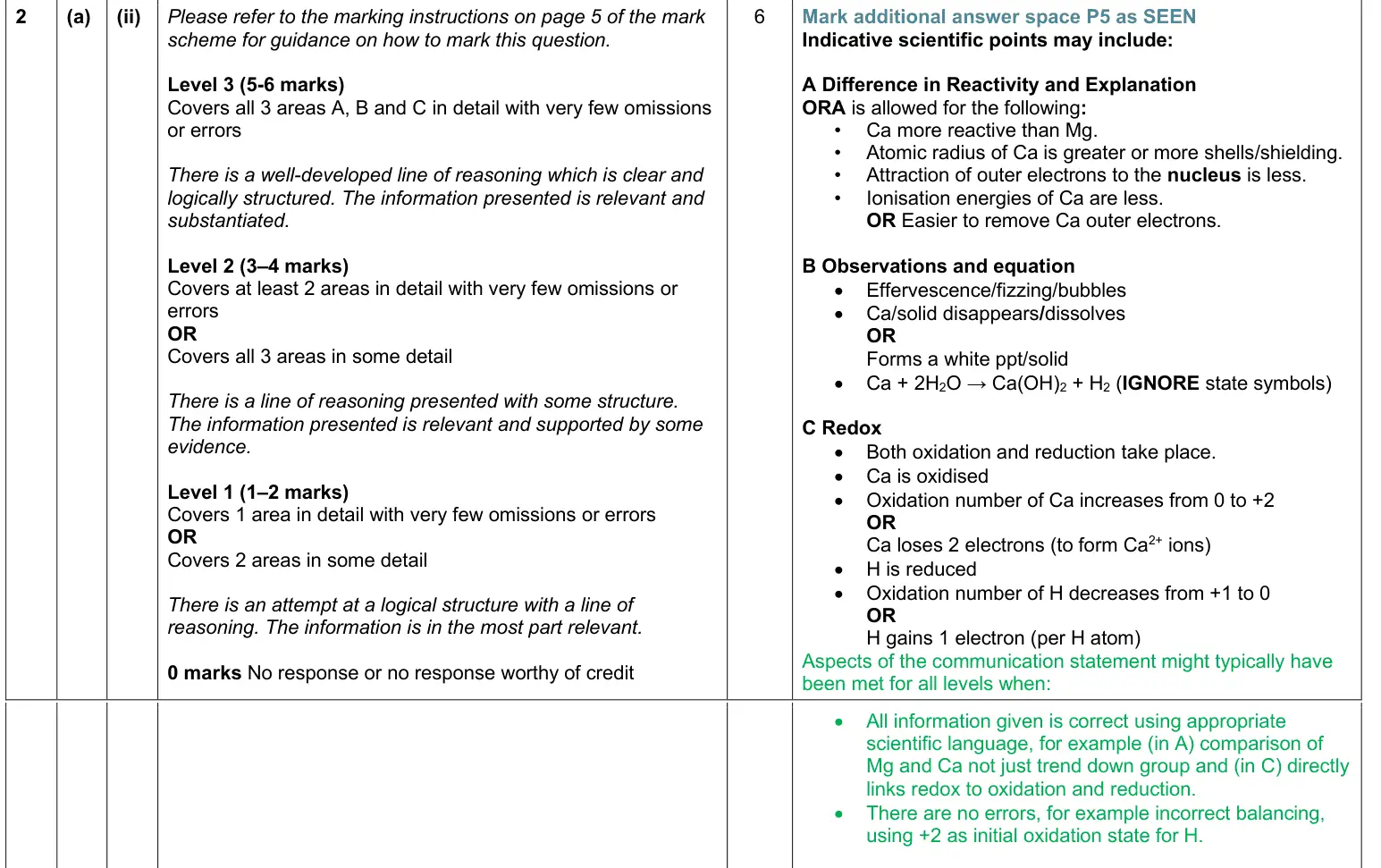
| June 2025 | AS Paper 2 | 2(a)(ii) | Magnesium and calcium differ in their reactivity. observed. Explain why this is a redox reaction. |
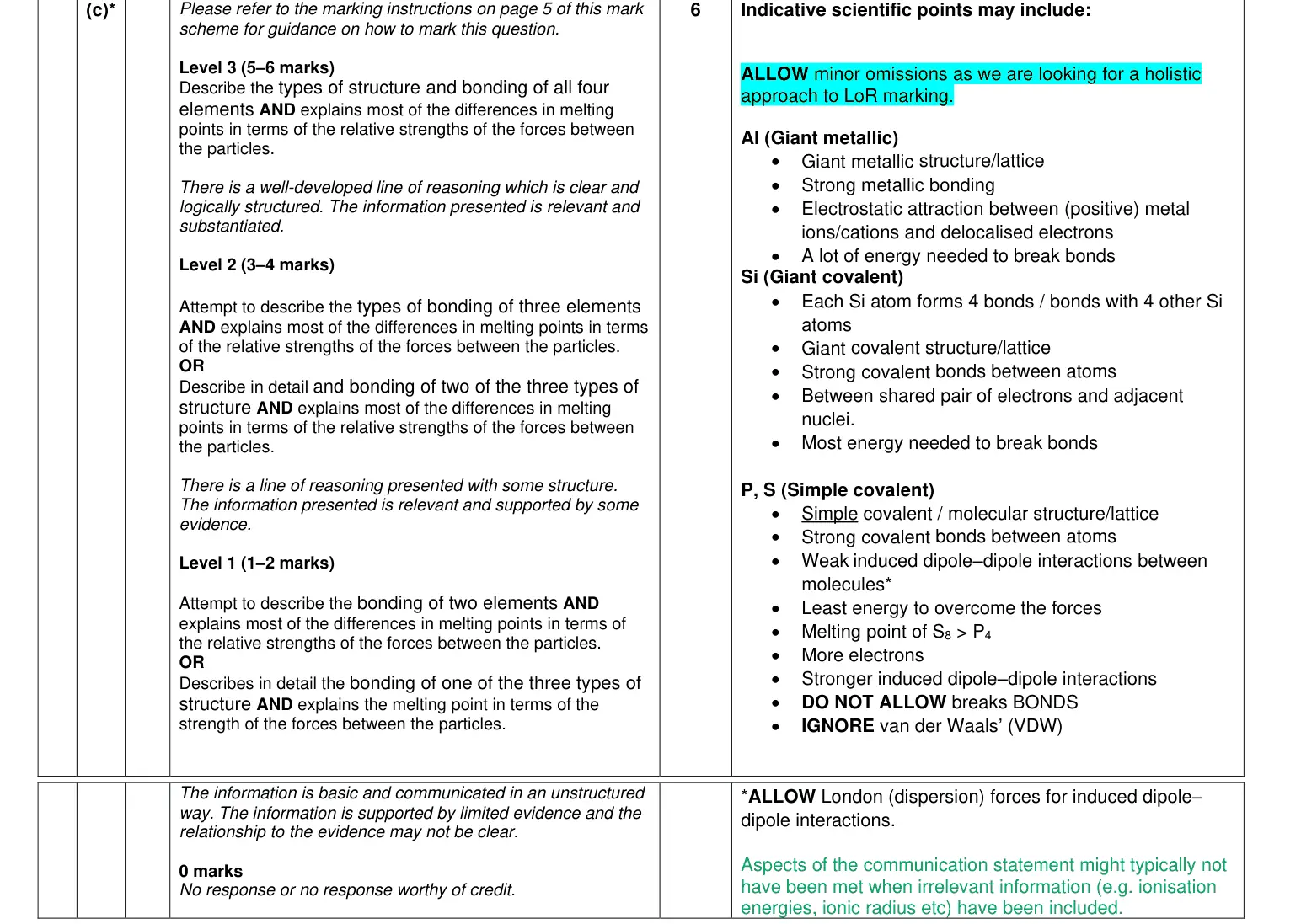
| June 2024 | Paper 1 | 20(c) | The table shows the melting points of some of the elements in Period 3 of the periodic table. Explain the melting points in terms of bonding and structure. [6] |
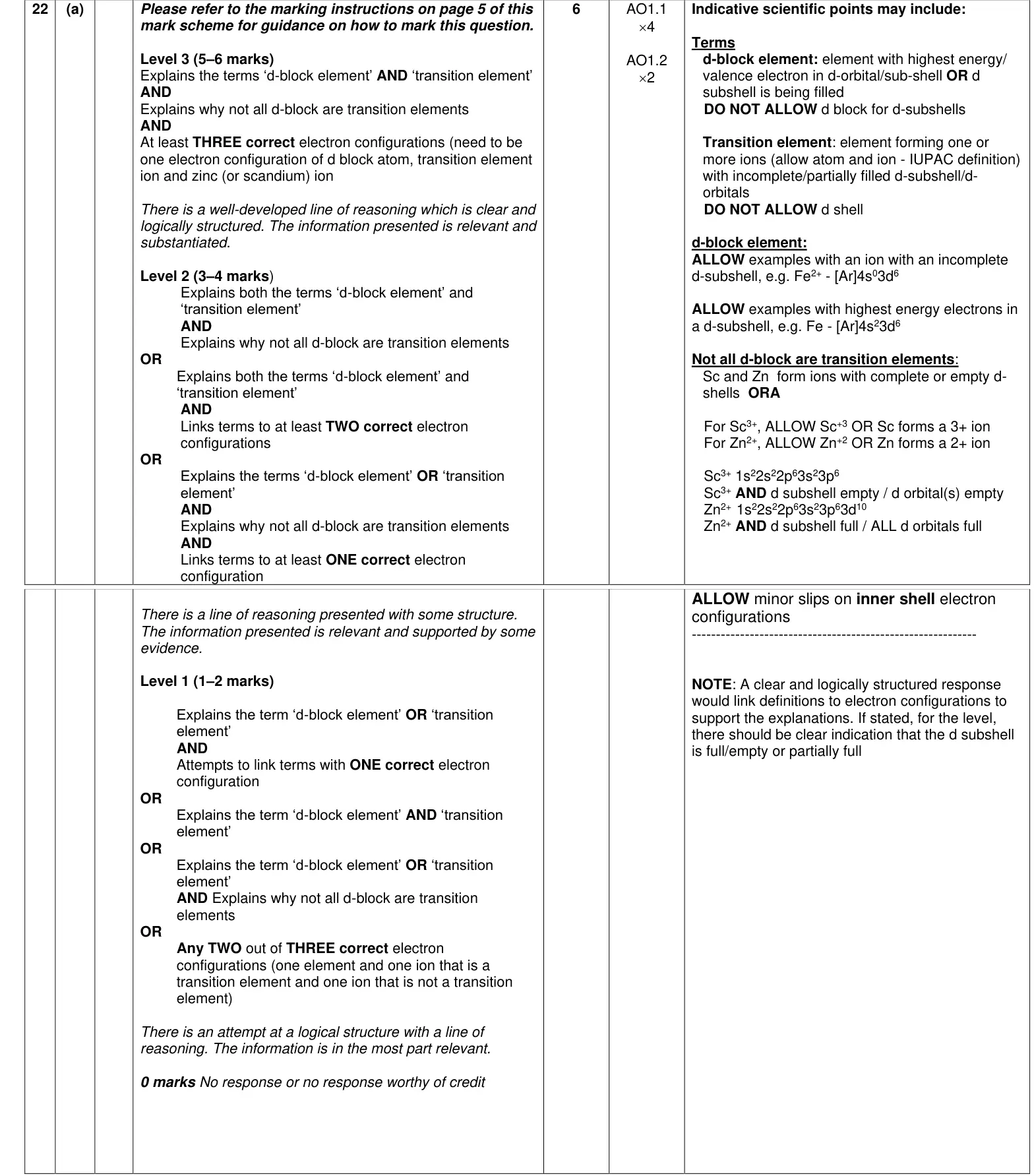
| June 2023 | Paper 1 | 22(a) | Explain, with examples from Period 4, what is meant by the terms d-block element and Explain why some d-block elements are not transition elements. |
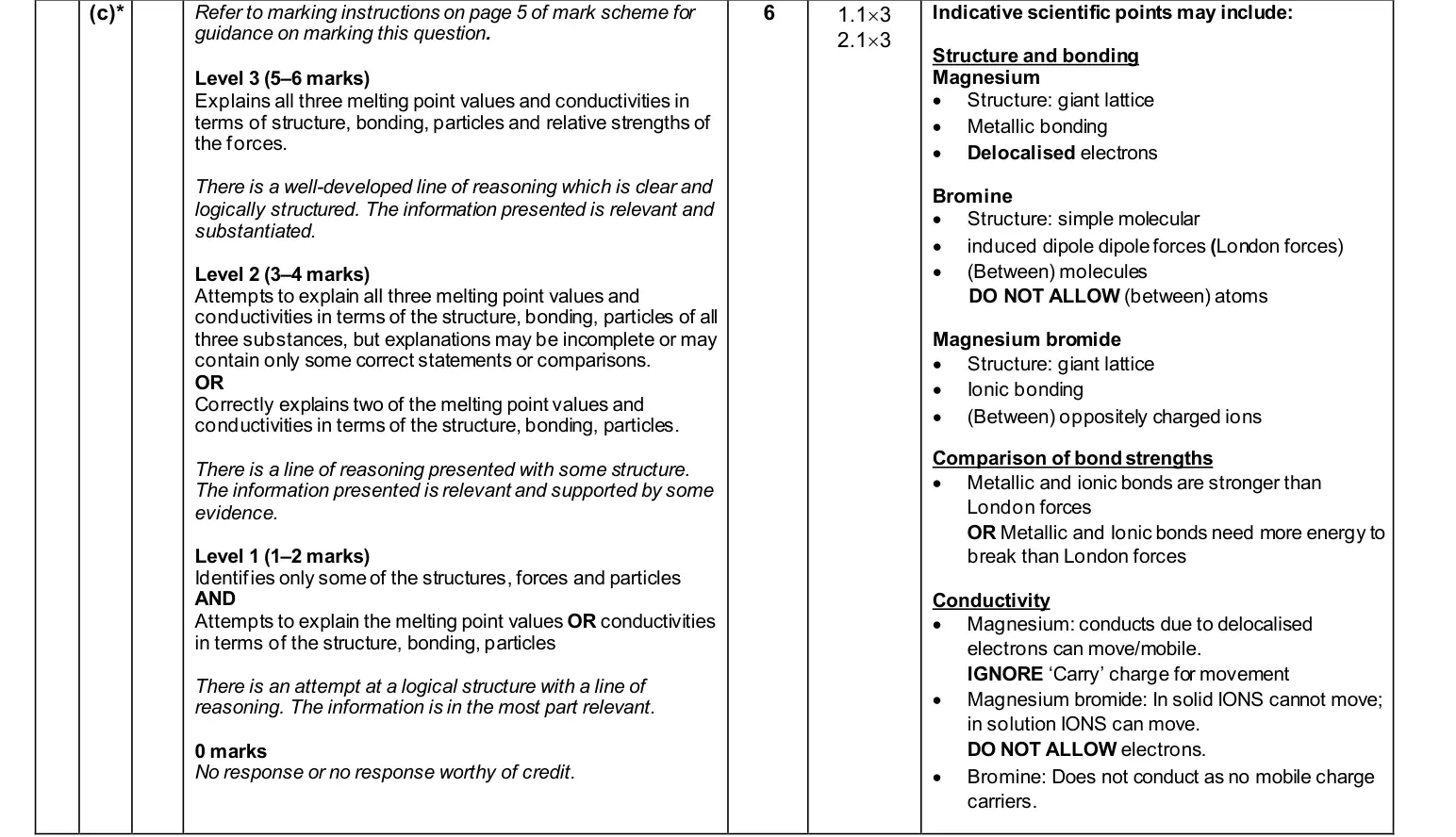
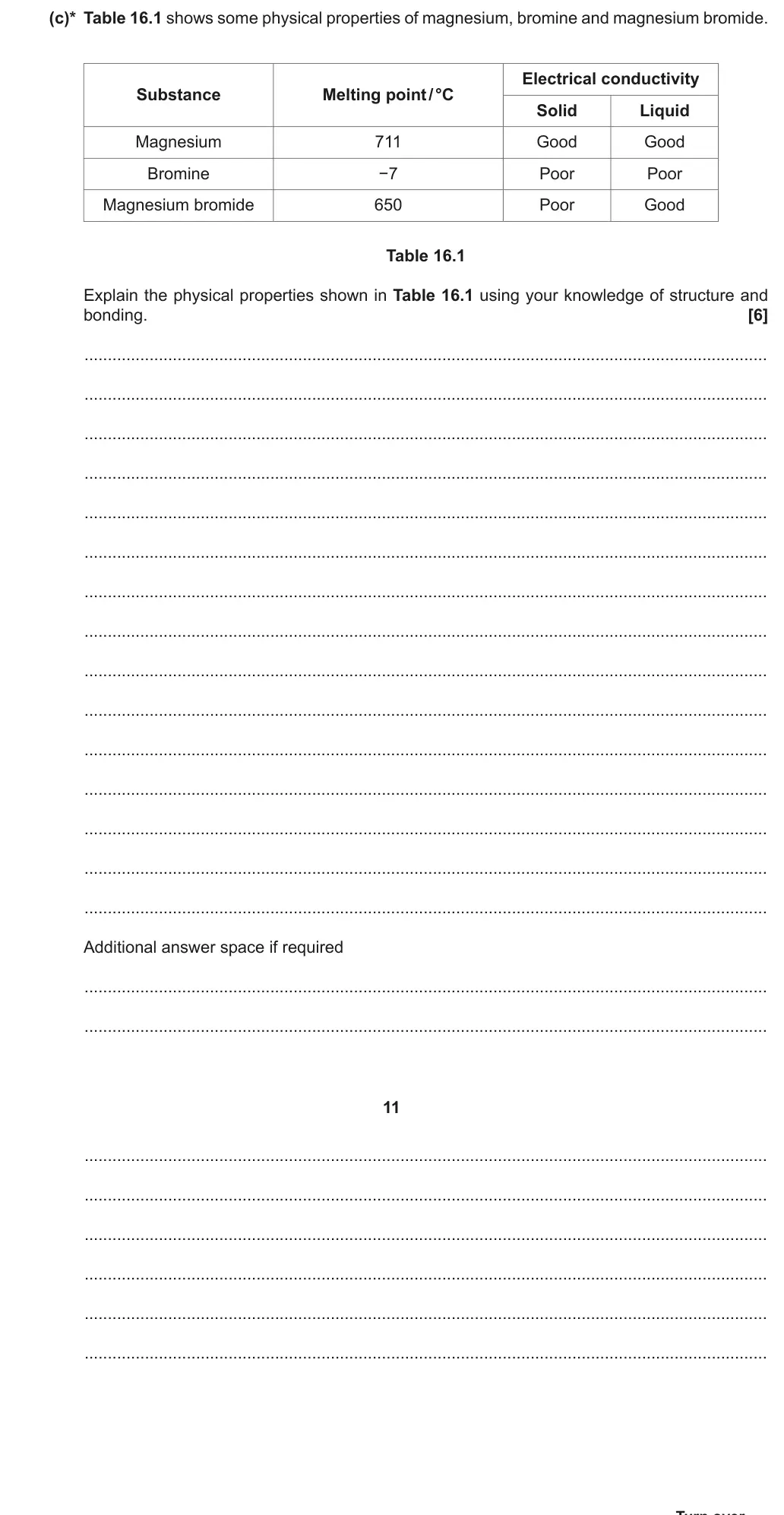
| November 2020 | Paper 1 | 16(c) | Table 16.1 shows some physical properties of magnesium, bromine and magnesium bromide. Explain the physical properties shown in Table 16.1 using your knowledge of structure and |
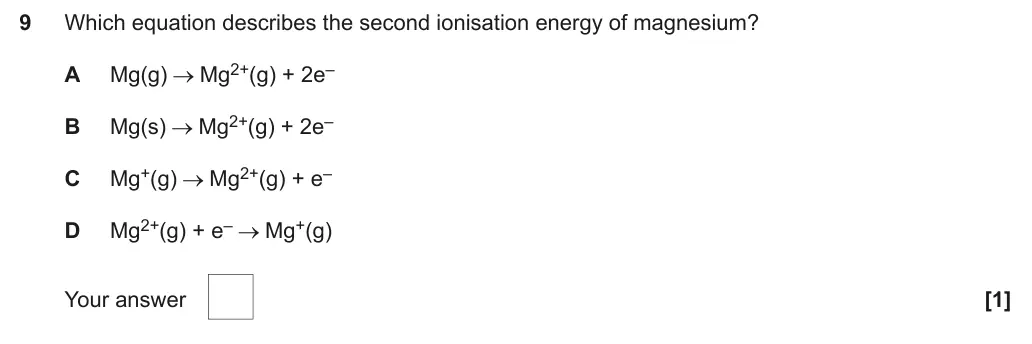
C
This question was answered well with most candidates correctly selecting C.
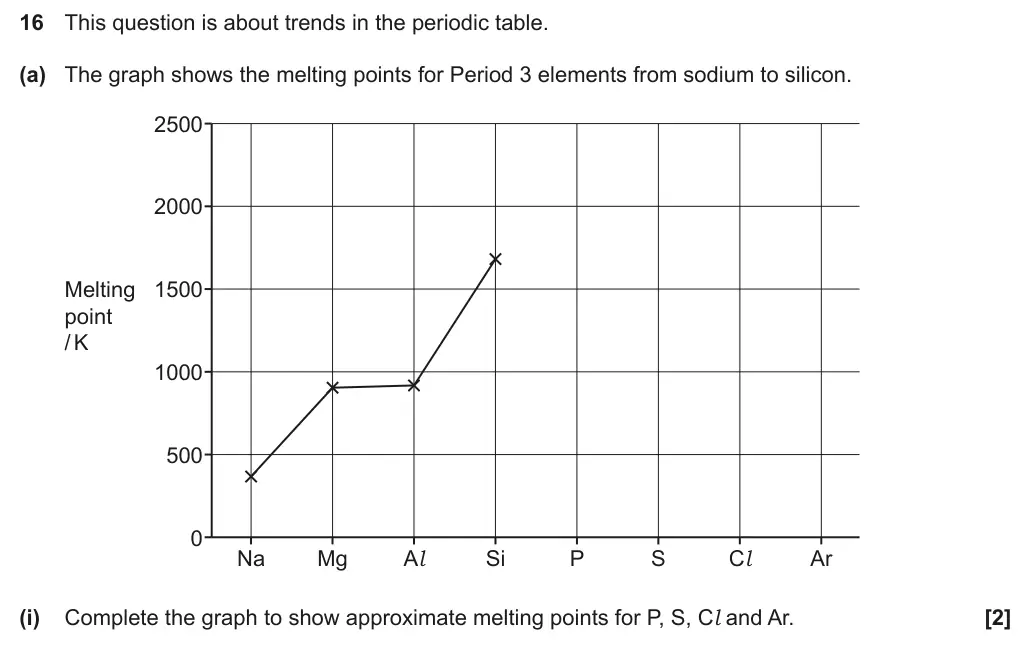
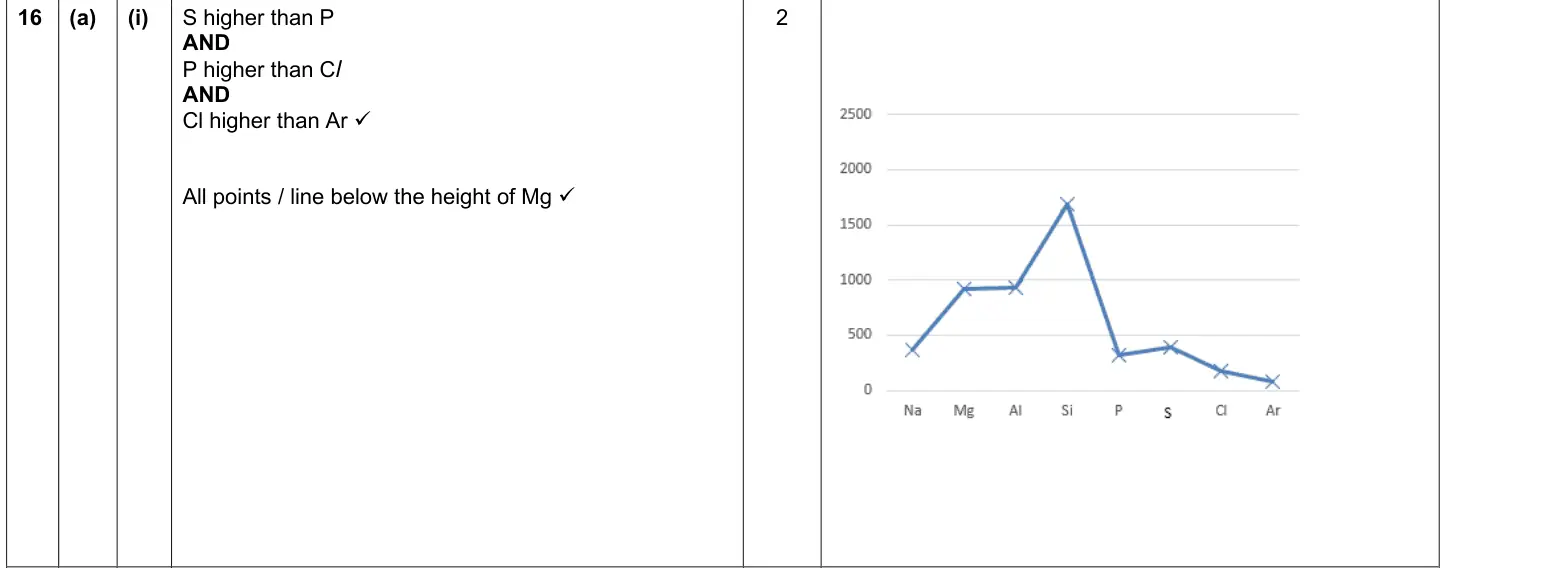
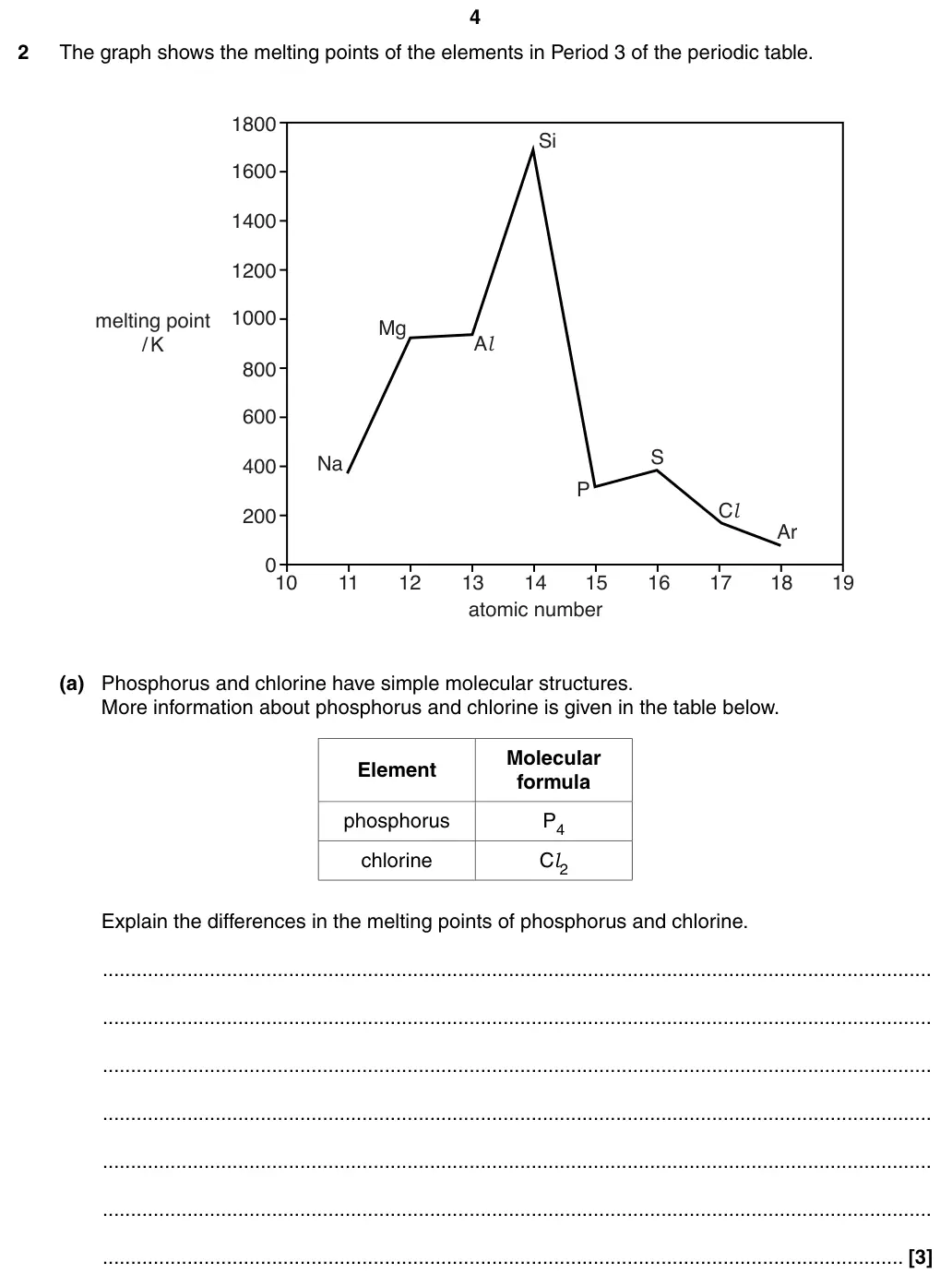
This question required the candidates to know the trend in melting points across period 3. This question proved difficult for candidates with few being given both marks. Many candidates did not recognise Mg as a metal with a higher melting point than the non-metals and continued the trend upwards above Si. The candidates may be aware that Ar and Cl2 are gases at room temperature, but they didn’t relate this into the concept of melting points. Some candidates plotted points lower than Mg in a straight line on a downward trajectory. Sulfur, with a higher melting point than phosphorus, appears to be not well-known. One misconception seemed to be confusing this with a graph for ionisation energy, maybe by using the first ionisation energy data given on the next page.
Skills: M3.1 Translate information between graphical, numerical and algebraic forms
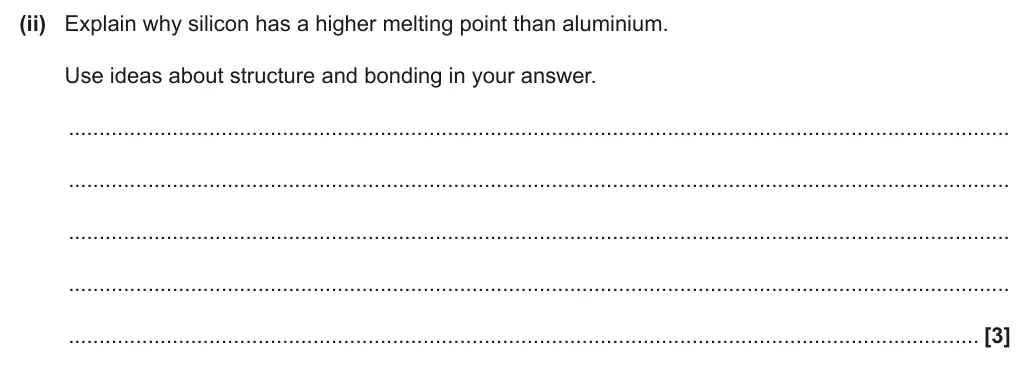
This question required the comparison of structure and bonding. The structure and bonding topic continues to be a difficult one for many candidates. Candidates who did well on this paper were able to identify why each of the elements had a certain magnitude of melting point. They clearly linked the structure type with the type of bonding. They then described the strength of force and gave a detailed description of the bond that was being broken. It was very common for ‘giant’ to be omitted in the name of the lattice for aluminium. Candidates find it particularly challenging to associate the correct terminology with the correct structure, often describing intermolecular forces in giant covalent explanations or use of molecules in giant metallic explanations. London forces were mentioned widely and described when comparing the strength of the bonding and this also appeared after a well written answer causing a CON for the last marking point. Less successful candidates gave an answer that appeared to confuse the melting point with ionisation energy and described number of electrons, shielding and nuclear attraction. The candidate correctly identified silicon as having a giant covalent structure but misidentified aluminium as having a simple molecular structure. This resulted in in incorrect bonding being compared for the final marking point.
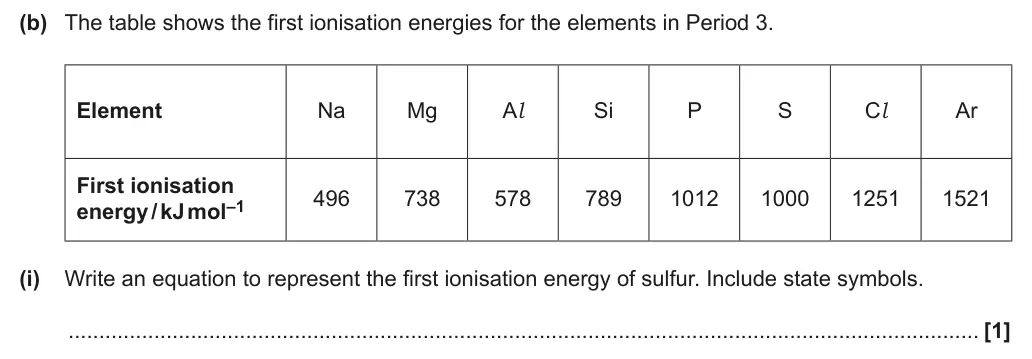
Most candidates were given this mark. However, there were multiple errors made which included the wrong element, missing or incorrect state symbols, and the formation of a negatively charged ion. Misconceptions included that a non-metal would form a negative ion, and the sulfur existed as S8 rather than an atom. Candidates are advised to make sure that state symbols are clearly written and the (s) and (g) can be easily distinguished by the reader. The convention is to use lower case letters of normal size, e.g. S(s) or S(g).
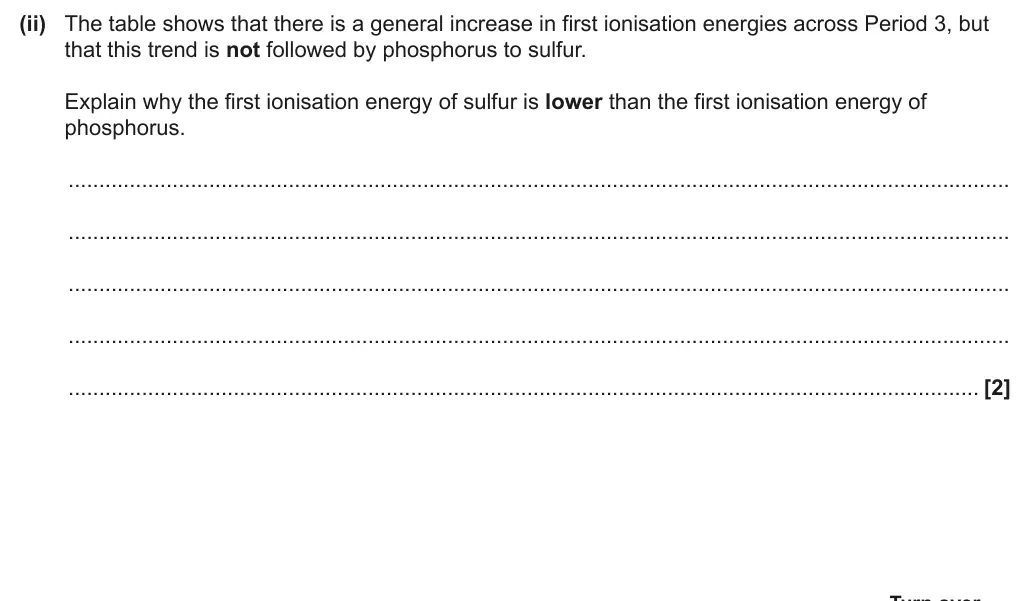
Most candidates were able to explain the lower first ionisation energy in sulfur. The description of the pairing of electrons for sulfur was better for those who used the orbital diagram with electrons clearly paired. Imprecise language was the most common cause of the mark not being given, e.g. ‘sulfur has four electrons in the subshell’ or incorrectly stating within the orbital. Less successful candidates approached this by explaining in terms of atomic radius, nuclear charge and nuclear attraction which demonstrated that they were not aware of the exceptions to the general trend.
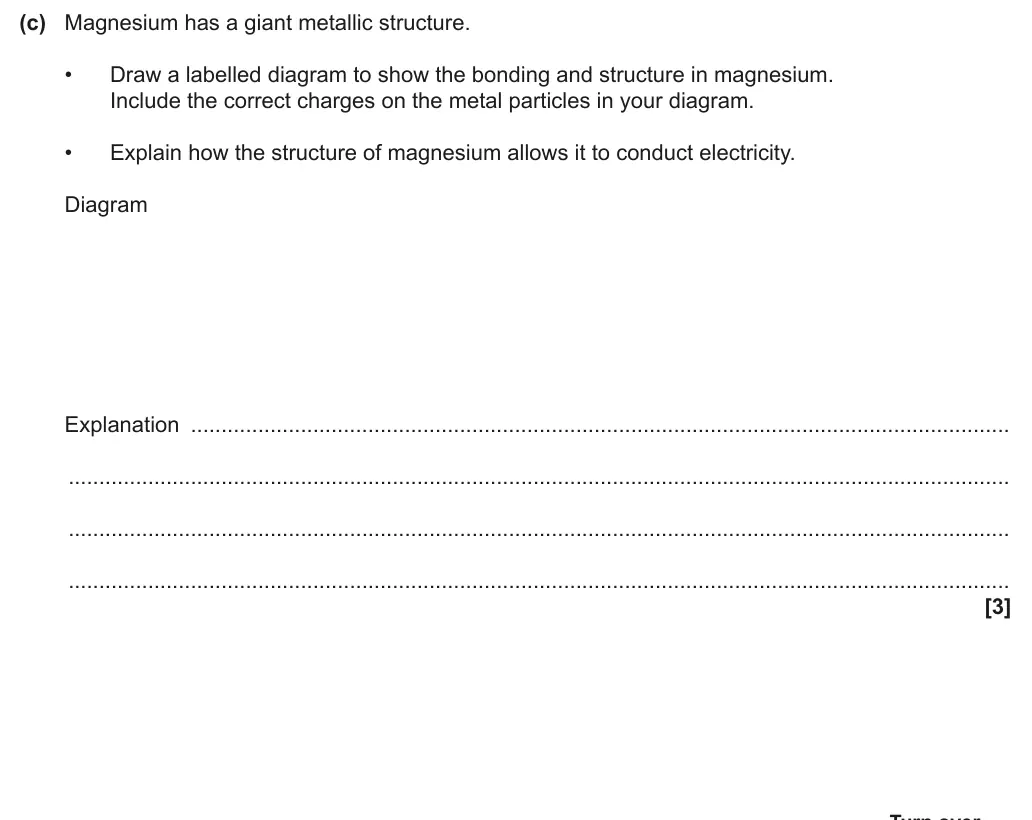
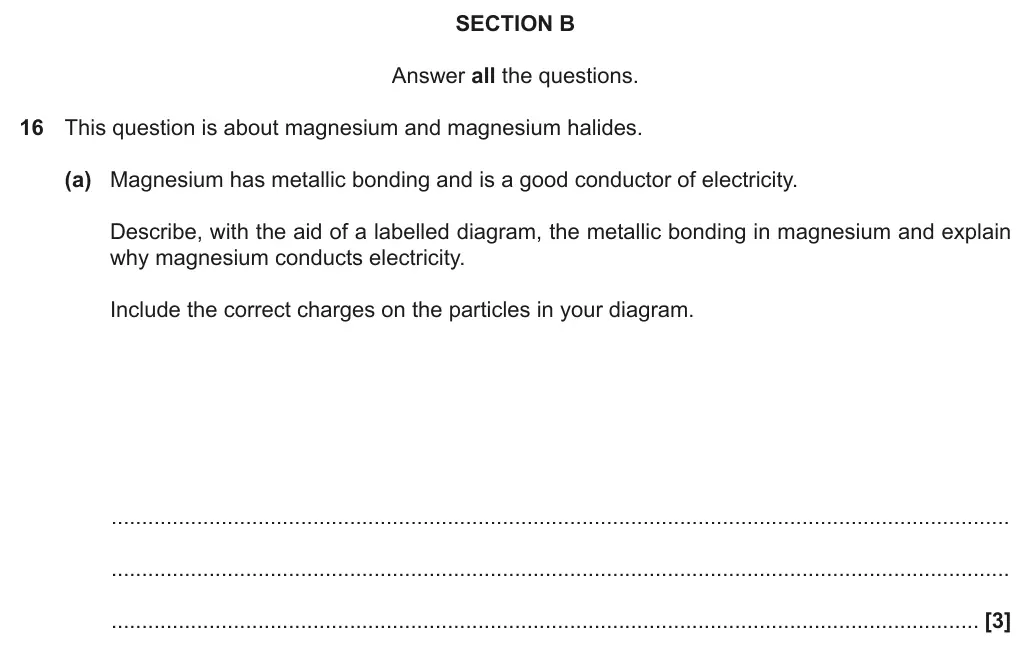
The majority of candidates were able to link movement of electrons to the ability of magnesium to conduct electricity. However, sometimes ‘electrons carry charge’ was not developed to explicitly state that they are mobile. Many diagrams were unclearly drawn and unlabelled, with the charge of the Mg2+ ion incorrectly shown.
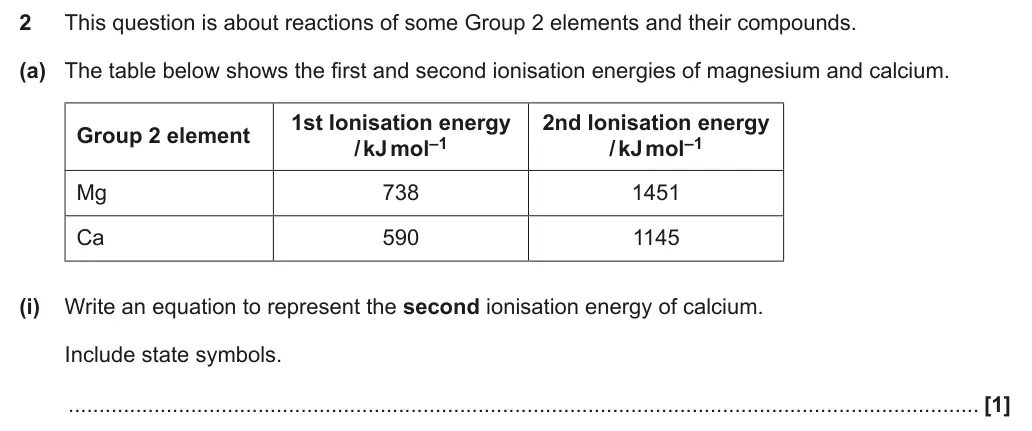
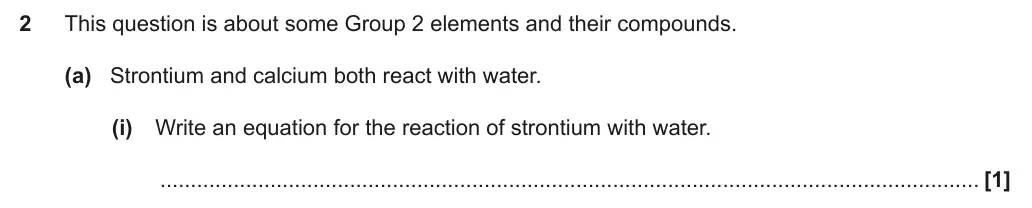
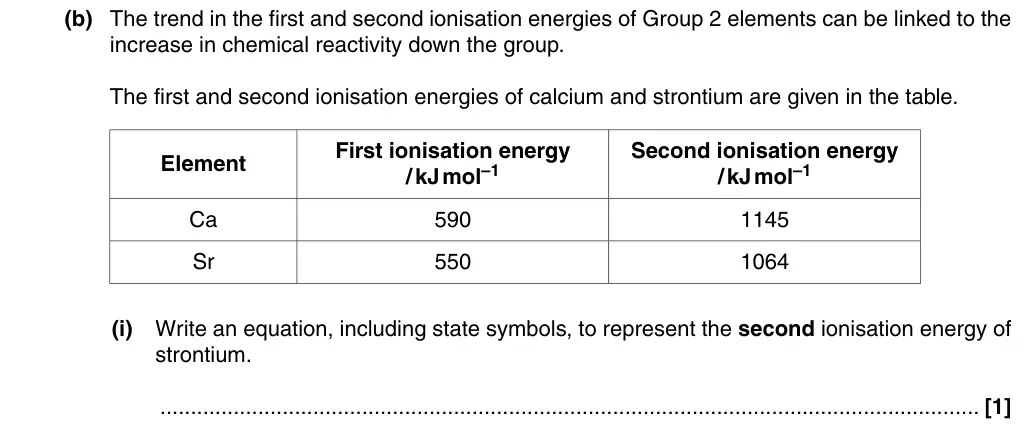
More than half of the candidates gave the correct equation. However, many lost the mark for missing or incorrect state symbols. In some responses it was hard to differentiate between (g) and (s) – candidates need to make sure their handwriting is clear so credit can be given. Some other errors that were seen included: losing 2 electrons, incorrect charges, gaining electrons or using Mg rather than Ca.
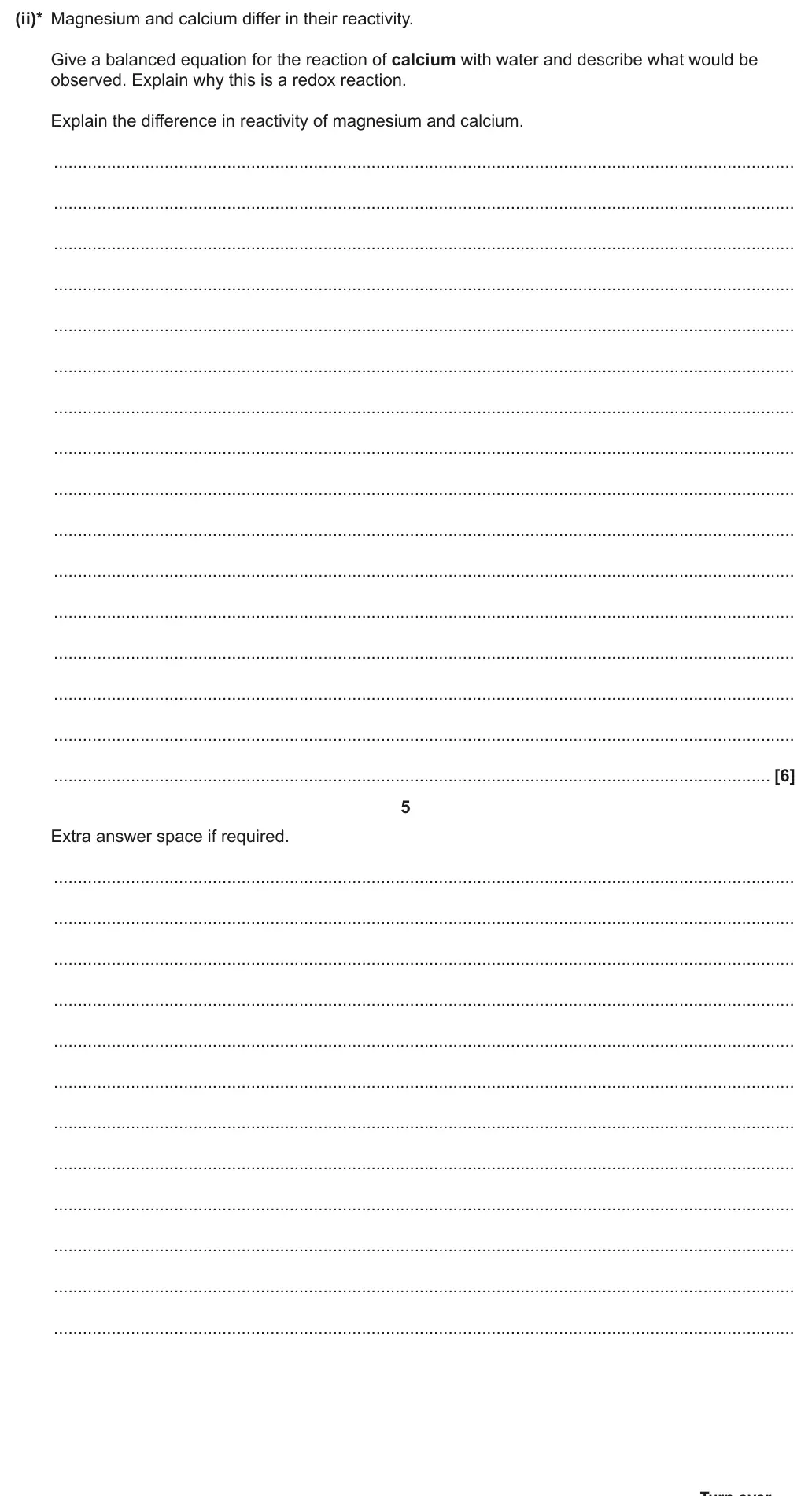
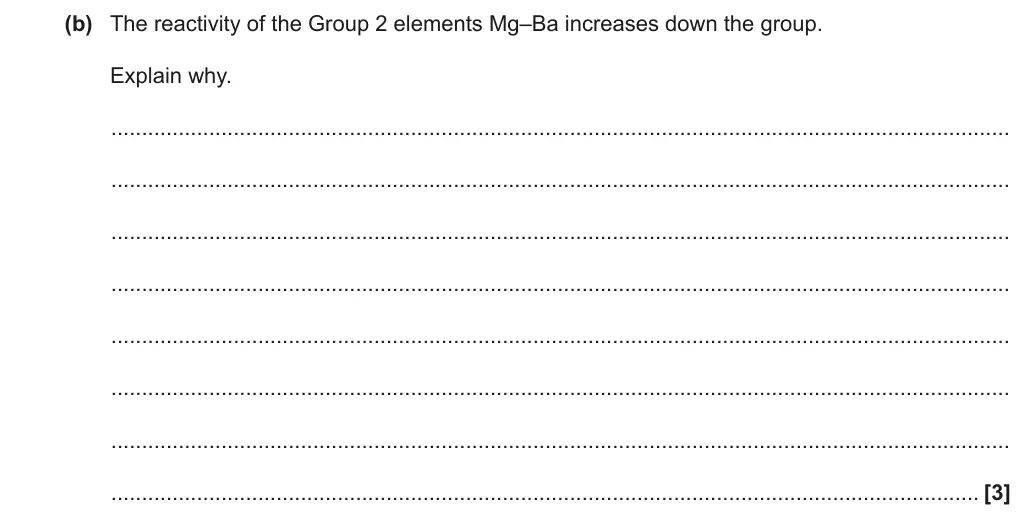
Many candidates scored highly on this level of response question, answering all three parts. Generally, candidates found it easier to explain the difference in reactivity between Mg and Ca than the other parts of the question. Some lacked clarity in their responses, describing a decreased “electrostatic attraction” without reference to the nucleus and/or outer electrons. Some muddled the order of reactivity describing the gain of electrons. A few candidates described a general trend down the group without linking to the position of Mg and Ca in the group. A number of candidates had an incorrect equation forming CaO rather than hydroxide and occasional errors in the formula, e.g. CaOH or balancing of the equation were seen. Most gave at least one correct observation. Some candidates suggested that bubbles would be seen but did not have hydrogen pro- duced in their equation. Most candidates were able to recognise that redox meant that oxidation and reduction took place. How- ever, some were not clear here, e.g. “it is redox as calcium is oxidised”. Most understood that to explain why this was a redox reaction they needed to give oxidation number changes and/or number of electrons lost or gained. Some errors were seen in assigning oxidation numbers such as H in water, which was given as +2, rather than +1 for each atom. Lower-attaining candidates often suggested that oxygen was reduced. Candidates should be aware that they do not need to fill the answer space provided. Often longer re- sponses introduce contradictions in responses. An excellent response which achieved Level 3 and gained all 6 marks.
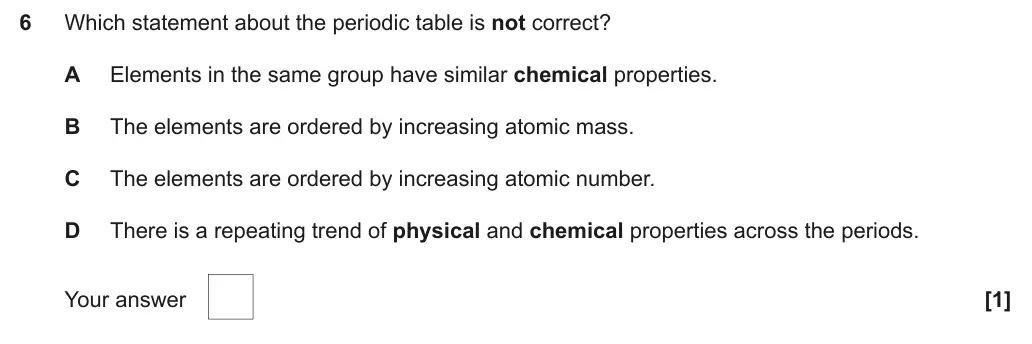
B
This question did discriminate, but the correct option of B was missed by many candidates. D was the main distractor, despite the question assessing basic chemical facts. This multiple-choice question required candidates to choose the option that is not correct, and some candidates may not have read the question closely enough. It is recommended that candidates underline the word not in such MCQs to highlight what is required.
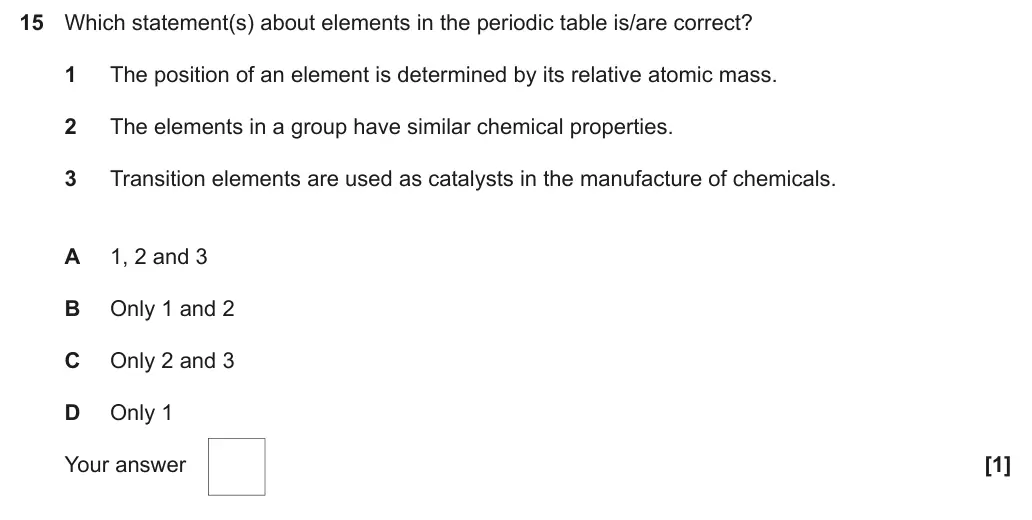
C
The correct answer was C. Most candidates chose the correct answer but a few selected A. The position of the element is based on its atomic number. Section B overview The section contained questions from all aspects of the specification. Candidates found many of the questions, including those with an extended response nature, relatively straightforward and the majority managed to cope with the mathematical content. As a rule, candidates should aim to use at least three significant figures, unless directed otherwise, in their intermediate calculations to avoid rounding errors in their final answer. Candidates should be advised that well set out calculations, which clearly indicate what each numerical value represents, allows effective error carried forward to be given in the event of an incorrect answer. It is also important that candidates avoid offering several solutions and clearly indicate which one has been used to derive the final answer. Some candidates were less confident and knowledgeable of questions which covered content traditionally taught earlier on in the A Level course. These were specifically: equations involving group 2 metals and their compounds; group 7; enthalpy profiles; and structure and bonding. There was evidence that candidates wrote far more than was necessary in some responses. Candidates should avoid repeating sentences which often introduce contradictions when expanding on written answers.
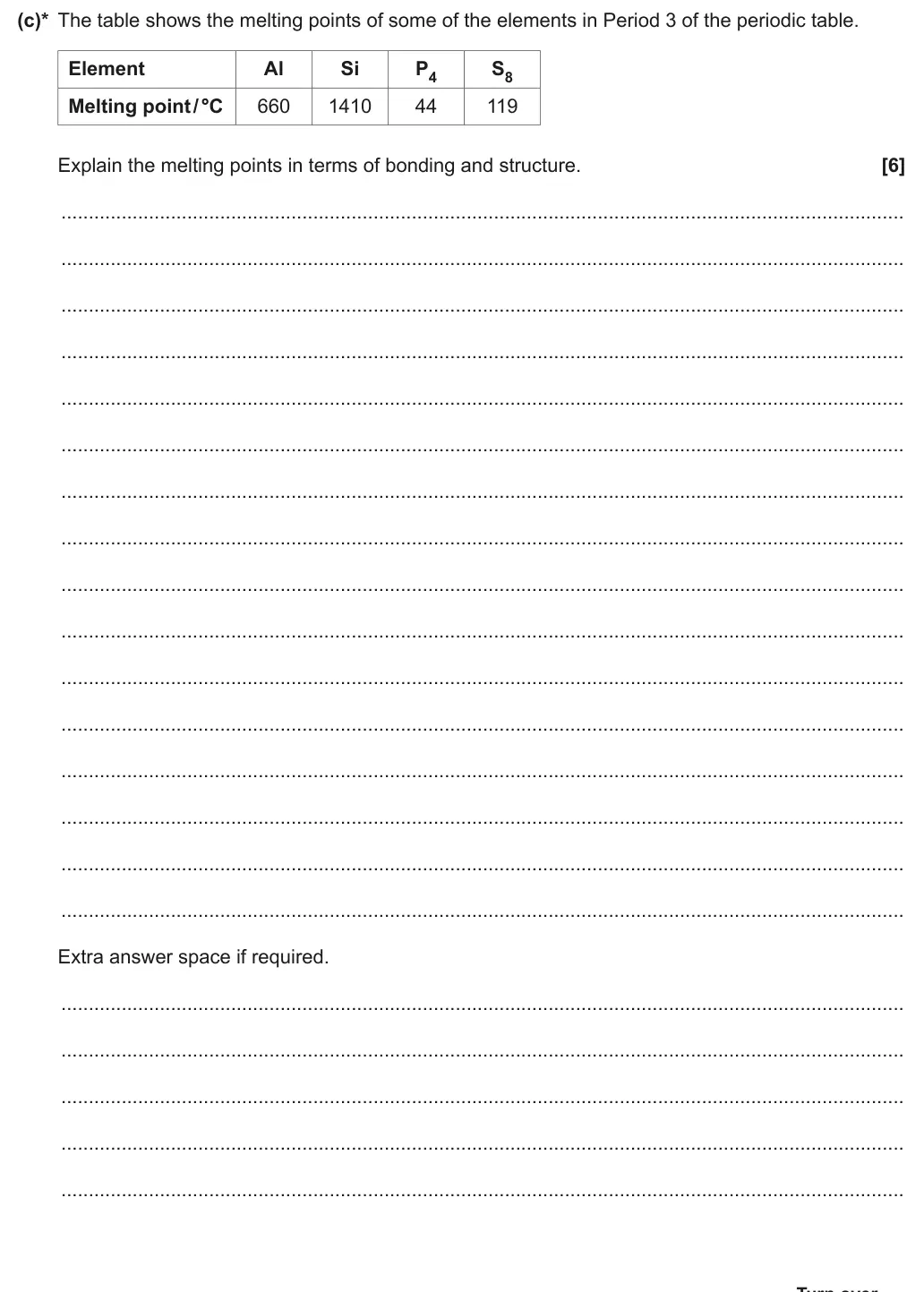
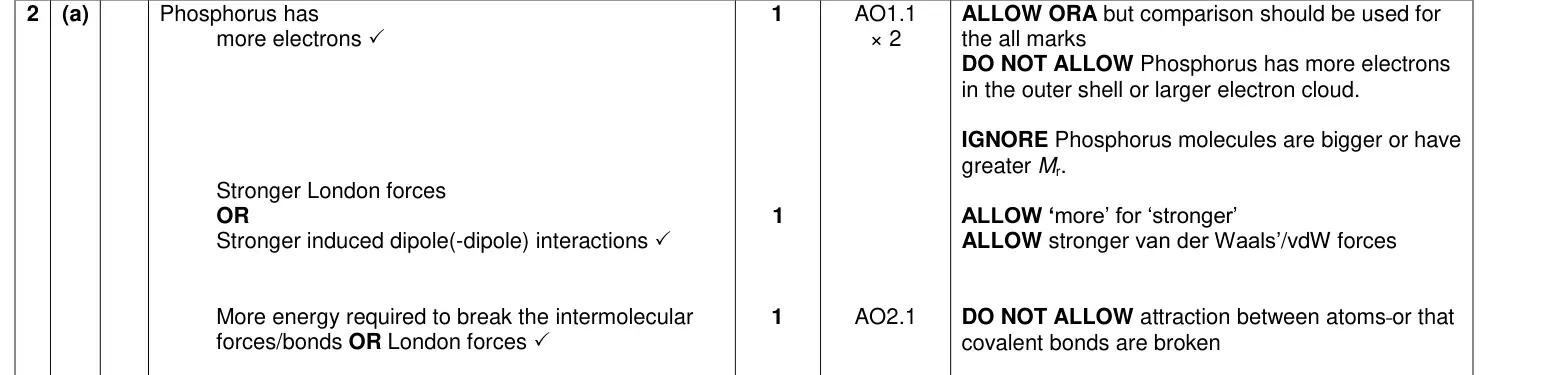
Structure and bonding continue to be a difficult concept for many candidates. High-attaining candidates were able to identify why the element had a certain magnitude of melting point. They clearly linked the structure type with the type of bonding. They then described, in detail, the nature of the bond. The strength of force required to break/overcome the bond/London Force was linked to the melting point. It was very common for ‘giant’ to be omitted in the name of the lattice, especially in Al. Candidates find it particularly challenging to associate the correct terminology with the correct structure, often describing intermolecular forces in giant covalent explanations or use of molecules in giant metallic explanations. London forces were mentioned widely but sometimes not described as being forces between molecules and not linked to the increased number of electrons. A holistic, rather than a point based, approach is used in marking these responses. This allowed Level 2 to be given when the candidate did not use all of the correct terminology throughout the three structure types. Several candidates described the varying melting point going across the period as being due to atoms having more electrons in the outer shell and a greater nuclear charge.
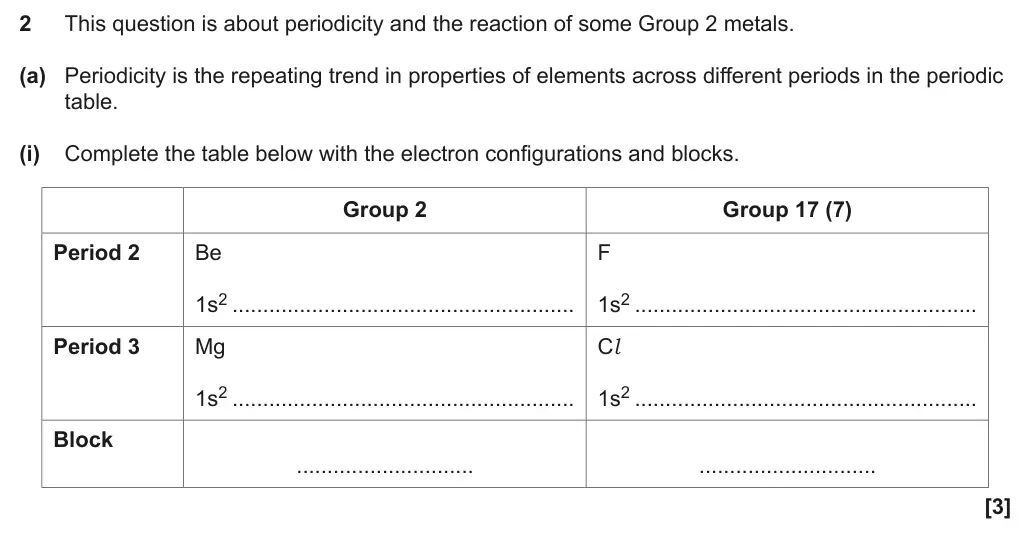
A very well answered question with most candidates very confident in giving the correct electron configurations and blocks. Errors were rare but included: 2p5 or 3p6 ending for Cl; using mass number for number of electrons; and assigning group 17 as d block and giving orbital box diagrams rather than block.
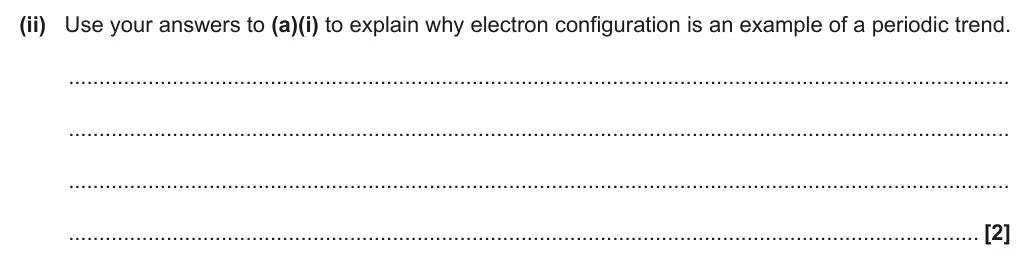
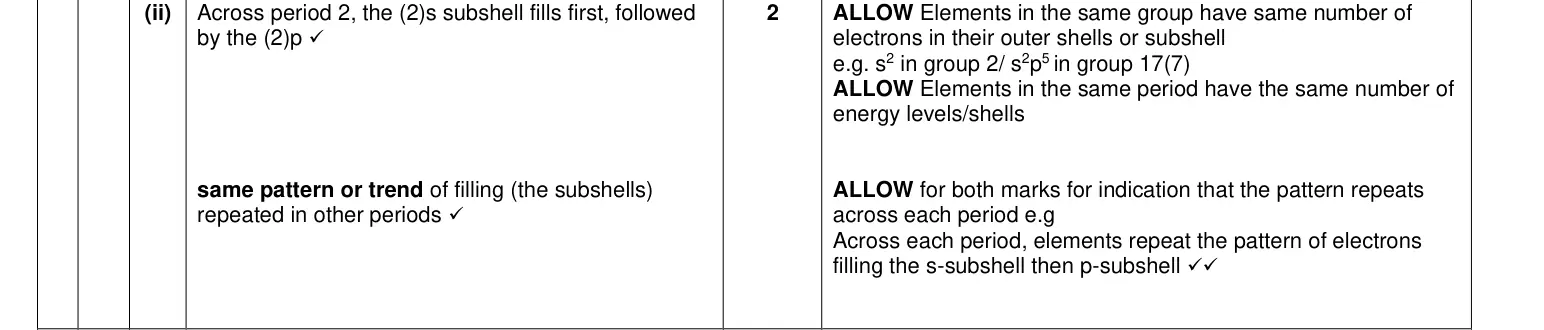
Many found this question challenging despite doing well in Question 2(a)(i). The question states ‘use your answers from (a)(i)’ but not many candidates wrote about the electron configurations they had given. Many gave very simplistic responses in terms of the number of electrons increasing but made no reference to how those electrons are arranged (e.g. ‘number of electrons increases across a period as the electron configuration gets higher’ or ‘atomic number increases’). Some candidates struggled with terminology, often referring to ‘block’ or ‘orbital’ instead of subshell (e.g. ‘outer electrons are in same block’, ‘going across a period the number of orbitals increases’, ‘elements in same group have their highest energy electron in same block’ or ‘orbital’). Candidates need clarity on the terminology used for electron configurations and periodic table i.e. blocks, shells, sub-shells and orbitals. It was rare for candidates to score both marks as this was a question that they were unfamiliar with. However, some did gain a mark for linking the number of outer shell electrons to the group number or stating that elements in the same period have the same number of shells. It was not enough to refer to the highest energy electron being in the s-subshell or p-subshell as this is the link to the block, but all groups in same block will be the same. Some described the trend in other physical or chemical properties. Some examples included: ‘Elements have same chemical and physical properties due to similar electronic configuration’; ‘as you go across period, number of electrons increase and their boiling and melting points increase’; and ‘electrons are more easily lost in a paired orbital, due to greater repulsion and so have lower ionisation energies’.
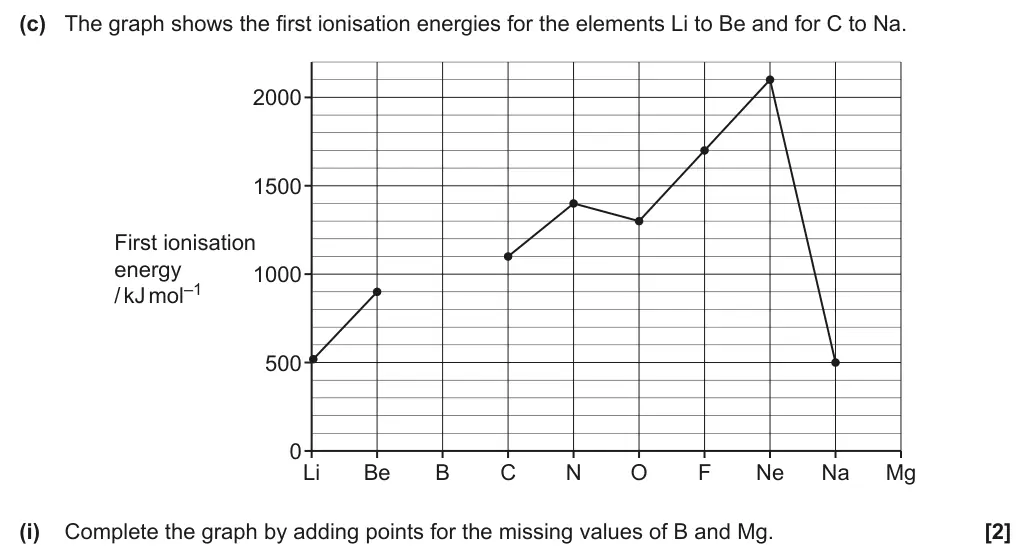
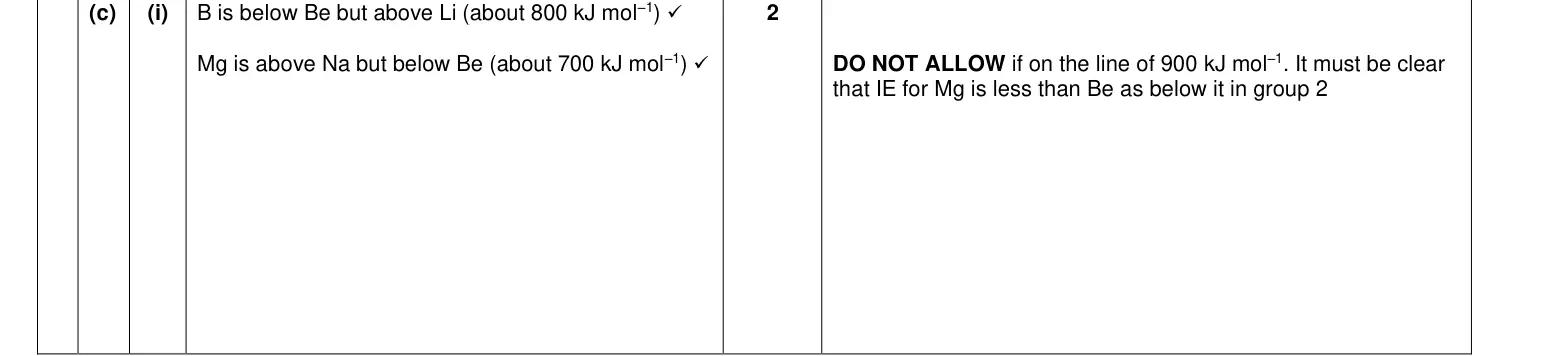
Approximately a quarter of candidates scored both marks here. Many candidates omitted to plot a point for Mg or positioned the point for Mg at 900 or above so higher than Be.
Skills: M3.1 Translate information between graphical, numerical and algebraic forms

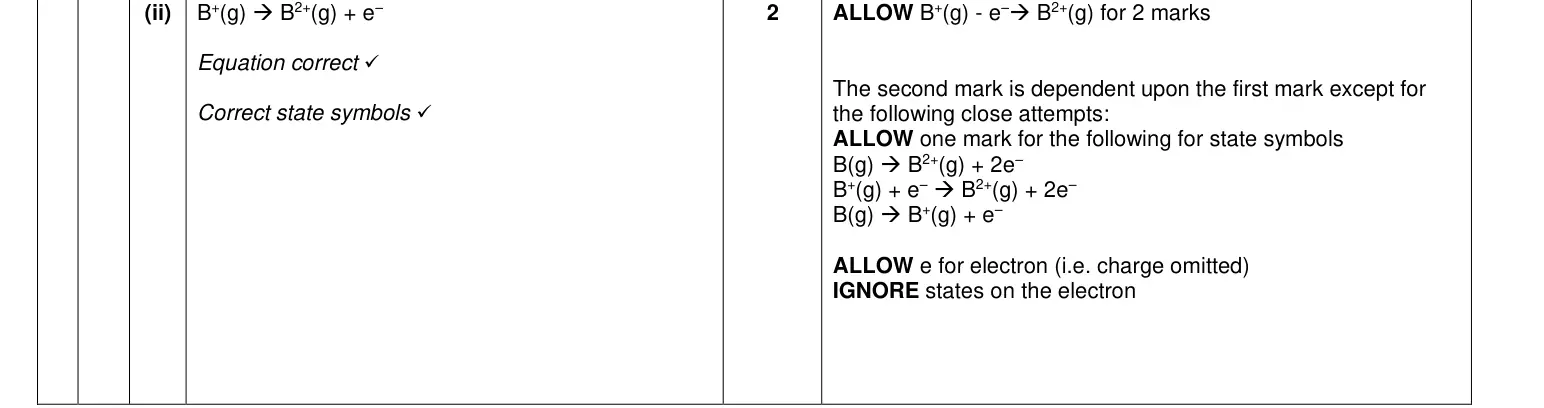
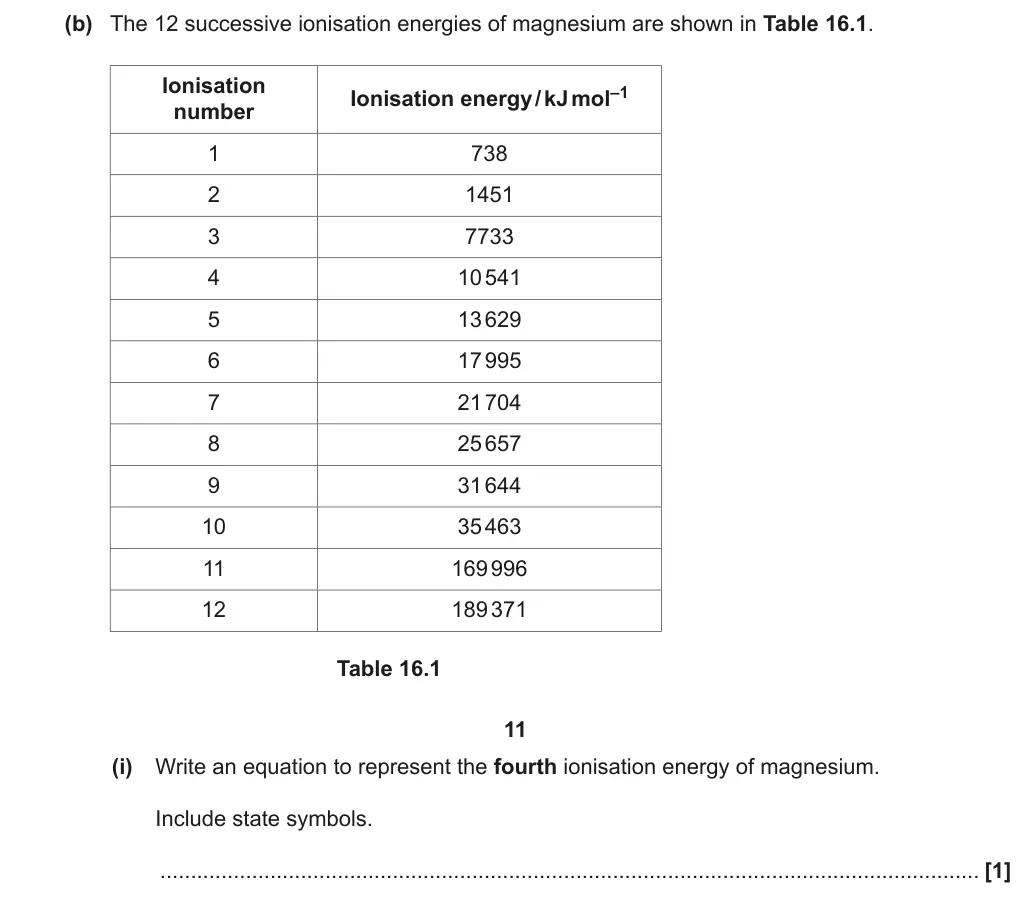
More than half of candidates scored both marks here. Errors seen included missing or incorrect state symbols, especially (s), but also (aq) was seen. Some had electrons on the left hand side of the equation, i.e. ‘B+ + e- → Be2+’. Some included negatively charged ions and occasionally the wrong element was used, e.g. Mg or Be.
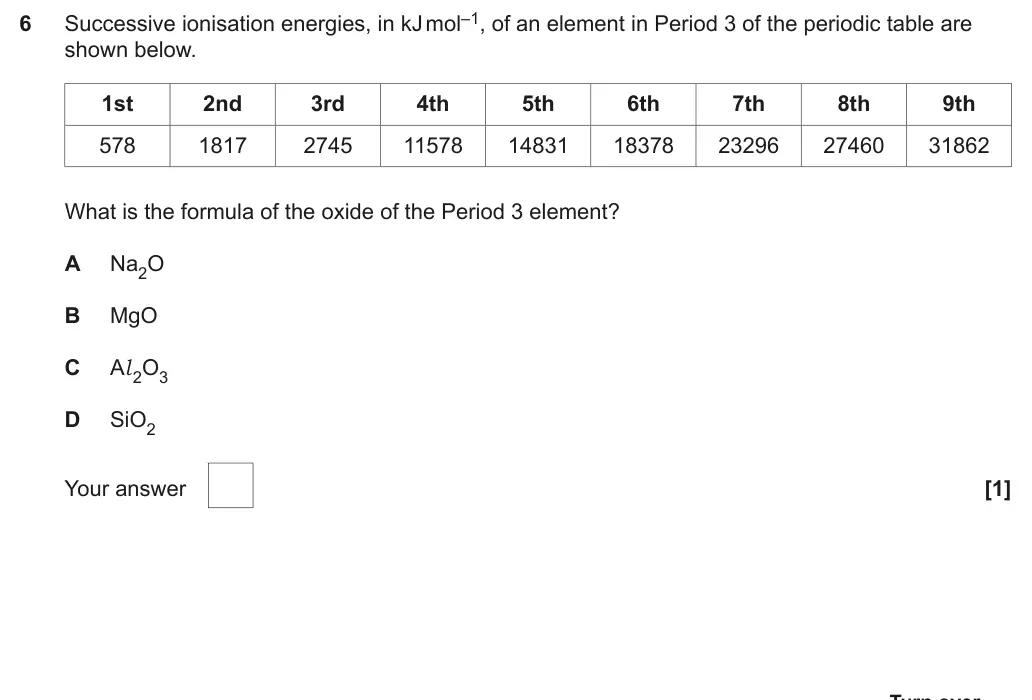
C
Most candidate chose the correct response of C. From the annotations on the scripts, most candidates identified the largest jump between the 3rd and 4th ionisation energies. Option D proved to be the main distractor. Having identified the correct large jump, a significant number of candidates chose the group at the end of the jump (Group 4) rather than the group at the start of the jump (Group 3). This suggests a misconception.
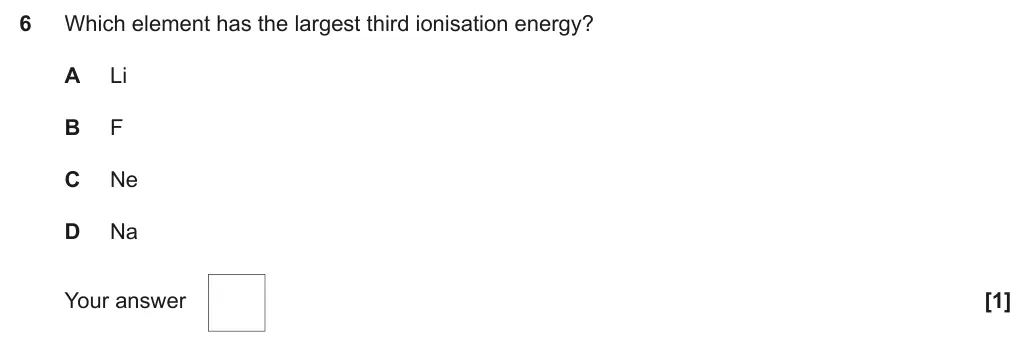
A
The correct answer was A. This question proved to be challenging, with the common incorrect answer being C.
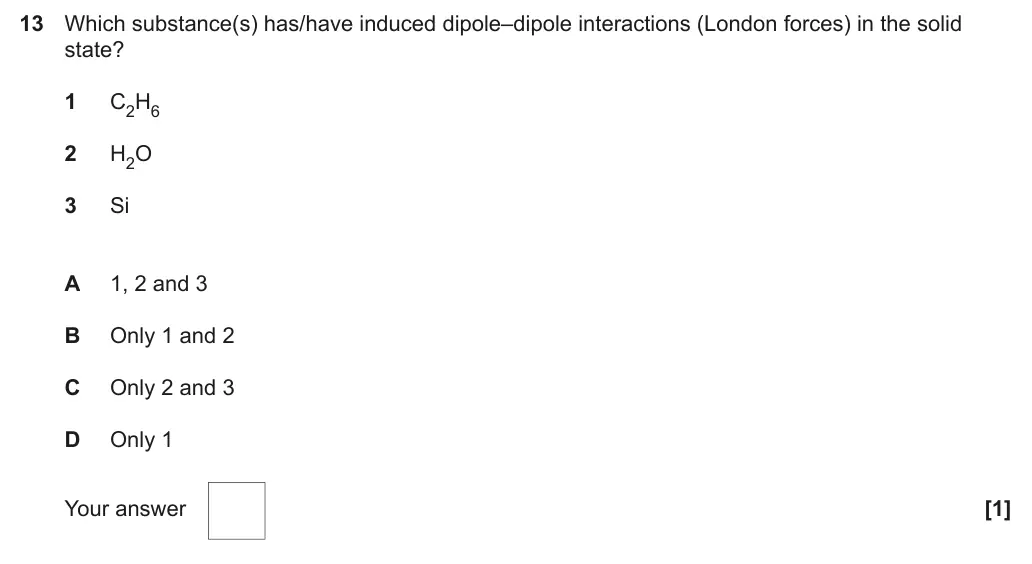
B
The correct answer was B. Most candidates did not recognise that Si has covalent bonds between atoms so included it or did not recognise that water forms London forces as well as hydrogen bonds and therefore excluded it.
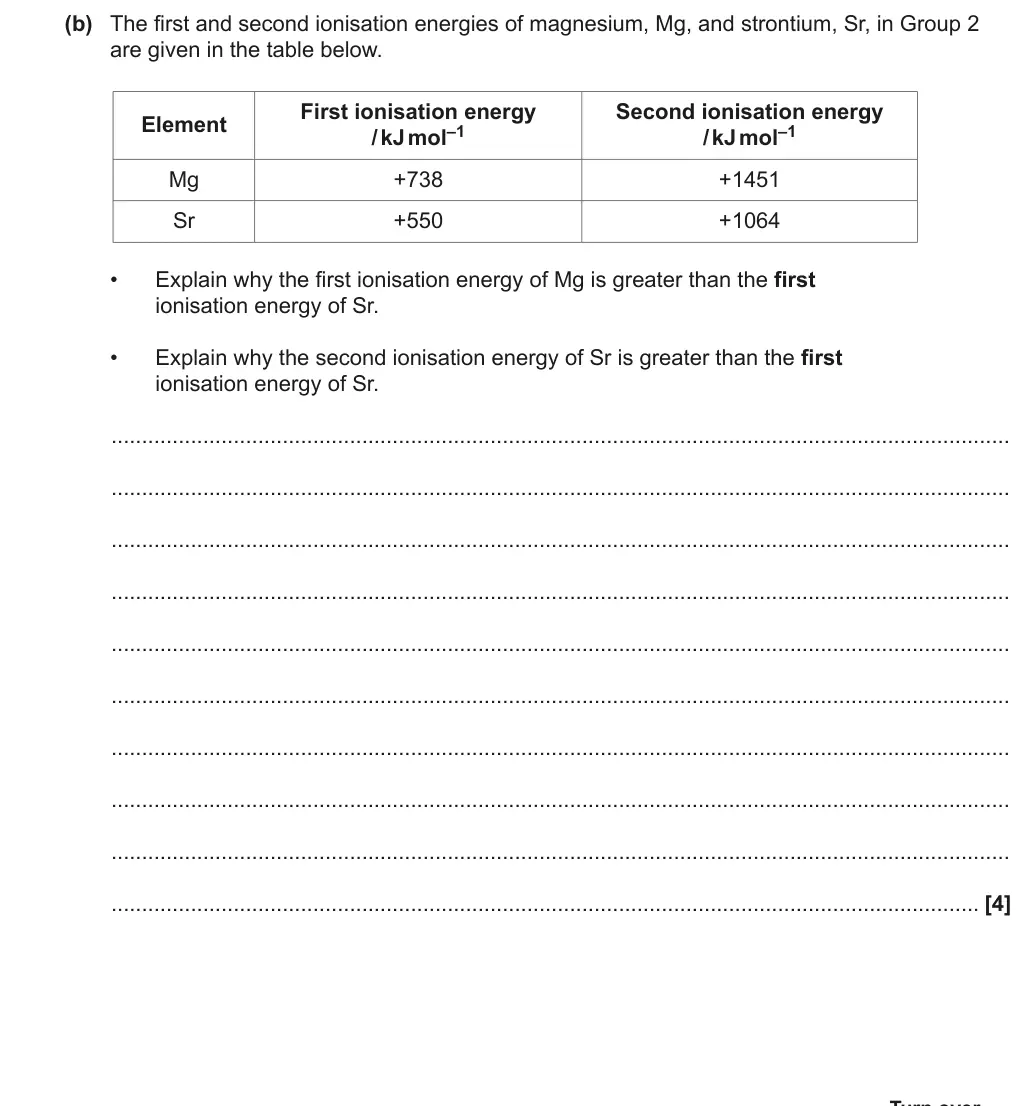
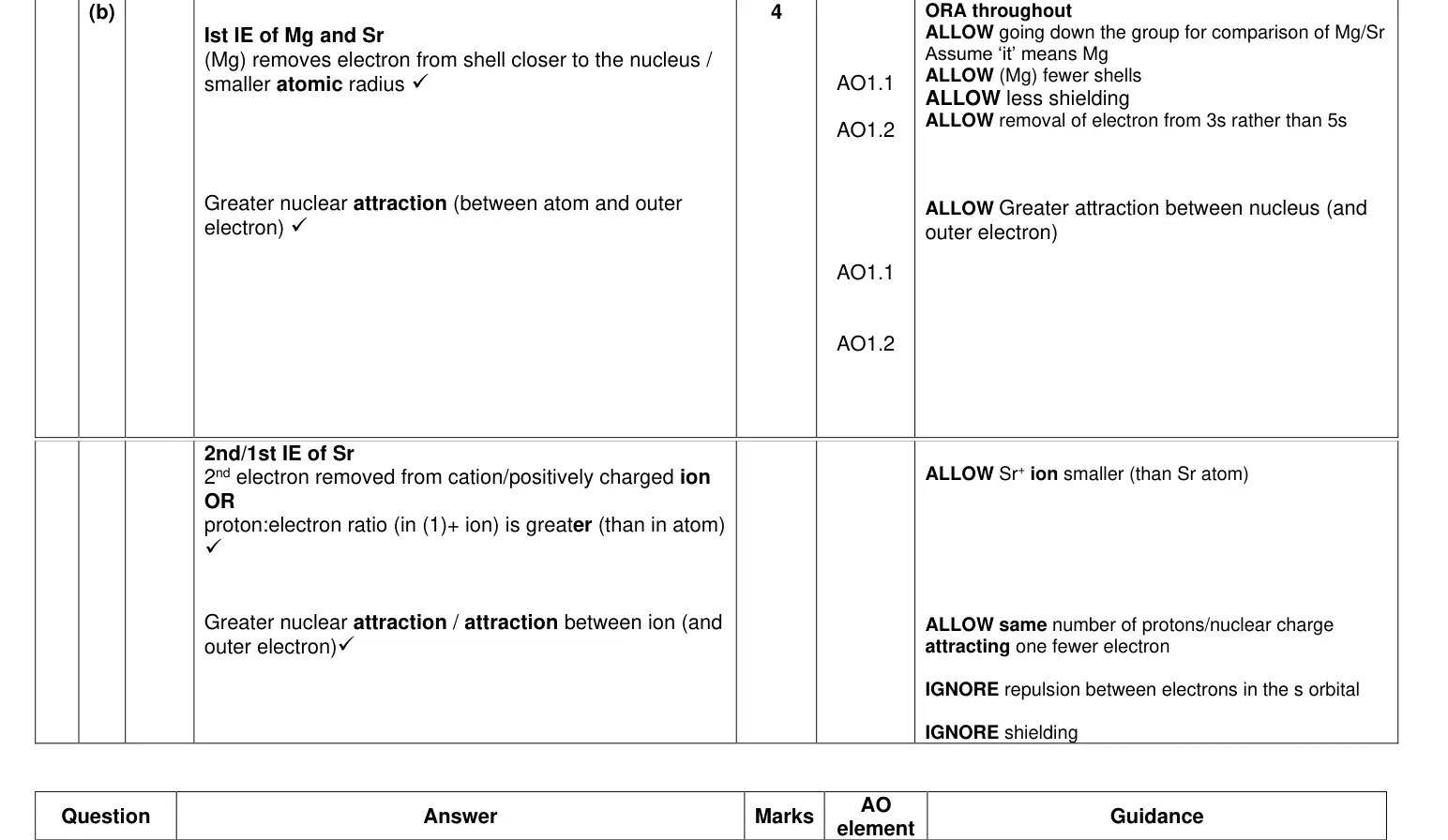
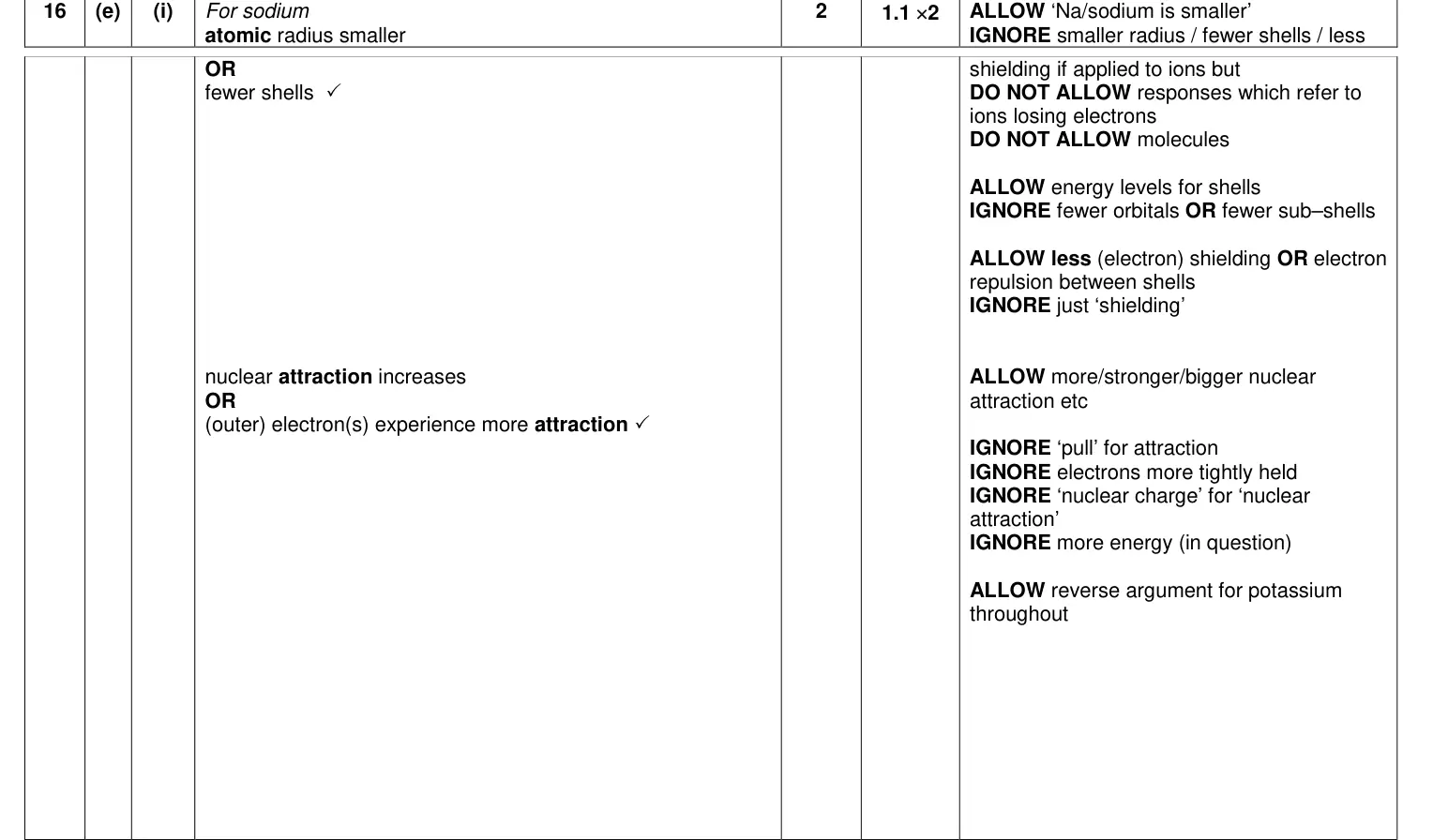
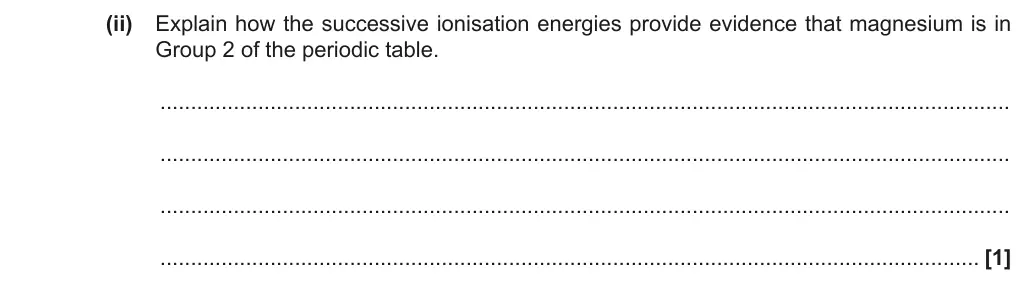
Most candidates were able to explain why the first ionisation energy of Mg is greater than that of Sr due to the Mg’s smaller atomic radius/less shielding and therefore increased nuclear attraction. Candidates should be reminded that there is no requirement to restate the question in their answers. Terminology is important and some candidates lost marks as they referred to nuclear radius instead of atomic radius. However, most candidates did not recognise that the second ionisation energy of Sr involves removing an electron from a +1 ion and instead discussed the repulsion between electrons in the s orbital. Atomic radius instead of ionic radius was often seen when discussing the Sr+ ion. Some candidates were still referring to Mg in this part of their answer and they should be advised to reread the question between each part to remain focused on the requirement.
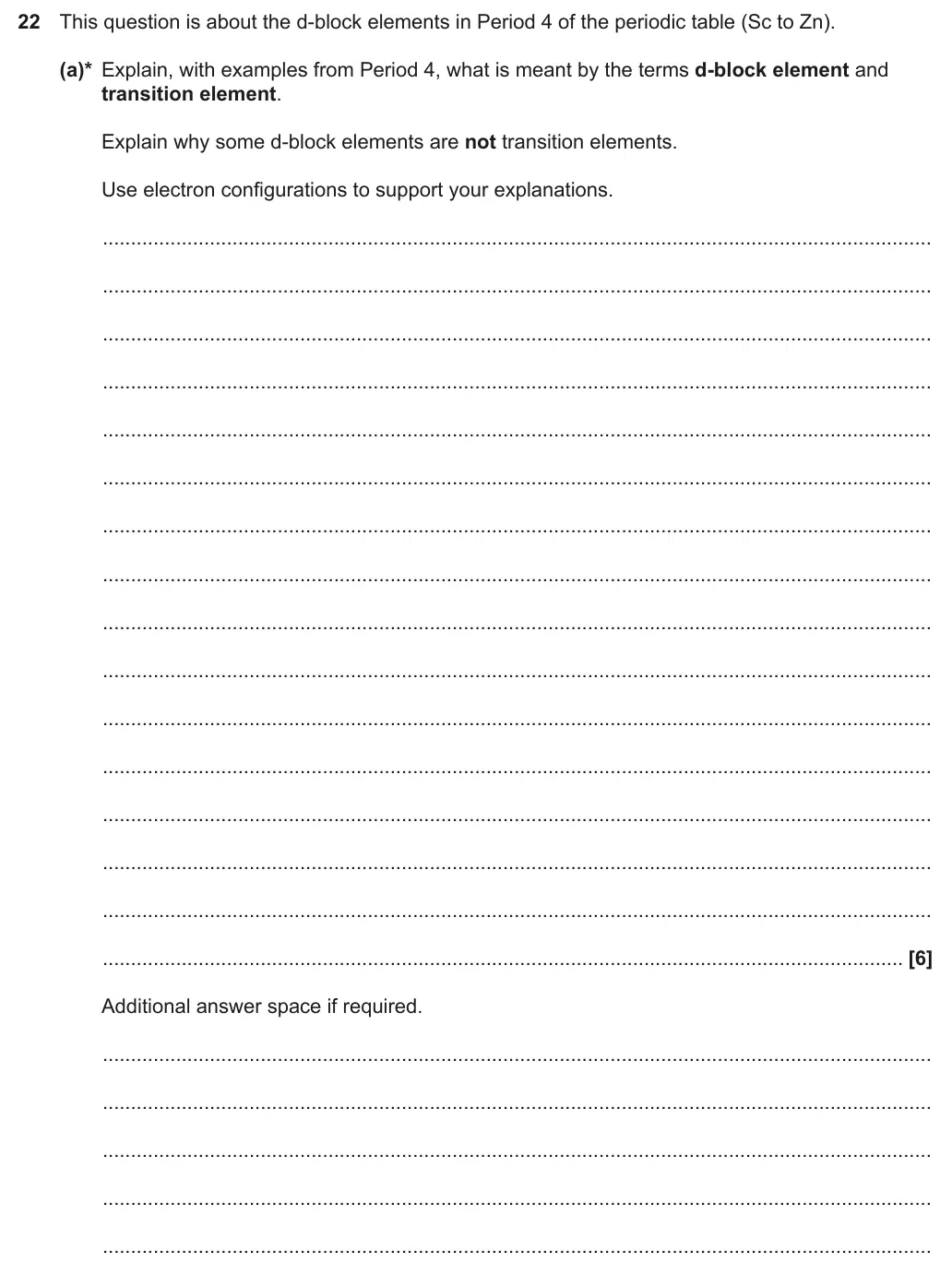
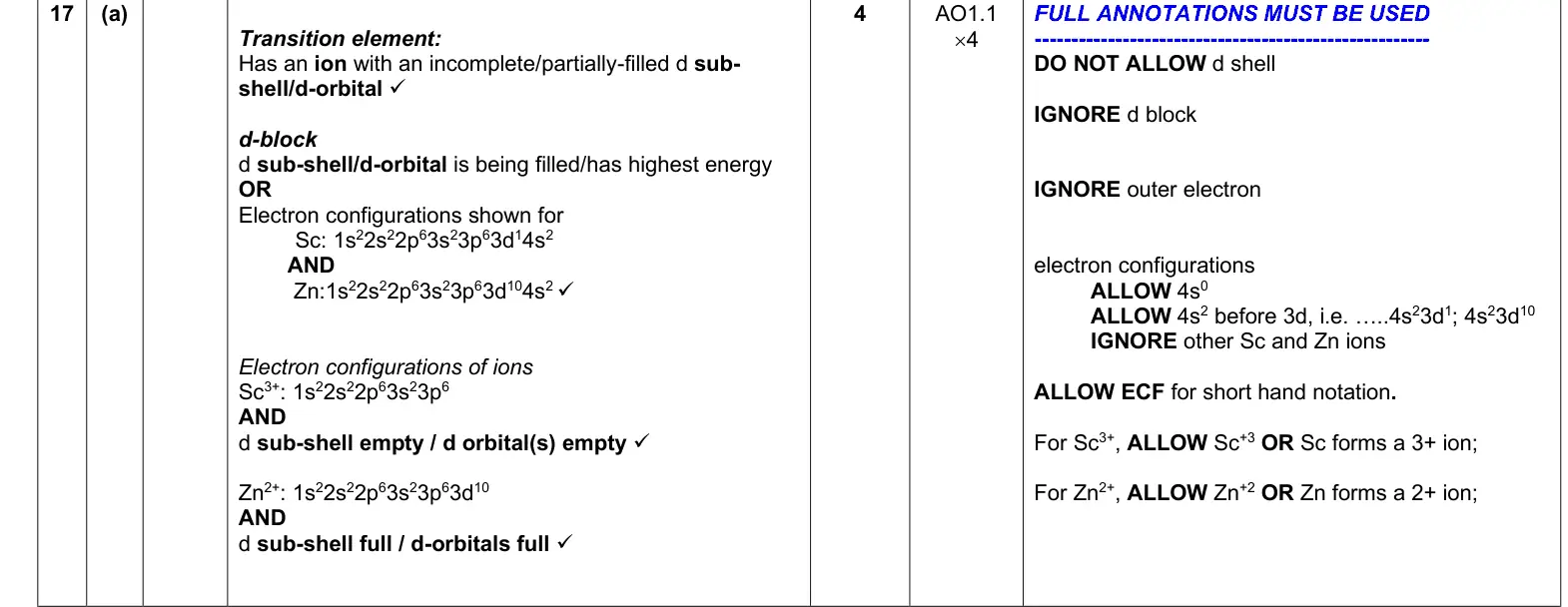
Only the higher-attaining candidates scored full marks. Very few candidates were able to define d-block element correctly without the minor slip of saying outermost electron instead of highest energy or valence electron. Many candidates often did not mention ions for the transition metal definition. Many did not include any of the electron arrangements for d-block elements and transition elements. The majority of candidates who were able to recognise zinc and scandium as d-block elements, but not transition elements, gave their electronic configurations correctly. Common errors included the presence of the 4s electrons in the electron configurations of the ions and incorrect electron configurations of copper and chromium atoms. A few candidates thought chromium and copper were not transition elements due to the 4s1 electron configuration. This candidate has mentioned outer electrons rather than highest energy but was this is a minor slip and they were still given a Level 3 response as everything else is correct. A holistic approach for LoRs is used and not a point-based marking system.
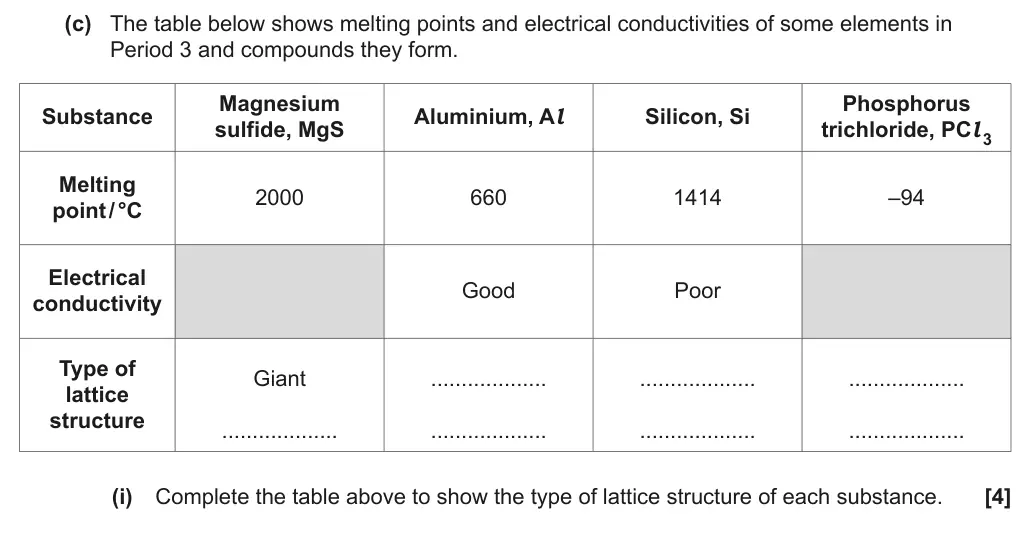
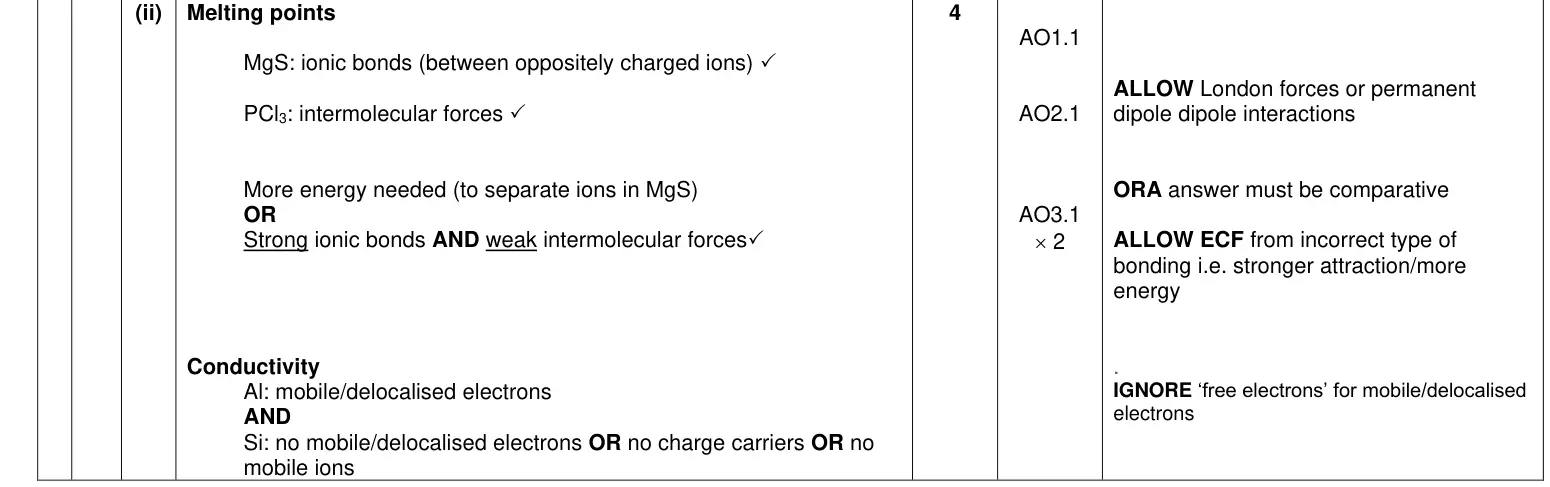
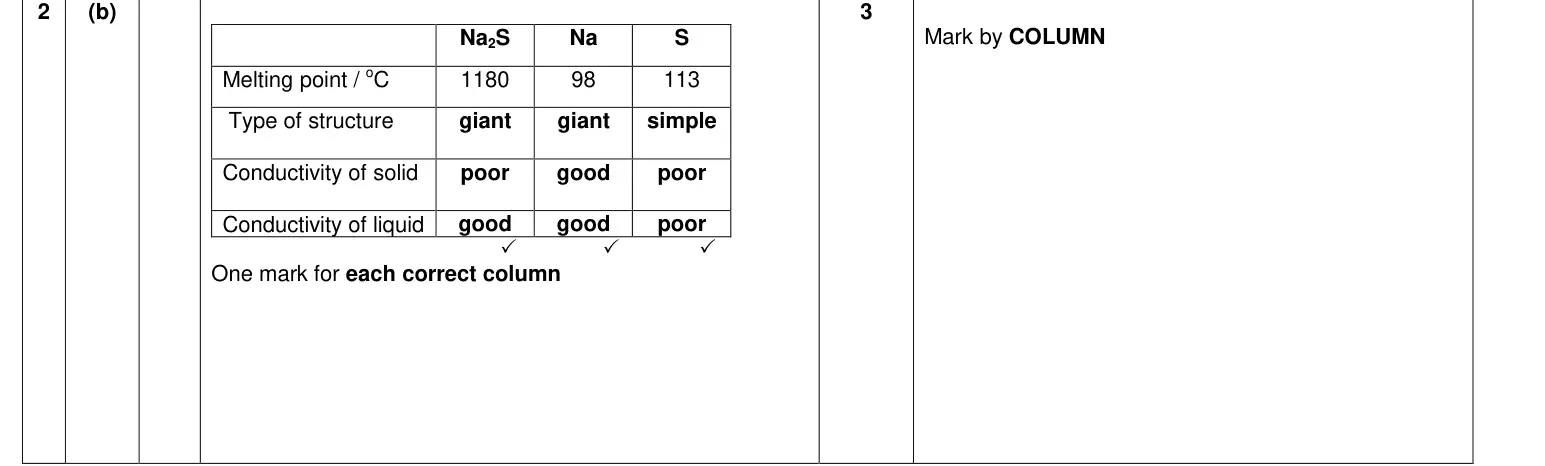
About half the candidates gained all 4 marks. Candidates often find it tricky to recognise the type of structure even when given some details about physical properties. Often giant was omitted especially for Al as metallic bonding. Some used ‘small’ in place of ‘simple’. Common errors included MgS as metallic and Si as simple covalent with PCl3 as giant covalent. Many added unnecessary detail such as filling in the greyed-out boxes for conductivity or adding lattice to each box.
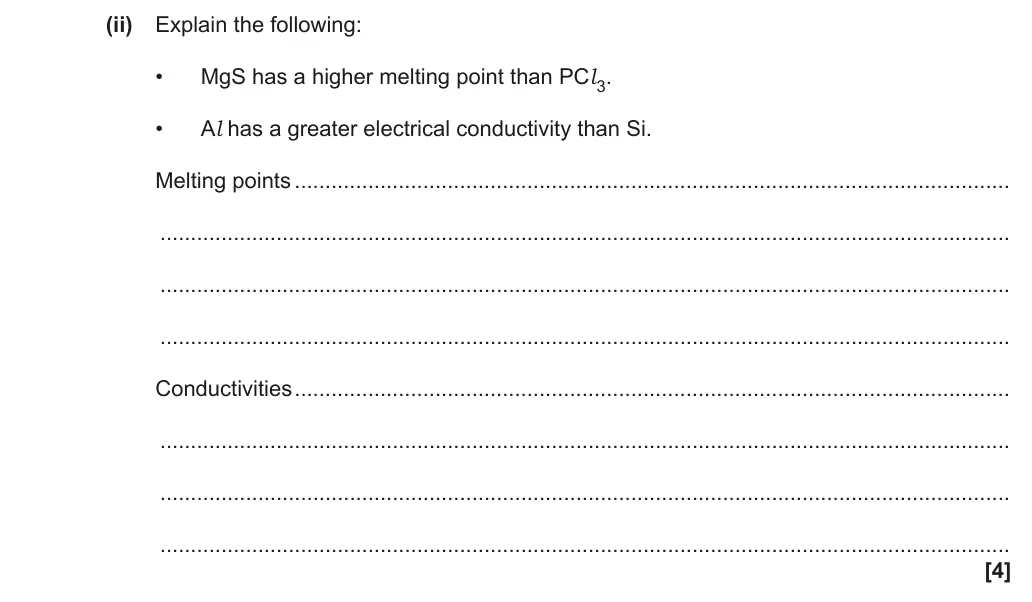
Candidate explanations often lacked clarity even if the correct structure had been identified in (i). Most gained at least 1 mark, usually for recognising that for MgS to have a higher melting point that it must contain stronger bonds than in PCl3. Responses highlighted a range of misconceptions including the presence of intermolecular forces in ionic/metallic substances, oppositely charged atoms in ionic compounds, and thinking London forces are between atoms. Most were able to gain the conductivity mark, but some compared to PCl3 rather than Si as asked in the question. Some described ‘mobile ions’ in Al or that Si has ‘no electrons’. The use of ‘free electrons’ was seen in many responses, and we would encourage the use of ‘delocalised electrons’ for a more accurate description of metallic bonding.
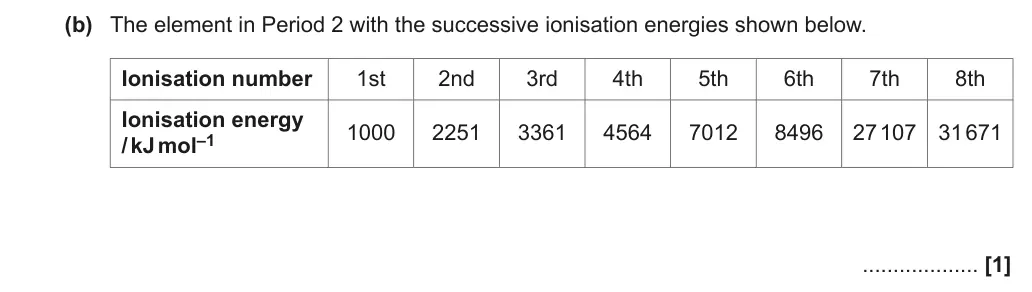
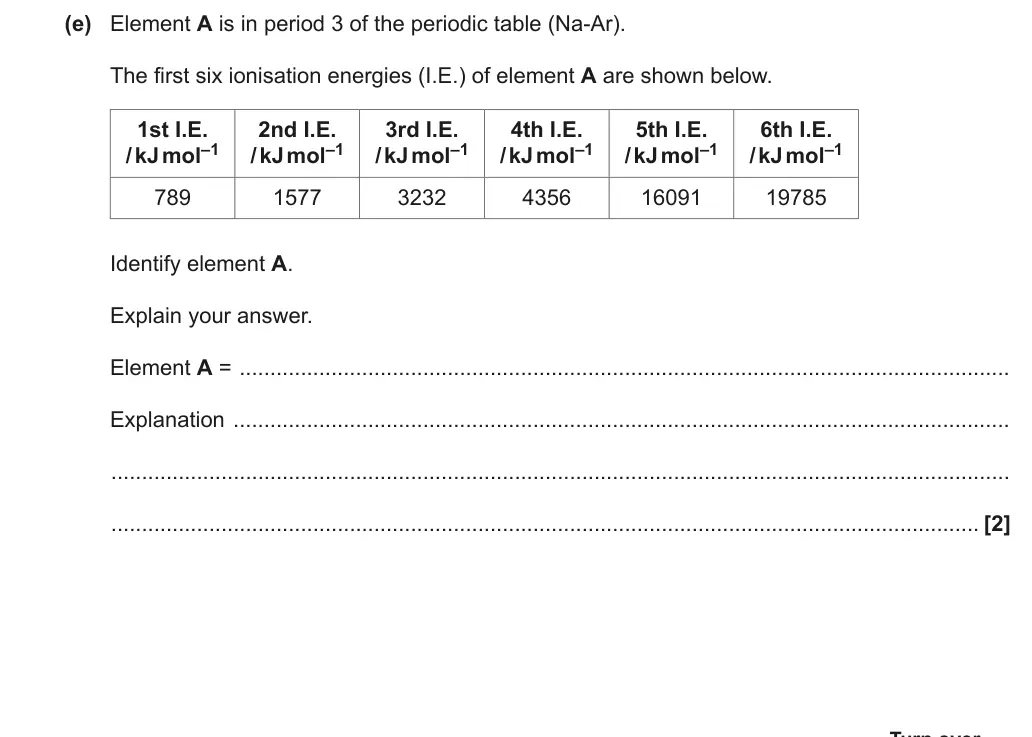
Most successful candidates looked for the large difference between successive ionisation, usually shown by annotations below the table. The commonest incorrect response was F, the element after the large difference. Other incorrect responses were random.
Skills: M3.1 Translate information between graphical, numerical and algebraic forms

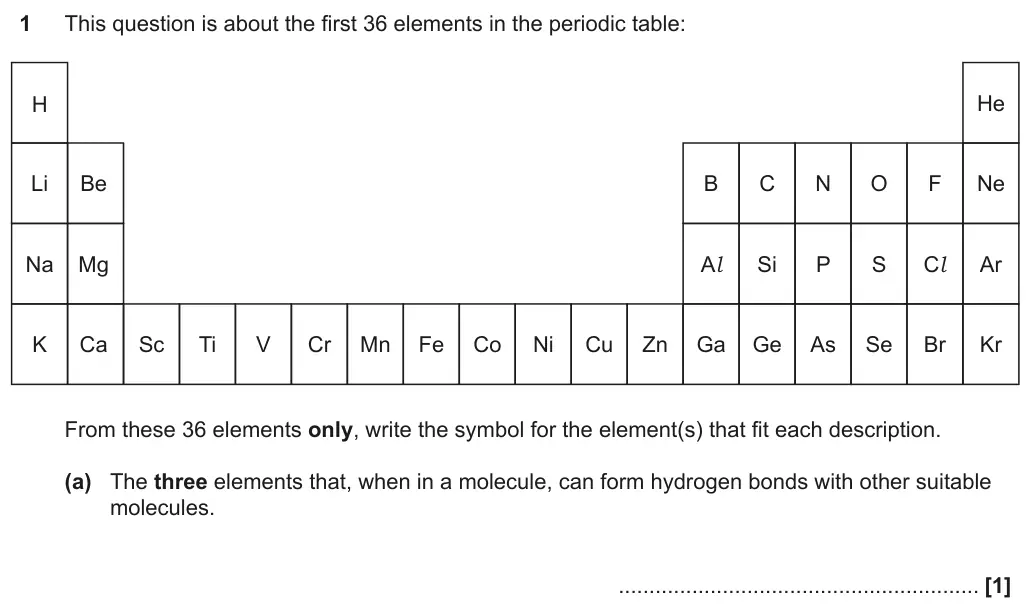
Candidates found this question harder than Questions 1 (a) and (b) with S and P being the most common correct elements seen. As and Se were also allowed. Si was a common incorrect response.

Most candidates correctly chose Si. As with earlier questions, there seemed to be little pattern with incorrect elements.
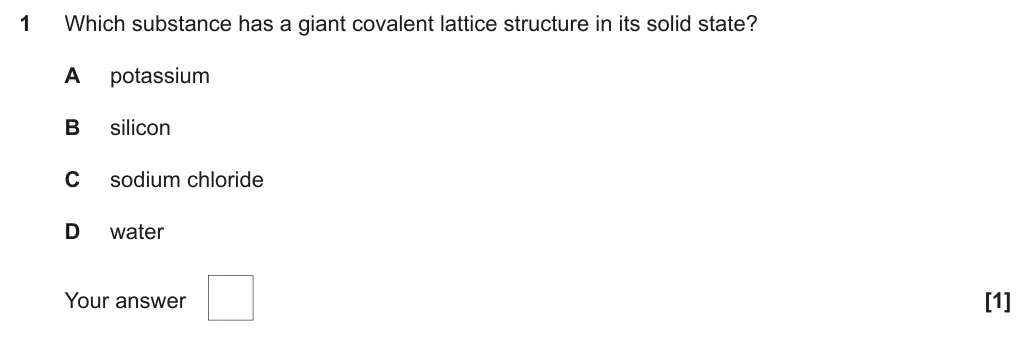
B
Most candidates selected B (silicon) as the correct response. A and C featured more than D as the incorrect choice but there seemed to be no pattern.
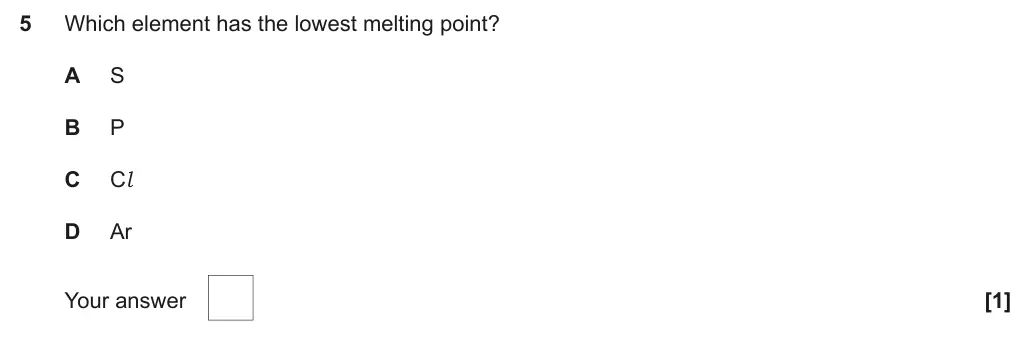
D
Candidates found this question difficult. Although argon looked to be the obvious choice, many candidates selected phosphorus (B) or chlorine (C). Candidate annotations alongside the question included atomic number and electron configurations suggesting that many find it difficult to link trends in melting point to the correct chemical concepts.
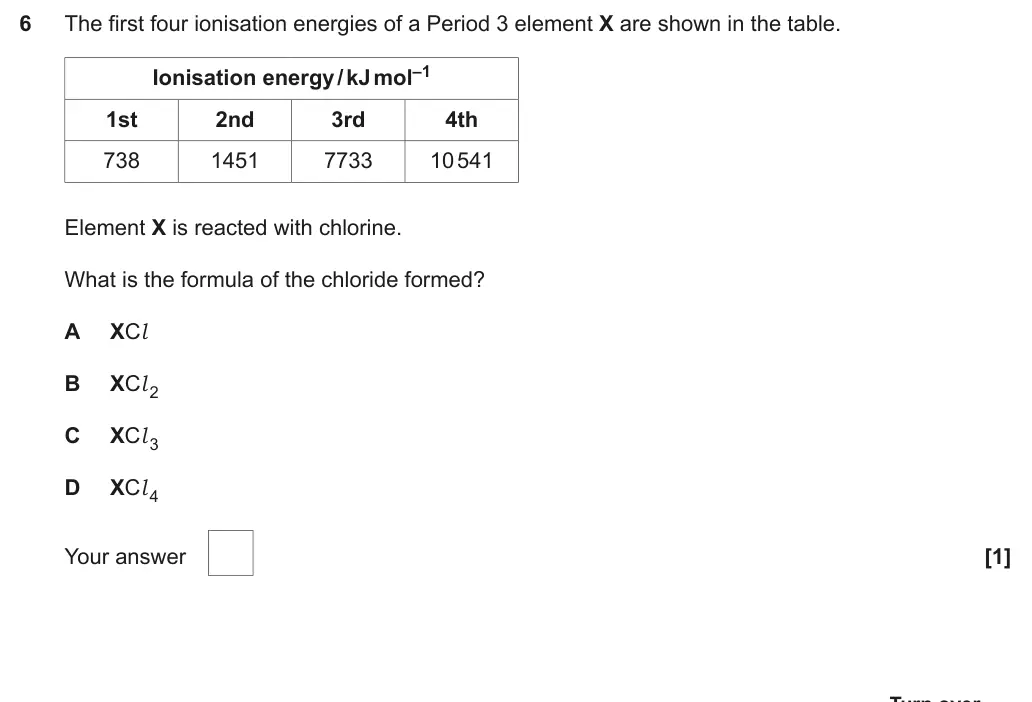
B
Although two steps were required to solve this problem, most candidates answered this question correctly. Candidate annotations showed that many identified element X as being in Group 2 and even as magnesium. The correct formula of XCl2 (B) then usually followed.
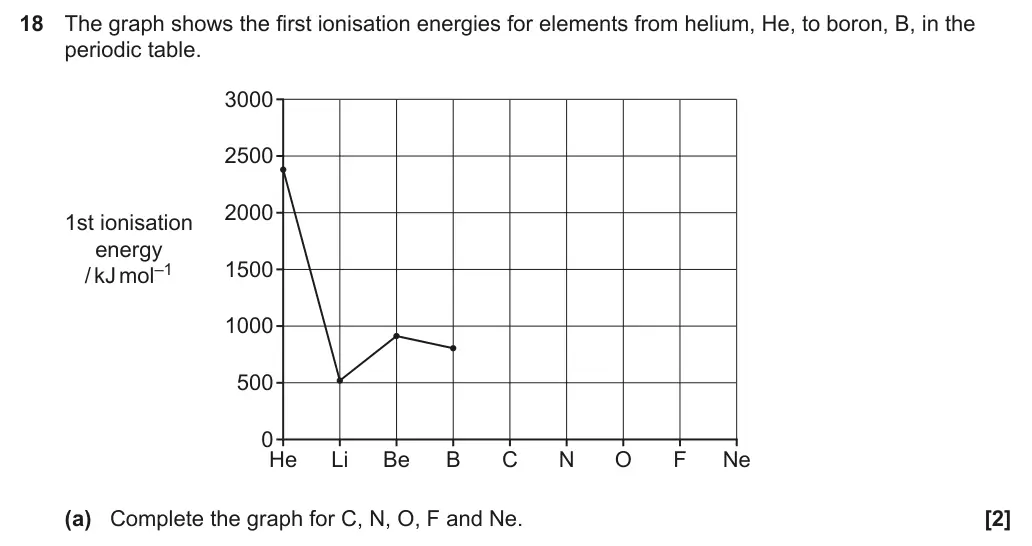
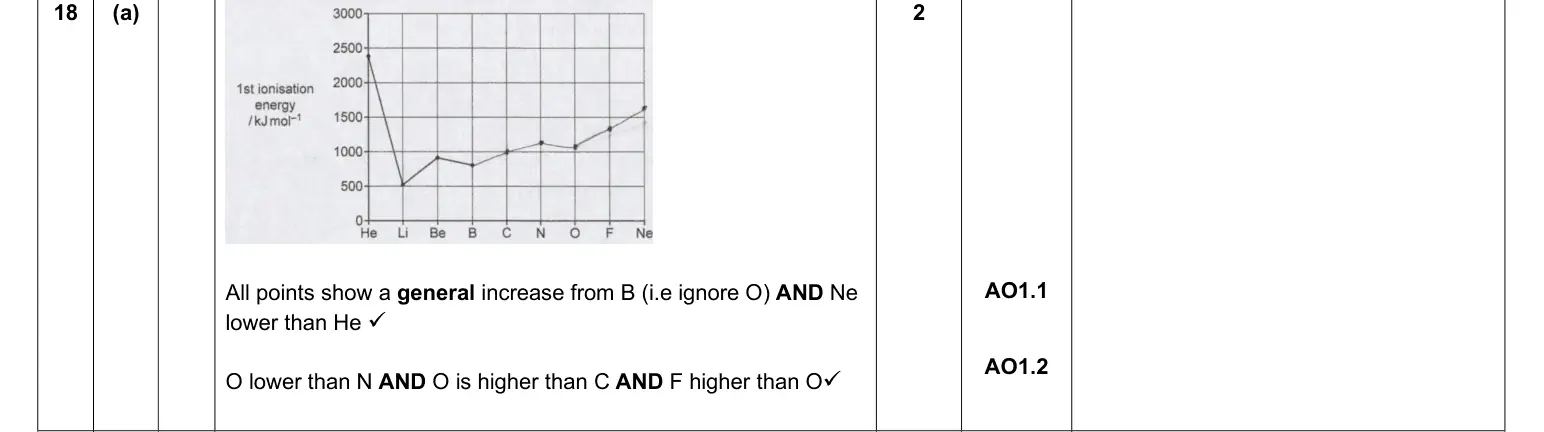
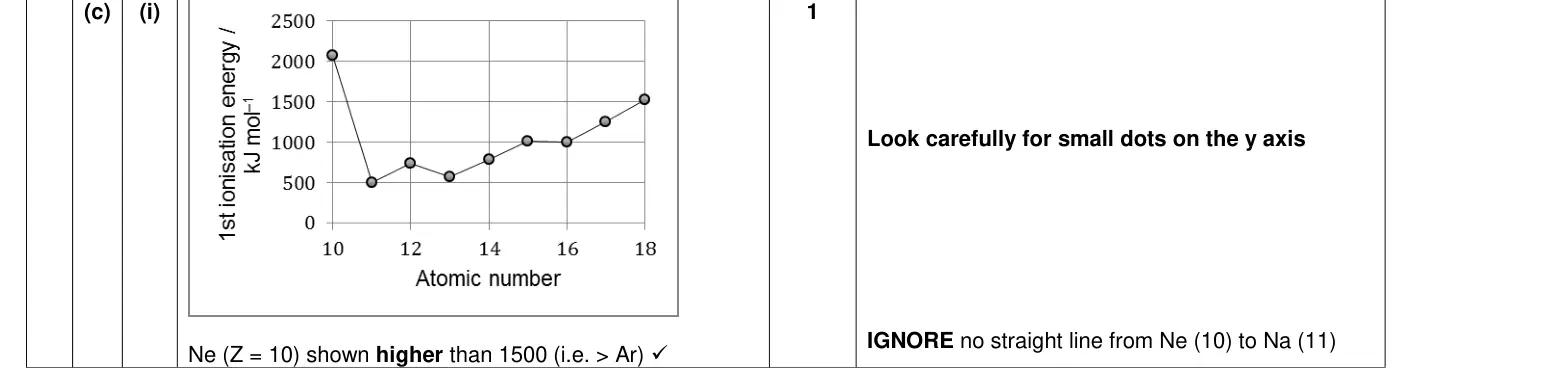
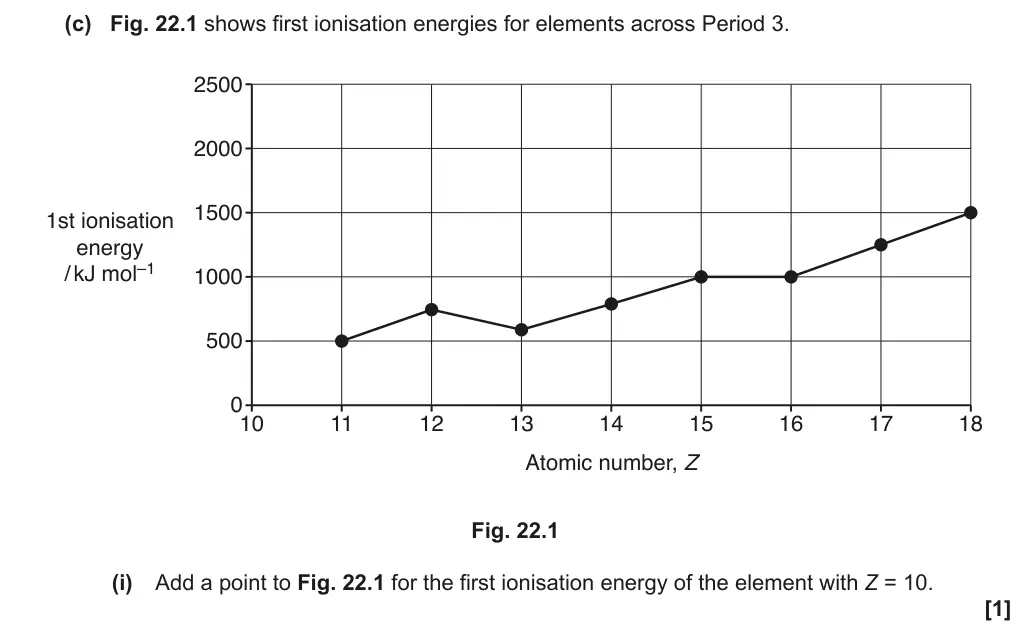
Few candidates scored full marks here, with some candidates not increasing the 1st IE across the period, and many getting the dip for the wrong element (not O) and finishing too high with Ne. Less successful candidates had clearly confused it with MP trend across the period.
Skills: M3.1 Translate information between graphical, numerical and algebraic forms
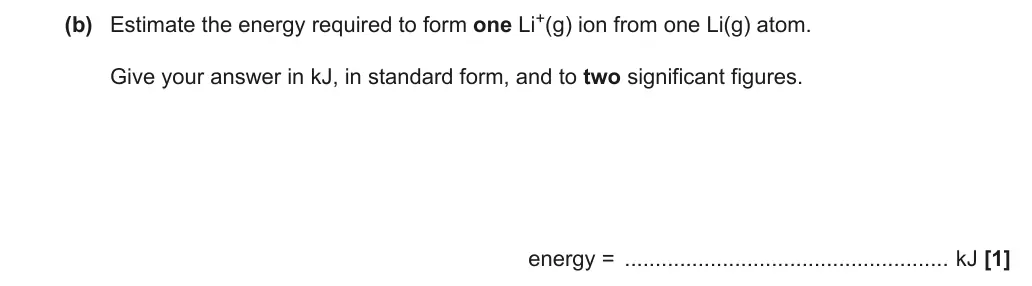
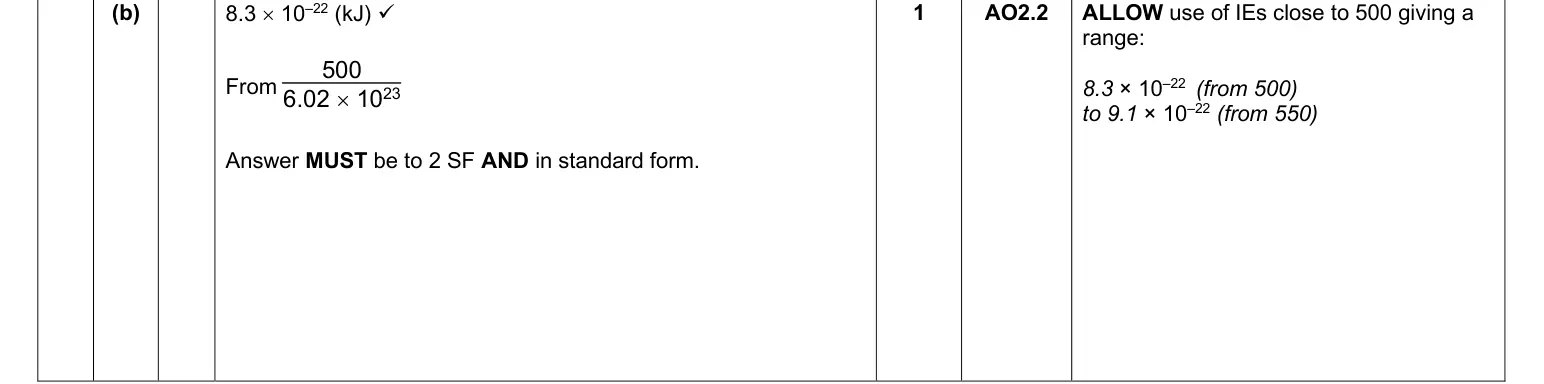
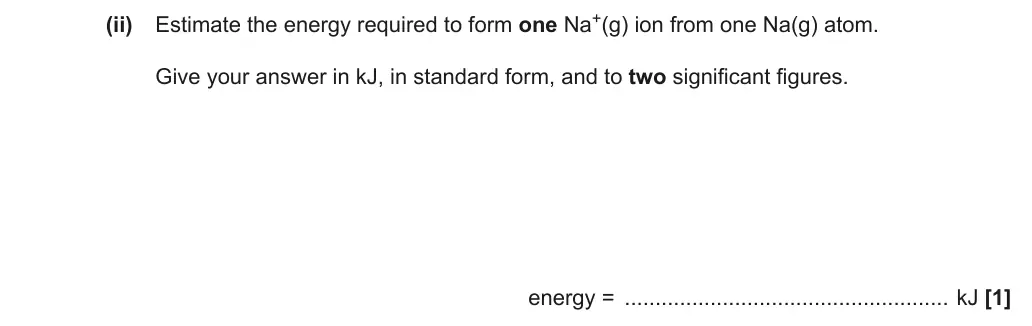
This question proved demanding for candidates, with many simply quoting a molar value taken from the graph and converting into standard form. Of those who recognised the need to use the Avogadro constant, a few tried to multiply it by the molar ionisation enthalpy. For those who worked out the correct answer, several lost marks due to the requirement of 2 significant figures.
Skills: M0.1 Recognise and use expressions in decimal and ordinary form; M0.3 Estimate results; M1.1 Use an appropriate number of significant figures
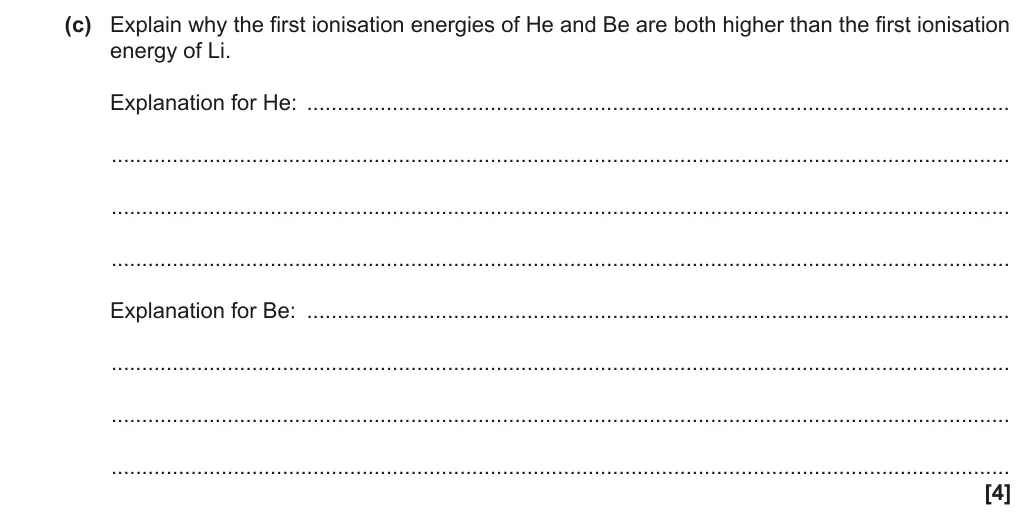
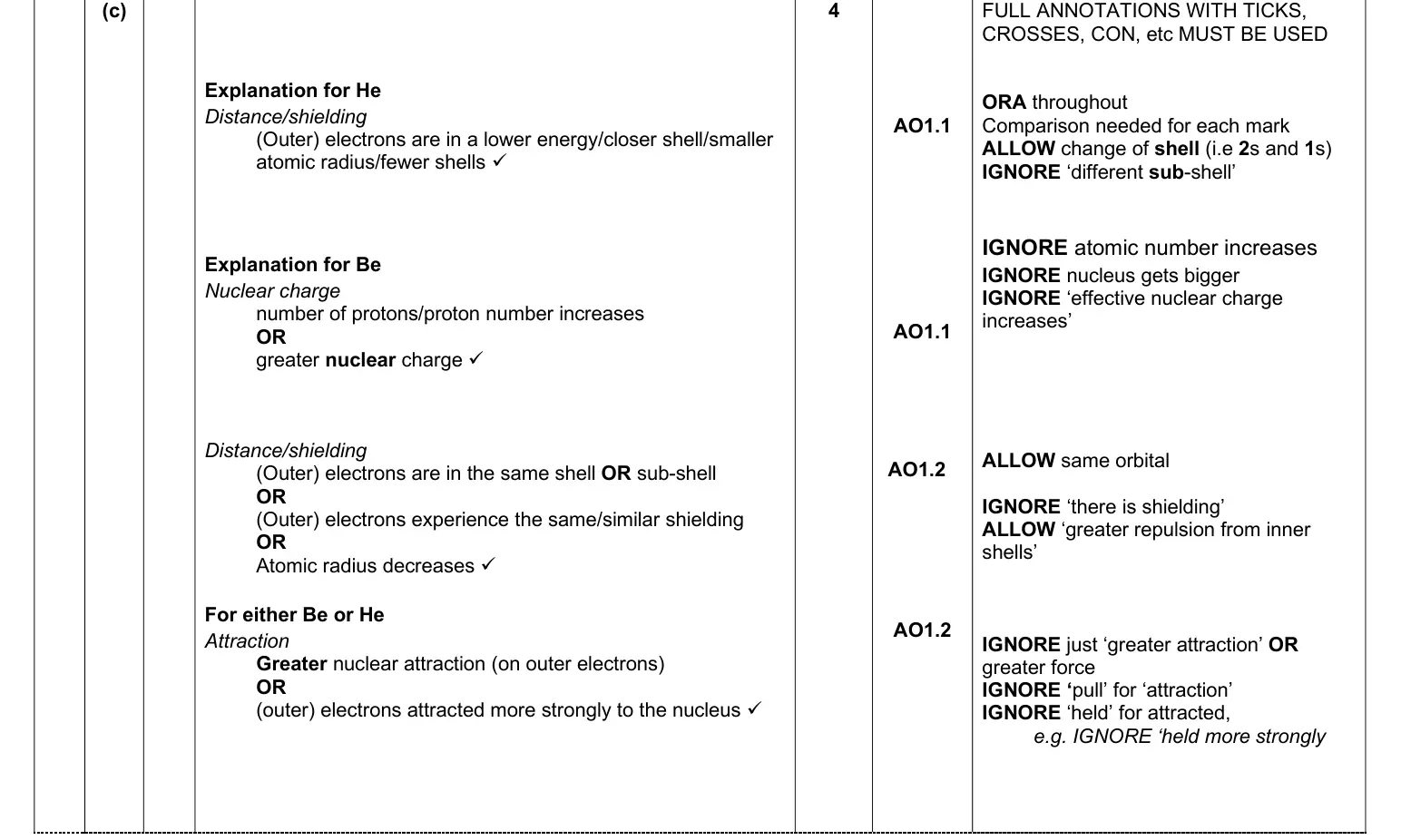
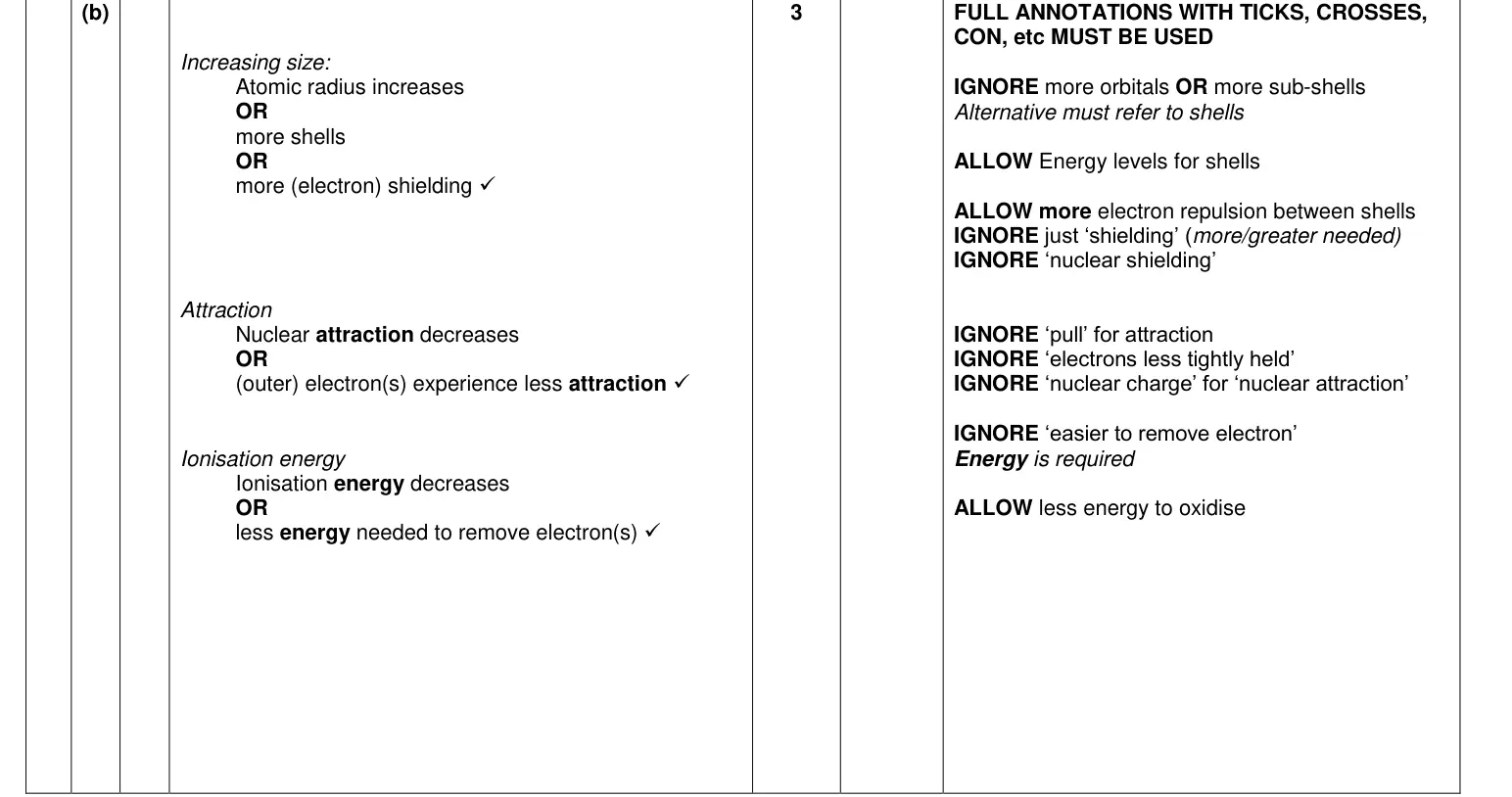
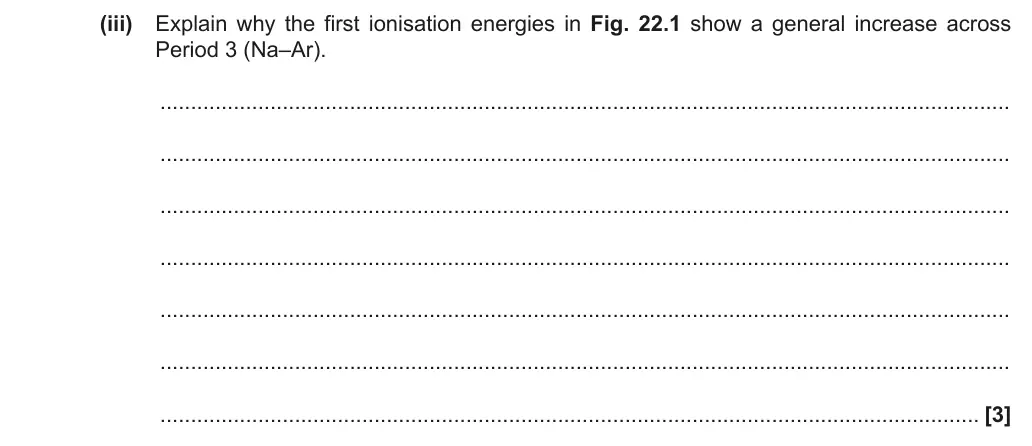
Some very wordy responses to this straightforward question were seen, with many candidates going onto the extra pages. Candidates are reminded that keeping responses concise and to the point can make their answer clearer and potentially avoid contradicting themselves in the process. There were a good number of excellent answers seen, although many candidates were distracted by arguments about the stability of full shells or subshells rather than explaining why nuclear attraction would be greater. Some students mixed up the explanation for Be/Li with the difference in ionisation energies between groups 5 and 6 (electron pair repulsion).
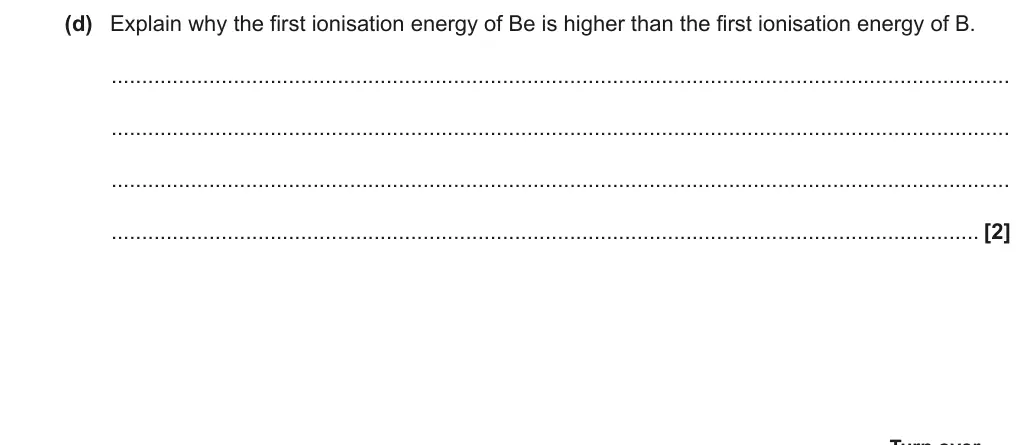
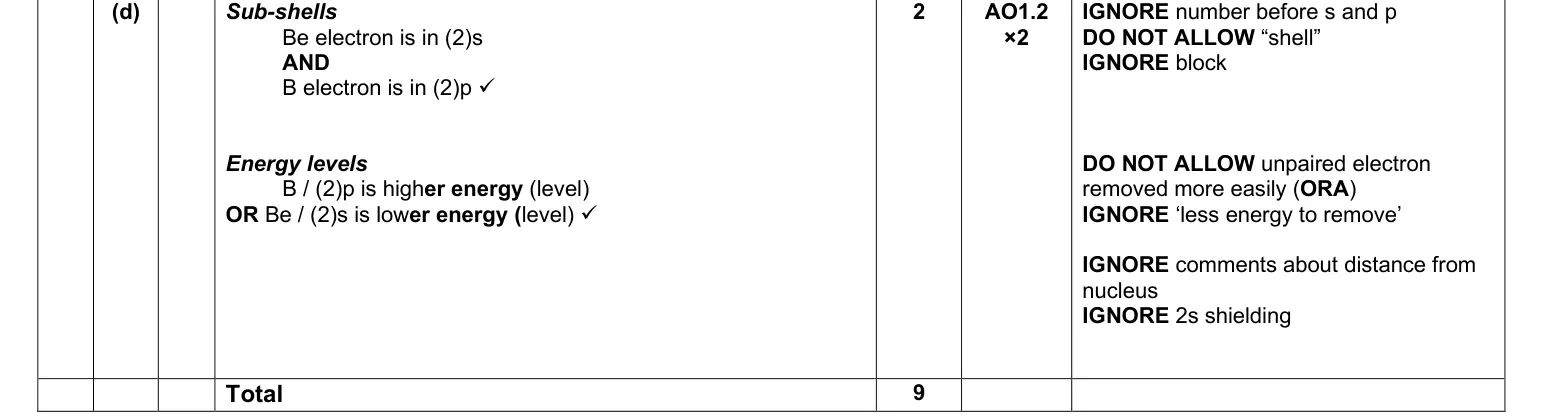
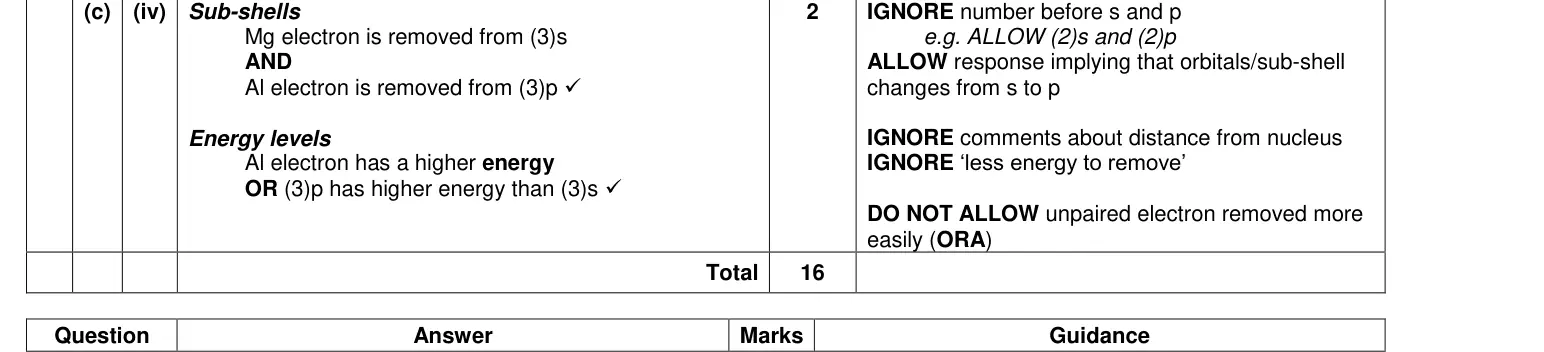
Many candidates did not achieve full marks as they did not discriminate between the three different comparisons that were being tested in Question 18 (c) and 18 (d). Few candidates did identify the electron being in the s or p but then explained the ionisation energy in terms of full subshells, electron pair repulsion and described the 2s sub-shell as closer to the nucleus rather than as lower energy.
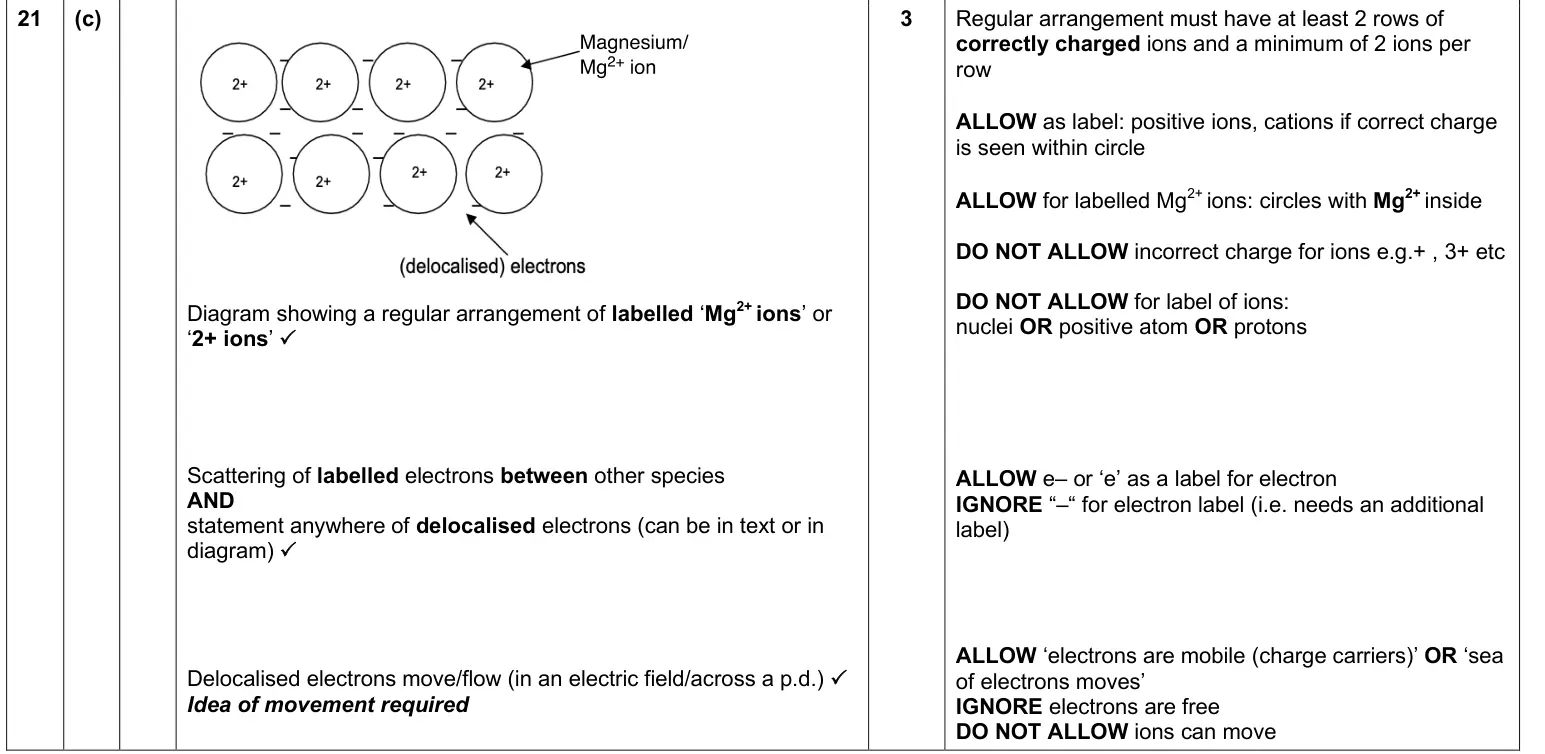
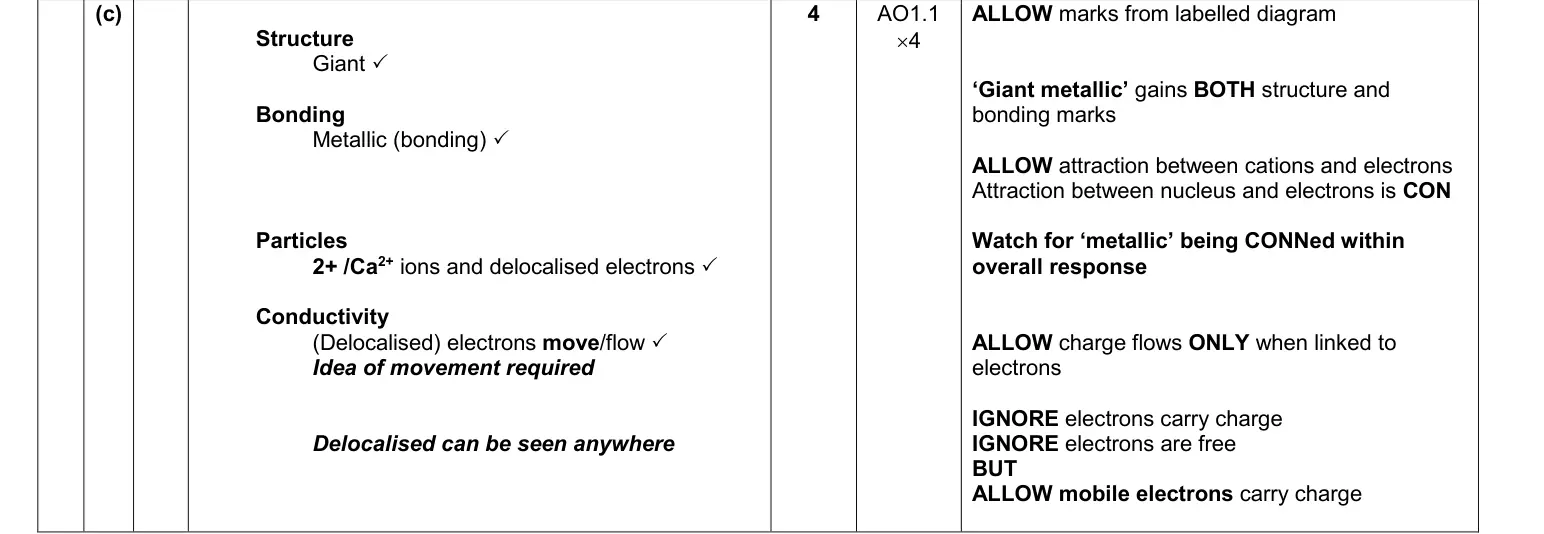
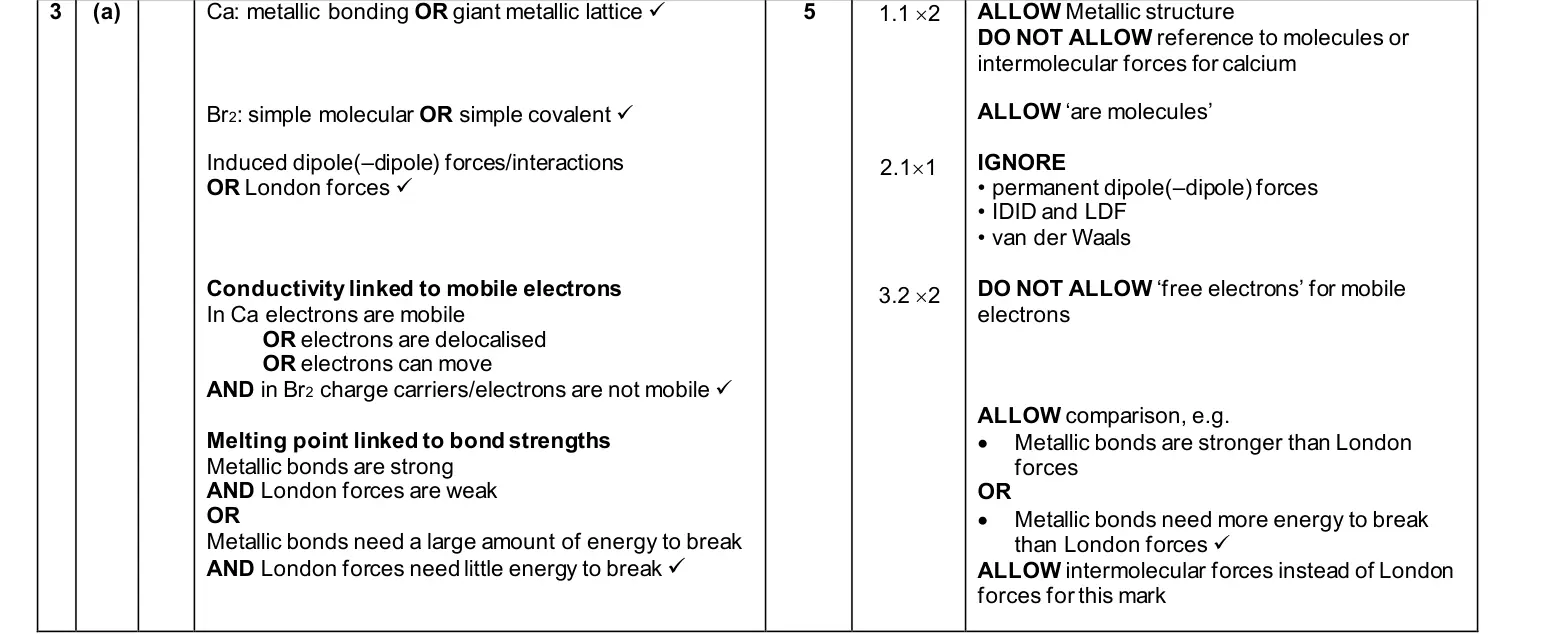
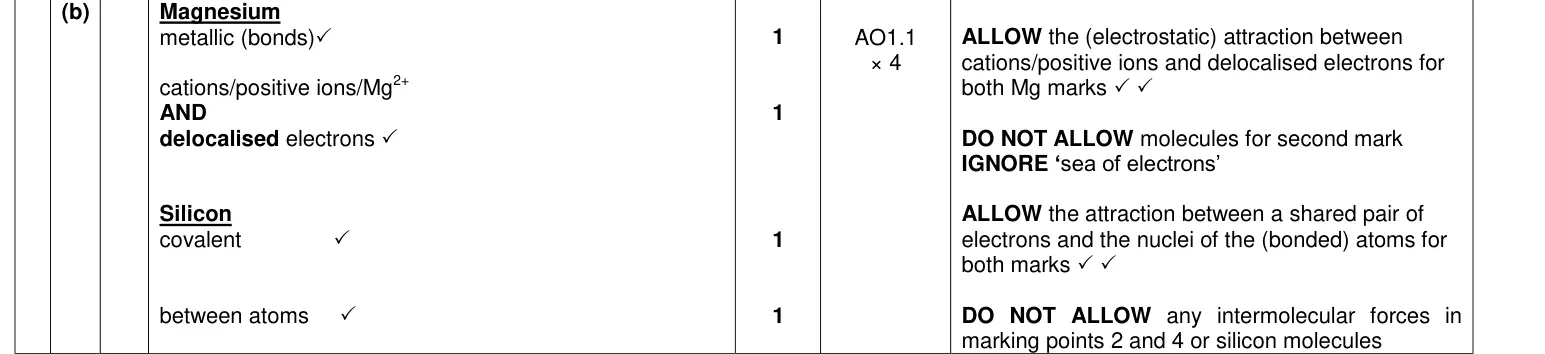
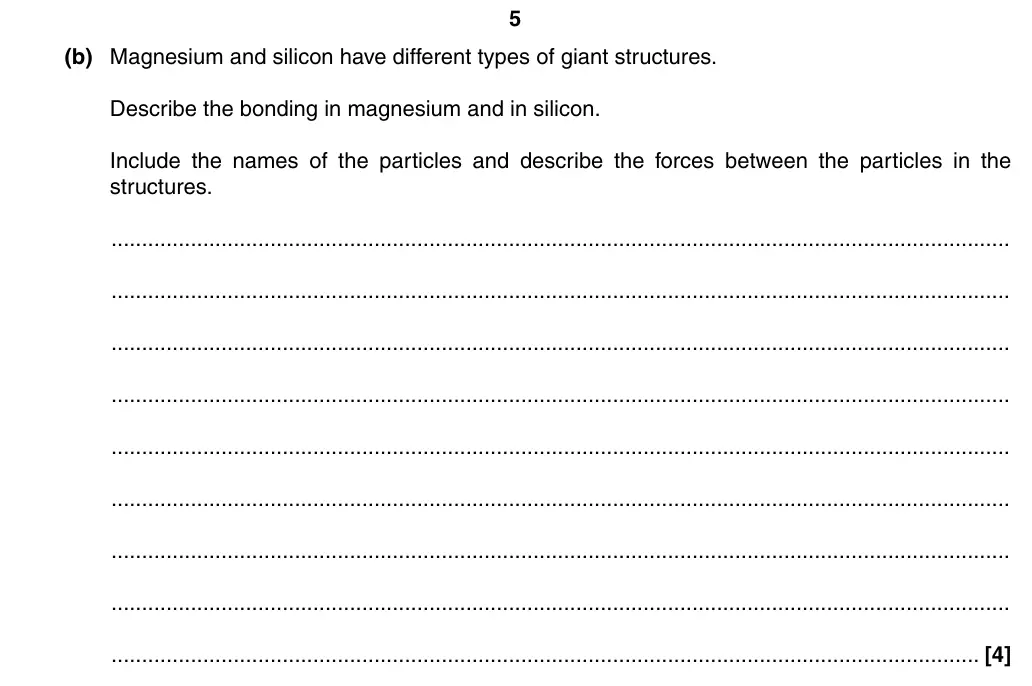
Many candidates answered this question well, with most identifying the model of metallic bonding as fixed positive ions and mobile delocalised electrons. The question did ask for bonding and structure and the giant feature of the structure was often omitted. Unfortunately, some candidates contradicted a correct metallic bonding statement by including descriptors of intermolecular forces, covalent bonding or attraction between electrons and the nucleus rather than with positive ions. Less successful responses demonstrated less understanding: some didn’t realise that Ca is a metal and conductivity explanations were often given as ions moving in the molten and not in the solid state, clear confusion with ionic bonding. Full marks were only given for showing the correct charges on the Ca2+ cations (+ was insufficient) and for explaining conductivity in terms of electron movement, rather than the common ‘the electrons carry charge’ and ‘the electrons are free’. Overall, this relatively simple question discriminated very well and demonstrated how well the candidates understood metal bonding and structure.
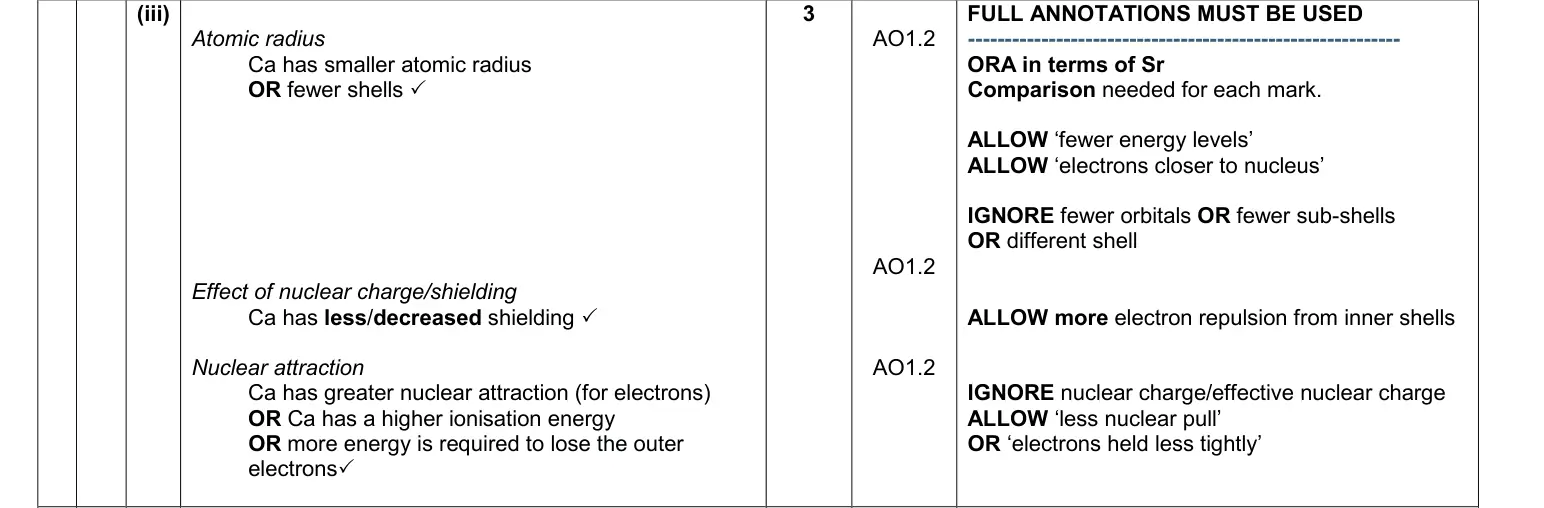
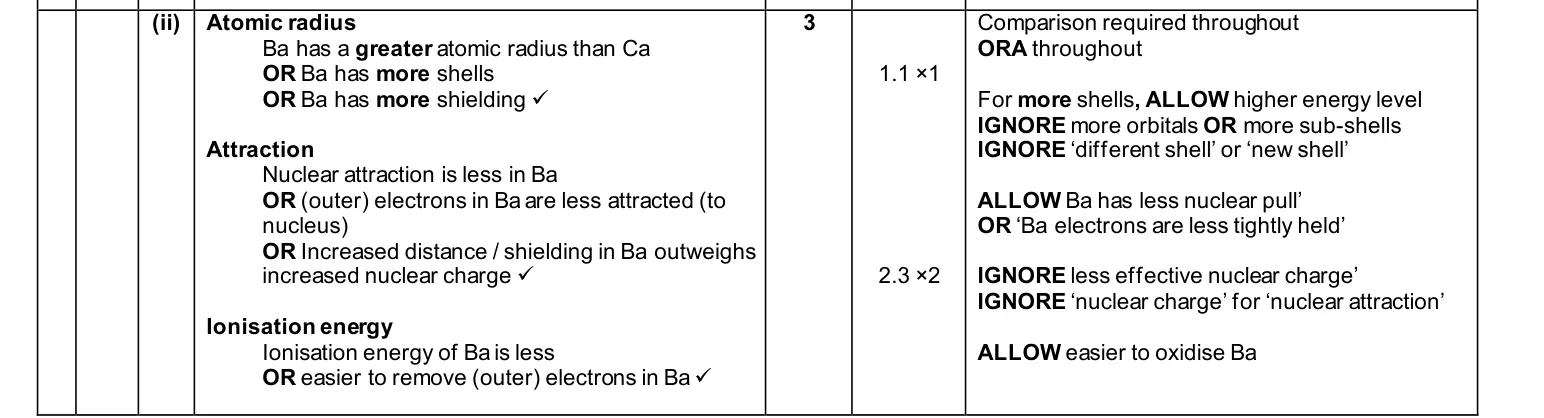
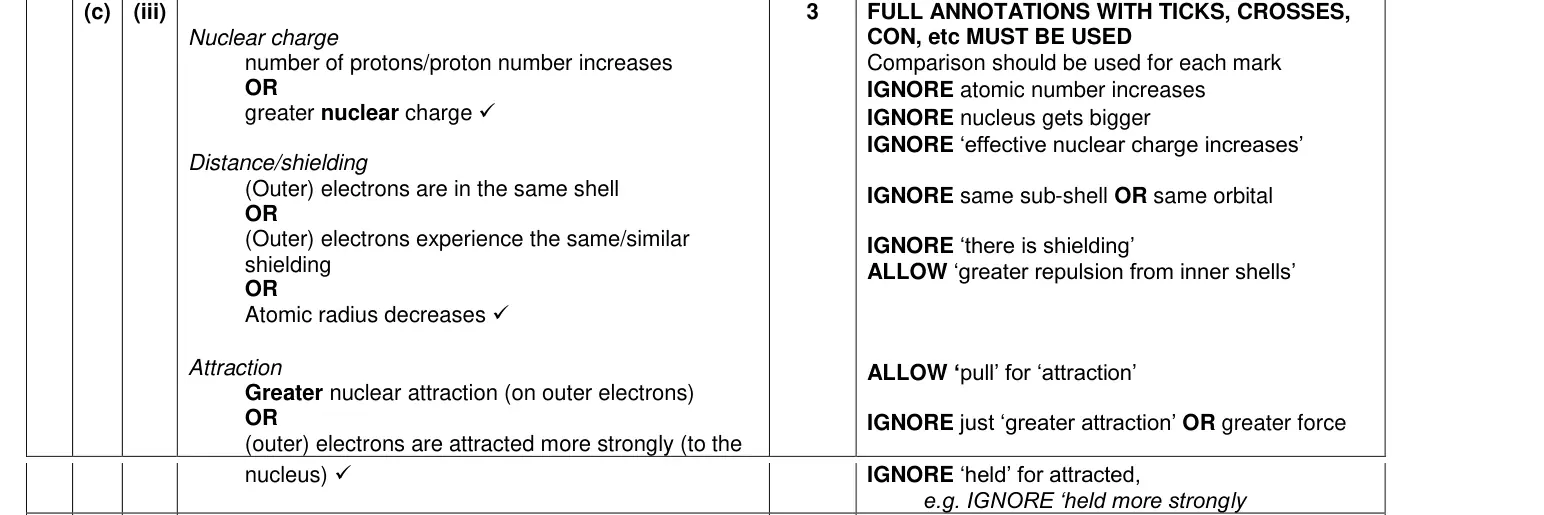
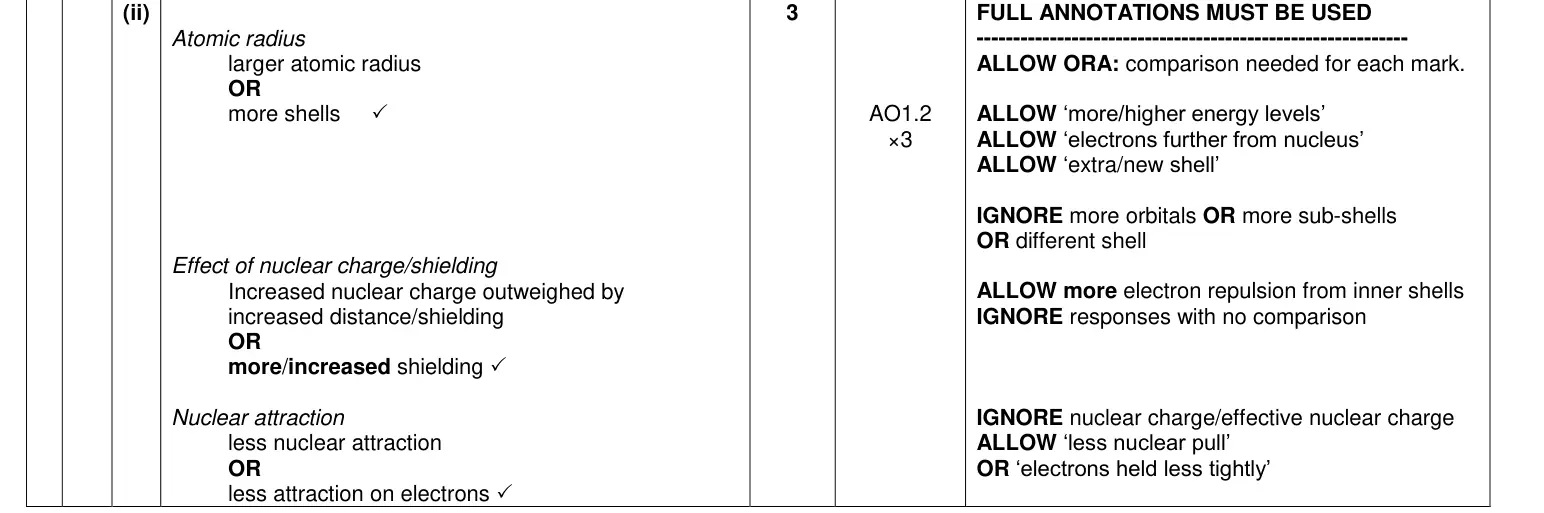
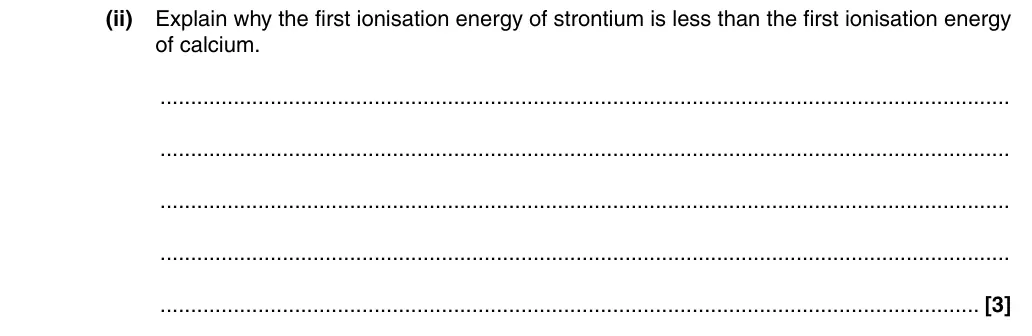
Most candidates gained some marks here although a significant proportion were unable to score all 3 marks covering atomic radius, shielding, nuclear attraction/IE. The mark most often missed was for shielding. Some candidates did not answer the question asked and gave the trend down the group so could not be given marks unless they made it clear Sr is below Ca in the group. Care must be taken to answer question asked not similar questions they have seen before. The best responses were those with direct comparative statements, e.g. “Ca has a smaller atomic radius than Sr”. It is worth noting that harder/easier to lose electrons didn’t gain marks, but was seen fairly frequently, as response needs to be in terms of energy required or linked to nuclear attraction.
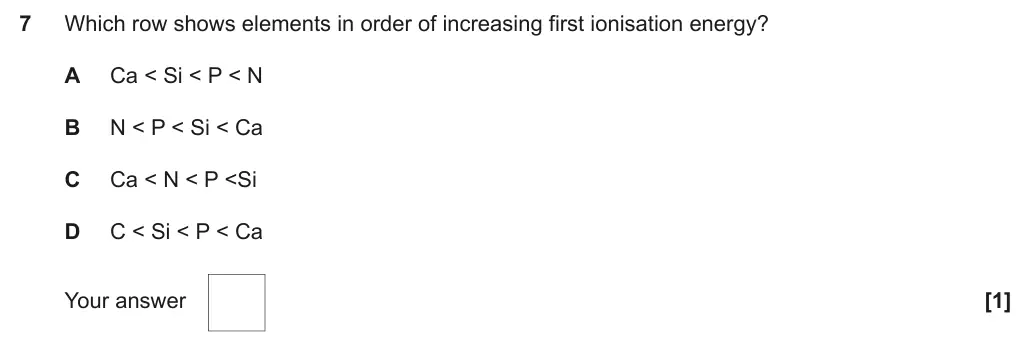
A
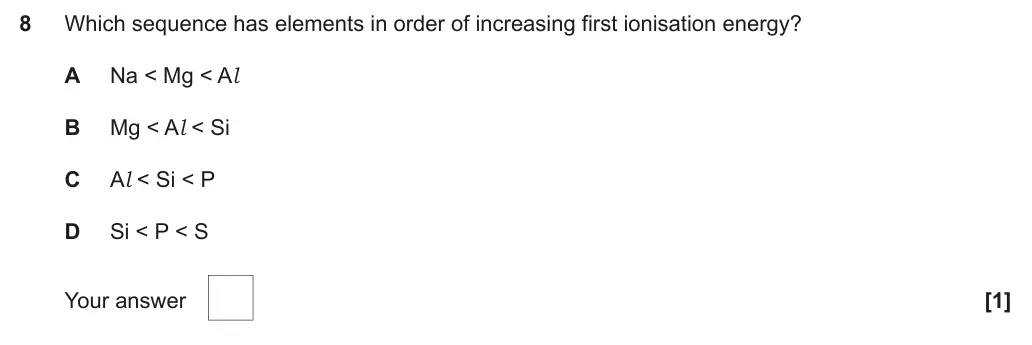
C
Skills: M3.1 Translate information between graphical, numerical and algebraic forms
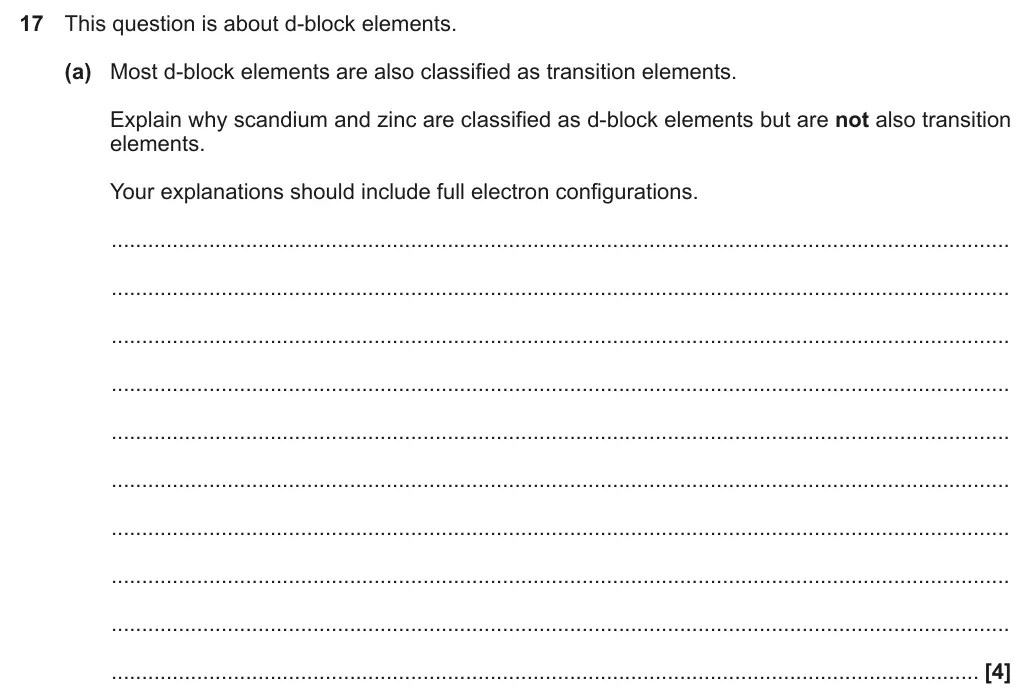
Question 17(a): Only the higher-attaining candidates scored full marks.

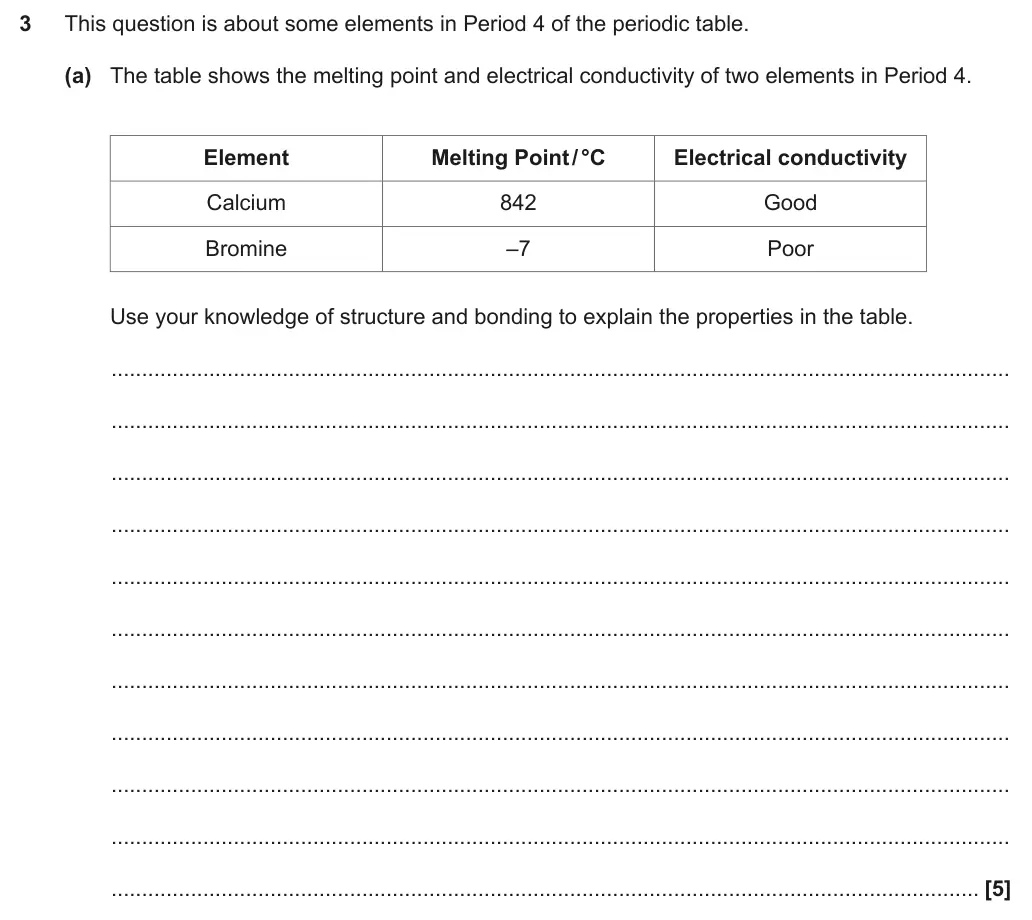
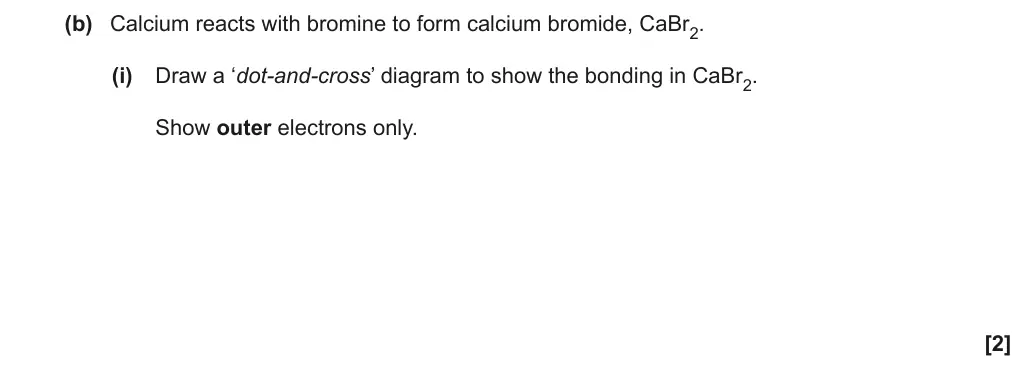
3(a) More able candidates scored well in this question, setting out their answers in a logical order. They often first discussed Ca and its bonding and structure, linking this to the physical properties and then doing the same for Br. A number of candidates discussed the chemical properties of Ca and Br, such as their ability to bond with other elements, ionisation energy and their reactivity based on their position in the periodic table. Some candidates gave a good description of metallic bonding but then went on to discuss melting point in terms of intermolecular forces. 3(b)(i) Most candidates were able to give the correct diagrams for ionic bonding, although care needs to be taken that diagrams are well drawn with both charges given. Some gave diagrams for covalent bonding. 3(b)(ii) It was important to answer the question asked. A number of responses lost marks for describing the general trend down group 2 without making reference at all to calcium and barium. Most candidates managed to score at least one mark here but a considerable proportion missed the second marking point explaining that nuclear attraction was less in Ba. 3(c)(i) This was dependent on candidates’ ability to give correct formula of aluminium hydroxide, Al(OH)3. Writing correct formulae is an important skill in chemistry, which should be practised regularly in different topics to help candidates master the skill. 3(c)(ii) Most candidates were able to recognise that water had the higher boiling point due to hydrogen bonding. However, it was evident in a number of responses that they were unclear that this is an example of an intermolecular force and doesn’t just refer to the covalent bond formed between O and H. Most avoided discussing the intermolecular forces present in H2Se even although both London forces and permanent dipole-dipole interactions were accepted as they may not have come across this specific example and had not been given electronegativity data. 3(d)(i) Very few candidates scored this mark. Although a number of candidates did give sodium bromate as the answer (with the omission of the oxidation state), many other answers were seen suggesting candidates are not aware of naming conventions for inorganic compounds. 3(d)(ii) This is the first time in a reformed chemistry AS paper that the question space has been left unstructured for oxidation number changes. The highest-attaining candidates set out their responses clearly, dealing with changes for oxidation and reduction separately, and giving the correct oxidation numbers. Some struggled to obtain an oxidation state of Br in NaBrO3 as +5, suggesting +1 instead.
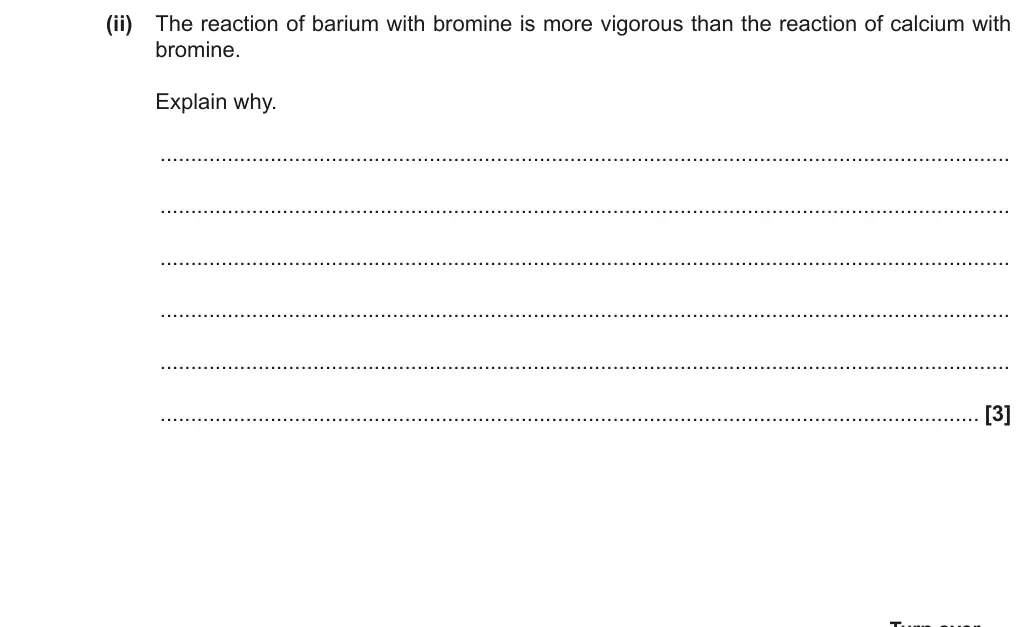
For example, Question 1(a) justified using oxidation numbers rather than numbers of electrons and Question 3(b)(ii) giving the general trend in group 2 rather than comparing Ba and Ca.
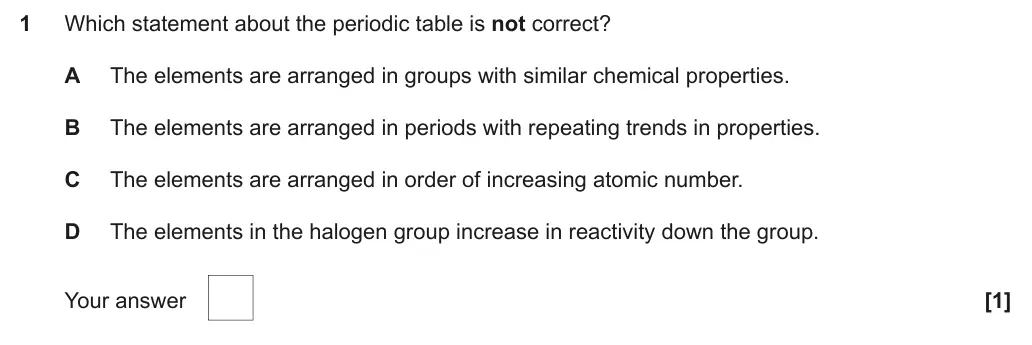
D
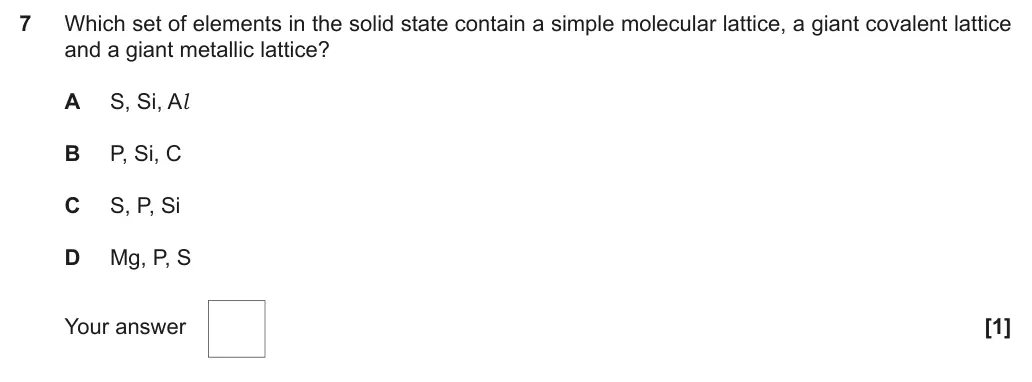
A
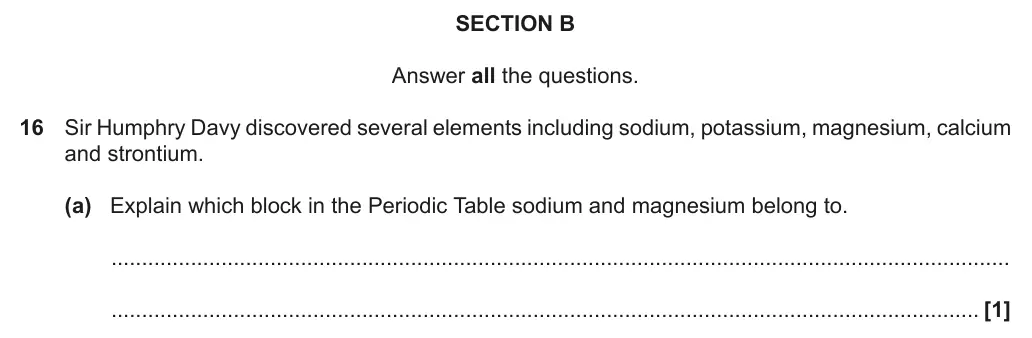
Many candidates knew the block magnesium belonged but only very few could explain this was because magnesium’s highest energy electron was in a s sub-shell or s orbital.
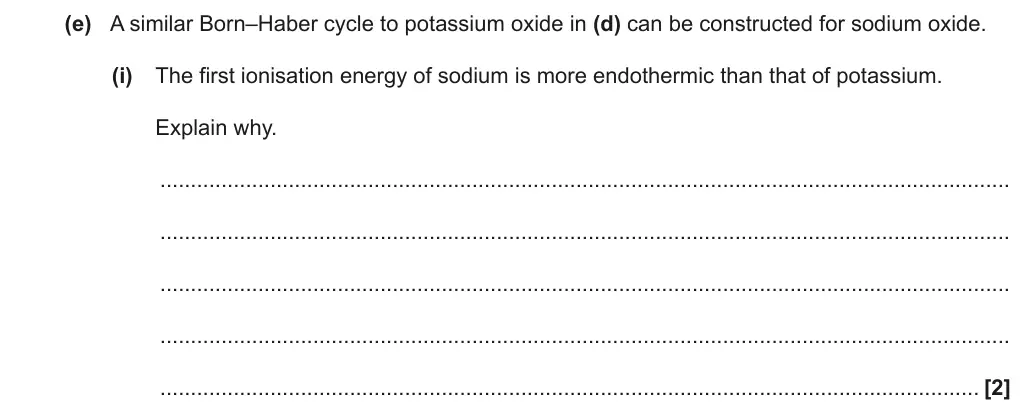
Candidates coped well with this question which was based on the AS part of the specification. Some candidates gave vague and unnecessarily long responses to this question.
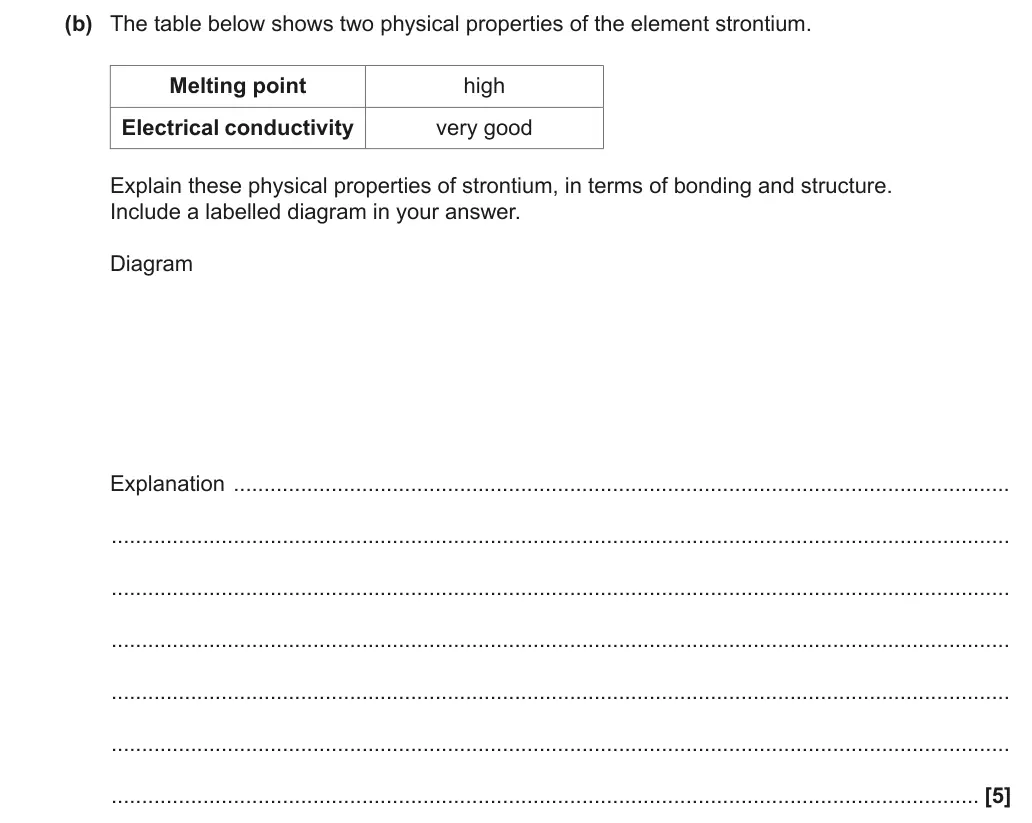
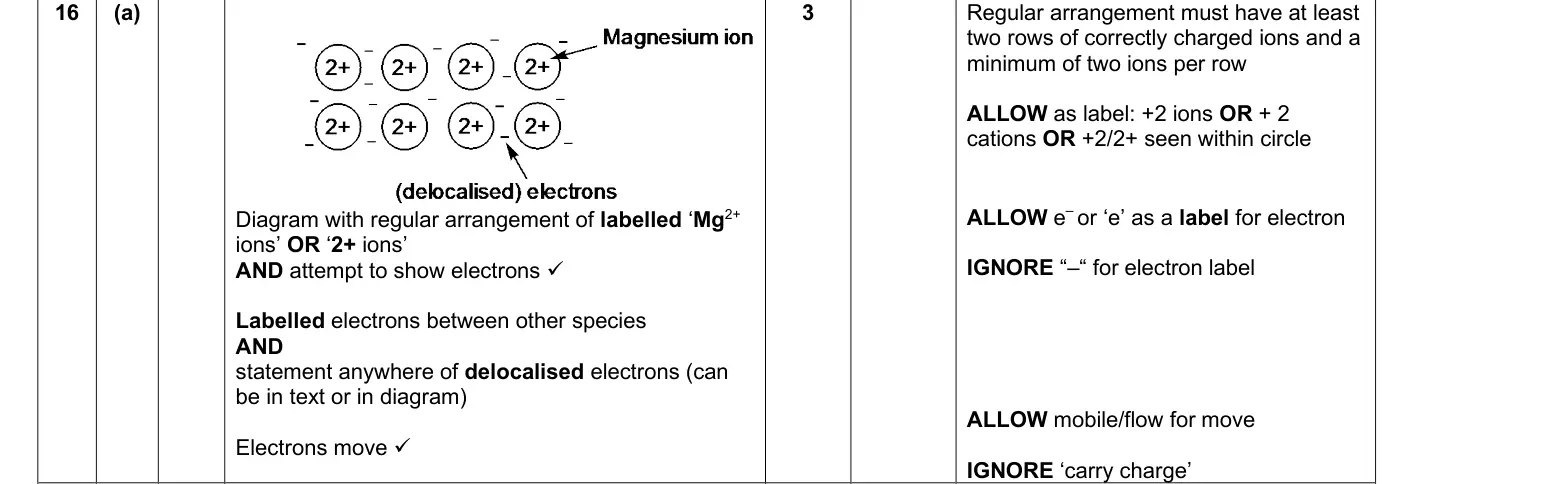
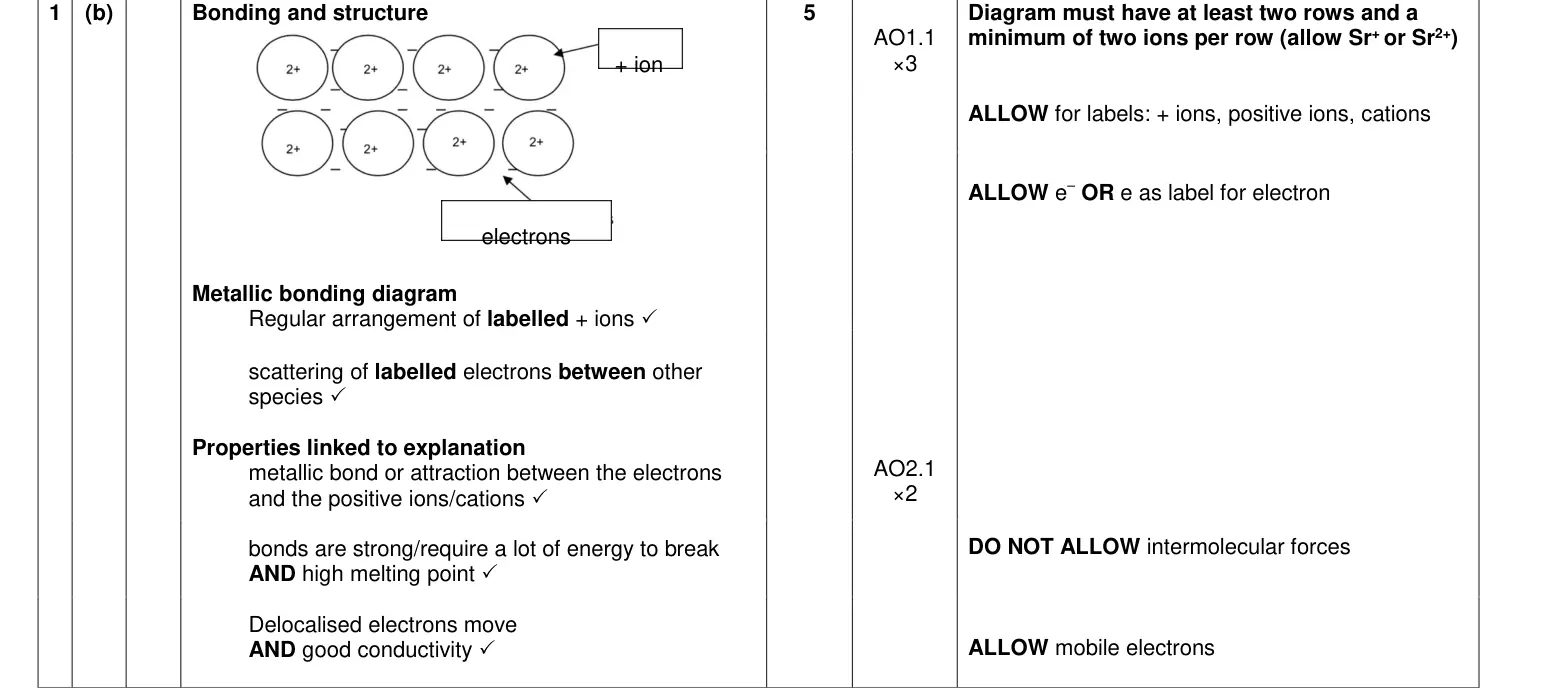
In general, the diagrams were poorly drawn or inadequately labelled. Many candidates lost marks as they did not specify the movement of electrons as the reason why metals conduct electricity. Too many candidates wrote “delocalised electrons carry the charge” or negated the metallic bonding description with “intermolecular forces” in their responses. This candidate scored 3 marks for the description but lost 2 marks as the electrons were not throughout the structure, merely drawn around the ions, and the positive ions were not labelled. This candidate scored 5 marks for the excellent description with a well drawn and labelled diagram, clearly showing the electrons throughout the structure in-between the ions.
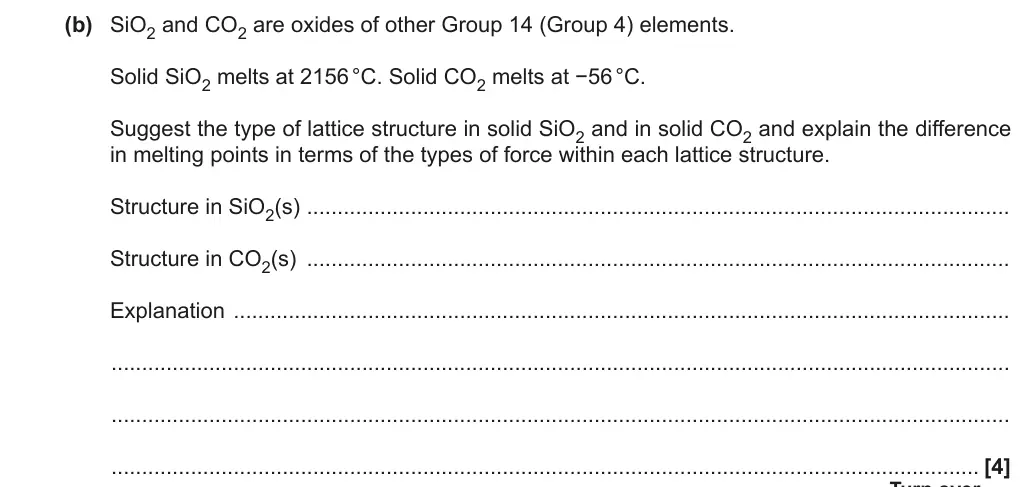
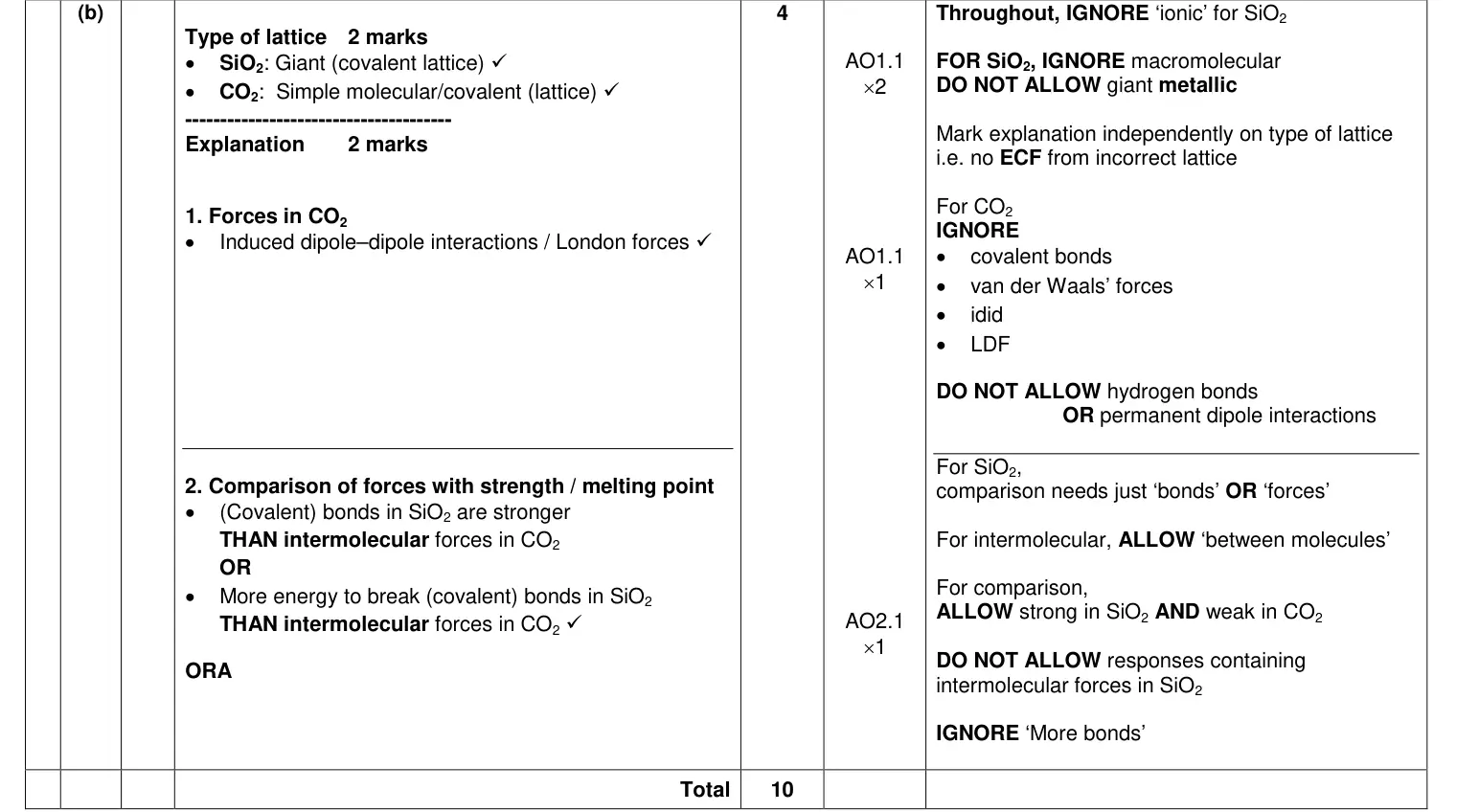
A good understanding of structure and bonding continues to be difficult for candidates, demonstrated by many explanations seen for the different melting points. Most candidates obtained two relatively easy marks for identifying the giant and simple molecular/covalent structures of SiO2 and CO2 respectively. The explanation proved to be much more difficult as candidates showed some misconceptions. Many identified that CO2 had London forces but their action between molecules was often omitted. Many candidates realised that the forces broken on melting are much stronger in SiO2 than in CO2, but then went on to erroneously compare the strength of London forces or intermolecular forces in both SiO2 and CO2.
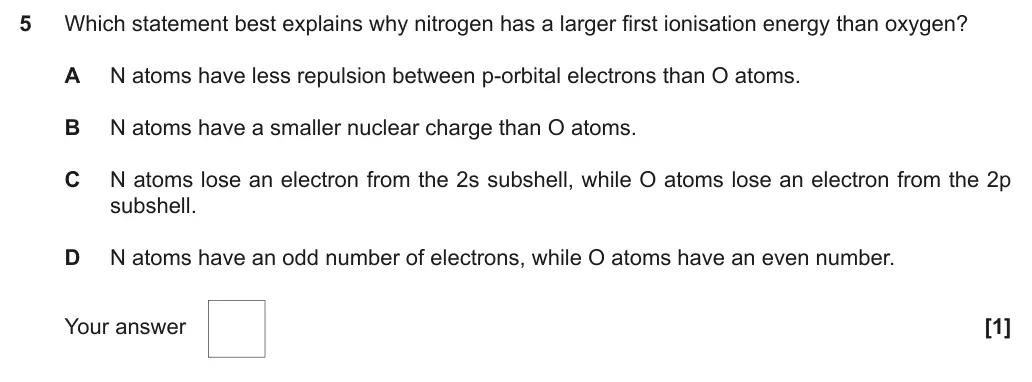
A
The majority of candidates knew the key factor affecting the relative ionisation energies of nitrogen and oxygen.
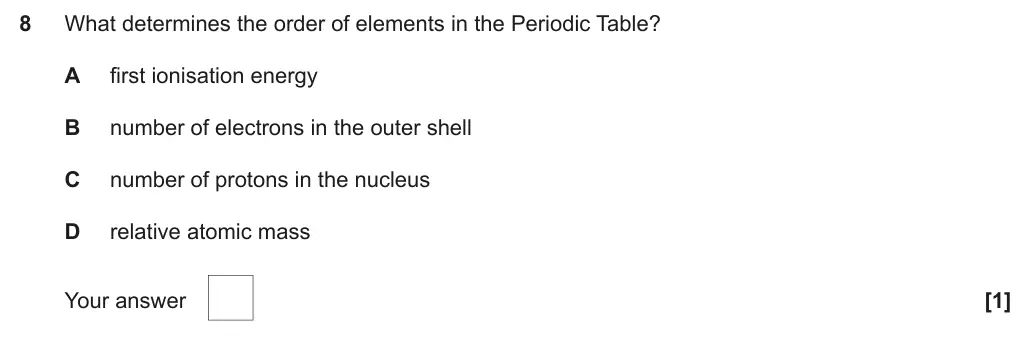
C
Most candidates correctly selected C (number of protons) but a sizeable number selected D (relative atomic mass) or B (number of electrons) instead.
A
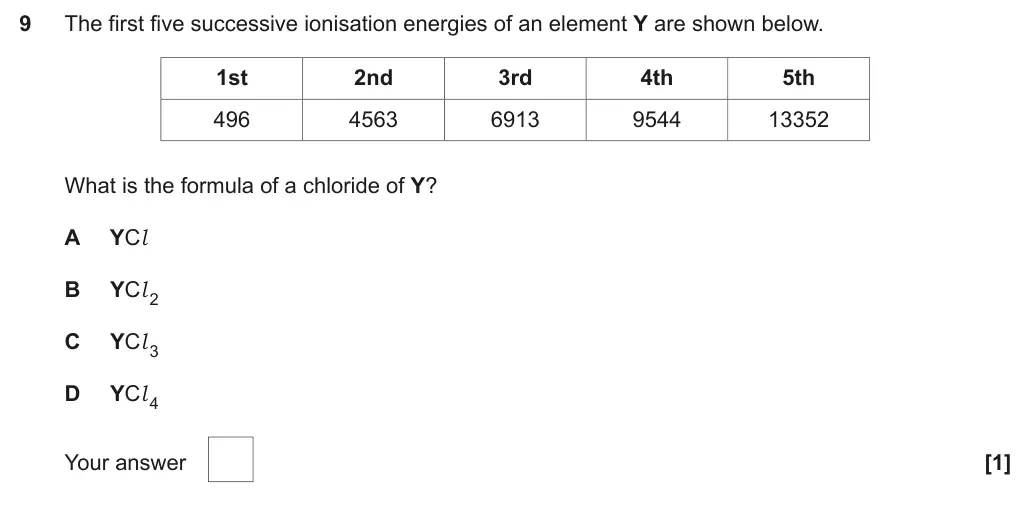
Success depended on identifying the group of Y and working out the formula of the chloride. Most candidates recognised the large increase between 1st and 2nd ionisation energies, leading to the conclusion that Y is in Group 1 and the correct formula is YCl (A).
D
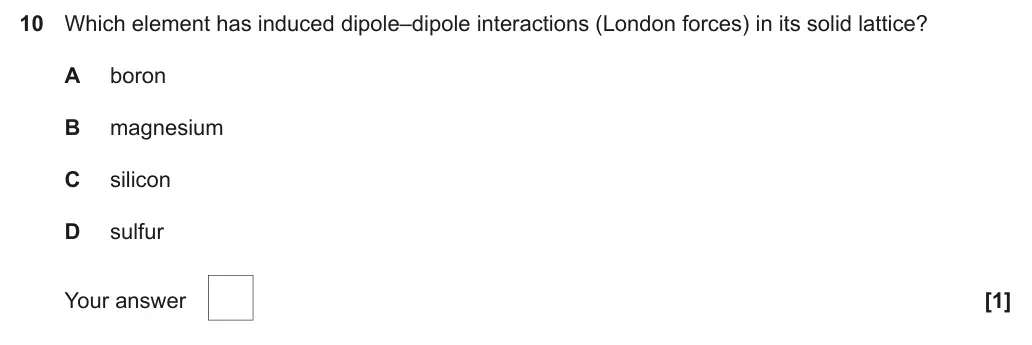
As is often the case, candidates find structure and bonding difficult. Many candidates selected silicon (C) instead of the correct response of sulfur (D).
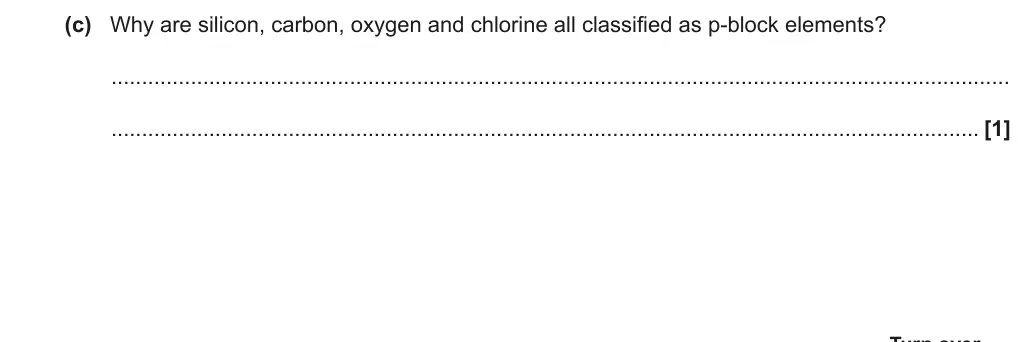
Candidates were expected to identify that a p-block element has its highest energy electron(s), or outer electrons, in a p orbital or sub-shell. Lower ability candidates often omitted ‘electrons’ in their responses and just repeated the information in the question.
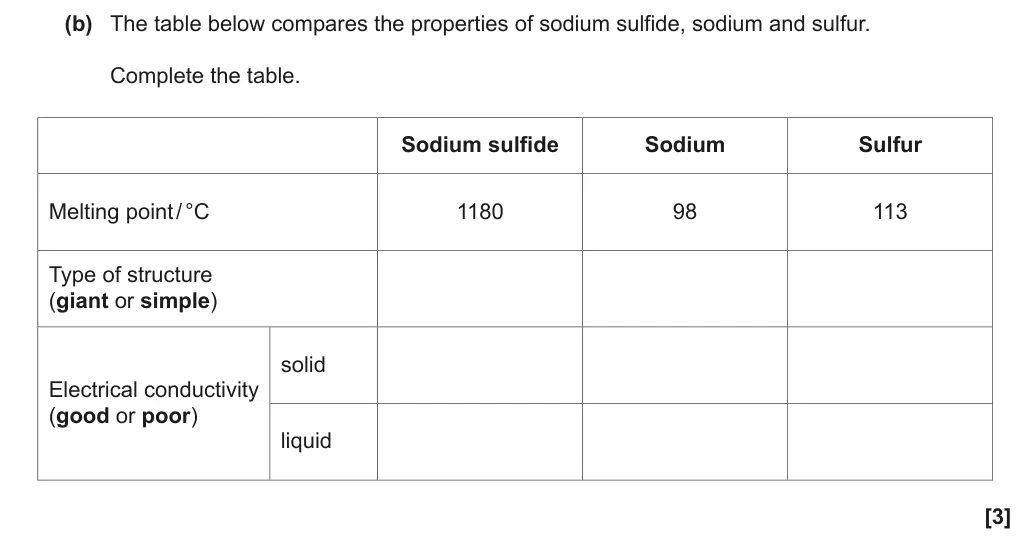
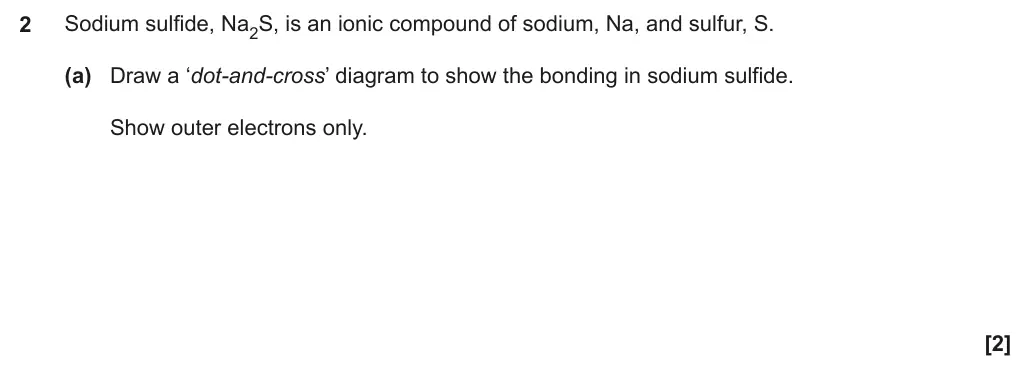
The majority of candidates obtained 2 or 3 marks on this question. Many candidates seemed unaware that sodium was a metal.
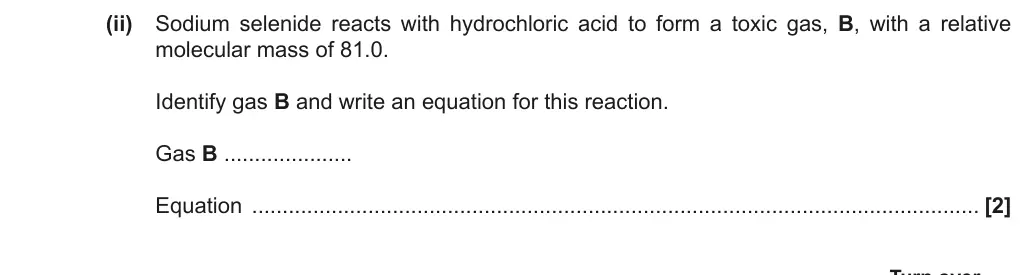
The majority of candidates obtained 1 or 2 marks on this question. The most common errors seen were identifying the gas as H2S or incorrect balancing.

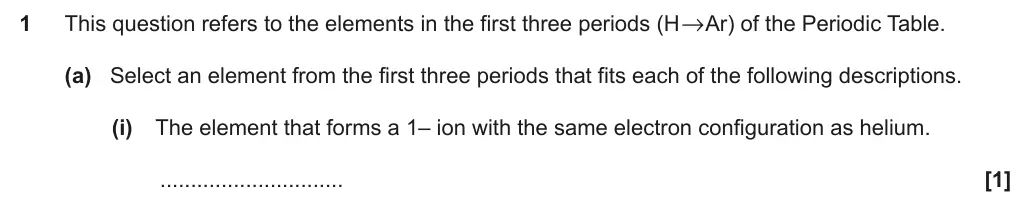
This part required candidates to recall their knowledge of trends in first ionisation energy. Candidates found this part harder than 1(a)(i) with only the higher ability candidates choosing the correct response of ‘helium’. Many candidates instead chose another noble gas, with neon and argon commonly seen. Other common incorrect responses were hydrogen and fluorine.
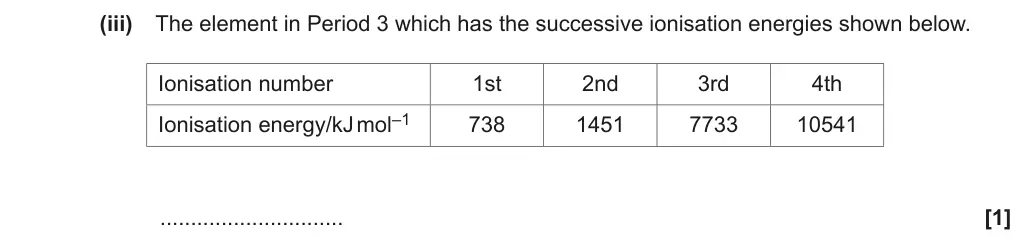
Most candidates did correctly select magnesium, but many other elements were seen, especially aluminium, silicon, beryllium and calcium. To identify the element’s group, candidates needed to analyse the data to find the large increase in ionisation energy corresponding to a change in shell. From the responses, some candidates did not make use of ‘Period 3’ in the stem.
Skills: M3.1 Translate information between graphical, numerical and algebraic forms
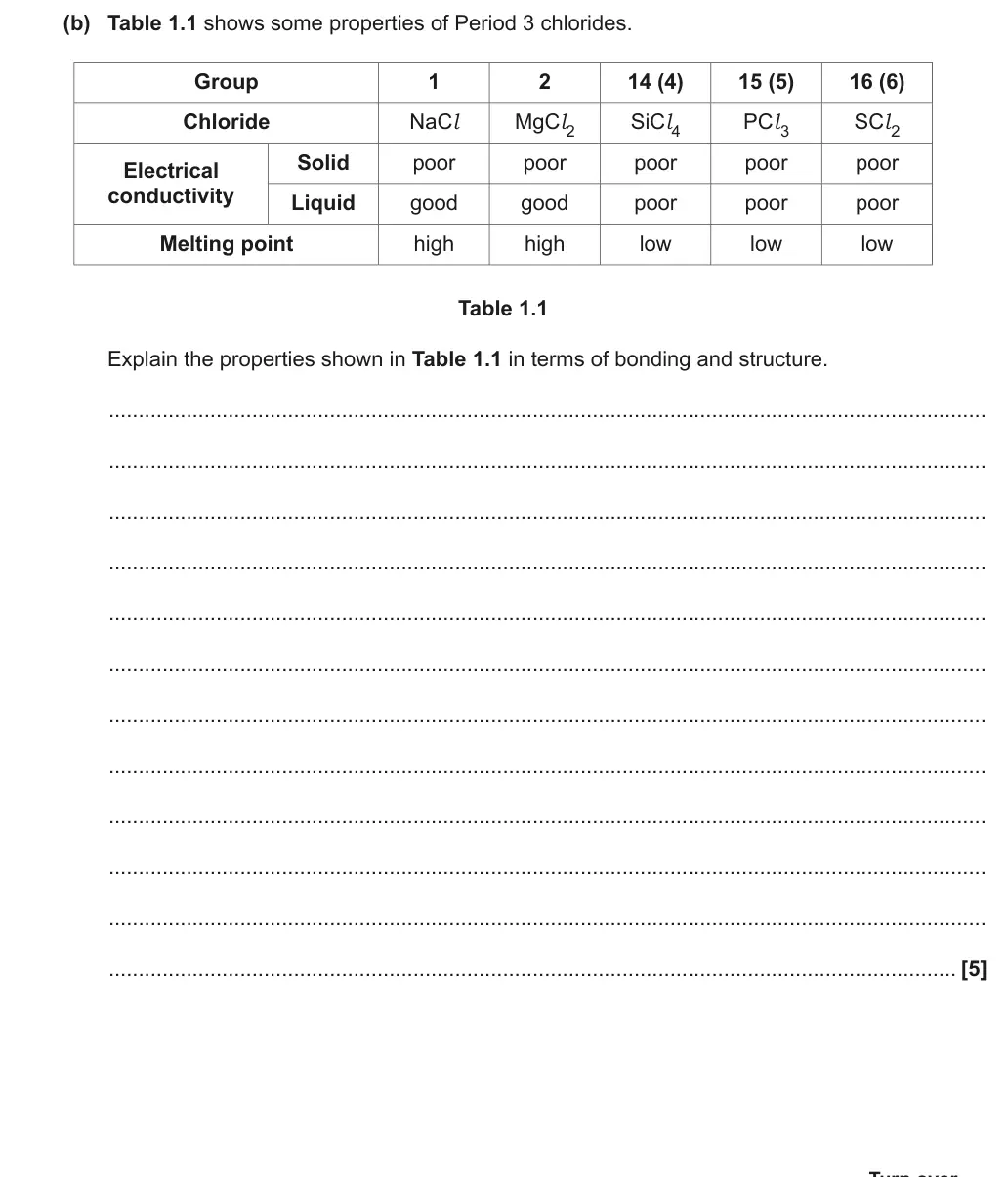
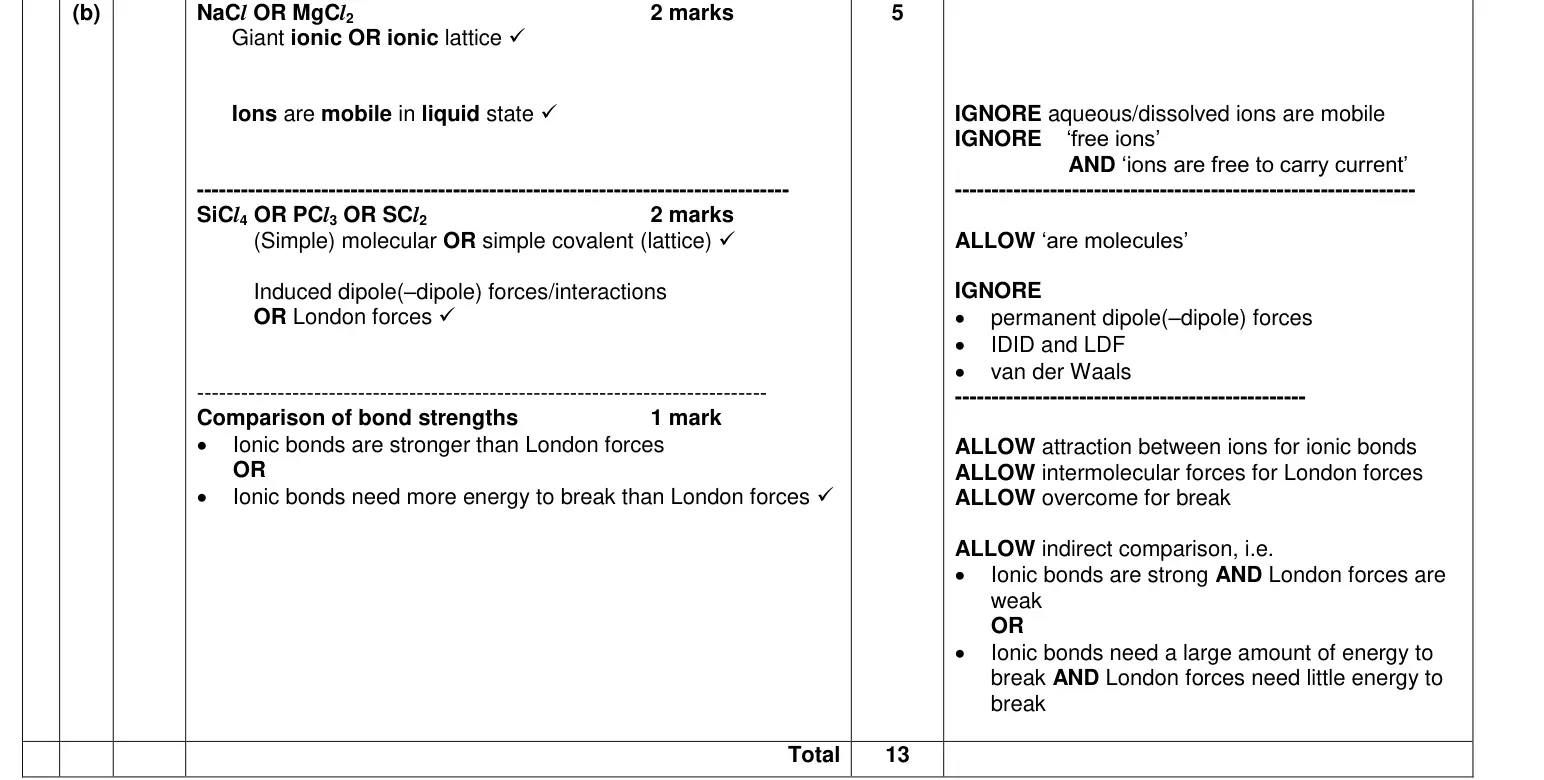
This part required candidates to determine the structure and bonding of unfamiliar compounds from their melting points and electrical conductivities. This part discriminated very well. Candidates with a good knowledge and understanding of structure and bonding, often produced concise, clear responses which were credited with a high mark, as shown in the Poor understanding often showed up with contradictions and it was common to see ionic lattices with strong intermolecular forces and able to release mobile electrons (rather than mobile ions) in the liquid state. Weaker candidates often wrote extensive answers, although the extra length did not lead to more marks as correct responses were then often contradicted. Exemplar 2 shows part of a very muddled and rambling response in which NaCl is described as having both ionic bonding and London forces. The best responses identified NaCl and MgCl2 as having giant ionic lattices with strong forces between their ions. This structure was then compared with the simple molecular structures of SiCl4, PCl3 and SCl2 with weak London forces between their molecules. A common error was for SiCl4 to have a giant covalent lattice, presumably linking with the structure of elemental silicon and not using the low boiling point in the supplied data.
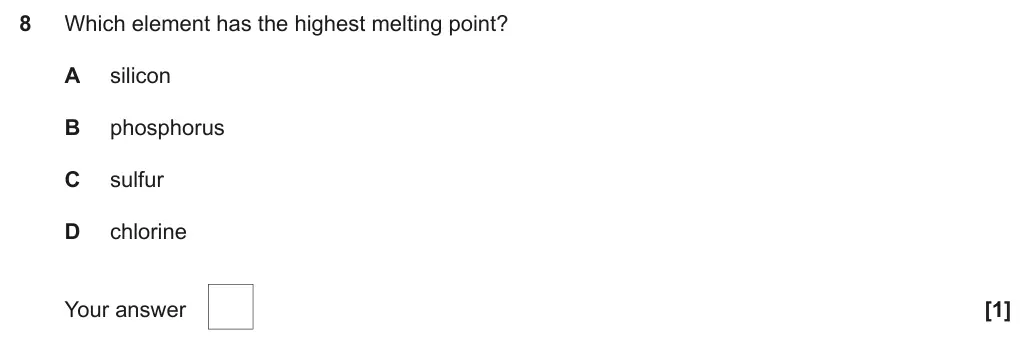
A
Skills: M3.1 Translate information between graphical, numerical and algebraic forms
Skills: M0.1 Recognise and use expressions in decimal and ordinary form; M0.3 Estimate results; M1.1 Use an appropriate number of significant figures; M3.1 Translate information between graphical, numerical and algebraic forms
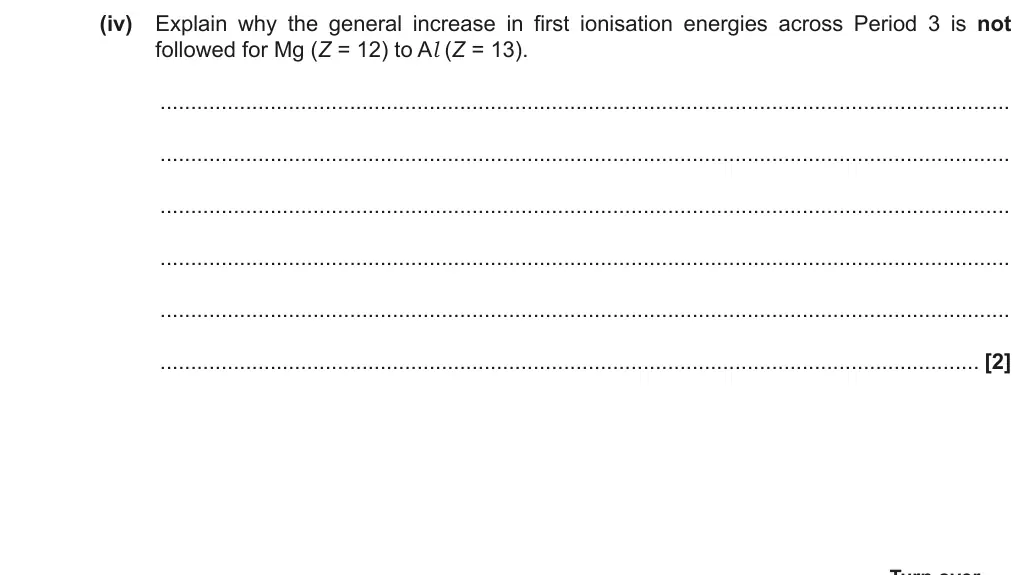
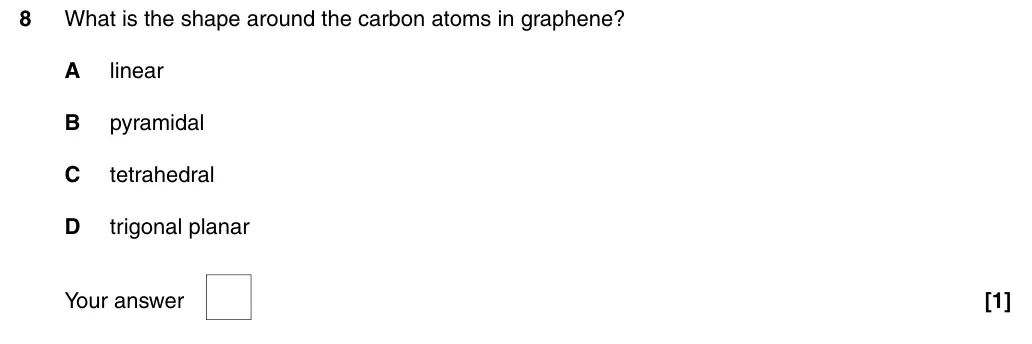
D
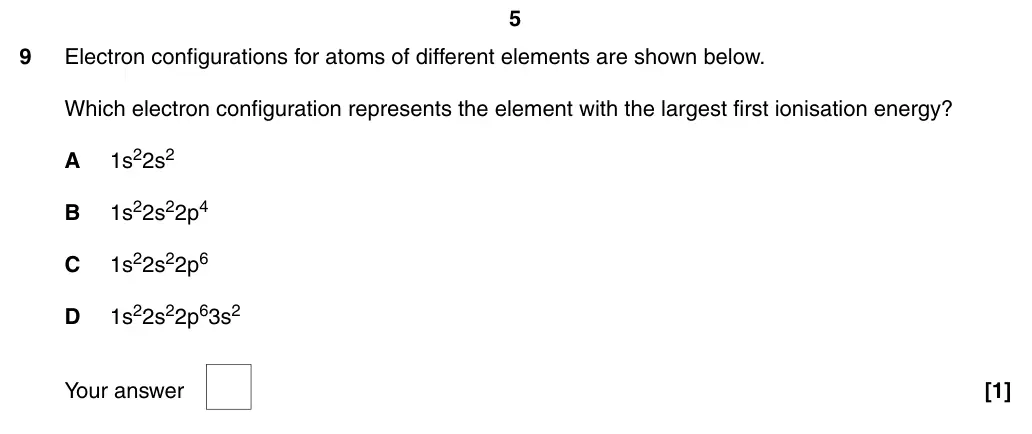
C
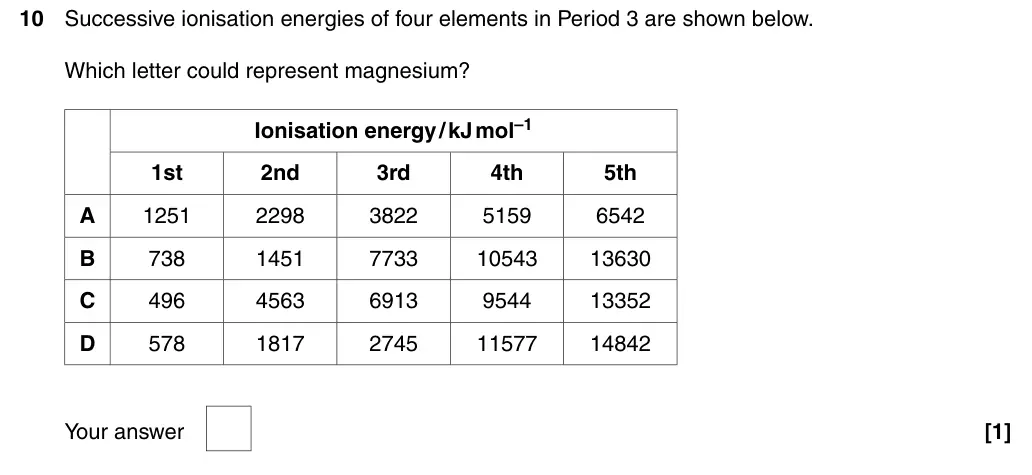
B
Skills: M3.1 Translate information between graphical, numerical and algebraic forms
Dropping marks on calculations, mechanisms or the six-markers? Book a trial session with a specialist OCR chemistry tutor.