June 2022: AS Paper 2, Depth in chemistry

70 marks · 27 question parts · Paper, mark scheme and report on OCR's site · Have OCR's Data Sheet beside you

Question by question

QTopicMarksAOType
1(a)(i) Acids, bases and titrations 1AO1Short answer
1(a)(ii) Acids, bases and titrations 1AO1Short answer
1(b)(i) Acids, bases and titrations, Practical techniques and apparatus (PAGs) 4AO1Calculation
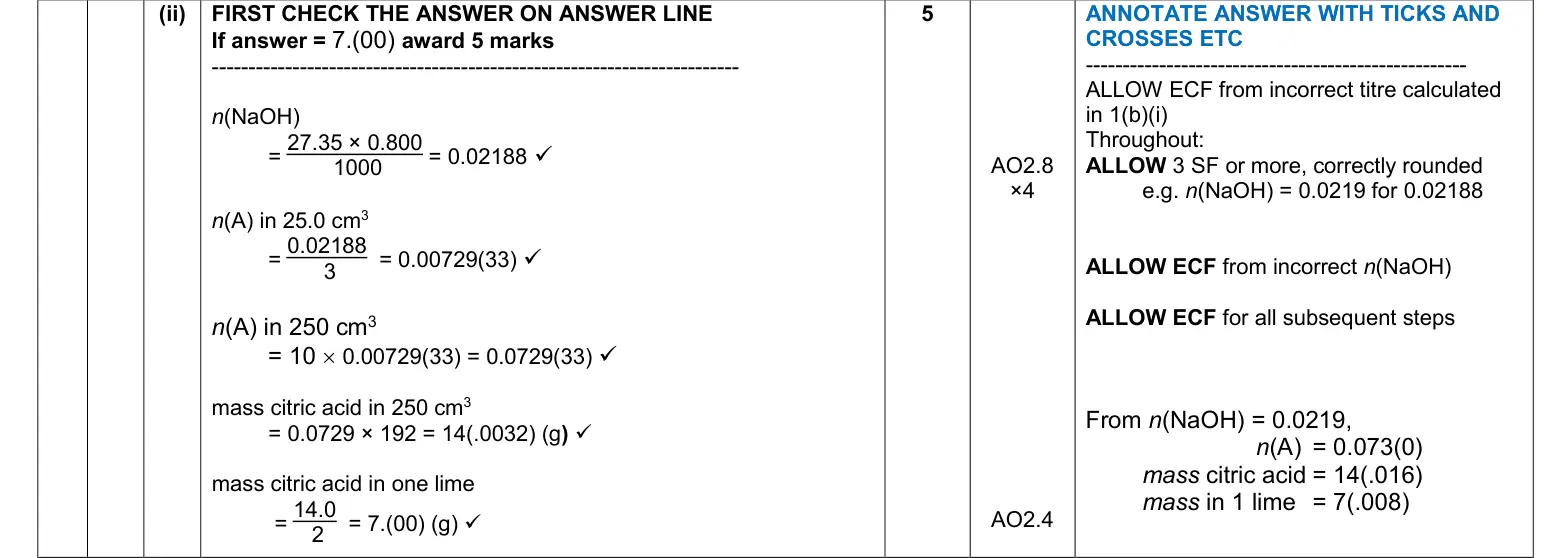
1(b)(ii) Acids, bases and titrations, Amount of substance (moles) 5AO2Calculation
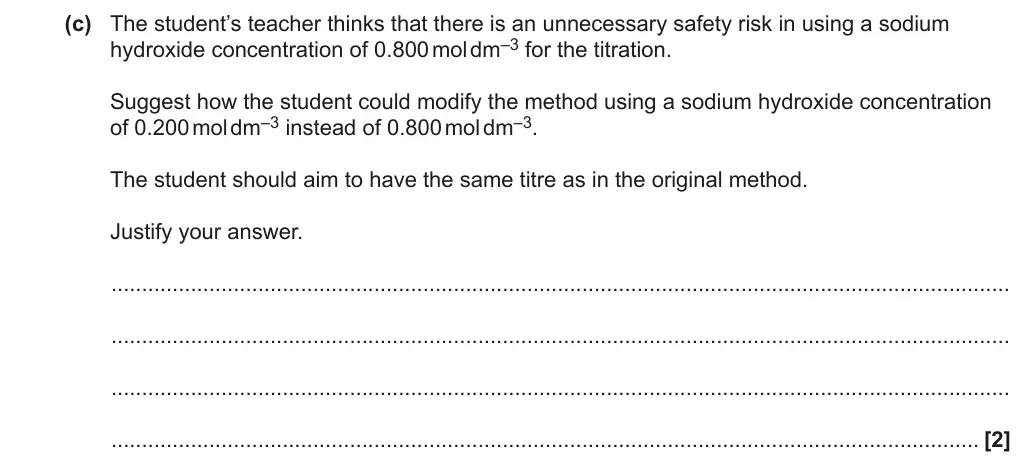
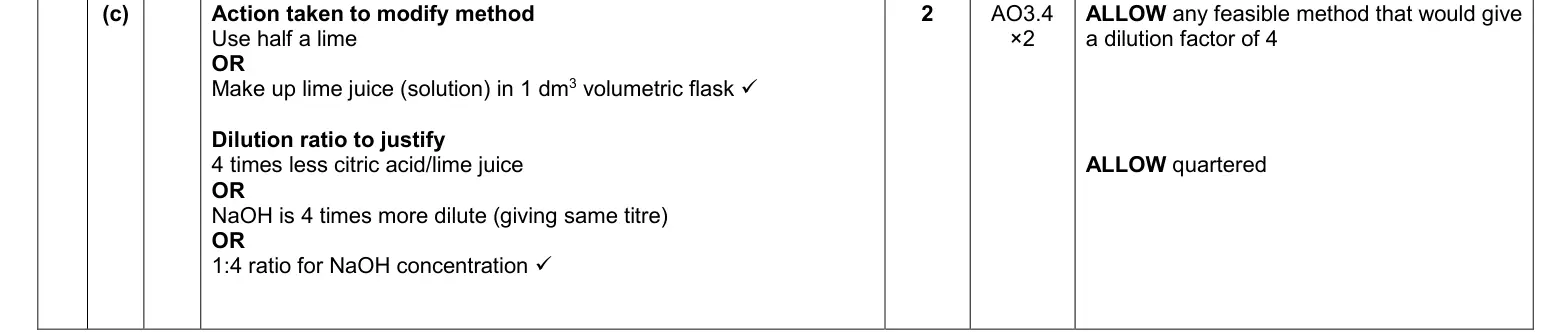
1(c) Practical skills: planning, analysis and evaluation, Amount of substance (moles), Acids, bases and titrations 2AO3Short answer
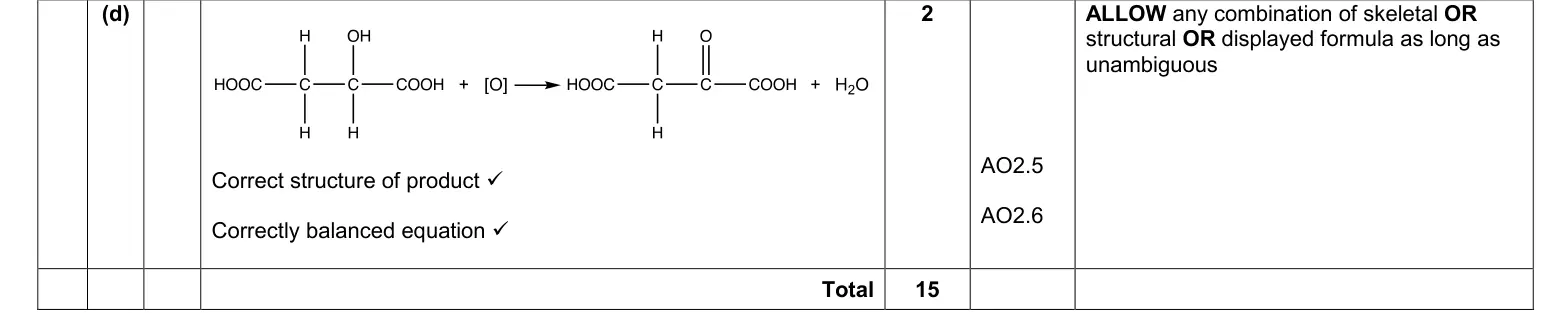
1(d) Alcohols, Formulae and equations, Organic synthesis and practical techniques (Module 4) 2AO2Equation writing
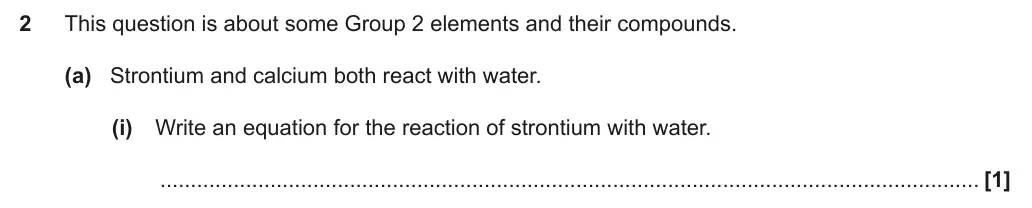
2(a)(i) Group 2 1AO2Equation writing
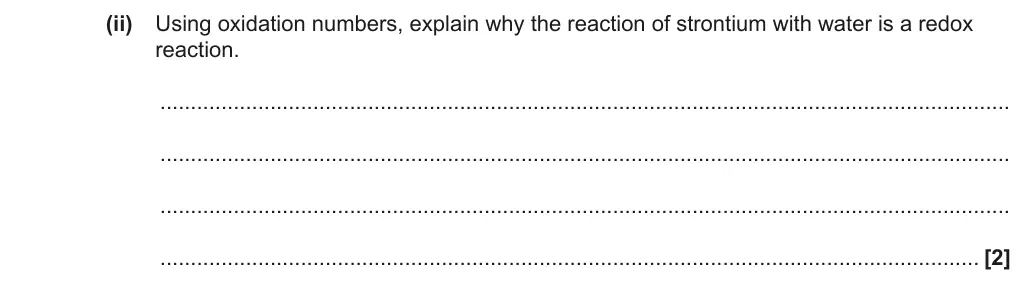
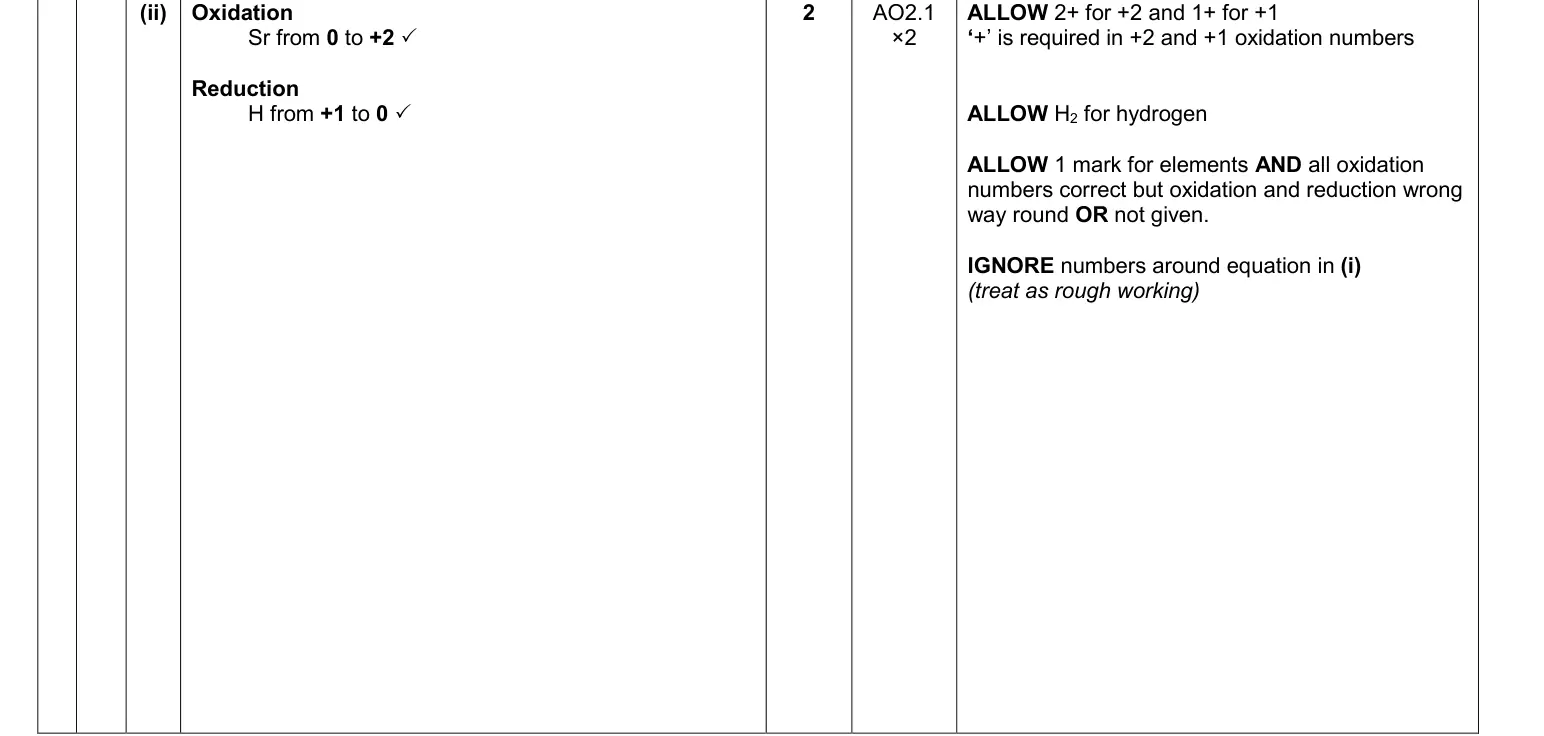
2(a)(ii) Redox and oxidation numbers 2AO2Short answer
2(a)(iii) Group 2, Periodicity and ionisation energy 3AO1Short answer
2(b)(i) Group 2 1AO1Calculation
2(b)(ii) Qualitative analysis: tests for ions, Formulae and equations 2AO3Short answer
3(a)(i) Reaction rates and the Boltzmann distribution 3AO1, 2Data interpretation
3(a)(ii) Reaction rates and the Boltzmann distribution, Practical skills: planning, analysis and evaluation 2AO3Calculation
3(a)(iii) Reaction rates and the Boltzmann distribution 2AO3Data interpretation
3(b)(i) Reaction rates and the Boltzmann distribution 2AO2Short answer
3(b)(ii) Enthalpy changes and Hess’ law, Reaction rates and the Boltzmann distribution 3AO1, 2Short answer
4(a)(i) Chemical equilibrium and Kc, Reaction rates and the Boltzmann distribution 6AO1, 2Level of response
4(a)(ii) Chemical equilibrium and Kc 2AO2Calculation
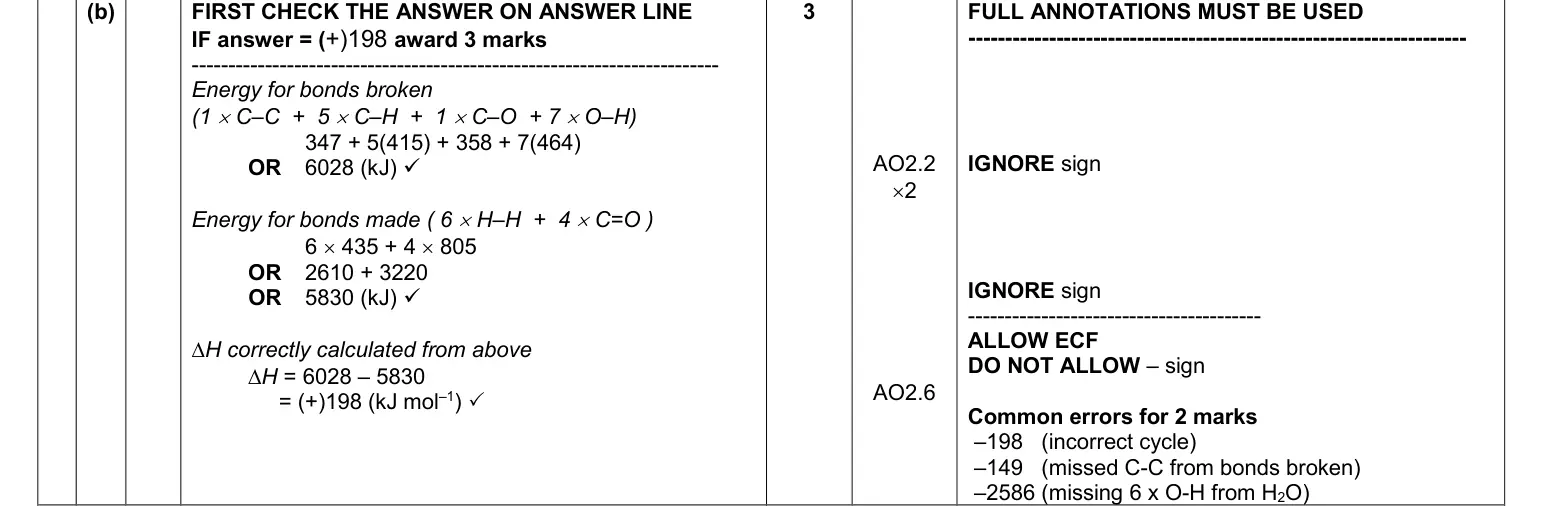
4(b) Enthalpy changes and Hess’ law 3AO2Calculation
4(c) Bonding, structure and shapes of molecules 4AO1, 2Short answer
5(a)(i) Alkanes 1AO1Short answer
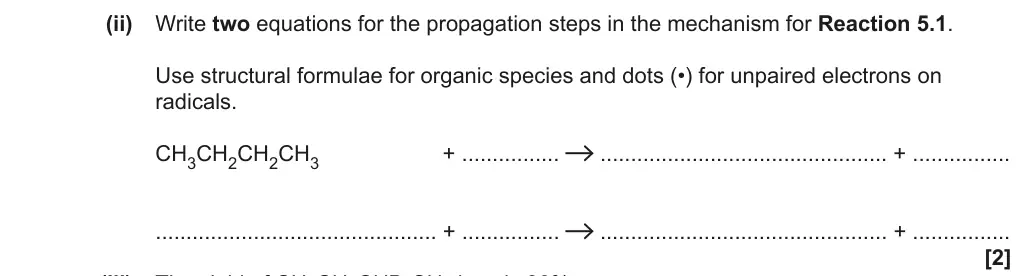
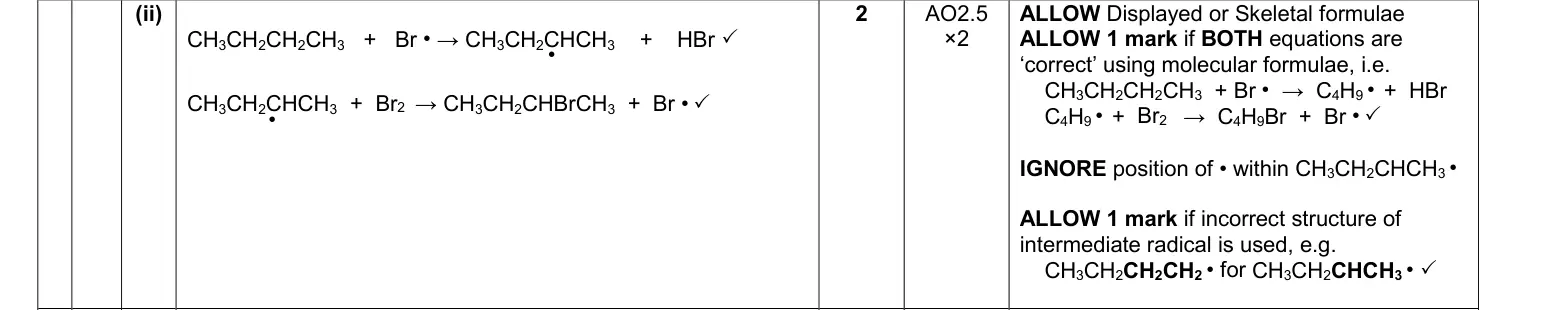
5(a)(ii) Alkanes, Organic basics: naming, formulae and isomerism 2AO2Equation writing
5(a)(iii) Alkanes 2AO3Short answer
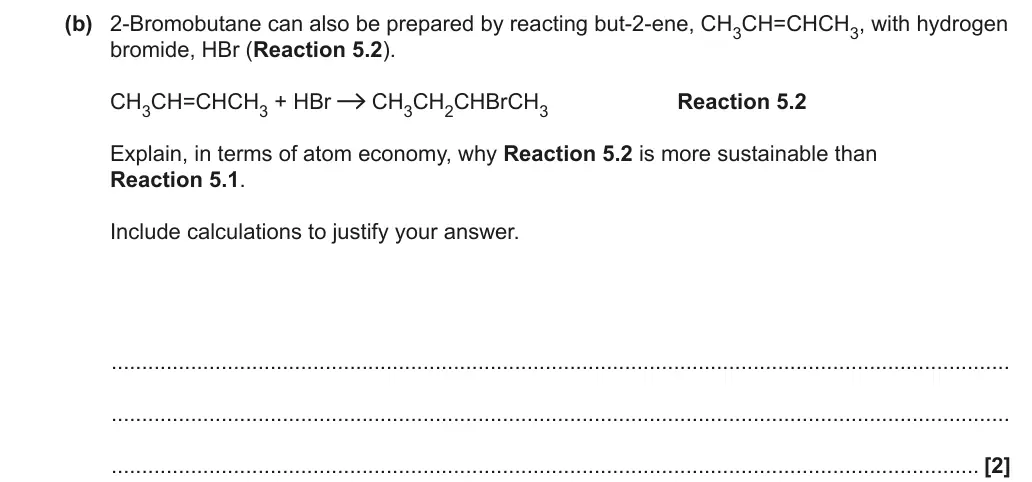
5(b) Amount of substance (moles) 2AO1, 2Calculation
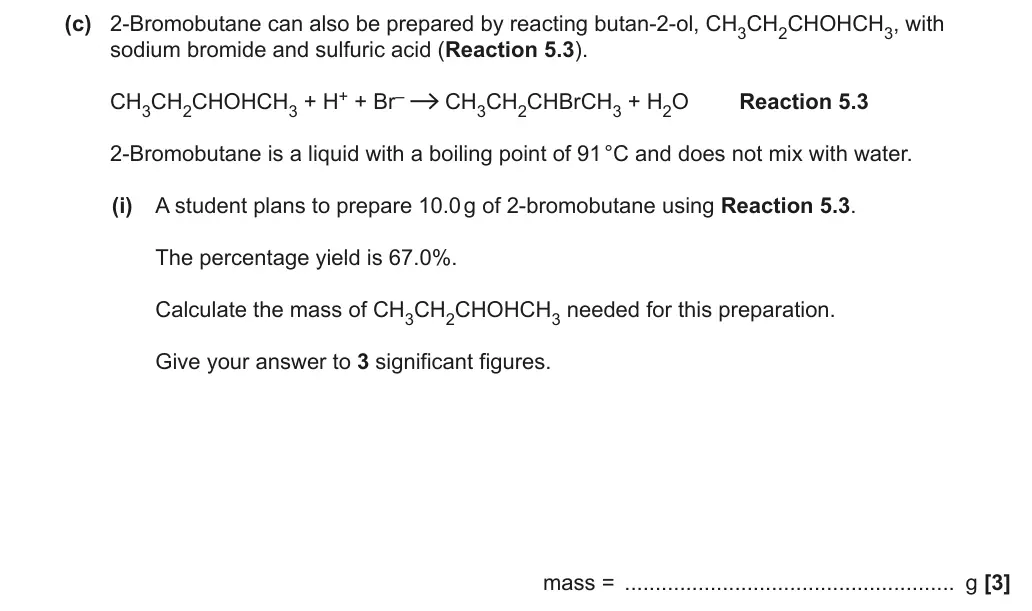
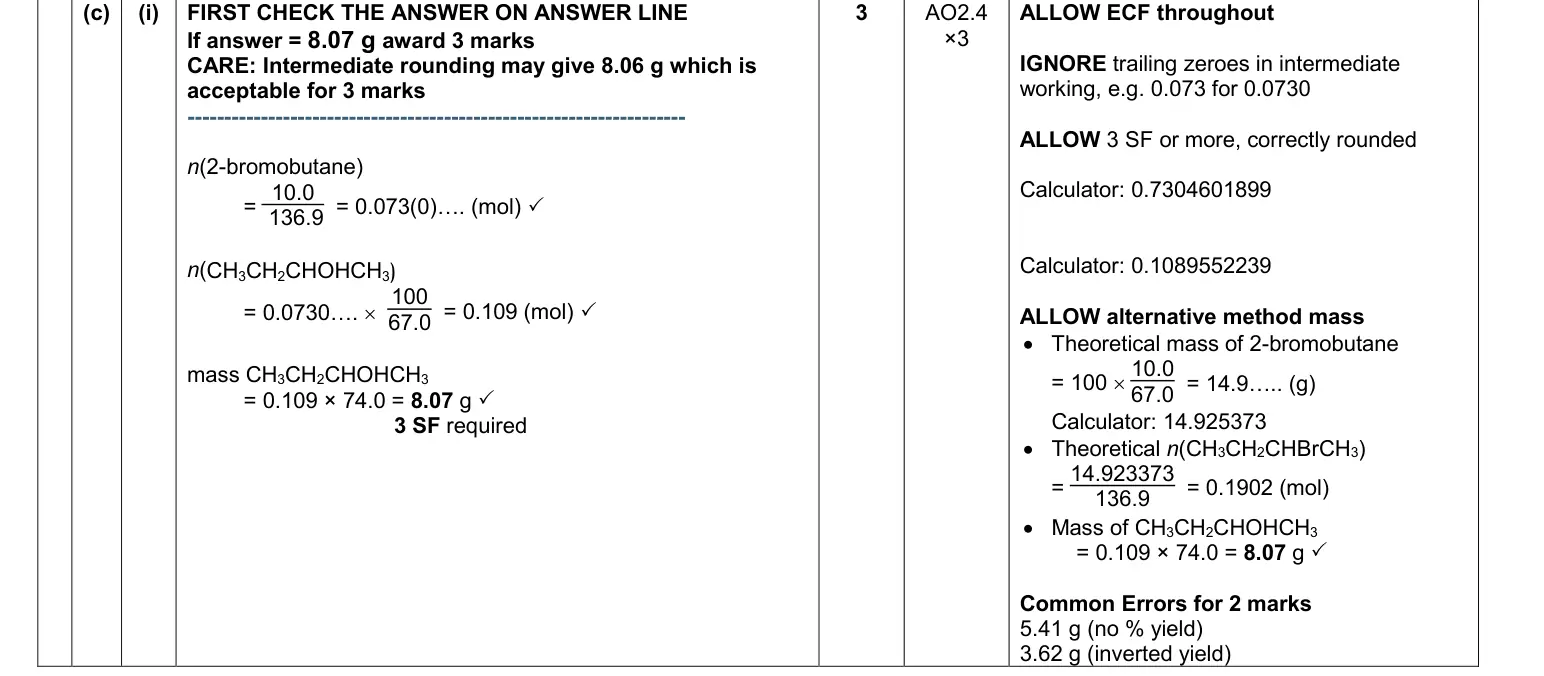
5(c)(i) Amount of substance (moles) 3AO2Calculation
5(c)(ii) Organic synthesis and practical techniques (Module 4), Practical techniques and apparatus (PAGs) 3AO3Short answer
6 Infrared spectroscopy and mass spectrometry, Alkenes 6AO3Level of response

The questions

1(a)(i)1(a)(ii)1(b)(i)1(b)(ii)1(c)1(d)2(a)(i)2(a)(ii)2(a)(iii)2(b)(i)2(b)(ii)3(a)(i)3(a)(ii)3(a)(iii)3(b)(i)3(b)(ii)4(a)(i)4(a)(ii)4(b)4(c)5(a)(i)5(a)(ii)5(a)(iii)5(b)5(c)(i)5(c)(ii)6
June 2022 · AS Paper 2 · Q1(a)(i) 1 mark AO1 Short answer Easy acids and titrations
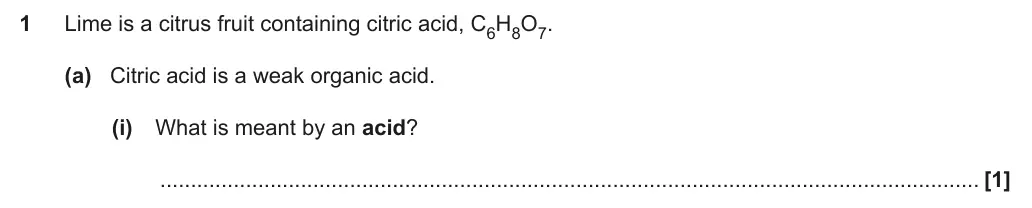
1 Lime is a citrus fruit containing citric acid, C6H8O7.
(a) Citric acid is a weak organic acid.
(i) What is meant by an acid?
...................................................................................................................................... [1]
June 2022 · AS Paper 2 · Q1(a)(ii) 1 mark AO1 Short answer Medium acids and titrations
Earlier part of question 1 that this part usesEarlier part of June 2022 Paper 2 question 1
(ii) What is meant by an acid that is weak?
...........................................................................................................................................
...................................................................................................................................... [1]
June 2022 · AS Paper 2 · Q1(b)(i) 4 marks AO1 Calculation Easy acids and titrationspractical techniques
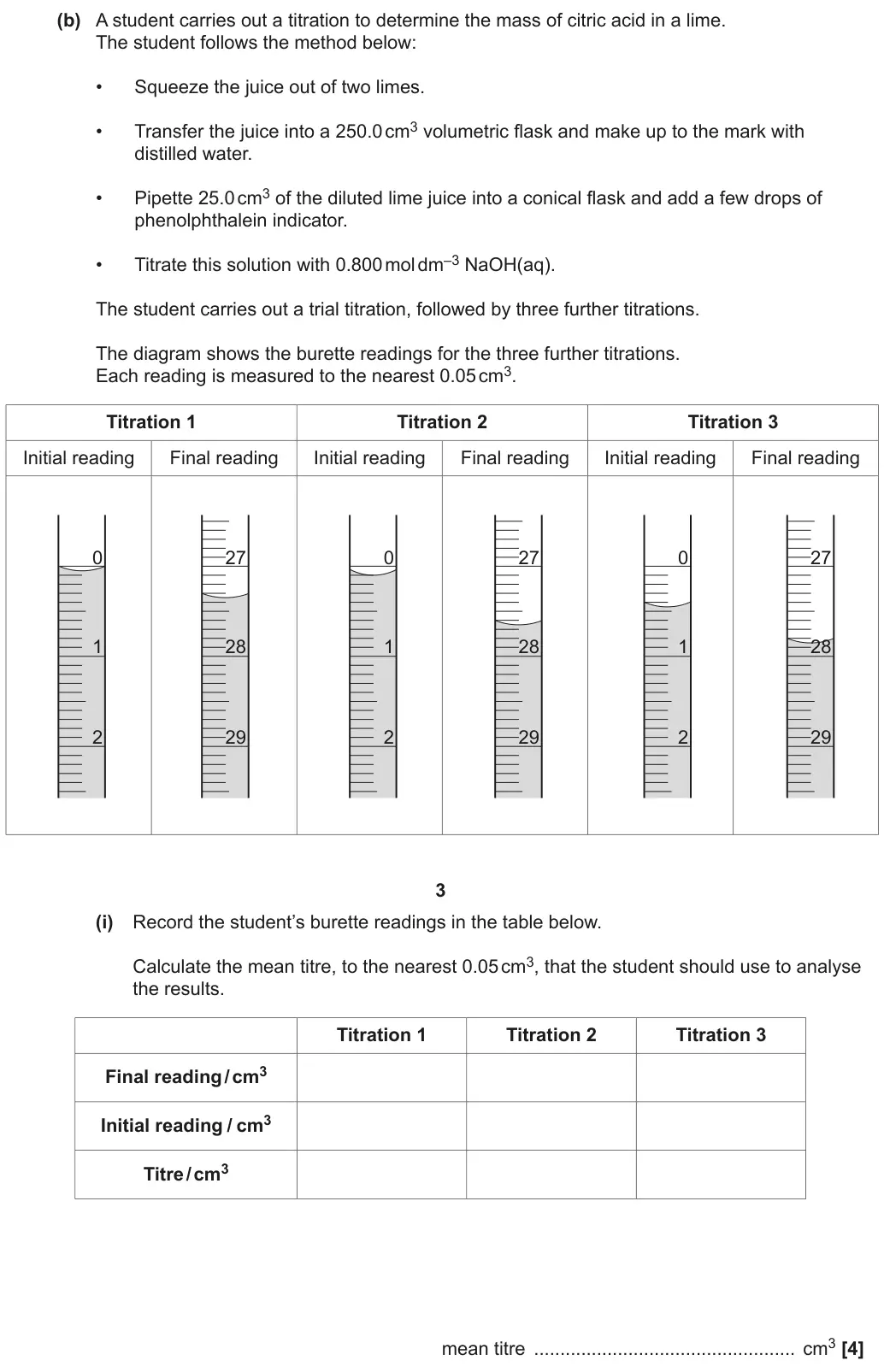
(b) A student carries out a titration to determine the mass of citric acid in a lime.
The student follows the method below:
• Squeeze the juice out of two limes.
• Transfer the juice into a 250.0 cm3 volumetric flask and make up to the mark with
distilled water.
• Pipette 25.0 cm3 of the diluted lime juice into a conical flask and add a few drops of
phenolphthalein indicator.
• Titrate this solution with 0.800 mol dm–3 NaOH(aq).
The student carries out a trial titration, followed by three further titrations.
The diagram shows the burette readings for the three further titrations.
Each reading is measured to the nearest 0.05 cm3.
Titration 1 Titration 2 Titration 3
Initial reading Final reading Initial reading Final reading Initial reading Final reading
0 27 0 27 0 27
1 28 1 28 1 28
2 29 2 29 2 29
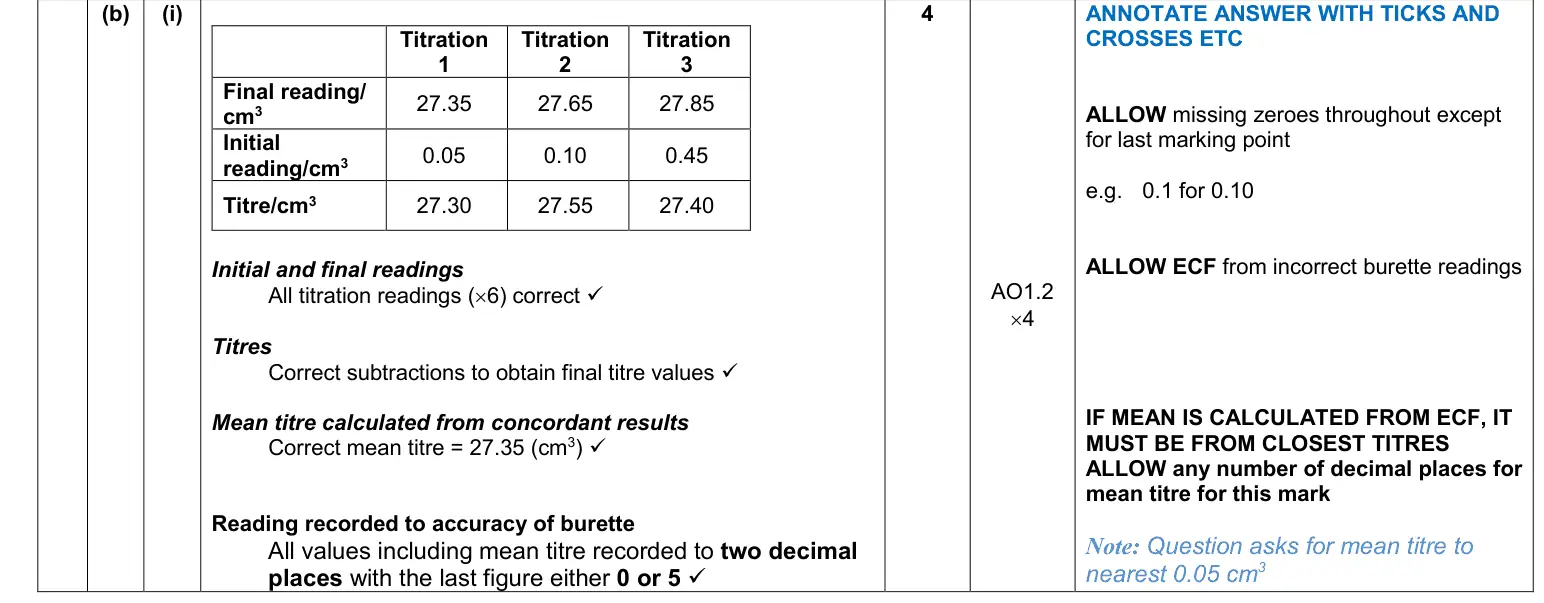
(i) Record the student’s burette readings in the table below.
Calculate the mean titre, to the nearest 0.05 cm3, that the student should use to analyse
the results.
Titration 1 Titration 2 Titration 3
Final reading / cm3
Initial reading  /  cm3
Titre / cm3
mean titre  .................................................. cm3 [4]
June 2022 · AS Paper 2 · Q1(b)(ii) 5 marks AO2 Calculation Medium acids and titrationsamount of substance
Earlier part of question 1 that this part usesEarlier part of June 2022 Paper 2 question 1
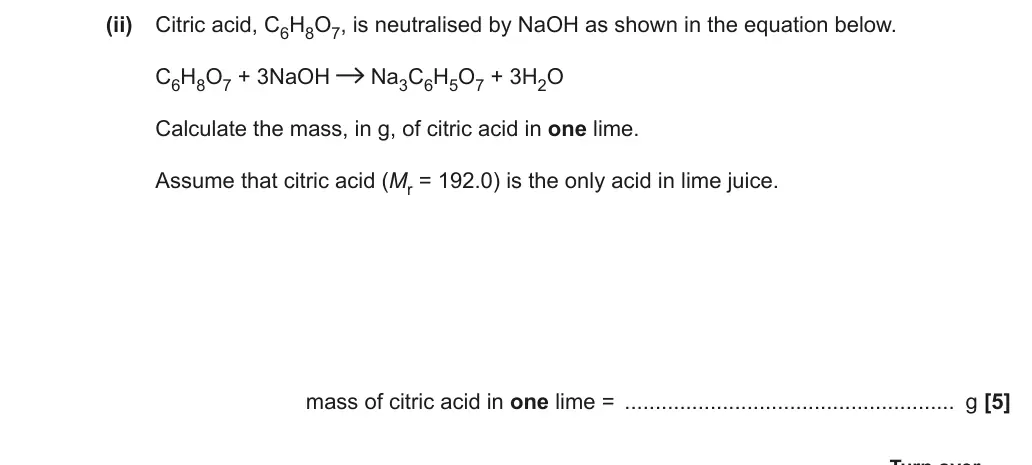
(ii) Citric acid, C6H8O7, is neutralised by NaOH as shown in the equation below.
C6H8O7 + 3NaOH Na3C6H5O7 + 3H2O
Calculate the mass, in g, of citric acid in one lime.
Assume that citric acid (Mr = 192.0) is the only acid in lime juice.
mass of citric acid in one lime =  ...................................................... g [5]
June 2022 · AS Paper 2 · Q1(c) 2 marks AO3 Short answer Hard practical skillsamount of substanceacids and titrations
Earlier part of question 1 that this part usesEarlier part of June 2022 Paper 2 question 1
(c) The student’s teacher thinks that there is an unnecessary safety risk in using a sodium
hydroxide concentration of 0.800 mol dm–3 for the titration.
Suggest how the student could modify the method using a sodium hydroxide concentration
of 0.200 mol dm–3 instead of 0.800 mol dm–3.
The student should aim to have the same titre as in the original method.
Justify your answer.
...................................................................................................................................................
...................................................................................................................................................
...................................................................................................................................................
.............................................................................................................................................. [2]
June 2022 · AS Paper 2 · Q1(d) 2 marks AO2 Equation writing Medium alcoholsformulae and equationsorganic synthesis as
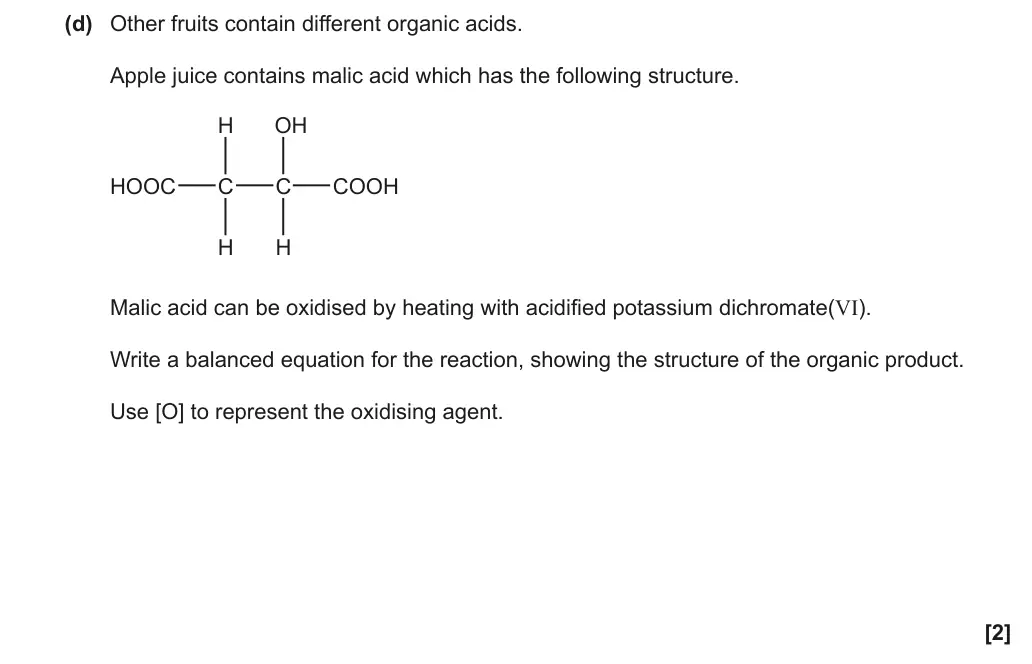
(d) Other fruits contain different organic acids.
Apple juice contains malic acid which has the following structure.
H OH
HOOC C C COOH
H H
Malic acid can be oxidised by heating with acidified potassium dichromate(VI).
Write a balanced equation for the reaction, showing the structure of the organic product.
Use [O] to represent the oxidising agent.
[2]
June 2022 · AS Paper 2 · Q2(a)(i) 1 mark AO2 Equation writing Medium group 2
2 This question is about some Group 2 elements and their compounds.
(a) Strontium and calcium both react with water.
(i) Write an equation for the reaction of strontium with water.
...................................................................................................................................... [1]
June 2022 · AS Paper 2 · Q2(a)(ii) 2 marks AO2 Short answer Medium redox
Earlier part of question 2 that this part usesEarlier part of June 2022 Paper 2 question 2
(ii) Using oxidation numbers, explain why the reaction of strontium with water is a redox
reaction.
...........................................................................................................................................
...........................................................................................................................................
...........................................................................................................................................
...................................................................................................................................... [2]
June 2022 · AS Paper 2 · Q2(a)(iii) 3 marks AO1 Short answer Easy group 2periodicity
Earlier part of question 2 that this part usesEarlier part of June 2022 Paper 2 question 2
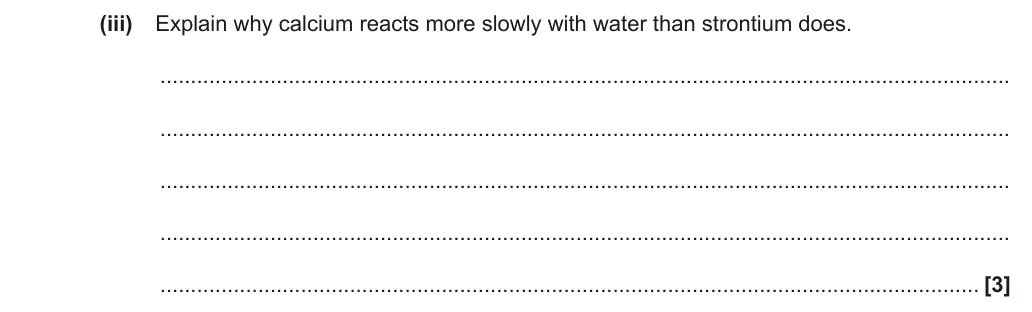
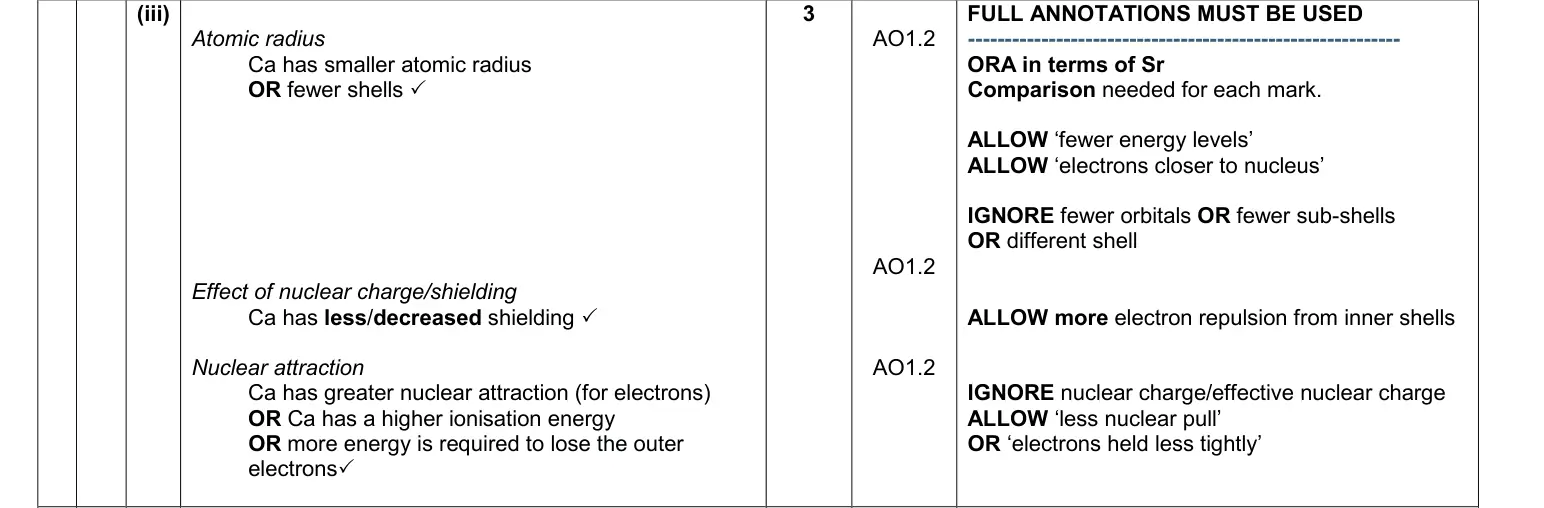
(iii) Explain why calcium reacts more slowly with water than strontium does.
...........................................................................................................................................
...........................................................................................................................................
...........................................................................................................................................
...........................................................................................................................................
...................................................................................................................................... [3]
June 2022 · AS Paper 2 · Q2(b)(i) 1 mark AO1 Calculation Easy group 2
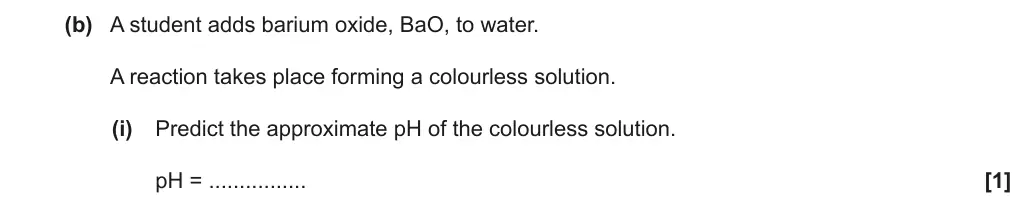
(b) A student adds barium oxide, BaO, to water.
A reaction takes place forming a colourless solution.
(i) Predict the approximate pH of the colourless solution.
pH = ................ [1]
June 2022 · AS Paper 2 · Q2(b)(ii) 2 marks AO3 Short answer Easy qualitative analysisformulae and equations
Earlier part of question 2 that this part usesEarlier part of June 2022 Paper 2 question 2
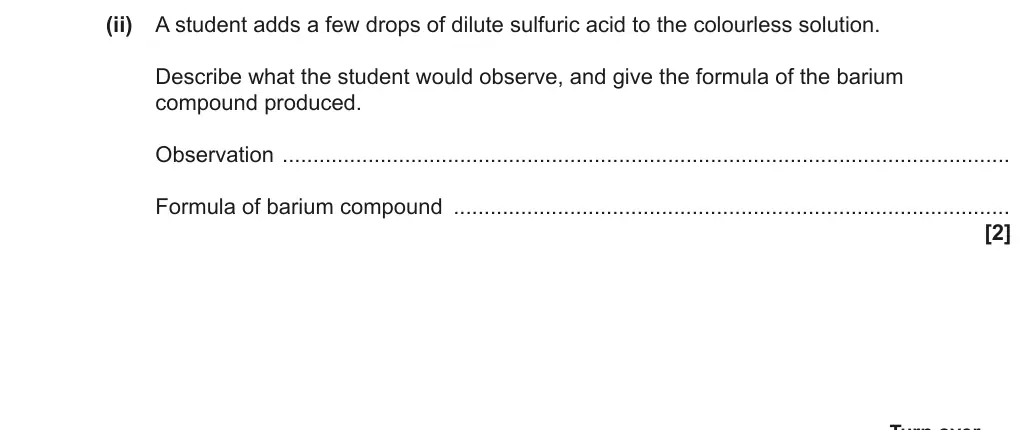
(ii) A student adds a few drops of dilute sulfuric acid to the colourless solution.
Describe what the student would observe, and give the formula of the barium
compound produced.
Observation  .......................................................................................................................
Formula of barium compound  ...........................................................................................
[2]
June 2022 · AS Paper 2 · Q3(a)(i) 3 marks AO1, 2 Data interpretation Hard reaction rates
3 A student investigates some reactions of zinc compounds and zinc metal.
(a) The student investigates the rate of reaction between zinc carbonate, ZnCO3(s), and dilute
hydrochloric acid, HCl (aq).
ZnCO3(s) + 2HCl (aq) ZnCl 2(aq) + CO2(g) + H2O(l)
The student follows the method outlined below:
• Add 50 cm3 of dilute HCl (aq) into a conical flask at 20 °C.
• Place the flask on a top-pan balance.
• Add an excess of ZnCO3(s) to the flask.
• Record the mass of the flask and contents on the top-pan balance every 30 seconds.
The student plots a graph of mass against time, shown in Fig. 3.1 below.
92.6
92.5
92.4
92.3
92.2
92.1
92.0
91.9
mass / g 91.8
91.7
91.6
91.5
91.4
91.3
91.2
91.1
91.0
0 50 100 150 200 250 300 350 400
time / s
Fig. 3.1
(i) The graph shows that the reaction gets slower over time, and eventually stops.
Explain why, in terms of collision theory.
...........................................................................................................................................
...........................................................................................................................................
...........................................................................................................................................
...........................................................................................................................................
...........................................................................................................................................
...........................................................................................................................................
...................................................................................................................................... [3]
June 2022 · AS Paper 2 · Q3(a)(ii) 2 marks AO3 Calculation Medium reaction ratespractical skills
Earlier part of question 3 that this part usesEarlier part of June 2022 Paper 2 question 3
(ii) Using the graph in Fig. 3.1, find the rate of reaction, in g s–1, at 50 seconds.
Show your working on the graph and in the space below.
rate of reaction =  ................................................. g s–1 [2]
June 2022 · AS Paper 2 · Q3(a)(iii) 2 marks AO3 Data interpretation Hard reaction rates
Earlier part of question 3 that this part usesEarlier part of June 2022 Paper 2 question 3
(iii) The student repeats the experiment but heats 50 cm3 of dilute hydrochloric acid up to
40 °C before adding the ZnCO3(s).
On Fig. 3.1, sketch the curve the student would obtain. [2]
June 2022 · AS Paper 2 · Q3(b)(i) 2 marks AO2 Short answer Hard reaction rates
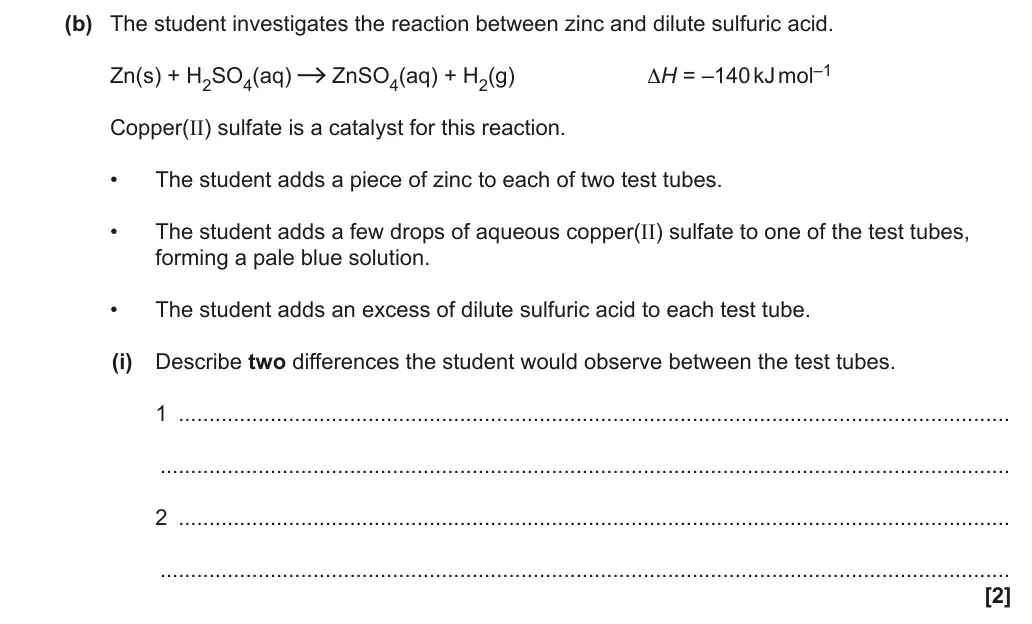
(b) The student investigates the reaction between zinc and dilute sulfuric acid.
Zn(s) + H2SO4(aq) ZnSO4(aq) + H2(g) ΔH = –140 kJ mol–1
Copper(II) sulfate is a catalyst for this reaction.
• The student adds a piece of zinc to each of two test tubes.
• The student adds a few drops of aqueous copper(II) sulfate to one of the test tubes,
forming a pale blue solution.
• The student adds an excess of dilute sulfuric acid to each test tube.
(i) Describe two differences the student would observe between the test tubes.
1  ........................................................................................................................................
...........................................................................................................................................
2  ........................................................................................................................................
...........................................................................................................................................
[2]
June 2022 · AS Paper 2 · Q3(b)(ii) 3 marks AO1, 2 Short answer Medium enthalpy changesreaction rates
Earlier part of question 3 that this part usesEarlier part of June 2022 Paper 2 question 3
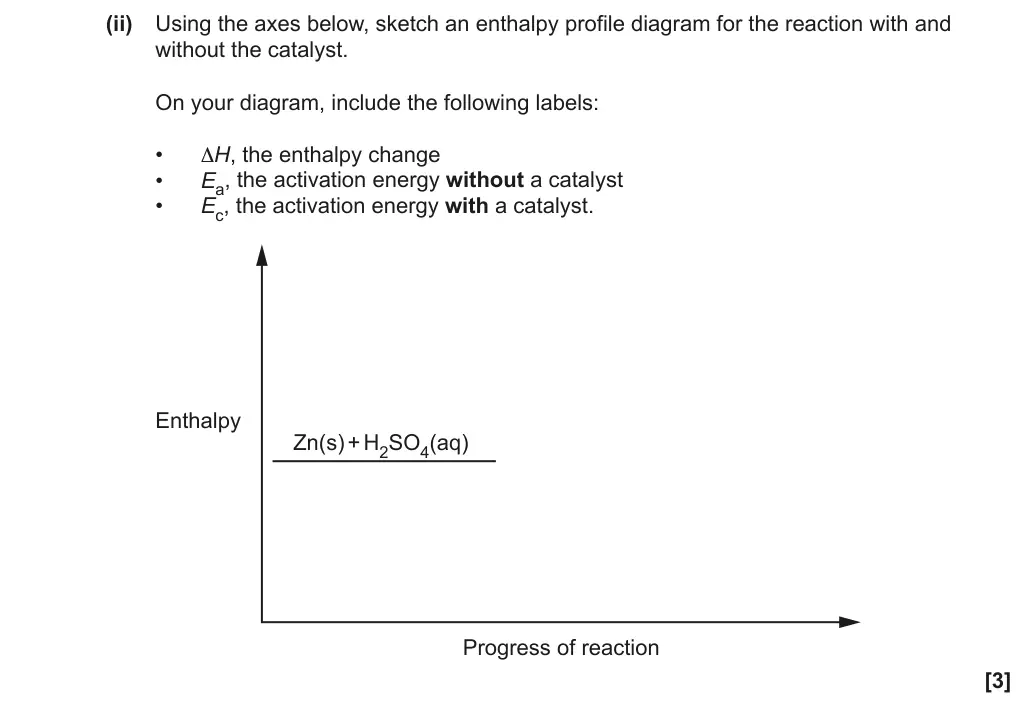
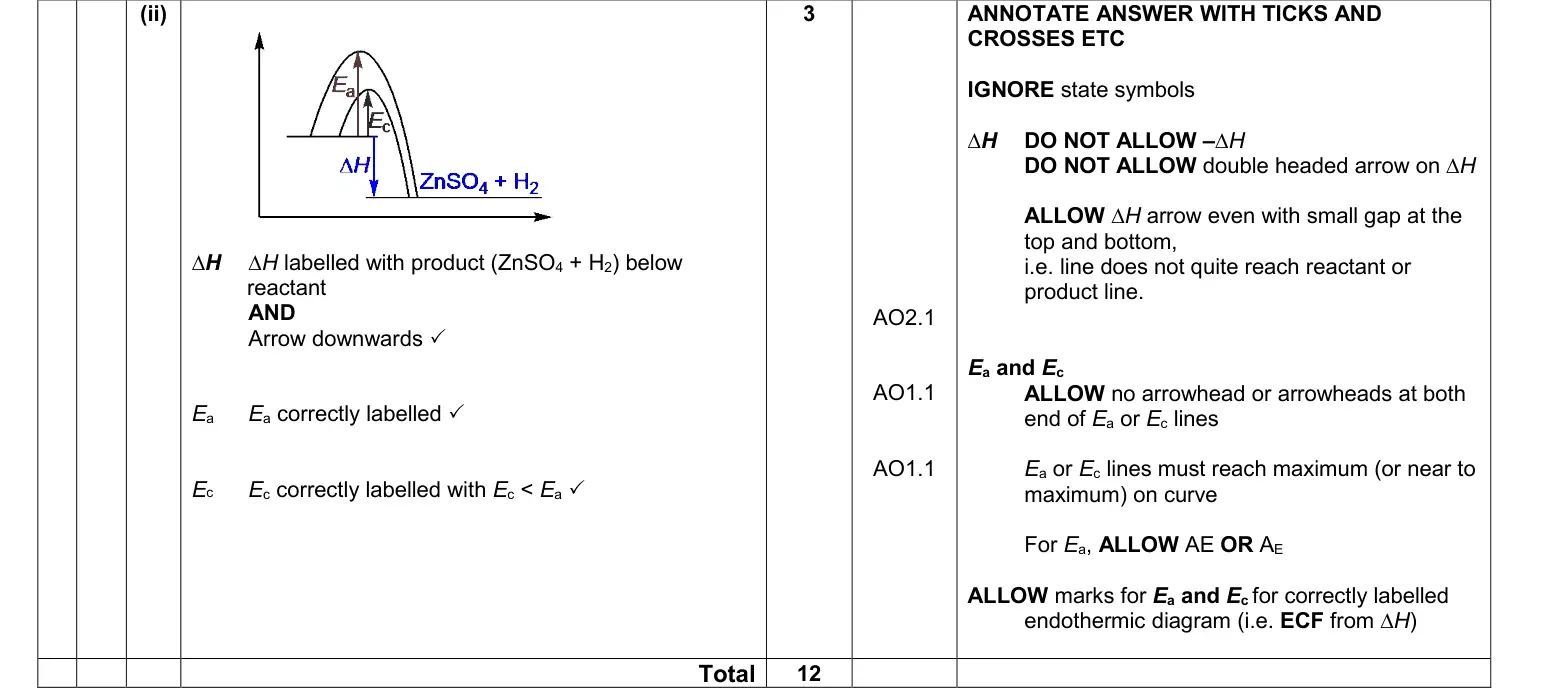
(ii) Using the axes below, sketch an enthalpy profile diagram for the reaction with and
without the catalyst.
On your diagram, include the following labels:
• ΔH, the enthalpy change
• Ea, the activation energy without a catalyst
• Ec, the activation energy with a catalyst.
Enthalpy
Zn(s) + H2SO4(aq)
Progress of reaction
[3]
June 2022 · AS Paper 2 · Q4(a)(i) 6 marks AO1, 2 6-mark level of response Hard chemical equilibriumreaction rates
4 This question is about the manufacture of hydrogen, H2.
(a) In industry, hydrogen is manufactured from methane, as shown in Equilibrium 4.1.
CH4(g) + H2O(g) CO(g) + 3H2(g)     ΔH = +206 kJ mol–1 Equilibrium 4.1
The industrial process is carried out at 15 atmospheres pressure and at a temperature of
800 °C using an excess of steam. A nickel catalyst is used.
(i)* Explain why these conditions are used industrially. [6]
...........................................................................................................................................
...........................................................................................................................................
...........................................................................................................................................
...........................................................................................................................................
...........................................................................................................................................
...........................................................................................................................................
...........................................................................................................................................
...........................................................................................................................................
...........................................................................................................................................
...........................................................................................................................................
...........................................................................................................................................
...........................................................................................................................................
...........................................................................................................................................
...........................................................................................................................................
...........................................................................................................................................
Additional answer space if required.
...........................................................................................................................................
...........................................................................................................................................
...........................................................................................................................................
...........................................................................................................................................
...........................................................................................................................................
June 2022 · AS Paper 2 · Q4(a)(ii) 2 marks AO2 Calculation Easy chemical equilibrium
Earlier part of question 4 that this part usesEarlier part of June 2022 Paper 2 question 4
(ii) A chemist mixes CH4(g) and H2O(g) and leaves the mixture to reach equilibrium.
CH4(g) + H2O(g) CO(g) + 3H2(g)     ΔH = +206 kJ mol–1 Equilibrium 4.1
The equilibrium mixture contains the following concentrations.
Substance Concentration / mol dm–3
CH4(g) 0.111
H2O(g) 0.682
CO(g) 0.510
H2(g) 1.530
Write an expression for the equilibrium constant, Kc, for Equilibrium 4.1 and calculate
the numerical value of Kc.
Give your answer to 3 significant figures.
Kc =  ......................................... mol2 dm–6 [2]
June 2022 · AS Paper 2 · Q4(b) 3 marks AO2 Calculation Medium enthalpy changes
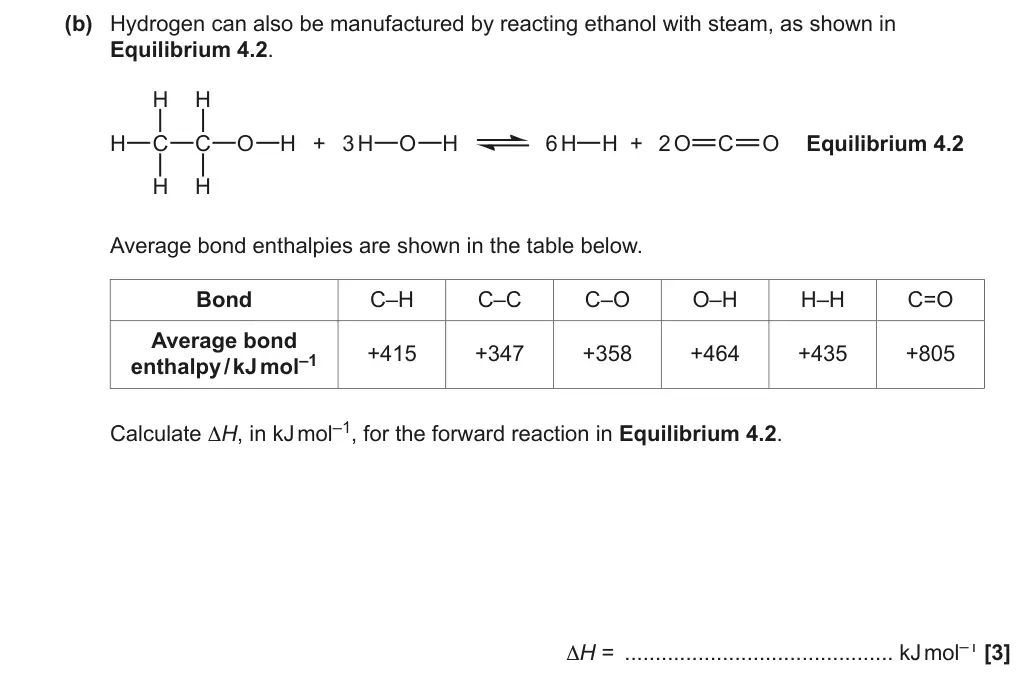
(b) Hydrogen can also be manufactured by reacting ethanol with steam, as shown in
Equilibrium 4.2.
H H
H C C O H + 3 H O H 6 H H + 2 O C O Equilibrium 4.2
H H
Average bond enthalpies are shown in the table below.
Bond C–H C–C C–O O–H H–H C=O
Average bond
+415 +347 +358 +464 +435 +805
enthalpy / kJ mol–1
Calculate ΔH, in kJ mol–1, for the forward reaction in Equilibrium 4.2.
ΔH =  ............................................ kJ mol–1 [3]
June 2022 · AS Paper 2 · Q4(c) 4 marks AO1, 2 Short answer Hard bonding and structure
(c) CO2 and H2O molecules have different shapes.
State the bond angles in CO2 and H2O molecules and explain, in terms of electron pair
repulsion, why the bond angles are different.
...................................................................................................................................................
...................................................................................................................................................
...................................................................................................................................................
...................................................................................................................................................
...................................................................................................................................................
...................................................................................................................................................
.............................................................................................................................................. [4]
June 2022 · AS Paper 2 · Q5(a)(i) 1 mark AO1 Short answer Medium alkanes
5 2-Bromobutane, CH3CH2CHBrCH3, can be prepared by three different methods.
The relative molecular mass, Mr, of 2-bromobutane is 136.9.
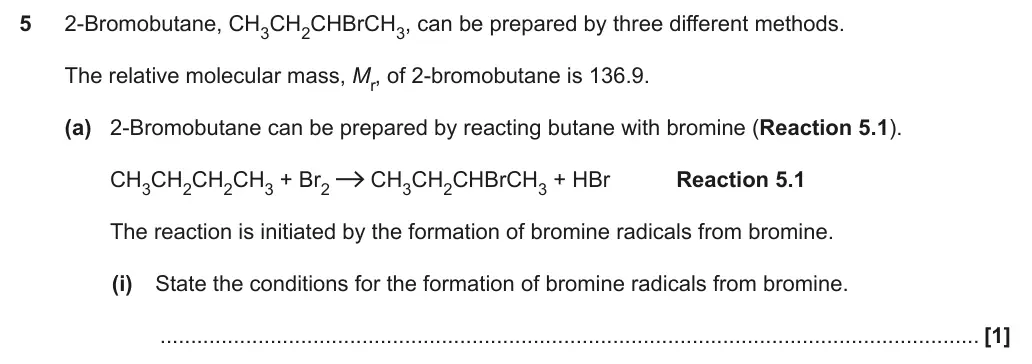
(a) 2-Bromobutane can be prepared by reacting butane with bromine (Reaction 5.1).
CH3CH2CH2CH3 + Br2 CH3CH2CHBrCH3 + HBr   Reaction 5.1
The reaction is initiated by the formation of bromine radicals from bromine.
(i) State the conditions for the formation of bromine radicals from bromine.
...................................................................................................................................... [1]
June 2022 · AS Paper 2 · Q5(a)(ii) 2 marks AO2 Equation writing Medium alkanesorganic basics
Earlier part of question 5 that this part usesEarlier part of June 2022 Paper 2 question 5
(ii) Write two equations for the propagation steps in the mechanism for Reaction 5.1.
Use structural formulae for organic species and dots (•) for unpaired electrons on
radicals.
CH3CH2CH2CH3 + ................ ............................................... + ................
.............................................. + ................ ............................................... + ................
[2]
June 2022 · AS Paper 2 · Q5(a)(iii) 2 marks AO3 Short answer Hard alkanes
Earlier part of question 5 that this part usesEarlier part of June 2022 Paper 2 question 5
(iii) The yield of CH3CH2CHBrCH3 is only 30%.
Suggest two reasons why the yield of CH3CH2CHBrCH3 is so low.
1  ........................................................................................................................................
...........................................................................................................................................
2  ........................................................................................................................................
...........................................................................................................................................
[2]
June 2022 · AS Paper 2 · Q5(b) 2 marks AO1, 2 Calculation Medium amount of substance
Earlier part of question 5 that this part usesEarlier part of June 2022 Paper 2 question 5
(b) 2-Bromobutane can also be prepared by reacting but-2-ene, CH3CH=CHCH3, with hydrogen
bromide, HBr (Reaction 5.2).
CH3CH=CHCH3 + HBr CH3CH2CHBrCH3 Reaction 5.2
Explain, in terms of atom economy, why Reaction 5.2 is more sustainable than
Reaction 5.1.
Include calculations to justify your answer.
...................................................................................................................................................
...................................................................................................................................................
.............................................................................................................................................. [2]
June 2022 · AS Paper 2 · Q5(c)(i) 3 marks AO2 Calculation Medium amount of substance
Earlier part of question 5 that this part usesEarlier part of June 2022 Paper 2 question 5
(c) 2-Bromobutane can also be prepared by reacting butan-2-ol, CH3CH2CHOHCH3, with
sodium bromide and sulfuric acid (Reaction 5.3).
CH3CH2CHOHCH3 + H+ + Br– CH3CH2CHBrCH3 + H2O Reaction 5.3
2-Bromobutane is a liquid with a boiling point of 91 °C and does not mix with water.
(i) A student plans to prepare 10.0 g of 2-bromobutane using Reaction 5.3.
The percentage yield is 67.0%.
Calculate the mass of CH3CH2CHOHCH3 needed for this preparation.
Give your answer to 3 significant figures.
mass =  ...................................................... g [3]
June 2022 · AS Paper 2 · Q5(c)(ii) 3 marks AO3 Short answer Medium organic synthesis aspractical techniques
Earlier part of question 5 that this part usesEarlier part of June 2022 Paper 2 question 5
(ii) The student mixes butan-2-ol, sodium bromide and sulfuric acid in a pear-shaped flask,
and refluxes the mixture.
After 1 hour, the mixture in the flask has separated into two layers: an aqueous layer
and an organic layer.
Describe the procedures the student would need to carry out to obtain a pure, dry
sample of 2-bromobutane from this mixture.
...........................................................................................................................................
...........................................................................................................................................
...........................................................................................................................................
...........................................................................................................................................
...........................................................................................................................................
...................................................................................................................................... [3]
June 2022 · AS Paper 2 · Q6 6 marks AO3 6-mark level of response Medium infrared and mass spectrometryalkenes
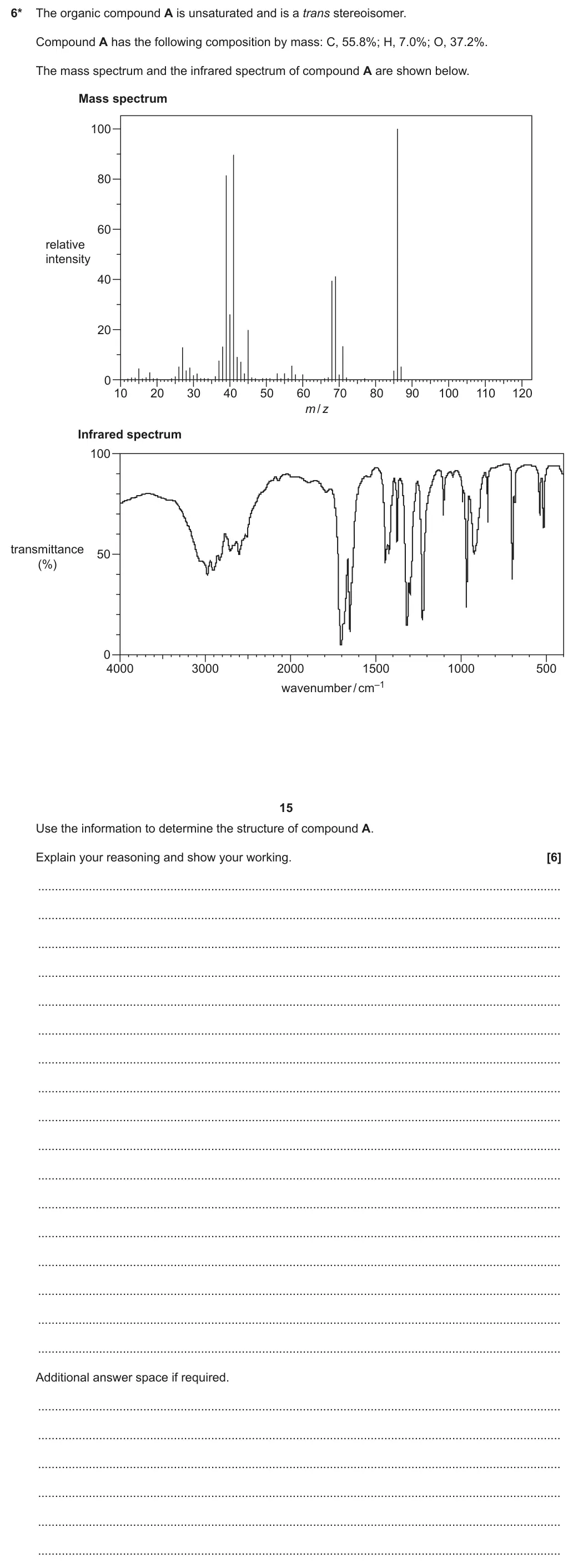
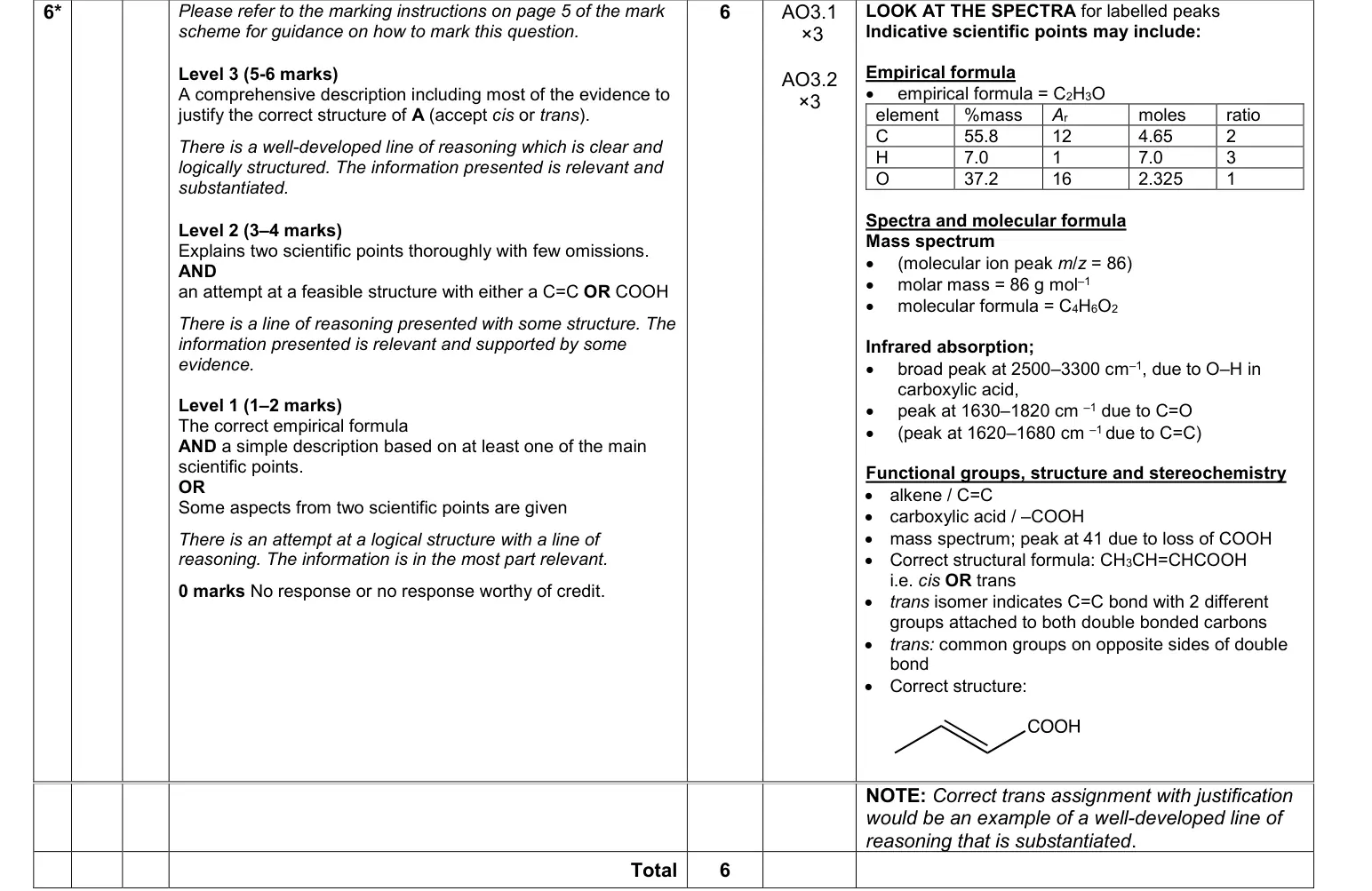
6* The organic compound A is unsaturated and is a trans stereoisomer.
Compound A has the following composition by mass: C, 55.8%; H, 7.0%; O, 37.2%.
The mass spectrum and the infrared spectrum of compound A are shown below.
Mass spectrum
100
80
60
relative
intensity
40
20
0
10 20 30 40 50 60 70 80 90 100 110 120
m / z
Infrared spectrum
100
transmittance
50
(%)
0
4000 3000 2000 1500 1000 500
wavenumber / cm–1
Use the information to determine the structure of compound A.
Explain your reasoning and show your working. [6]
..........................................................................................................................................................
..........................................................................................................................................................
..........................................................................................................................................................
..........................................................................................................................................................
..........................................................................................................................................................
..........................................................................................................................................................
..........................................................................................................................................................
..........................................................................................................................................................
..........................................................................................................................................................
..........................................................................................................................................................
..........................................................................................................................................................
..........................................................................................................................................................
..........................................................................................................................................................
..........................................................................................................................................................
..........................................................................................................................................................
..........................................................................................................................................................
..........................................................................................................................................................
Additional answer space if required.
..........................................................................................................................................................
..........................................................................................................................................................
..........................................................................................................................................................
..........................................................................................................................................................
..........................................................................................................................................................
..........................................................................................................................................................

Work with an OCR chemistry tutor

Want a paper marked and gone through with you? Message us.

Prefer email? Send an enquiry

If you are under 18, please include a parent's contact details. Enquiries go to enquiries@chemistryaleveltutor.com and are deleted once handled. All tutoring is online.