November 2020: Paper 1, Periodic table, elements and physical chemistry

100 marks · 44 question parts · Paper, mark scheme and report on OCR's site · An autumn series, sat in place of the cancelled summer exams · Have OCR's Data Sheet beside you

Question by question

QTopicMarksAOType
1 Acids, bases and titrations, Practical skills: planning, analysis and evaluation 1AO2Multiple choice
2 Amount of substance (moles) 1AO1Multiple choice
3 Amount of substance (moles) 1AO2Multiple choice
4 Amount of substance (moles) 1AO2Multiple choice
5 Transition elements 1AO1Multiple choice
6 Enthalpy changes and Hess’ law 1AO2Multiple choice
7 Reaction rates and the Boltzmann distribution 1AO1Multiple choice
8 Rates: orders, rate equations and the Arrhenius equation 1AO2Multiple choice
9 Equilibrium constants Kc and Kp 1AO2Multiple choice
10 Rates: orders, rate equations and the Arrhenius equation 1AO1Multiple choice
11 Acids, bases, pH and buffers, Amount of substance (moles) 1AO2Multiple choice
12 Redox titrations and electrode potentials, Redox and oxidation numbers 1AO2Multiple choice
13 Chemical equilibrium and Kc, Equilibrium constants Kc and Kp 1AO1Multiple choice
14 Group 2, Electron structure and orbitals 1AO1Multiple choice
15 Transition elements 1AO1Multiple choice
16(a) Atomic structure and isotopes 1AO1Short answer
16(b)(i) Bonding, structure and shapes of molecules 2AO1, 2Drawing / labelling
16(b)(ii) Amount of substance (moles) 3AO2Calculation
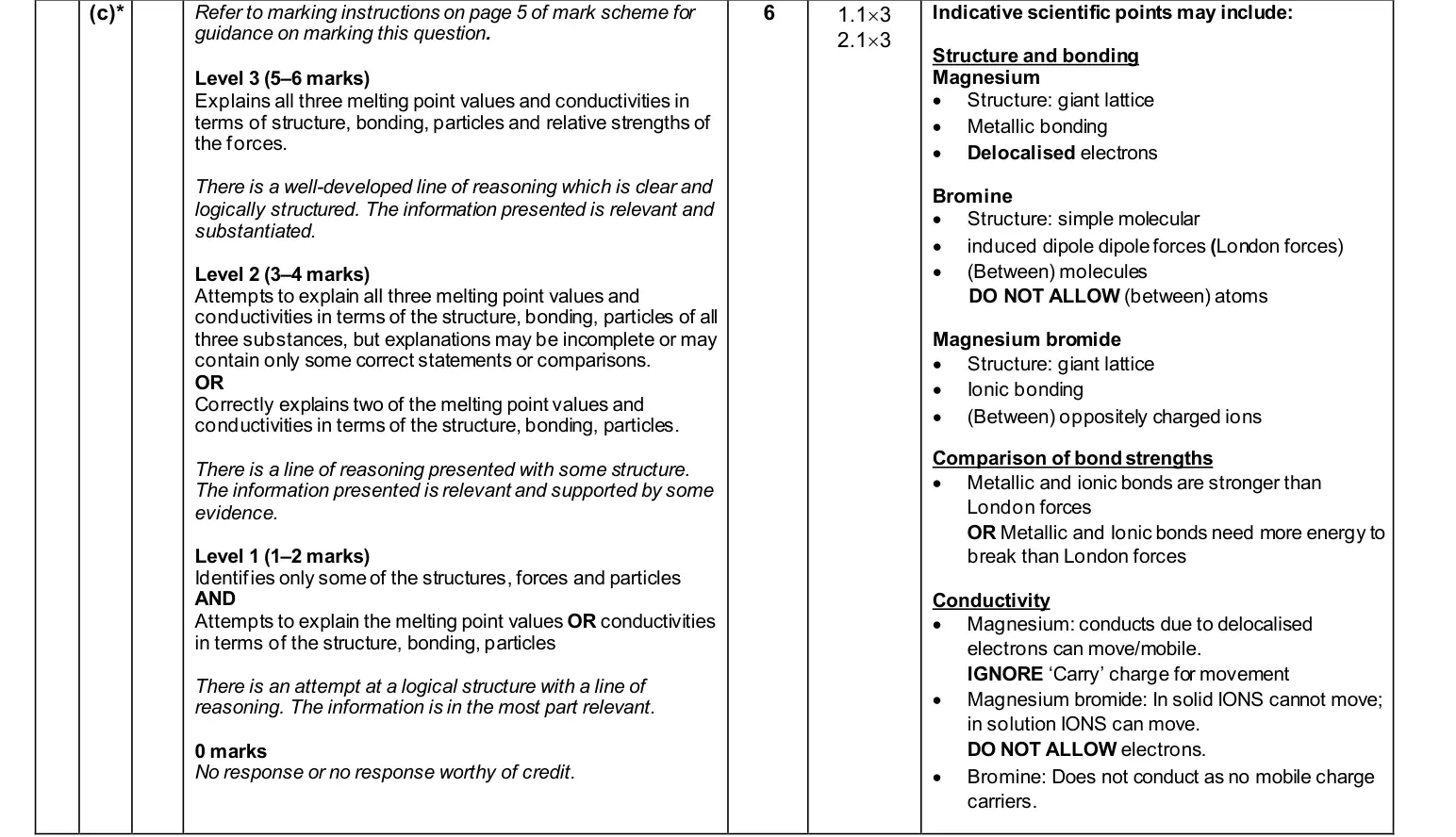
16(c) Periodicity and ionisation energy, Bonding, structure and shapes of molecules 6AO1, 2Level of response
16(d)(i) Lattice enthalpy and Born–Haber cycles 2AO1Complete table/diagram
16(d)(ii) Lattice enthalpy and Born–Haber cycles 2AO2Calculation
16(d)(iii) Lattice enthalpy and Born–Haber cycles 3AO1, 2Calculation
17(a) Chemical equilibrium and Kc 3AO1Short answer
17(b) Reaction rates and the Boltzmann distribution 2AO1Short answer
17(c) Entropy and free energy 5AO2, 3Calculation
17(d) Equilibrium constants Kc and Kp, Entropy and free energy 3AO1, 3Calculation
18(a) Redox and oxidation numbers, Acids, bases, pH and buffers 3AO1, 2Equation writing
18(b) Acids, bases, pH and buffers 2AO1Complete table/diagram
18(c)(i) Acids, bases, pH and buffers 2AO2Data interpretation
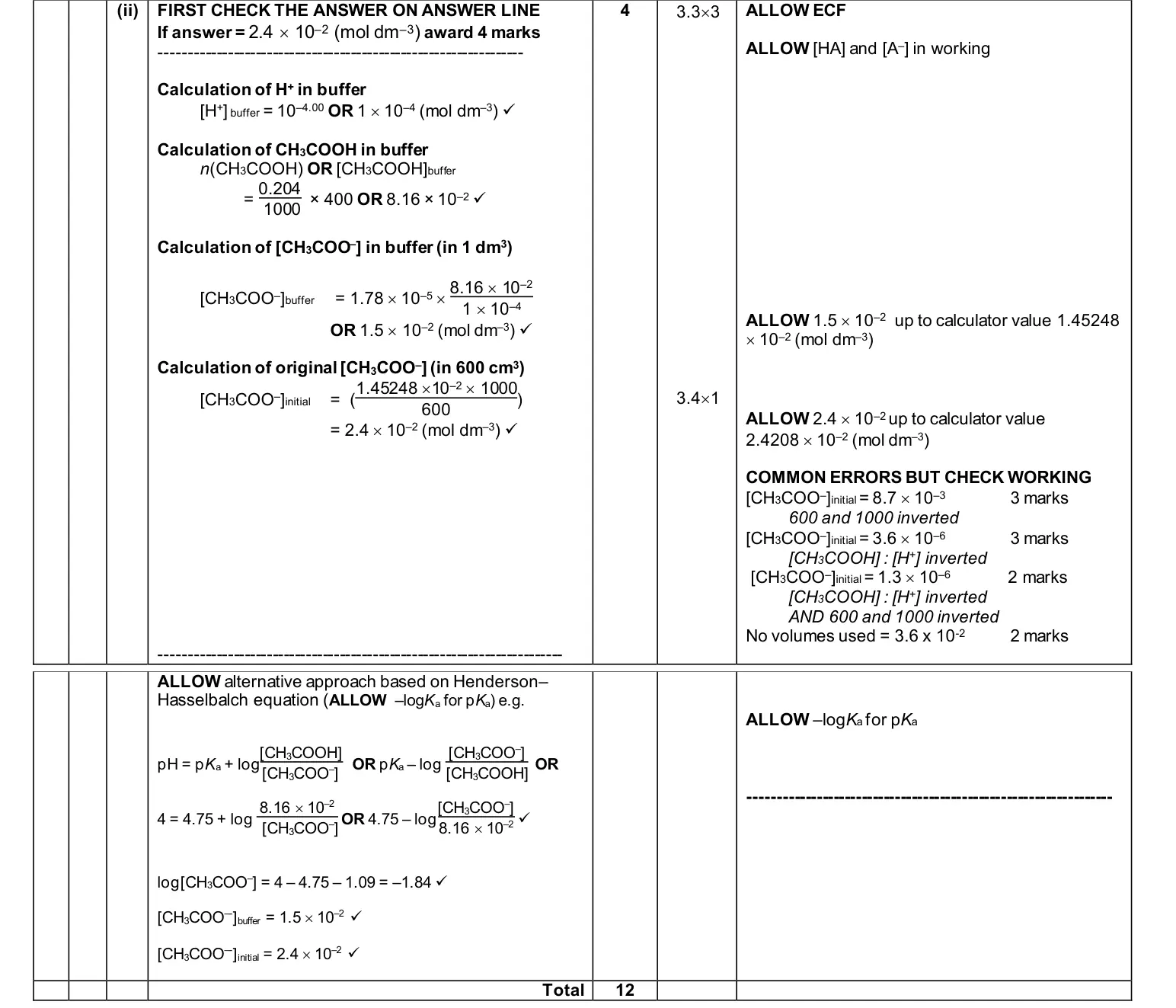
18(c)(ii) Acids, bases, pH and buffers 4AO3Calculation
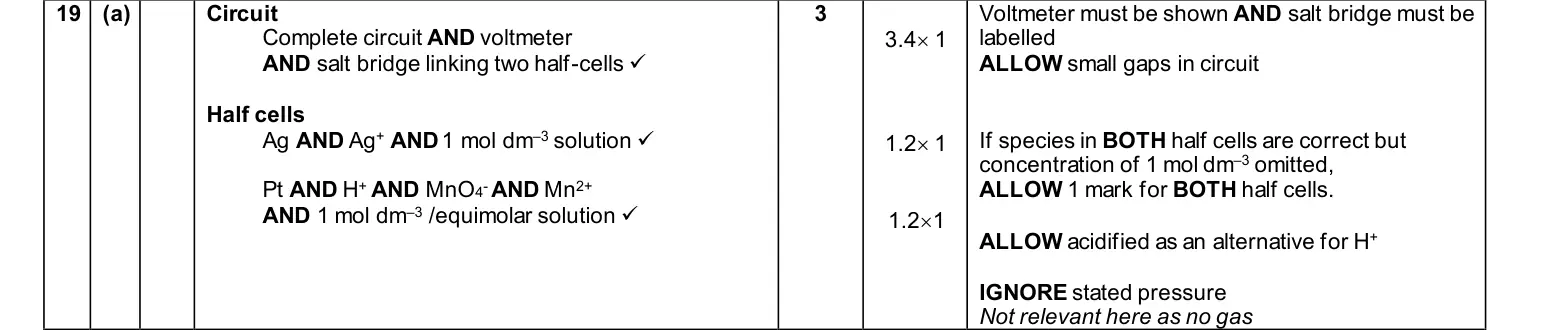
19(a) Redox titrations and electrode potentials 3AO1, 3Drawing / labelling
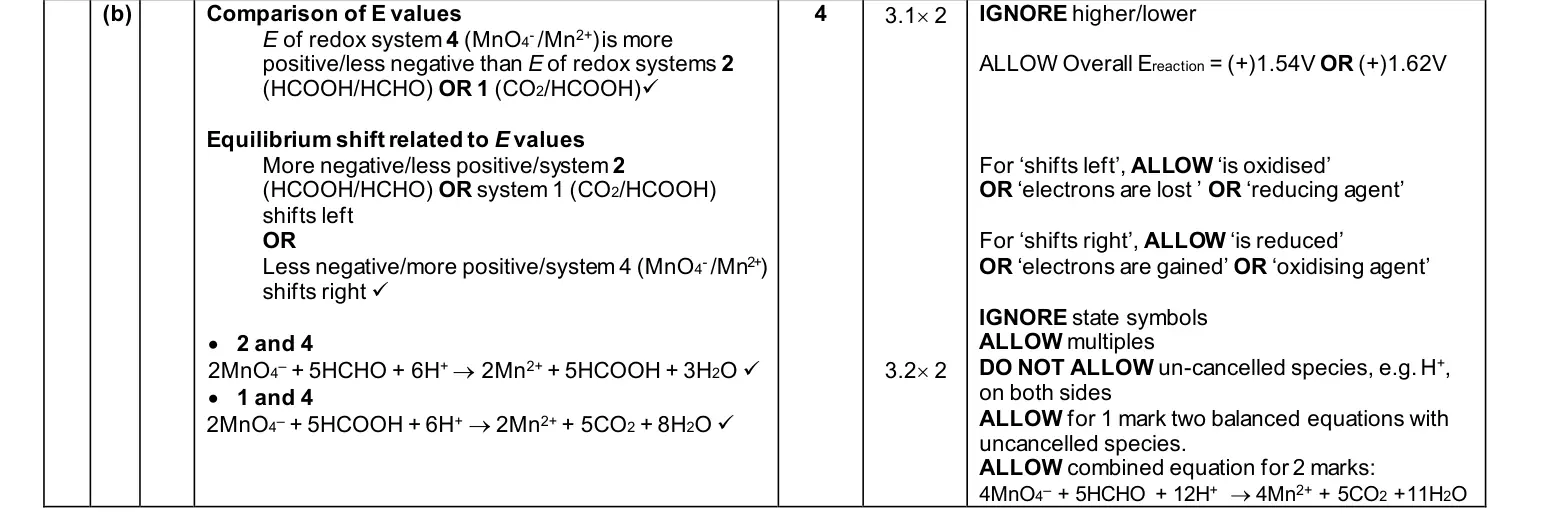
19(b) Redox titrations and electrode potentials 4AO3Short answer
19(c) Redox titrations and electrode potentials 2AO2Calculation
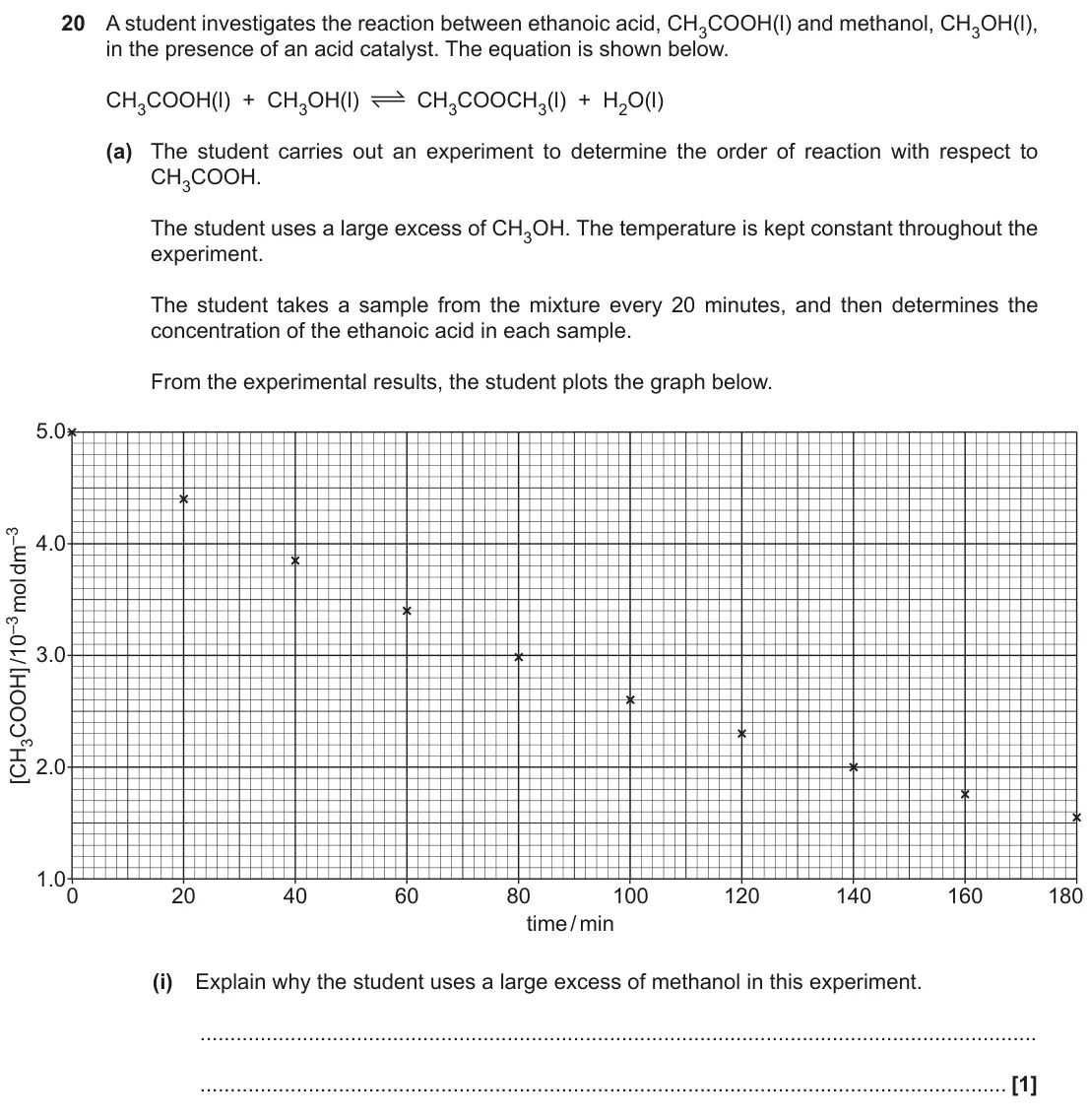
20(a)(i) Rates: orders, rate equations and the Arrhenius equation, Practical skills: planning, analysis and evaluation 1AO3Short answer
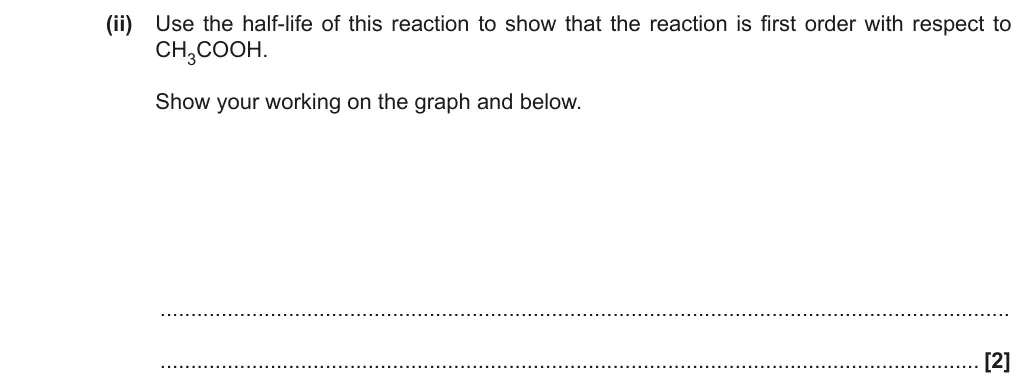
20(a)(ii) Rates: orders, rate equations and the Arrhenius equation 2AO3Calculation
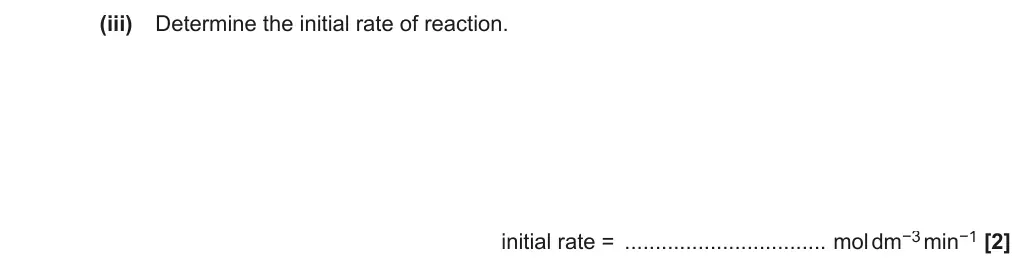
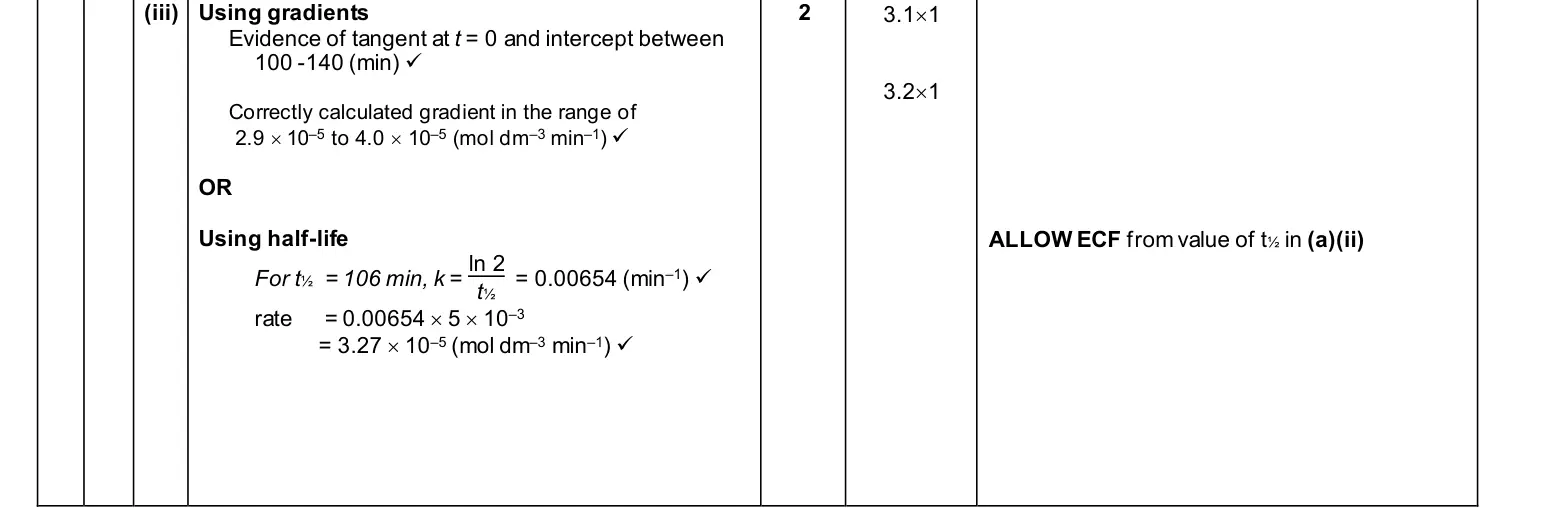
20(a)(iii) Rates: orders, rate equations and the Arrhenius equation 2AO3Calculation
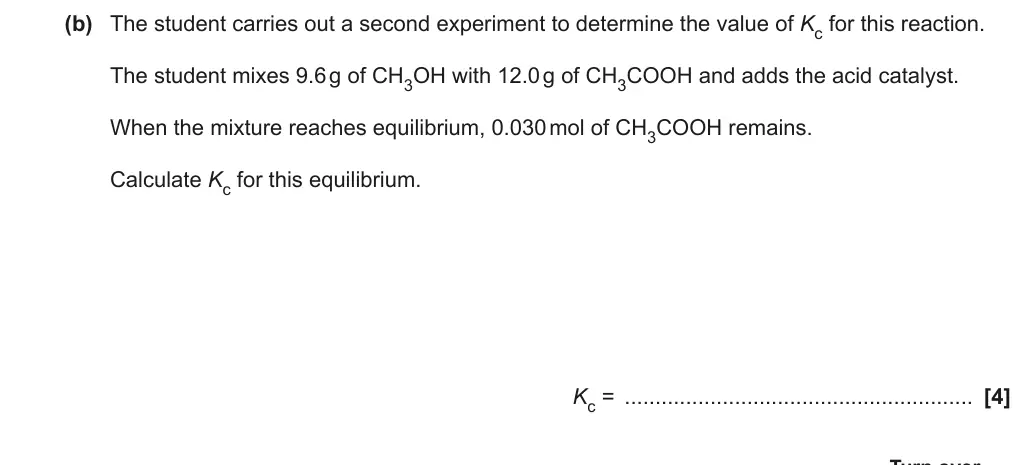
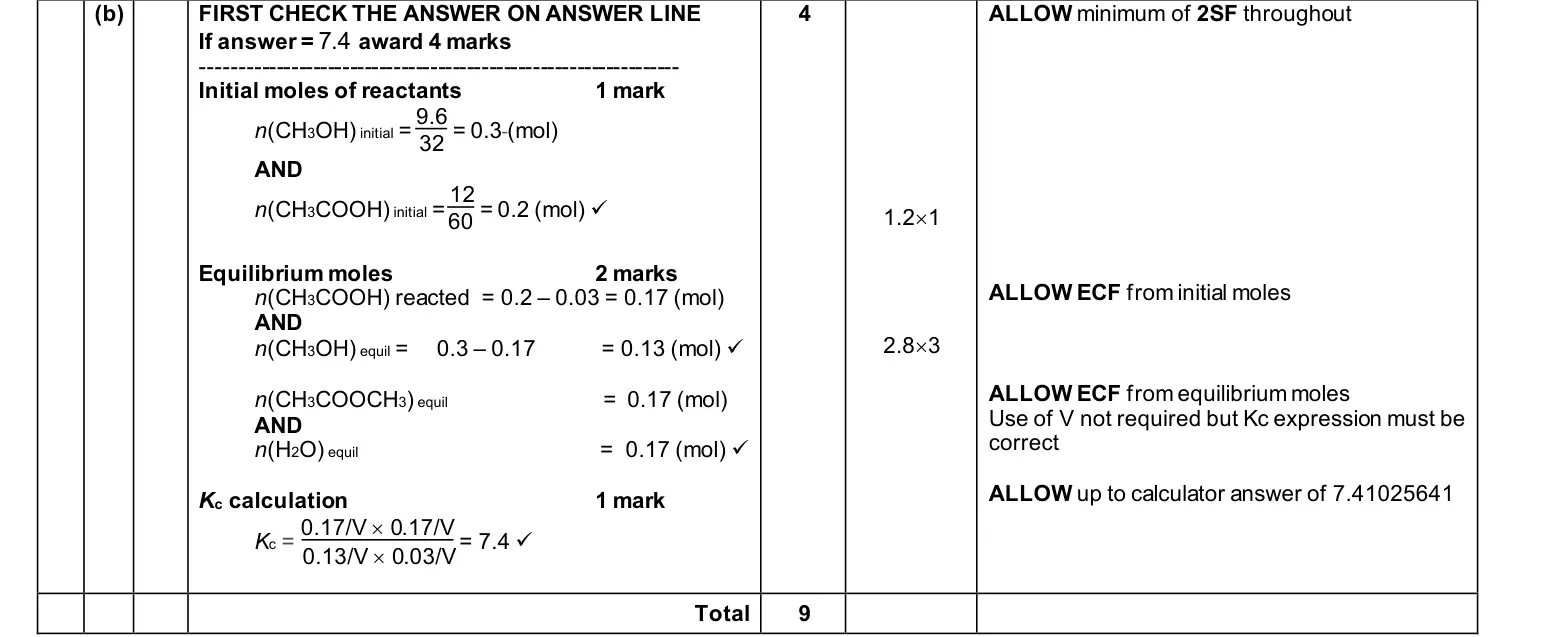
20(b) Equilibrium constants Kc and Kp, Amount of substance (moles) 4AO1, 2Calculation
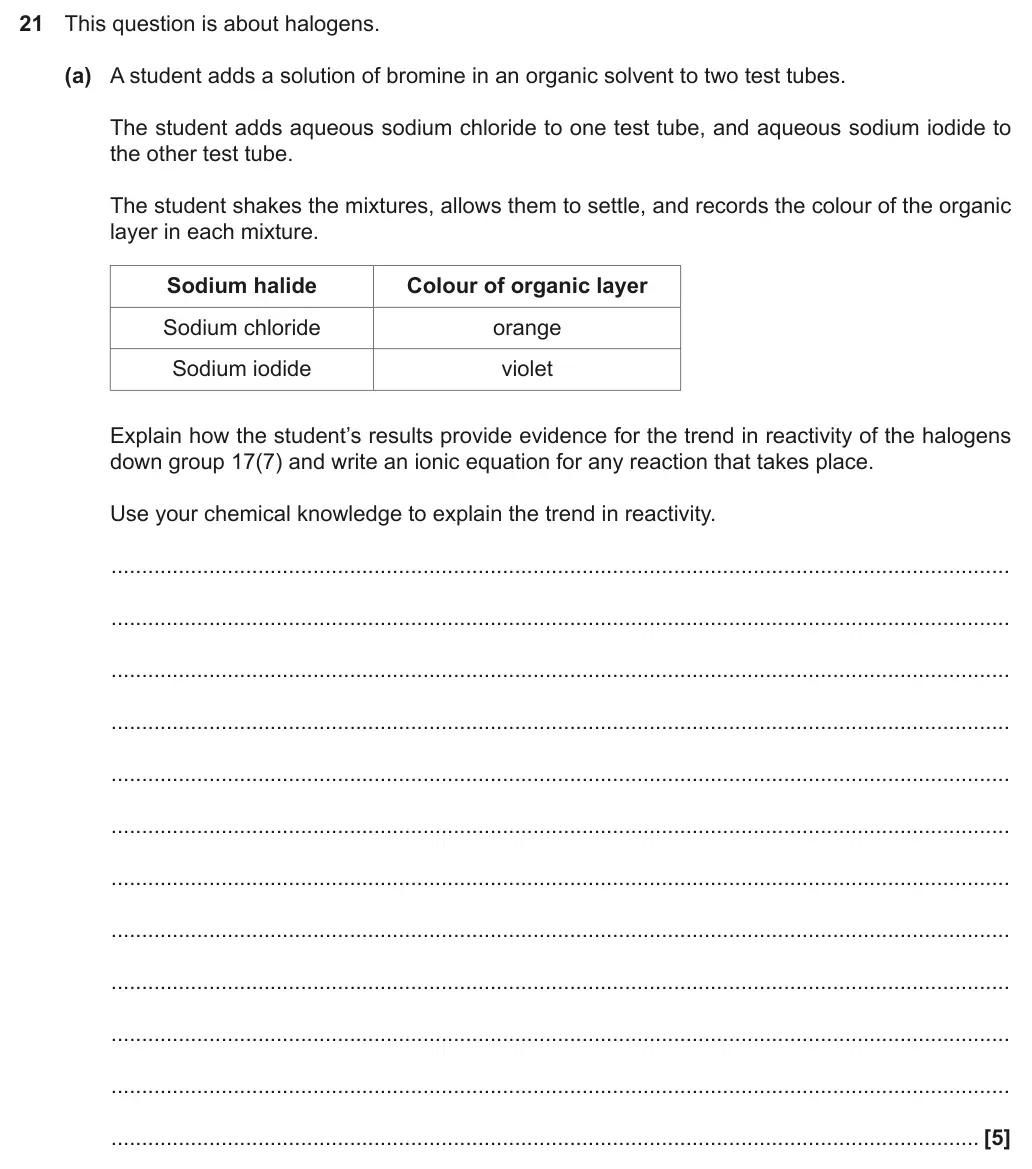
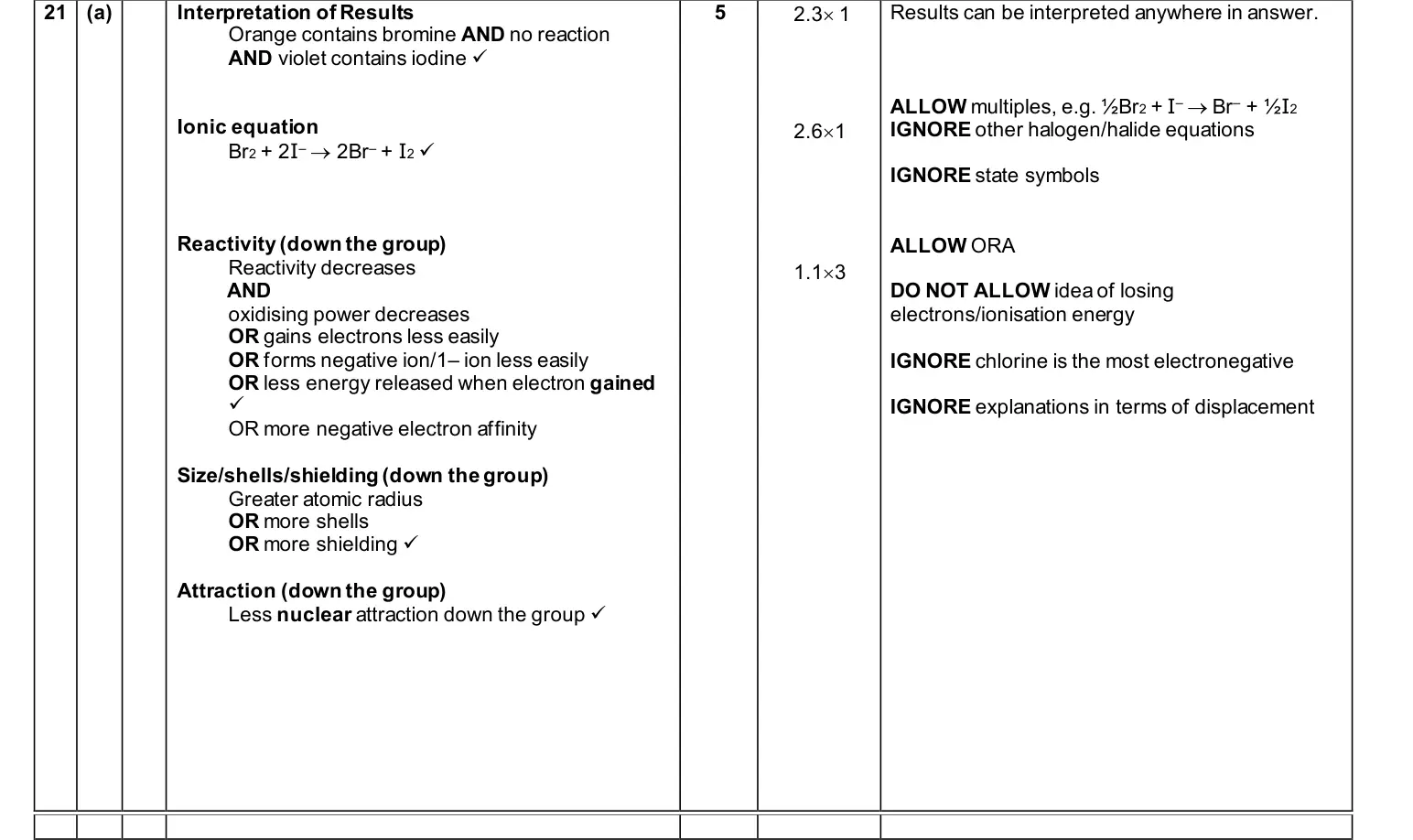
21(a) The halogens, Formulae and equations 5AO1, 2Equation writing
21(b) The halogens 1AO1Short answer
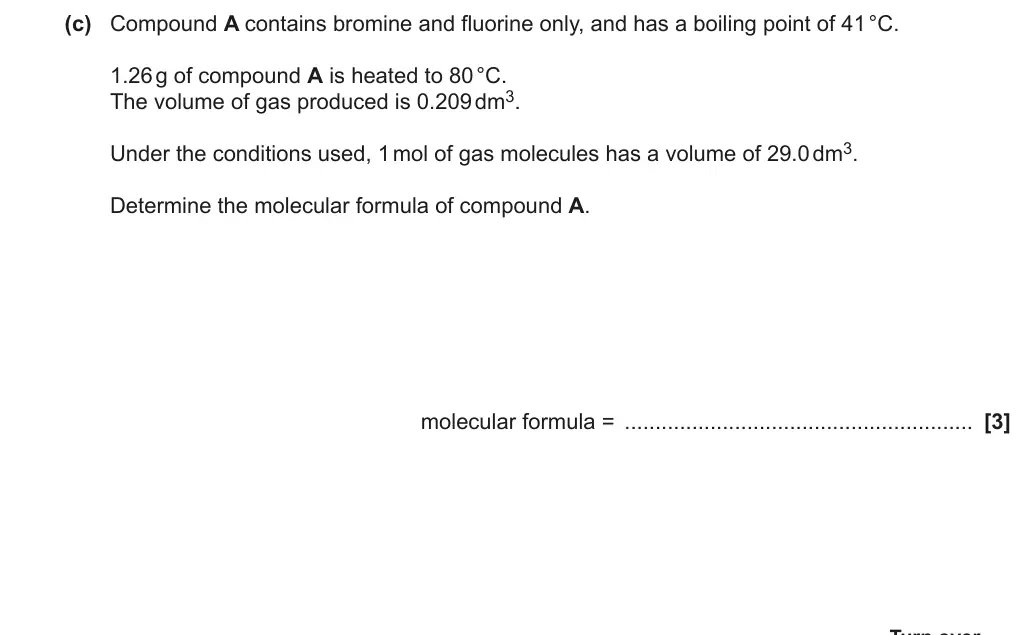
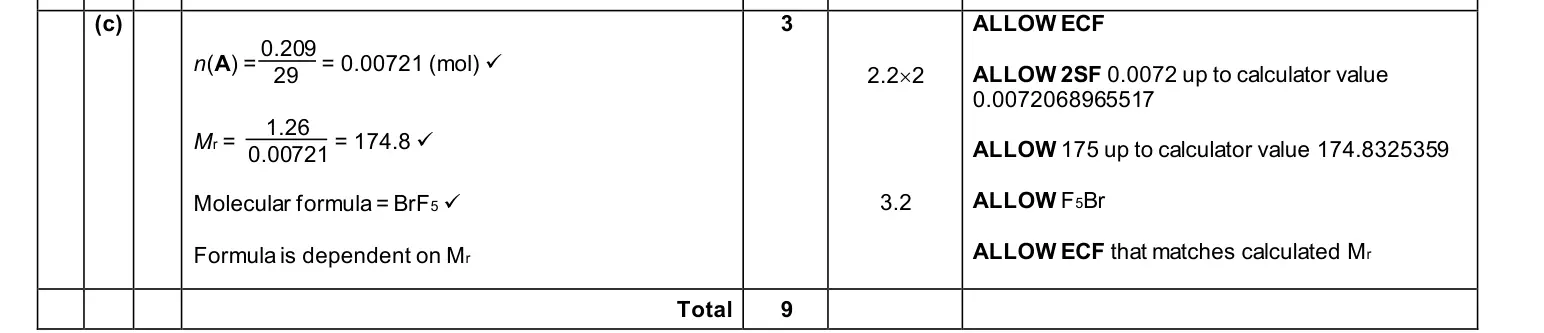
21(c) Amount of substance (moles) 3AO2, 3Calculation
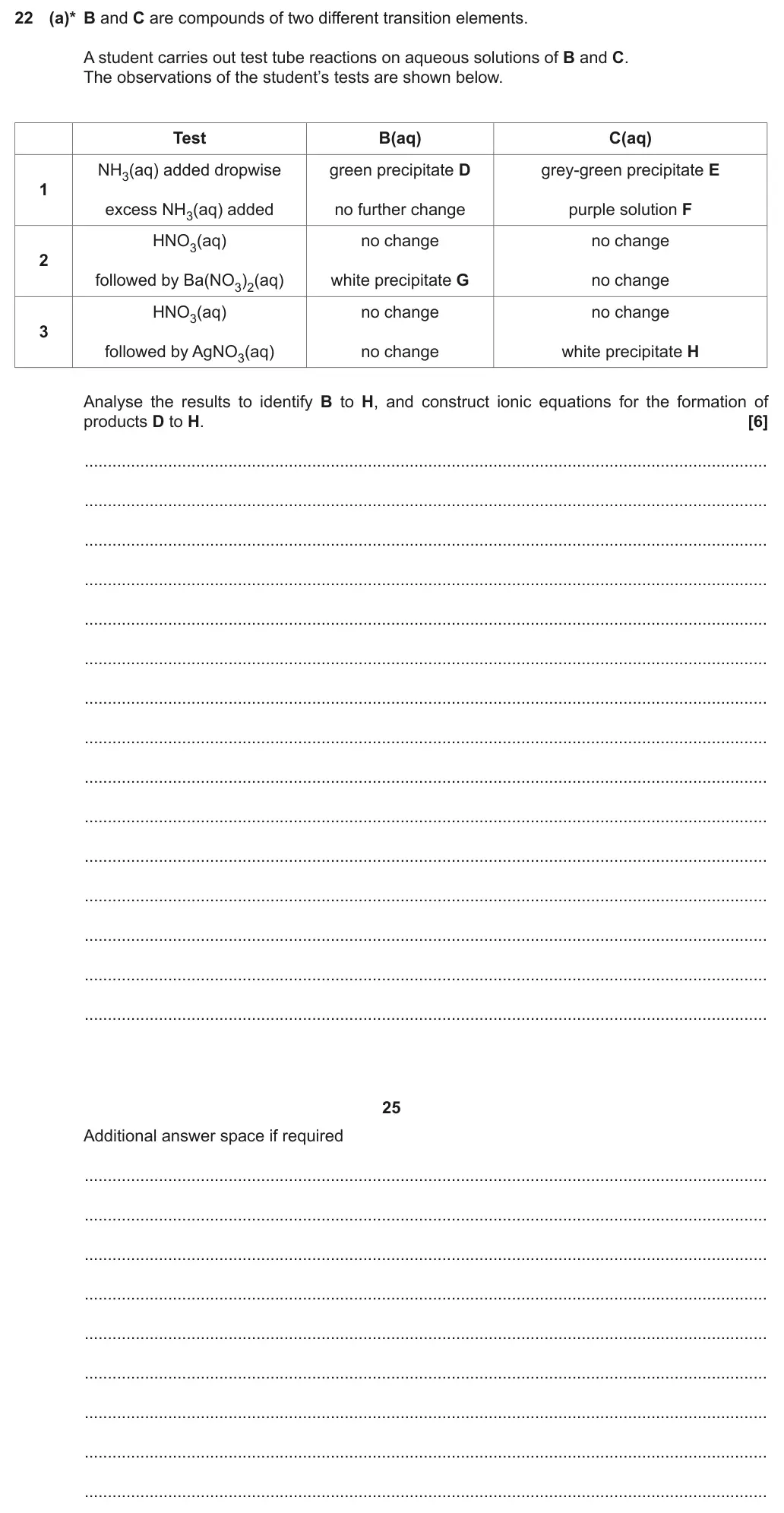
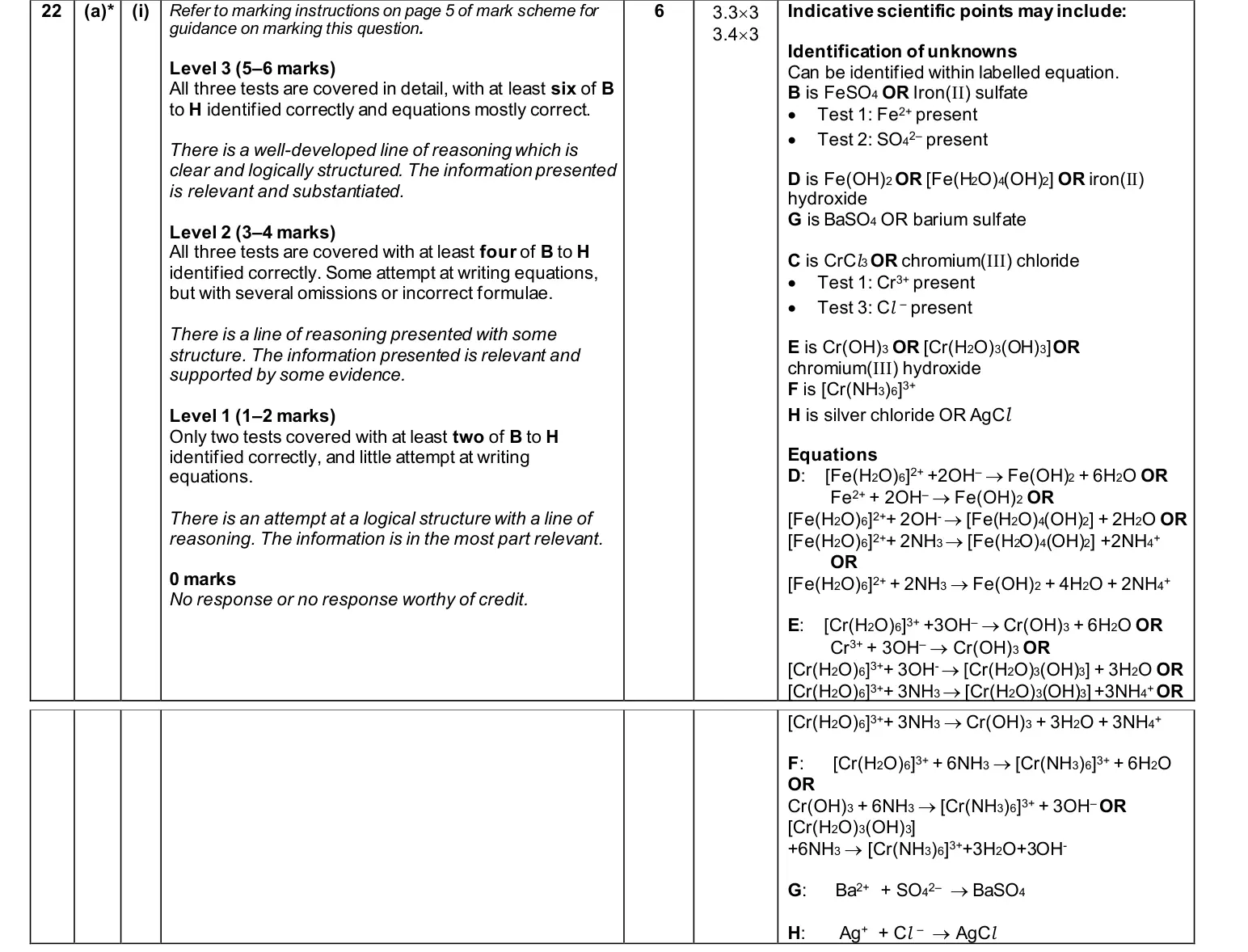
22(a) Qualitative analysis: tests for ions, Formulae and equations, Transition elements 6AO3Level of response
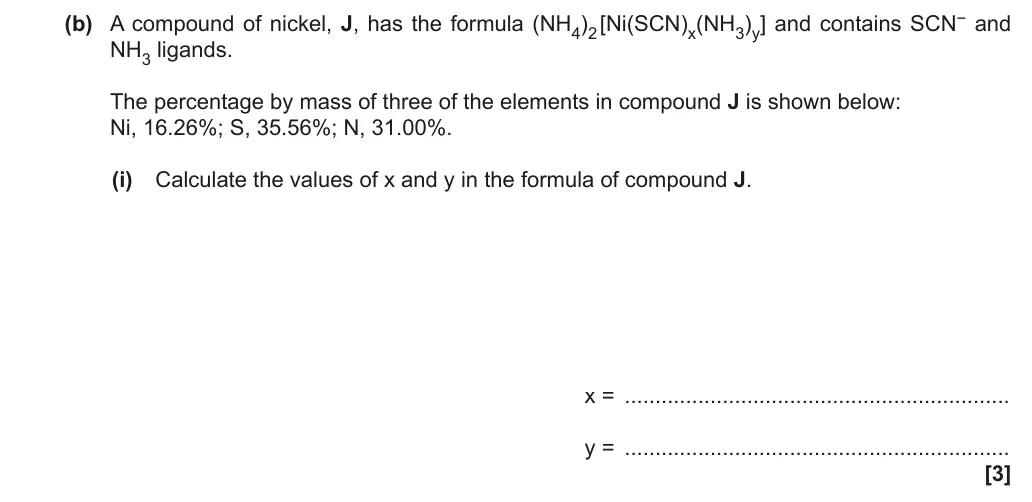
22(b)(i) Amount of substance (moles), Transition elements 3AO3Calculation
22(b)(ii) Redox and oxidation numbers 1AO2Short answer
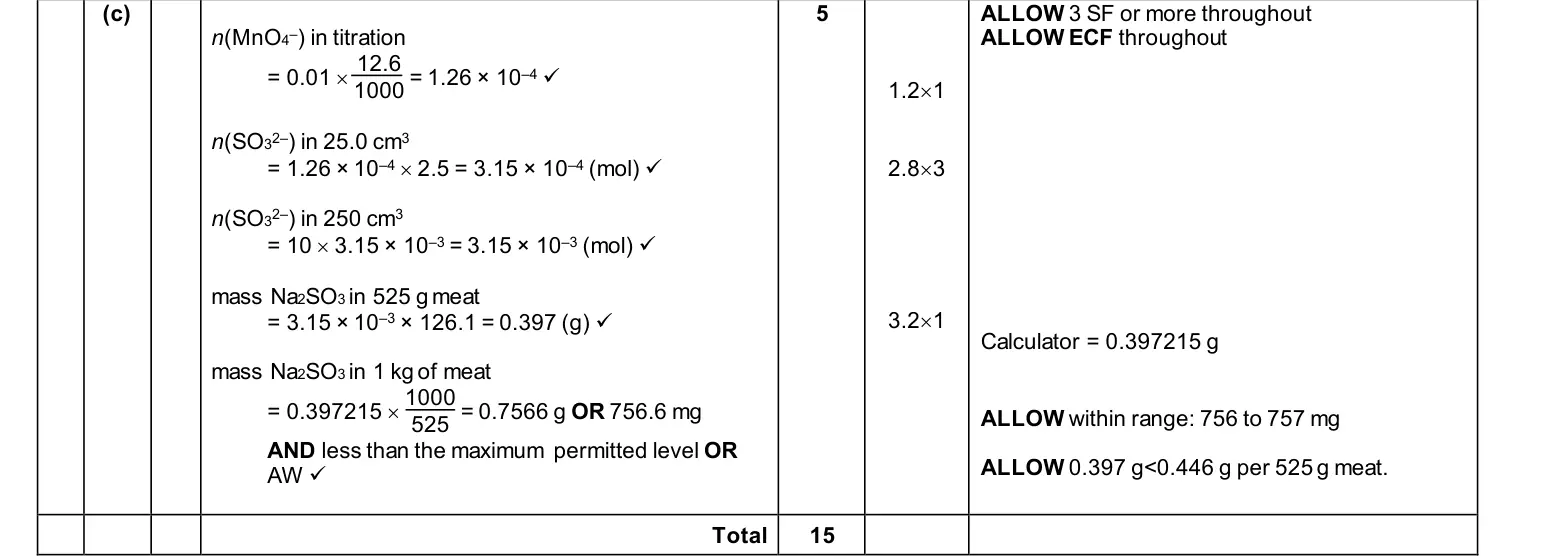
22(c) Redox titrations and electrode potentials, Amount of substance (moles) 5AO1, 2, 3Data interpretation

The questions

12345678910111213141516(a)16(b)(i)16(b)(ii)16(c)16(d)(i)16(d)(ii)16(d)(iii)17(a)17(b)17(c)17(d)18(a)18(b)18(c)(i)18(c)(ii)19(a)19(b)19(c)20(a)(i)20(a)(ii)20(a)(iii)20(b)21(a)21(b)21(c)22(a)22(b)(i)22(b)(ii)22(c)
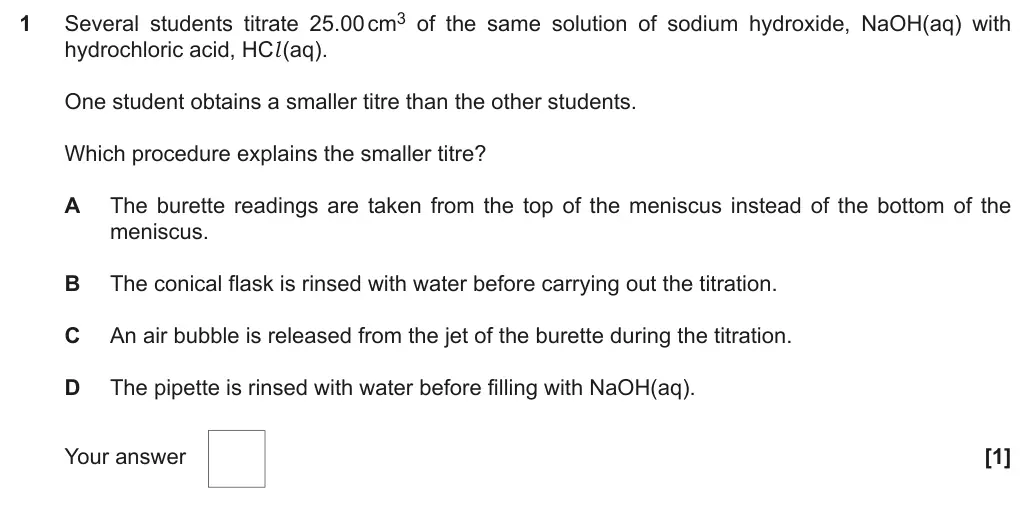
November 2020 · Paper 1 · Q1 1 mark AO2 Multiple choice acids and titrationspractical skills
1 Several students titrate 25.00 cm3 of the same solution of sodium hydroxide, NaOH(aq) with
hydrochloric acid, HCl (aq).
One student obtains a smaller titre than the other students.
Which procedure explains the smaller titre?
A The burette readings are taken from the top of the meniscus instead of the bottom of the
meniscus.
B The conical flask is rinsed with water before carrying out the titration.
C An air bubble is released from the jet of the burette during the titration.
D The pipette is rinsed with water before filling with NaOH(aq).
Your answer [1]
November 2020 · Paper 1 · Q2 1 mark AO1 Multiple choice amount of substance
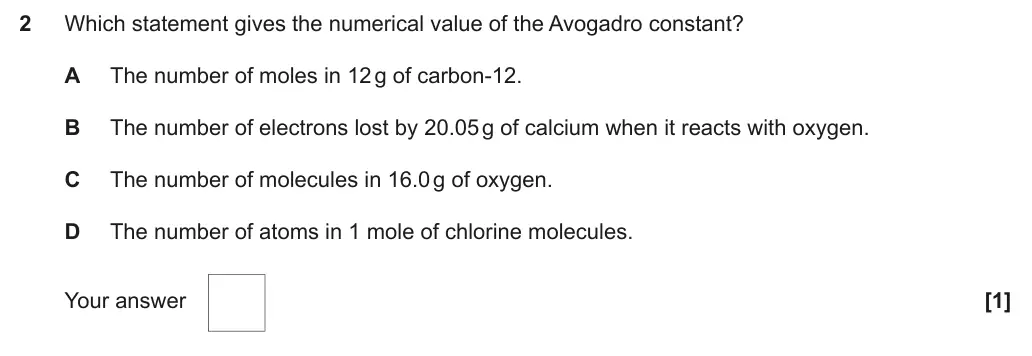
2 Which statement gives the numerical value of the Avogadro constant?
A The number of moles in 12 g of carbon-12.
B The number of electrons lost by 20.05 g of calcium when it reacts with oxygen.
C The number of molecules in 16.0 g of oxygen.
D The number of atoms in 1 mole of chlorine molecules.
Your answer [1]
November 2020 · Paper 1 · Q3 1 mark AO2 Multiple choice amount of substance
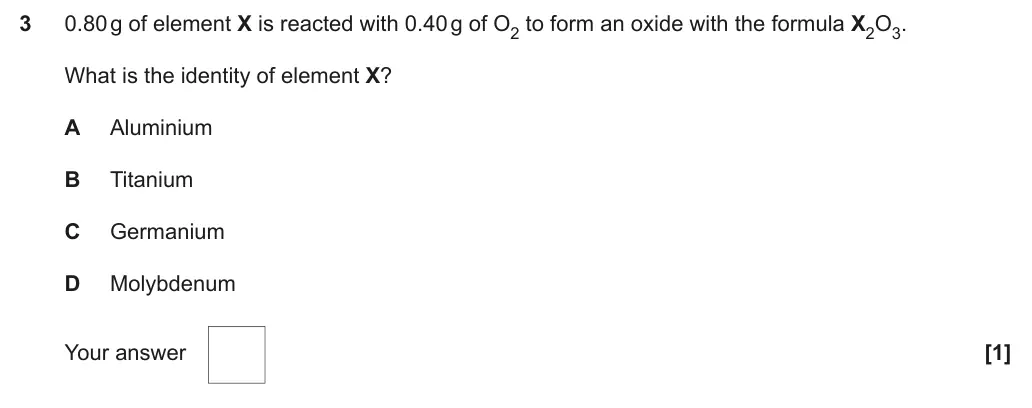
3 0.80 g of element X is reacted with 0.40 g of O2 to form an oxide with the formula X2O3.
What is the identity of element X?
A Aluminium
B Titanium
C Germanium
D Molybdenum
Your answer [1]
November 2020 · Paper 1 · Q4 1 mark AO2 Multiple choice amount of substance
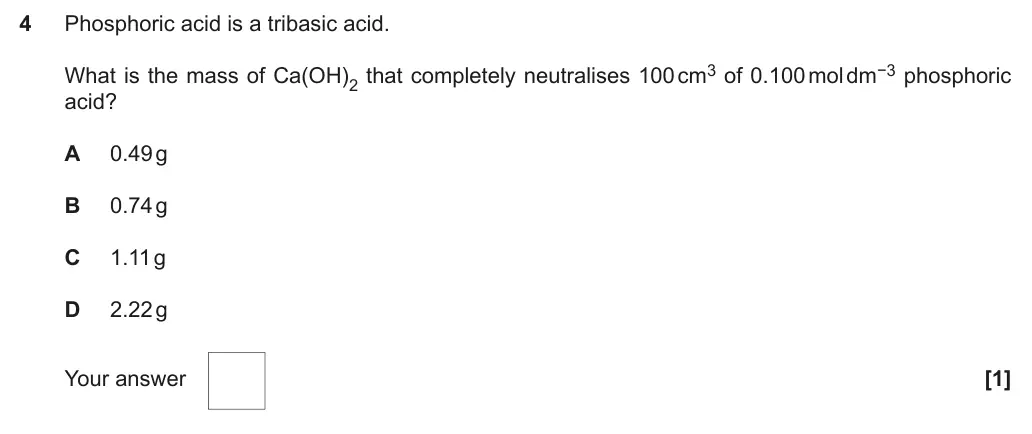
4 Phosphoric acid is a tribasic acid.
What is the mass of Ca(OH)2 that completely neutralises 100 cm3 of 0.100 mol dm−3 phosphoric
acid?
A 0.49 g
B 0.74 g
C 1.11 g
D 2.22 g
Your answer [1]
November 2020 · Paper 1 · Q5 1 mark AO1 Multiple choice transition elements
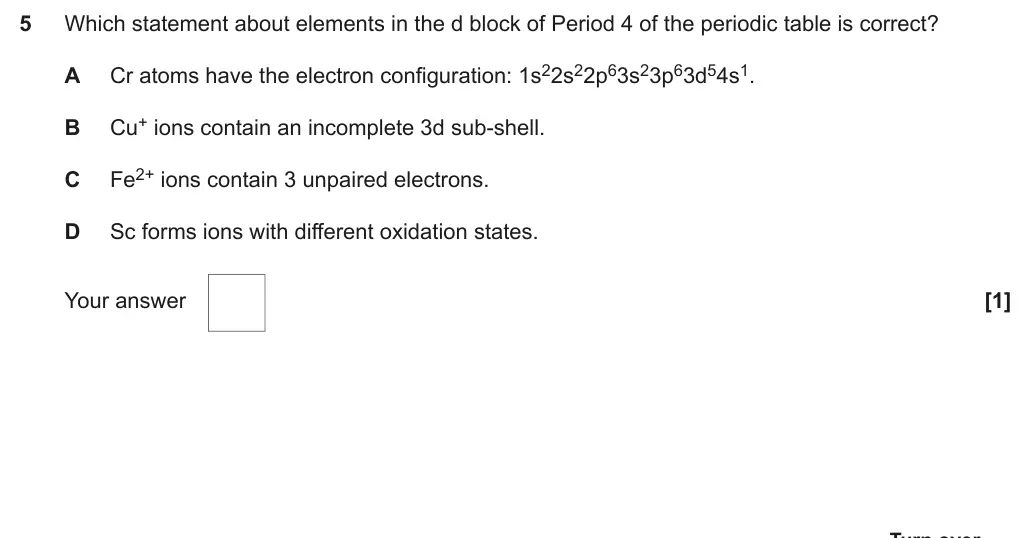
5 Which statement about elements in the d block of Period 4 of the periodic table is correct?
A Cr atoms have the electron configuration: 1s22s22p63s23p63d54s1.
B Cu+ ions contain an incomplete 3d sub-shell.
C Fe2+ ions contain 3 unpaired electrons.
D Sc forms ions with different oxidation states.
Your answer [1]
November 2020 · Paper 1 · Q6 1 mark AO2 Multiple choice enthalpy changes
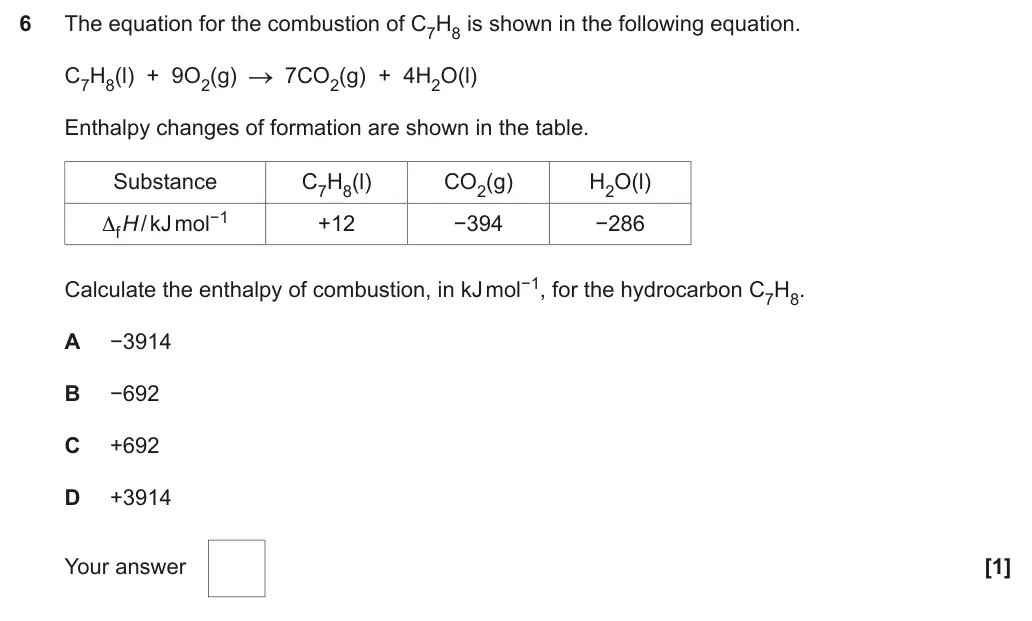
6 The equation for the combustion of C7H8 is shown in the following equation.
C7H8(l)  +  9O2(g) 7CO2(g)  +  4H2O(l)
Enthalpy changes of formation are shown in the table.
Substance C7H8(l) CO2(g) H2O(l)
∆f H / kJ mol−1 +12 −394 −286
Calculate the enthalpy of combustion, in kJ mol−1, for the hydrocarbon C7H8.
A −3914
B  −692
C +692
D +3914
Your answer [1]
November 2020 · Paper 1 · Q7 1 mark AO1 Multiple choice reaction rates
7 The diagram represents a Boltzmann distribution curve of molecules at a given temperature.
number of
molecules
energy
Which statement for this Boltzmann distribution curve is correct at a higher temperature?
A The peak increases in height and moves to the left.
B The peak increases in height and moves to the right.
C The peak decreases in height and moves to the left.
D The peak decreases in height and moves to the right.
Your answer [1]
November 2020 · Paper 1 · Q8 1 mark AO2 Multiple choice rate equations
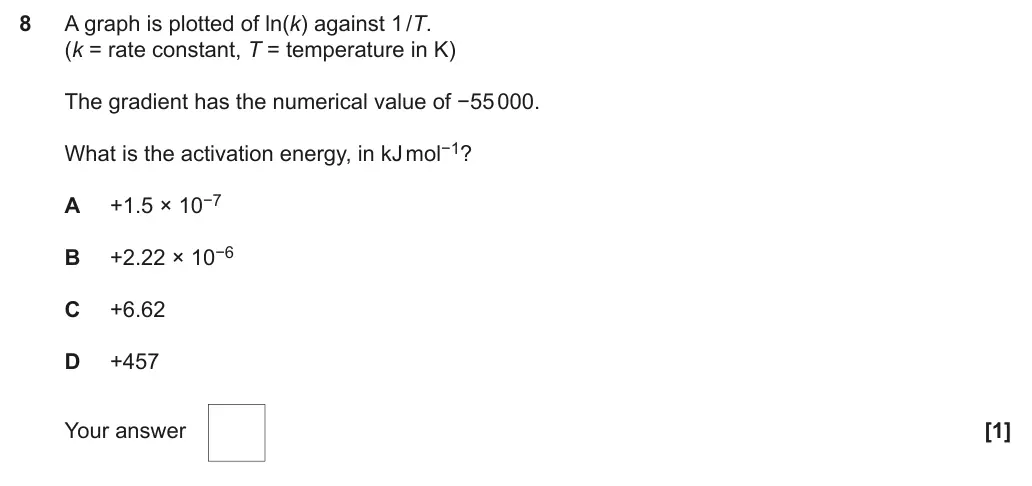
8 A graph is plotted of ln(k) against 1 /T.
(k = rate constant, T = temperature in K)
The gradient has the numerical value of −55 000.
What is the activation energy, in kJ mol−1?
A +1.5 × 10⁻⁷
B +2.22 × 10⁻⁶
C +6.62
D +457
Your answer [1]
November 2020 · Paper 1 · Q9 1 mark AO2 Multiple choice equilibrium constants
9 The reversible reaction of nitrogen and hydrogen to form ammonia is shown below.
N2(g)  +  3H2(g) 2NH3(g)
In the equilibrium mixture, the partial pressure of N2 is 18.75 MPa and the partial pressure of H2 is
2.50 MPa.
The total pressure is 25 MPa.
What is the value of Kp, in MPa−2?
A 1.2 × 10⁻⁴
B 0.048
C 0.075
D 21
Your answer [1]
November 2020 · Paper 1 · Q10 1 mark AO1 Multiple choice rate equations
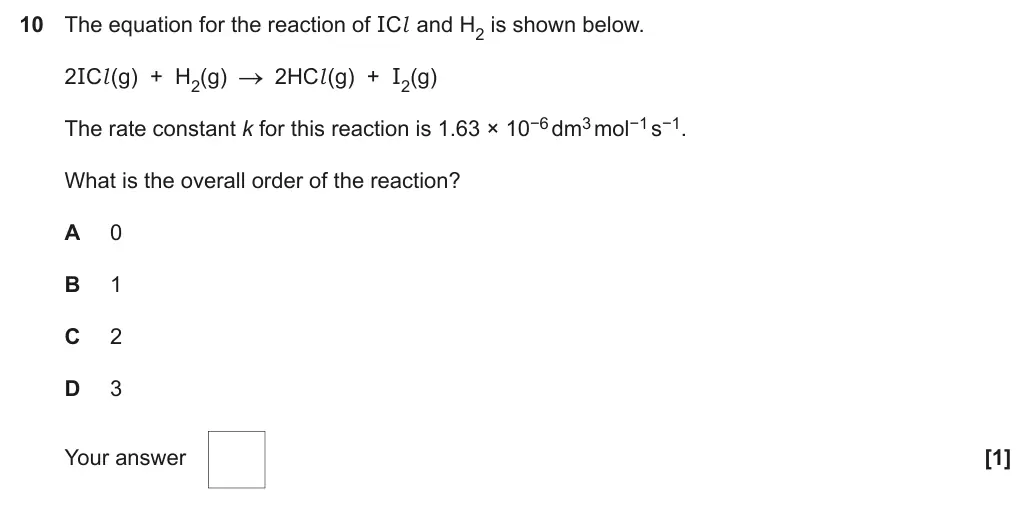
10 The equation for the reaction of ICl  and H2 is shown below.
2ICl (g)  +  H2(g) 2HCl (g)  +  I2(g)
The rate constant k for this reaction is 1.63 × 10⁻⁶ dm3 mol−1 s−1.
What is the overall order of the reaction?
A 0
B 1
C 2
D 3
Your answer [1]
November 2020 · Paper 1 · Q11 1 mark AO2 Multiple choice acids bases and buffersamount of substance
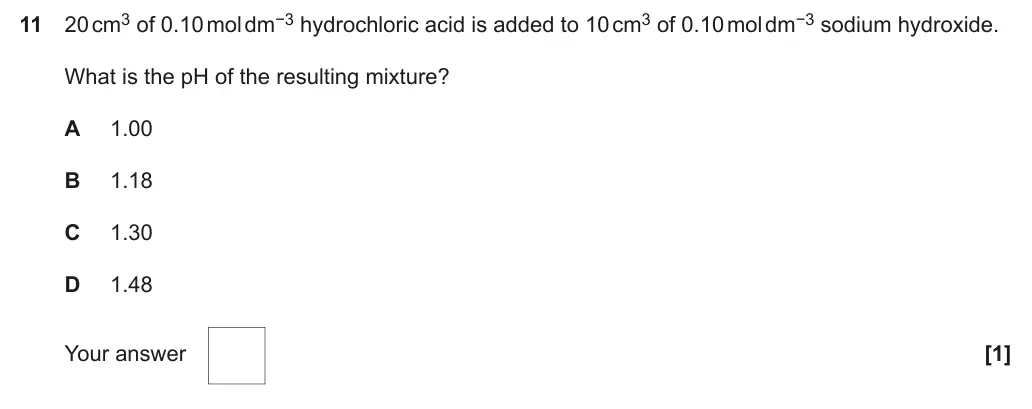
11 20 cm3 of 0.10 mol dm−3 hydrochloric acid is added to 10 cm3 of 0.10 mol dm−3 sodium hydroxide.
What is the pH of the resulting mixture?
A 1.00
B 1.18
C 1.30
D 1.48
Your answer [1]
November 2020 · Paper 1 · Q12 1 mark AO2 Multiple choice redox and electrode potentialsredox
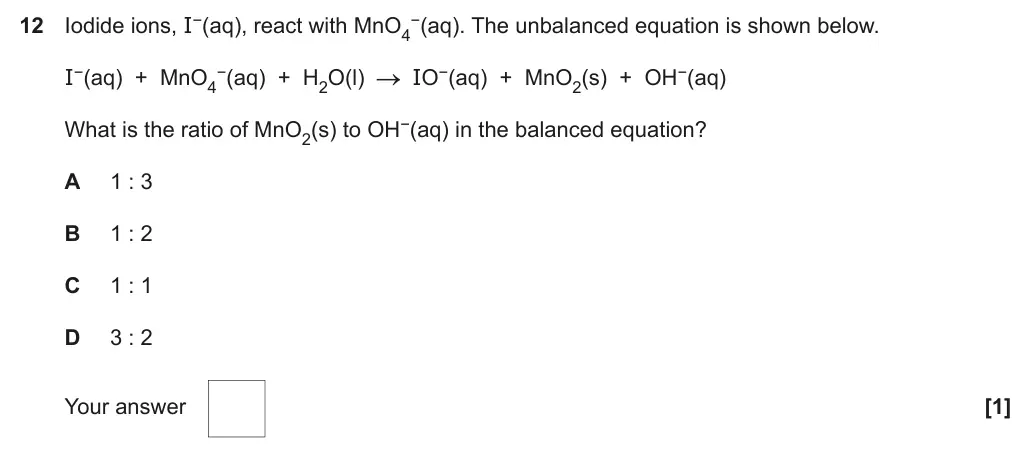
12 Iodide ions, I−(aq), react with MnO4 −(aq). The unbalanced equation is shown below.
I−(aq)  +  MnO4 −(aq)  +  H2O(l) IO−(aq)  +  MnO2(s)  +  OH−(aq)
What is the ratio of MnO2(s) to OH−(aq) in the balanced equation?
A 1 : 3
B 1 : 2
C 1 : 1
D 3 : 2
Your answer [1]
November 2020 · Paper 1 · Q13 1 mark AO1 Multiple choice chemical equilibriumequilibrium constants
13 Which statement(s) is/are correct when a catalyst is added to a system in dynamic equilibrium?
1 The rates of the forward and reverse reactions increase by the same amount.
2 The concentrations of the reactants and products do not change.
3 The value of Kc increases.
A 1, 2 and 3
B Only 1 and 2
C Only 2 and 3
D Only 1
Your answer [1]
November 2020 · Paper 1 · Q14 1 mark AO1 Multiple choice group 2electron structure
14 Which statement(s) for Group 2 elements is/are correct?
1 The 2nd ionisation energy of magnesium is greater than the 2nd ionisation energy of
calcium.
2 A strontium ion, Sr2+, contains a total of 6 electrons in s orbitals.
3 The equation for the reaction of barium with water is:
2Ba  +  2H2O 2BaOH  +  H2.
A 1, 2 and 3
B Only 1 and 2
C Only 2 and 3
D Only 1
Your answer [1]
November 2020 · Paper 1 · Q15 1 mark AO1 Multiple choice transition elements
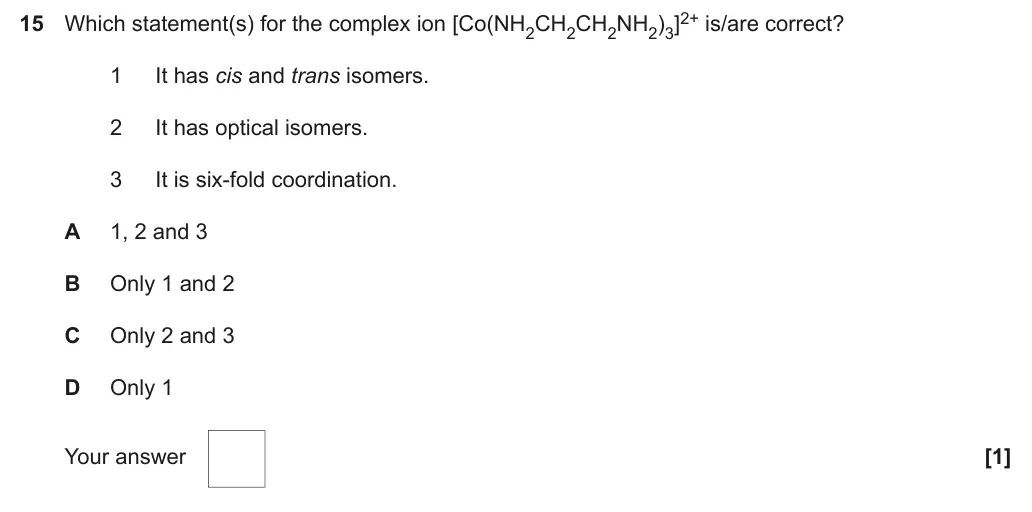
15 Which statement(s) for the complex ion [Co(NH2CH2CH2NH2)3]2+ is/are correct?
1 It has cis and trans isomers.
2 It has optical isomers.
3 It is six-fold coordination.
A 1, 2 and 3
B Only 1 and 2
C Only 2 and 3
D Only 1
Your answer [1]
November 2020 · Paper 1 · Q16(a) 1 mark AO1 Short answer atomic structure and isotopes
SECTION B
Answer all the questions.
16 This question is about magnesium, bromine and magnesium bromide.
(a) Relative atomic mass is defined as ‘the weighted mean mass compared with 1/12th mass of
carbon-12’.
Explain what is meant by the term weighted mean mass.
...................................................................................................................................................
...................................................................................................................................................
...................................................................................................................................................
.............................................................................................................................................. [1]
November 2020 · Paper 1 · Q16(b)(i) 2 marks AO1, 2 Drawing / labelling bonding and structure
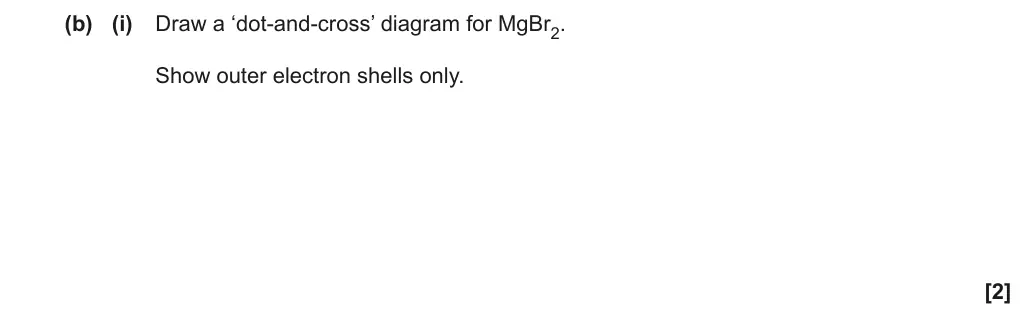
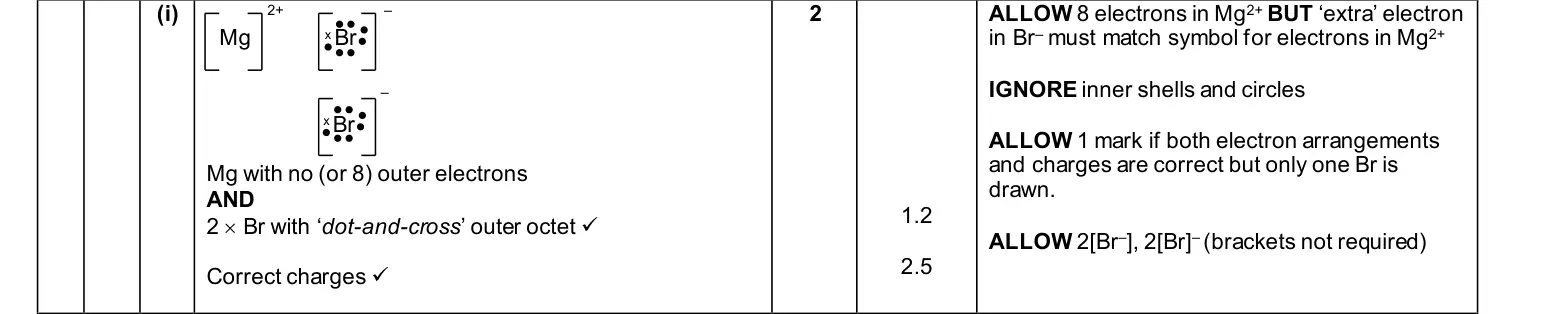
(b) (i) Draw a ‘dot-and-cross’ diagram for MgBr2.
Show outer electron shells only.
[2]
November 2020 · Paper 1 · Q16(b)(ii) 3 marks AO2 Calculation amount of substance
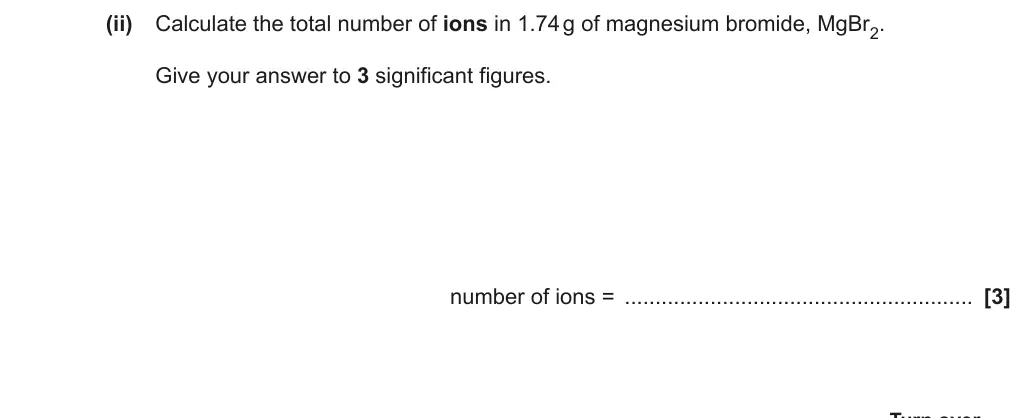
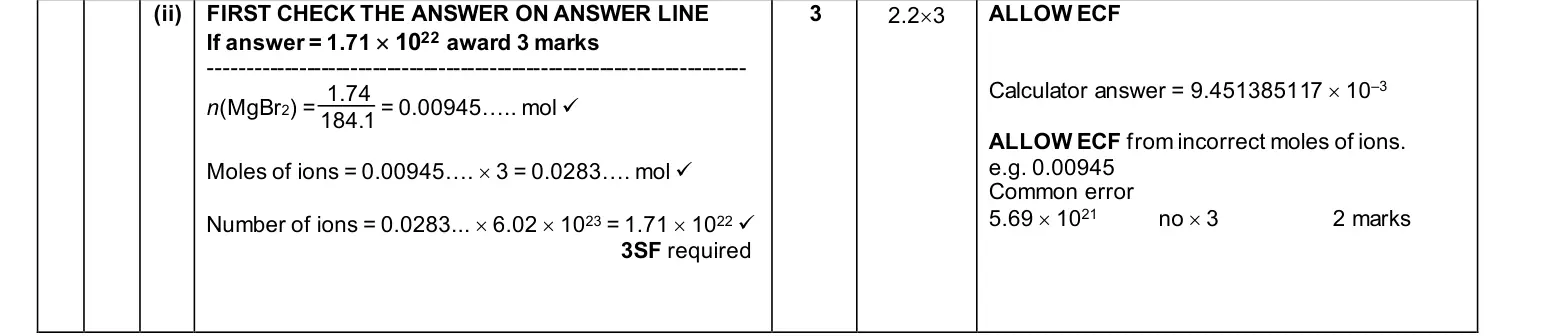
(ii) Calculate the total number of ions in 1.74 g of magnesium bromide, MgBr2.
Give your answer to 3 significant figures.
number of ions =  ......................................................... [3]
November 2020 · Paper 1 · Q16(c) 6 marks AO1, 2 6-mark level of response periodicitybonding and structure
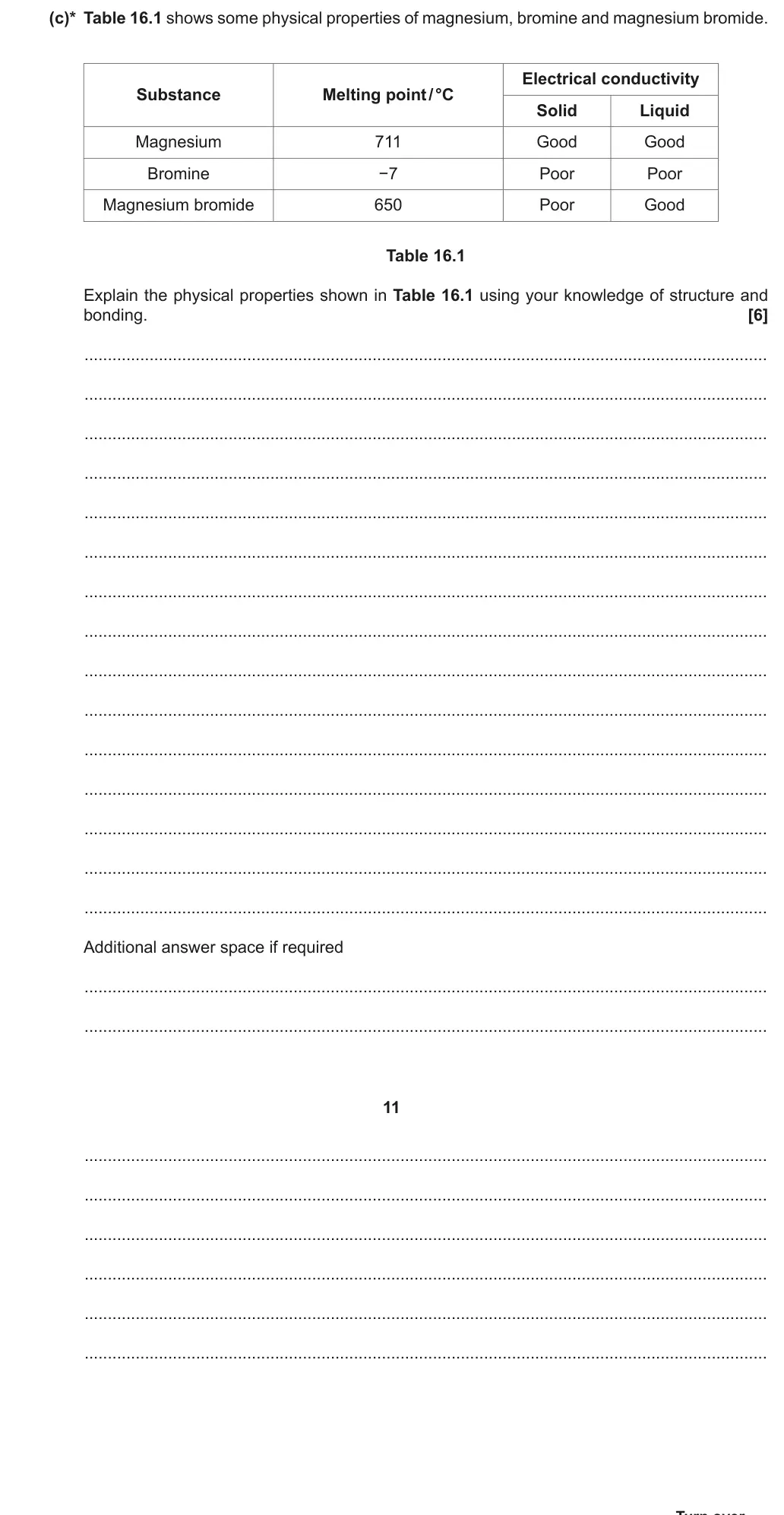
(c)* Table 16.1 shows some physical properties of magnesium, bromine and magnesium bromide.
Electrical conductivity
Substance Melting point / °C
Solid Liquid
Magnesium 711 Good Good
Bromine −7 Poor Poor
Magnesium bromide 650 Poor Good
Table 16.1
Explain the physical properties shown in Table 16.1 using your knowledge of structure and
bonding. [6]
...................................................................................................................................................
...................................................................................................................................................
...................................................................................................................................................
...................................................................................................................................................
...................................................................................................................................................
...................................................................................................................................................
...................................................................................................................................................
...................................................................................................................................................
...................................................................................................................................................
...................................................................................................................................................
...................................................................................................................................................
...................................................................................................................................................
...................................................................................................................................................
...................................................................................................................................................
...................................................................................................................................................
Additional answer space if required
...................................................................................................................................................
...................................................................................................................................................
...................................................................................................................................................
...................................................................................................................................................
...................................................................................................................................................
...................................................................................................................................................
...................................................................................................................................................
...................................................................................................................................................
November 2020 · Paper 1 · Q16(d)(i) 2 marks AO1 Complete table/diagram Hard lattice enthalpy
(d) The enthalpy change of hydration of bromide ions can be determined using the enthalpy
changes in Table 16.2.
Enthalpy change Energy / kJ mol−1
1st ionisation energy of magnesium +736
2nd ionisation energy of magnesium +1450
atomisation of bromine +112
atomisation of magnesium +148
electron affinity of bromine −325
formation of magnesium bromide −525
hydration of bromide ion to be calculated
hydration of magnesium ion −1926
solution of magnesium bromide −186
Table 16.2
(i) An incomplete energy cycle based on Table 16.2 is shown below.
On the dotted lines, add the species present, including state symbols.
............................................
Mg2+(g) + 2Br–(g)
Mg+(g) + 2Br(g) + e–
Mg(g) + 2Br(g)
Mg(s) + 2Br(g)
............................................
Mg2+(aq) + 2Br–(g)
MgBr2(s)
Mg2+(aq) + 2Br–(aq)
[2]
November 2020 · Paper 1 · Q16(d)(ii) 2 marks AO2 Calculation Medium lattice enthalpy
Earlier part of question 16 that this part usesEarlier part of November 2020 Paper 1 question 16
(ii) Using your completed energy cycle in 16(d)(i), calculate the enthalpy change of hydration
of bromide ions.
enthalpy change of hydration =  ........................................... kJ mol−1 [2]
November 2020 · Paper 1 · Q16(d)(iii) 3 marks AO1, 2 Calculation lattice enthalpy
Earlier parts of question 16 that this part usesEarlier part of November 2020 Paper 1 question 16Earlier part of November 2020 Paper 1 question 16
(iii) Write the equation for the lattice enthalpy of magnesium bromide and calculate the lattice
enthalpy of magnesium bromide.
Equation  ............................................................................................................................
Calculation
lattice enthalpy =  ............................................ kJ mol−1 [3]
November 2020 · Paper 1 · Q17(a) 3 marks AO1 Short answer chemical equilibrium
17 Methanol, CH3OH, can be made industrially by the reaction of carbon monoxide with hydrogen, as
shown in equilibrium 1.
CO(g)  +  2H2(g) CH3OH(g)   ∆H = −91 kJ mol−1 Equilibrium 1
(a) Predict the conditions of pressure and temperature that would give the maximum equilibrium
yield of CH3OH in equilibrium 1.
Explain your answer.
...................................................................................................................................................
...................................................................................................................................................
...................................................................................................................................................
...................................................................................................................................................
.............................................................................................................................................. [3]
November 2020 · Paper 1 · Q17(b) 2 marks AO1 Short answer reaction rates
Earlier part of question 17 that this part usesEarlier part of November 2020 Paper 1 question 17
(b) A catalyst is used in the production of methanol in equilibrium 1.
State two ways that the use of catalysts helps chemical companies to make their processes
more sustainable and less harmful to the environment.
1  ................................................................................................................................................
...................................................................................................................................................
2  ................................................................................................................................................
...................................................................................................................................................
[2]
November 2020 · Paper 1 · Q17(c) 5 marks AO2, 3 Calculation entropy and free energy
Earlier part of question 17 that this part usesEarlier part of November 2020 Paper 1 question 17
(c) Standard entropy values are given below.
Substance CO(g) H2(g) CH3OH(g)
Sө / J K−1 mol−1 198 131 238
A chemist proposed producing methanol at 525 K using equilibrium 1.
Explain, with a calculation, whether the production of methanol is feasible at 525 K.
...................................................................................................................................................
...................................................................................................................................................
...................................................................................................................................................
...................................................................................................................................................
...................................................................................................................................................
...................................................................................................................................................
...................................................................................................................................................
...................................................................................................................................................
...................................................................................................................................................
.............................................................................................................................................. [5]
November 2020 · Paper 1 · Q17(d) 3 marks AO1, 3 Calculation Medium equilibrium constantsentropy and free energy
Earlier part of question 17 that this part usesEarlier part of November 2020 Paper 1 question 17
(d) At 298 K, the free energy change, ∆G, for the production of methanol in equilibrium 1 is
−2.48 × 10⁴ J mol−1.
∆G is linked to Kp by the relationship: ∆G = −RT lnKp.
R = gas constant
T = temperature in K.
Calculate Kp for equilibrium 1 at 298 K.
Give your answer to 3 significant figures.
Kp =  .......................... units ...................... [3]
November 2020 · Paper 1 · Q18(a) 3 marks AO1, 2 Equation writing redoxacids bases and buffers
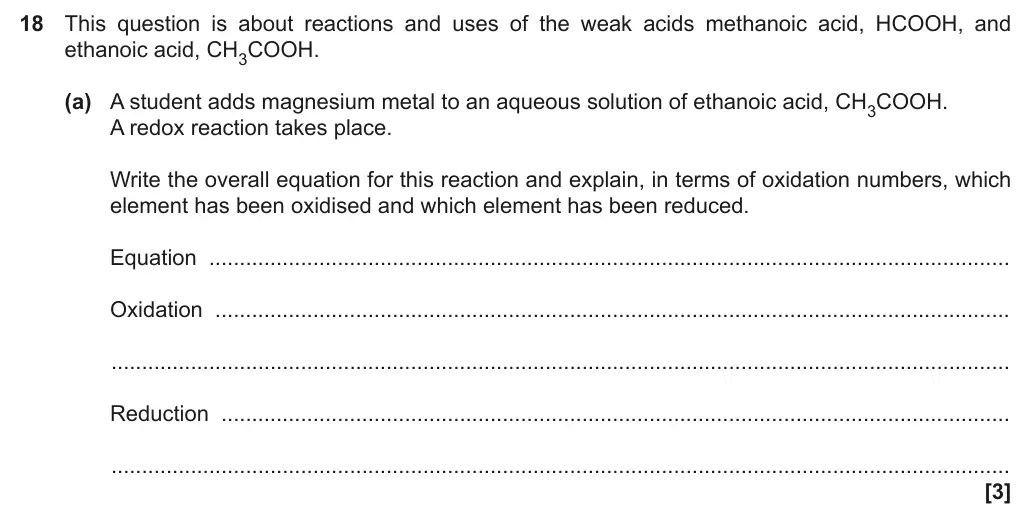
18 This question is about reactions and uses of the weak acids methanoic acid, HCOOH, and
ethanoic acid, CH3COOH.
(a) A student adds magnesium metal to an aqueous solution of ethanoic acid, CH3COOH.
A redox reaction takes place.
Write the overall equation for this reaction and explain, in terms of oxidation numbers, which
element has been oxidised and which element has been reduced.
Equation  ...................................................................................................................................
Oxidation  ..................................................................................................................................
...................................................................................................................................................
Reduction  .................................................................................................................................
...................................................................................................................................................
[3]
November 2020 · Paper 1 · Q18(b) 2 marks AO1 Complete table/diagram acids bases and buffers
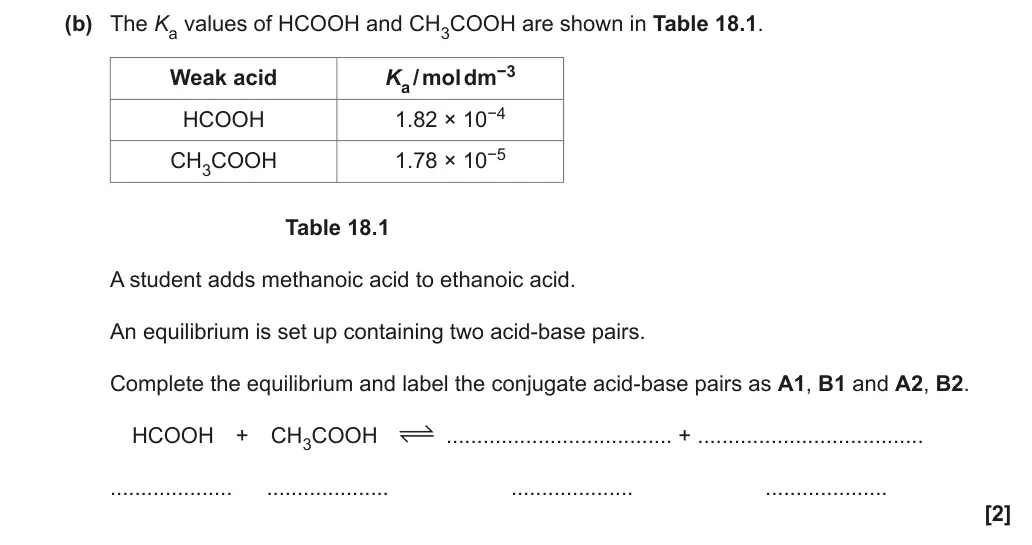
(b) The Ka values of HCOOH and CH3COOH are shown in Table 18.1.
Weak acid Ka / mol dm−3
HCOOH 1.82 × 10⁻⁴
CH3COOH 1.78 × 10⁻⁵
Table 18.1
A student adds methanoic acid to ethanoic acid.
An equilibrium is set up containing two acid-base pairs.
Complete the equilibrium and label the conjugate acid-base pairs as A1, B1 and A2, B2.
HCOOH + CH3COOH ..................................... + .....................................
....................   ....................       ....................      ....................
[2]
November 2020 · Paper 1 · Q18(c)(i) 2 marks AO2 Data interpretation acids bases and buffers
Earlier part of question 18 that this part usesEarlier part of November 2020 Paper 1 question 18
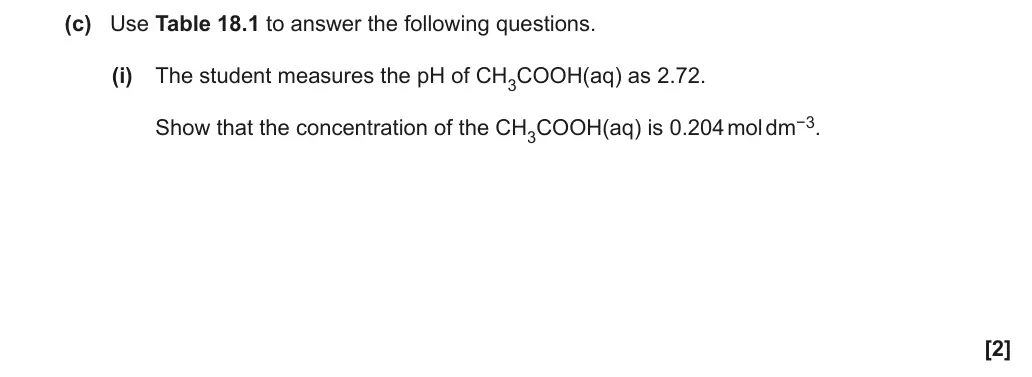
(c) Use Table 18.1 to answer the following questions.
(i) The student measures the pH of CH3COOH(aq) as 2.72.
Show that the concentration of the CH3COOH(aq) is 0.204 mol dm−3.
[2]
November 2020 · Paper 1 · Q18(c)(ii) 4 marks AO3 Calculation Medium acids bases and buffers
Earlier parts of question 18 that this part usesEarlier part of November 2020 Paper 1 question 18Earlier part of November 2020 Paper 1 question 18
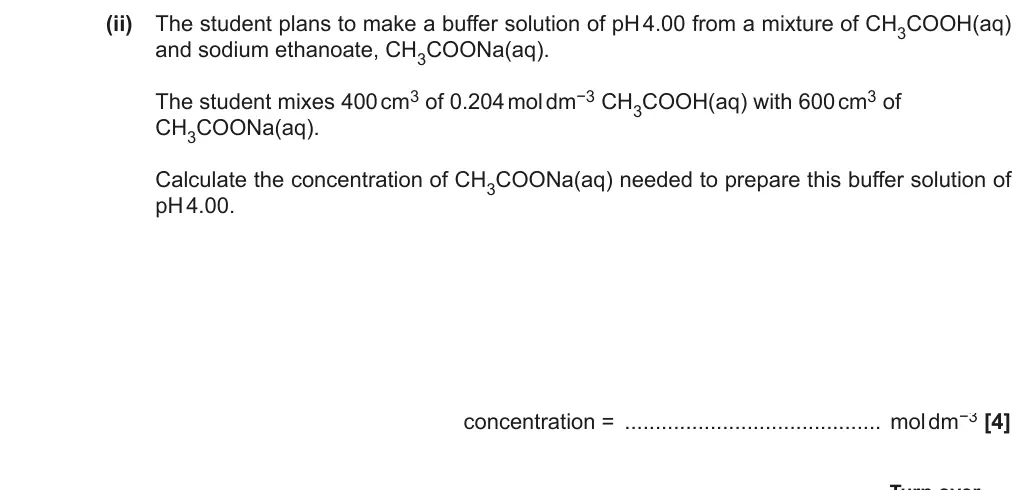
(ii) The student plans to make a buffer solution of pH 4.00 from a mixture of CH3COOH(aq)
and sodium ethanoate, CH3COONa(aq).
The student mixes 400 cm3 of 0.204 mol dm−3 CH3COOH(aq) with 600 cm3 of
CH3COONa(aq).
Calculate the concentration of CH3COONa(aq) needed to prepare this buffer solution of
pH 4.00.
concentration =  .......................................... mol dm−3 [4]
November 2020 · Paper 1 · Q19(a) 3 marks AO1, 3 Drawing / labelling Hard redox and electrode potentials
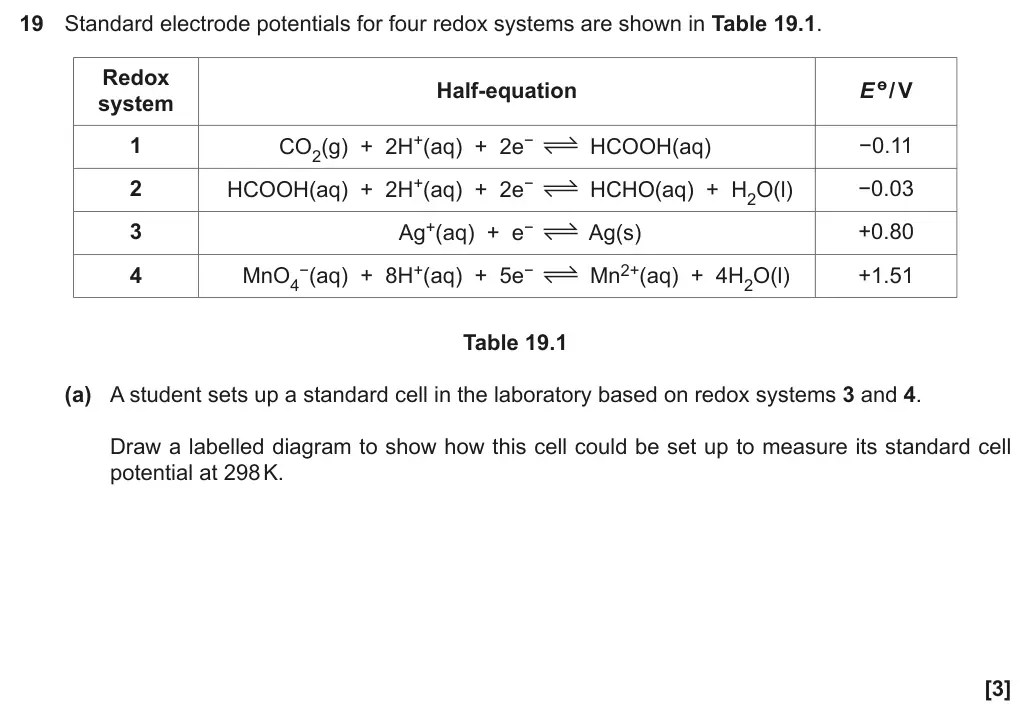
19 Standard electrode potentials for four redox systems are shown in Table 19.1.
Redox
Half-equation E ө / V
system
1 CO2(g)  +  2H+(aq)  +  2e− HCOOH(aq) −0.11
2 HCOOH(aq)  +  2H+(aq)  +  2e− HCHO(aq)  +  H2O(l) −0.03
3 Ag+(aq)  +  e− Ag(s) +0.80
4 MnO4 −(aq)  +  8H+(aq)  +  5e− Mn2+(aq)  +  4H2O(l) +1.51
Table 19.1
(a) A student sets up a standard cell in the laboratory based on redox systems 3 and 4.
Draw a labelled diagram to show how this cell could be set up to measure its standard cell
potential at 298 K.
[3]
November 2020 · Paper 1 · Q19(b) 4 marks AO3 Short answer Medium redox and electrode potentials
Earlier part of question 19 that this part usesEarlier part of November 2020 Paper 1 question 19
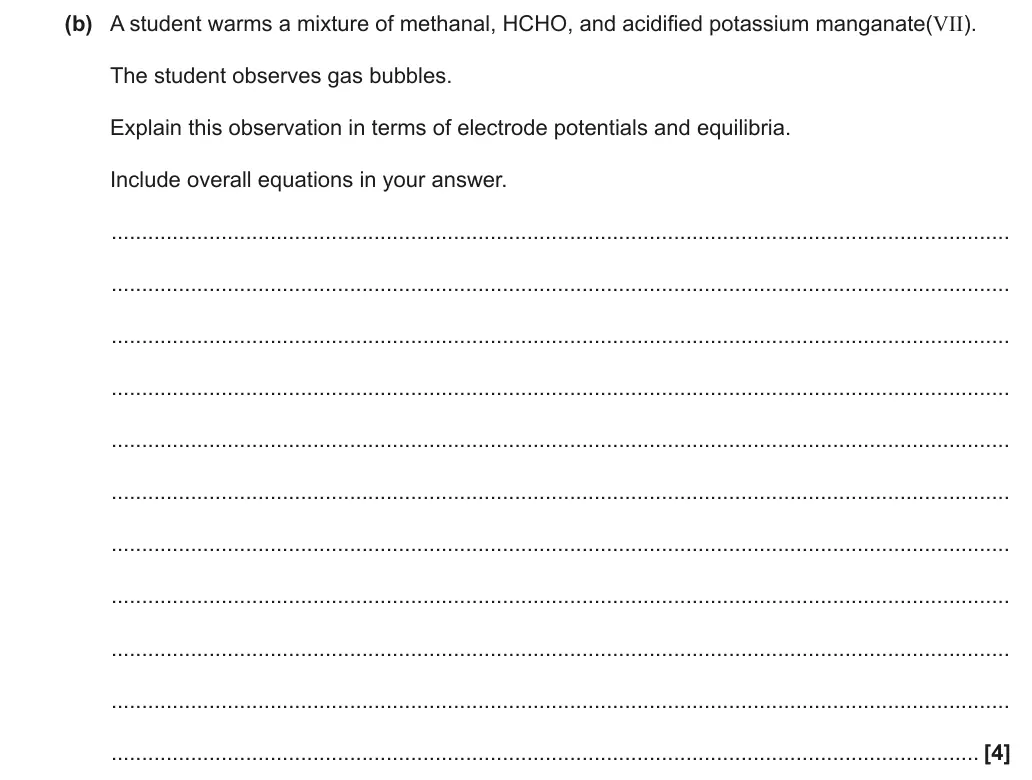
(b) A student warms a mixture of methanal, HCHO, and acidified potassium manganate(VII).
The student observes gas bubbles.
Explain this observation in terms of electrode potentials and equilibria.
Include overall equations in your answer.
...................................................................................................................................................
...................................................................................................................................................
...................................................................................................................................................
...................................................................................................................................................
...................................................................................................................................................
...................................................................................................................................................
...................................................................................................................................................
...................................................................................................................................................
...................................................................................................................................................
...................................................................................................................................................
.............................................................................................................................................. [4]
November 2020 · Paper 1 · Q19(c) 2 marks AO2 Calculation redox and electrode potentials
Earlier part of question 19 that this part usesEarlier part of November 2020 Paper 1 question 19
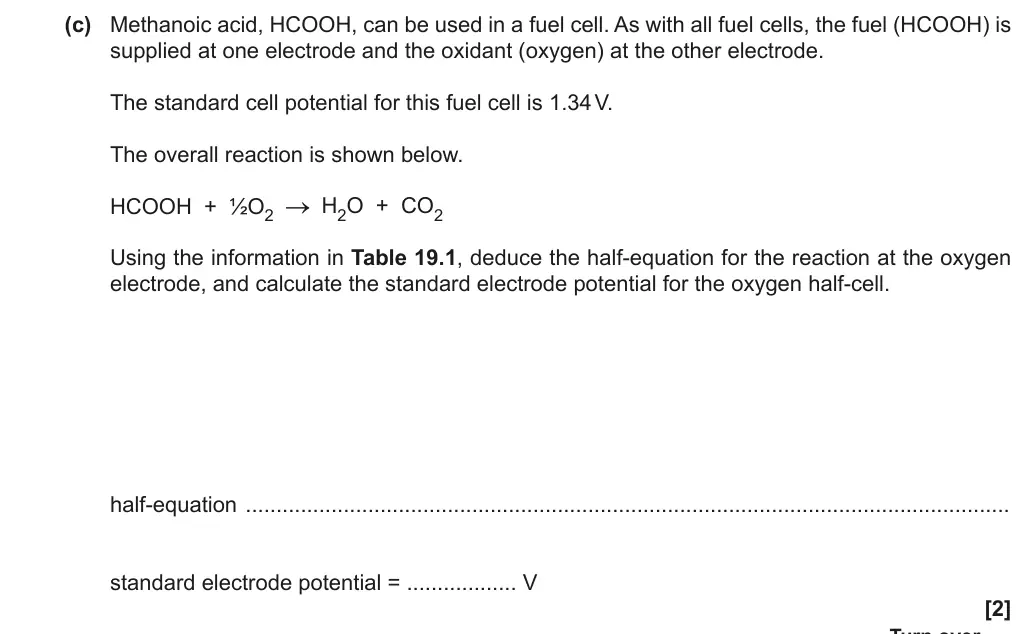
(c) Methanoic acid, HCOOH, can be used in a fuel cell. As with all fuel cells, the fuel (HCOOH) is
supplied at one electrode and the oxidant (oxygen) at the other electrode.
The standard cell potential for this fuel cell is 1.34 V.
The overall reaction is shown below.
HCOOH  +  ½O2 H2O  +  CO2
Using the information in Table 19.1, deduce the half-equation for the reaction at the oxygen
electrode, and calculate the standard electrode potential for the oxygen half-cell.
half-equation  .............................................................................................................................
standard electrode potential = .................. V
[2]
November 2020 · Paper 1 · Q20(a)(i) 1 mark AO3 Short answer Medium rate equationspractical skills
20 A student investigates the reaction between ethanoic acid, CH3COOH(l) and methanol, CH3OH(l),
in the presence of an acid catalyst. The equation is shown below.
CH3COOH(l)  +  CH3OH(l) CH3COOCH3(l)  +  H2O(l)
(a) The student carries out an experiment to determine the order of reaction with respect to
CH3COOH.
The student uses a large excess of CH3OH. The temperature is kept constant throughout the
experiment.
The student takes a sample from the mixture every 20 minutes, and then determines the
concentration of the ethanoic acid in each sample.
From the experimental results, the student plots the graph below.
5.0
[CH3COOH] /10–3 mol dm–3 4.0
3.0
2.0
1.0
0 20 40 60 80 100 120 140 160 180
time / min
(i) Explain why the student uses a large excess of methanol in this experiment.
...........................................................................................................................................
...................................................................................................................................... [1]
November 2020 · Paper 1 · Q20(a)(ii) 2 marks AO3 Calculation Hard rate equations
Earlier part of question 20 that this part usesEarlier part of November 2020 Paper 1 question 20
(ii) Use the half-life of this reaction to show that the reaction is first order with respect to
CH3COOH.
Show your working on the graph and below.
...........................................................................................................................................
...................................................................................................................................... [2]
November 2020 · Paper 1 · Q20(a)(iii) 2 marks AO3 Calculation Hard rate equations
Earlier parts of question 20 that this part usesEarlier part of November 2020 Paper 1 question 20Earlier part of November 2020 Paper 1 question 20
(iii) Determine the initial rate of reaction.
initial rate =  ................................. mol dm−3 min−1 [2]
November 2020 · Paper 1 · Q20(b) 4 marks AO1, 2 Calculation Medium equilibrium constantsamount of substance
Earlier part of question 20 that this part usesEarlier part of November 2020 Paper 1 question 20
(b) The student carries out a second experiment to determine the value of Kc for this reaction.
The student mixes 9.6 g of CH3OH with 12.0 g of CH3COOH and adds the acid catalyst.
When the mixture reaches equilibrium, 0.030 mol of CH3COOH remains.
Calculate Kc for this equilibrium.
Kc =  ......................................................... [4]
November 2020 · Paper 1 · Q21(a) 5 marks AO1, 2 Equation writing Medium halogensformulae and equations
21 This question is about halogens.
(a) A student adds a solution of bromine in an organic solvent to two test tubes.
The student adds aqueous sodium chloride to one test tube, and aqueous sodium iodide to
the other test tube.
The student shakes the mixtures, allows them to settle, and records the colour of the organic
layer in each mixture.
Sodium halide Colour of organic layer
Sodium chloride orange
Sodium iodide violet
Explain how the student’s results provide evidence for the trend in reactivity of the halogens
down group 17(7) and write an ionic equation for any reaction that takes place.
Use your chemical knowledge to explain the trend in reactivity.
...................................................................................................................................................
...................................................................................................................................................
...................................................................................................................................................
...................................................................................................................................................
...................................................................................................................................................
...................................................................................................................................................
...................................................................................................................................................
...................................................................................................................................................
...................................................................................................................................................
...................................................................................................................................................
...................................................................................................................................................
.............................................................................................................................................. [5]
November 2020 · Paper 1 · Q21(b) 1 mark AO1 Short answer halogens
(b) Chlorine is used in water treatment.
State one benefit and one risk of using chlorine in water treatment.
Benefit  ......................................................................................................................................
...................................................................................................................................................
Risk  ...........................................................................................................................................
...................................................................................................................................................
[1]
November 2020 · Paper 1 · Q21(c) 3 marks AO2, 3 Calculation amount of substance
(c) Compound A contains bromine and fluorine only, and has a boiling point of 41 °C.
1.26 g of compound A is heated to 80 °C.
The volume of gas produced is 0.209 dm3.
Under the conditions used, 1 mol of gas molecules has a volume of 29.0 dm3.
Determine the molecular formula of compound A.
molecular formula =  ......................................................... [3]
November 2020 · Paper 1 · Q22(a) 6 marks AO3 6-mark level of response qualitative analysisformulae and equationstransition elements
22 (a)* B and C are compounds of two different transition elements.
A student carries out test tube reactions on aqueous solutions of B and C.
The observations of the student’s tests are shown below.
Test B(aq) C(aq)
NH3(aq) added dropwise green precipitate D grey-green precipitate E
1
excess NH3(aq) added no further change purple solution F
HNO3(aq) no change no change
2
followed by Ba(NO3)2(aq) white precipitate G no change
HNO3(aq) no change no change
3
followed by AgNO3(aq) no change white precipitate H
Analyse the results to identify B to H, and construct ionic equations for the formation of
products D to H. [6]
...................................................................................................................................................
...................................................................................................................................................
...................................................................................................................................................
...................................................................................................................................................
...................................................................................................................................................
...................................................................................................................................................
...................................................................................................................................................
...................................................................................................................................................
...................................................................................................................................................
...................................................................................................................................................
...................................................................................................................................................
...................................................................................................................................................
...................................................................................................................................................
...................................................................................................................................................
...................................................................................................................................................
Additional answer space if required
...................................................................................................................................................
...................................................................................................................................................
...................................................................................................................................................
...................................................................................................................................................
...................................................................................................................................................
...................................................................................................................................................
...................................................................................................................................................
...................................................................................................................................................
...................................................................................................................................................
November 2020 · Paper 1 · Q22(b)(i) 3 marks AO3 Calculation amount of substancetransition elements
(b) A compound of nickel, J, has the formula (NH4)2 [Ni(SCN)x(NH3)y] and contains SCN− and
NH3 ligands.
The percentage by mass of three of the elements in compound J is shown below:
Ni, 16.26%; S, 35.56%; N, 31.00%.
(i) Calculate the values of x and y in the formula of compound J.
x =  ...............................................................
y =  ...............................................................
[3]
November 2020 · Paper 1 · Q22(b)(ii) 1 mark AO2 Short answer redox
Earlier part of question 22 that this part usesEarlier part of November 2020 Paper 1 question 22
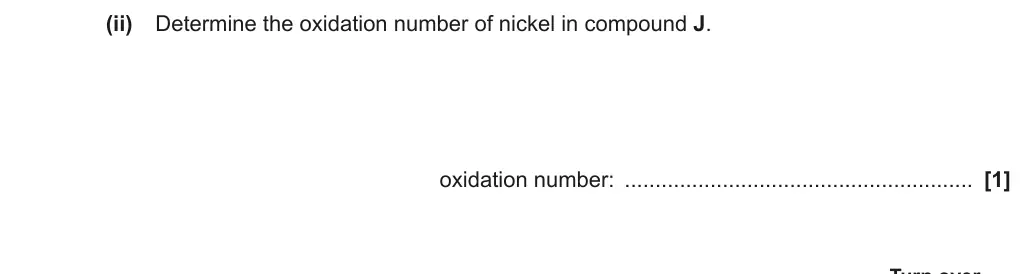
(ii) Determine the oxidation number of nickel in compound J.
oxidation number:  ......................................................... [1]
November 2020 · Paper 1 · Q22(c) 5 marks AO1, 2, 3 Data interpretation Medium redox and electrode potentialsamount of substance
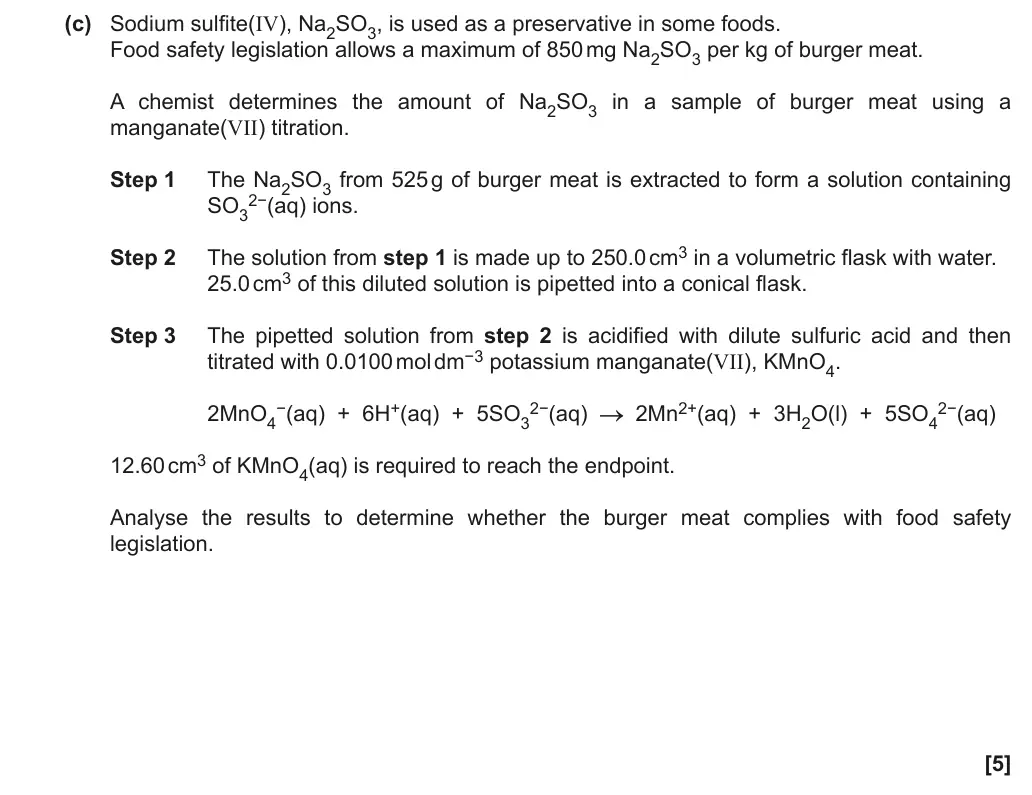
(c) Sodium sulfite(IV), Na2SO3, is used as a preservative in some foods.
Food safety legislation allows a maximum of 850 mg Na2SO3 per kg of burger meat.
A chemist determines the amount of Na2SO3 in a sample of burger meat using a
manganate(VII) titration.
Step 1 The Na2SO3 from 525 g of burger meat is extracted to form a solution containing
SO3 2−(aq) ions.
Step 2 The solution from step 1 is made up to 250.0 cm3 in a volumetric flask with water.
25.0 cm3 of this diluted solution is pipetted into a conical flask.
Step 3 The pipetted solution from step 2 is acidified with dilute sulfuric acid and then
titrated with 0.0100 mol dm−3 potassium manganate(VII), KMnO4.
2MnO4 −(aq)  +  6H+(aq)  +  5SO3 2−(aq) 2Mn2+(aq)  +  3H2O(l)  +  5SO4 2−(aq)
12.60 cm3 of KMnO4(aq) is required to reach the endpoint.
Analyse the results to determine whether the burger meat complies with food safety
legislation.
[5]

Work with an OCR chemistry tutor

Want a paper marked and gone through with you? Message us.

Prefer email? Send an enquiry

If you are under 18, please include a parent's contact details. Enquiries go to enquiries@chemistryaleveltutor.com and are deleted once handled. All tutoring is online.