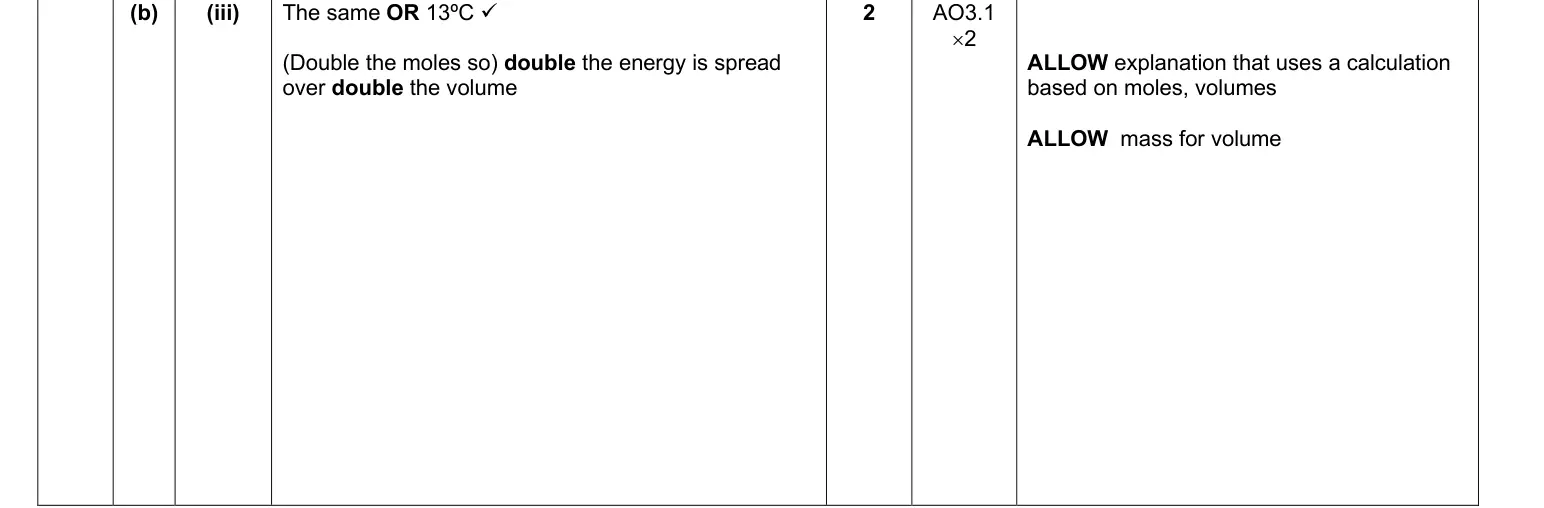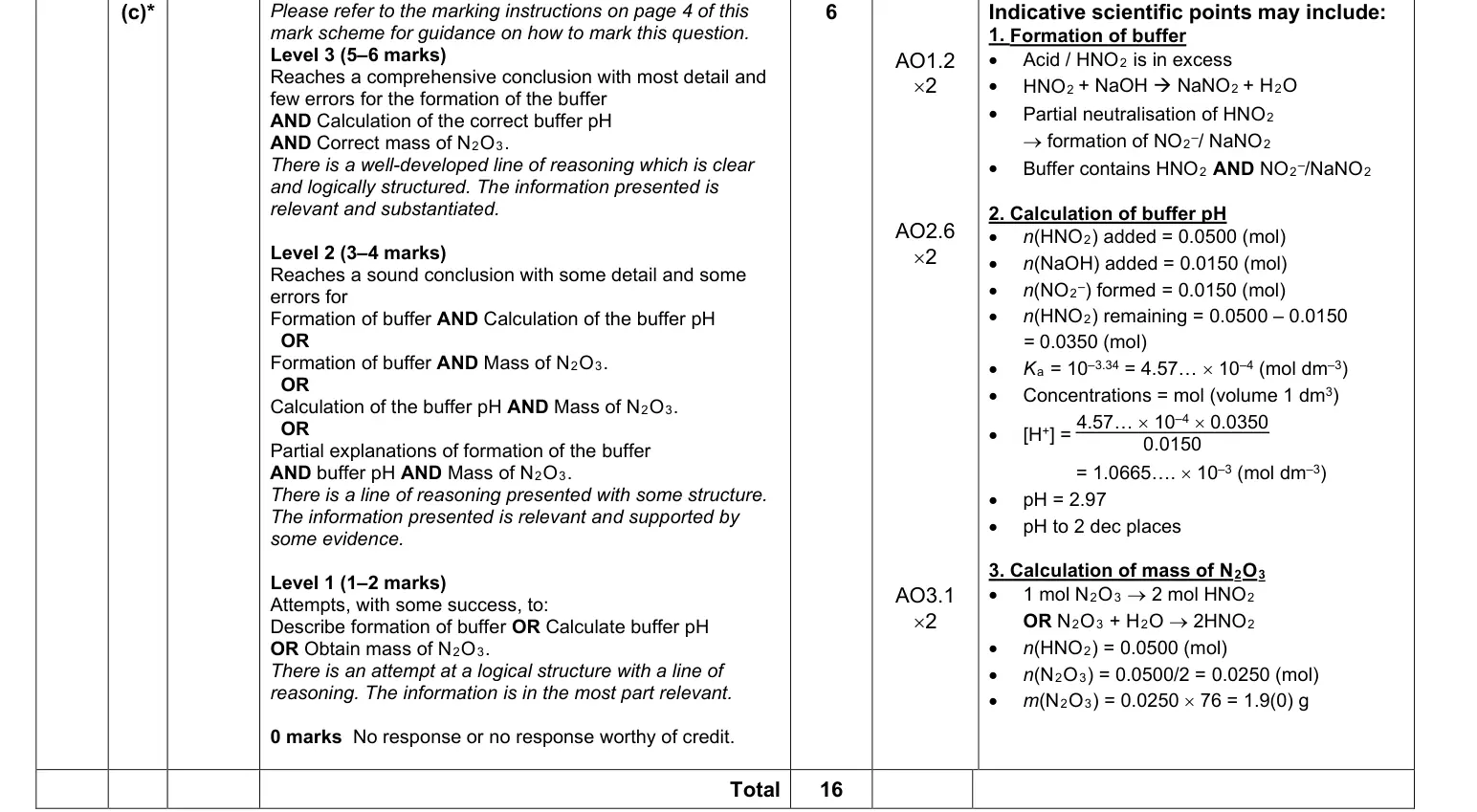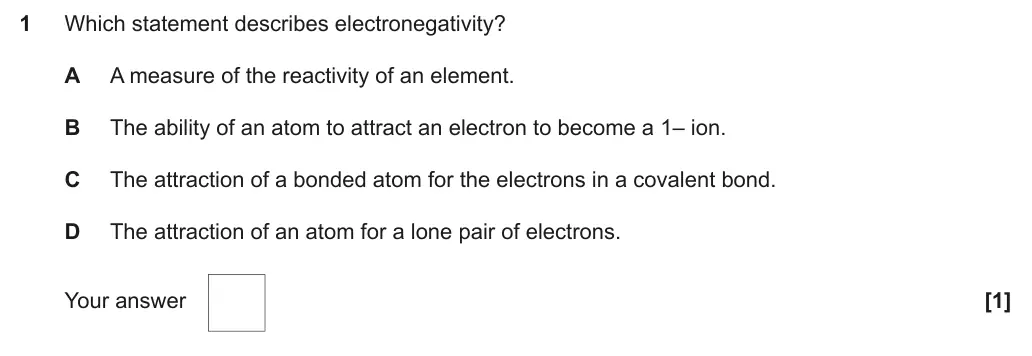
Answer
C
Mark scheme

100 marks · 55 question parts · Paper, mark scheme and report on OCR's site · An autumn series, sat in place of the cancelled summer exams · Have OCR's Data Sheet beside you
C
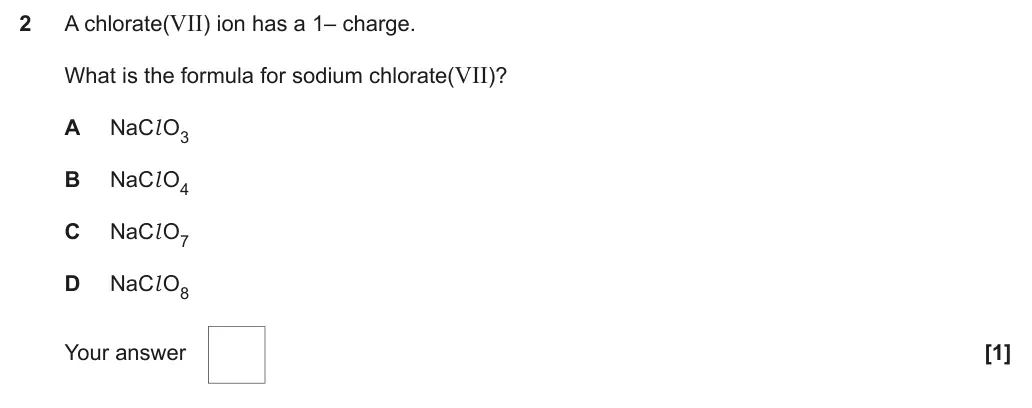
B
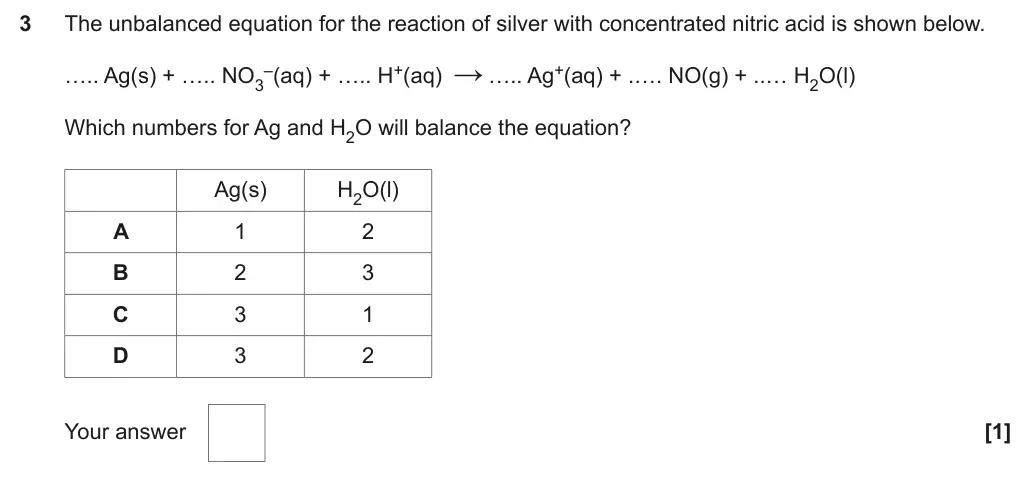
D
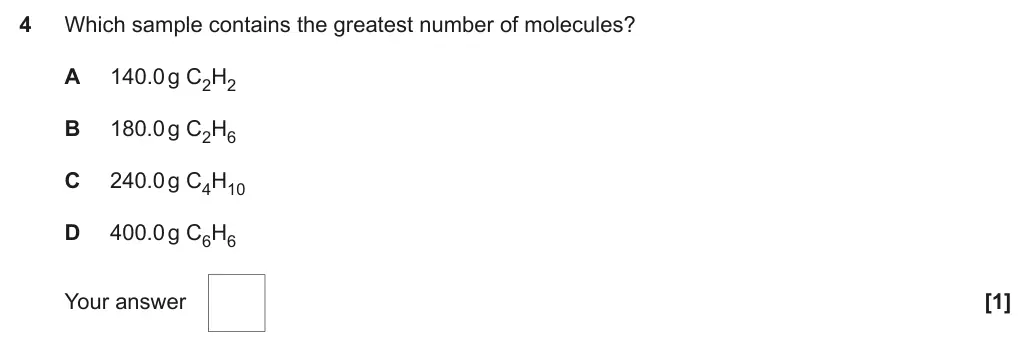
B
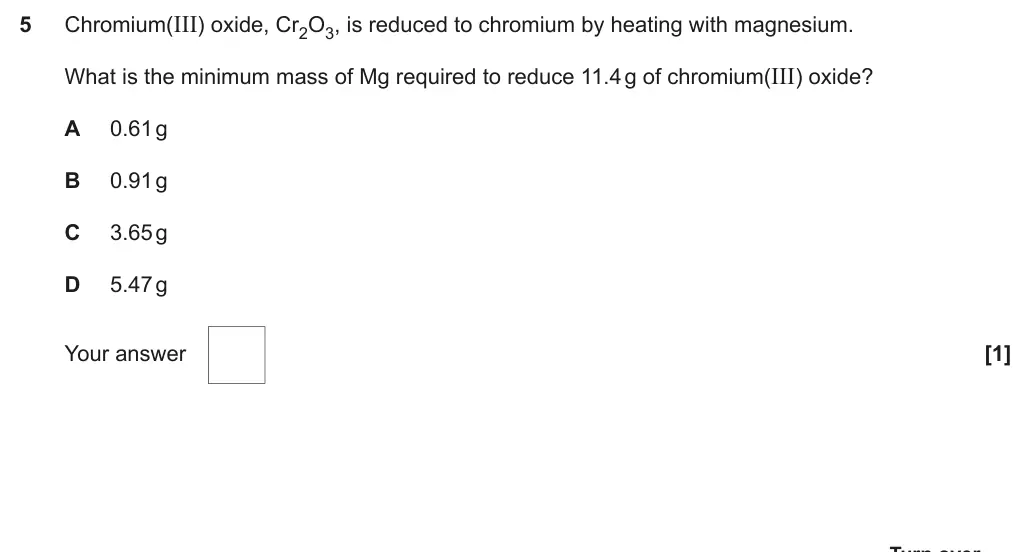
D
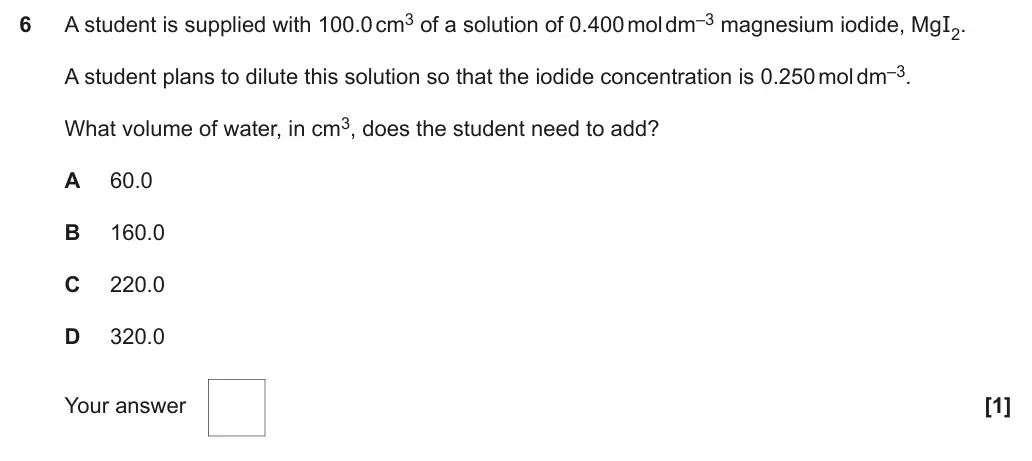
C
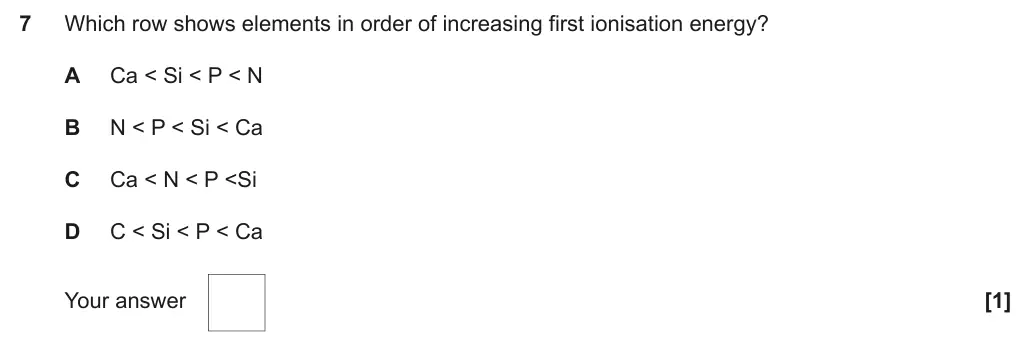
A
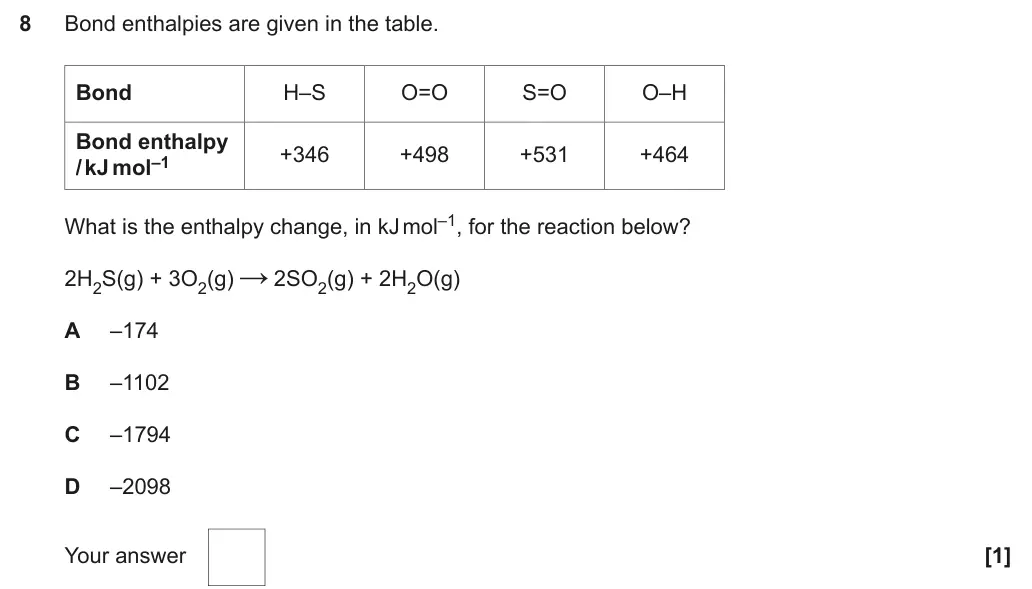
B

B
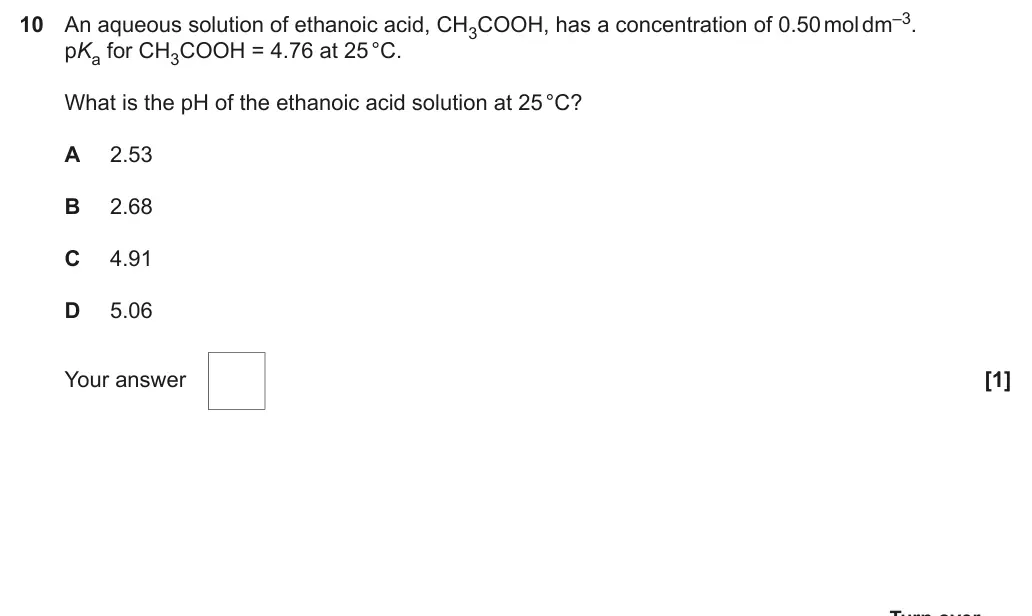
A

A
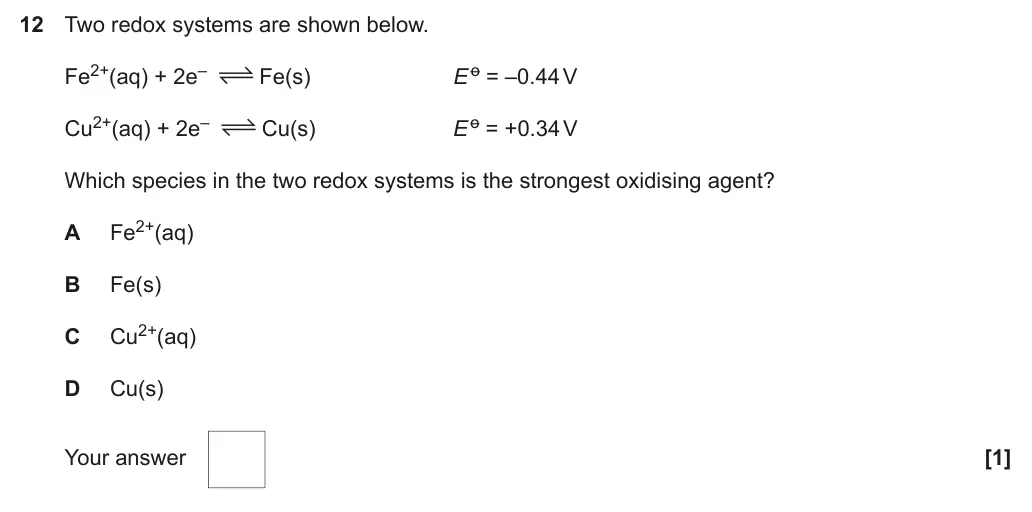
C
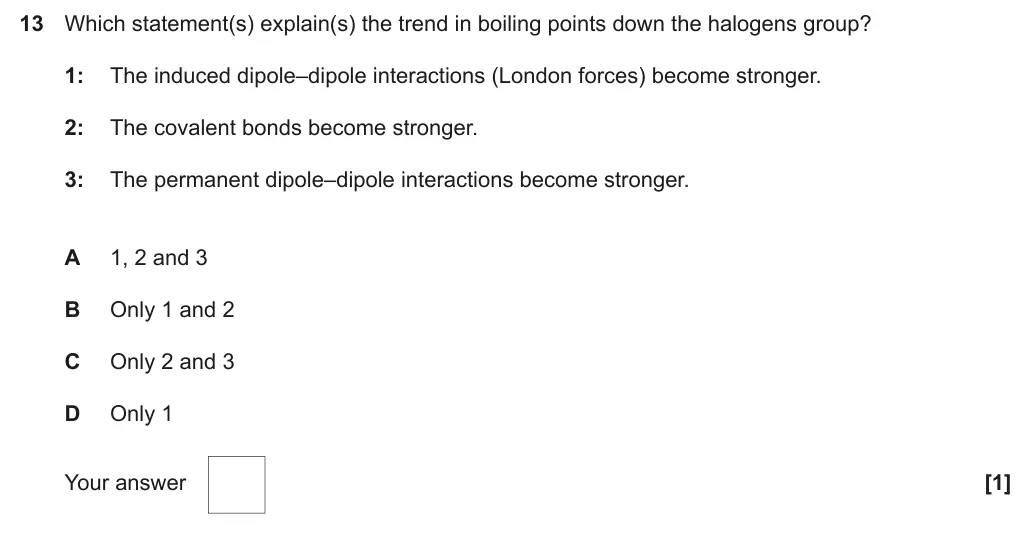
D
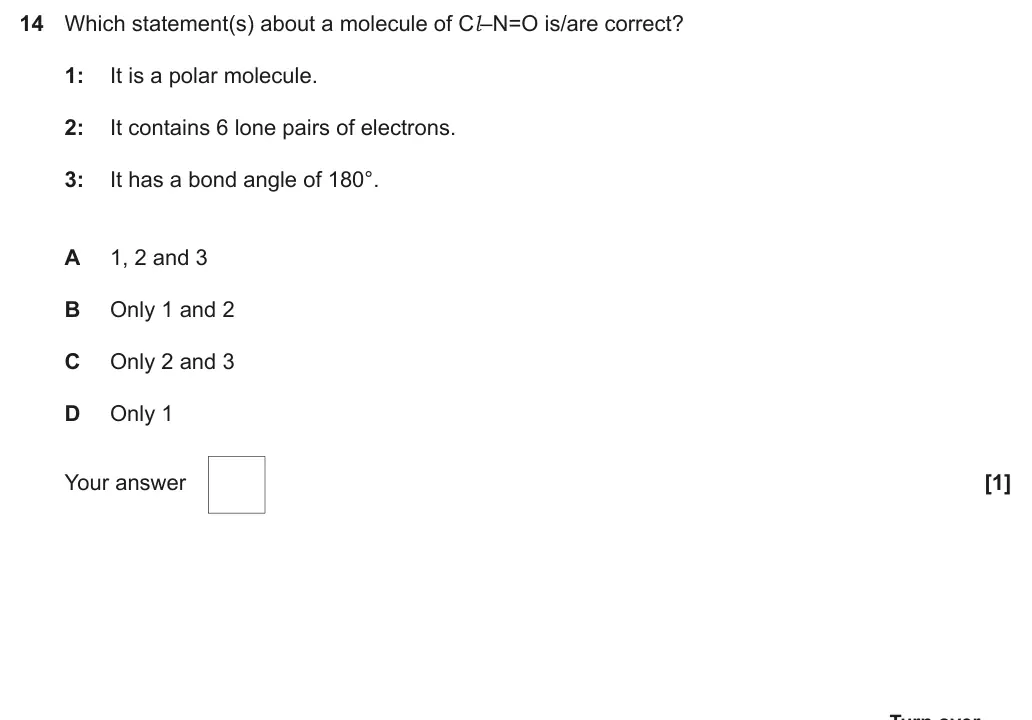
B
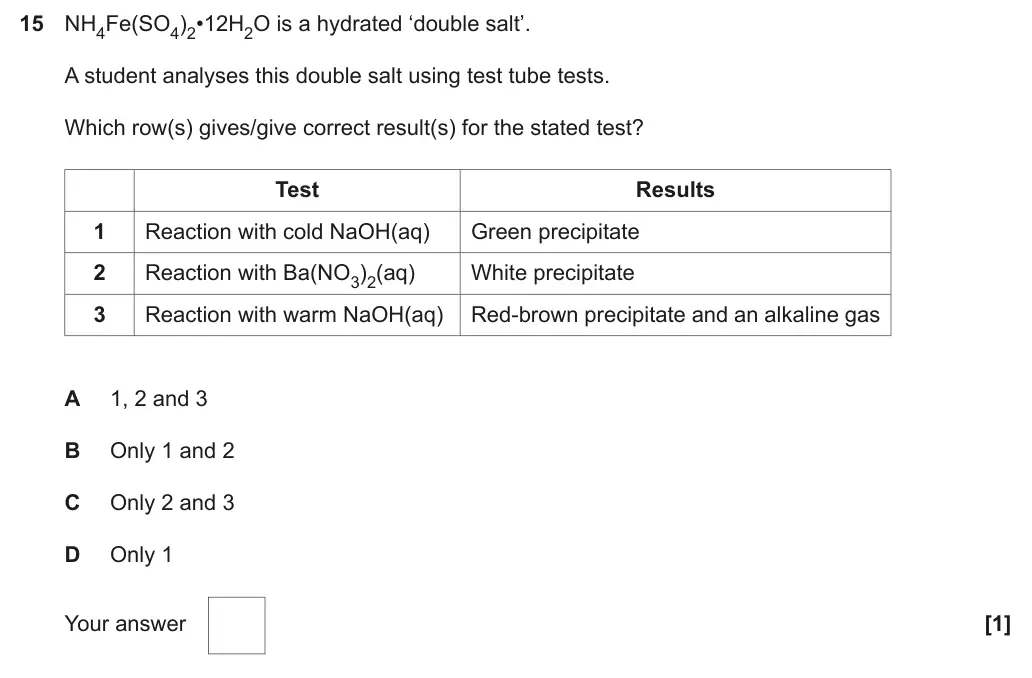
C
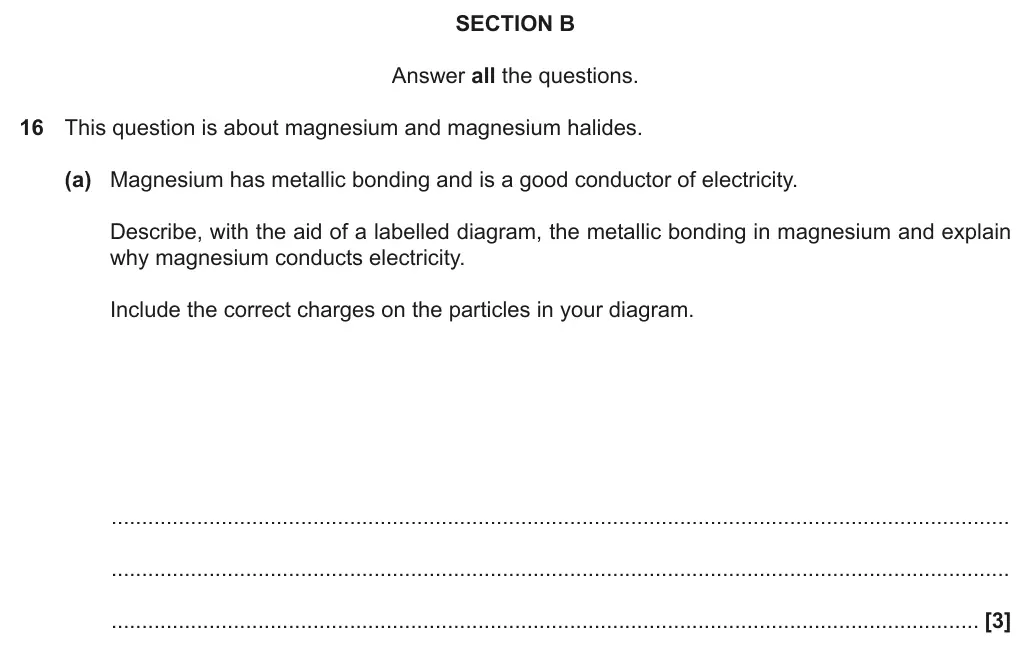
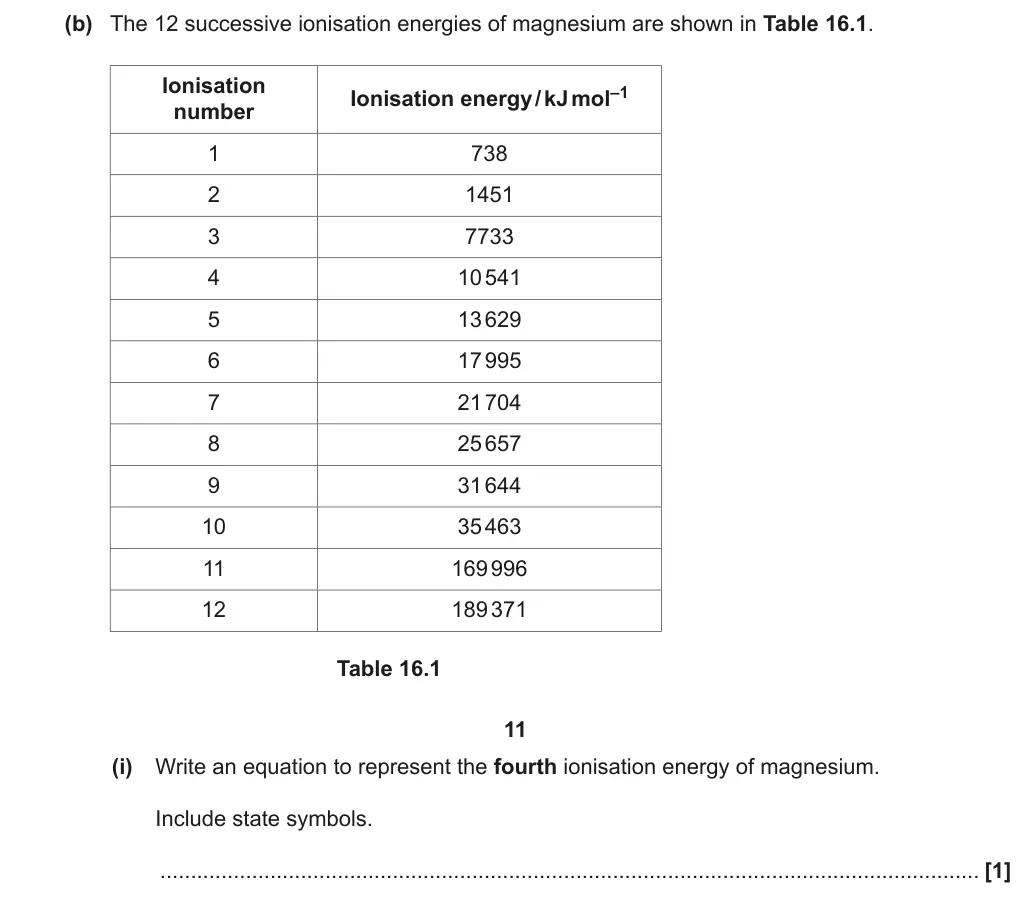
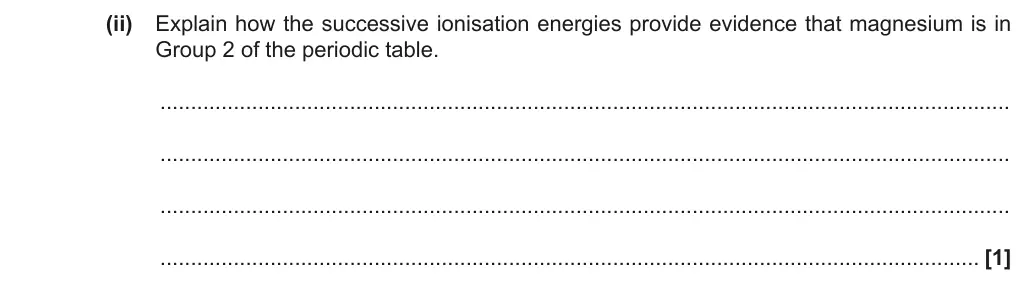
Skills: M3.1 Translate information between graphical, numerical and algebraic forms


Question 16(c)(iii): This was an enthalpy solution/hydration cycle.
Skills: M2.3 Substitute numerical values into algebraic equations using appropriate units for physical quantities; M2.4 Solve algebraic equations

Question 16(c)(iv): This question involved the qualitative explanation of the effect of ionic charge and ionic radius on the exothermic value of a lattice enthalpy and enthalpy change of hydration.
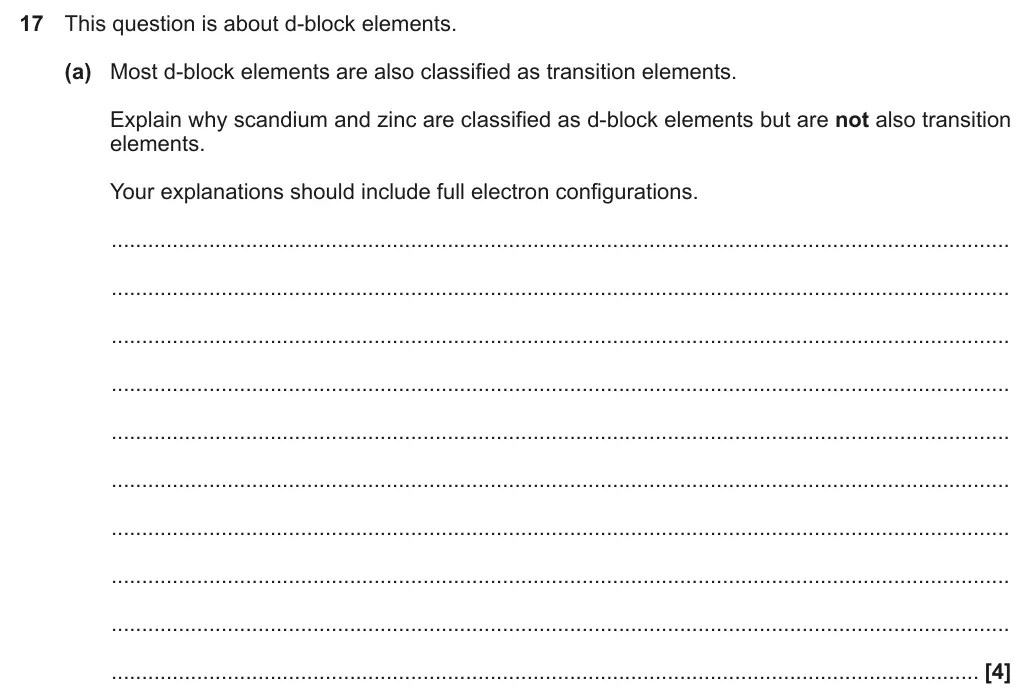
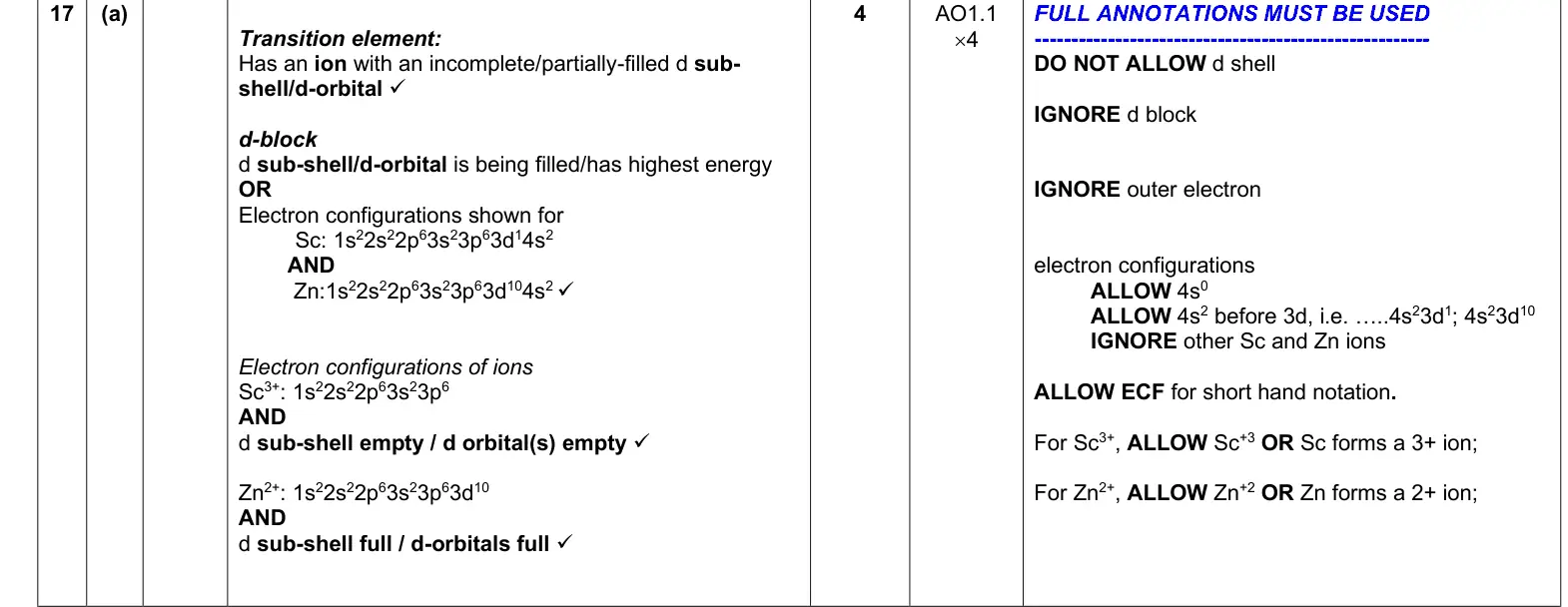
Question 17(a): Only the higher-attaining candidates scored full marks.
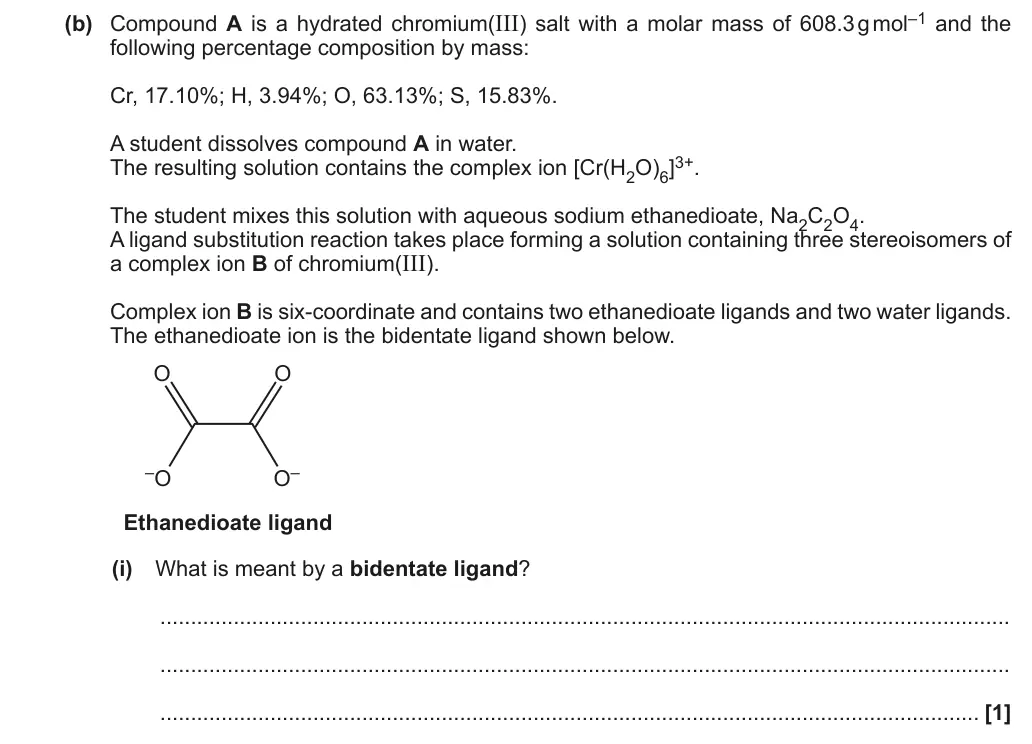

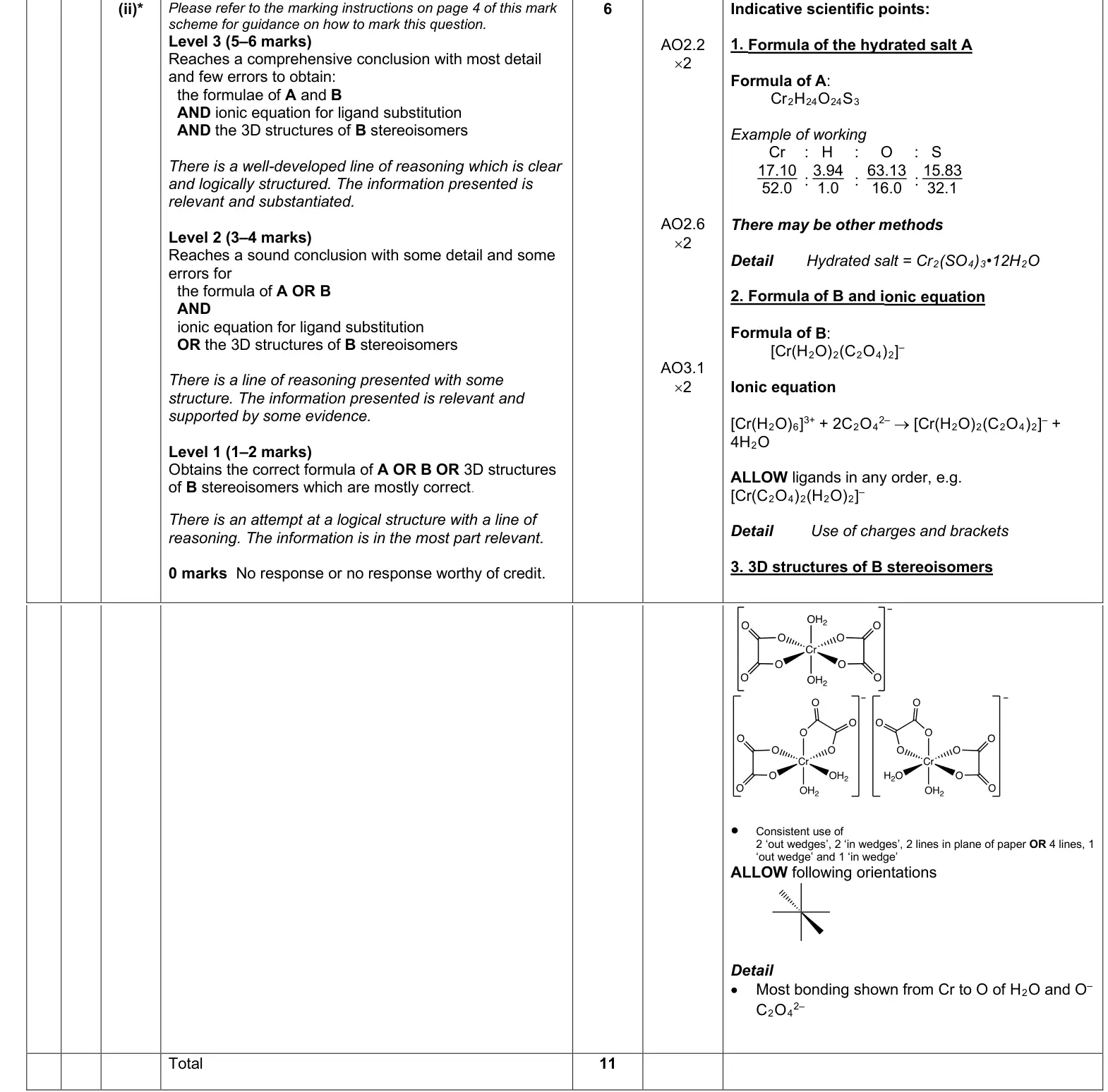
Skills: M0.2 Use ratios, fractions and percentages; M4.2 Visualise and represent 2-D and 3-D forms including 2-D representations of 3-D objects; M4.3 Understand the symmetry of 2-D and 3-D shapes
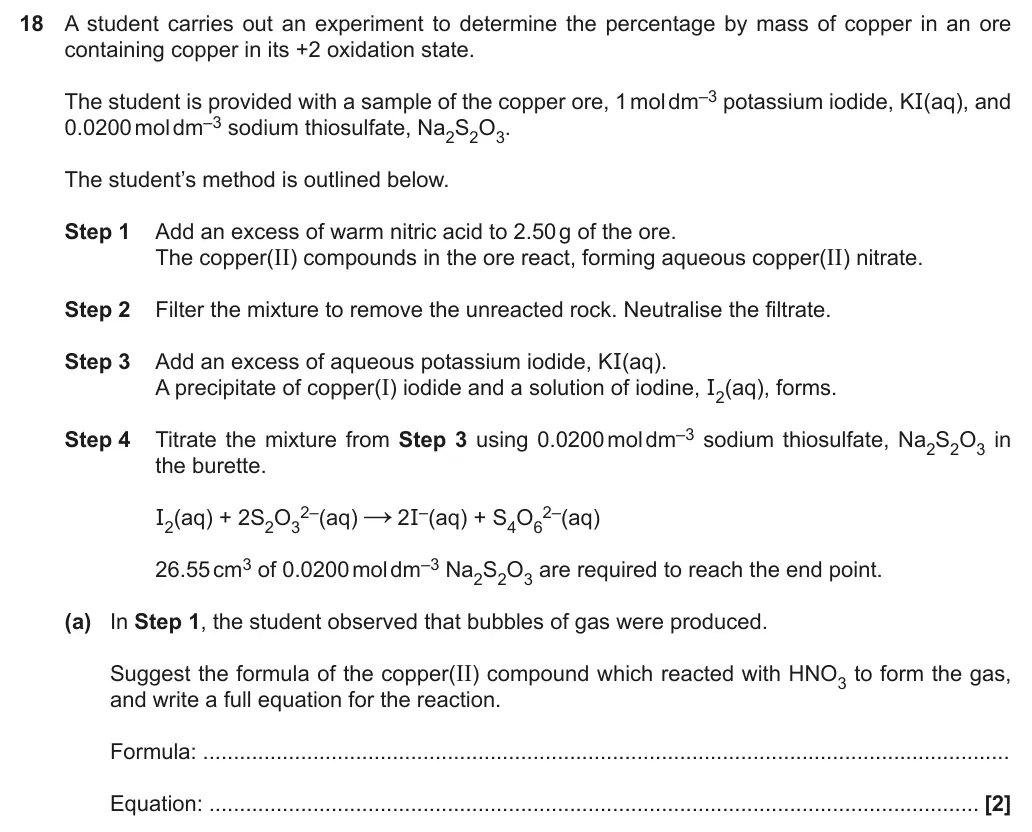

Skills: M0.2 Use ratios, fractions and percentages

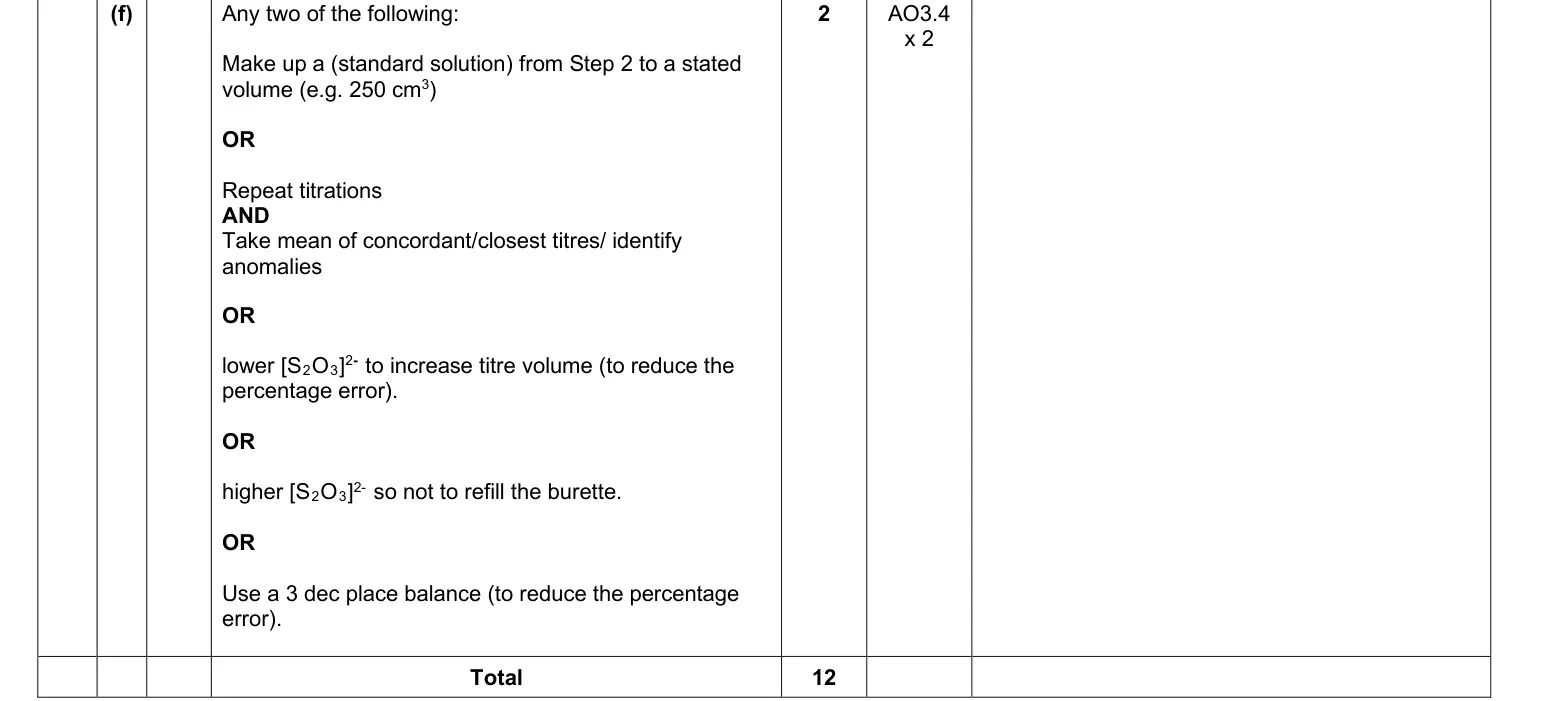
Skills: PAG2 Acid–base titration
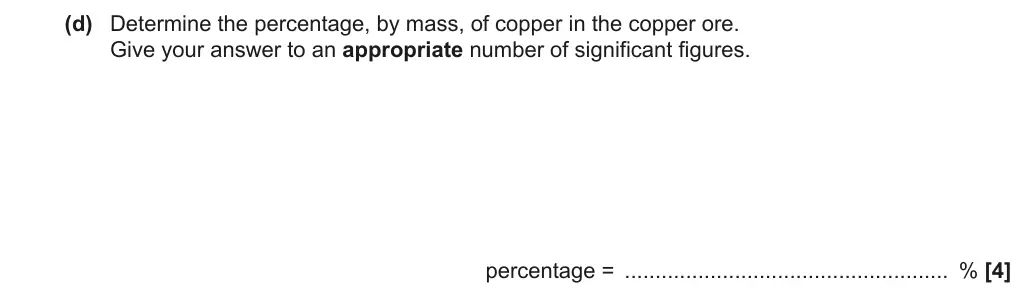
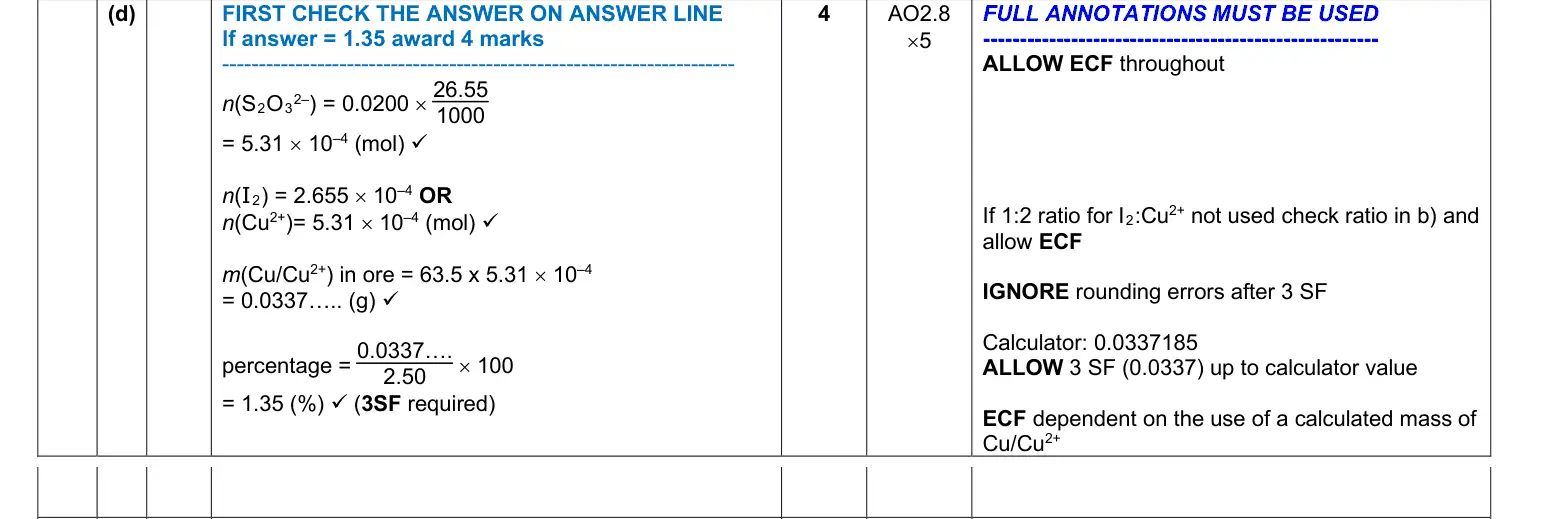
Question 18(d): This was a percentage by mass calculation.
Skills: M0.2 Use ratios, fractions and percentages; M1.1 Use an appropriate number of significant figures; M2.3 Substitute numerical values into algebraic equations using appropriate units for physical quantities; PAG2 Acid–base titration

Skills: PAG2 Acid–base titration

Skills: PAG2 Acid–base titration
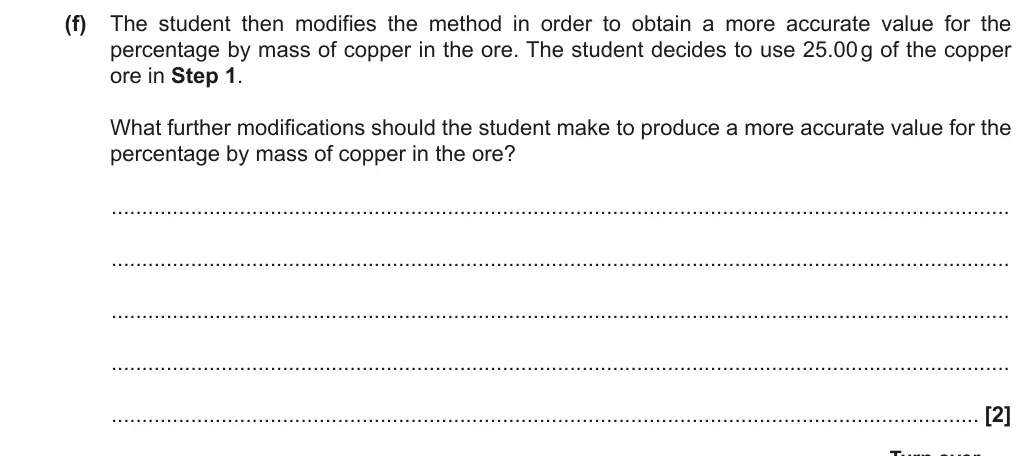
Skills: M1.3 Identify uncertainties in measurements and use simple techniques to determine uncertainty when data are combined; PAG2 Acid–base titration
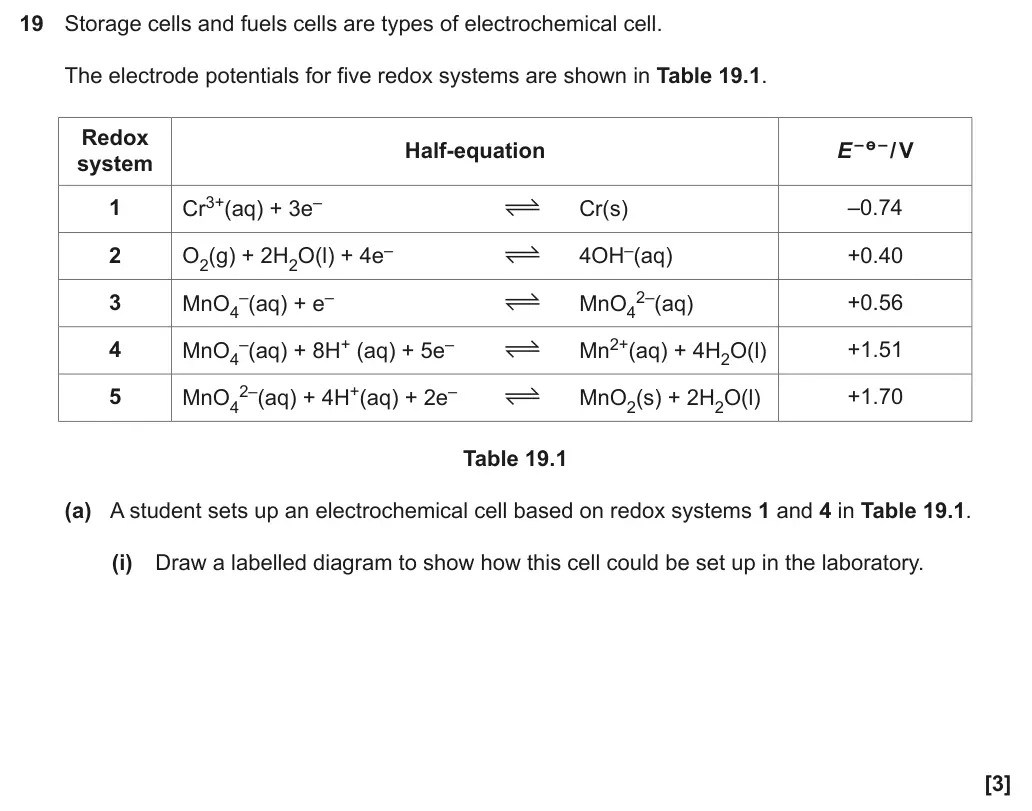
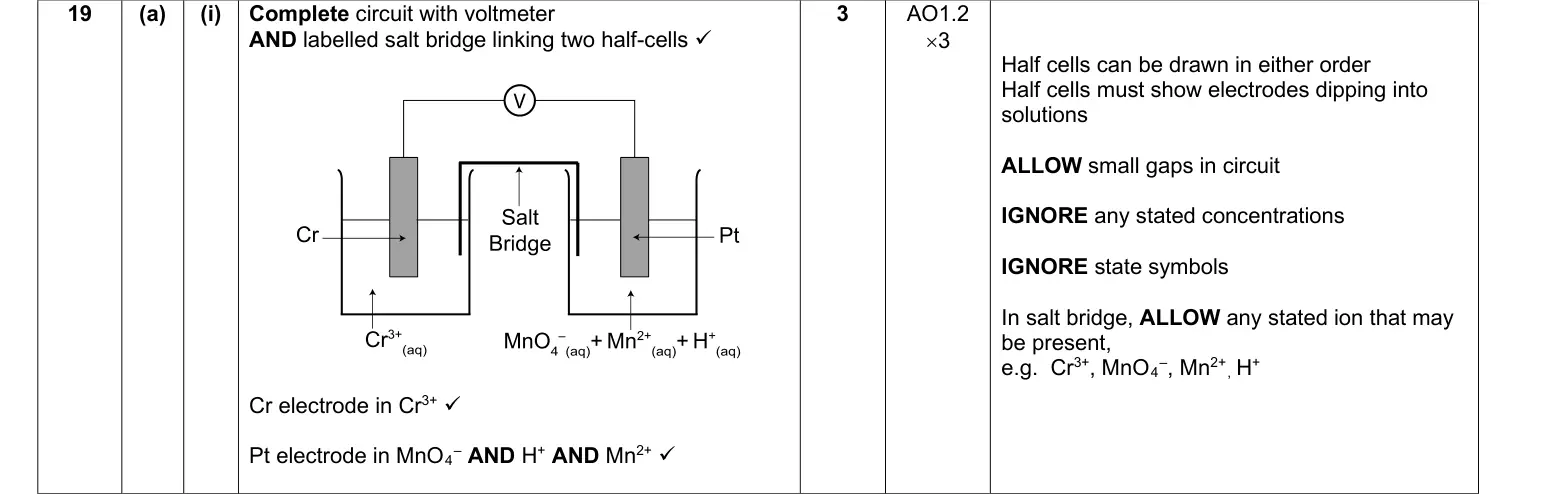
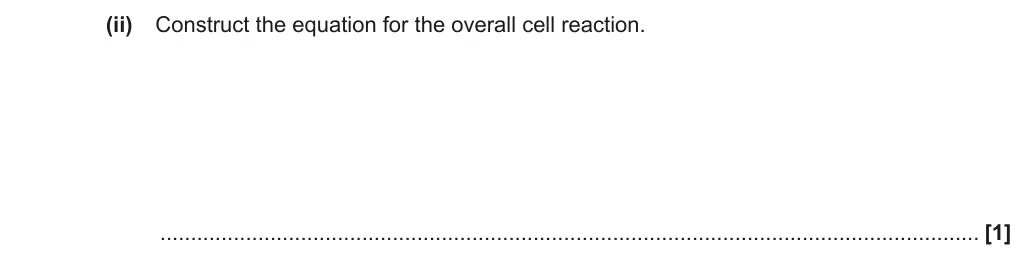
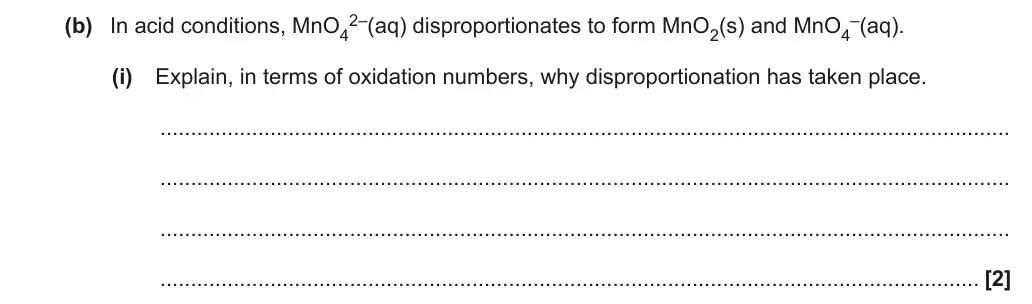
Question 19(a)(i): Most candidates were able to draw a circuit containing a voltmeter and the chromium half-cell but very few candidates included the H+ in the MnO4-/Mn2+ cell. 19(a)(ii) and (b)(i): Most candidates were able to construct the equation for the overall cell reaction and to use oxidation numbers to explain disproportionation. .
Skills: PAG8 Electrochemical cells
Skills: M0.2 Use ratios, fractions and percentages
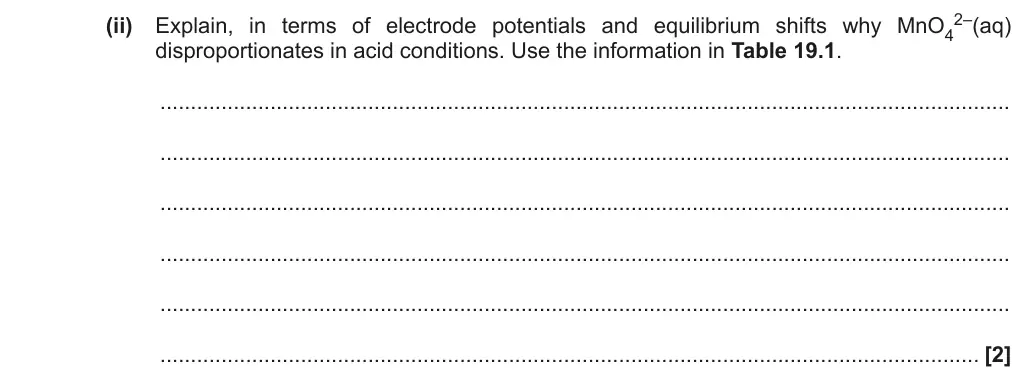
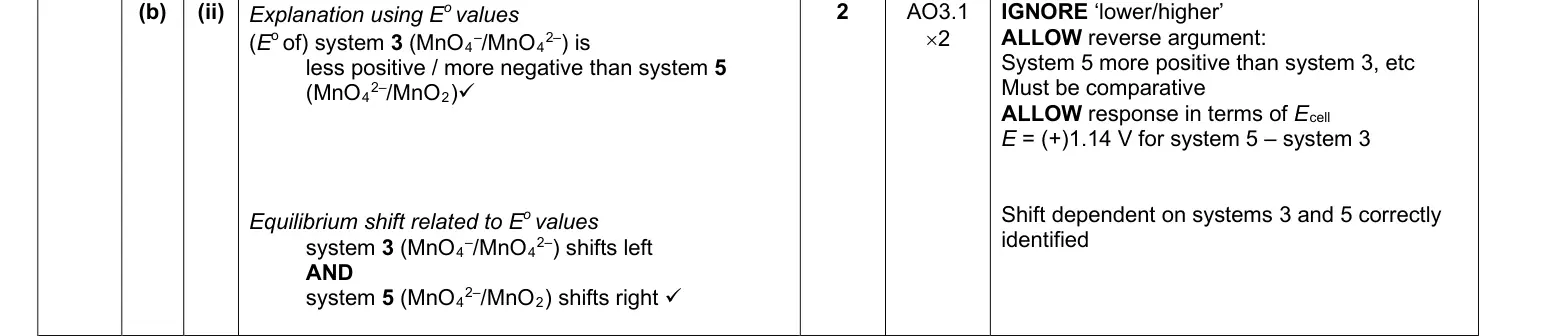
Question 19(b)(ii): Only a few candidates were able to link the electrode potentials and equilibrium shifts.
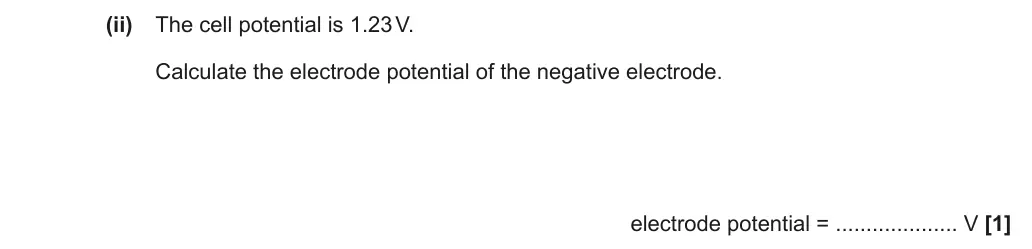
Skills: M2.2 Change the subject of an equation



Skills: M0.0 Recognise and make use of appropriate units in calculations; M2.3 Substitute numerical values into algebraic equations using appropriate units for physical quantities

Skills: M1.1 Use an appropriate number of significant figures; M2.2 Change the subject of an equation

Question 20(c): This question asked the candidate to calculate Kp.
Skills: M0.2 Use ratios, fractions and percentages; M1.1 Use an appropriate number of significant figures; M2.3 Substitute numerical values into algebraic equations using appropriate units for physical quantities

Question 20(c): This question asked the candidate to calculate Kp.
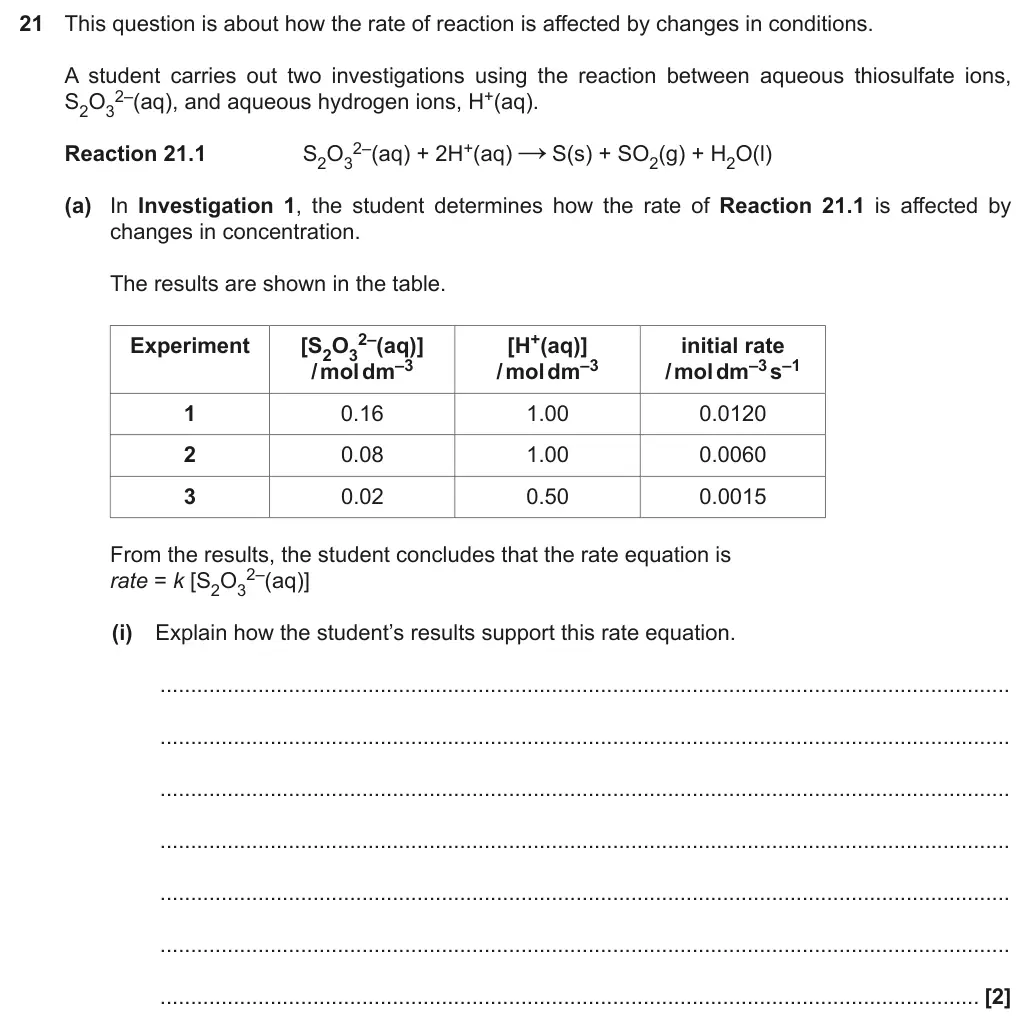
Question 21(a)(i): Most candidates found the order with respect to S2O32- by comparing experiments 1 and 2.
Skills: M0.2 Use ratios, fractions and percentages; PAG10 Rates of reaction – initial rates
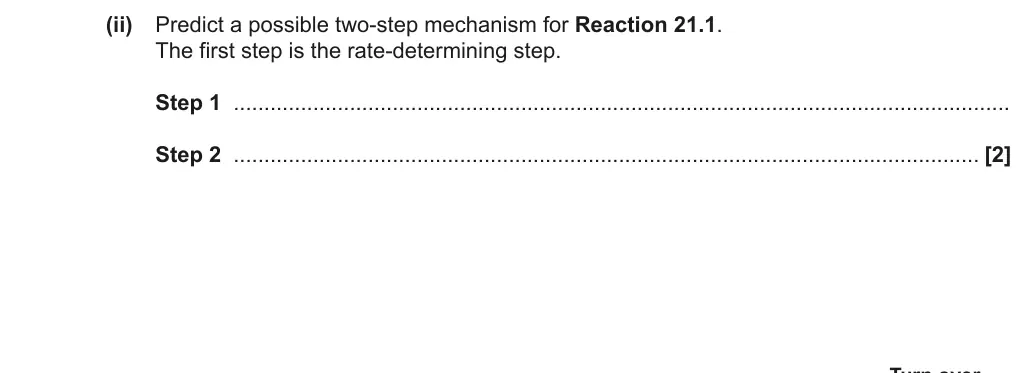
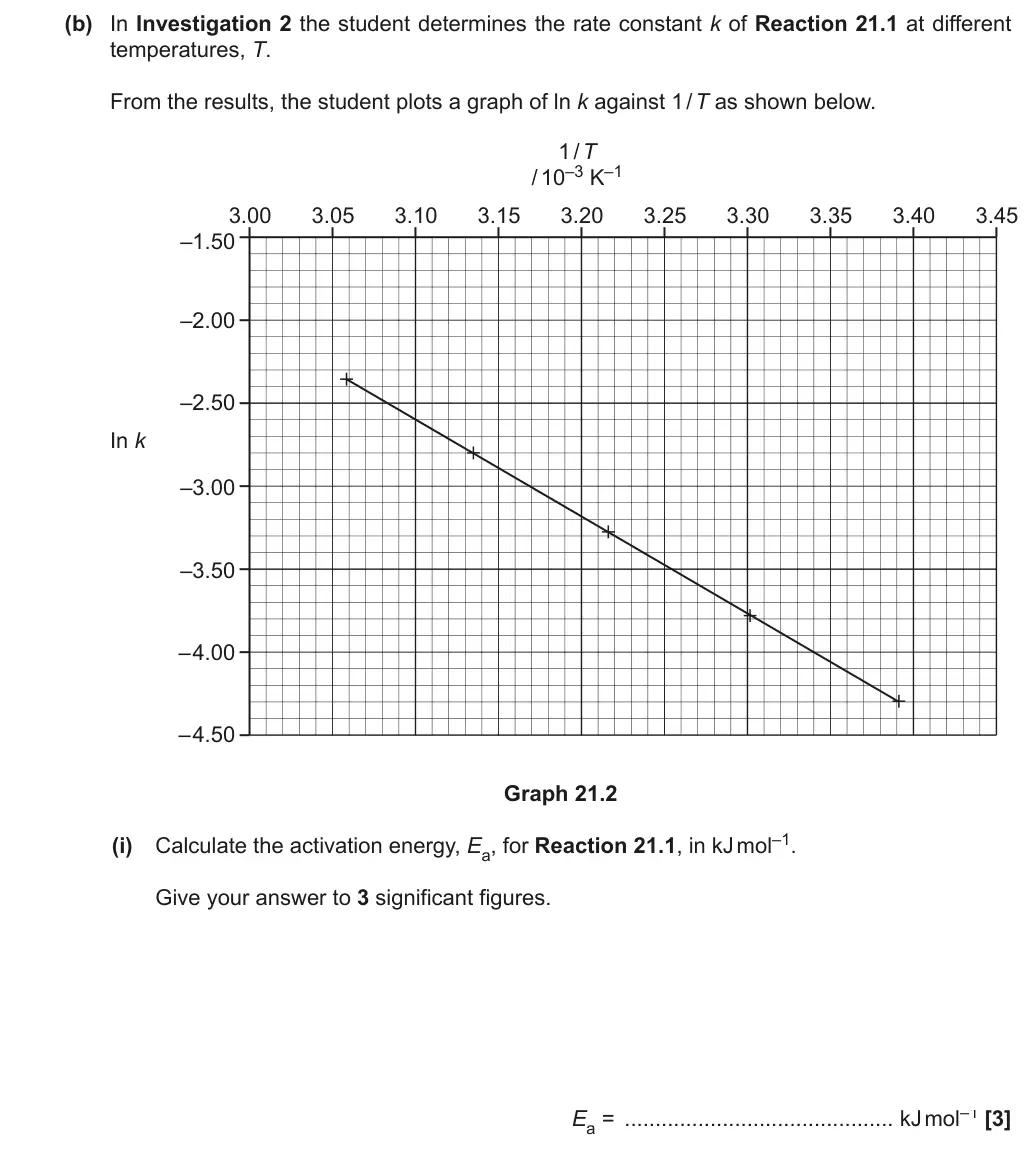
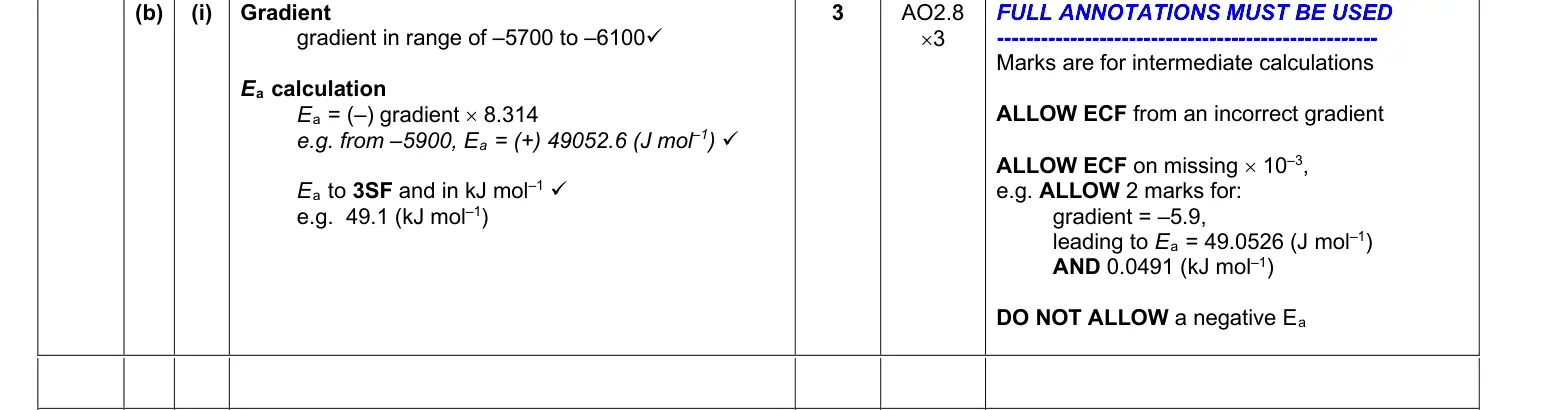
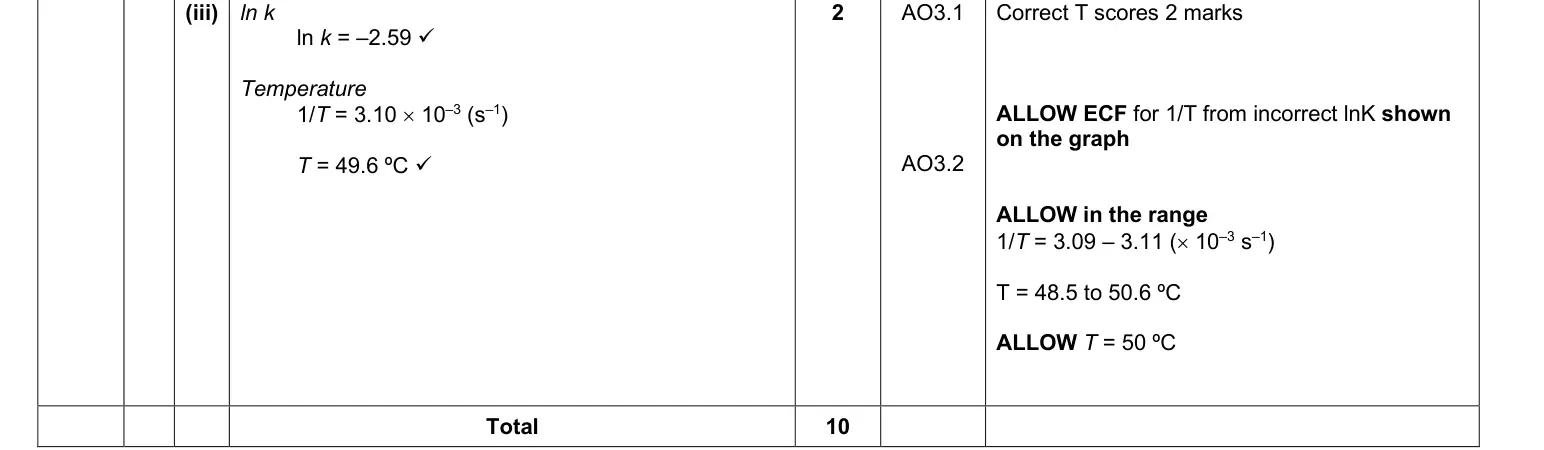
Question 21(b)(i): This question asked the candidate to determine the activation energy and to use the graph to calculate the temperature that an investigation was carried out..
Skills: M0.0 Recognise and make use of appropriate units in calculations; M1.1 Use an appropriate number of significant figures; M2.3 Substitute numerical values into algebraic equations using appropriate units for physical quantities; M3.3 Determine the slope and intercept of a linear graph; M3.4 Calculate rate of change from a graph showing a linear relationship
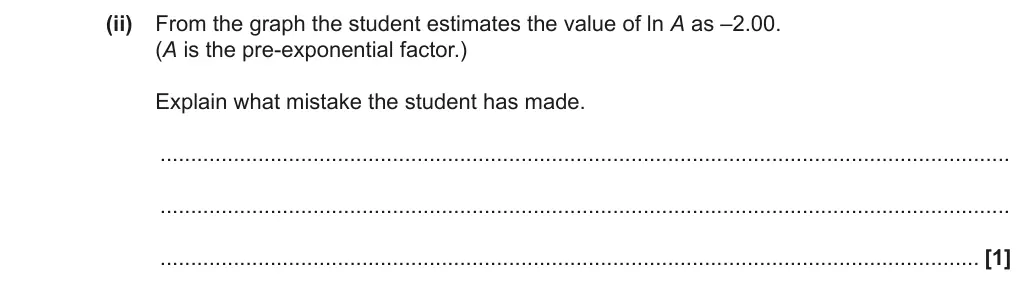
Skills: M3.1 Translate information between graphical, numerical and algebraic forms; M3.3 Determine the slope and intercept of a linear graph
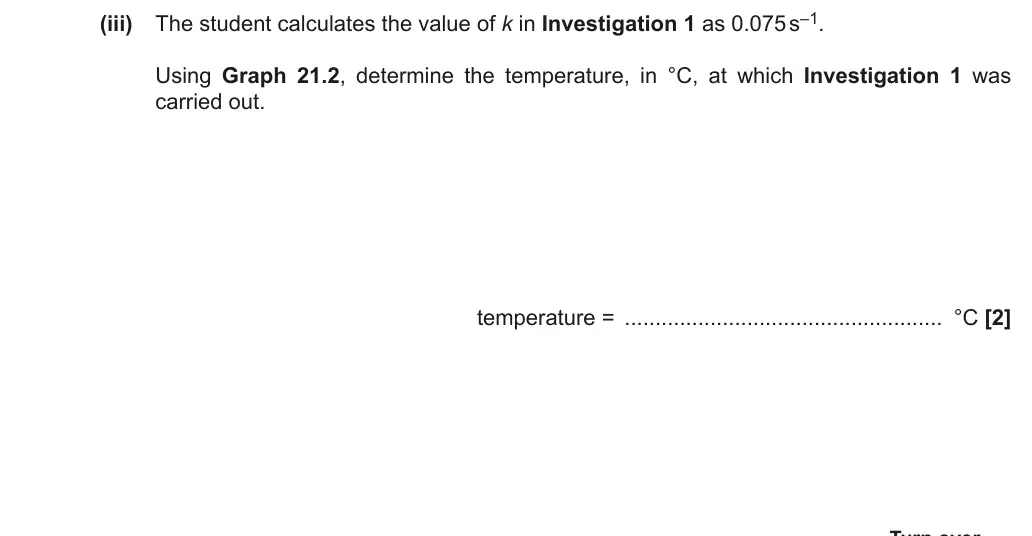
Skills: M0.0 Recognise and make use of appropriate units in calculations; M0.4 Use calculators to find and use power, exponential and logarithmic functions; M2.5 Use logarithms in relation to quantities that range over several orders of magnitude; M3.1 Translate information between graphical, numerical and algebraic forms
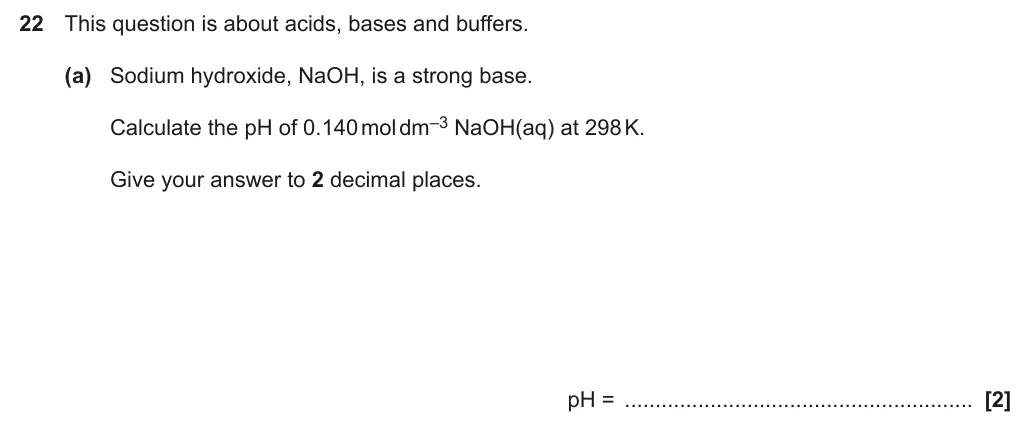
Skills: M0.4 Use calculators to find and use power, exponential and logarithmic functions; M2.3 Substitute numerical values into algebraic equations using appropriate units for physical quantities; M2.5 Use logarithms in relation to quantities that range over several orders of magnitude
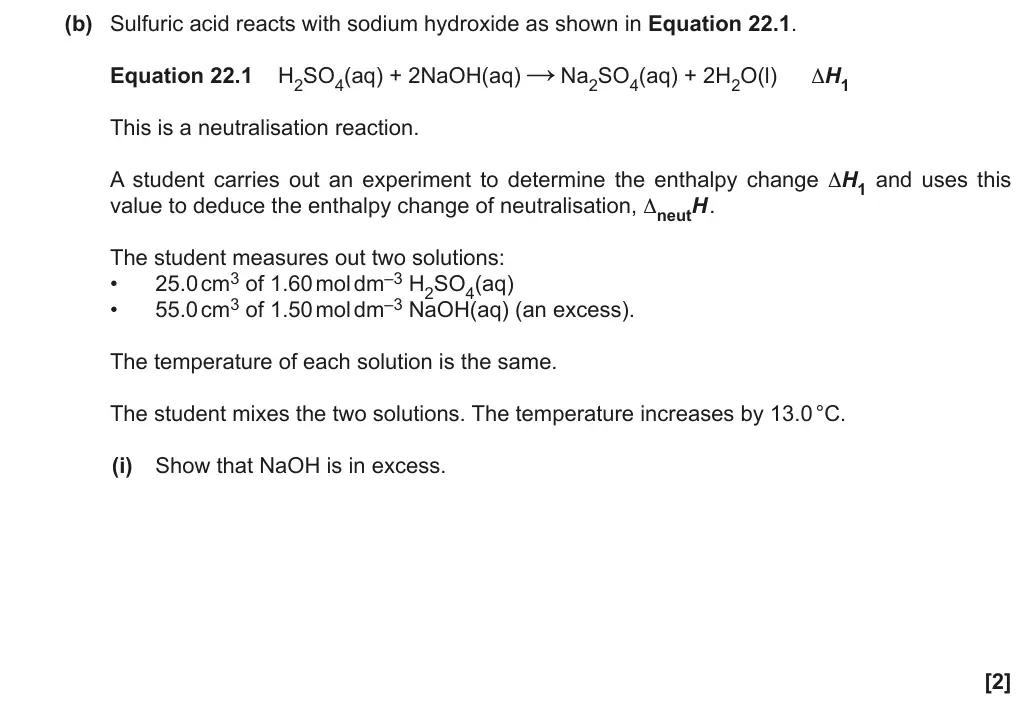
Skills: M0.2 Use ratios, fractions and percentages; M2.3 Substitute numerical values into algebraic equations using appropriate units for physical quantities
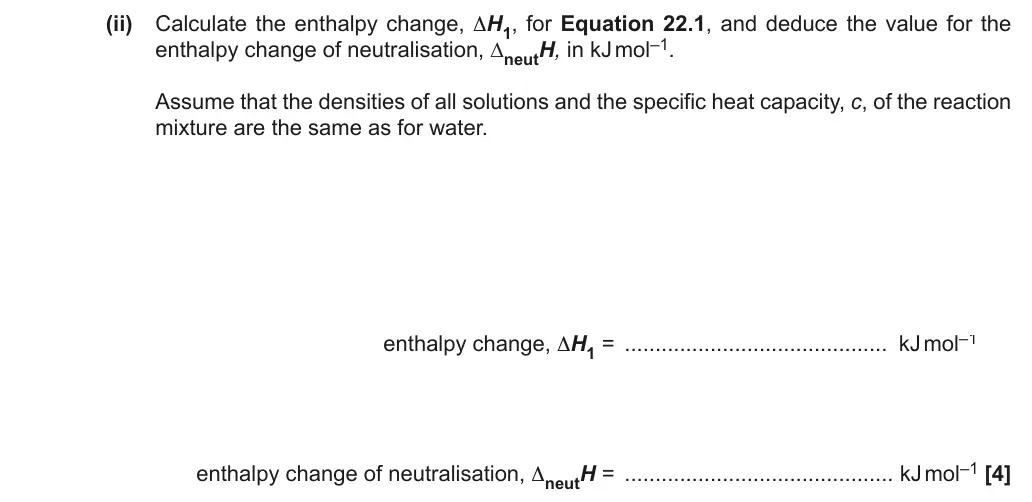
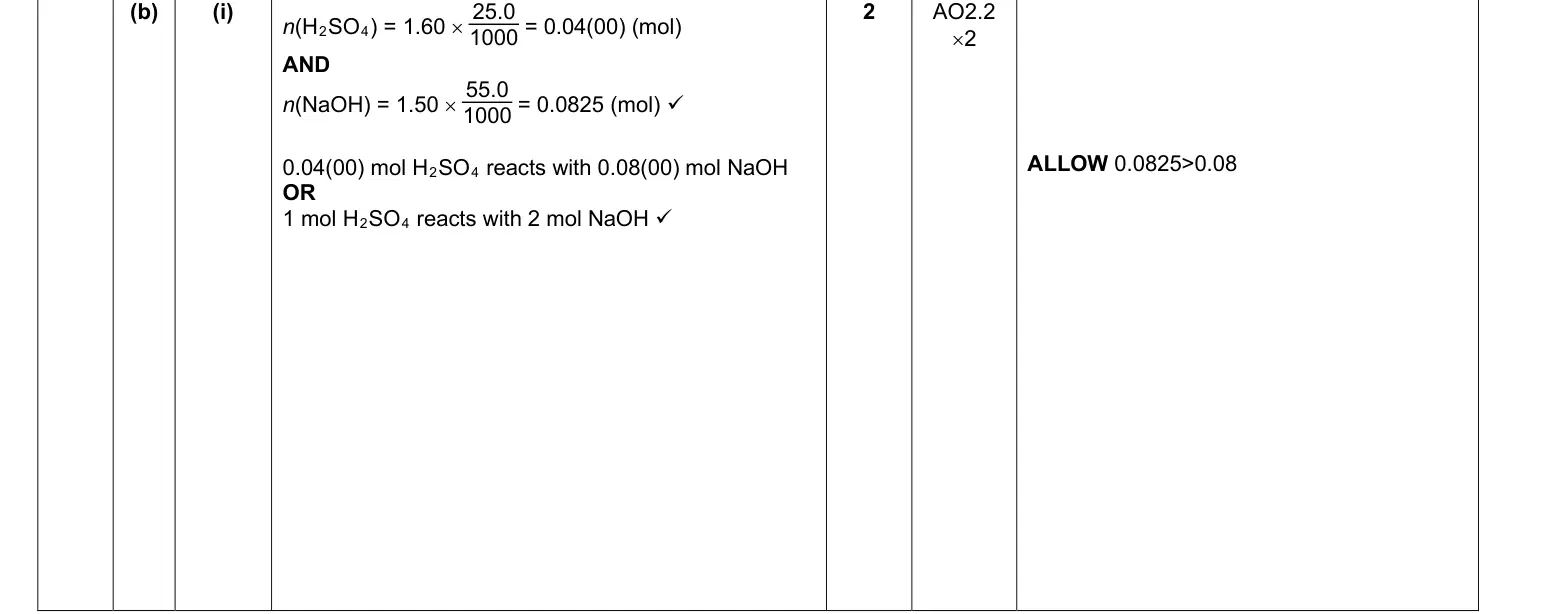
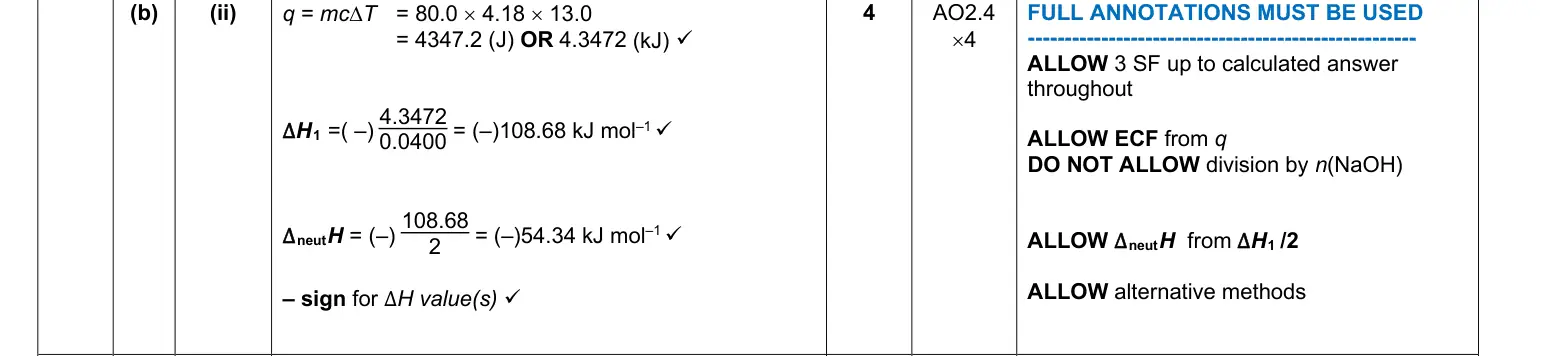
Question 22(b)(ii): This question asked the candidates to calculate the enthalpy change and then to deduce the value for the enthalpy change of neutralisation.
Skills: M0.0 Recognise and make use of appropriate units in calculations; M0.2 Use ratios, fractions and percentages; M2.3 Substitute numerical values into algebraic equations using appropriate units for physical quantities; PAG3 Enthalpy determination
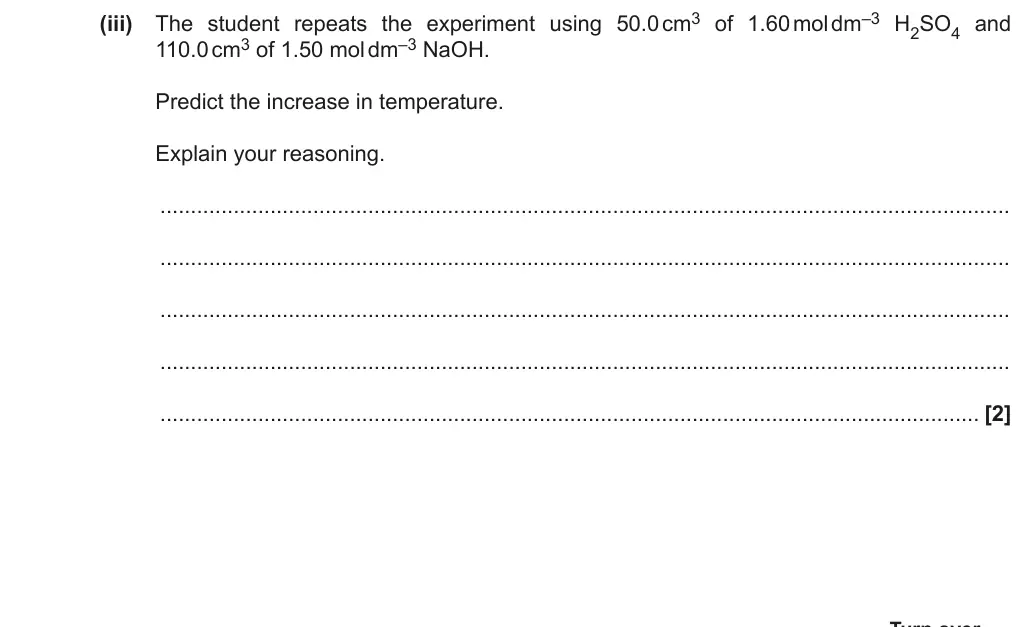
Skills: M0.2 Use ratios, fractions and percentages; PAG3 Enthalpy determination
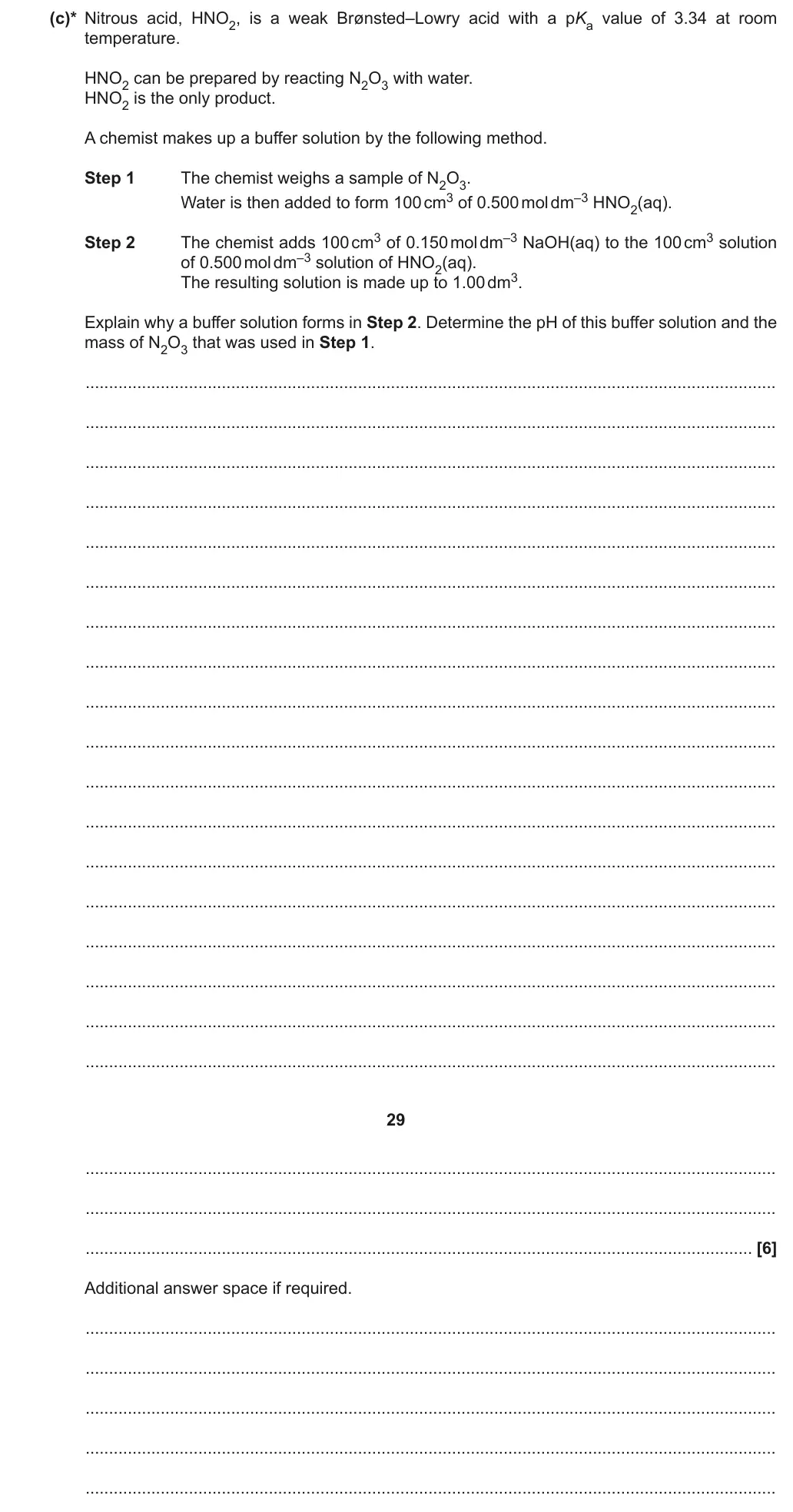
Skills: M0.2 Use ratios, fractions and percentages; M0.4 Use calculators to find and use power, exponential and logarithmic functions; M2.3 Substitute numerical values into algebraic equations using appropriate units for physical quantities; M2.5 Use logarithms in relation to quantities that range over several orders of magnitude
Want a paper marked and gone through with you? Message us.