June 2023: Paper 2, Synthesis and analytical techniques

100 marks · 40 question parts · Paper, mark scheme and report on OCR's site · Have OCR's Data Sheet beside you

Question by question

QTopicMarksAOType
1 NMR spectroscopy and combined techniques 1AO1Multiple choice
2 Carbonyl compounds: aldehydes and ketones, Chromatography and tests for functional groups 1AO1Multiple choice
3 Organic basics: naming, formulae and isomerism 1AO2Multiple choice
4 Organic synthesis (Module 6), Amino acids, amides and chirality 1AO1Multiple choice
5 Organic basics: naming, formulae and isomerism, Amount of substance (moles) 1AO1Multiple choice
6 Aromatic compounds: benzene and phenol 1AO1Multiple choice
7 Organic basics: naming, formulae and isomerism 1AO1Multiple choice
8 Alkanes, Amount of substance (moles) 1AO2Multiple choice
9 NMR spectroscopy and combined techniques 1AO2Multiple choice
10 Infrared spectroscopy and mass spectrometry 1AO2Multiple choice
11 Infrared spectroscopy and mass spectrometry 1AO2Multiple choice
12 Carboxylic acids, esters and acyl chlorides 1AO1Multiple choice
13 Organic basics: naming, formulae and isomerism 1AO1Multiple choice
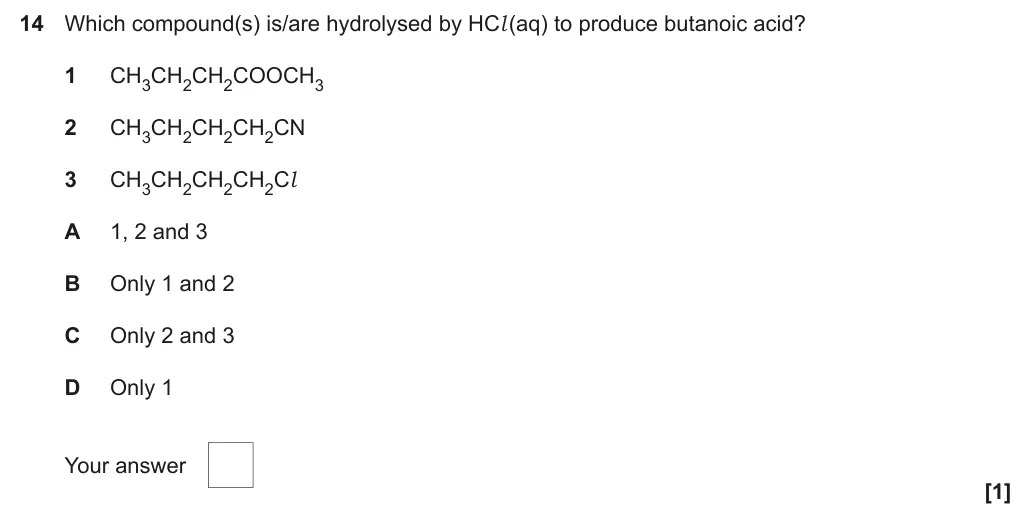
14 Carboxylic acids, esters and acyl chlorides, Carbon–carbon bond formation 1AO1Multiple choice
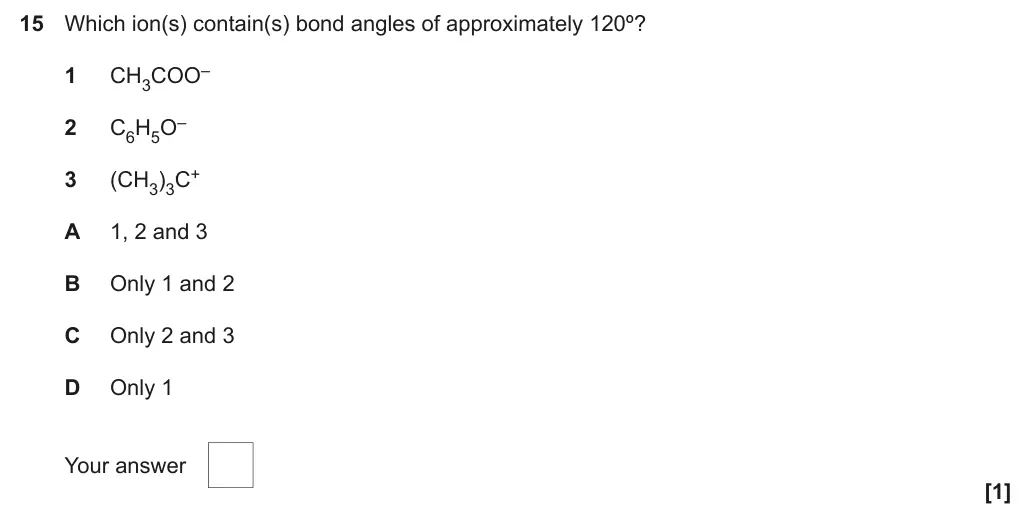
15 Bonding, structure and shapes of molecules 1AO1Multiple choice
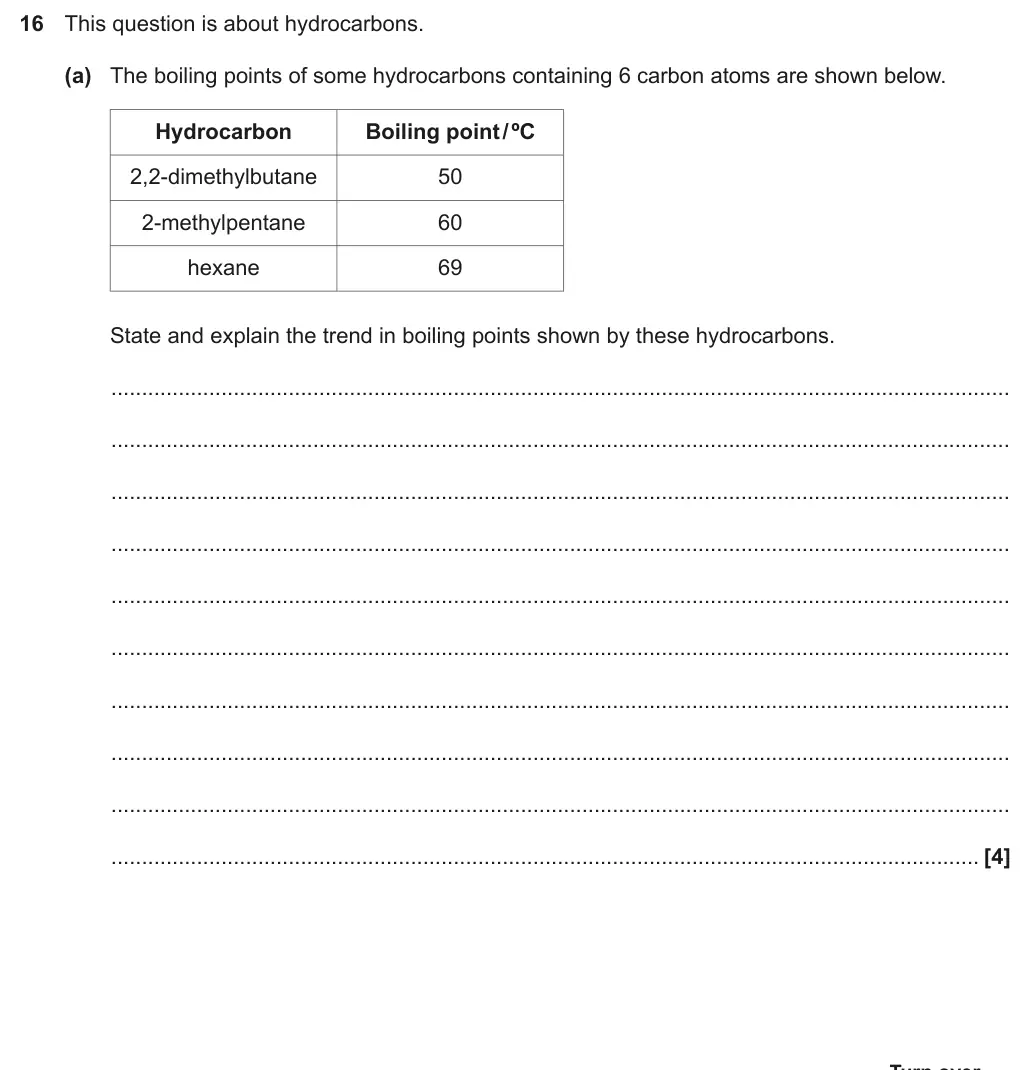
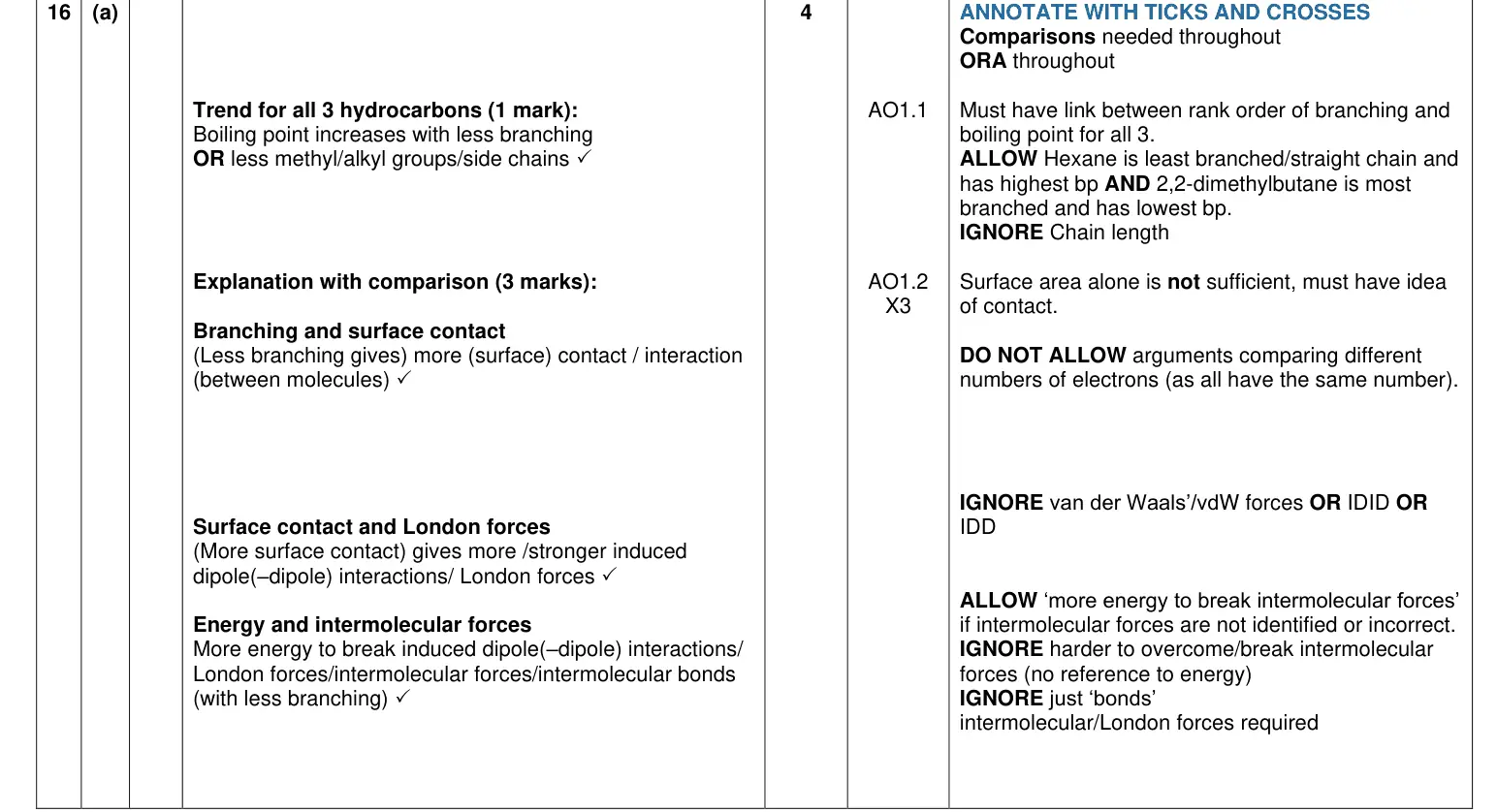
16(a) Alkanes, Bonding, structure and shapes of molecules 4AO1Short answer
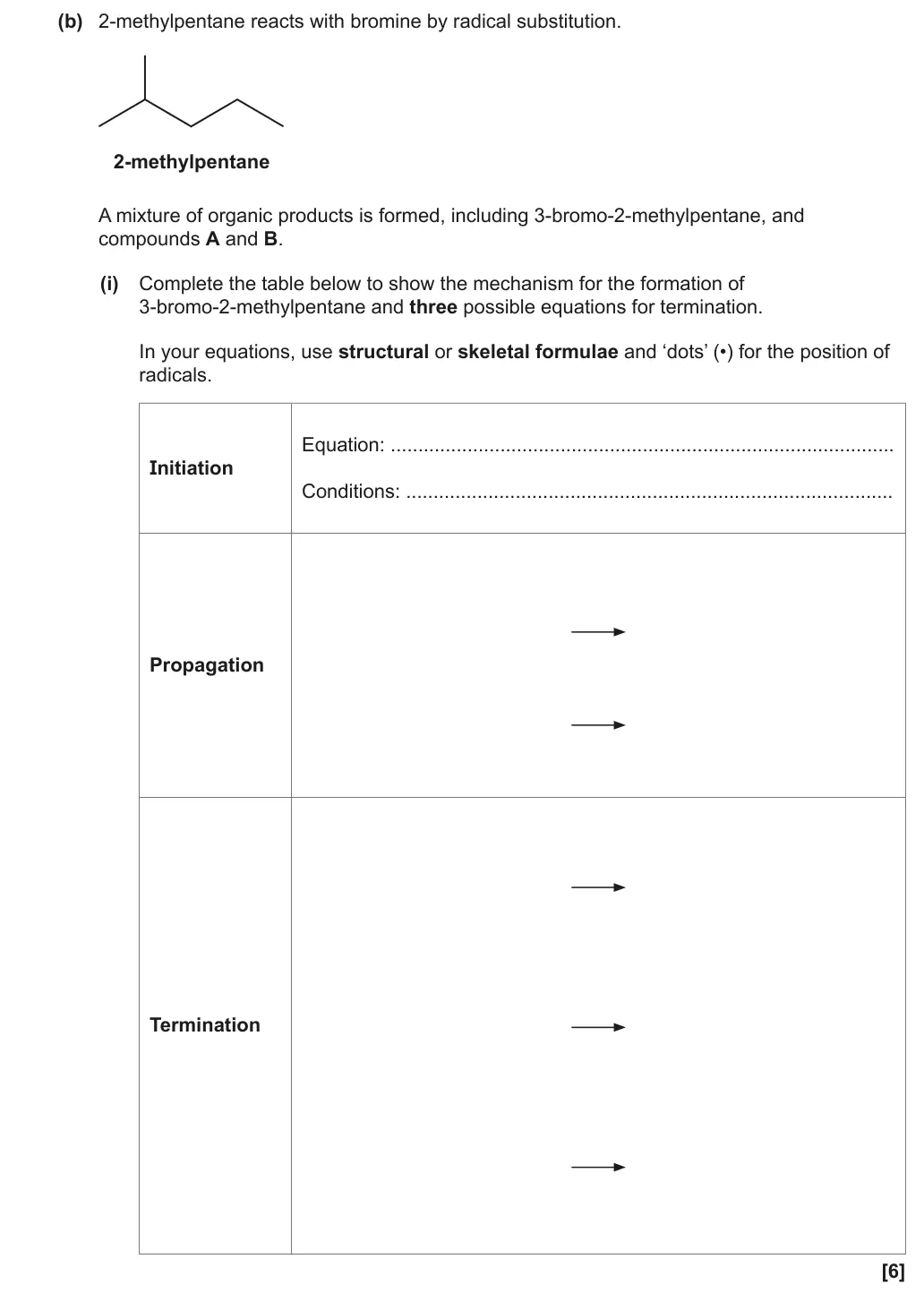
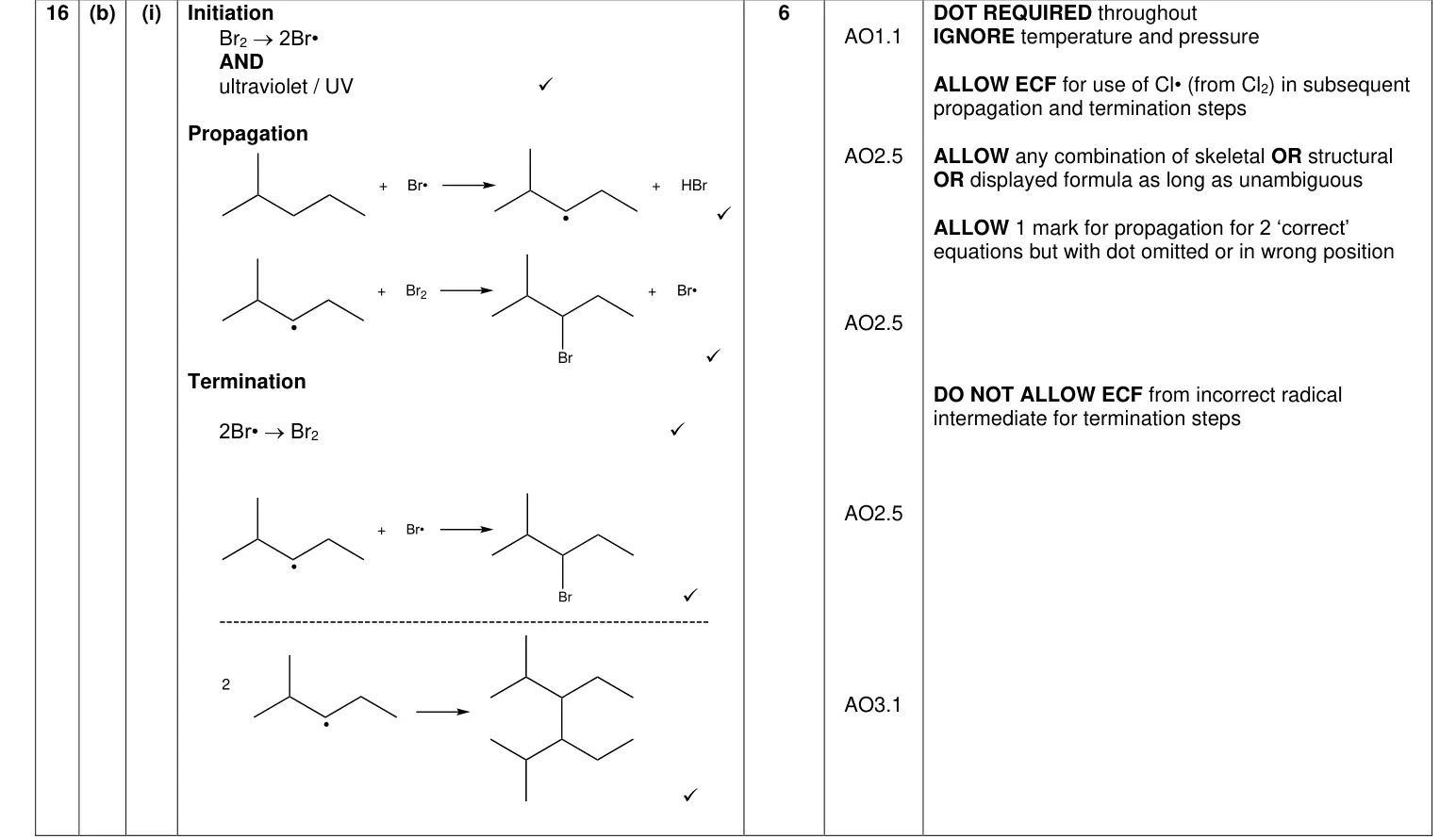
16(b)(i) Alkanes, Organic basics: naming, formulae and isomerism 6AO1, 2, 3Mechanism
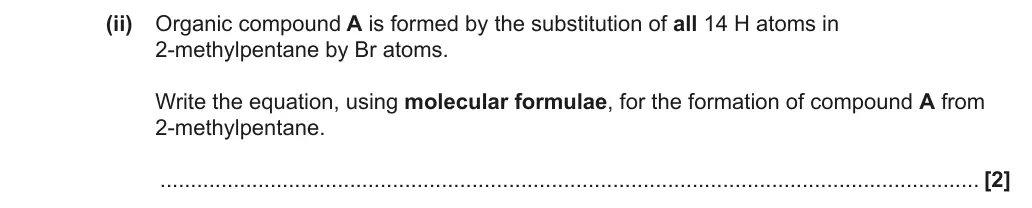
16(b)(ii) Alkanes, Formulae and equations 2AO2Equation writing
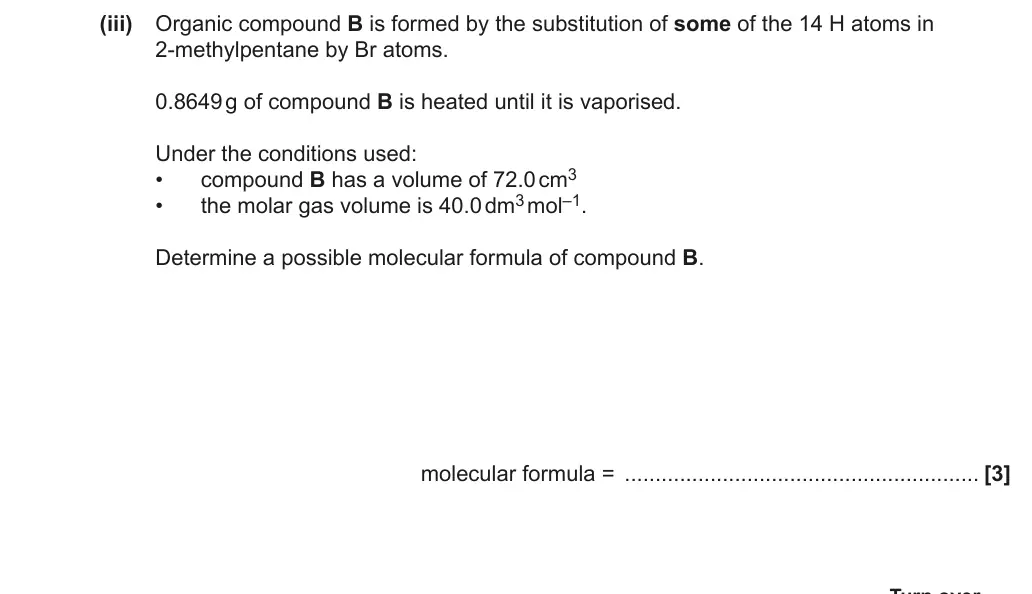
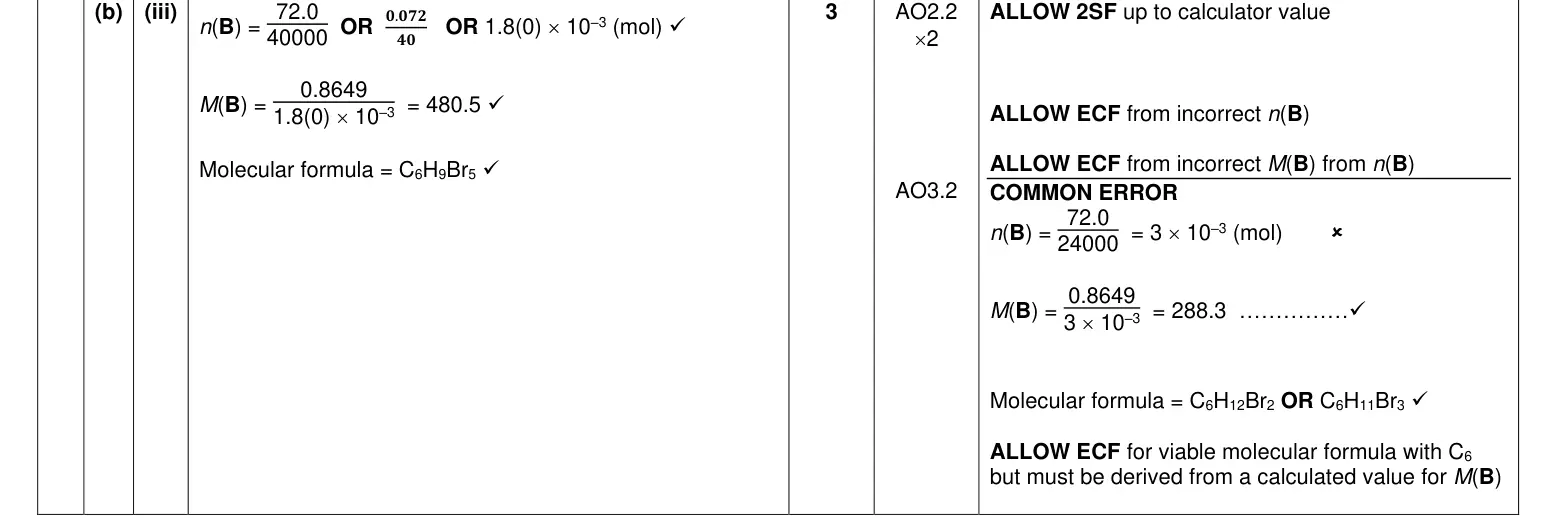
16(b)(iii) Amount of substance (moles), Atomic structure and isotopes 3AO2, 3Calculation
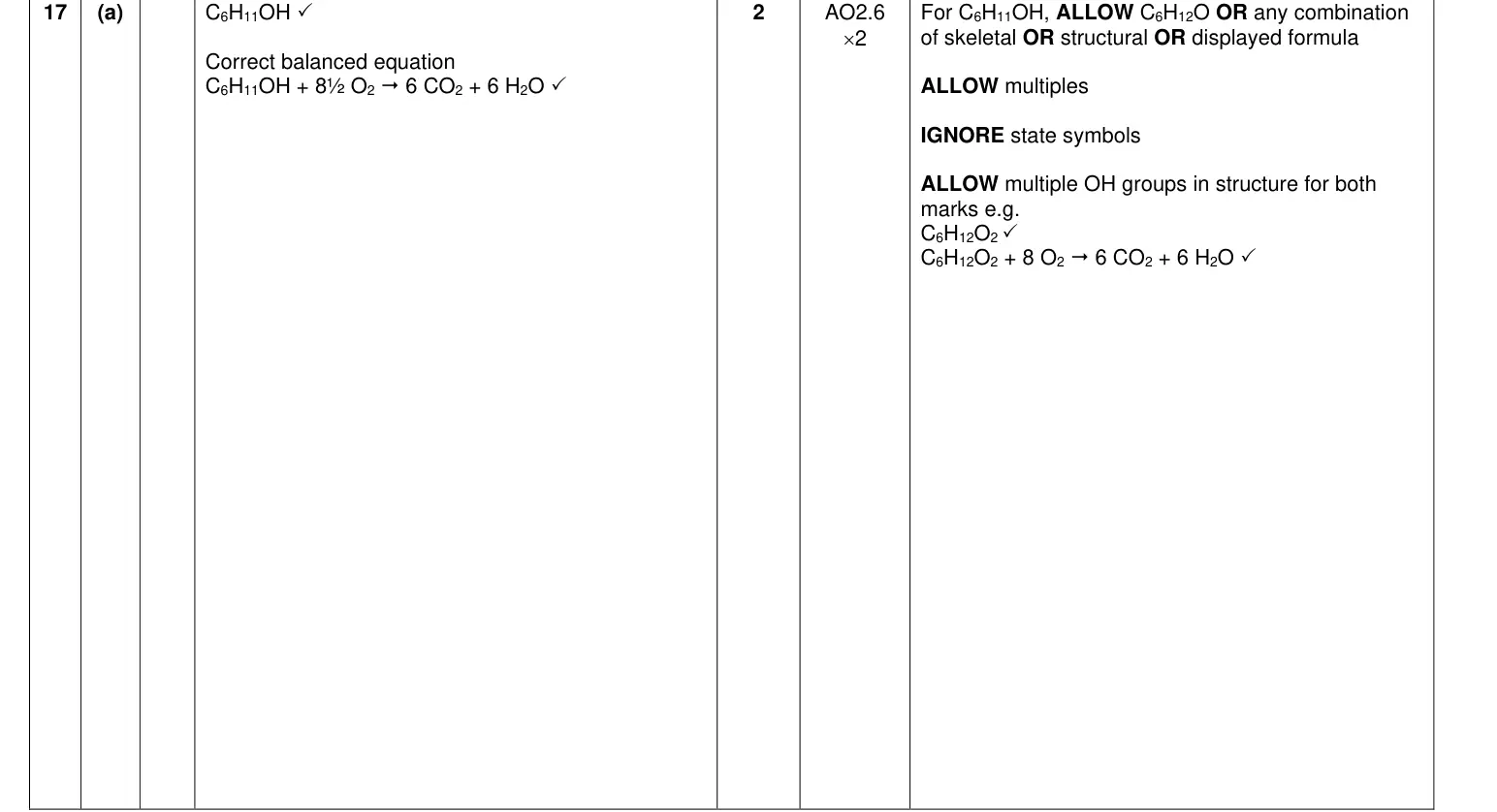
17(a) Alcohols, Formulae and equations, Organic basics: naming, formulae and isomerism 2AO2Equation writing
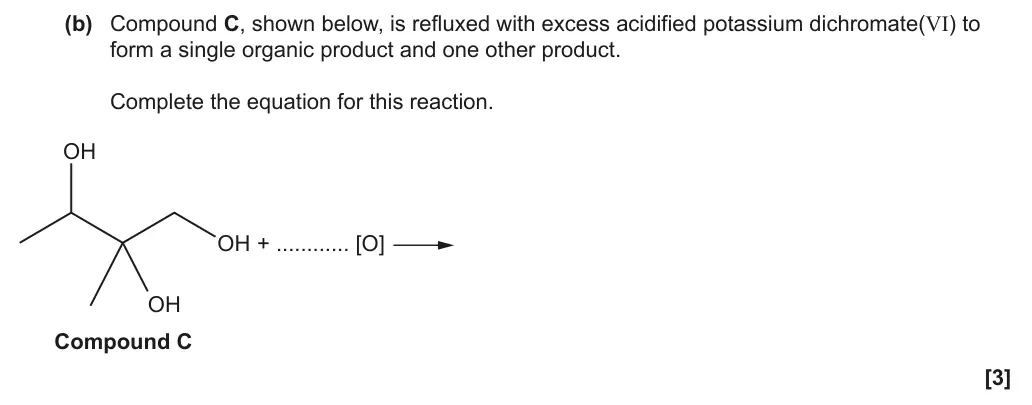
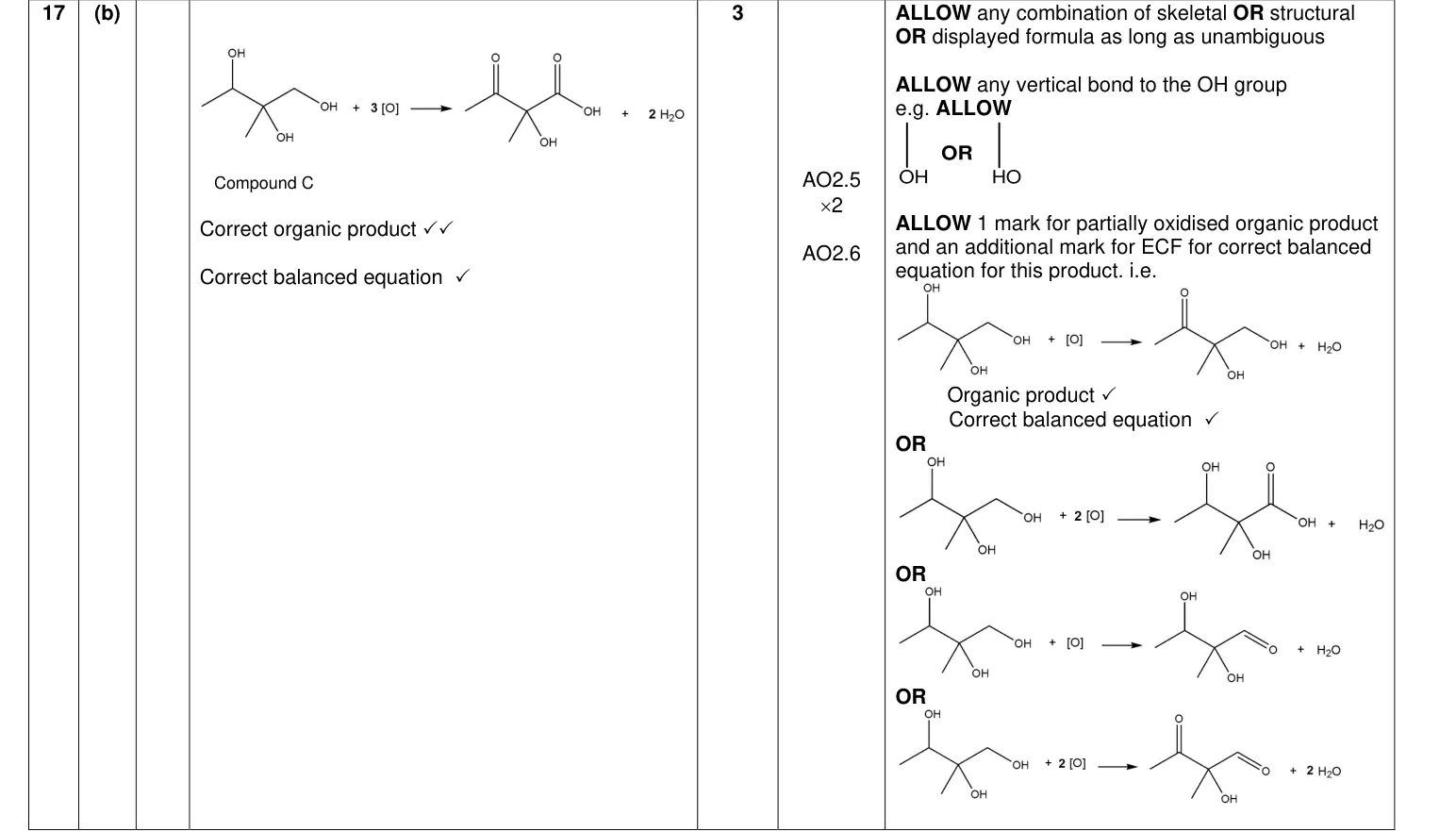
17(b) Alcohols, Formulae and equations 3AO2Complete table/diagram
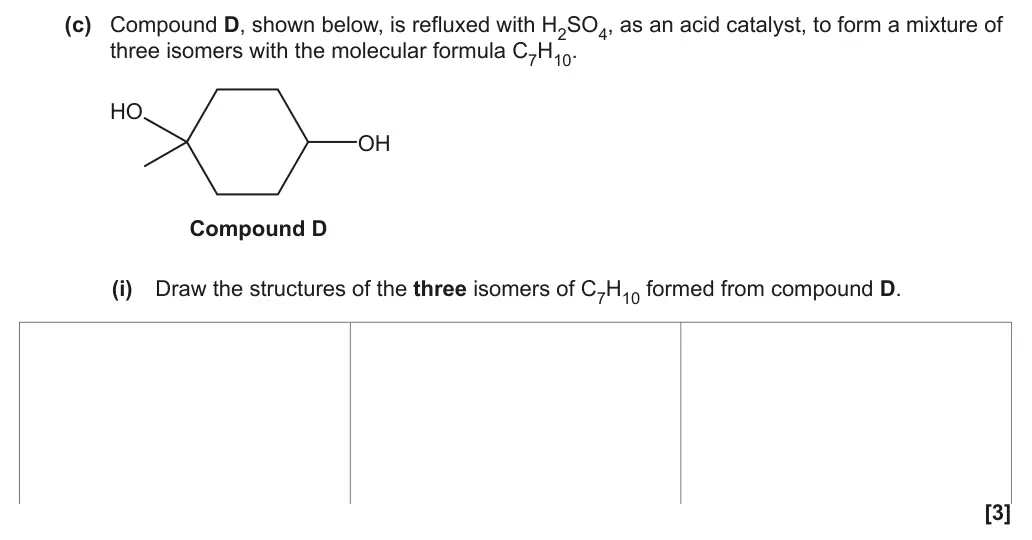
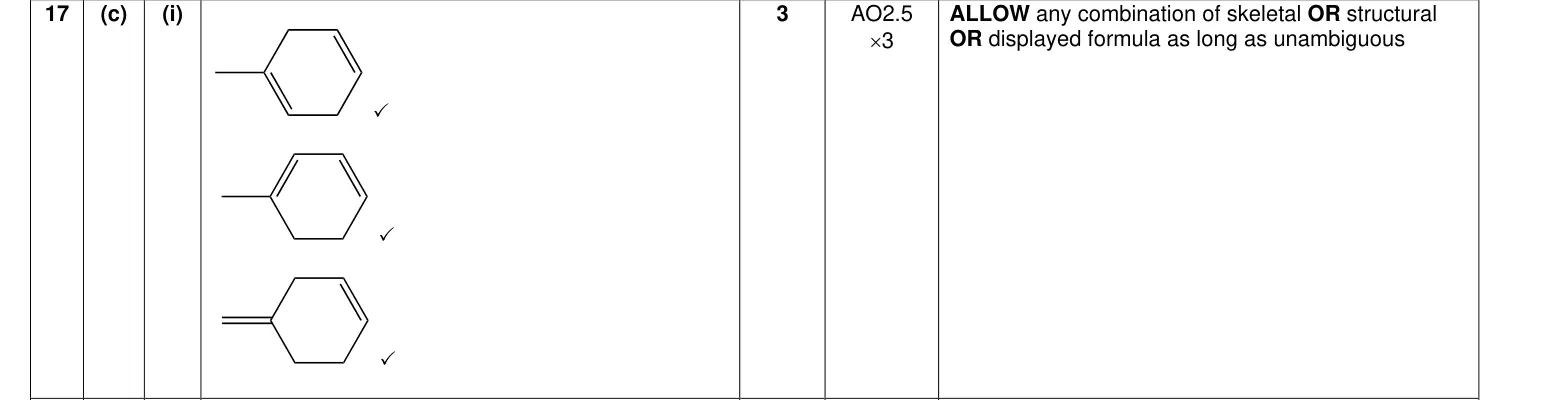
17(c)(i) Alcohols, Organic basics: naming, formulae and isomerism 3AO2Structure / isomer
17(c)(ii) Alcohols 1AO1Short answer
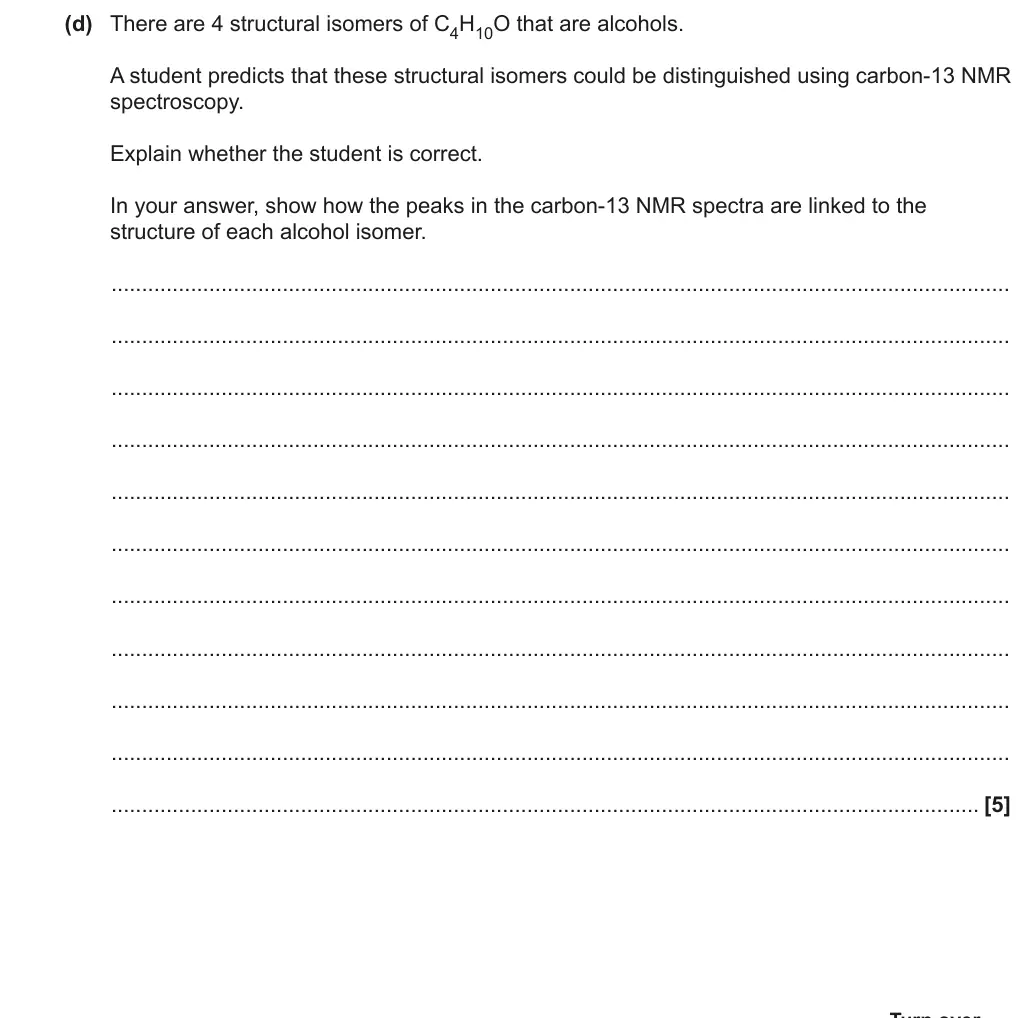
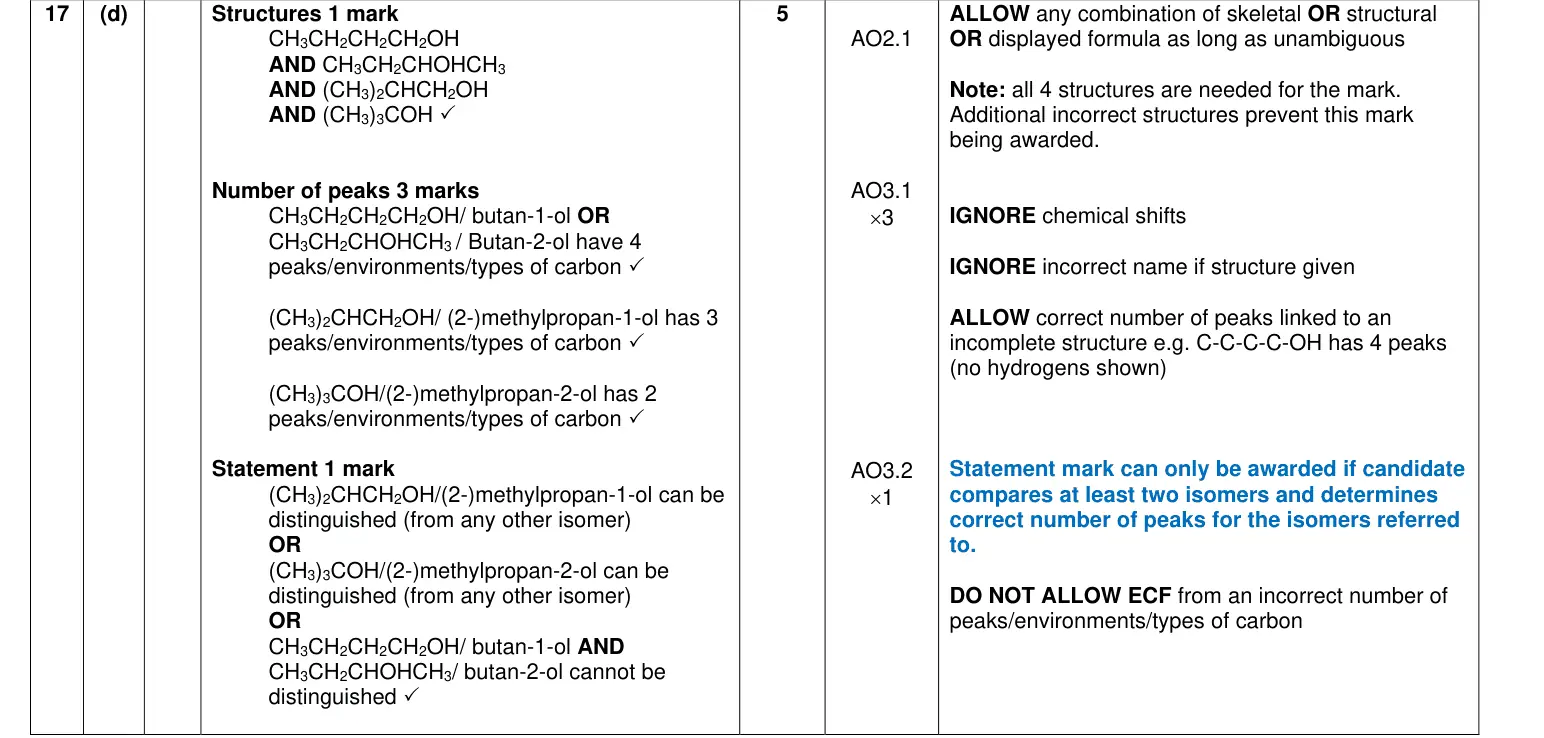
17(d) NMR spectroscopy and combined techniques, Organic basics: naming, formulae and isomerism 5AO2, 3Extended response
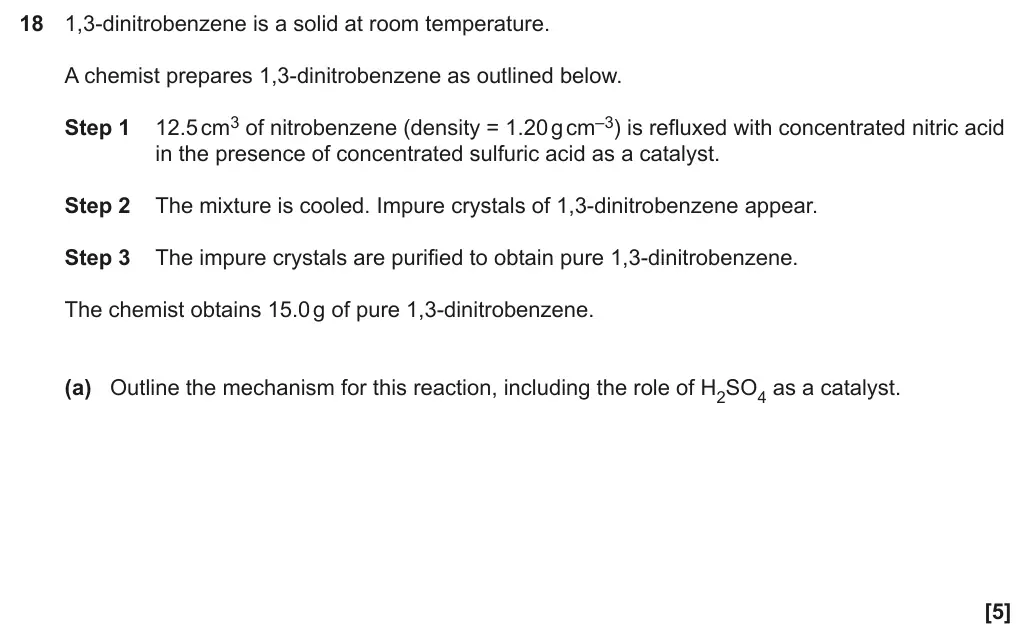
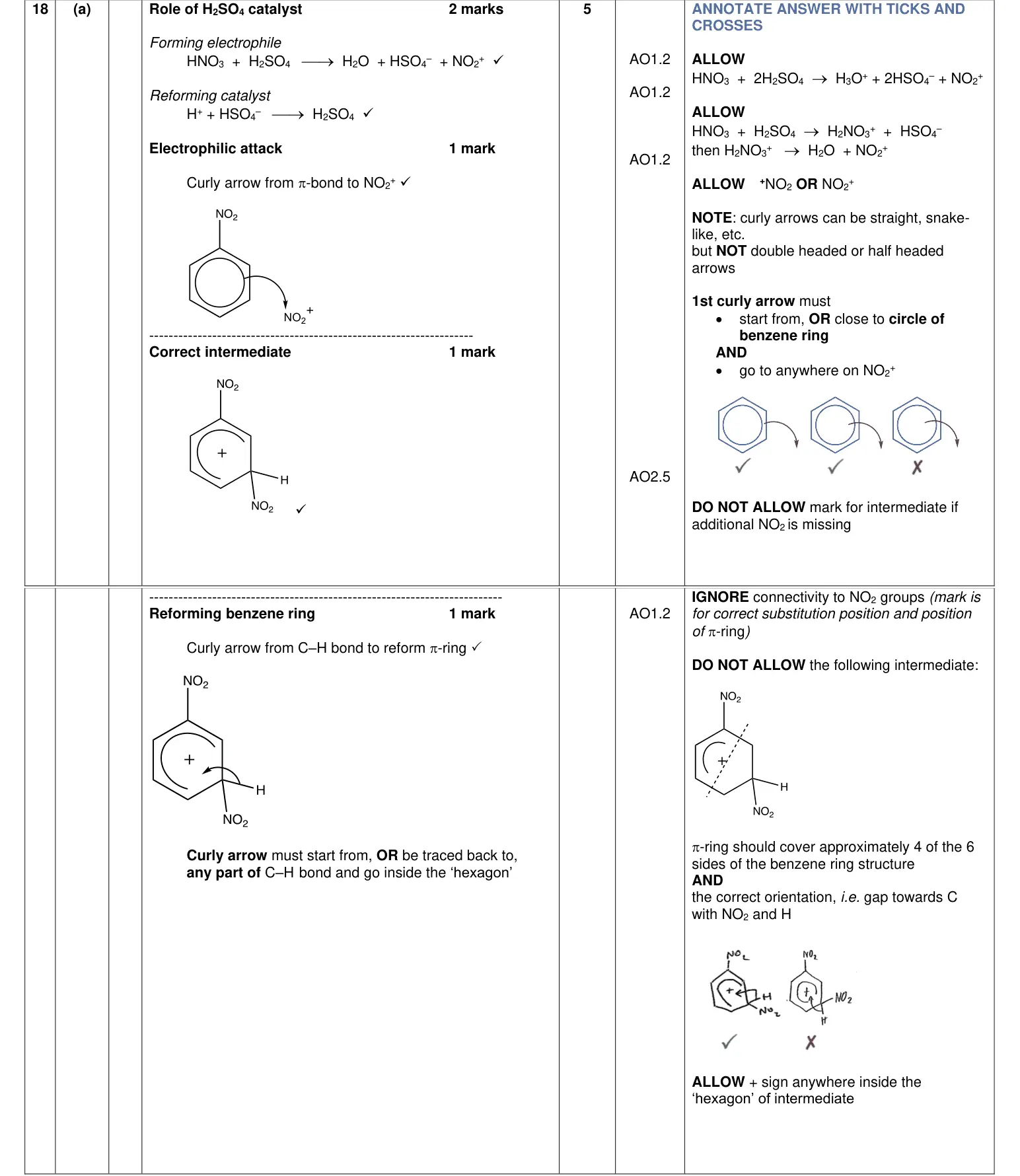
18(a) Aromatic compounds: benzene and phenol 5AO1, 2Mechanism
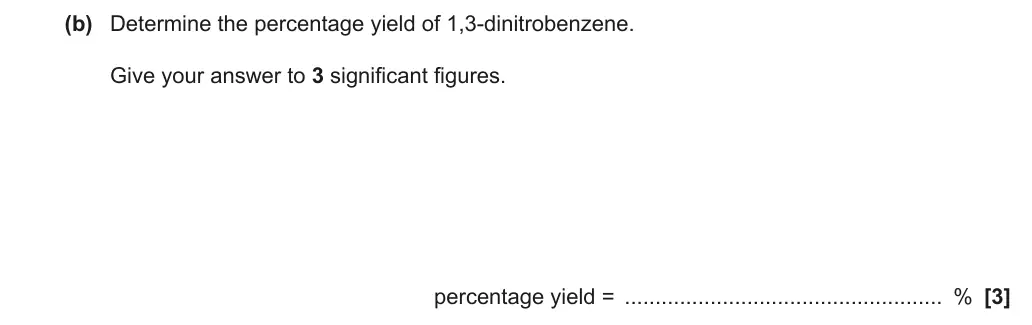
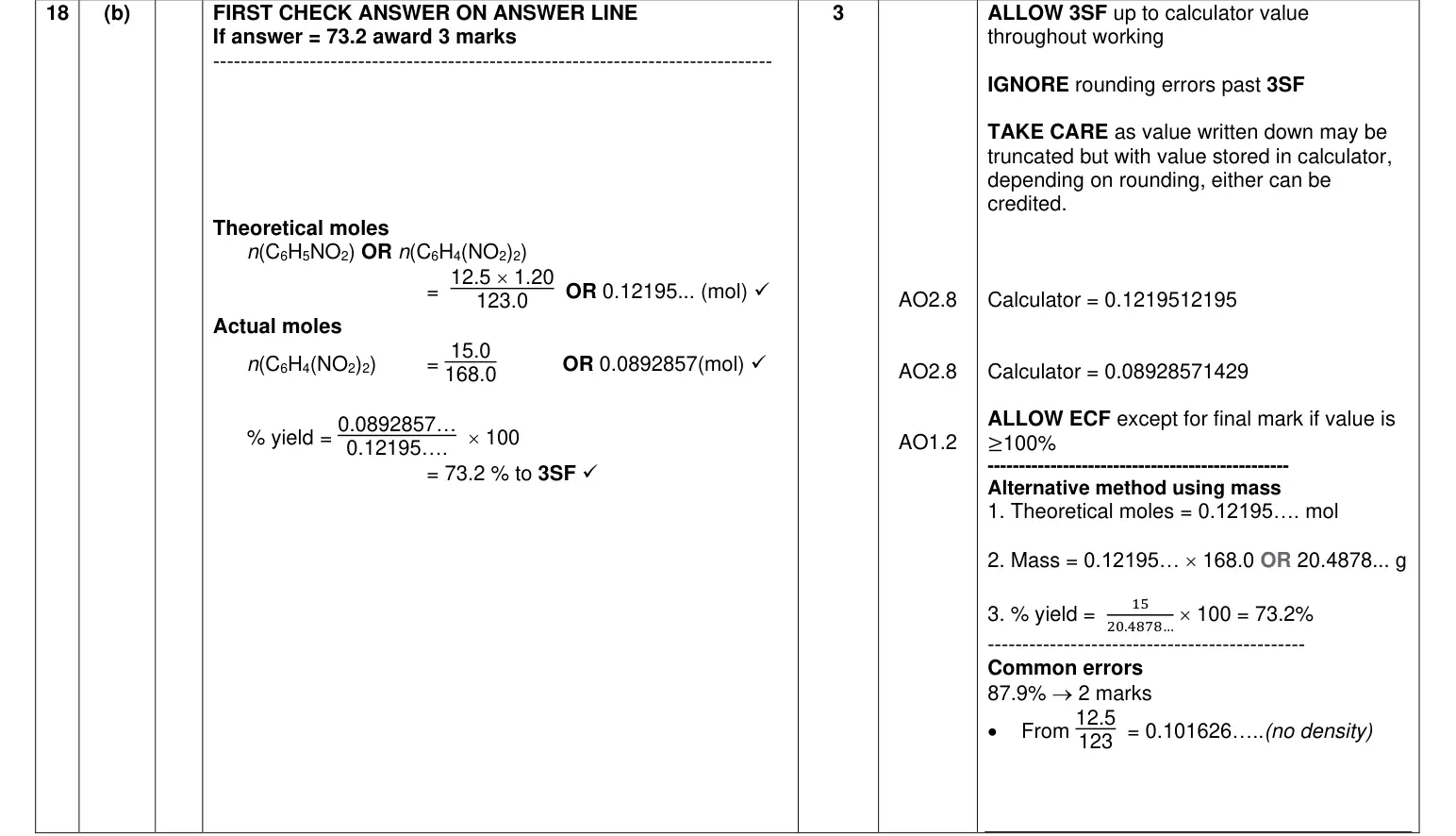
18(b) Amount of substance (moles) 3AO1, 2Calculation
18(c) Organic synthesis (Module 6) 3AO3Short answer
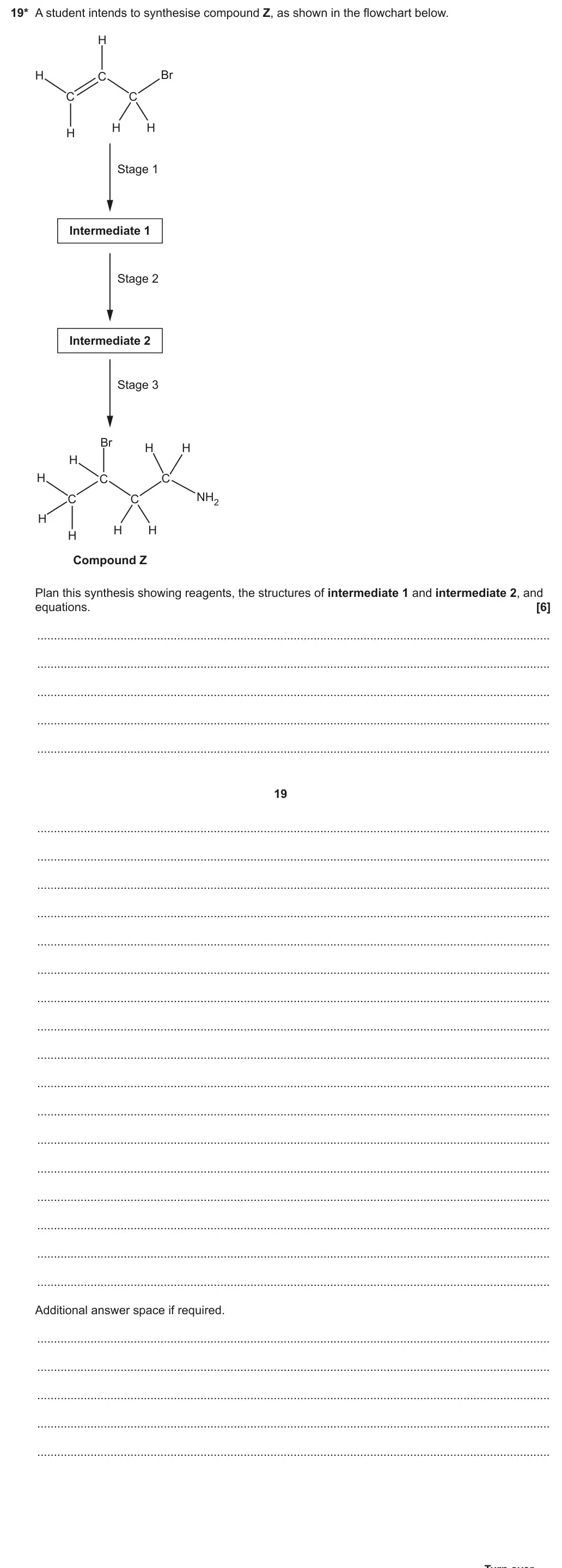
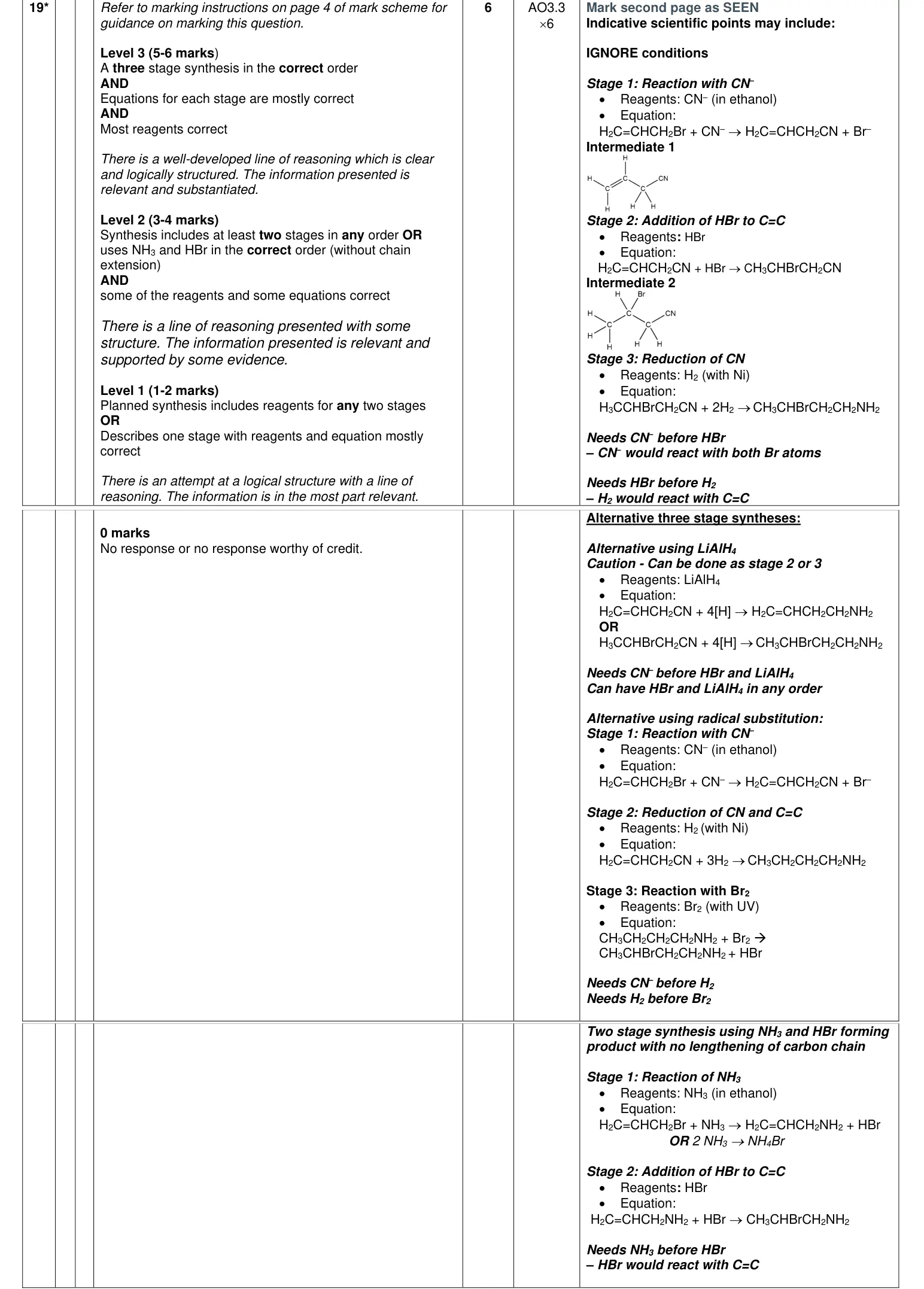
19 Organic synthesis (Module 6), Alkenes, Carbon–carbon bond formation 6AO3Level of response
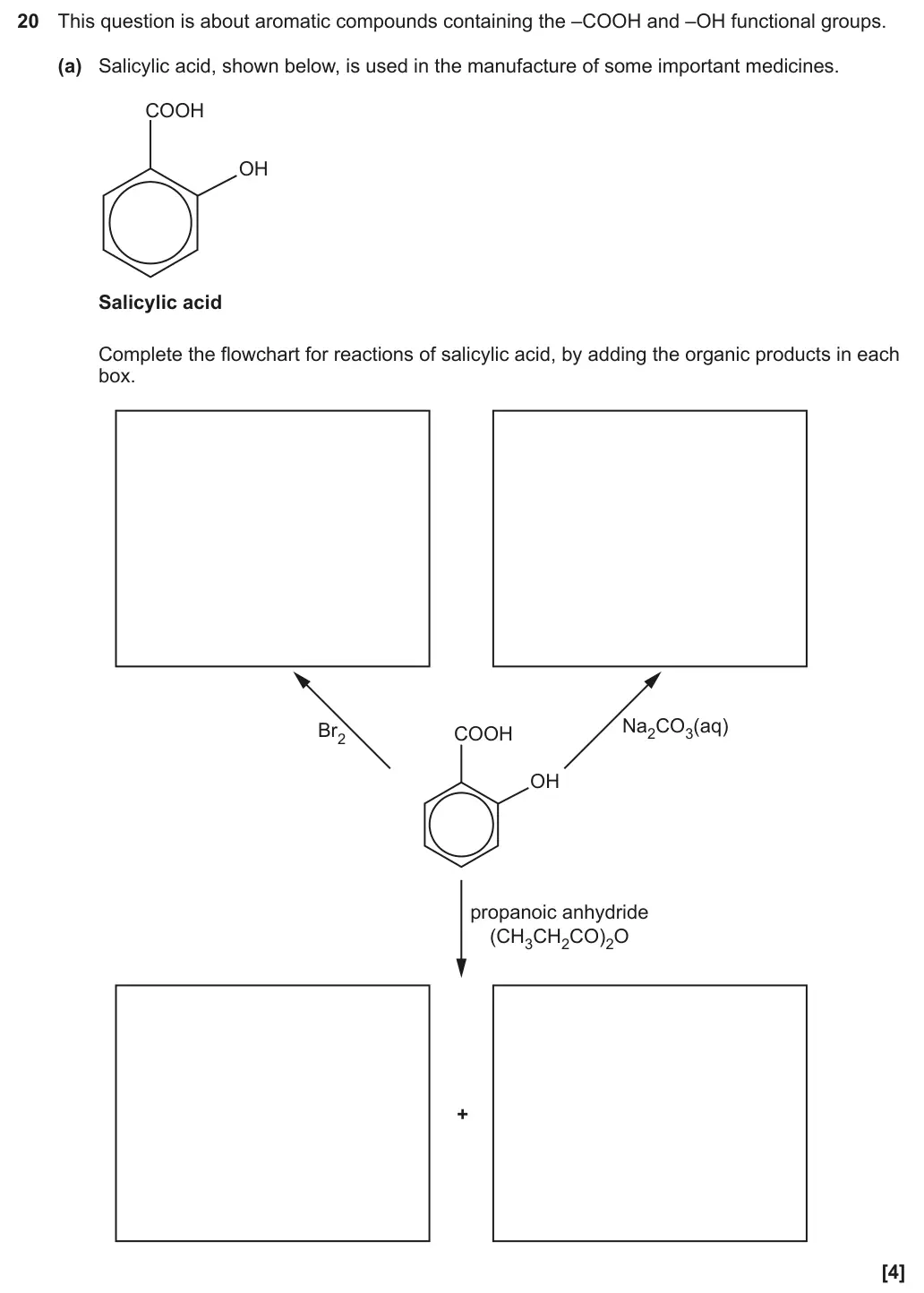
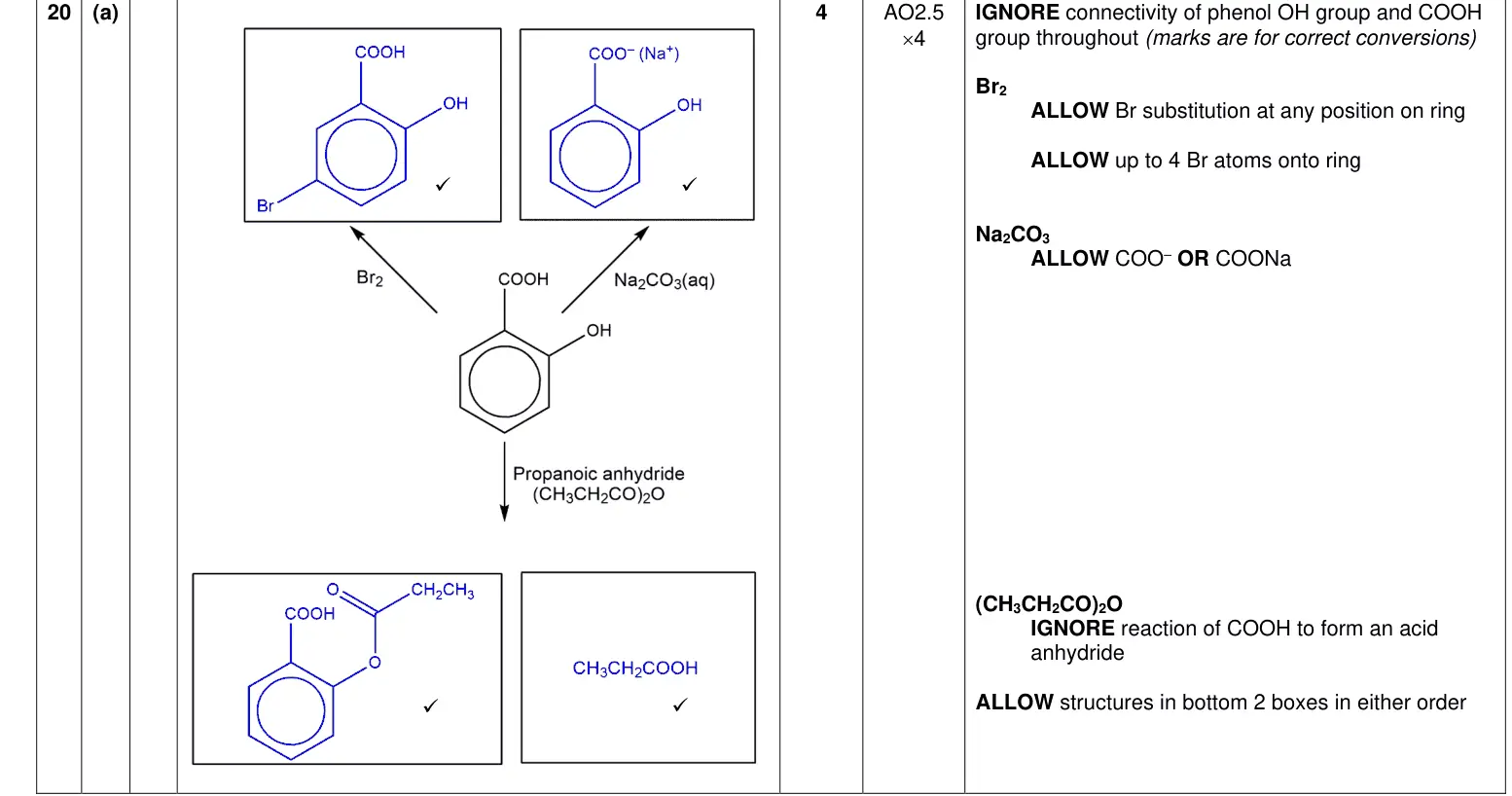
20(a) Aromatic compounds: benzene and phenol, Carboxylic acids, esters and acyl chlorides 4AO2Short answer
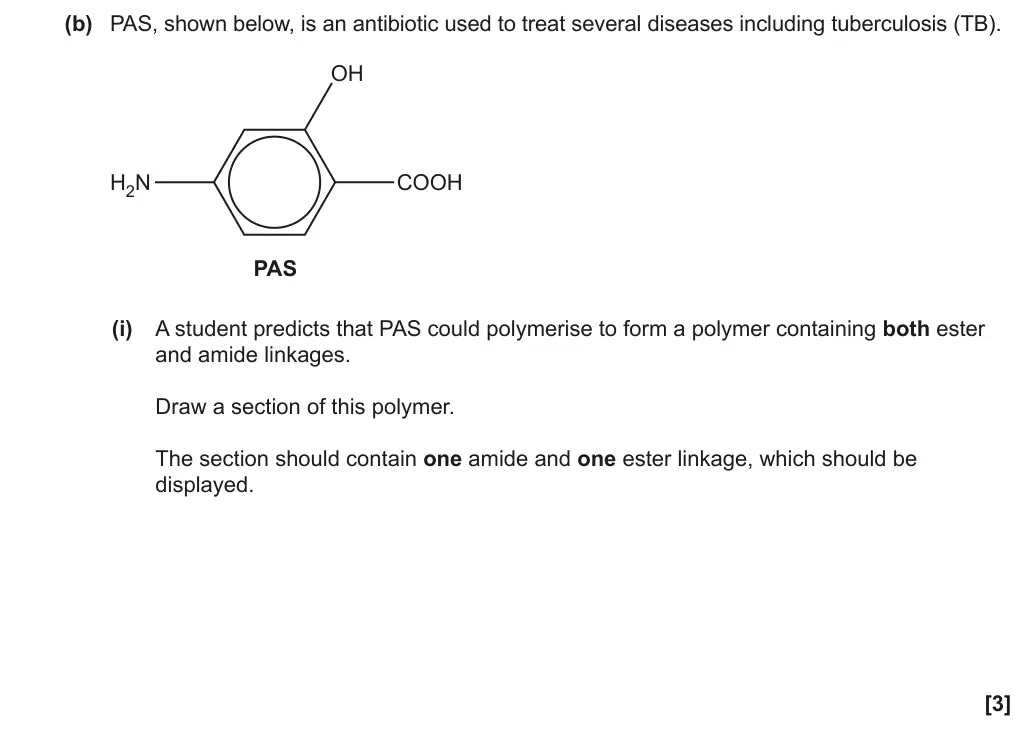
20(b)(i) Polyesters and polyamides 3AO1, 3Structure / isomer
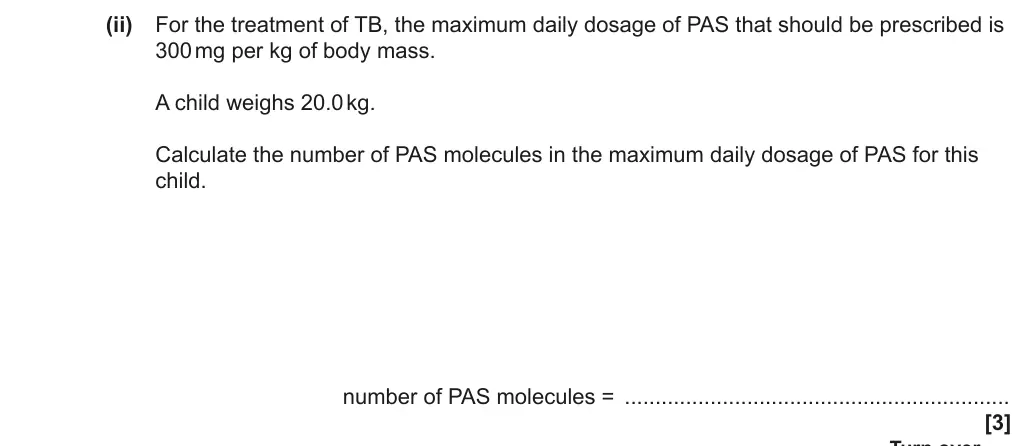
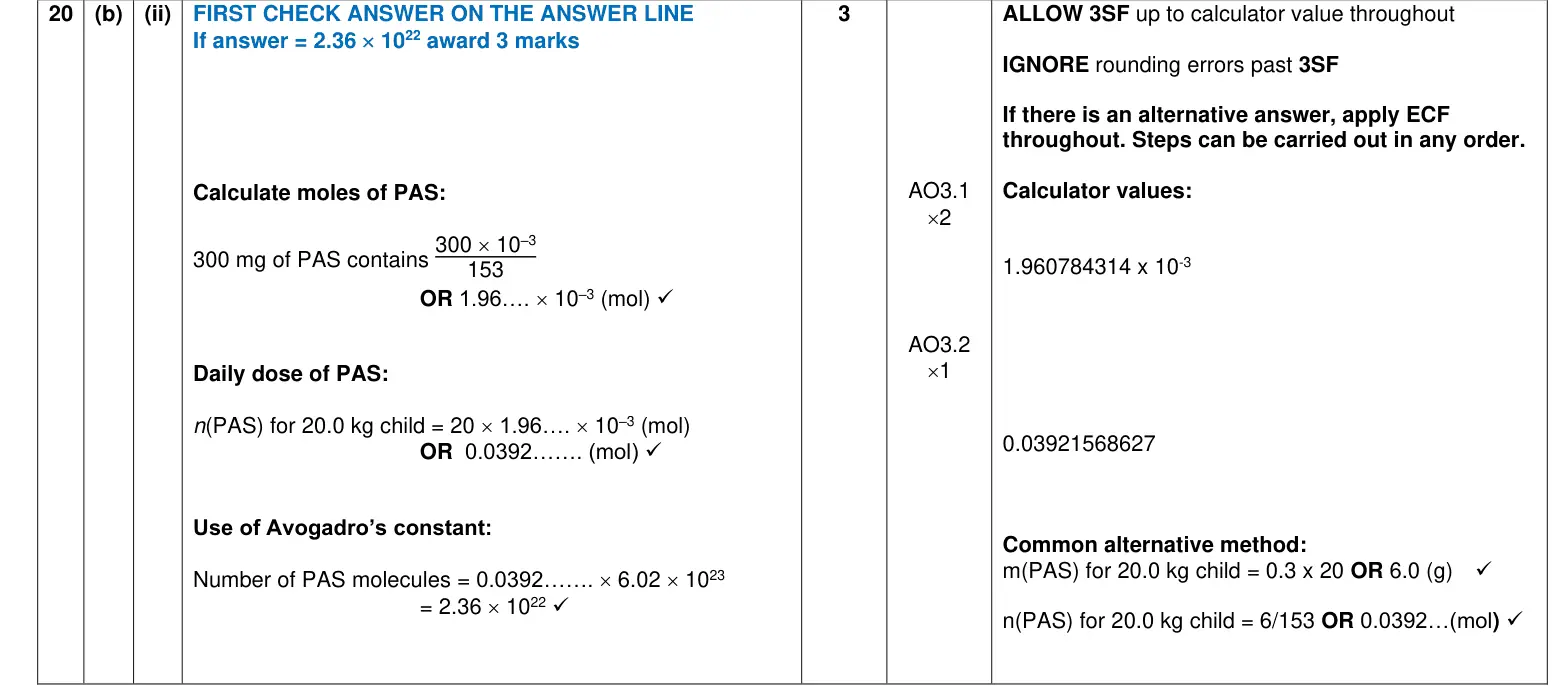
20(b)(ii) Amount of substance (moles) 3AO3Calculation
21(a) Amino acids, amides and chirality 1AO1Short answer
21(b)(i) Organic basics: naming, formulae and isomerism 1AO1Short answer
21(b)(ii) Amino acids, amides and chirality 2AO1Structure / isomer
21(c)(i) Amino acids, amides and chirality 1AO2Short answer
21(c)(ii) Polyesters and polyamides, Amino acids, amides and chirality 4AO2Structure / isomer
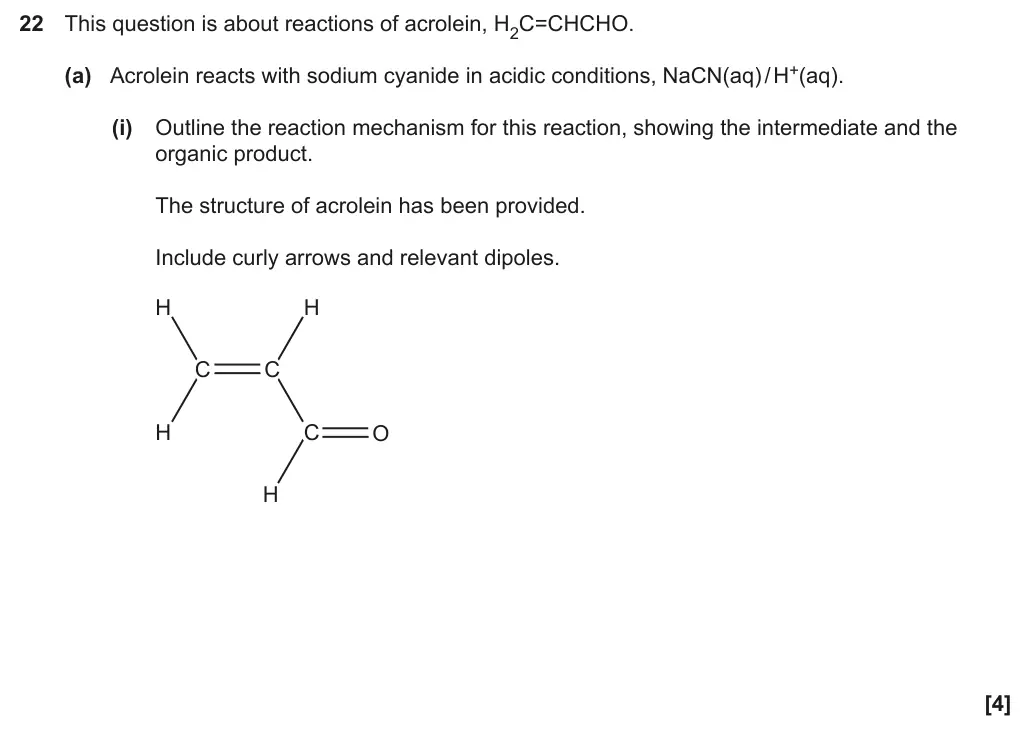
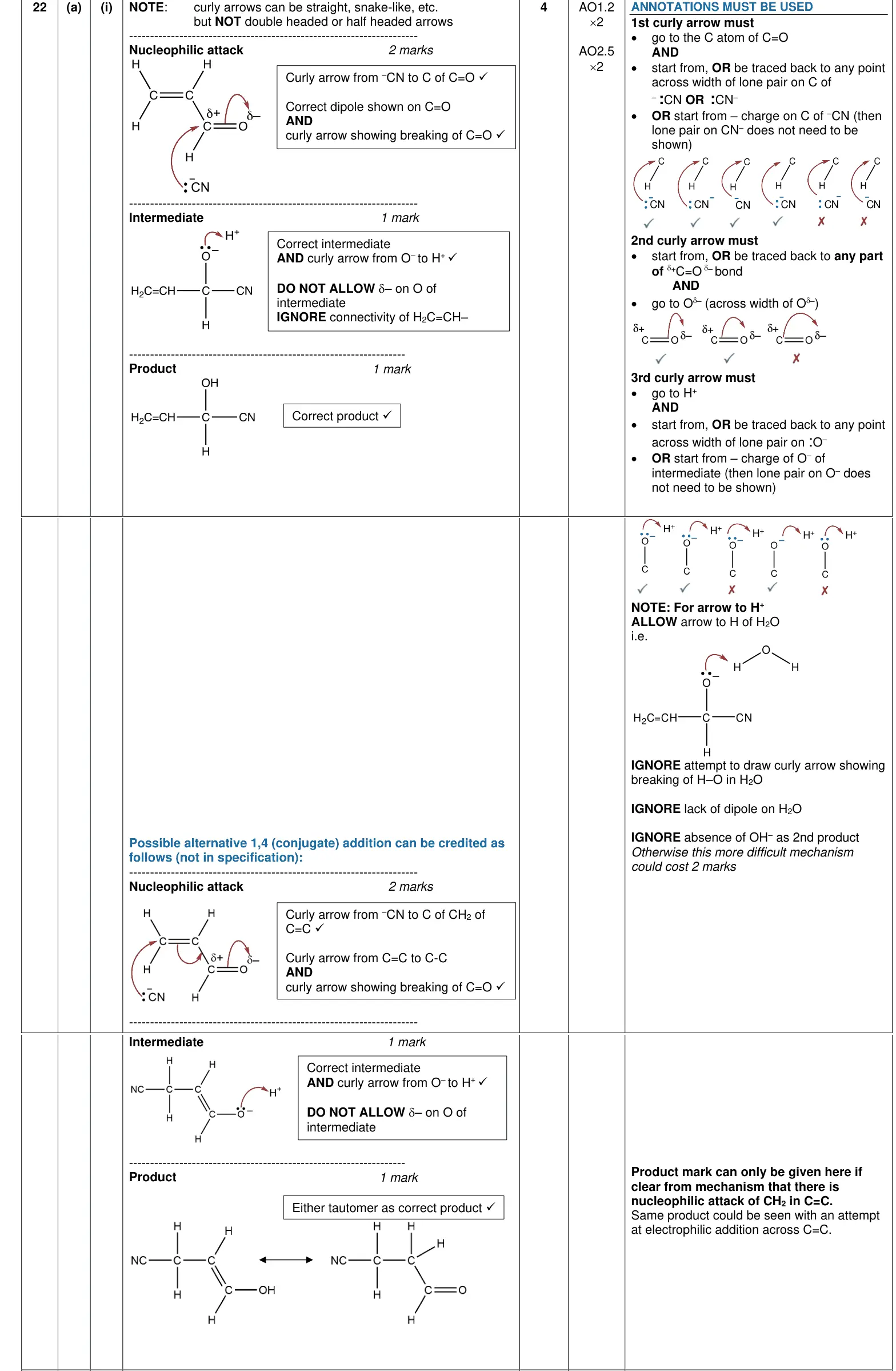
22(a)(i) Carbonyl compounds: aldehydes and ketones, Organic basics: naming, formulae and isomerism, Carbon–carbon bond formation 4AO1, 2Mechanism
22(a)(ii) Carbonyl compounds: aldehydes and ketones 1AO1Short answer
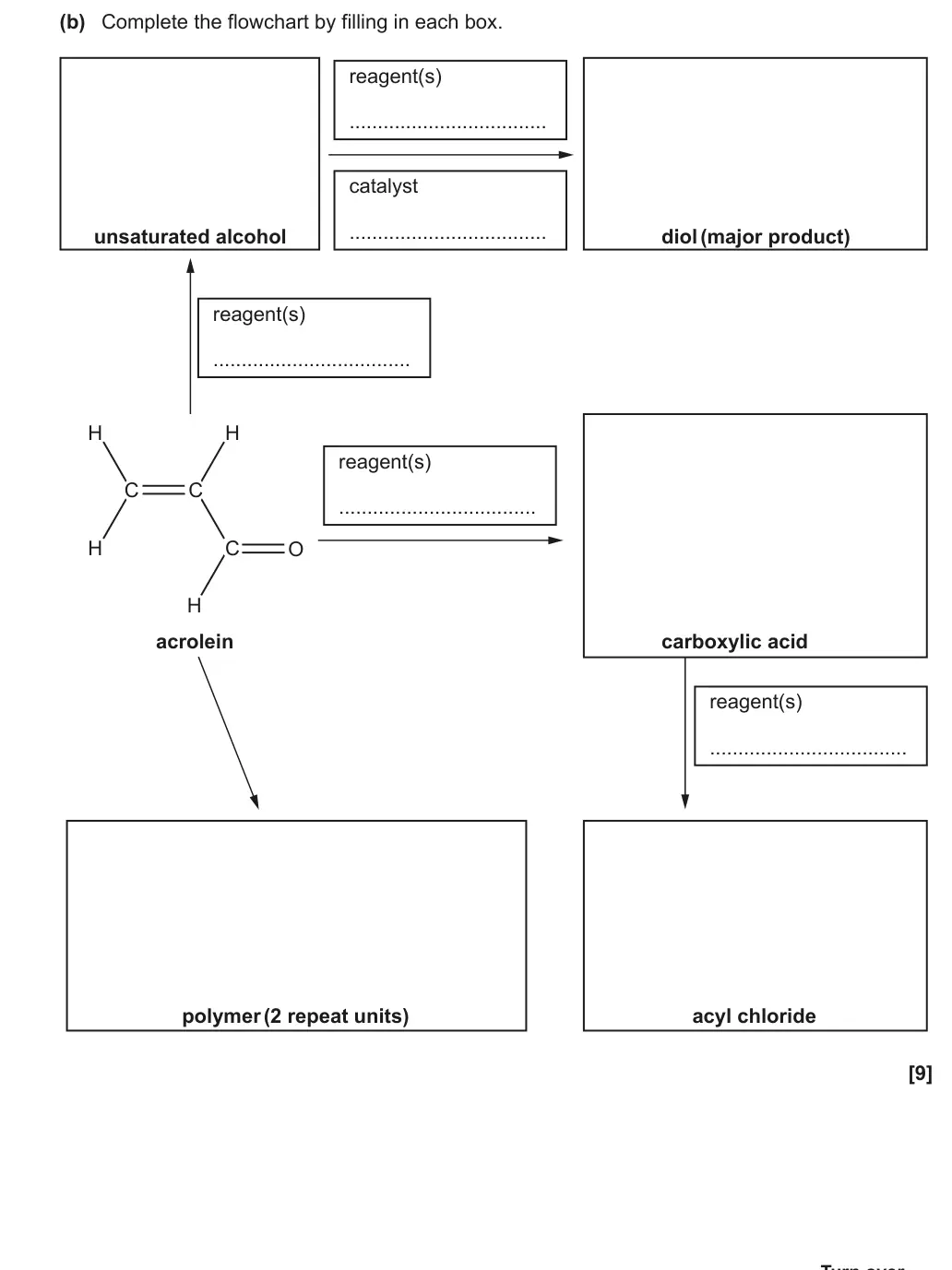
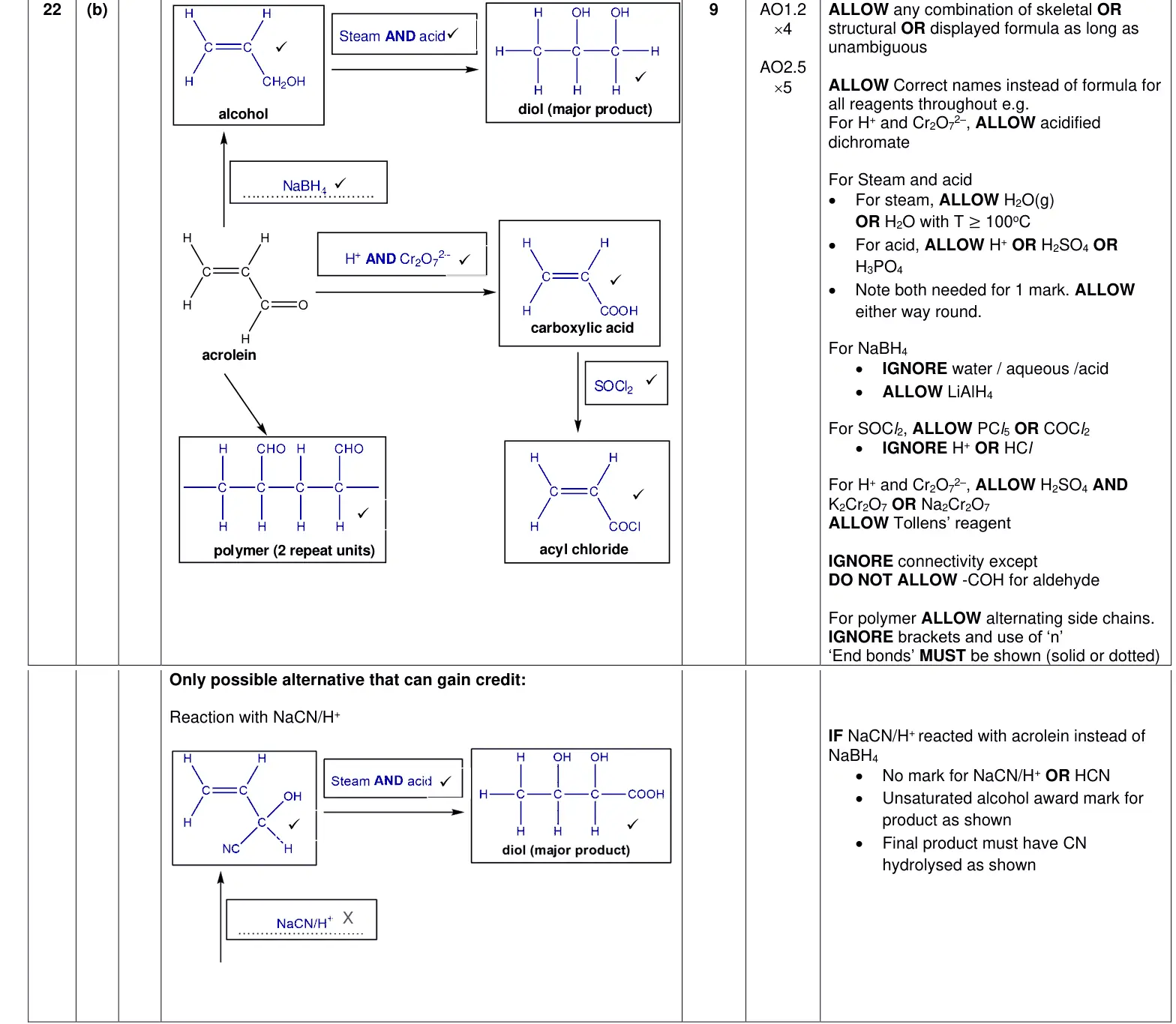
22(b) Organic synthesis (Module 6), Alkenes, Carbonyl compounds: aldehydes and ketones, Carboxylic acids, esters and acyl chlorides 9AO1, 2Short answer
23 Amount of substance (moles), Infrared spectroscopy and mass spectrometry, NMR spectroscopy and combined techniques 6AO1, 3Level of response

The questions

12345678910111213141516(a)16(b)(i)16(b)(ii)16(b)(iii)17(a)17(b)17(c)(i)17(c)(ii)17(d)18(a)18(b)18(c)1920(a)20(b)(i)20(b)(ii)21(a)21(b)(i)21(b)(ii)21(c)(i)21(c)(ii)22(a)(i)22(a)(ii)22(b)23
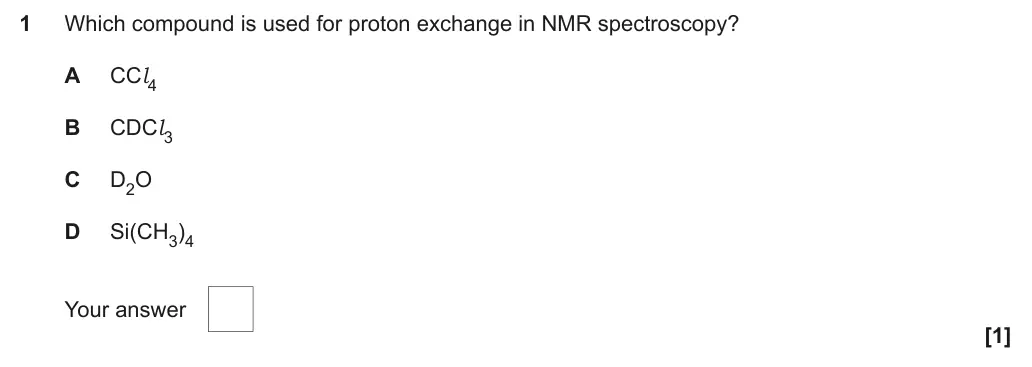
June 2023 · Paper 2 · Q1 1 mark AO1 Multiple choice Medium nmr spectroscopy
1 Which compound is used for proton exchange in NMR spectroscopy?
A CCl4
B CDCl3
C D2O
D Si(CH3)4
Your answer
[1]
June 2023 · Paper 2 · Q2 1 mark AO1 Multiple choice Medium carbonyl compoundschromatography and functional group tests
2 Which compound reacts with 2,4-dinitrophenylhydrazine but does not react with Tollens’
reagent?
A C6H5COCOOH
B C6H5CH(OH)CHO
C CH3COCHO
D CH3CH2CH(OH)CH3
Your answer
[1]
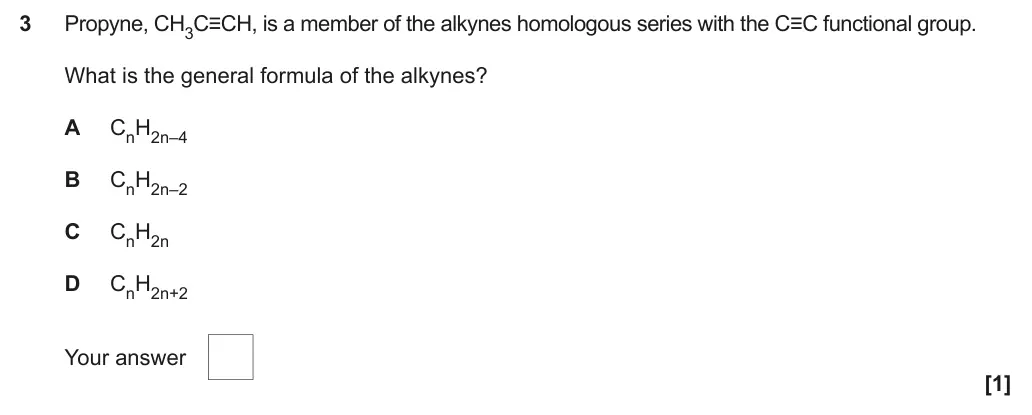
June 2023 · Paper 2 · Q3 1 mark AO2 Multiple choice organic basics
3 Propyne, CH3C≡CH, is a member of the alkynes homologous series with the C≡C functional group.
What is the general formula of the alkynes?
A CnH2n–4
B CnH2n–2
C CnH2n
D CnH2n+2
Your answer
[1]
June 2023 · Paper 2 · Q4 1 mark AO1 Multiple choice Medium organic synthesisamino acids amides and chirality
4 The structure of the painkiller paracetamol is shown below.
OH
O
N
H
Paracetamol
Which functional groups are present in paracetamol?
A alcohol, amide
B alcohol, arene, ketone, amine
C phenol, amide
D phenol, ketone, amine
Your answer
[1]
June 2023 · Paper 2 · Q5 1 mark AO1 Multiple choice Hard organic basicsamount of substance
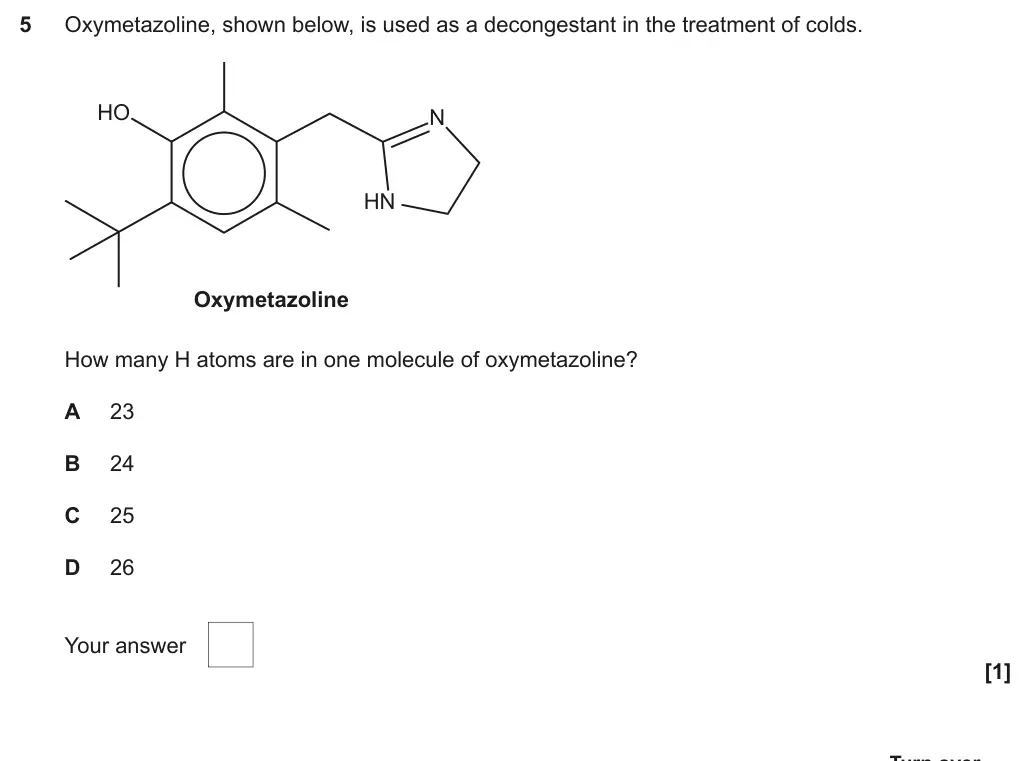
5 Oxymetazoline, shown below, is used as a decongestant in the treatment of colds.
HO N
HN
Oxymetazoline
How many H atoms are in one molecule of oxymetazoline?
A 23
B 24
C 25
D 26
Your answer
[1]
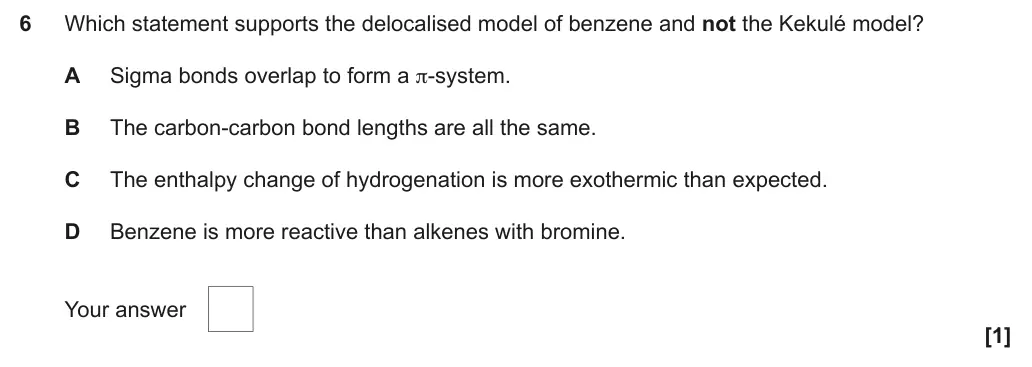
June 2023 · Paper 2 · Q6 1 mark AO1 Multiple choice Medium aromatic compounds
6 Which statement supports the delocalised model of benzene and not the Kekulé model?
A Sigma bonds overlap to form a π-system.
B The carbon-carbon bond lengths are all the same.
C The enthalpy change of hydrogenation is more exothermic than expected.
D Benzene is more reactive than alkenes with bromine.
Your answer
[1]
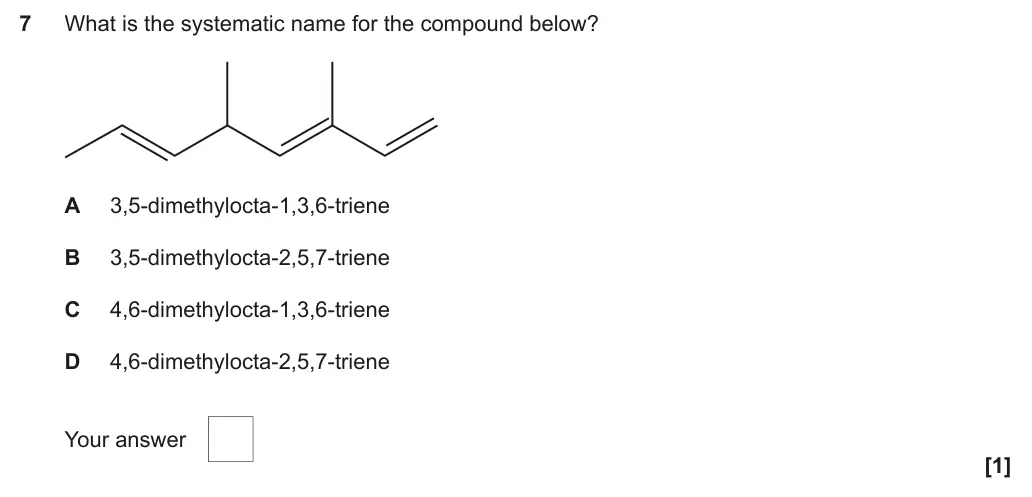
June 2023 · Paper 2 · Q7 1 mark AO1 Multiple choice Easy organic basics
7 What is the systematic name for the compound below?
A 3,5-dimethylocta-1,3,6-triene
B 3,5-dimethylocta-2,5,7-triene
C 4,6-dimethylocta-1,3,6-triene
D 4,6-dimethylocta-2,5,7-triene
Your answer
[1]
June 2023 · Paper 2 · Q8 1 mark AO2 Multiple choice Medium alkanesamount of substance
8 For complete combustion, 0.100 mol of an alkane requires 22.8 dm3 of O2, measured at RTP.
Which alkane has undergone complete combustion?
A pentane
B hexane
C heptane
D octane
Your answer
[1]
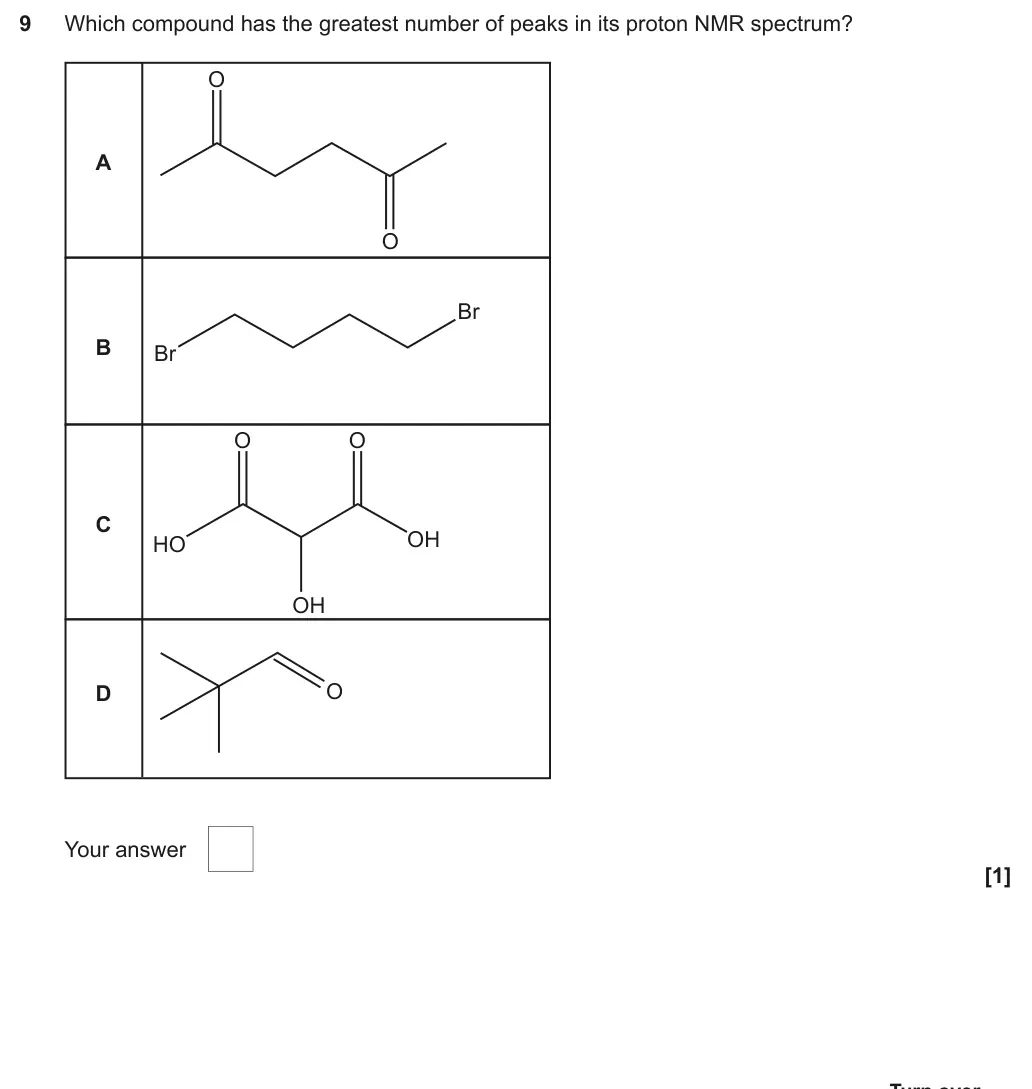
June 2023 · Paper 2 · Q9 1 mark AO2 Multiple choice Hard nmr spectroscopy
9 Which compound has the greatest number of peaks in its proton NMR spectrum?
O
A
O
Br
B Br
O O
C
HO OH
OH
D O
Your answer
[1]
June 2023 · Paper 2 · Q10 1 mark AO2 Multiple choice infrared and mass spectrometry
10 Which ester is most likely to produce a mass spectrum with a fragment ion at m / z = 43?
OH O
A H3C C C O CH3
CH3
O
B
HO CH2 C O CH2CH2CH3
OH O
C H3C CH CH2 C O CH3
OH O
D
CH3CH2 C C O CH2CH2OH
CH3
Your answer
[1]
June 2023 · Paper 2 · Q11 1 mark AO2 Multiple choice Medium infrared and mass spectrometry
11 The infrared spectrum of an organic compound is shown below.
100
transmittance (%) 50
0
4000 3000 2000 1500 1000 500
wavenumber / cm–1
Which compound could have produced this spectrum?
A
COOH
B H3C OCOCH3
C HO CHO
D HOCH2 OCH3
Your answer
[1]
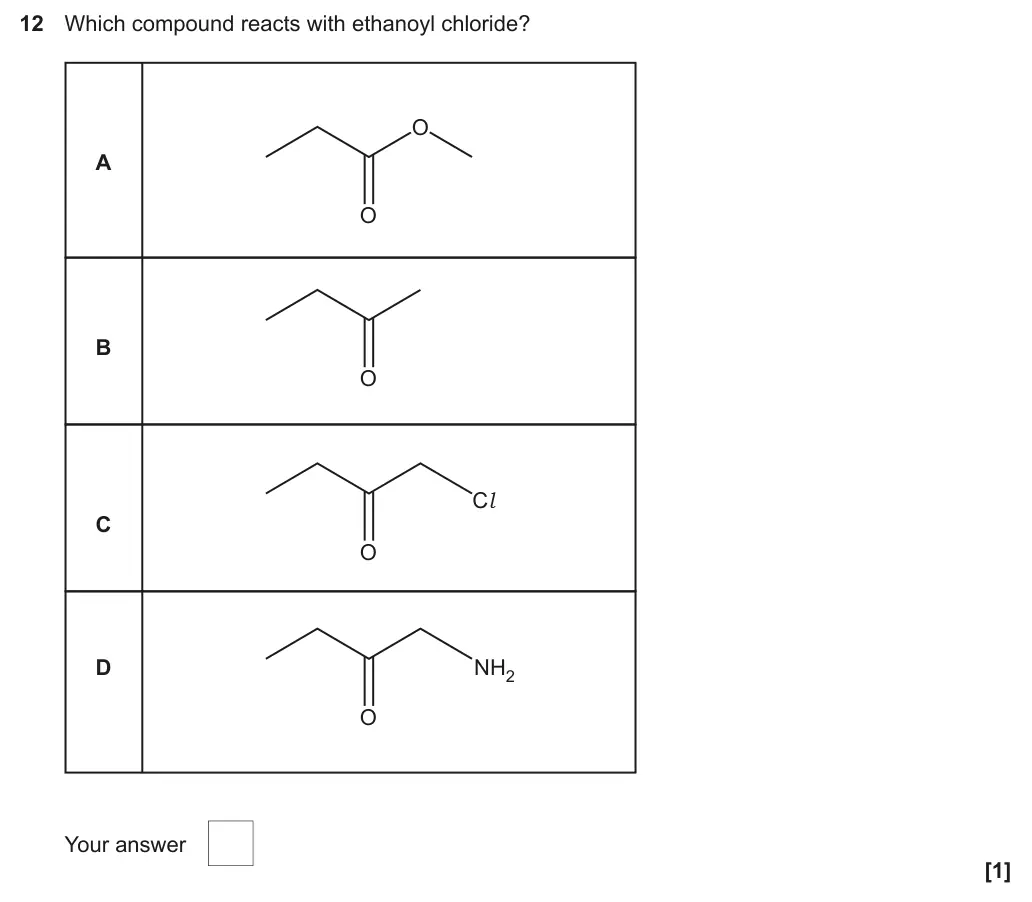
June 2023 · Paper 2 · Q12 1 mark AO1 Multiple choice Easy carboxylic acids and esters
12 Which compound reacts with ethanoyl chloride?
O
A
O
B
O
Cl
C
O
D NH2
O
Your answer
[1]
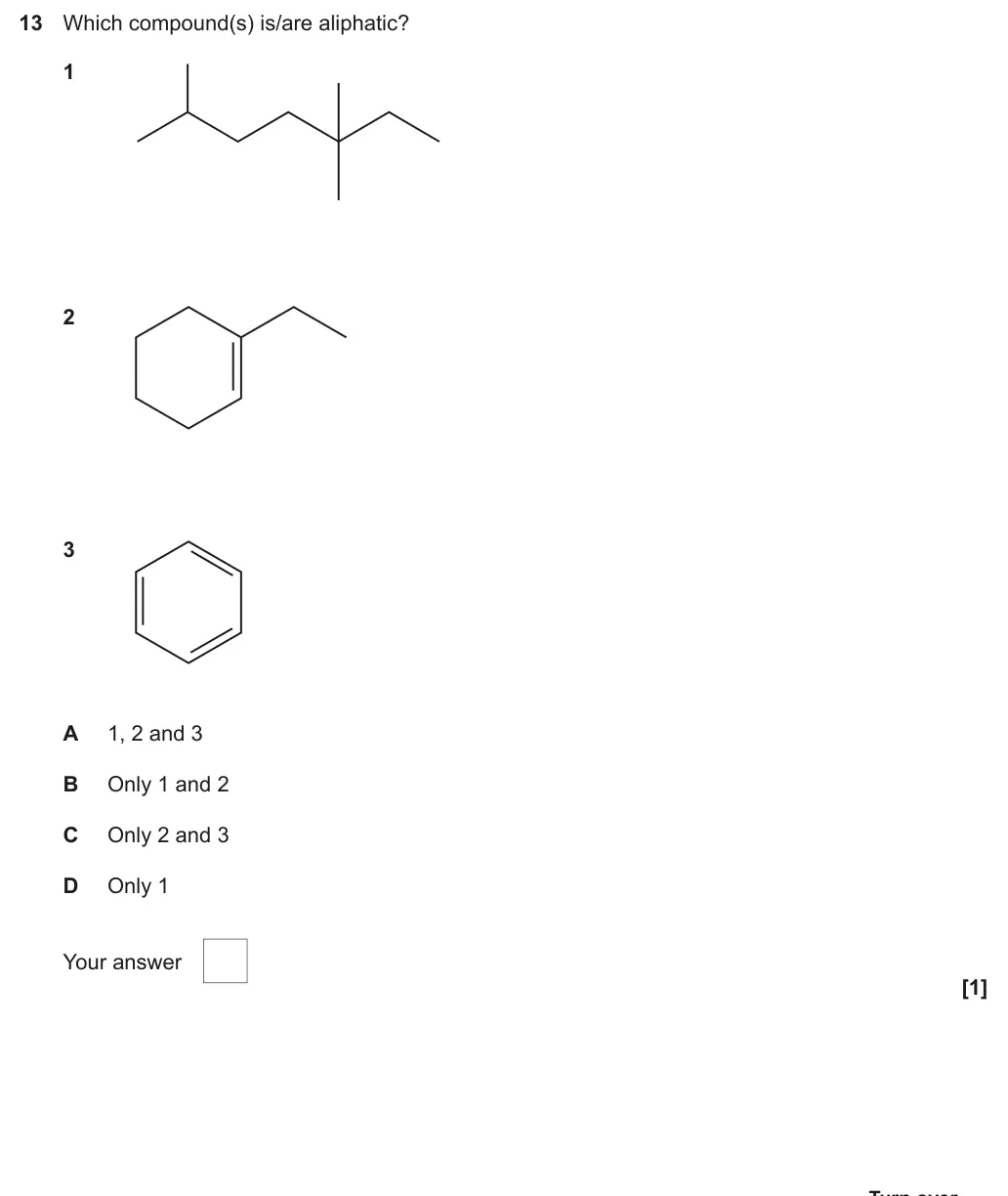
June 2023 · Paper 2 · Q13 1 mark AO1 Multiple choice Hard organic basics
13 Which compound(s) is/are aliphatic?
1
2
3
A 1, 2 and 3
B Only 1 and 2
C Only 2 and 3
D Only 1
Your answer
[1]
June 2023 · Paper 2 · Q14 1 mark AO1 Multiple choice Medium carboxylic acids and esterscarbon carbon bond formation
14 Which compound(s) is/are hydrolysed by HCl (aq) to produce butanoic acid?
1 CH3CH2CH2COOCH3
2 CH3CH2CH2CH2CN
3 CH3CH2CH2CH2Cl
A 1, 2 and 3
B Only 1 and 2
C Only 2 and 3
D Only 1
Your answer
[1]
June 2023 · Paper 2 · Q15 1 mark AO1 Multiple choice Medium bonding and structure
15 Which ion(s) contain(s) bond angles of approximately 120º?
1 CH3COO–
2 C6H5O–
3 (CH3)3C+
A 1, 2 and 3
B Only 1 and 2
C Only 2 and 3
D Only 1
Your answer
[1]
June 2023 · Paper 2 · Q16(a) 4 marks AO1 Short answer Hard alkanesbonding and structure
16 This question is about hydrocarbons.
(a) The boiling points of some hydrocarbons containing 6 carbon atoms are shown below.
Hydrocarbon Boiling point / ºC
2,2-dimethylbutane 50
2-methylpentane 60
hexane 69
State and explain the trend in boiling points shown by these hydrocarbons.
...................................................................................................................................................
...................................................................................................................................................
...................................................................................................................................................
...................................................................................................................................................
...................................................................................................................................................
...................................................................................................................................................
...................................................................................................................................................
...................................................................................................................................................
...................................................................................................................................................
.............................................................................................................................................. [4]
June 2023 · Paper 2 · Q16(b)(i) 6 marks AO1, 2, 3 Mechanism Medium alkanesorganic basics
(b) 2-methylpentane reacts with bromine by radical substitution.
2-methylpentane
A mixture of organic products is formed, including 3-bromo-2-methylpentane, and
compounds A and B.
(i) Complete the table below to show the mechanism for the formation of
3-bromo-2-methylpentane and three possible equations for termination.
In your equations, use structural or skeletal formulae and ‘dots’ (•) for the position of
radicals.
Equation: ............................................................................................
Initiation
Conditions: .........................................................................................
Propagation
Termination
[6]
June 2023 · Paper 2 · Q16(b)(ii) 2 marks AO2 Equation writing Medium alkanesformulae and equations
Earlier part of question 16 that this part usesEarlier part of June 2023 Paper 2 question 16
(ii) Organic compound A is formed by the substitution of all 14 H atoms in
2-methylpentane by Br atoms.
Write the equation, using molecular formulae, for the formation of compound A from
2-methylpentane.
...................................................................................................................................... [2]
June 2023 · Paper 2 · Q16(b)(iii) 3 marks AO2, 3 Calculation Medium amount of substanceatomic structure and isotopes
Earlier part of question 16 that this part usesEarlier part of June 2023 Paper 2 question 16
(iii) Organic compound B is formed by the substitution of some of the 14 H atoms in
2-methylpentane by Br atoms.
0.8649 g of compound B is heated until it is vaporised.
Under the conditions used:
• compound B has a volume of 72.0 cm3
• the molar gas volume is 40.0 dm3 mol–1.
Determine a possible molecular formula of compound B.
molecular formula =  .......................................................... [3]
June 2023 · Paper 2 · Q17(a) 2 marks AO2 Equation writing Hard alcoholsformulae and equationsorganic basics
17 This question is about alcohols.
(a) An unsaturated alcohol has 6 carbon atoms and contains one C=C bond.
Construct an equation for the complete combustion of this alcohol.
.............................................................................................................................................. [2]
June 2023 · Paper 2 · Q17(b) 3 marks AO2 Complete table/diagram Medium alcoholsformulae and equations
(b) Compound C, shown below, is refluxed with excess acidified potassium dichromate(VI) to
form a single organic product and one other product.
Complete the equation for this reaction.
OH
OH    + ............ [O]
OH
Compound C
[3]
June 2023 · Paper 2 · Q17(c)(i) 3 marks AO2 Structure / isomer Hard alcoholsorganic basics
(c) Compound D, shown below, is refluxed with H2SO4, as an acid catalyst, to form a mixture of
three isomers with the molecular formula C7H10.
HO
OH
Compound D
(i) Draw the structures of the three isomers of C7H10 formed from compound D.
[3]
June 2023 · Paper 2 · Q17(c)(ii) 1 mark AO1 Short answer Medium alcohols
Earlier part of question 17 that this part usesEarlier part of June 2023 Paper 2 question 17
(ii) A student converts compound D into a diiodoalkane.
Suggest suitable reagents for this reaction.
...................................................................................................................................... [1]
June 2023 · Paper 2 · Q17(d) 5 marks AO2, 3 Extended response Hard nmr spectroscopyorganic basics
(d) There are 4 structural isomers of C4H10O that are alcohols.
A student predicts that these structural isomers could be distinguished using carbon-13 NMR
spectroscopy.
Explain whether the student is correct.
In your answer, show how the peaks in the carbon-13 NMR spectra are linked to the
structure of each alcohol isomer.
...................................................................................................................................................
...................................................................................................................................................
...................................................................................................................................................
...................................................................................................................................................
...................................................................................................................................................
...................................................................................................................................................
...................................................................................................................................................
...................................................................................................................................................
...................................................................................................................................................
...................................................................................................................................................
.............................................................................................................................................. [5]
June 2023 · Paper 2 · Q18(a) 5 marks AO1, 2 Mechanism Medium aromatic compounds
18 1,3-dinitrobenzene is a solid at room temperature.
A chemist prepares 1,3-dinitrobenzene as outlined below.
Step 1 12.5 cm3 of nitrobenzene (density = 1.20 g cm–3) is refluxed with concentrated nitric acid
in the presence of concentrated sulfuric acid as a catalyst.
Step 2 The mixture is cooled. Impure crystals of 1,3-dinitrobenzene appear.
Step 3 The impure crystals are purified to obtain pure 1,3-dinitrobenzene.
The chemist obtains 15.0 g of pure 1,3-dinitrobenzene.
(a) Outline the mechanism for this reaction, including the role of H2SO4 as a catalyst.
[5]
June 2023 · Paper 2 · Q18(b) 3 marks AO1, 2 Calculation Hard amount of substance
Earlier part of question 18 that this part usesEarlier part of June 2023 Paper 2 question 18
(b) Determine the percentage yield of 1,3-dinitrobenzene.
Give your answer to 3 significant figures.
percentage yield =  .................................................... % [3]
June 2023 · Paper 2 · Q18(c) 3 marks AO3 Short answer Medium organic synthesis
Earlier part of question 18 that this part usesEarlier part of June 2023 Paper 2 question 18
(c) Describe how to purify the impure crystals in Step 3.
...................................................................................................................................................
...................................................................................................................................................
...................................................................................................................................................
...................................................................................................................................................
...................................................................................................................................................
.............................................................................................................................................. [3]
June 2023 · Paper 2 · Q19 6 marks AO3 6-mark level of response Medium organic synthesisalkenescarbon carbon bond formation
19* A student intends to synthesise compound Z, as shown in the flowchart below.
H
H C Br
C C
H H
H
Stage 1
Intermediate 1
Stage 2
Intermediate 2
Stage 3
Br
H H
H
H C C
C C NH2
H
H H
H
Compound Z
Plan this synthesis showing reagents, the structures of intermediate 1 and intermediate 2, and
equations. [6]
..........................................................................................................................................................
..........................................................................................................................................................
..........................................................................................................................................................
..........................................................................................................................................................
..........................................................................................................................................................
..........................................................................................................................................................
..........................................................................................................................................................
..........................................................................................................................................................
..........................................................................................................................................................
..........................................................................................................................................................
..........................................................................................................................................................
..........................................................................................................................................................
..........................................................................................................................................................
..........................................................................................................................................................
..........................................................................................................................................................
..........................................................................................................................................................
..........................................................................................................................................................
..........................................................................................................................................................
..........................................................................................................................................................
..........................................................................................................................................................
..........................................................................................................................................................
..........................................................................................................................................................
Additional answer space if required.
..........................................................................................................................................................
..........................................................................................................................................................
..........................................................................................................................................................
..........................................................................................................................................................
..........................................................................................................................................................
June 2023 · Paper 2 · Q20(a) 4 marks AO2 Short answer Medium aromatic compoundscarboxylic acids and esters
20 This question is about aromatic compounds containing the –COOH and –OH functional groups.
(a) Salicylic acid, shown below, is used in the manufacture of some important medicines.
COOH
OH
Salicylic acid
Complete the flowchart for reactions of salicylic acid, by adding the organic products in each
box.
Br2 Na2CO3(aq)
COOH
OH
propanoic anhydride
(CH3CH2CO)2O
+
[4]
June 2023 · Paper 2 · Q20(b)(i) 3 marks AO1, 3 Structure / isomer Hard condensation polymers
(b) PAS, shown below, is an antibiotic used to treat several diseases including tuberculosis (TB).
OH
H2N COOH
PAS
(i) A student predicts that PAS could polymerise to form a polymer containing both ester
and amide linkages.
Draw a section of this polymer.
The section should contain one amide and one ester linkage, which should be
displayed.
[3]
June 2023 · Paper 2 · Q20(b)(ii) 3 marks AO3 Calculation Hard amount of substance
Earlier part of question 20 that this part usesEarlier part of June 2023 Paper 2 question 20
(ii) For the treatment of TB, the maximum daily dosage of PAS that should be prescribed is
300 mg per kg of body mass.
A child weighs 20.0 kg.
Calculate the number of PAS molecules in the maximum daily dosage of PAS for this
child.
number of PAS molecules =  ...............................................................
[3]
June 2023 · Paper 2 · Q21(a) 1 mark AO1 Short answer Medium amino acids amides and chirality
21 This question is about α-amino acids.
(a) The general formula of an α-amino acid is RCH(NH2)COOH.
Most α-amino acids show optical isomerism.
Explain the term optical isomerism.
...................................................................................................................................................
...................................................................................................................................................
...................................................................................................................................................
.............................................................................................................................................. [1]
June 2023 · Paper 2 · Q21(b)(i) 1 mark AO1 Short answer Hard organic basics
Earlier part of question 21 that this part usesEarlier part of June 2023 Paper 2 question 21
(b) The α-amino acid valine has the R group of –CH(CH3)2.
(i) What is the systematic name of valine?
...................................................................................................................................... [1]
June 2023 · Paper 2 · Q21(b)(ii) 2 marks AO1 Structure / isomer Medium amino acids amides and chirality
Earlier parts of question 21 that this part usesEarlier part of June 2023 Paper 2 question 21Earlier part of June 2023 Paper 2 question 21
(ii) Draw diagrams to show 3D structures of the optical isomers of valine.
[2]
June 2023 · Paper 2 · Q21(c)(i) 1 mark AO2 Short answer Hard amino acids amides and chirality
Earlier part of question 21 that this part usesEarlier part of June 2023 Paper 2 question 21
(c) Three α-amino acids can react together to form compound E, shown below.
OH
OH
C
H2C O
H
H2C N CH
CH C NH
C O C NH2
HO O O CH
CH
HO CH3
Compound E
(i) How many optical isomers are possible for compound E?
...................................................................................................................................... [1]
June 2023 · Paper 2 · Q21(c)(ii) 4 marks AO2 Structure / isomer Medium condensation polymersamino acids amides and chirality
Earlier part of question 21 that this part usesEarlier part of June 2023 Paper 2 question 21
(ii) A student hydrolyses compound E with dilute hydrochloric acid, HCl (aq).
Draw the structures of the organic products formed by this hydrolysis.
[4]
June 2023 · Paper 2 · Q22(a)(i) 4 marks AO1, 2 Mechanism Easy carbonyl compoundsorganic basicscarbon carbon bond formation
22 This question is about reactions of acrolein, H2C=CHCHO.
(a) Acrolein reacts with sodium cyanide in acidic conditions, NaCN(aq) / H+(aq).
(i) Outline the reaction mechanism for this reaction, showing the intermediate and the
organic product.
The structure of acrolein has been provided.
Include curly arrows and relevant dipoles.
H H
C C
H C O
H
[4]
June 2023 · Paper 2 · Q22(a)(ii) 1 mark AO1 Short answer Easy carbonyl compounds
Earlier part of question 22 that this part usesEarlier part of June 2023 Paper 2 question 22
(ii) Name this type of mechanism.
...................................................................................................................................... [1]
June 2023 · Paper 2 · Q22(b) 9 marks AO1, 2 Short answer Medium organic synthesisalkenescarbonyl compoundscarboxylic acids and esters
Earlier part of question 22 that this part usesEarlier part of June 2023 Paper 2 question 22
(b) Complete the flowchart by filling in each box.
reagent(s)
...................................
catalyst
unsaturated alcohol ................................... diol (major product)
reagent(s)
...................................
H H
reagent(s)
C C
...................................
H C O
H
acrolein carboxylic acid
reagent(s)
...................................
polymer (2 repeat units) acyl chloride
[9]
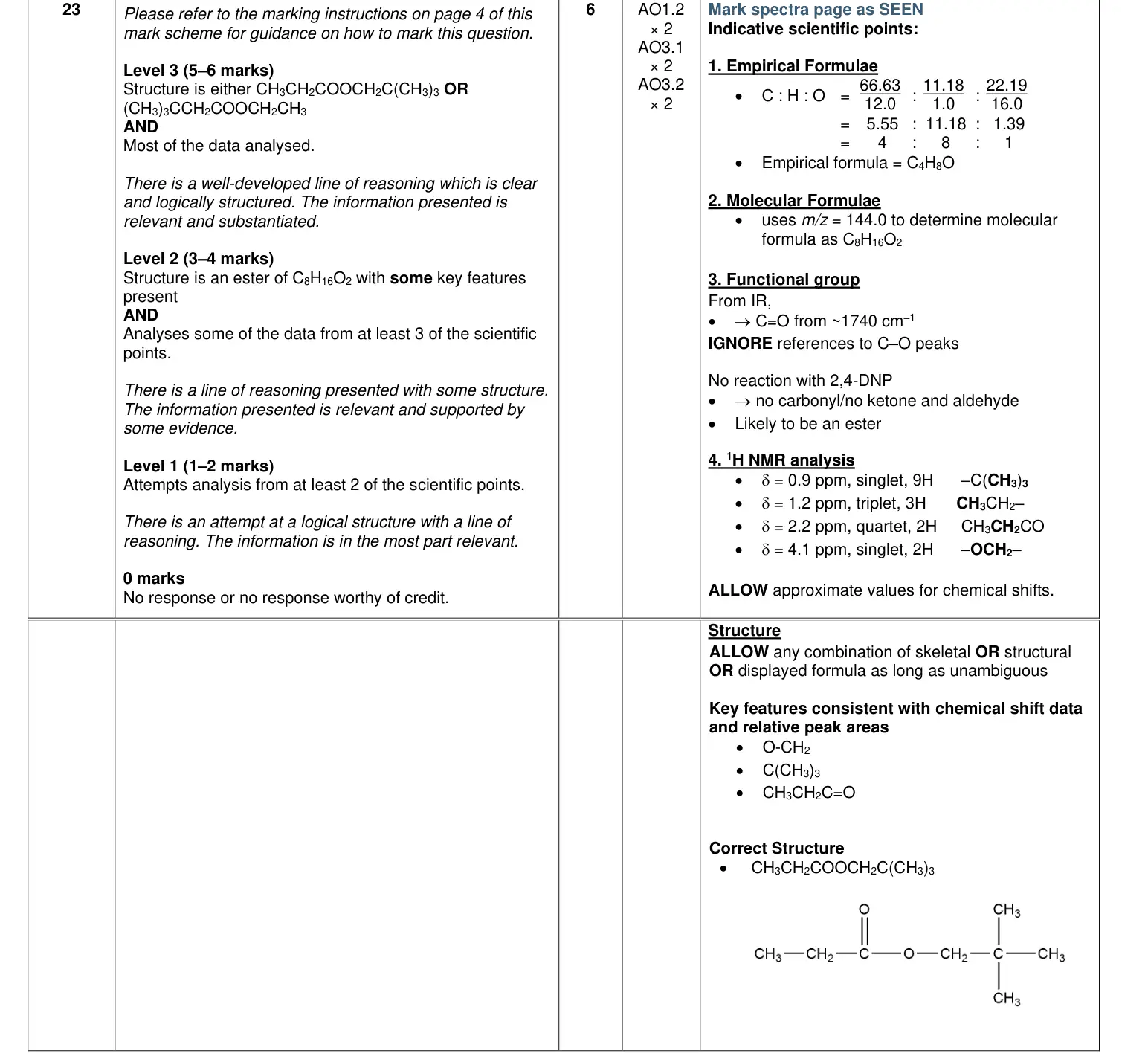
June 2023 · Paper 2 · Q23 6 marks AO1, 3 6-mark level of response Easy amount of substanceinfrared and mass spectrometrynmr spectroscopy
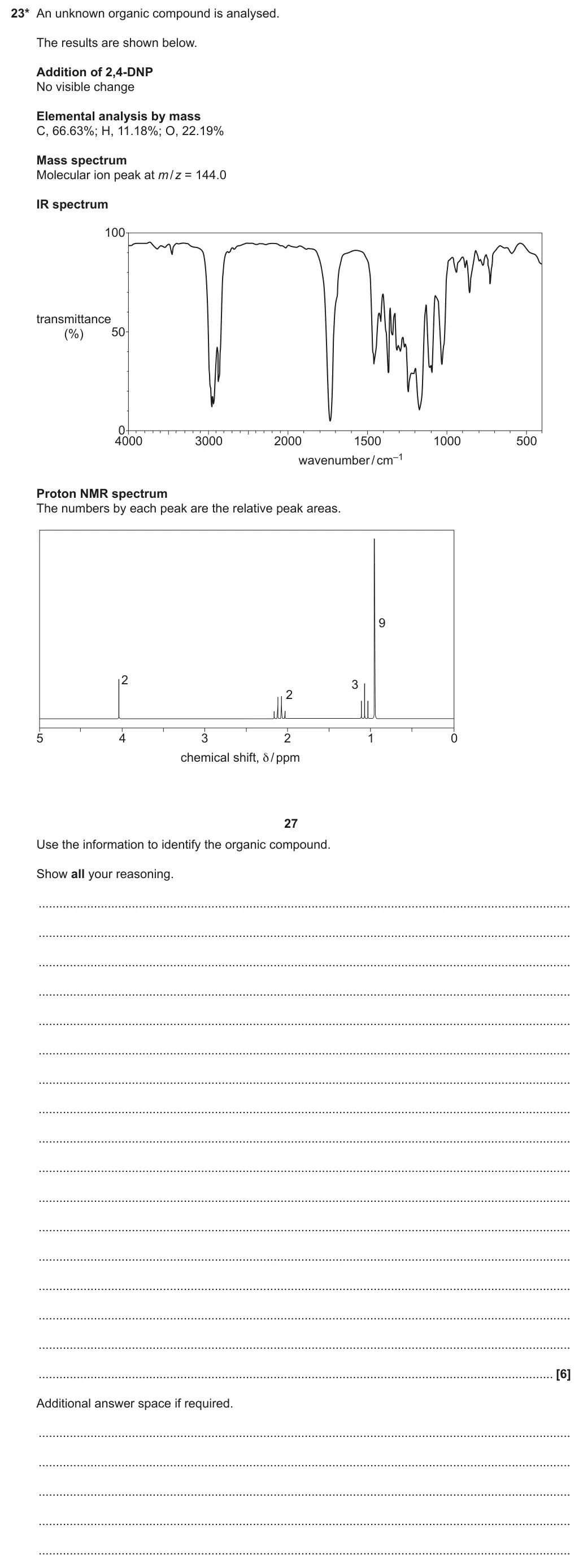
23* An unknown organic compound is analysed.
The results are shown below.
Addition of 2,4-DNP
No visible change
Elemental analysis by mass
C, 66.63%; H, 11.18%; O, 22.19%
Mass spectrum
Molecular ion peak at m / z = 144.0
IR spectrum
100
transmittance
(%) 50
0
4000 3000 2000 1500 1000 500
wavenumber / cm–1
Proton NMR spectrum
The numbers by each peak are the relative peak areas.
9
2
3
2
5 4 3 2 1 0
chemical shift, δ / ppm
Use the information to identify the organic compound.
Show all your reasoning.
..........................................................................................................................................................
..........................................................................................................................................................
..........................................................................................................................................................
..........................................................................................................................................................
..........................................................................................................................................................
..........................................................................................................................................................
..........................................................................................................................................................
..........................................................................................................................................................
..........................................................................................................................................................
..........................................................................................................................................................
..........................................................................................................................................................
..........................................................................................................................................................
..........................................................................................................................................................
..........................................................................................................................................................
..........................................................................................................................................................
..........................................................................................................................................................
..................................................................................................................................................... [6]
Additional answer space if required.
..........................................................................................................................................................
..........................................................................................................................................................
..........................................................................................................................................................
..........................................................................................................................................................
..........................................................................................................................................................

Work with an OCR chemistry tutor

Want a paper marked and gone through with you? Message us.

Prefer email? Send an enquiry

If you are under 18, please include a parent's contact details. Enquiries go to enquiries@chemistryaleveltutor.com and are deleted once handled. All tutoring is online.