June 2016: AS Paper 2, Depth in chemistry

70 marks · 30 question parts · Paper, mark scheme and report on OCR's site · Have OCR's Data Sheet beside you

Question by question

QTopicMarksAOType
1(a)(i) Electron structure and orbitals 1AO1Short answer
1(a)(ii) Redox and oxidation numbers, Group 2 1AO1Short answer
1(b)(i) Group 2, Periodicity and ionisation energy 1AO2Equation writing
1(b)(ii) Periodicity and ionisation energy 3AO1Short answer
1(c)(i) Amount of substance (moles), Practical skills: planning, analysis and evaluation, Practical techniques and apparatus (PAGs) 2AO3Drawing / labelling
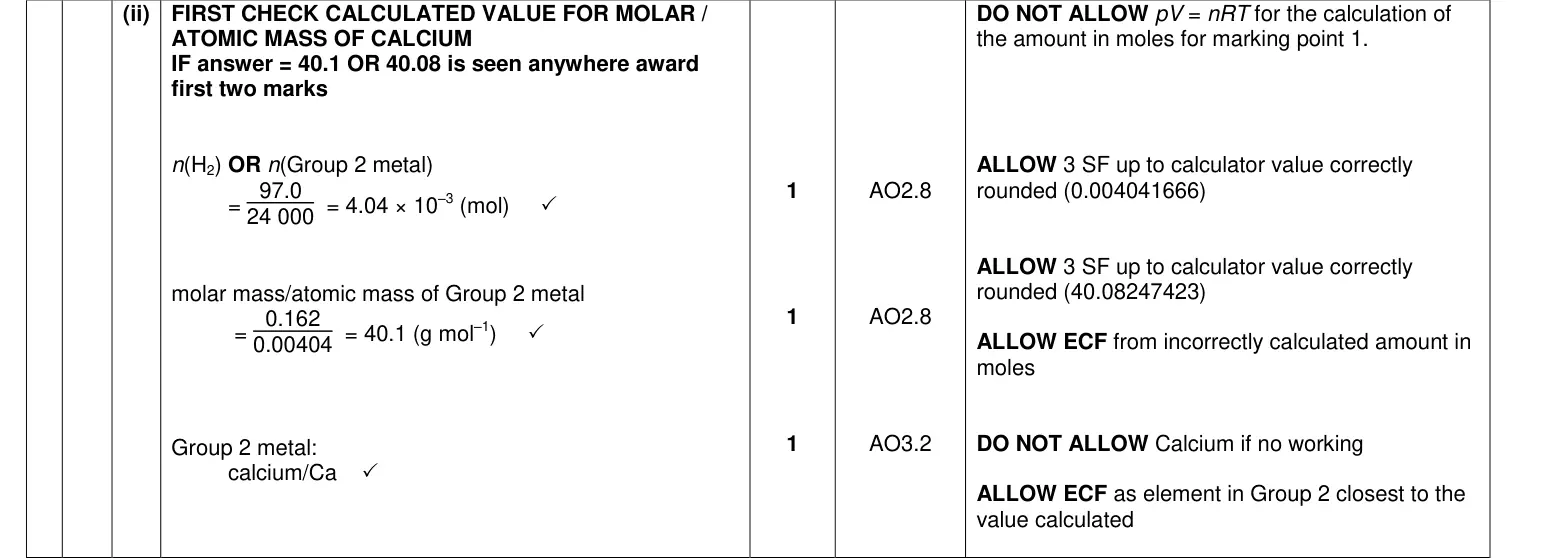
1(c)(ii) Amount of substance (moles) 3AO2, 3Calculation
1(d) Amount of substance (moles) 1AO3Short answer
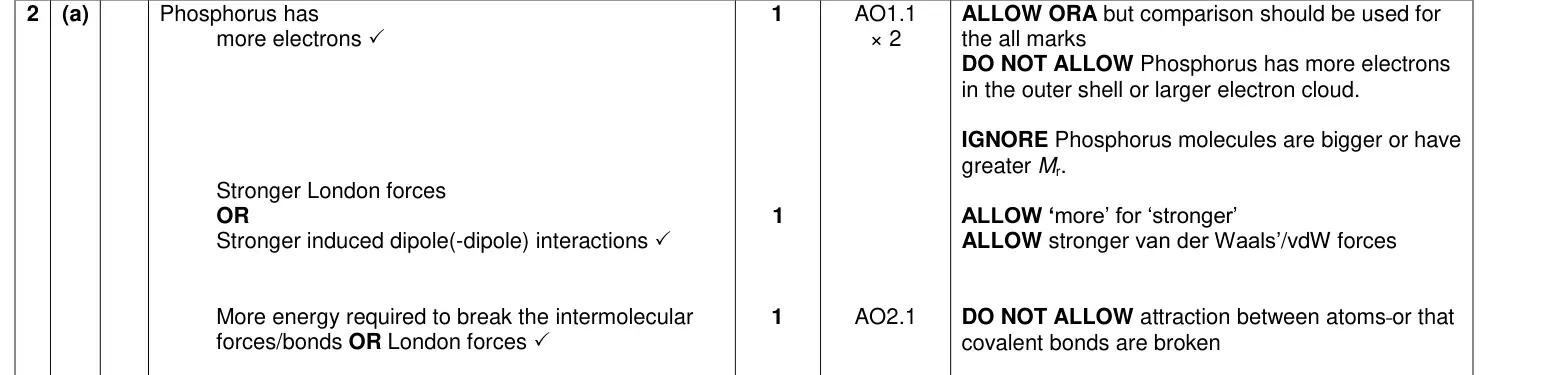
2(a) Bonding, structure and shapes of molecules, Periodicity and ionisation energy 3AO1, 2Short answer
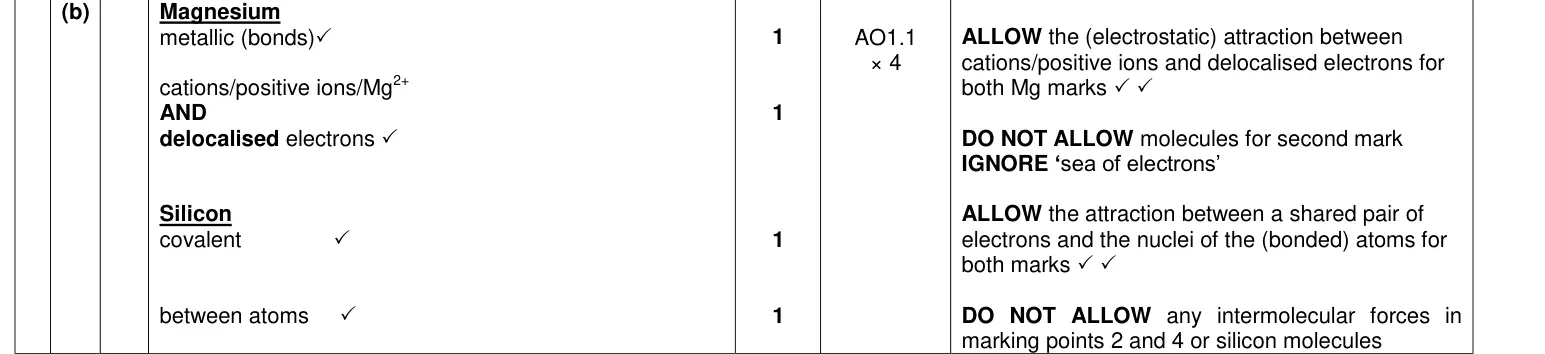
2(b) Periodicity and ionisation energy 4AO1Short answer
2(c) Formulae and equations 1AO2Equation writing
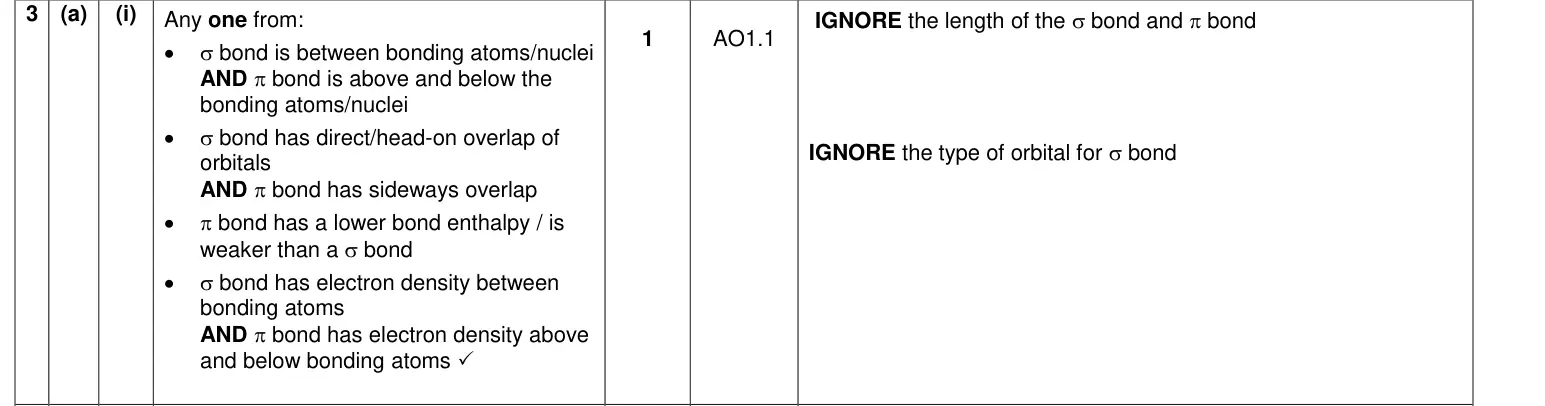
3(a)(i) Alkenes, Alkanes 1Short answer
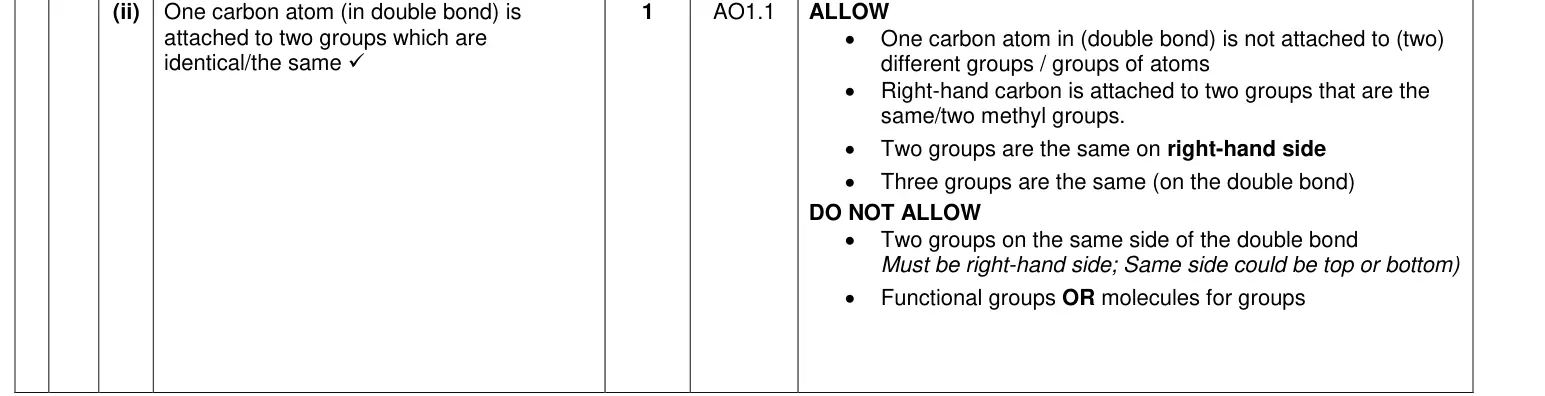
3(a)(ii) Alkenes 1Short answer
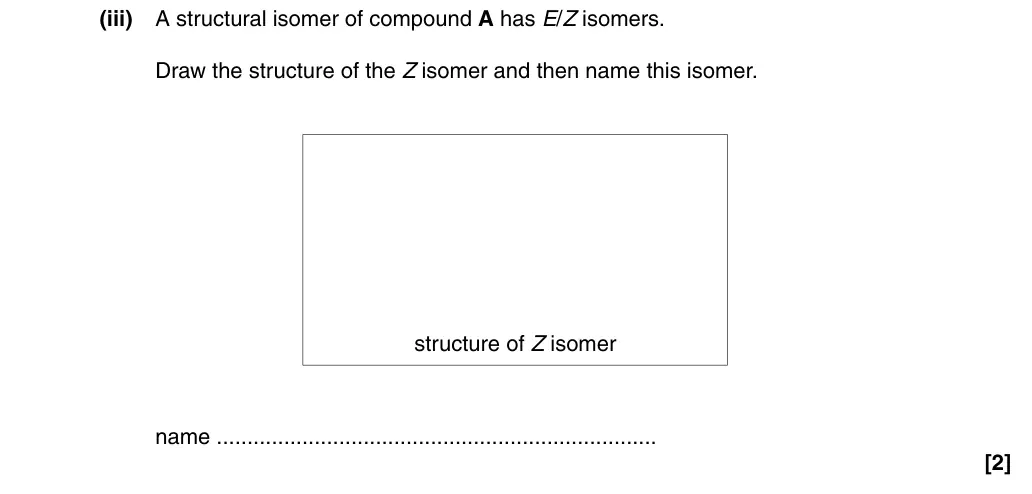
3(a)(iii) Alkenes, Organic basics: naming, formulae and isomerism 2Structure / isomer
3(b) Alcohols 2Short answer
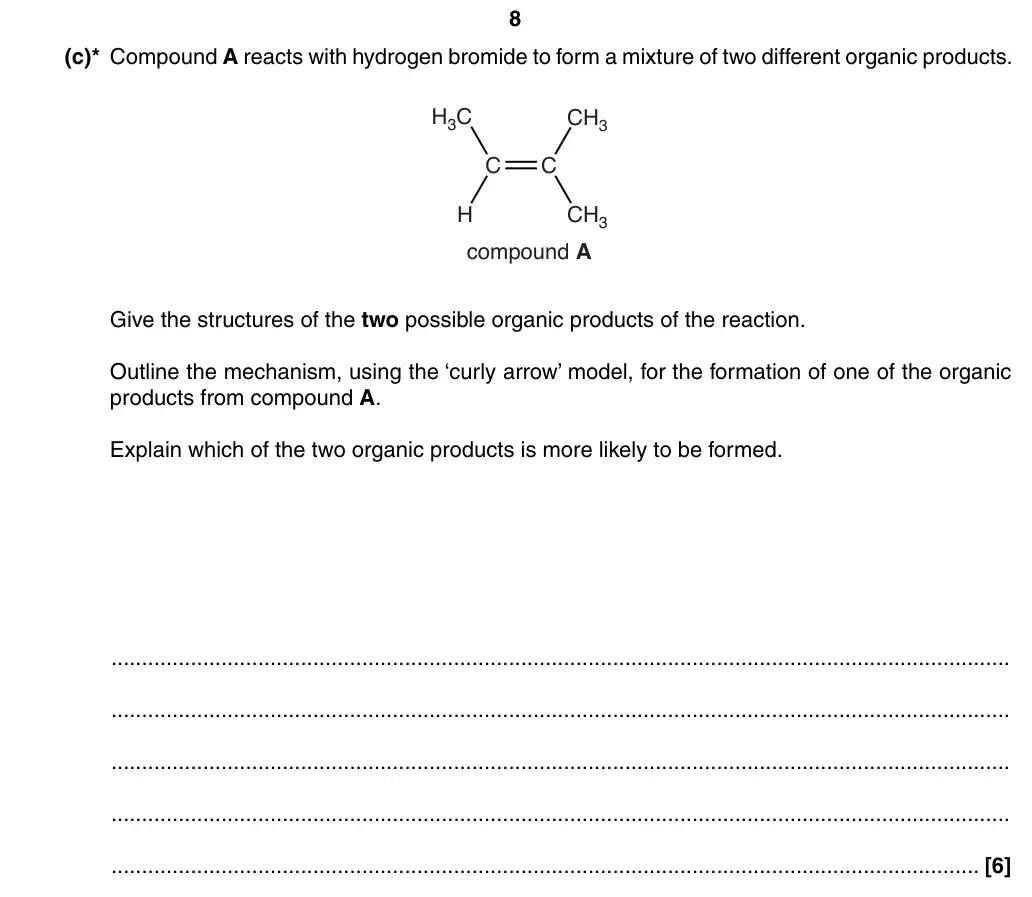
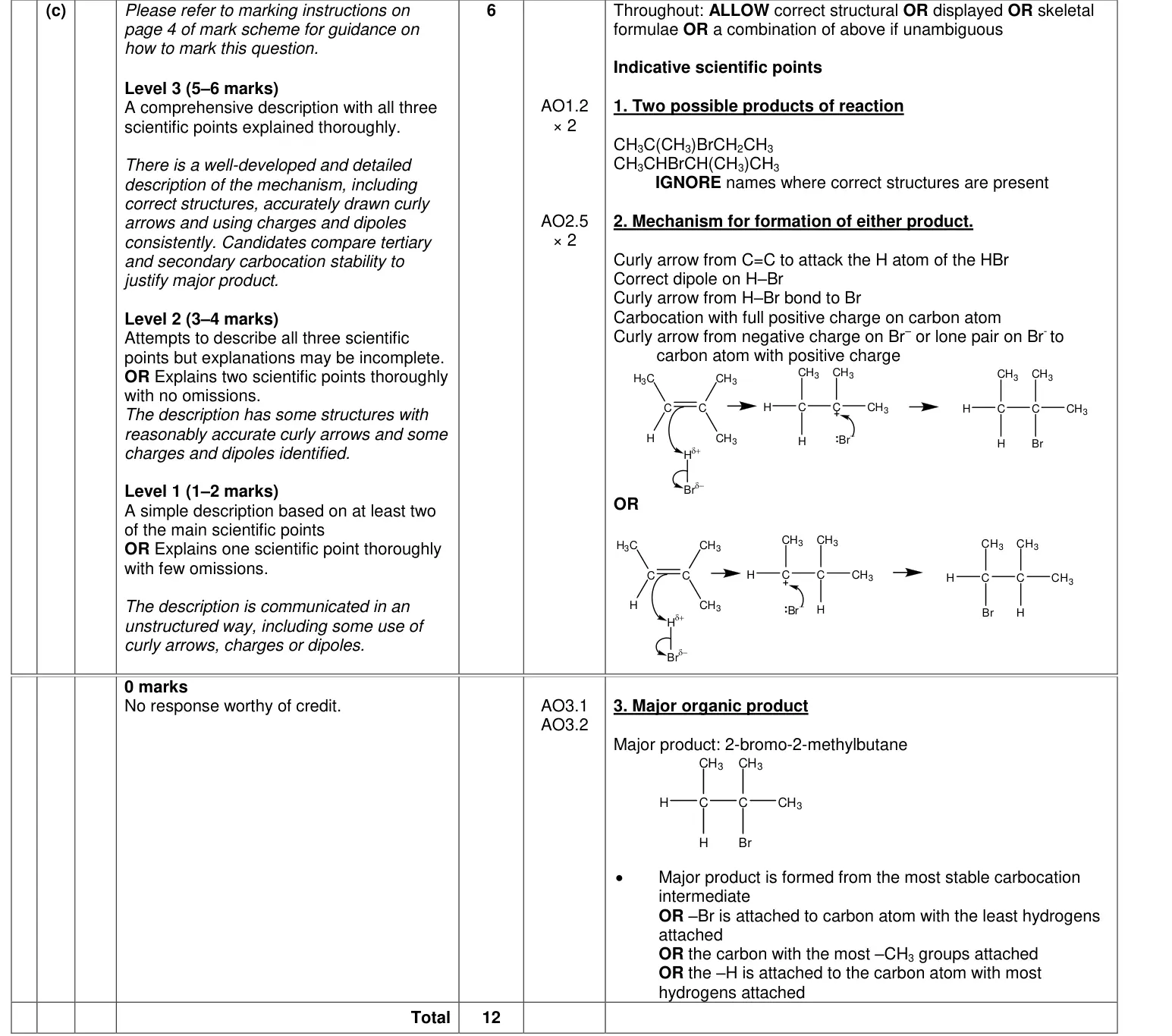
3(c) Alkenes, Organic basics: naming, formulae and isomerism 6Level of response
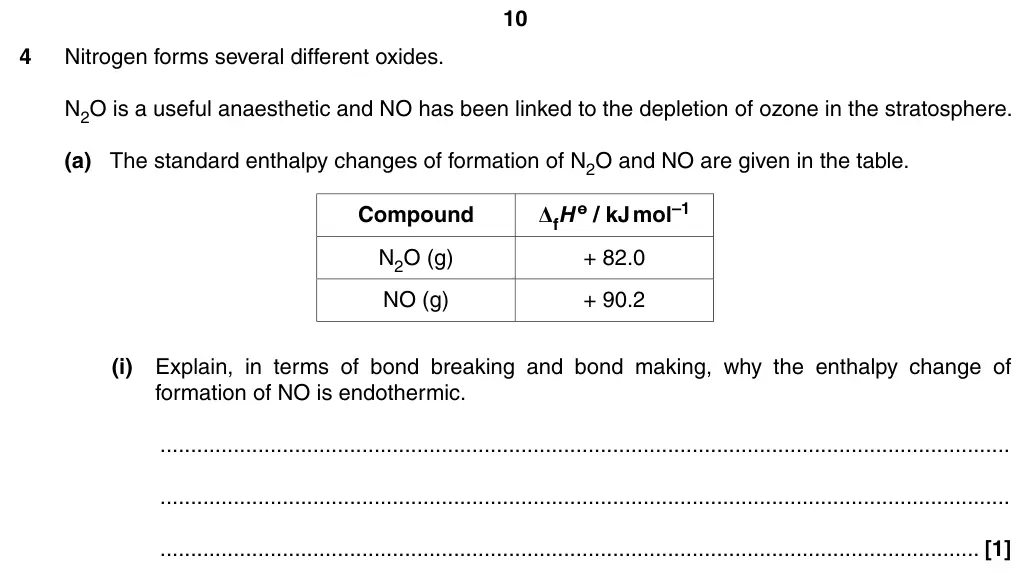
4(a)(i) Enthalpy changes and Hess’ law 1AO2Short answer
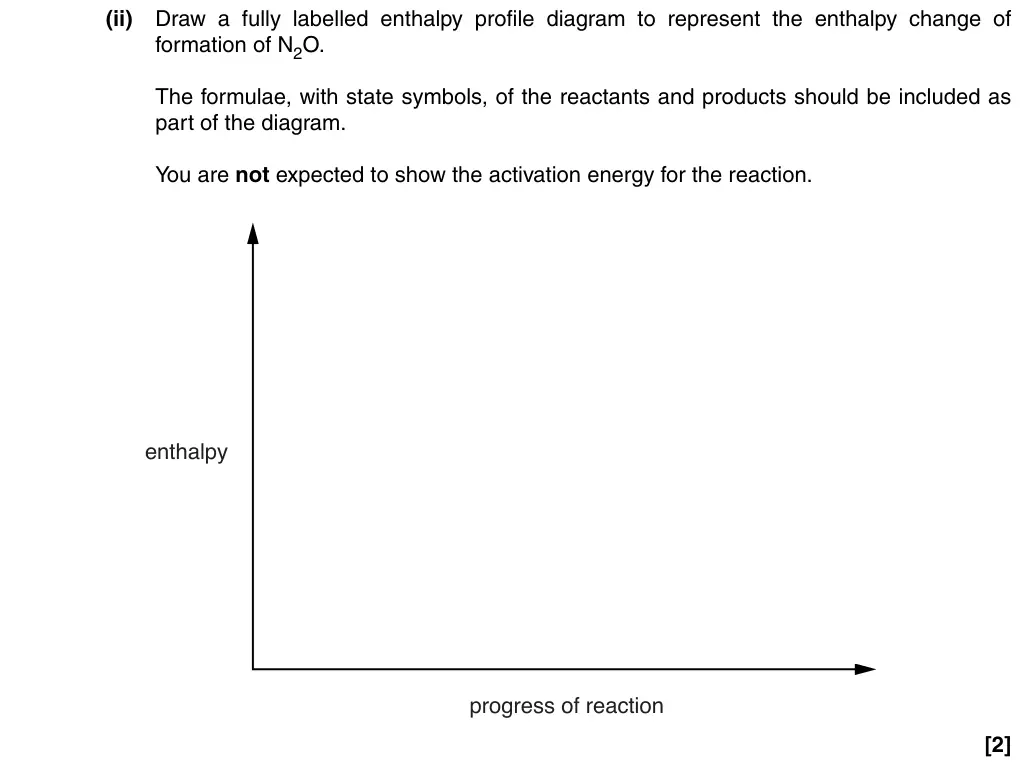
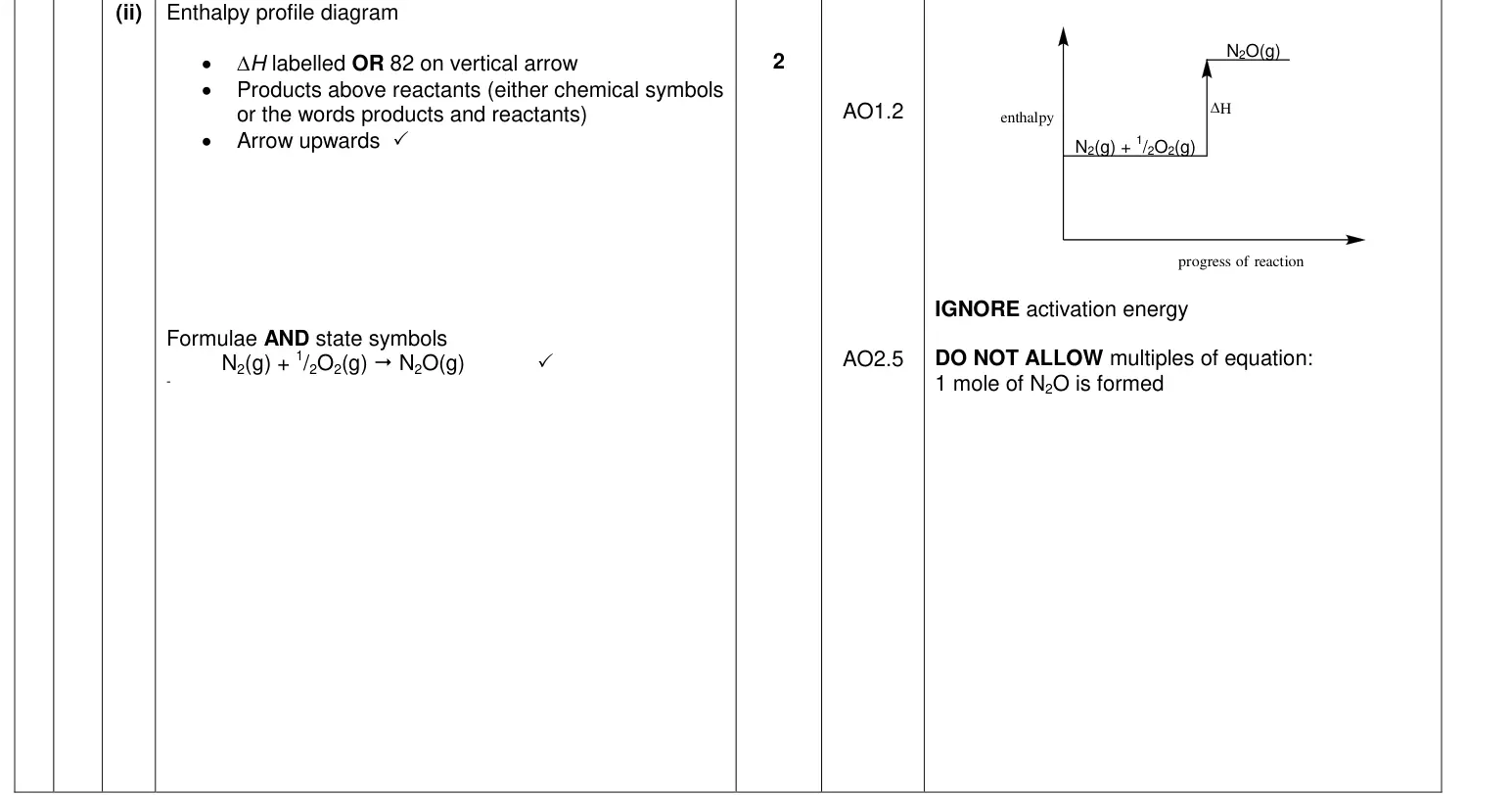
4(a)(ii) Enthalpy changes and Hess’ law 2AO1, 2Drawing / labelling
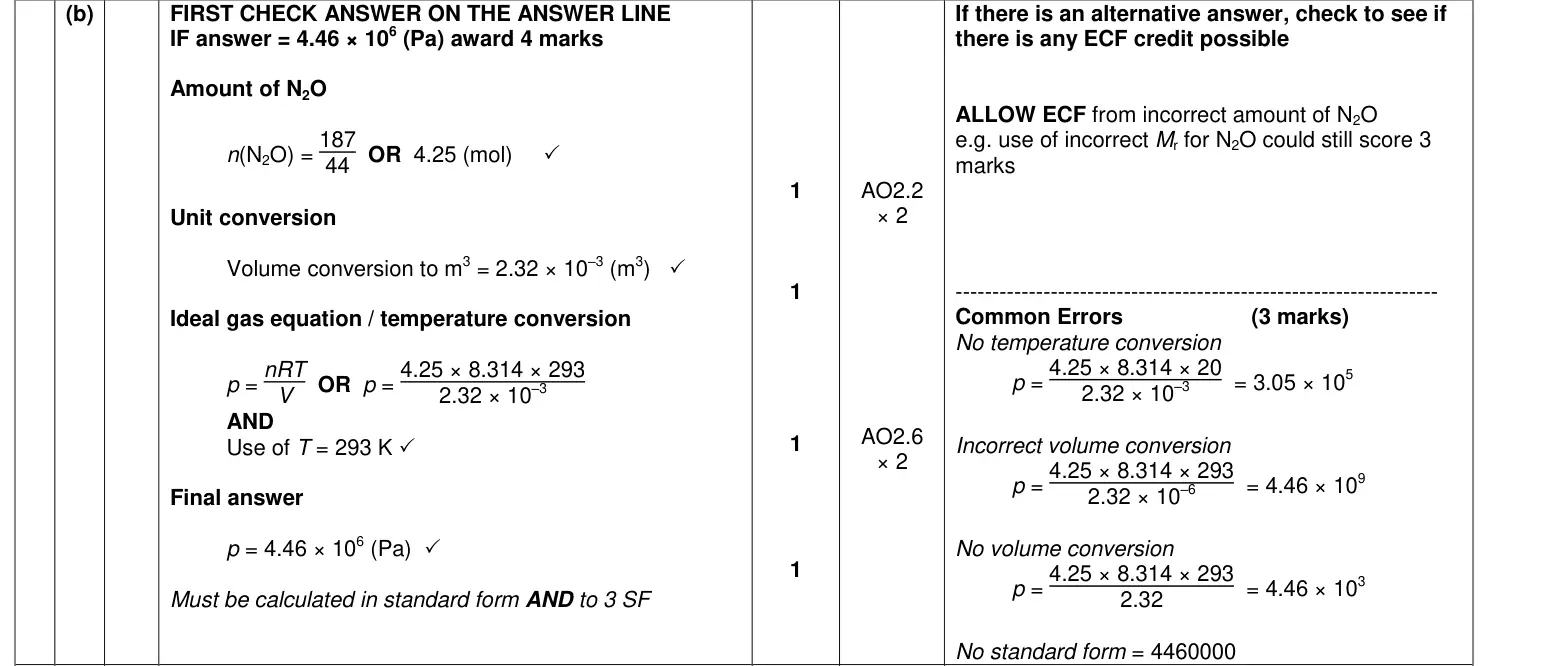
4(b) Amount of substance (moles) 4AO2Calculation
4(c) Haloalkanes 2AO1Equation writing
5(a)(i) Acids, bases and titrations, Reaction rates and the Boltzmann distribution 1AO3Short answer
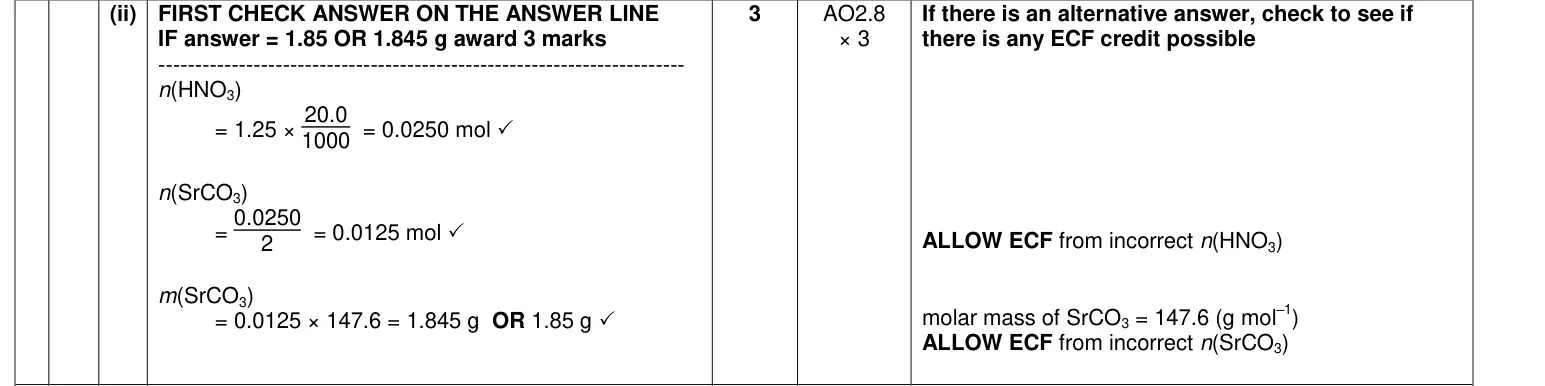
5(a)(ii) Amount of substance (moles) 3AO2Calculation
5(b)(i) Reaction rates and the Boltzmann distribution 2AO2Short answer
5(b)(ii) Reaction rates and the Boltzmann distribution, Practical skills: planning, analysis and evaluation 2AO3Calculation
5(c) Reaction rates and the Boltzmann distribution, Practical skills: planning, analysis and evaluation, Practical techniques and apparatus (PAGs) 3AO3Short answer
6(a) Alcohols 1AO1Short answer
6(b) Bonding, structure and shapes of molecules 4AO1, 2Short answer
6(c)(i) Alcohols 2AO2Equation writing
6(c)(ii) Organic synthesis and practical techniques (Module 4), Practical skills: planning, analysis and evaluation, Practical techniques and apparatus (PAGs) 2AO3Short answer
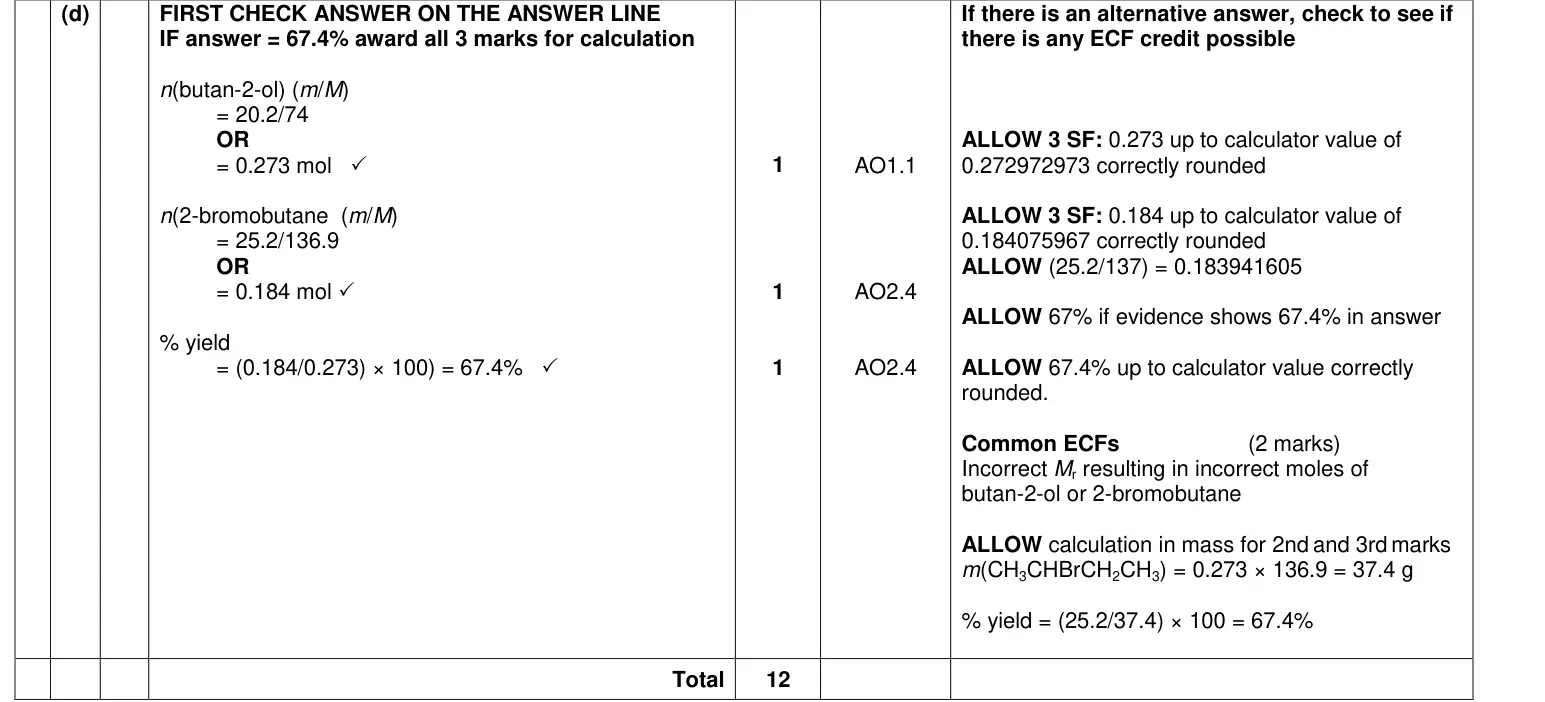
6(d) Amount of substance (moles) 3AO1, 2Calculation
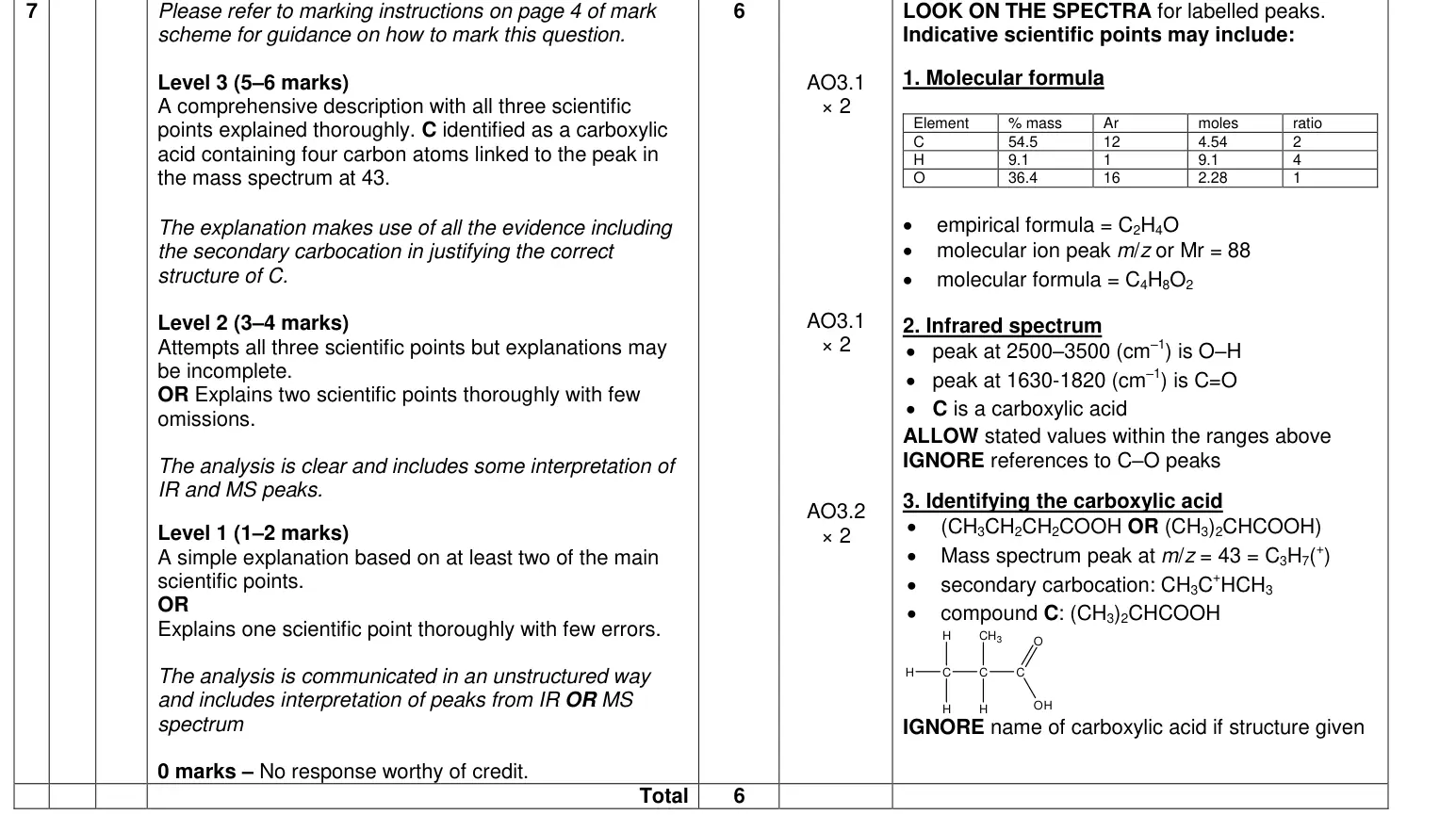
7 Infrared spectroscopy and mass spectrometry 6AO3Level of response

The questions

1(a)(i)1(a)(ii)1(b)(i)1(b)(ii)1(c)(i)1(c)(ii)1(d)2(a)2(b)2(c)3(a)(i)3(a)(ii)3(a)(iii)3(b)3(c)4(a)(i)4(a)(ii)4(b)4(c)5(a)(i)5(a)(ii)5(b)(i)5(b)(ii)5(c)6(a)6(b)6(c)(i)6(c)(ii)6(d)7
June 2016 · AS Paper 2 · Q1(a)(i) 1 mark AO1 Short answer electron structure
1 Group 2 elements are metals that react with oxygen and water.
(a) Magnesium is oxidised when it burns in oxygen to form an ionic compound.
(i) Write the electron configuration, in terms of sub-shells, of a magnesium atom.
...................................................................................................................................... [1]
June 2016 · AS Paper 2 · Q1(a)(ii) 1 mark AO1 Short answer redoxgroup 2
Earlier part of question 1 that this part usesEarlier part of June 2016 Paper 2 question 1
(ii) Explain what happens when magnesium is oxidised in terms of electron transfer.
...........................................................................................................................................
...................................................................................................................................... [1]
June 2016 · AS Paper 2 · Q1(b)(i) 1 mark AO2 Equation writing group 2periodicity
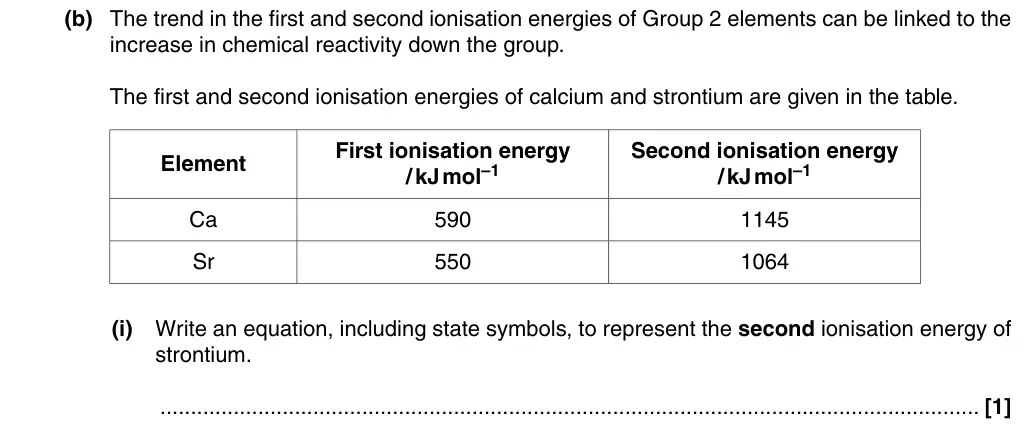
(b) The trend in the first and second ionisation energies of Group 2 elements can be linked to the
increase in chemical reactivity down the group.
The first and second ionisation energies of calcium and strontium are given in the table.
First ionisation energy Second ionisation energy
Element
/ kJ mol–1 / kJ mol–1
Ca 590 1145
Sr 550 1064
(i) Write an equation, including state symbols, to represent the second ionisation energy of
strontium.
...................................................................................................................................... [1]
June 2016 · AS Paper 2 · Q1(b)(ii) 3 marks AO1 Short answer periodicity
Earlier part of question 1 that this part usesEarlier part of June 2016 Paper 2 question 1
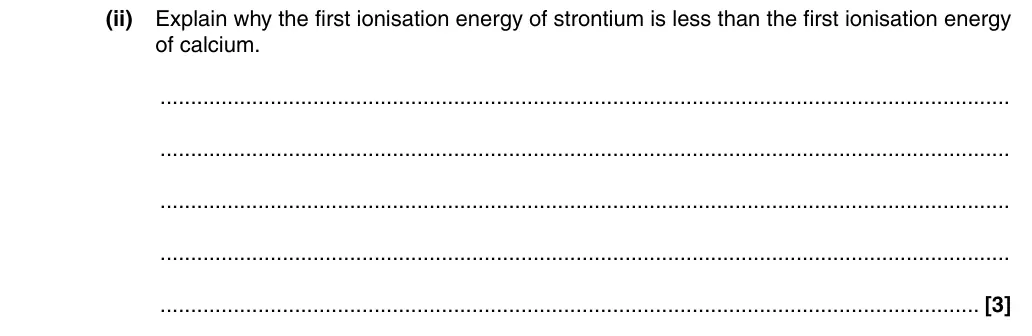
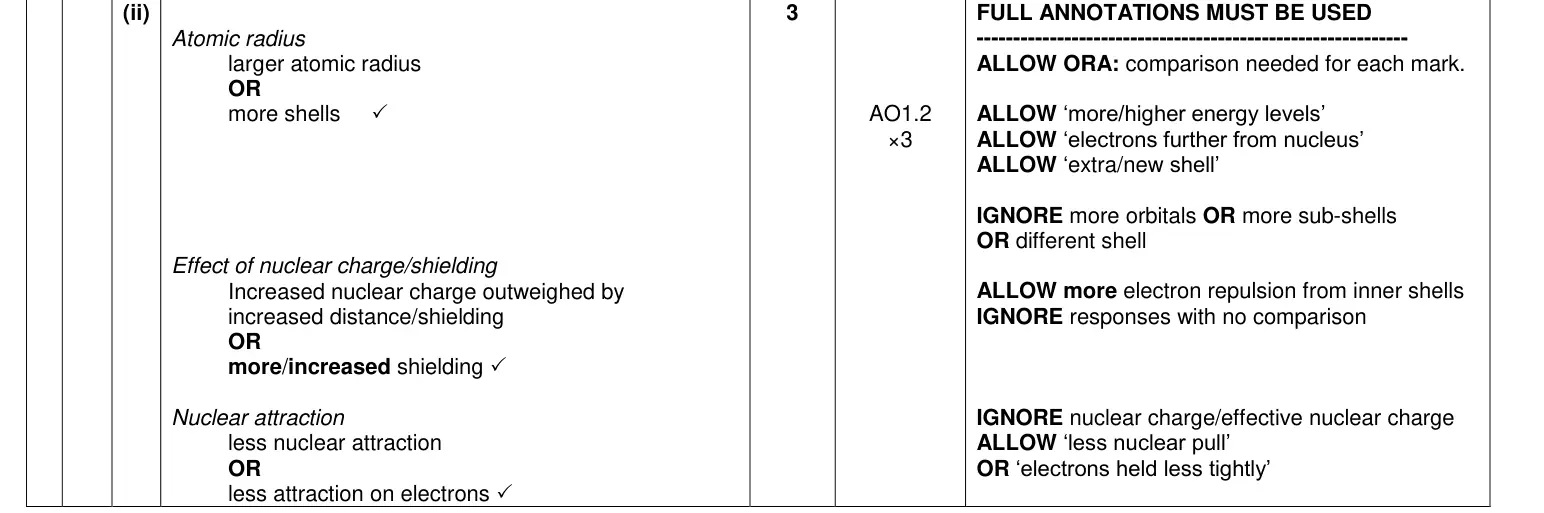
(ii) Explain why the first ionisation energy of strontium is less than the first ionisation energy
of calcium.
...........................................................................................................................................
...........................................................................................................................................
...........................................................................................................................................
...........................................................................................................................................
...................................................................................................................................... [3]
June 2016 · AS Paper 2 · Q1(c)(i) 2 marks AO3 Drawing / labelling amount of substancepractical skillspractical techniques
3
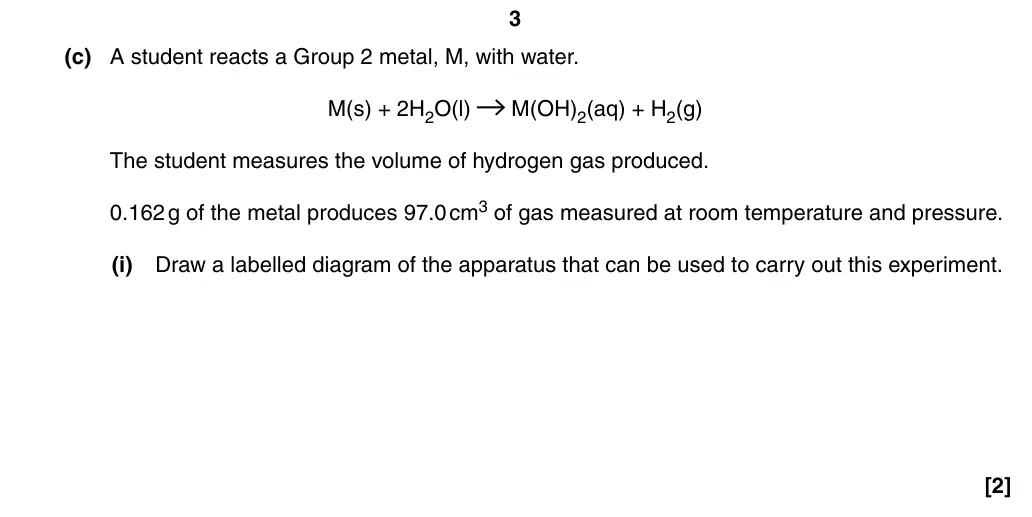
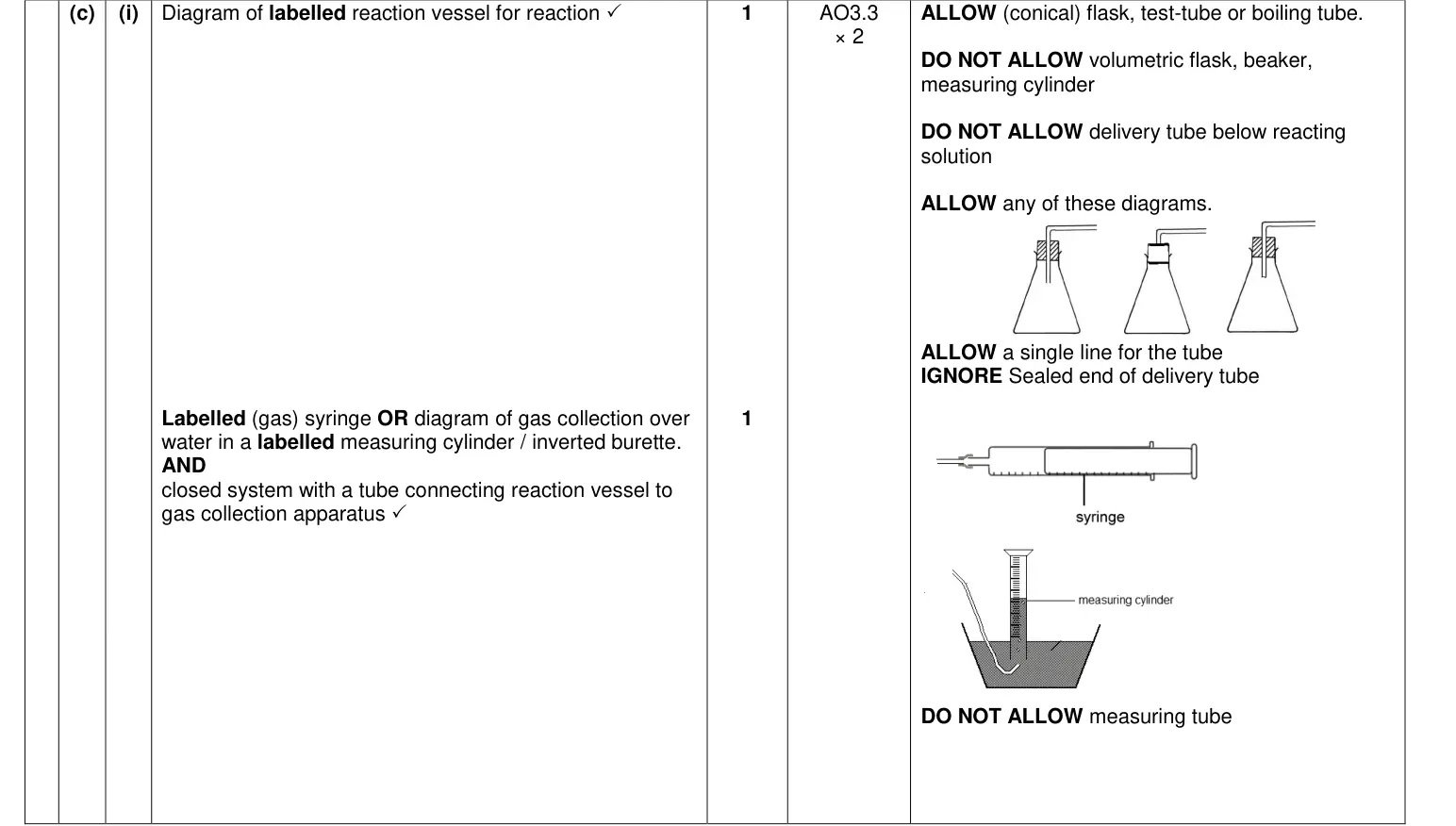
(c) A student reacts a Group 2 metal, M, with water.
M(s) + 2H2O(l) M(OH)2(aq) + H2(g)
The student measures the volume of hydrogen gas produced.
0.162 g of the metal produces 97.0 cm3 of gas measured at room temperature and pressure.
(i) Draw a labelled diagram of the apparatus that can be used to carry out this experiment.
[2]
June 2016 · AS Paper 2 · Q1(c)(ii) 3 marks AO2, 3 Calculation amount of substance
Earlier part of question 1 that this part usesEarlier part of June 2016 Paper 2 question 1
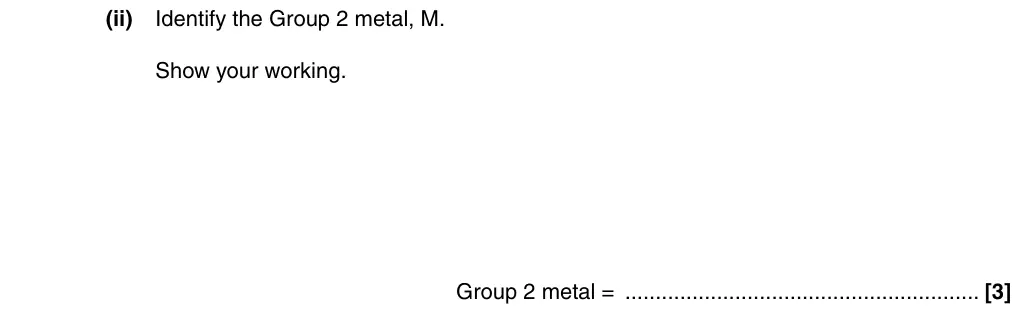
(ii) Identify the Group 2 metal, M.
Show your working.
Group 2 metal =  .......................................................... [3]
June 2016 · AS Paper 2 · Q1(d) 1 mark AO3 Short answer amount of substance
Earlier part of question 1 that this part usesEarlier part of June 2016 Paper 2 question 1
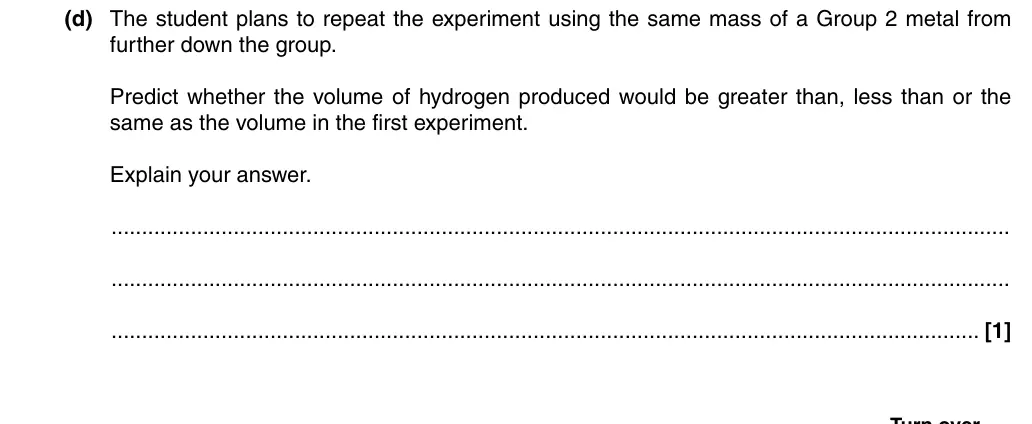
(d) The student plans to repeat the experiment using the same mass of a Group 2 metal from
further down the group.
Predict whether the volume of hydrogen produced would be greater than, less than or the
same as the volume in the first experiment.
Explain your answer.
...................................................................................................................................................
...................................................................................................................................................
.............................................................................................................................................. [1]
June 2016 · AS Paper 2 · Q2(a) 3 marks AO1, 2 Short answer bonding and structureperiodicity
4
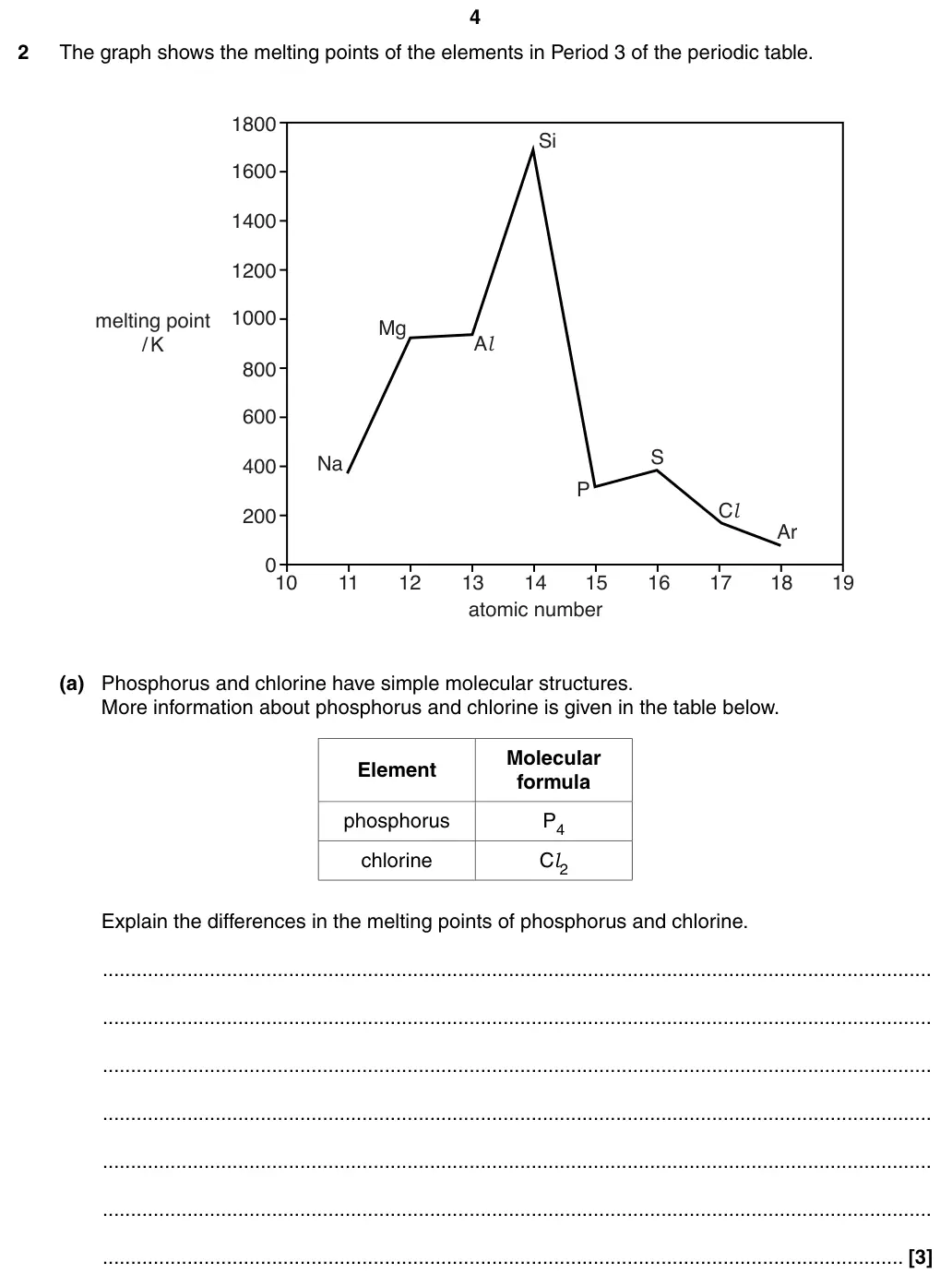
2 The graph shows the melting points of the elements in Period 3 of the periodic table.
1800
Si
1600
1400
1200
melting point 1000
Mg
/ K Al
800
600
S
400 Na
P
Cl
200
Ar
0
10 11 12 13 14 15 16 17 18 19
atomic number
(a) Phosphorus and chlorine have simple molecular structures.
More information about phosphorus and chlorine is given in the table below.
Molecular
Element
formula
phosphorus P4
chlorine Cl2
Explain the differences in the melting points of phosphorus and chlorine.
...................................................................................................................................................
...................................................................................................................................................
...................................................................................................................................................
...................................................................................................................................................
...................................................................................................................................................
...................................................................................................................................................
.............................................................................................................................................. [3]
June 2016 · AS Paper 2 · Q2(b) 4 marks AO1 Short answer periodicity
Earlier part of question 2 that this part usesEarlier part of June 2016 Paper 2 question 2
5
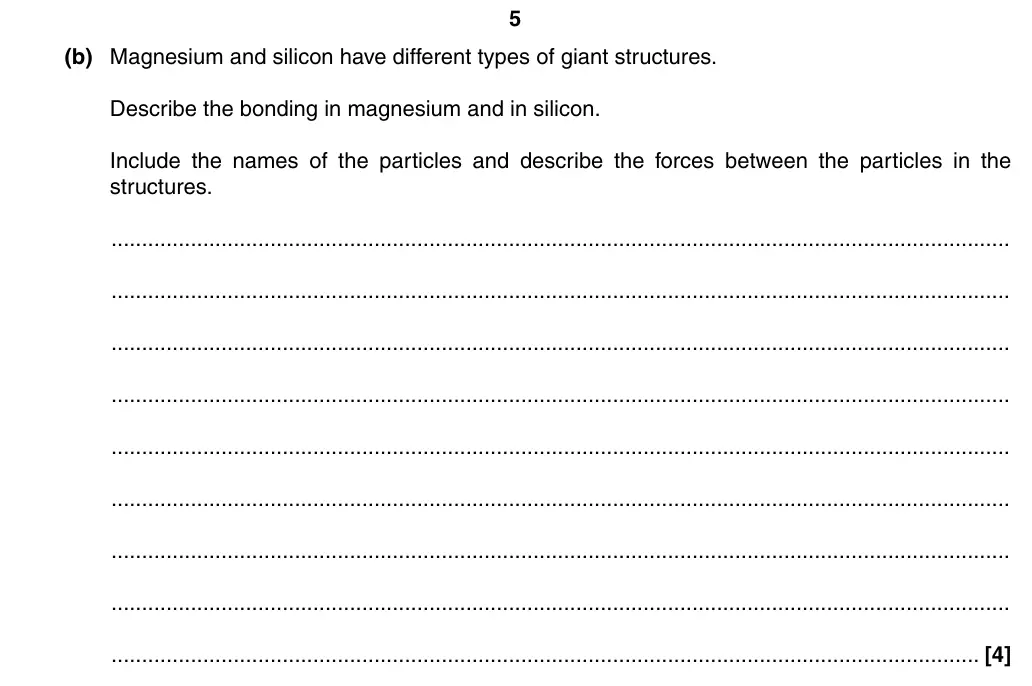
(b) Magnesium and silicon have different types of giant structures.
Describe the bonding in magnesium and in silicon.
Include the names of the particles and describe the forces between the particles in the
structures.
...................................................................................................................................................
...................................................................................................................................................
...................................................................................................................................................
...................................................................................................................................................
...................................................................................................................................................
...................................................................................................................................................
...................................................................................................................................................
...................................................................................................................................................
.............................................................................................................................................. [4]
June 2016 · AS Paper 2 · Q2(c) 1 mark AO2 Equation writing formulae and equations
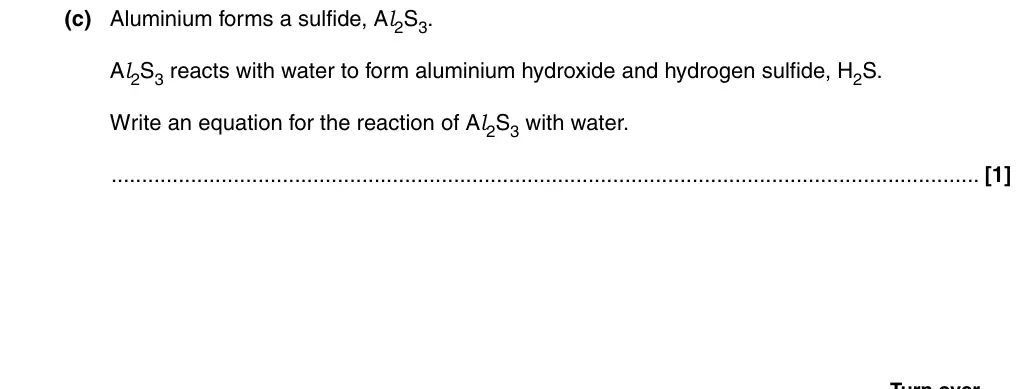
(c) Aluminium forms a sulfide, Al2S3.
Al2S3 reacts with water to form aluminium hydroxide and hydrogen sulfide, H2S.
Write an equation for the reaction of Al2S3 with water.
.............................................................................................................................................. [1]
June 2016 · AS Paper 2 · Q3(a)(i) 1 mark Short answer alkenesalkanes
6
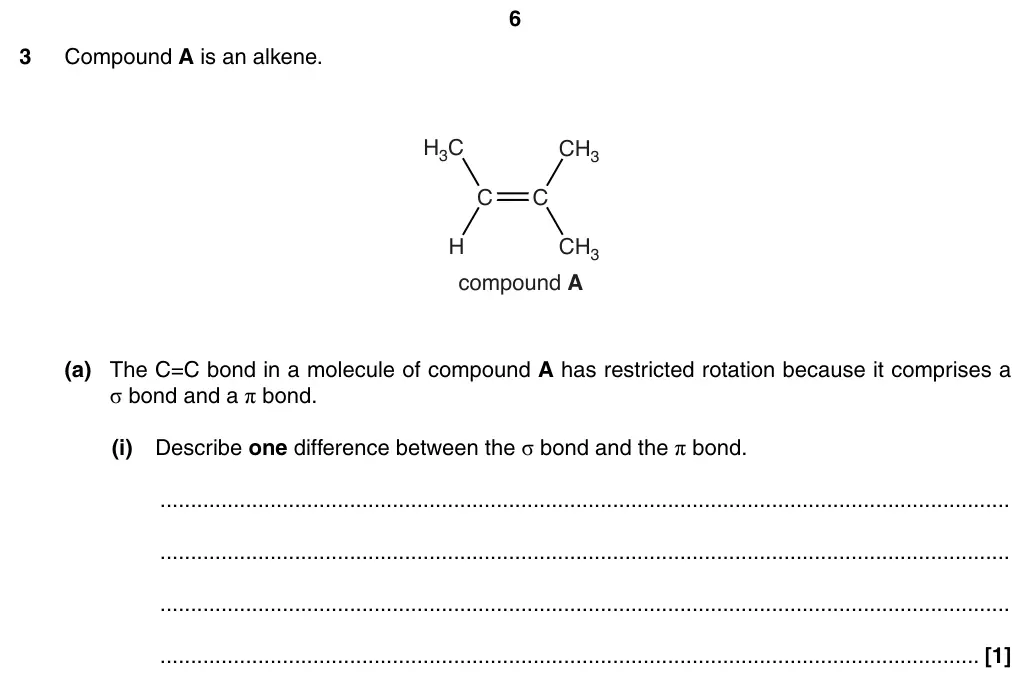
3 Compound A is an alkene.
H3C CH3
C C
H CH3
compound A
(a) The C=C bond in a molecule of compound A has restricted rotation because it comprises a
σ bond and a π bond.
(i) Describe one difference between the σ bond and the π bond.
...........................................................................................................................................
...........................................................................................................................................
...........................................................................................................................................
...................................................................................................................................... [1]
June 2016 · AS Paper 2 · Q3(a)(ii) 1 mark Short answer alkenes
Earlier part of question 3 that this part usesEarlier part of June 2016 Paper 2 question 3
(ii) Explain why compound A does not have E/Z isomers.
...........................................................................................................................................
...........................................................................................................................................
...................................................................................................................................... [1]
June 2016 · AS Paper 2 · Q3(a)(iii) 2 marks Structure / isomer alkenesorganic basics
Earlier part of question 3 that this part usesEarlier part of June 2016 Paper 2 question 3
(iii) A structural isomer of compound A has E/Z isomers.
Draw the structure of the Z isomer and then name this isomer.
structure of Z isomer
name ........................................................................
[2]
June 2016 · AS Paper 2 · Q3(b) 2 marks Short answer alcohols
Earlier part of question 3 that this part usesEarlier part of June 2016 Paper 2 question 3
7
(b) Compound A can be made from alcohol B by heating with an acid catalyst.
Suggest two possible structures for alcohol B.
[2]
June 2016 · AS Paper 2 · Q3(c) 6 marks 6-mark level of response alkenesorganic basics
Earlier part of question 3 that this part usesEarlier part of June 2016 Paper 2 question 3
8
(c)* Compound A reacts with hydrogen bromide to form a mixture of two different organic products.
H3C CH3
C C
H CH3
compound A
Give the structures of the two possible organic products of the reaction.
Outline the mechanism, using the ‘curly arrow’ model, for the formation of one of the organic
products from compound A.
Explain which of the two organic products is more likely to be formed.
...................................................................................................................................................
...................................................................................................................................................
...................................................................................................................................................
...................................................................................................................................................
.............................................................................................................................................. [6]
June 2016 · AS Paper 2 · Q4(a)(i) 1 mark AO2 Short answer enthalpy changes
10
4 Nitrogen forms several different oxides.
N2O is a useful anaesthetic and NO has been linked to the depletion of ozone in the stratosphere.
(a) The standard enthalpy changes of formation of N2O and NO are given in the table.
Compound ΔfH ɵ / kJ mol–1
N2O (g) + 82.0
NO (g) + 90.2
(i) Explain, in terms of bond breaking and bond making, why the enthalpy change of
formation of NO is endothermic.
...........................................................................................................................................
...........................................................................................................................................
...................................................................................................................................... [1]
June 2016 · AS Paper 2 · Q4(a)(ii) 2 marks AO1, 2 Drawing / labelling enthalpy changes
Earlier part of question 4 that this part usesEarlier part of June 2016 Paper 2 question 4
(ii) Draw a fully labelled enthalpy profile diagram to represent the enthalpy change of
formation of N2O.
The formulae, with state symbols, of the reactants and products should be included as
part of the diagram.
You are not expected to show the activation energy for the reaction.
enthalpy
progress of reaction
[2]
June 2016 · AS Paper 2 · Q4(b) 4 marks AO2 Calculation amount of substance
11
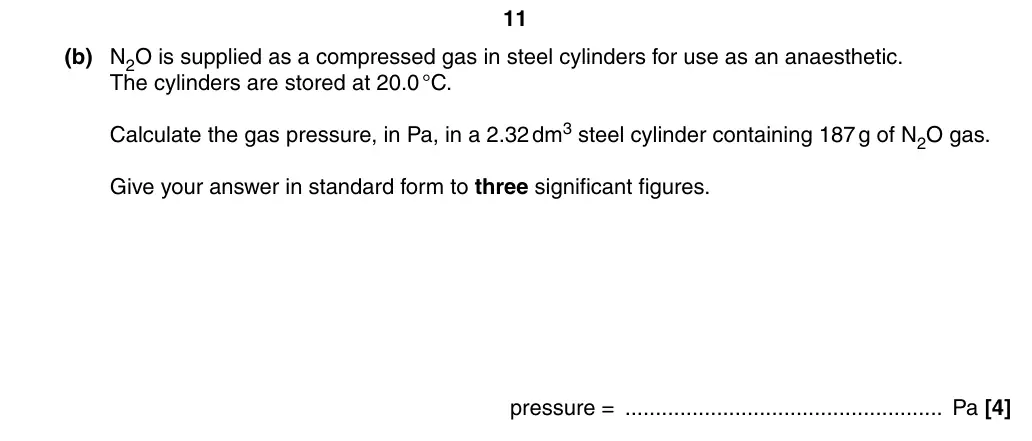
(b) N2O is supplied as a compressed gas in steel cylinders for use as an anaesthetic.
The cylinders are stored at 20.0 °C.
Calculate the gas pressure, in Pa, in a 2.32 dm3 steel cylinder containing 187 g of N2O gas.
Give your answer in standard form to three significant figures.
pressure =  .................................................... Pa [4]
June 2016 · AS Paper 2 · Q4(c) 2 marks AO1 Equation writing haloalkanes
(c) NO radicals catalyse the breakdown of ozone in the stratosphere.
Write two equations to show how NO radicals catalyse this breakdown.
...................................................................................................................................................
.............................................................................................................................................. [2]
June 2016 · AS Paper 2 · Q5(a)(i) 1 mark AO3 Short answer acids and titrationsreaction rates
12
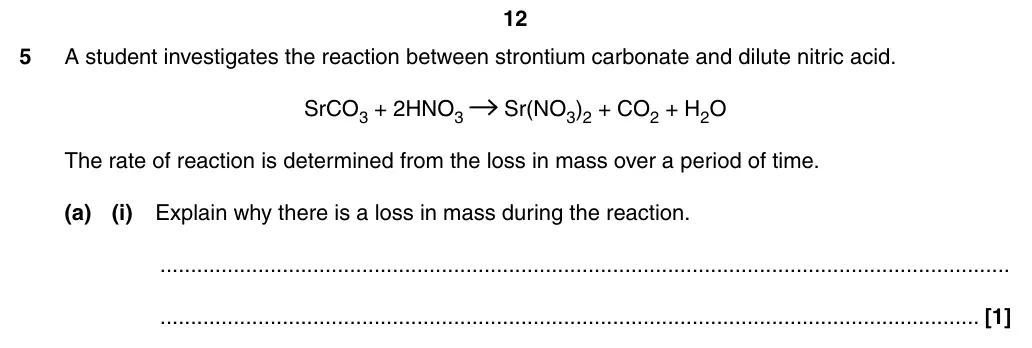
5 A student investigates the reaction between strontium carbonate and dilute nitric acid.
SrCO3 + 2HNO3 Sr(NO3)2 + CO2 + H2O
The rate of reaction is determined from the loss in mass over a period of time.
(a) (i) Explain why there is a loss in mass during the reaction.
...........................................................................................................................................
...................................................................................................................................... [1]
June 2016 · AS Paper 2 · Q5(a)(ii) 3 marks AO2 Calculation amount of substance
Earlier part of question 5 that this part usesEarlier part of June 2016 Paper 2 question 5
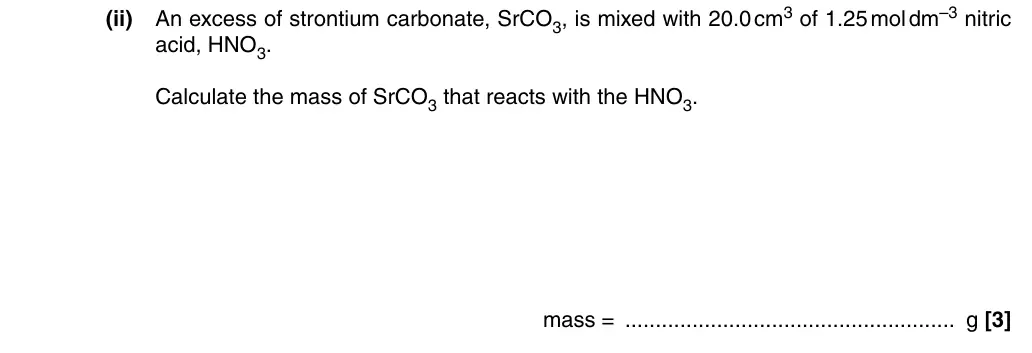
(ii) An excess of strontium carbonate, SrCO3, is mixed with 20.0 cm3 of 1.25 mol dm–3 nitric
acid, HNO3.
Calculate the mass of SrCO3 that reacts with the HNO3.
mass =  ...................................................... g [3]
June 2016 · AS Paper 2 · Q5(b)(i) 2 marks AO2 Short answer reaction rates
Earlier part of question 5 that this part usesEarlier part of June 2016 Paper 2 question 5
(b) The student plots a graph of total mass (reagents + container) against time.
96.40
96.30
96.20
mass / g
96.10
96.00
95.90
0 50 100 150 200 250 300 350 400
time / s
13
(i) Describe and explain the change in the rate of the reaction during the first 200 seconds
of the experiment.
...........................................................................................................................................
...........................................................................................................................................
...................................................................................................................................... [2]
June 2016 · AS Paper 2 · Q5(b)(ii) 2 marks AO3 Calculation reaction ratespractical skills
Earlier parts of question 5 that this part usesEarlier part of June 2016 Paper 2 question 5Earlier part of June 2016 Paper 2 question 5
(ii) Using the graph, calculate the rate of reaction, in g s–1, at 200 seconds.
Show your working on the graph.
rate of reaction =  ................................................. g s–1 [2]
June 2016 · AS Paper 2 · Q5(c) 3 marks AO3 Short answer reaction ratespractical skillspractical techniques
Earlier parts of question 5 that this part usesEarlier part of June 2016 Paper 2 question 5Earlier part of June 2016 Paper 2 question 5
(c) Outline a method that could be used to obtain the results that are plotted on the graph.
Your answer should include the apparatus required and the procedure for the experiment.
...................................................................................................................................................
...................................................................................................................................................
...................................................................................................................................................
...................................................................................................................................................
...................................................................................................................................................
.............................................................................................................................................. [3]
June 2016 · AS Paper 2 · Q6(a) 1 mark AO1 Short answer alcohols
14
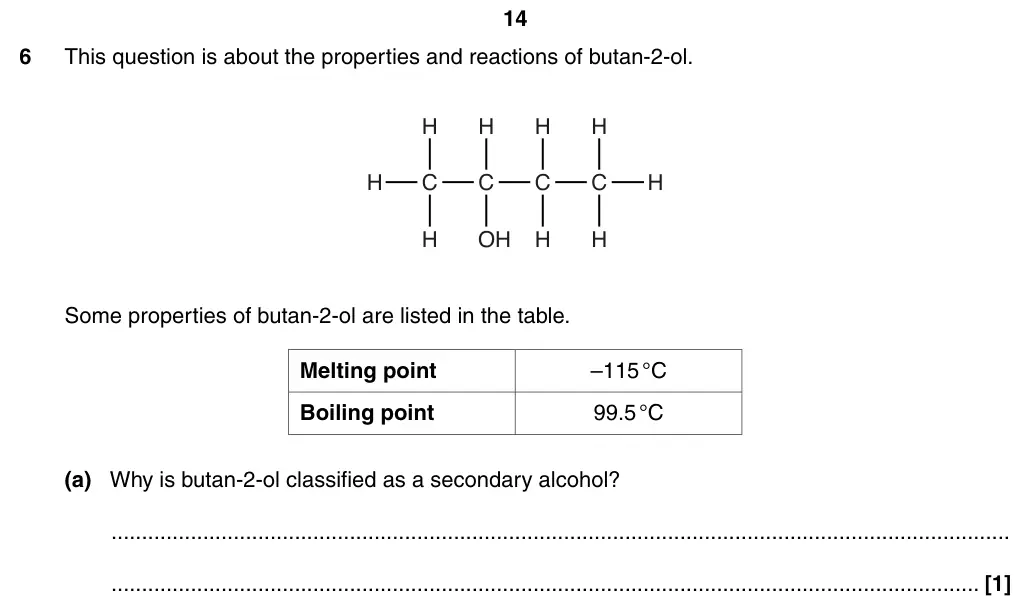
6 This question is about the properties and reactions of butan-2-ol.
H H H H
H C C C C H
H OH H H
Some properties of butan-2-ol are listed in the table.
Melting point –115 °C
Boiling point 99.5 °C
(a) Why is butan-2-ol classified as a secondary alcohol?
...................................................................................................................................................
.............................................................................................................................................. [1]
June 2016 · AS Paper 2 · Q6(b) 4 marks AO1, 2 Short answer bonding and structure
Earlier part of question 6 that this part usesEarlier part of June 2016 Paper 2 question 6
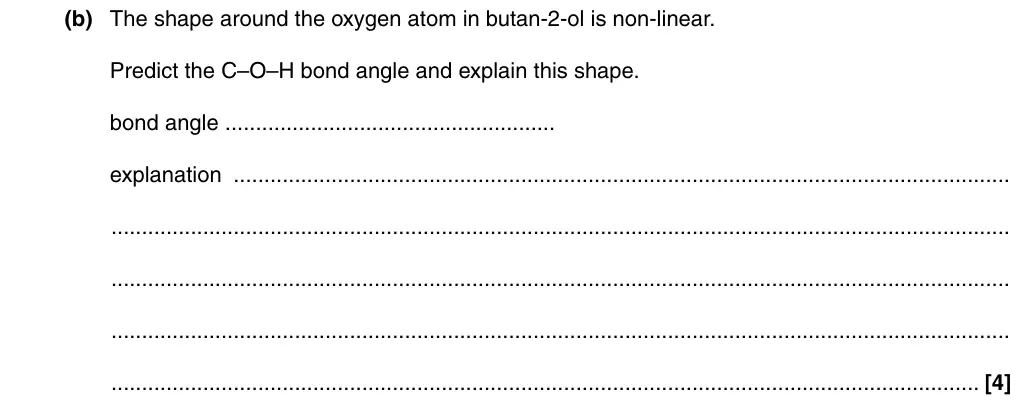
(b) The shape around the oxygen atom in butan-2-ol is non-linear.
Predict the C–O–H bond angle and explain this shape.
bond angle ......................................................
explanation  ...............................................................................................................................
...................................................................................................................................................
...................................................................................................................................................
...................................................................................................................................................
.............................................................................................................................................. [4]
June 2016 · AS Paper 2 · Q6(c)(i) 2 marks AO2 Equation writing alcohols
Earlier part of question 6 that this part usesEarlier part of June 2016 Paper 2 question 6
(c) Butan-2-ol can be oxidised by heating with an oxidising agent.
(i) Write an equation for the reaction.
Use [O] to represent the oxidising agent and show the structure of the organic product.
[2]
June 2016 · AS Paper 2 · Q6(c)(ii) 2 marks AO3 Short answer organic synthesis aspractical skillspractical techniques
Earlier parts of question 6 that this part usesEarlier part of June 2016 Paper 2 question 6Earlier part of June 2016 Paper 2 question 6
15
(ii) A student plans to carry out this oxidation using the apparatus shown in the diagram.
Give one reason why the apparatus is not suitable and describe a more suitable way of
carrying out this oxidation.
...........................................................................................................................................
...........................................................................................................................................
...................................................................................................................................... [2]
June 2016 · AS Paper 2 · Q6(d) 3 marks AO1, 2 Calculation amount of substance
Earlier part of question 6 that this part usesEarlier part of June 2016 Paper 2 question 6
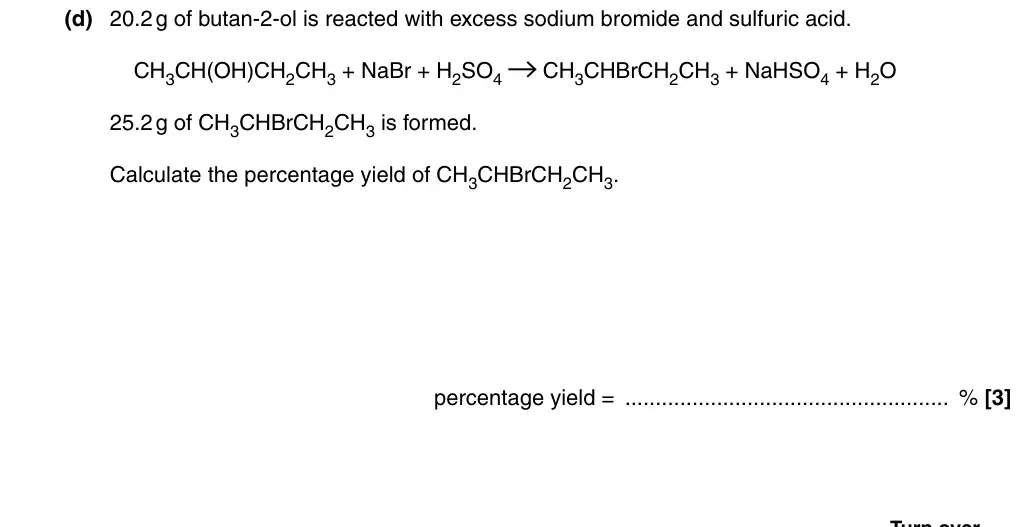
(d) 20.2 g of butan-2-ol is reacted with excess sodium bromide and sulfuric acid.
CH3CH(OH)CH2CH3 + NaBr + H2SO4 CH3CHBrCH2CH3 + NaHSO4 + H2O
25.2 g of CH3CHBrCH2CH3 is formed.
Calculate the percentage yield of CH3CHBrCH2CH3.
percentage yield =  ..................................................... % [3]
June 2016 · AS Paper 2 · Q7 6 marks AO3 6-mark level of response infrared and mass spectrometry
16
7* Organic compound C has the following percentage composition by mass:
C, 54.5%; H, 9.1%; O, 36.4%.
The infrared spectrum and mass spectrum of compound C are shown below.
100
transmittance
50
(%)
0
4000 3000 2000 1500 1000 500
wavenumber / cm–1
100
80
60
relative
intensity
40
20
0
10 20 30 40 50 60 70 80 90
m / z
In the mass spectrum, a secondary carbocation is responsible for the peak with the greatest
relative intensity.
17
Identify compound C.
In your answer you should make clear how your conclusion is linked to all the evidence.
..........................................................................................................................................................
..........................................................................................................................................................
..........................................................................................................................................................
..................................................................................................................................................... [6]

Work with an OCR chemistry tutor

Want a paper marked and gone through with you? Message us.

Prefer email? Send an enquiry

If you are under 18, please include a parent's contact details. Enquiries go to enquiries@chemistryaleveltutor.com and are deleted once handled. All tutoring is online.