Answer
A
Mark scheme

Examiner's comment
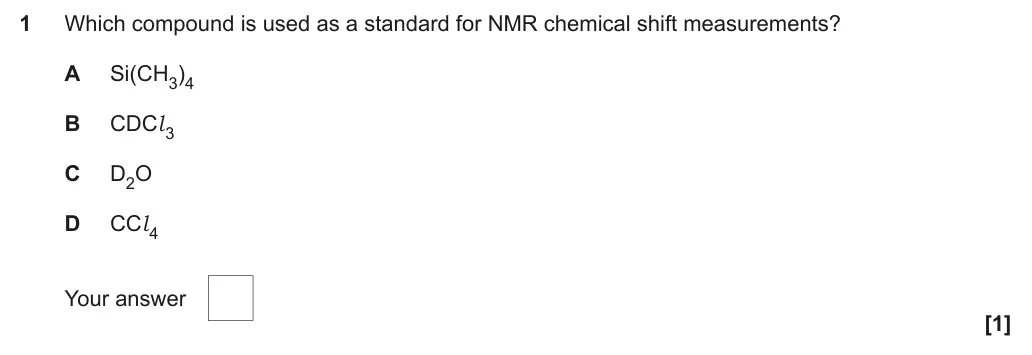
Candidates found this question more challenging than anticipated. While many correctly chose A, a significant proportion of candidates selected C.
100 marks · 46 question parts · Paper, mark scheme and report on OCR's site · Have OCR's Data Sheet beside you
A
Candidates found this question more challenging than anticipated. While many correctly chose A, a significant proportion of candidates selected C.

C
The majority of candidates identified C as the secondary amide.
B
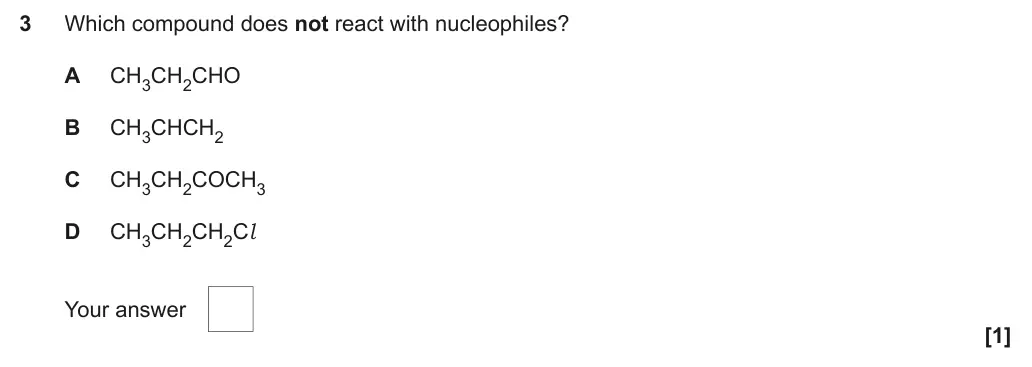
The majority of candidates identified B (an alkene) as the compound that does not react with nucleophiles.
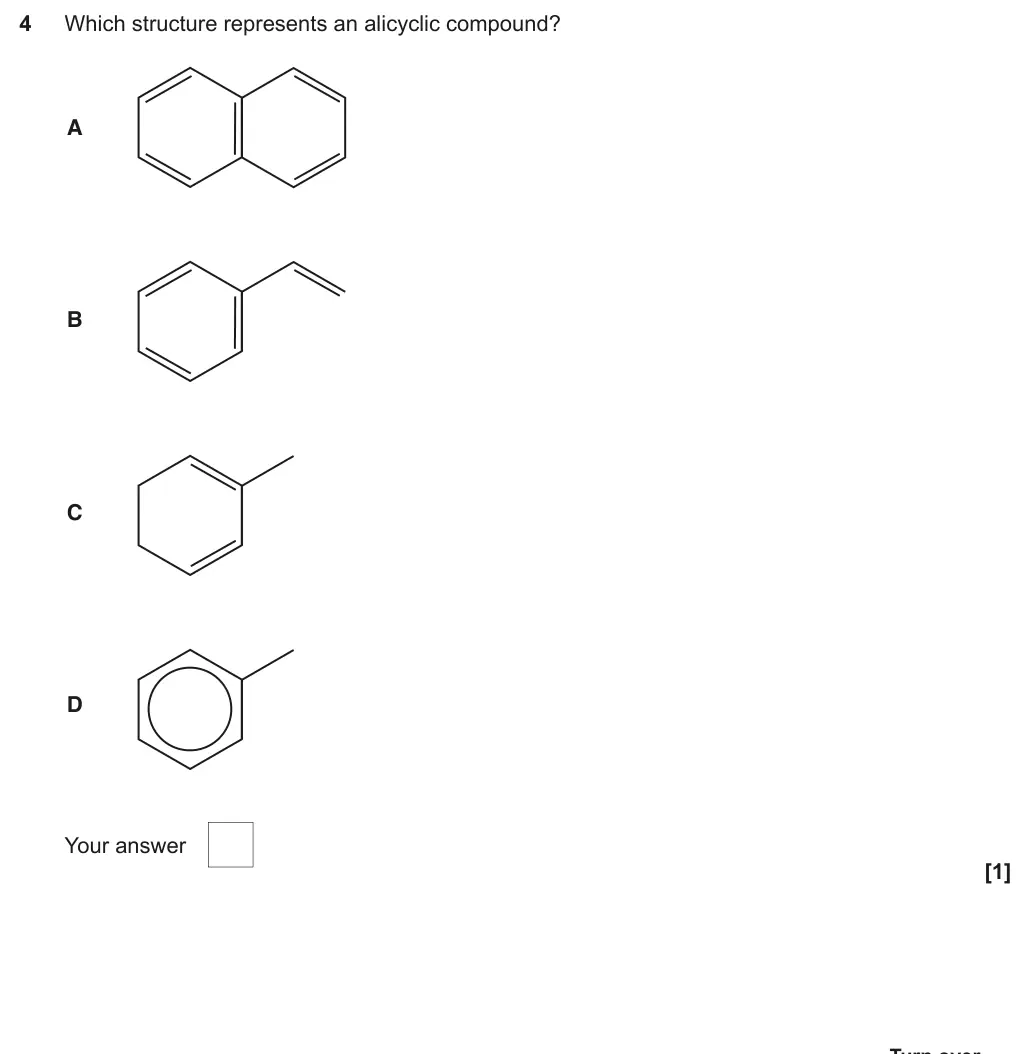
C
Many candidates correctly identified C as the alicyclic compound. B and D proved good distractors and were seen in approximately equal proportions.
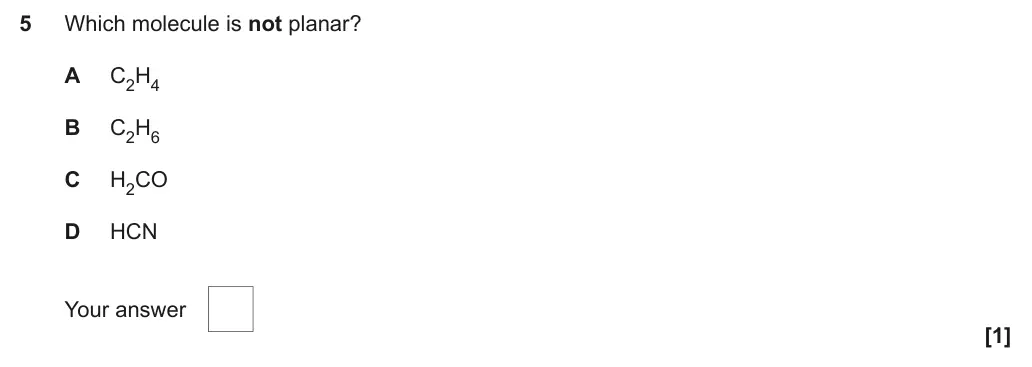
B
This question discriminated well, with higher ability candidates correctly identifying B as a non-planar molecule. Common incorrect responses included C and D. Some candidates drew structures alongside each option to aid their choice.
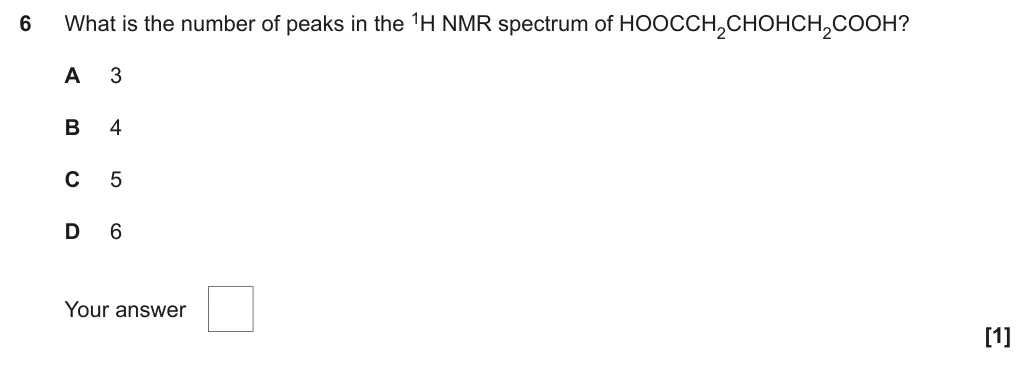
B
Many candidates correctly identified that the 1H NMR spectrum would contain 4 peaks and selected B. In most cases candidates arrived at this answer by drawing out the structure and labelling the environments. A common distractor was A (3 peaks) which presumably arose from candidates assuming that the C–H and O–H protons in the centre of the structure were equivalent.
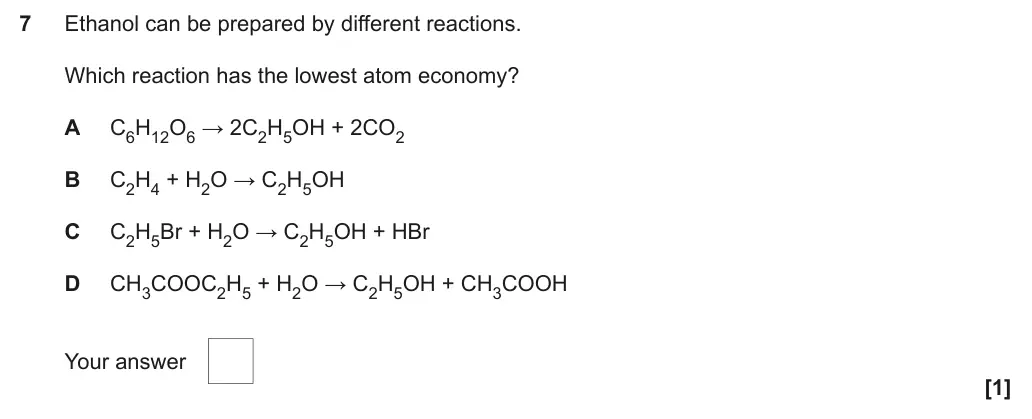
C
A lot of work was required to determine the equation with the lowest atom economy. Some candidates selected C after calculating a value for each equation, while stronger candidates appeared to focus on HBr as a by-product with a relatively high molar mass. Many incorrect responses were seen and candidates appeared to pick A, B and D in roughly equal proportions.

D
Candidates found this multiple choice question difficult. While some correctly selected D, many candidates chose B.

B
Most candidates correctly identified B as the compound after labelling the O-H and C≡N peaks in the spectrum.
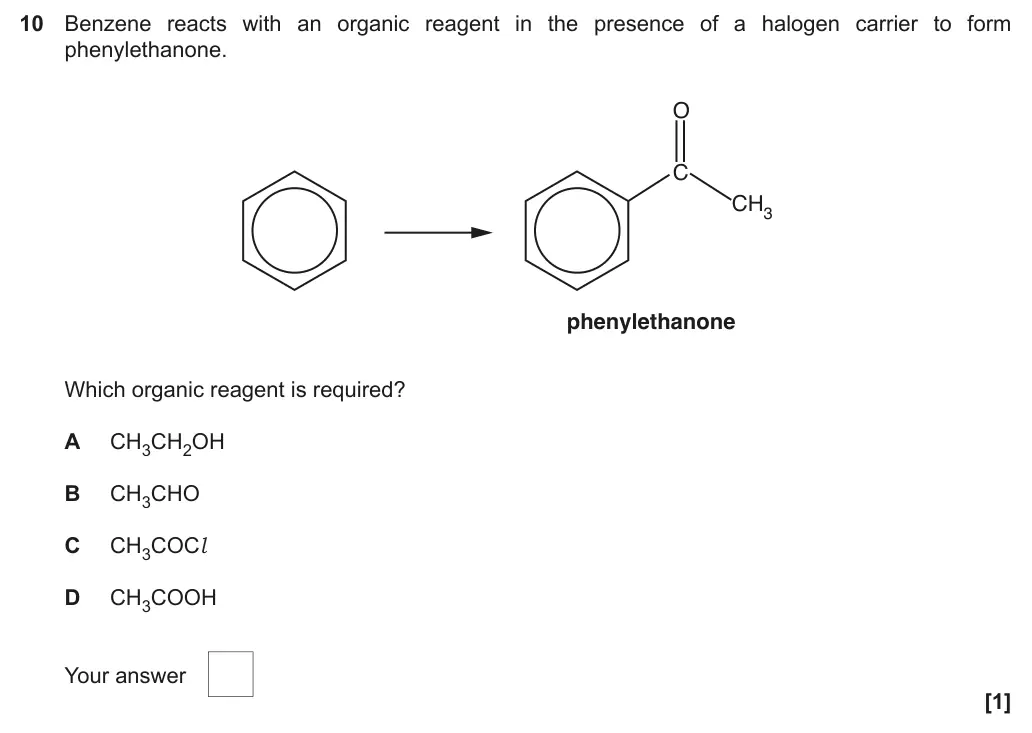
C
Almost all candidates identified C (CH3COCl) as the reagent required for this reaction.
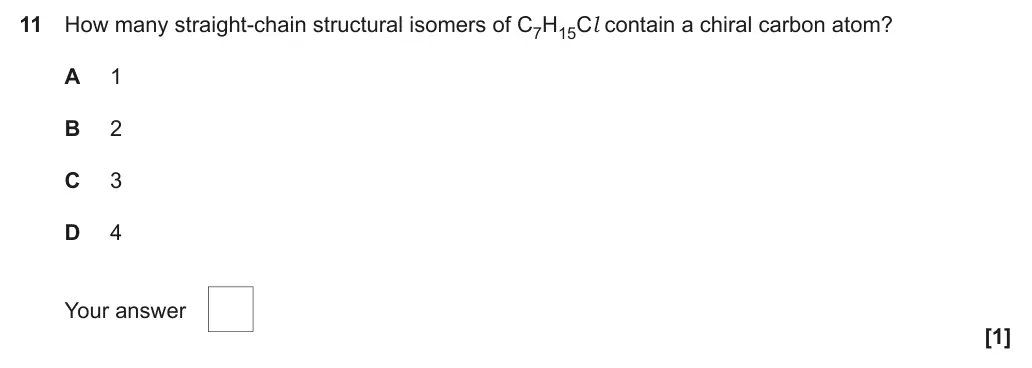
B
This question proved difficult. Candidates who drew out the different isomers of chloroheptane were able to identify B as the correct response.

C
Most candidates were able to identify C as the fragment responsible for the peak at m/z = 43. A number of different approaches were used. Some candidates determined the mass of each fragment shown while others drew the structures to see which were likely to be formed from (CH3)2CHCH2OH.
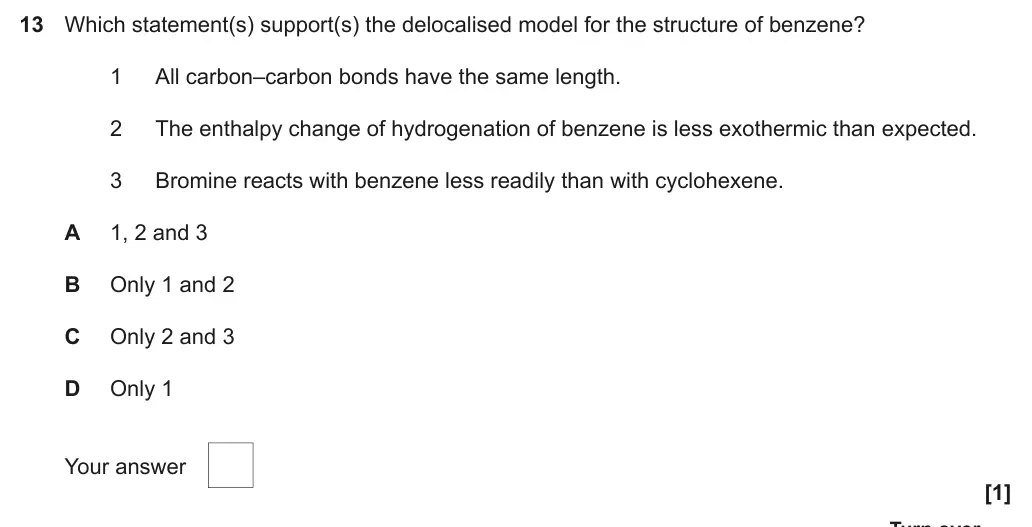
A
The bonding in benzene is well known by candidates at this level and most correctly selected A as their response.

B
Many candidates correctly selected B. Option A proved a good distractor, presumably as candidates linked melting point to recrystallisation without fully interpreting statement 3.

B
Candidates found this question difficult, presumably as it involved reactions of different functional groups within the same compound. Many candidates identified B as the correct response. The most common incorrect responses were C and D. Section B overview Section B includes a mixture of short answer and extended response questions, including two questions marked using a level of response mark scheme (20d and 22d). This section of the paper is worth 85 marks.
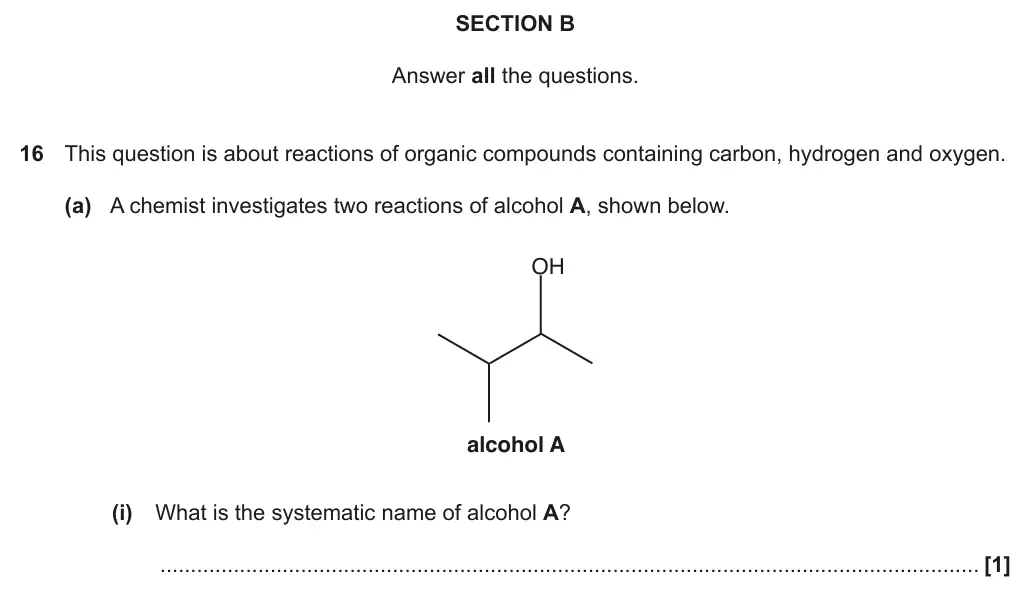
The majority of candidates were able to correctly name alcohol A as 3-methylbutan-2-ol. A significant number of responses used incorrect numbering and suggested 2-methylbutan-3-ol as the name.

Most candidates were able to show a correct structural formula of alcohol A.
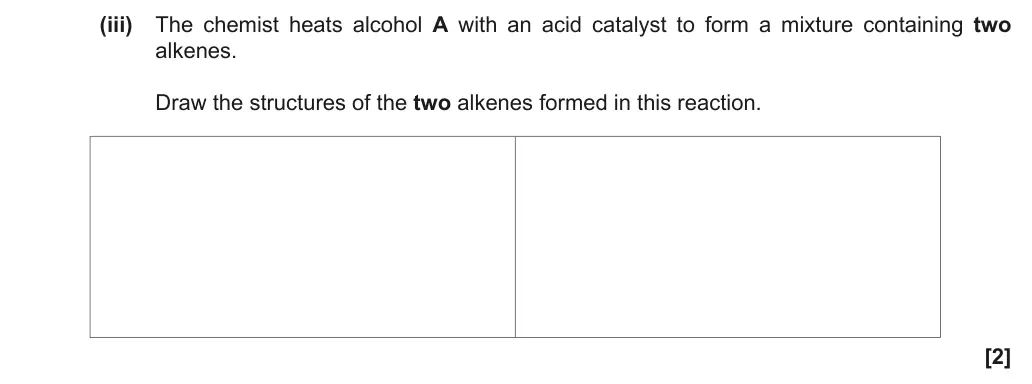
Many candidates correctly identified the two alkenes formed as 2-methylbut-2-ene and 3-methybut-1- ene. Stronger responses used skeletal formula to show the structures clearly. Some candidates preferred to use chemical symbols to represent the atoms present and although this approach is valid, lower ability responses did not show sufficient detail as demonstrated in Exemplar 1. In this response the alkene 2-methylbut-2-ene has been correctly identified and one mark credited. However, the attempt to show 3-methylbut-1-ene does not score. This is because C3H7 has been used instead of CH(CH3)2. Candidates should be encouraged to show every carbon atom when drawing a structure as the use of ambiguous formulae is not sufficient to gain credit.
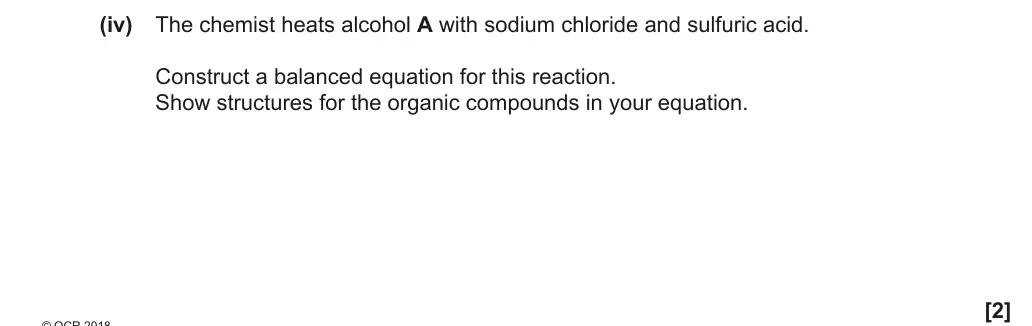
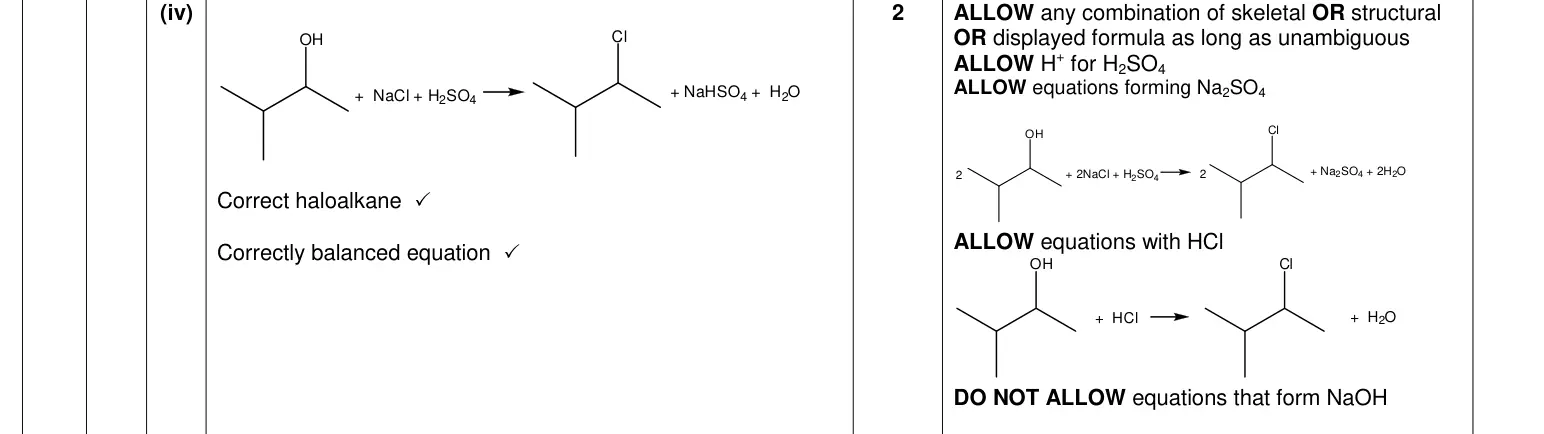
This question proved difficult for candidates. Although many candidates were able to identify the correct organic product, only the higher ability candidates were able to construct an appropriate balanced equation. A common error was to omit the role of the acid; this is shown in Exemplar 2 below. Lower ability candidates appeared not to recognise this reaction and suggested an alkoxide salt, rather than a haloalkane as the organic product. This type of response was seen frequently by examiners. The candidate has drawn the correct structure of the haloalkane formed and scores the first mark. However, the response fails to recognise that the reaction occurs under acidic conditions and omits the sulfuric acid from the equation.
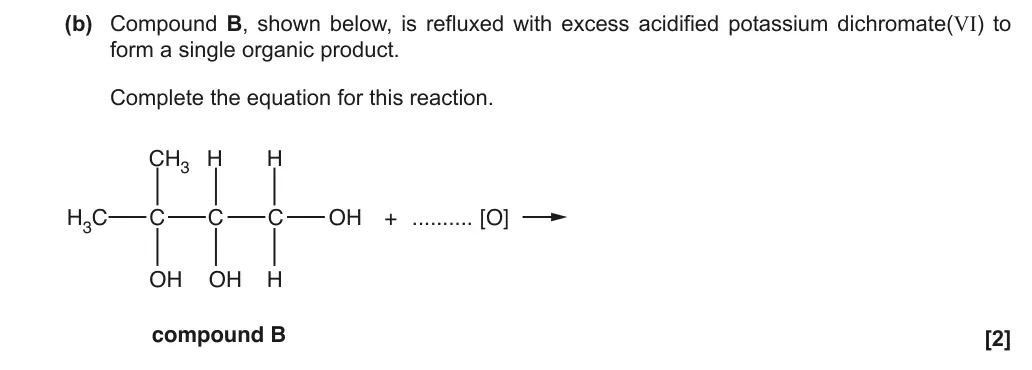
This question required candidates to apply their knowledge of the oxidation of alcohols to complete the equation for the complete oxidation of compound B. This question discriminated well. Many candidates correctly identified the organic product but only the higher ability candidates could complete the equation. A common error was to omit water as a product of the reaction.
Skills: M0.2 Use ratios, fractions and percentages
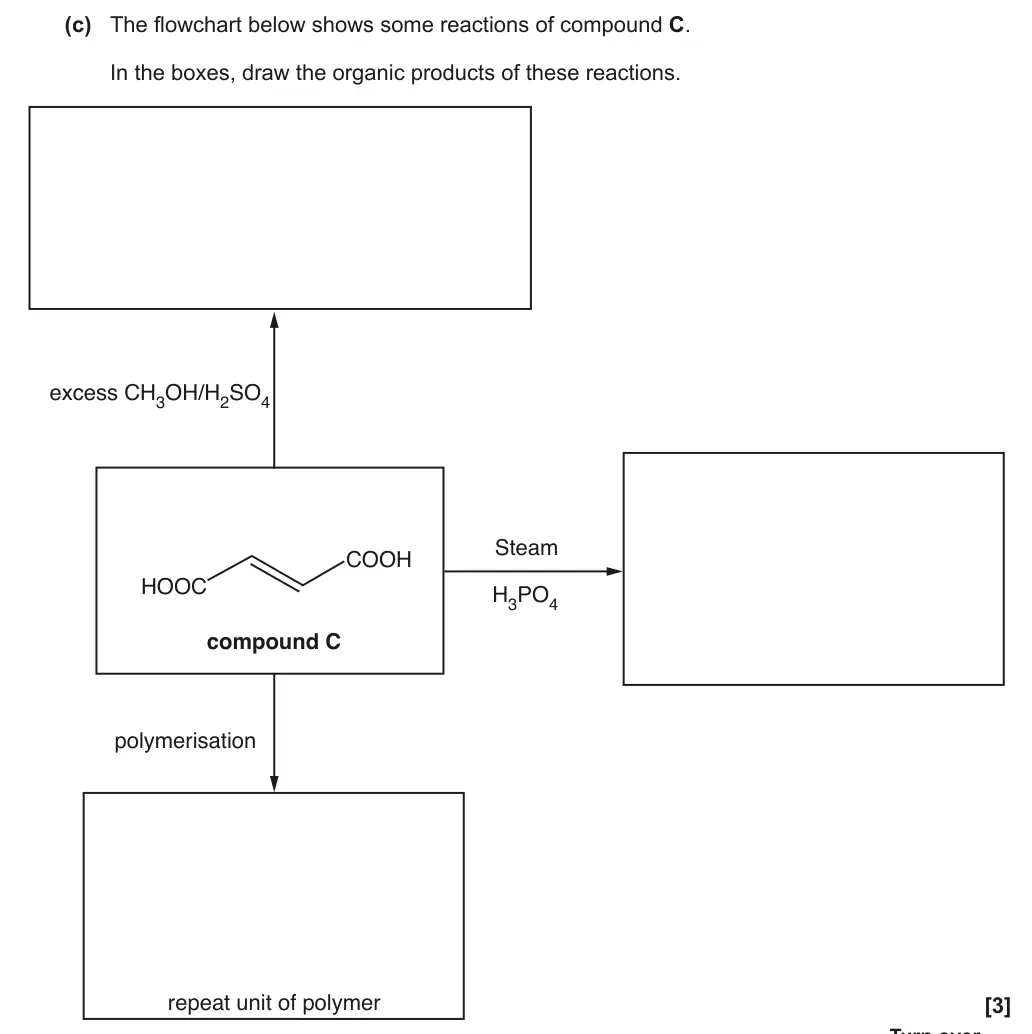
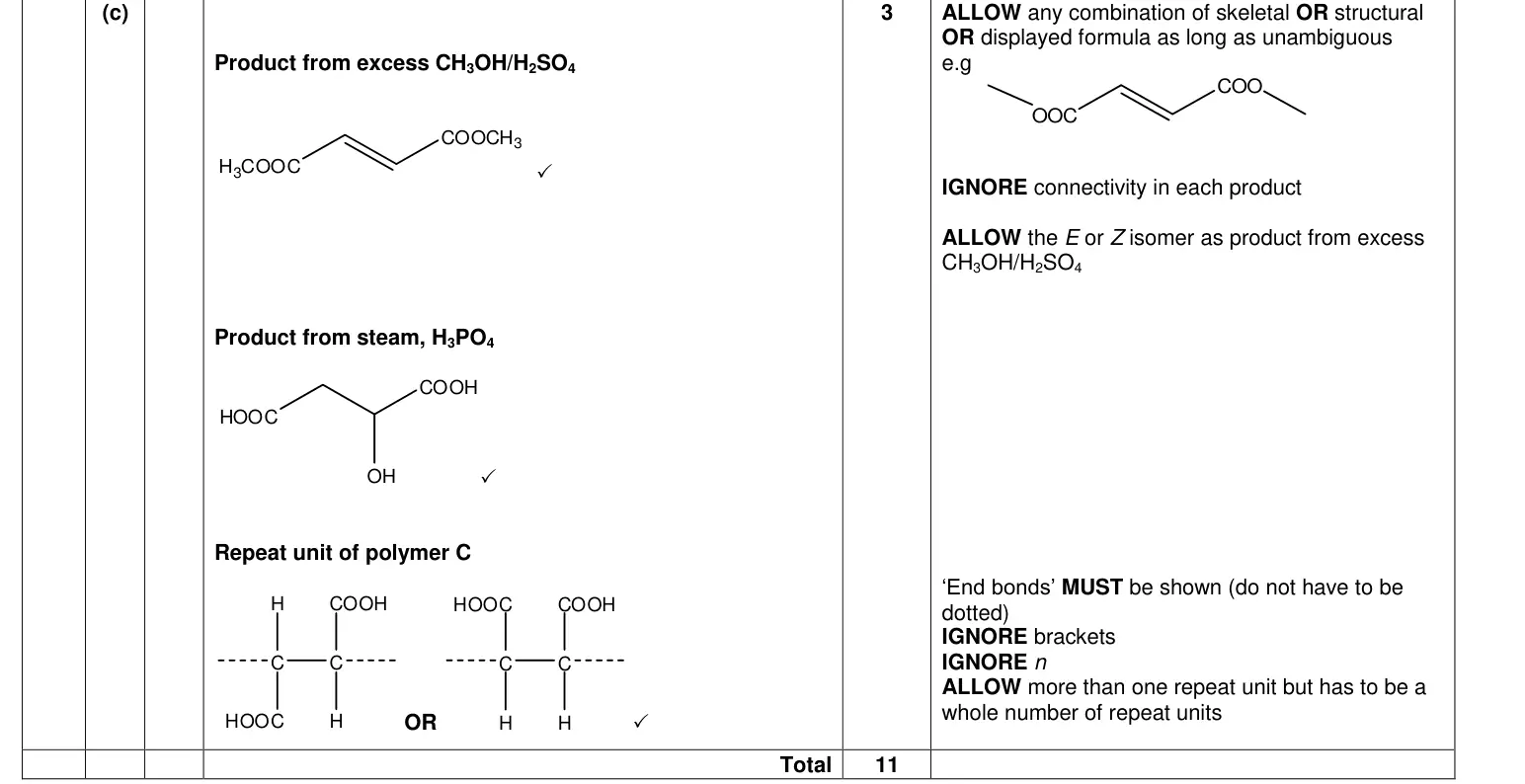
The majority of candidates were able to identify at least one product from the reactions of compound C. The polymerisation reaction appeared to be the most familiar, although some candidates attempted to draw a condensation polymer using the carboxylic acid groups rather than the alkene. The reaction of C with excess methanol was also well attempted. However, a significant number of candidates used chemical symbols to show their product. A proportion of these did not show the H atoms of the alkene group, showing only C=C in the centre of the structure. Candidates are advised to use the type of formulae given in a question as this will reduce the potential for error or omissions. The product from the hydration of C appeared to be the hardest to deduce. Many candidates recognised this reaction would produce an alcohol, but often included two OH groups – one on each C from the double bond – in their structure. Other candidates confused this reaction with hydrogenation and formed a saturated product from C.

Candidates were well prepared to tackle this question and consequently most candidates scored both marks.
Skills: M4.2 Visualise and represent 2-D and 3-D forms including 2-D representations of 3-D objects; M4.3 Understand the symmetry of 2-D and 3-D shapes

In contrast to part (a) this question proved difficult and discriminated well. The higher ability candidates correctly identified the dichloride salt produced by the reaction of lysine with excess acid. Some candidates formed ammonium ions on both nitrogen atoms but omitted the chloride ions. Others only formed a monochloride salt, leaving the R group unchanged. These two approaches scored one mark.

This question required candidates to apply their knowledge of amide hydrolysis to a section of protein. Many candidates correctly recognised that two amino acids would be produced but not all took account of the alkaline conditions and showed COOH groups rather than carboxylates. Candidates found this question difficult and although many gained some credit only the highest ability candidates, who recognised the amide in the side-chain would also react, scored full marks after. Exemplar 3 shows a good response. This response has correctly identified the amino acid on the left hand side of the amide link and also shown this as a carboxylate. Consequently the first mark has been achieved. The right hand amino acid has also been identified correctly. However, the amide in the R group has not been hydrolysed so this response only scores one of the two marks available for this product. Notice the candidate has presented their structures clearly with the atoms drawn in a similar arrangement to the protein shown in the question. This is a good strategy to avoid errors and omissions when drawing organic structures.
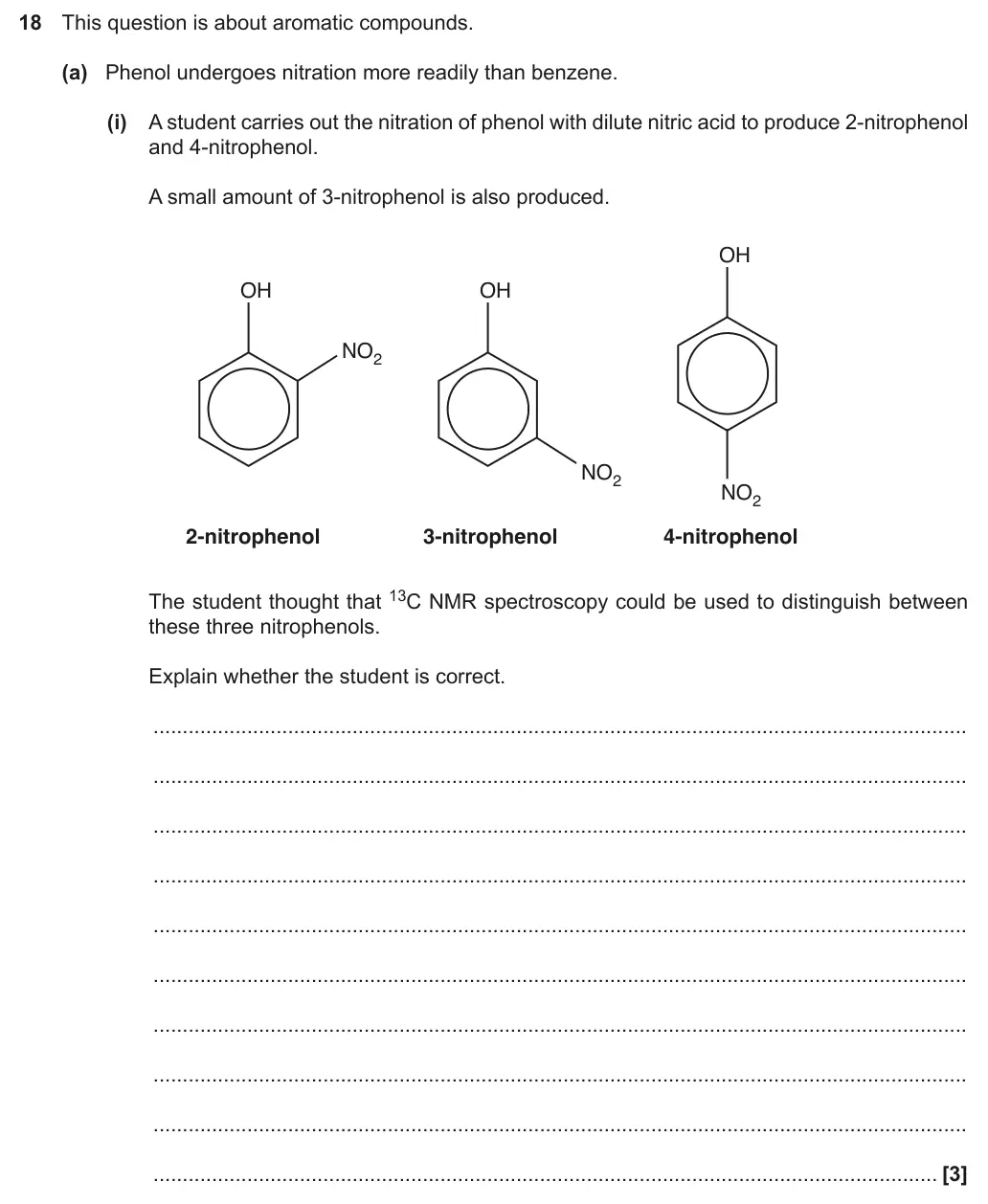
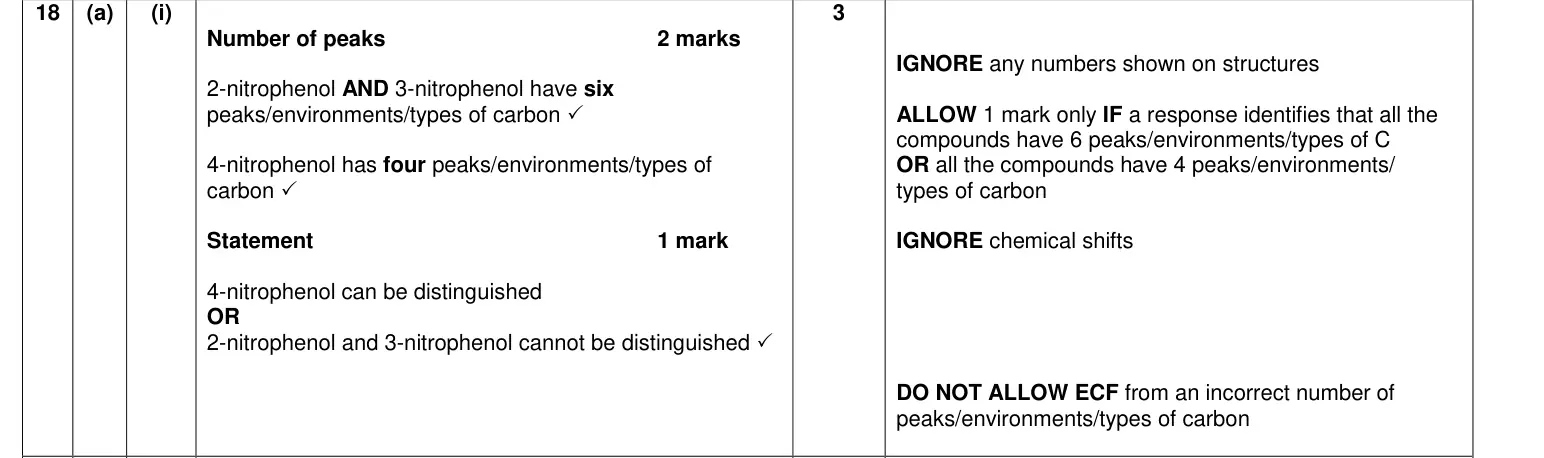
This question required candidates to apply their knowledge of 13C NMR spectroscopy to deduce the number of different carbon environments in each of the nitrophenols shown. The best responses were succinct, stating that it is possible to distinguish 4-ntirophenol from the other two after deducing the correct number of carbon environments for each compound. Lower ability candidates’ responses did not identify the symmetry in 4-nitrophenol and suggested all three compounds would produce six peaks, therefore making it impossible to distinguish between them.
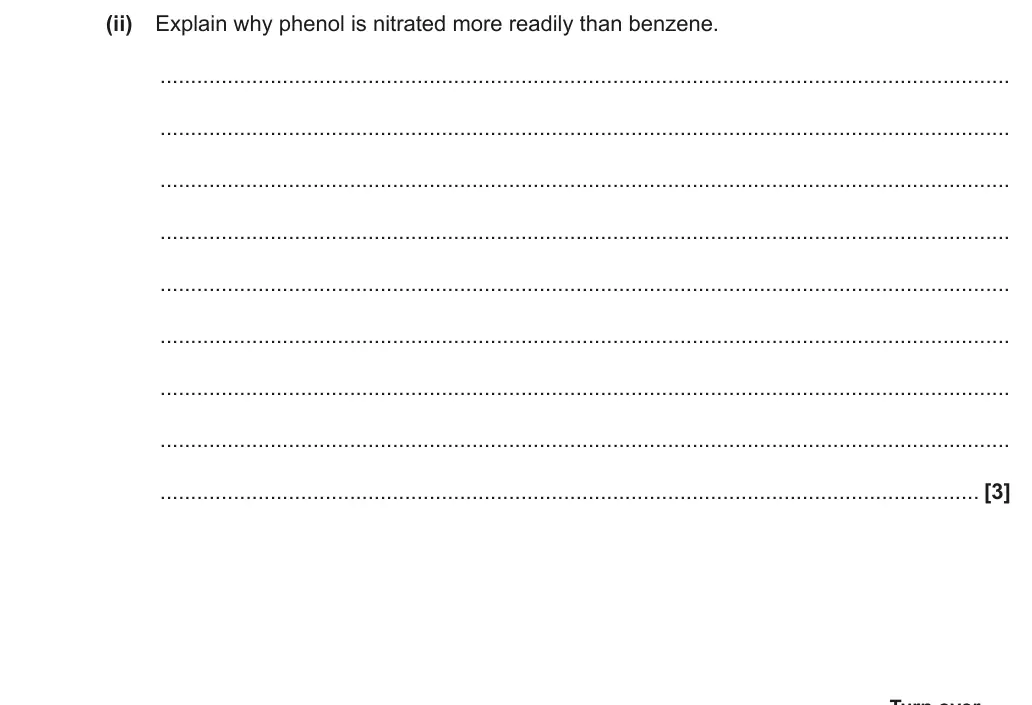
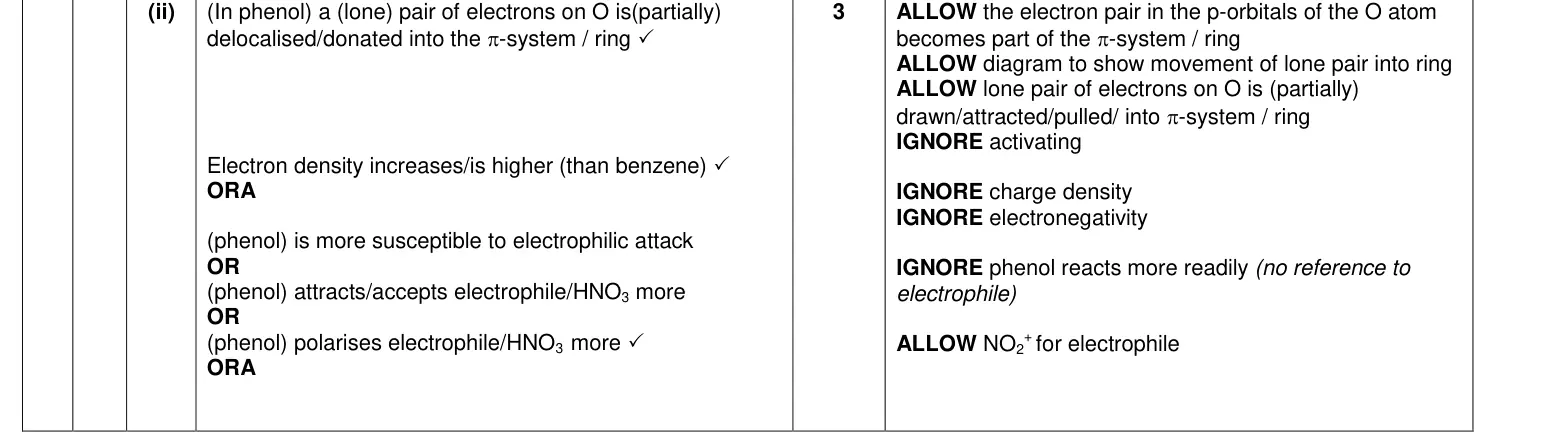
The relative reactivity of phenol is well known by candidates at this level and the majority scored two or three marks. Candidates who did not score full marks gave imprecise or vague explanations. This included reference to ‘higher charge density’ or ‘higher electronegativity’ of the phenol ring, rather than ‘higher electron density’.
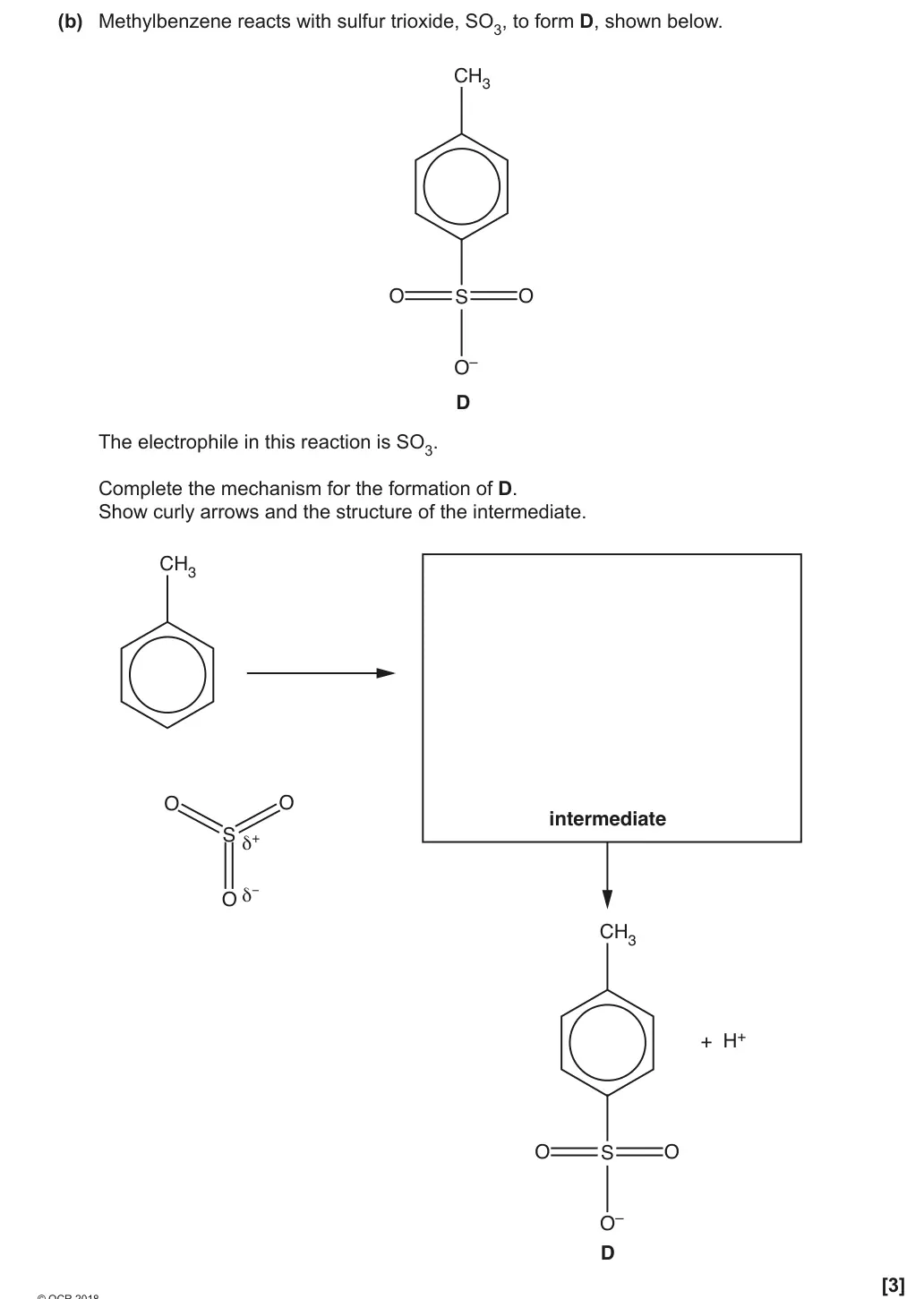
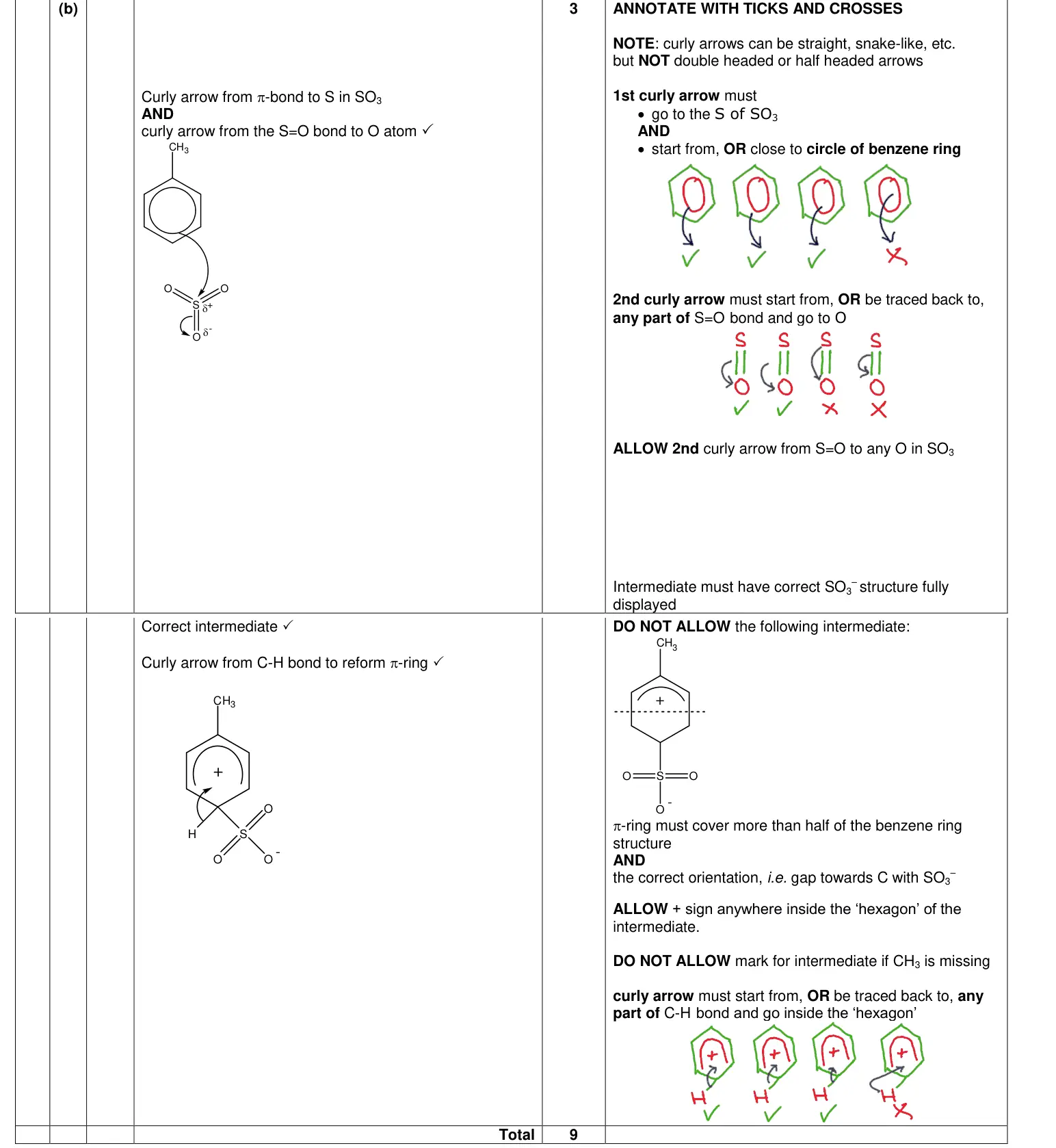
This question required candidates to apply their understanding of electrophilic substitution to the reaction of methylbenzene with sulfur trioxide. Examiners were encouraged by the quality of responses to this question. Most candidates secured full marks in this part. Some candidates did not show the curly arrow for the breaking of the S=O bond, while others omitted the methyl group from the intermediate. Exemplar 4 shows an excellent response. This response demonstrates an excellent example for candidates to follow. Curly arrows are drawn accurately, with each arrow touching the bond it starts from. The intermediate has been drawn clearly, using all the space provided. The ‘horseshoe’ has been drawn accurately over five of the carbon atoms with the positive charge shown neatly in the centre.
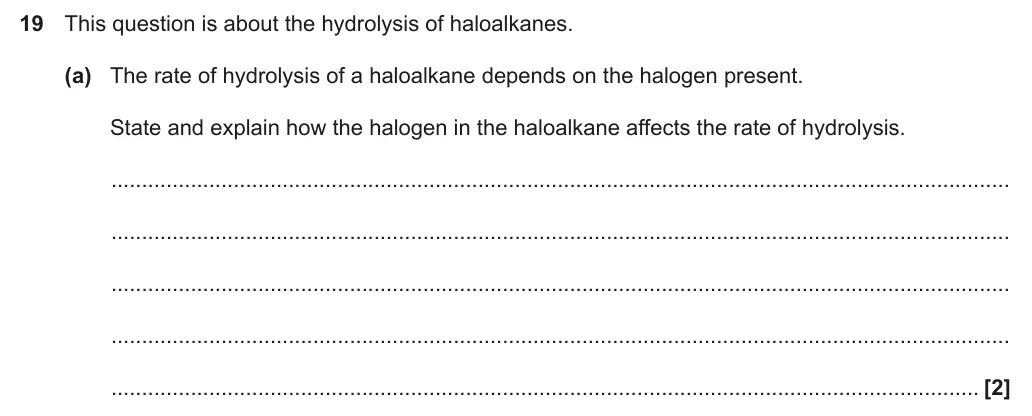
This question required candidates to link the rate of hydrolysis with the strength of the carbon-halogen bond present in different haloalkanes. Higher ability candidates were able to do this succinctly, making clear comparisons between different C-X bonds. Exemplar 5 shows a commonly seen one mark response. This response correctly describes the effect of bond strength on the rate of hydrolysis and receives one mark. To score the second mark a comparison of two different carbon-halogen bonds is required.
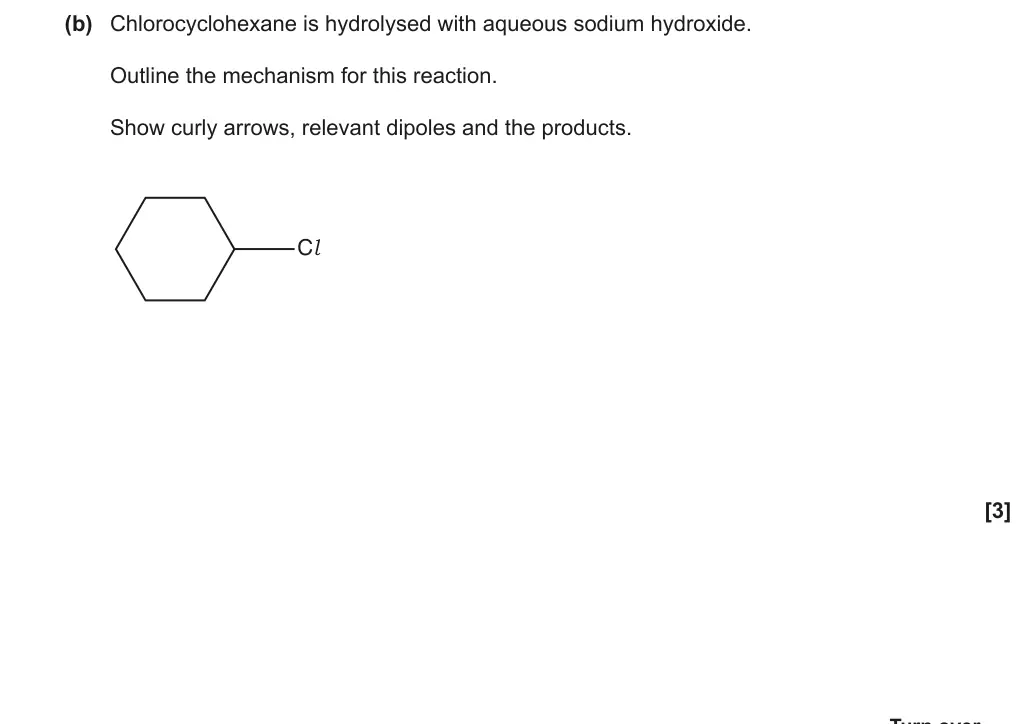
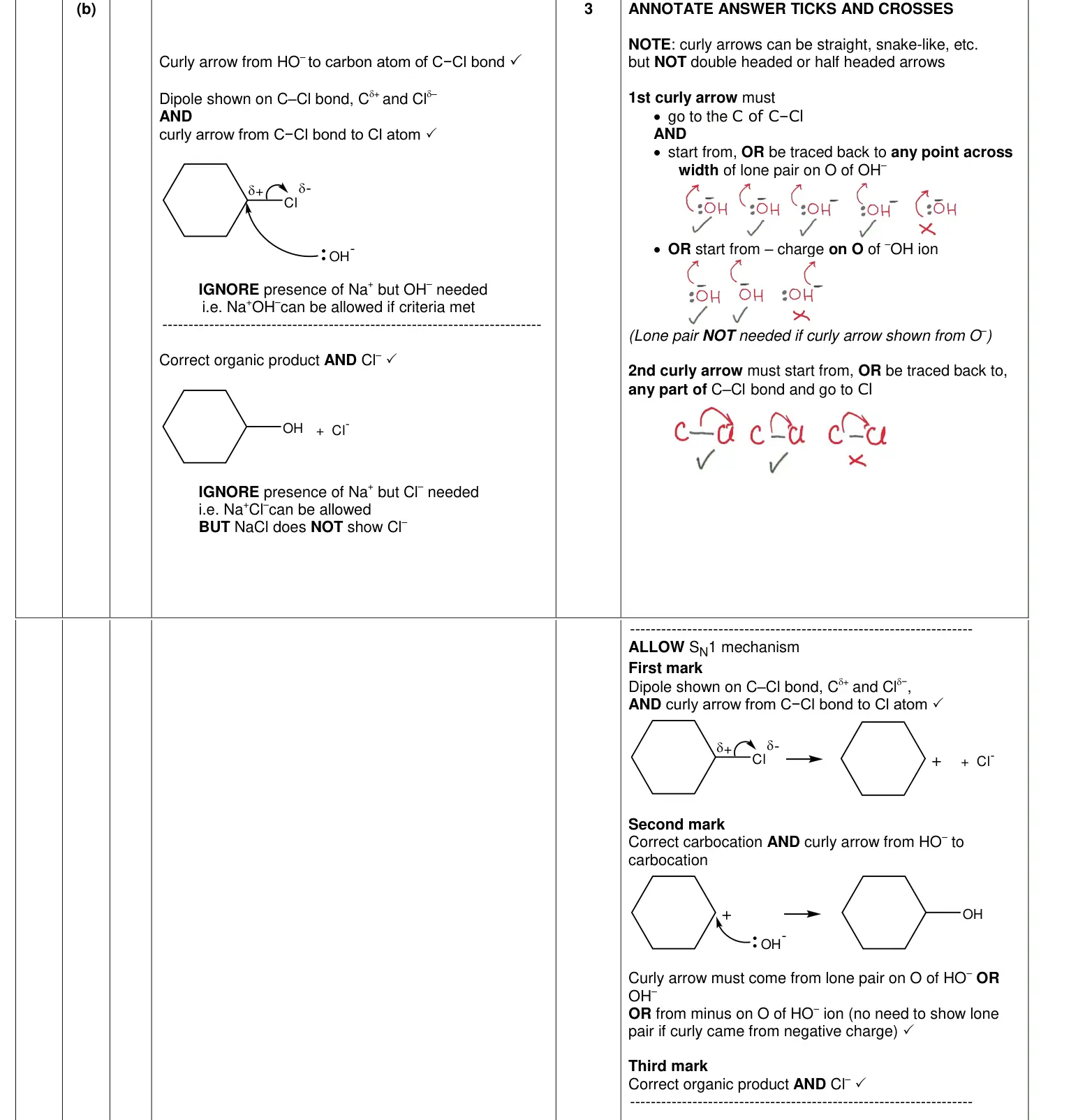
Candidates were very familiar with this nucleophilic substitution mechanism. Consequently the majority of candidates scored two or three marks. Common errors included inaccurate curly arrows from the hydroxide ion and failure to show the chloride ion as a product. Exemplar 6 highlights both of these. This response demonstrates the two most common errors seen in this part. The first marking point cannot be credited as the curly arrow from the hydroxide ion does not involve either the lone pair or minus sign on the O atom. The organic product is correct but the chloride ion produced by the heterolytic fission of the C-Cl bond is not shown so marking point three cannot be credited. This response only scores one mark for the correct partial charges and curly arrow on the C-Cl bond. Candidates are encouraged to practice drawing mechanisms so as to avoid costly errors during examinations.
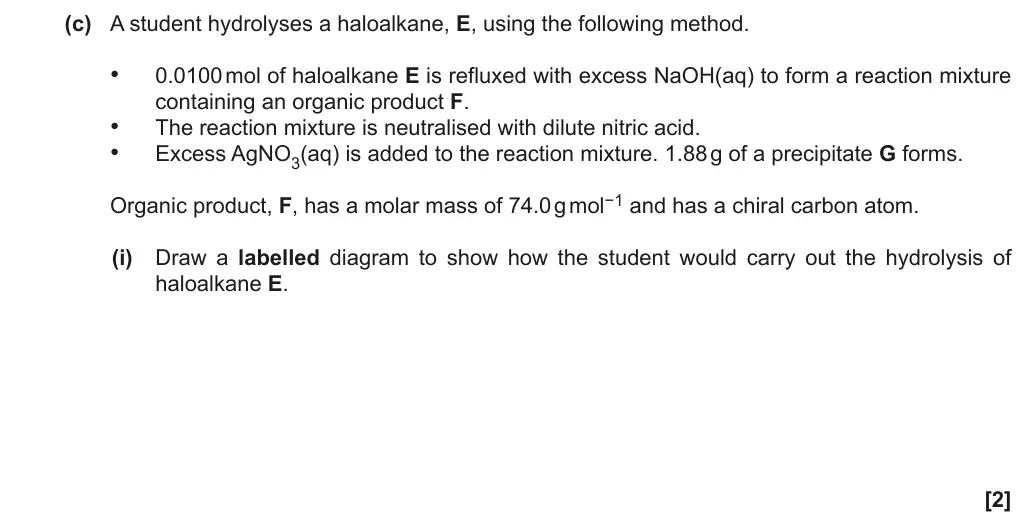
Most candidates were able to draw a suitable diagram to show the apparatus required for reflux but some included a stopper on top of the condenser. Many of the diagrams were labelled appropriately but common errors included incorrect direction of water flow or omission of the ‘flask’ label. A small but significant proportion of candidates drew a diagram showing distillation.
Skills: PAG5 Synthesis of an organic liquid
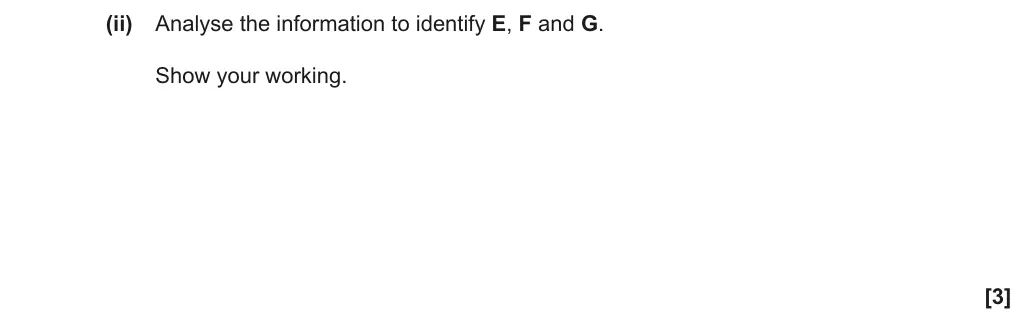
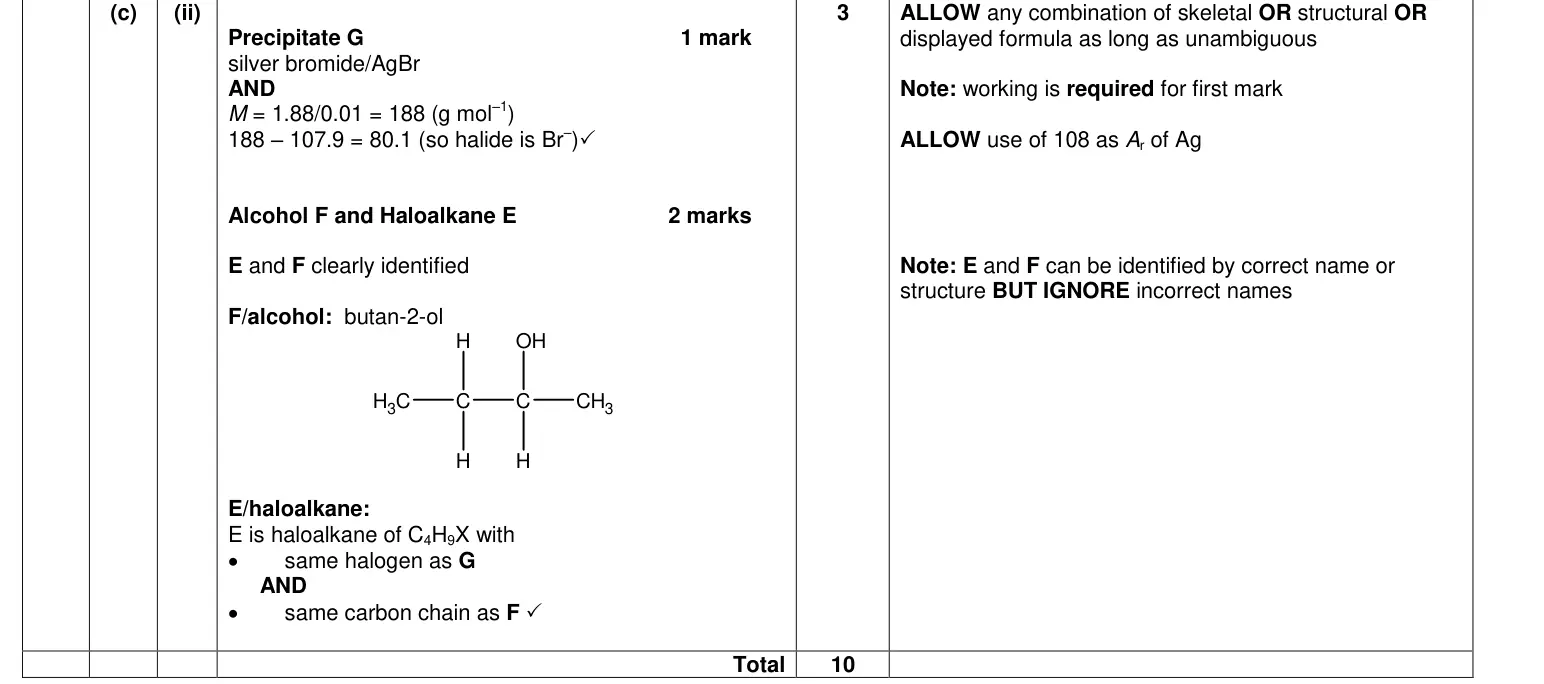
This question, requiring candidates to analyse the information to identify compounds E, F and G, discriminated well. Many candidates deduced that G was a silver halide but not all provided working to back up their choice of AgBr. Some candidates appeared to guess and AgCl was commonly seen. Some candidates used the molar mass of F provided to deduce the molecular formula of C4H10O but lower ability responses did not process this further. Higher ability candidates identified F as butan-2-ol, showing the chiral carbon clearly. Other alcohols were also seen including butan-1-ol and methylpropan- 2-ol. The highest ability candidates linked all the information and provided a structure for E that was consistent with their suggestions for F and G.
Skills: M0.2 Use ratios, fractions and percentages; M2.2 Change the subject of an equation
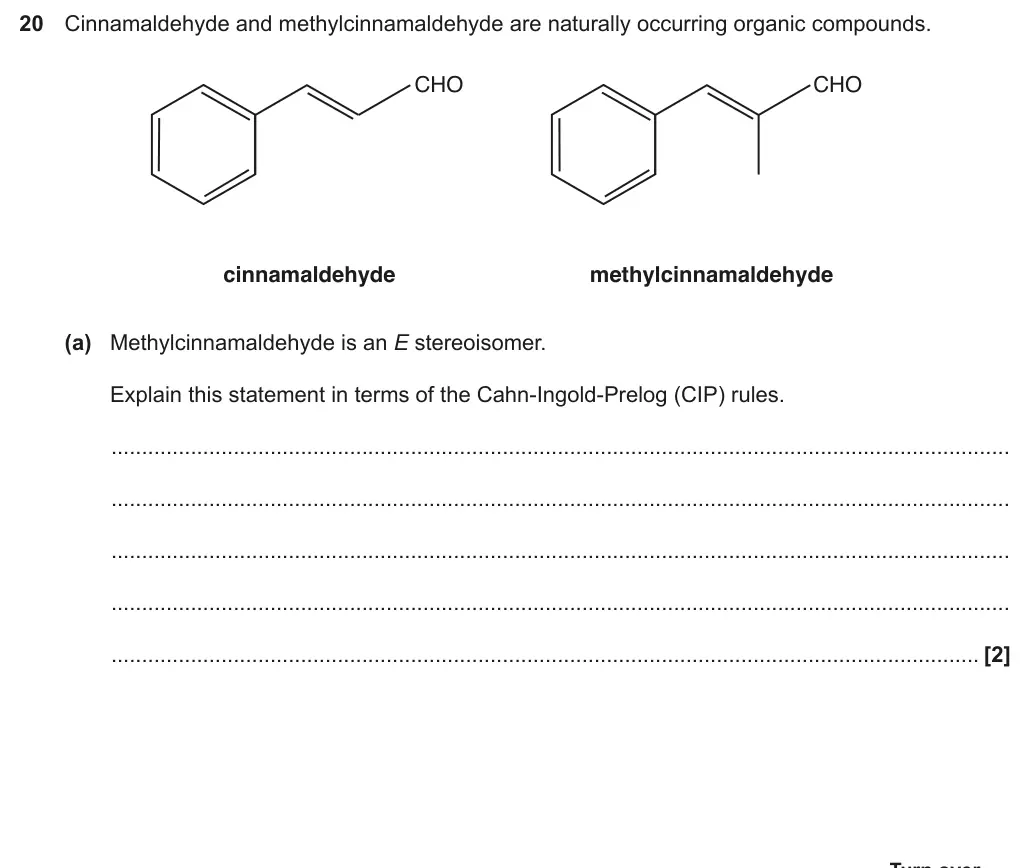
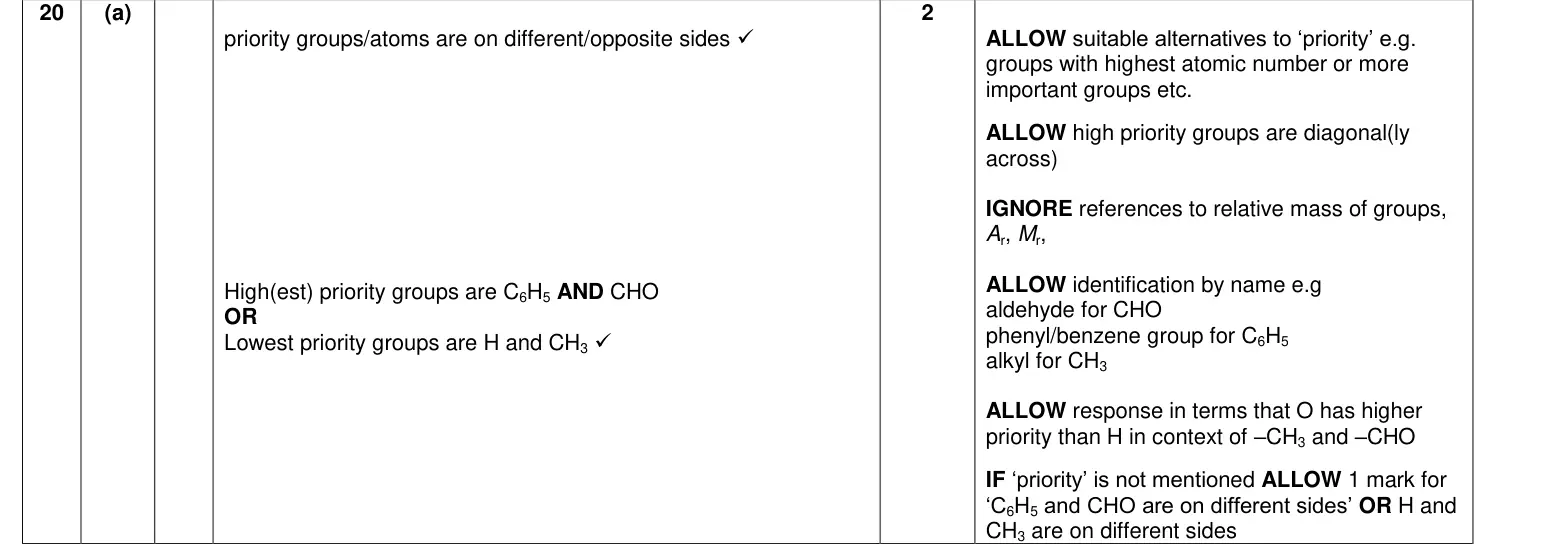
Many candidates explained that methylcinnamaldehyde is an E isomer as the highest priority groups are on opposite sides, but only the highest ability candidates applied the CIP rules to identify the highest priority groups as C6H5 and CHO. A common misconception was to refer to the molecular mass of the groups instead of priority as in Exemplar 7. This response uses the mass of the benzene and CHO groups to attempt to justify their priority. This was ignored by the mark scheme as the CIP rules use atomic number to determine the highest priority groups. However, this response does clearly communicate that these two groups are on different sides of the carbon-carbon double bond so scored one mark.
Skills: M4.2 Visualise and represent 2-D and 3-D forms including 2-D representations of 3-D objects; M4.3 Understand the symmetry of 2-D and 3-D shapes
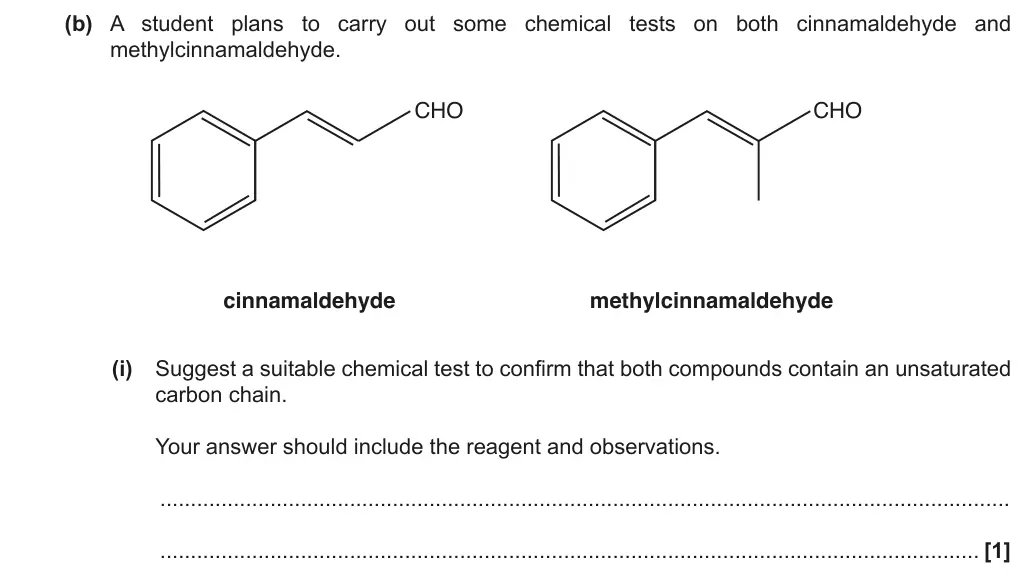
Almost all candidates were able to correctly describe the use of bromine as a test for an unsaturated chain.
Skills: PAG7 Qualitative analysis of organic functional groups

Almost all candidates were able to correctly describe the use of Tollens’ reagent as a test for an aldehyde functional group.
Skills: PAG7 Qualitative analysis of organic functional groups

The use of 2,4-dinitrophenylhydrazine as a test for the carbonyl group is well known by candidates at this level. The majority of the cohort correctly identified this test and the subsequent analysis of the melting point of the products as a method of identifying each compound. Lower ability candidate responses made reference to analysis of the boiling points of the cinnamaldehyde and methylcinnamaldehyde as a means of identification.
Skills: PAG6 Synthesis of an organic solid; PAG7 Qualitative analysis of organic functional groups
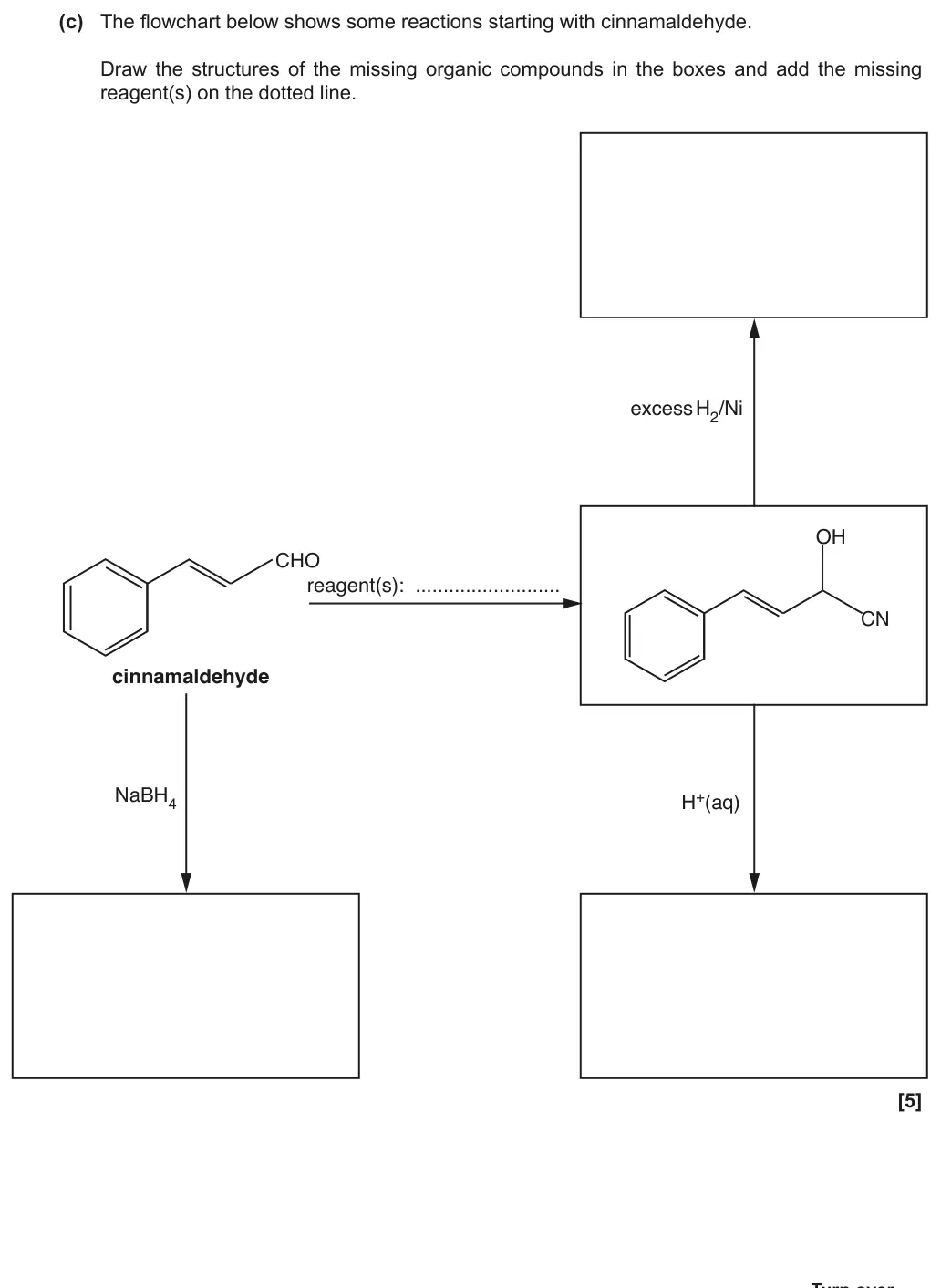
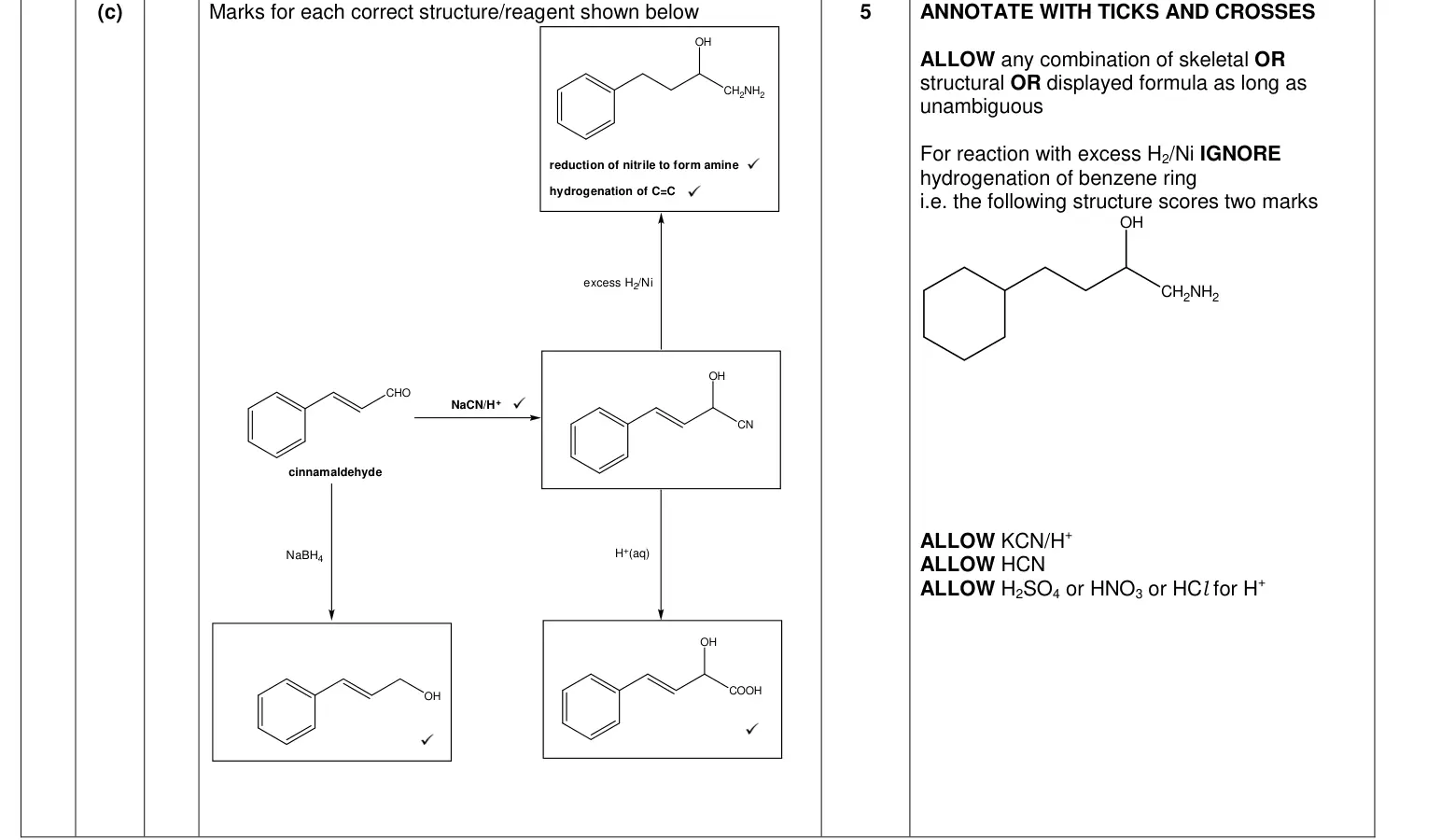
This question proved difficult and although the majority of candidates scored in some parts, only the very best responses secured all five marks. More detailed feedback is discussed with Exemplar 8. Cinnamaldehyde was the starting point for this flowchart of reactions. The most frequently scored mark was correct identification of the reagents required for the formation of the hydroxynitrile. This response uses NaCN/H+. Other candidates used HCN which was also acceptable. The flowchart shows two different reactions of this hydroxynitrile. The first is the reaction with excess hydrogen in the presence of Ni. Most candidates scored one mark for their product. As in this exemplar, the double bond was often reacted to form a saturated chain. Some candidates identified that the CN group would also react but instead of writing CH2NH2 they replaced the CN group with just NH2, effectivity removing a carbon atom from the chain. The second reaction of the hydroxynitrile is acid hydrolysis of the CN group. This response identifies the correct carboxylic acid. However, this reaction seemed unfamiliar to many candidates and a range of incorrect responses were frequently seen. The final reaction is the reduction of cinnamaldehyde with NaBH4. Many candidates recognised this reaction, but as can be seen in this response the alcohol group is shown on the incorrect carbon atom. This was a common error. Candidates are advised to number carbon atoms present if provided with a complex structure, such as cinnamaldehyde. Numbering will ensure that each carbon is considered when drawing reaction products and would minimise errors, such as those demonstrated in the reduction product.
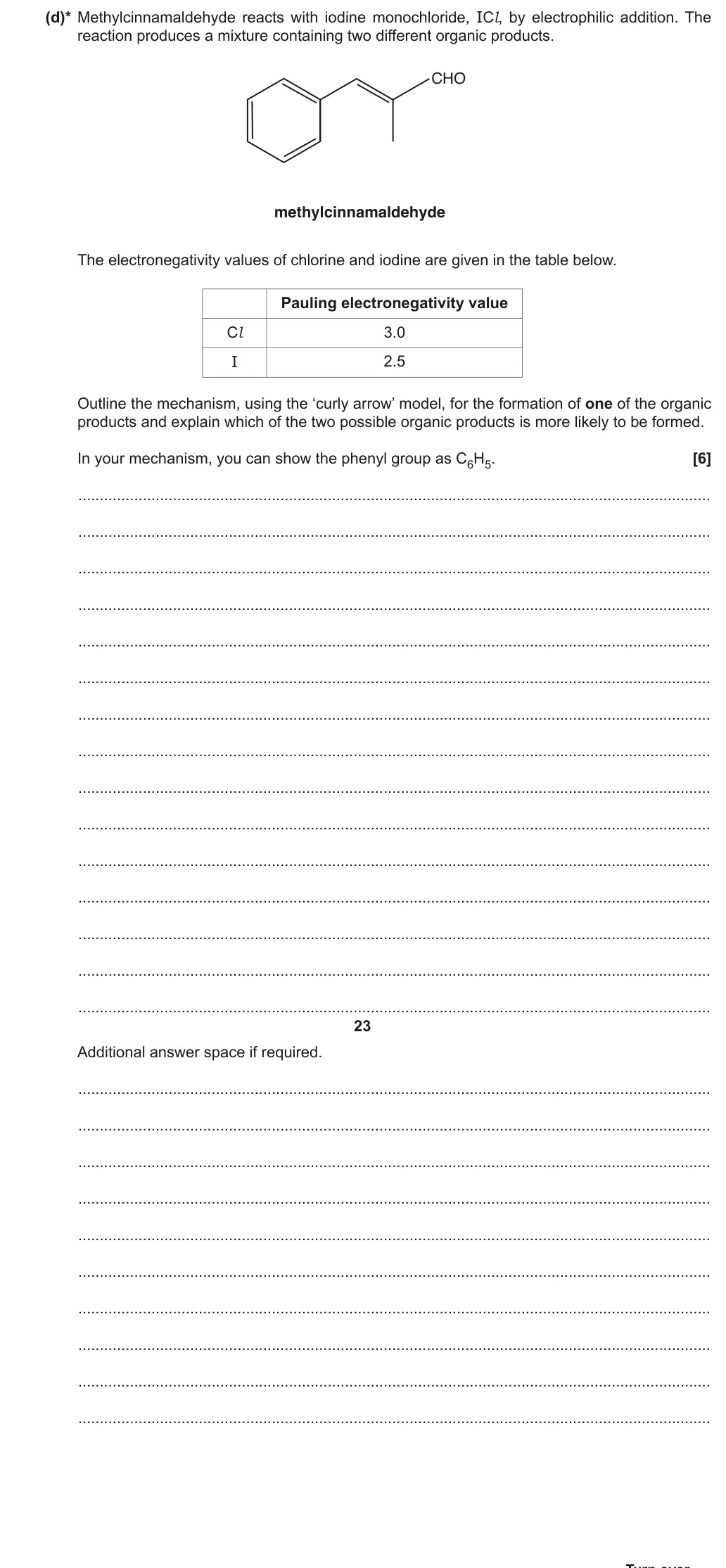
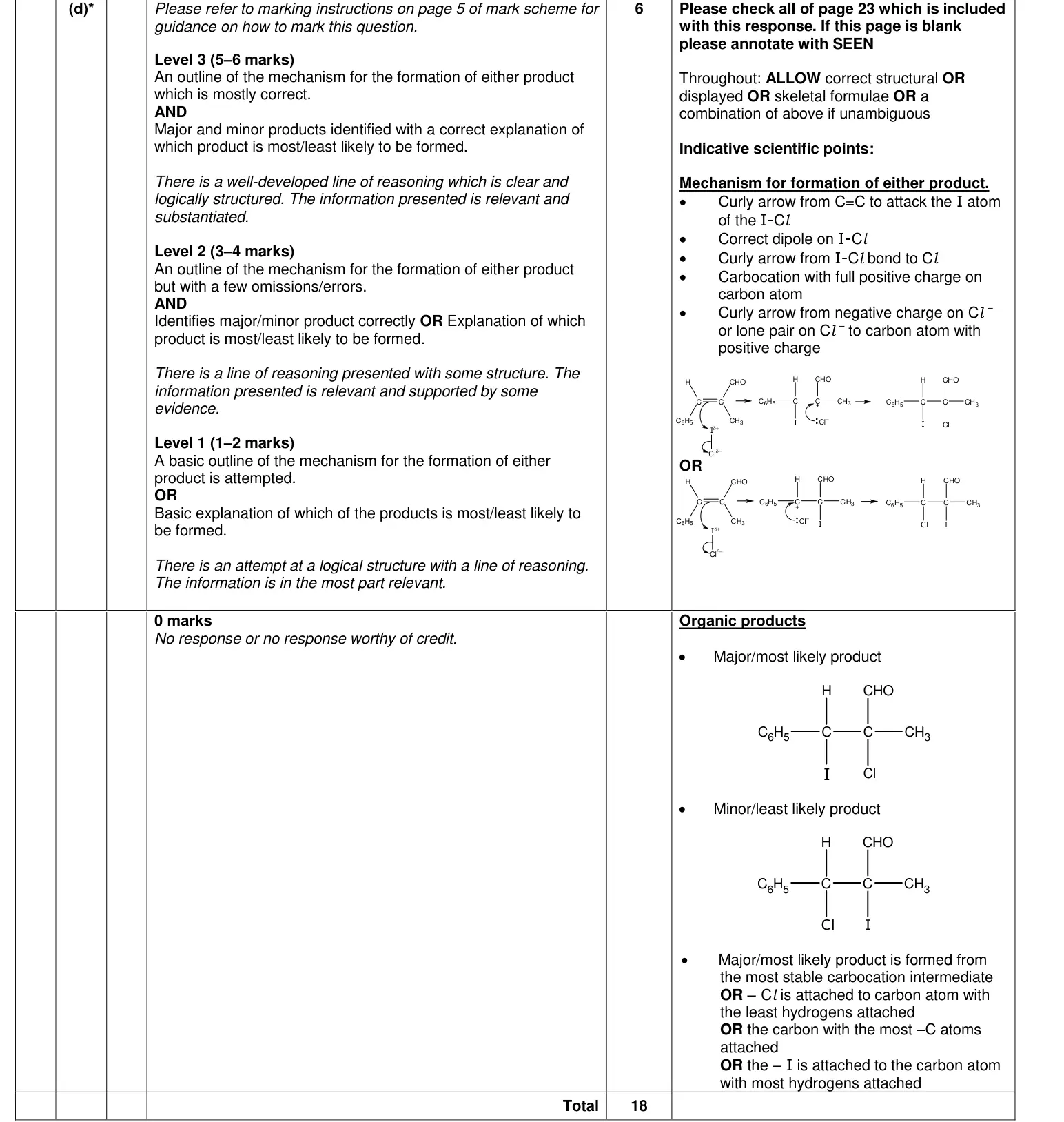
This question was marked using a level of response mark scheme. Most candidates gave an answer worthy of at least level two (3-4 marks) by providing a suitable mechanism and identifying the major product. The strongest candidates identified both products and were able to describe which was most likely. Such responses received level 3 (5-6 marks) as shown in Exemplar 9. Lower ability candidate responses seemed to ignore the reference to electrophilic addition in the question and tried reacting ICl with either the benzene ring or the aldehyde group. This response starts with a clear outline of the electrophilic addition mechanism showing correct partial charges and accurately drawn curly arrows. The structures of the two possible organic products are shown and the most likely product to be formed is identified correctly. Notice that the candidate has labelled these structures as ‘Product A’ and ‘Product B’ and refers to the labels later in the response. This is a good strategy, which enables the candidate to provide a clear and easy to follow answer. The response concludes with a detailed explanation, referring to carbocation stability to justify why product A is most likely to be formed. This response therefore satisfies the Level 3 criteria. The response is logically structured with a well-developed line of reasoning and was therefore credited the upper mark within the level and achieved six marks.
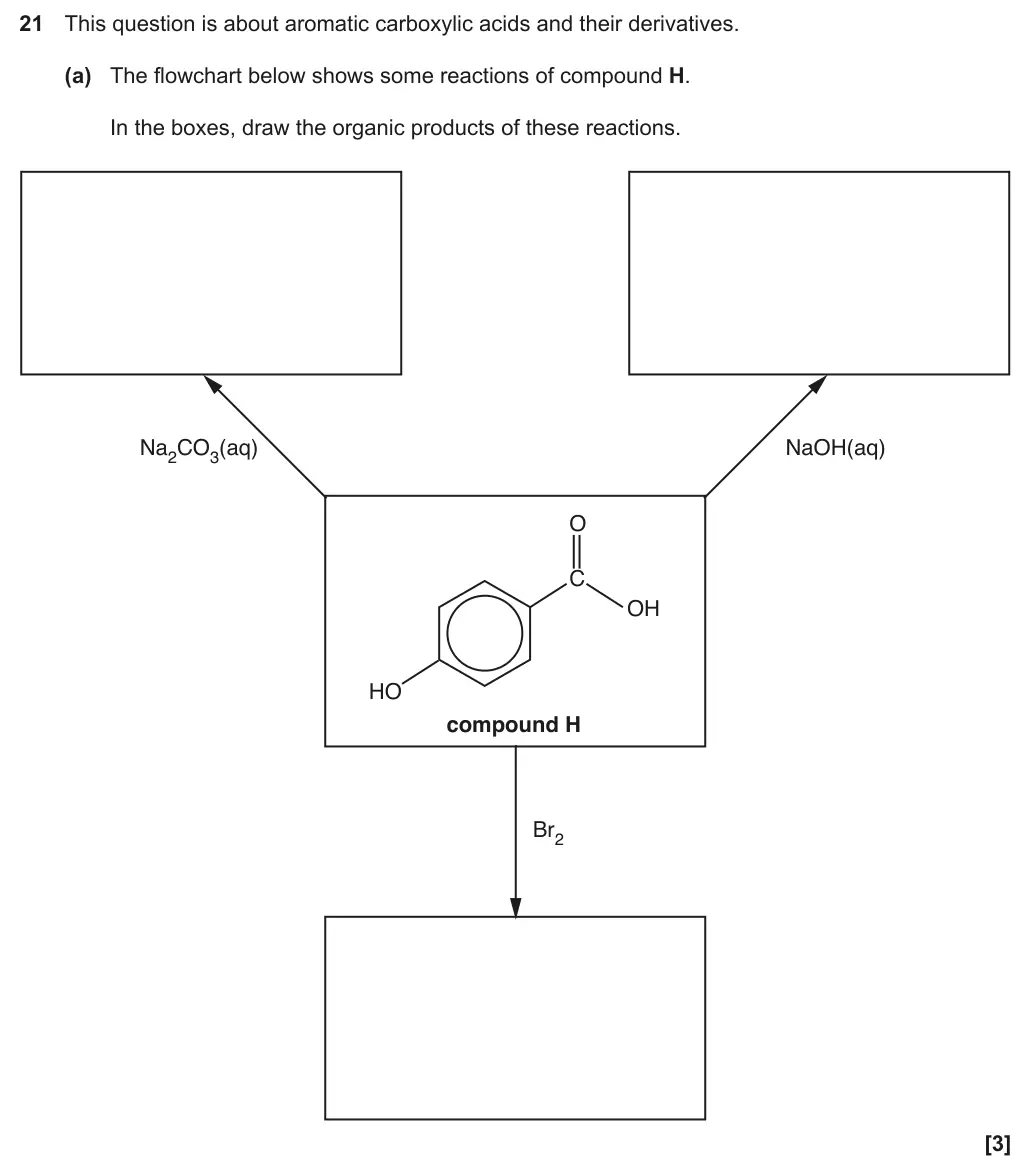
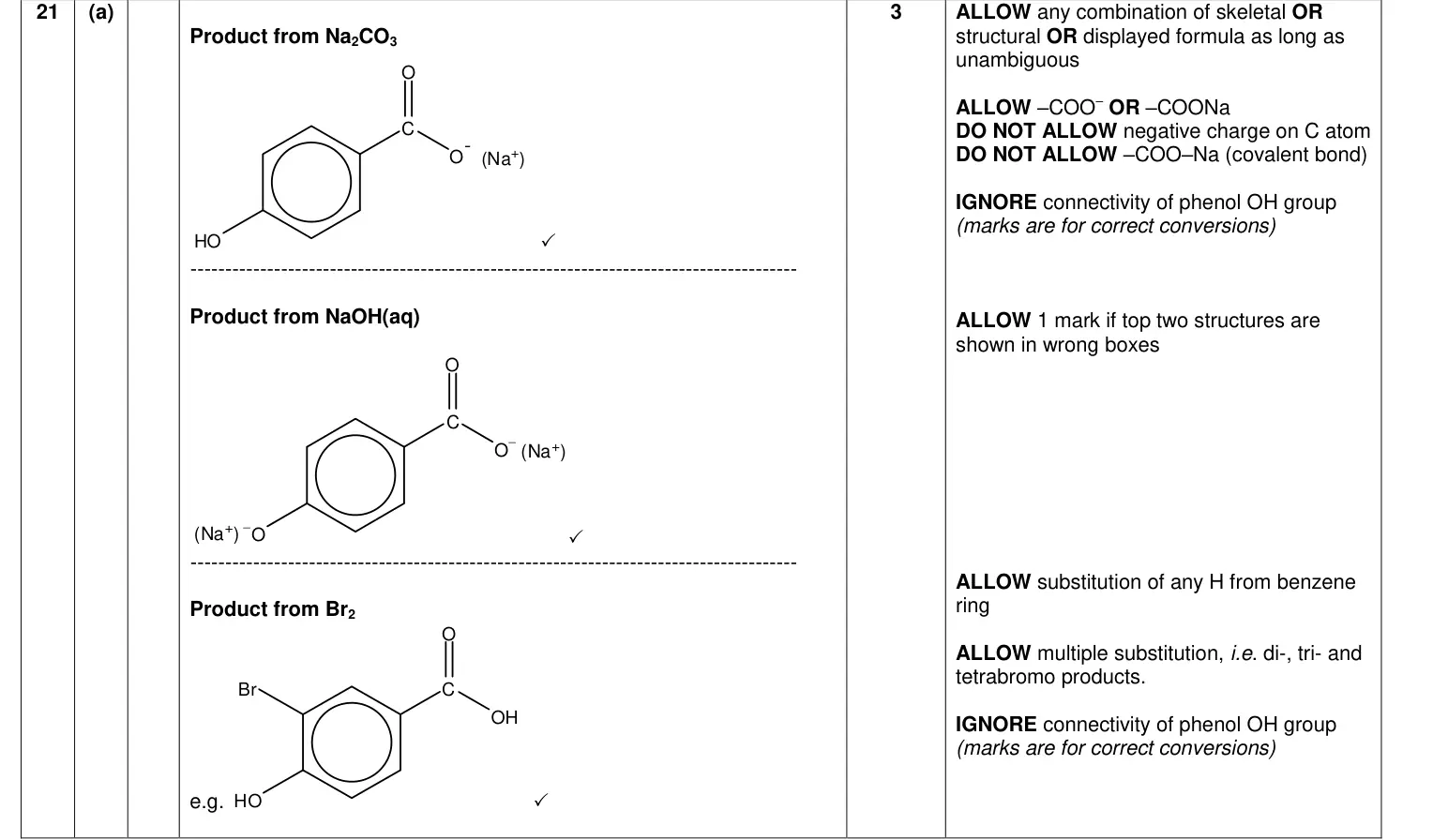
This question assessed different reactions of compound H, 4-hydroxybenzoic acid, and discriminated well. Two of the reactions focused on acid-base chemistry, using the reagents Na2CO3 and NaOH. Many candidates recognised that the carboxylic acid group would react in both cases but only some managed to identify when the phenol group was involved correctly. A number of responses suggested that a phenoxide ion was formed with sodium carbonate but not with sodium hydroxide. The third reaction was substitution with bromine. This reaction appeared more familiar to all candidates with the majority scoring this mark. A small proportion of candidates substituted the phenol OH group or carboxylic acid group.
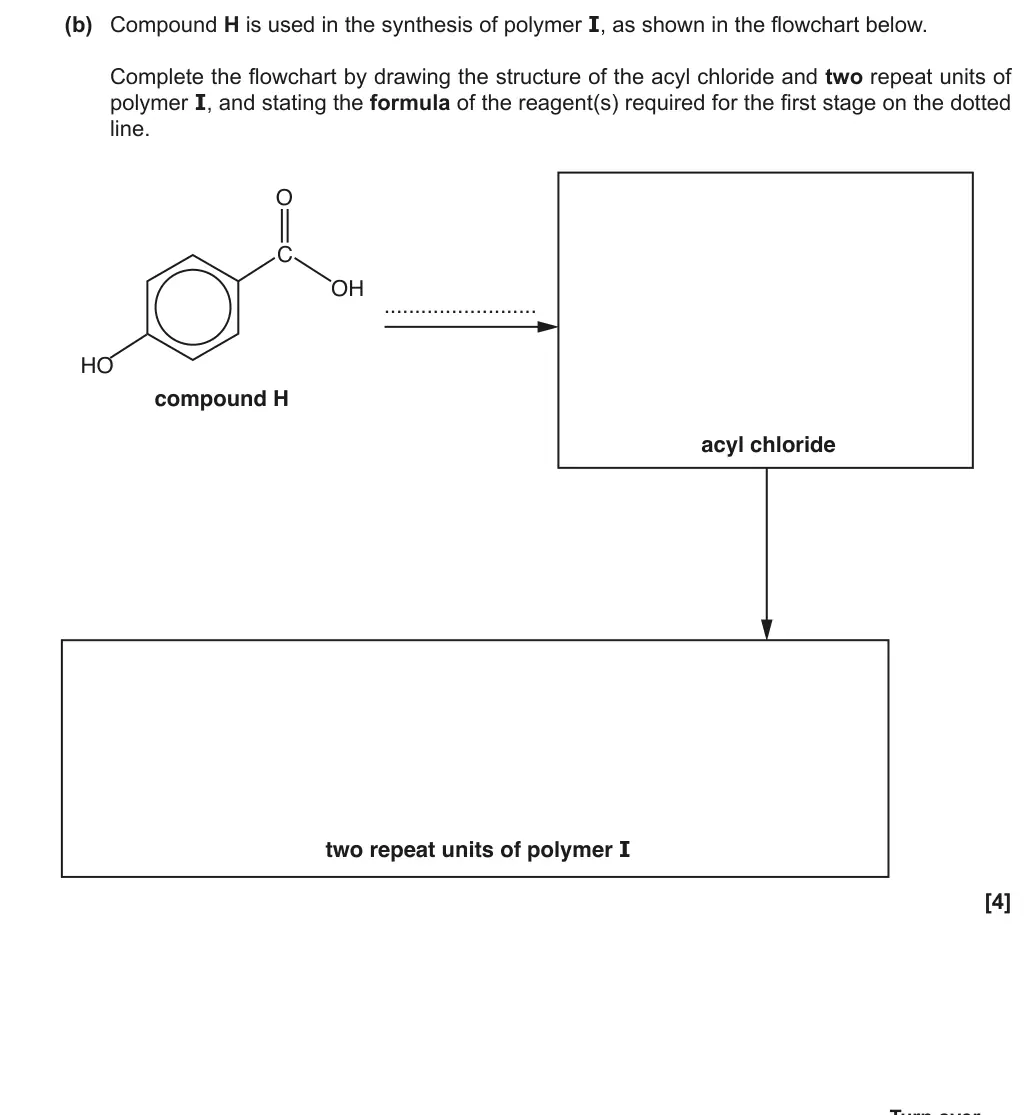
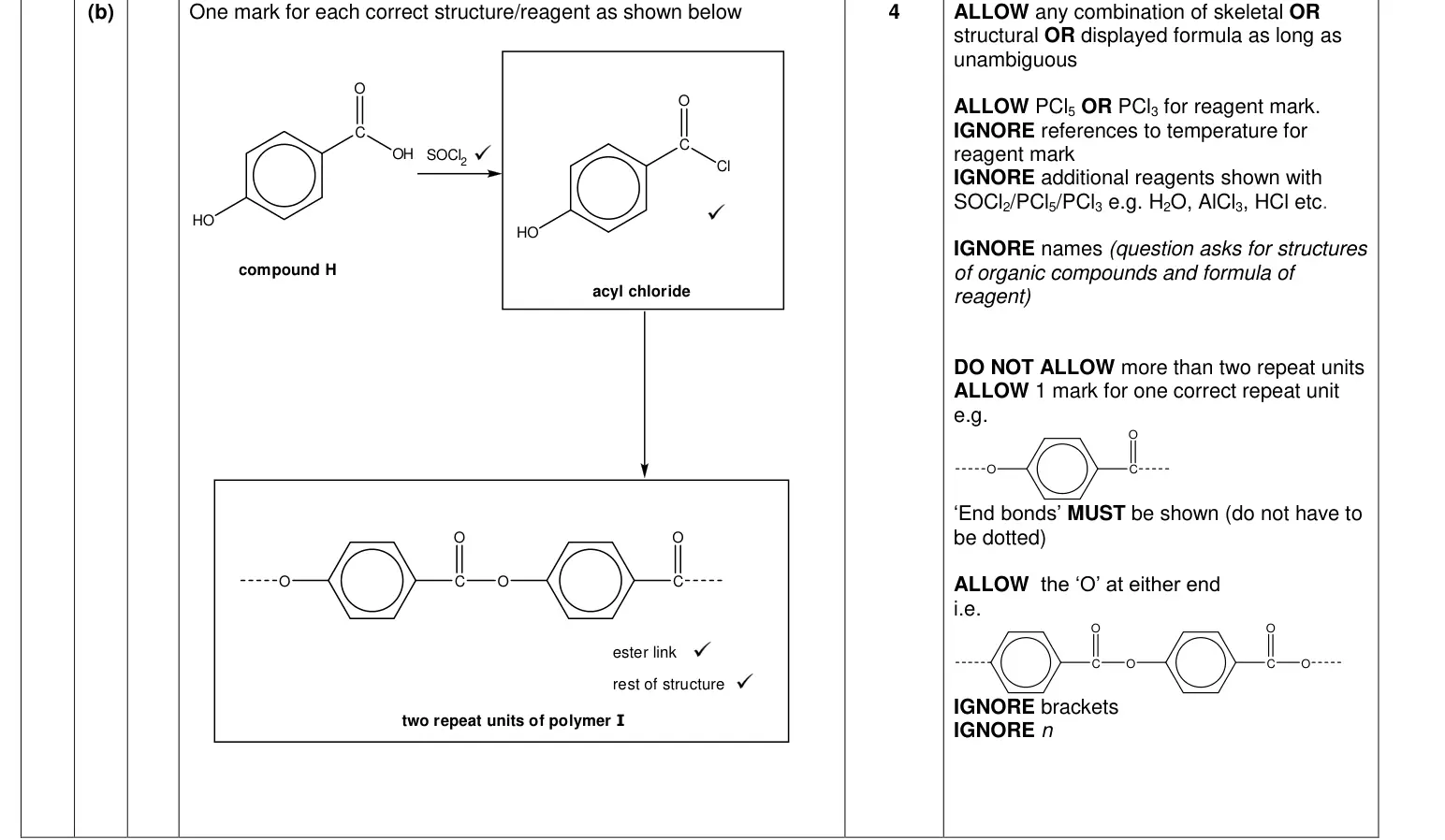
Compound H was also the focus for this question. Most candidates were able to provide the structure of the acyl chloride obtained from H but only some identified SOCl2 as the correct reagent. Common incorrect reagents included HCl and AlCl3. Most candidates recognised that polymer I was a polyester but only some were able to draw two repeat units correctly. Candidates are advised to practice drawing different polymers, taking care to ensure the correct number of repeat units are present when a specific number is required.
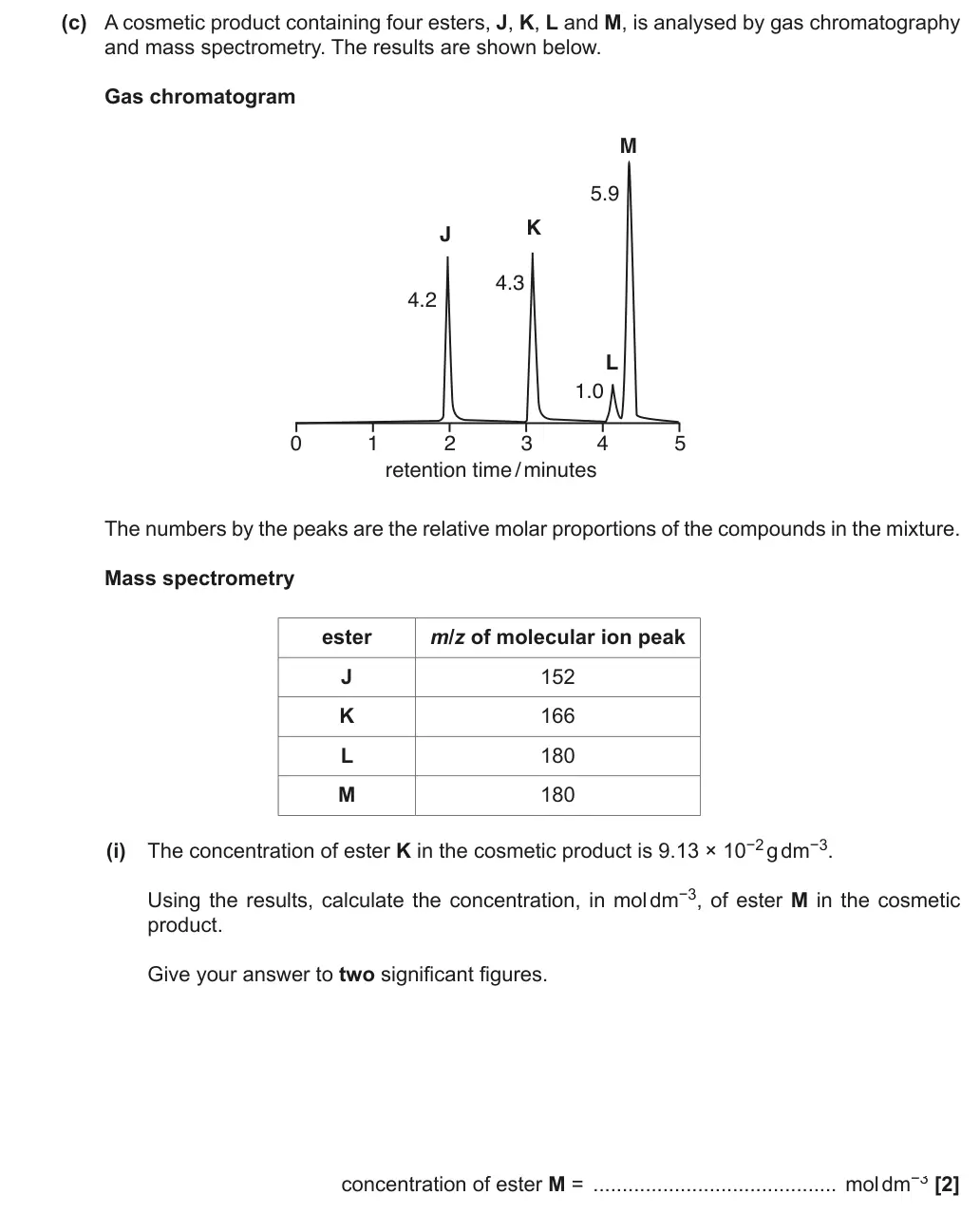
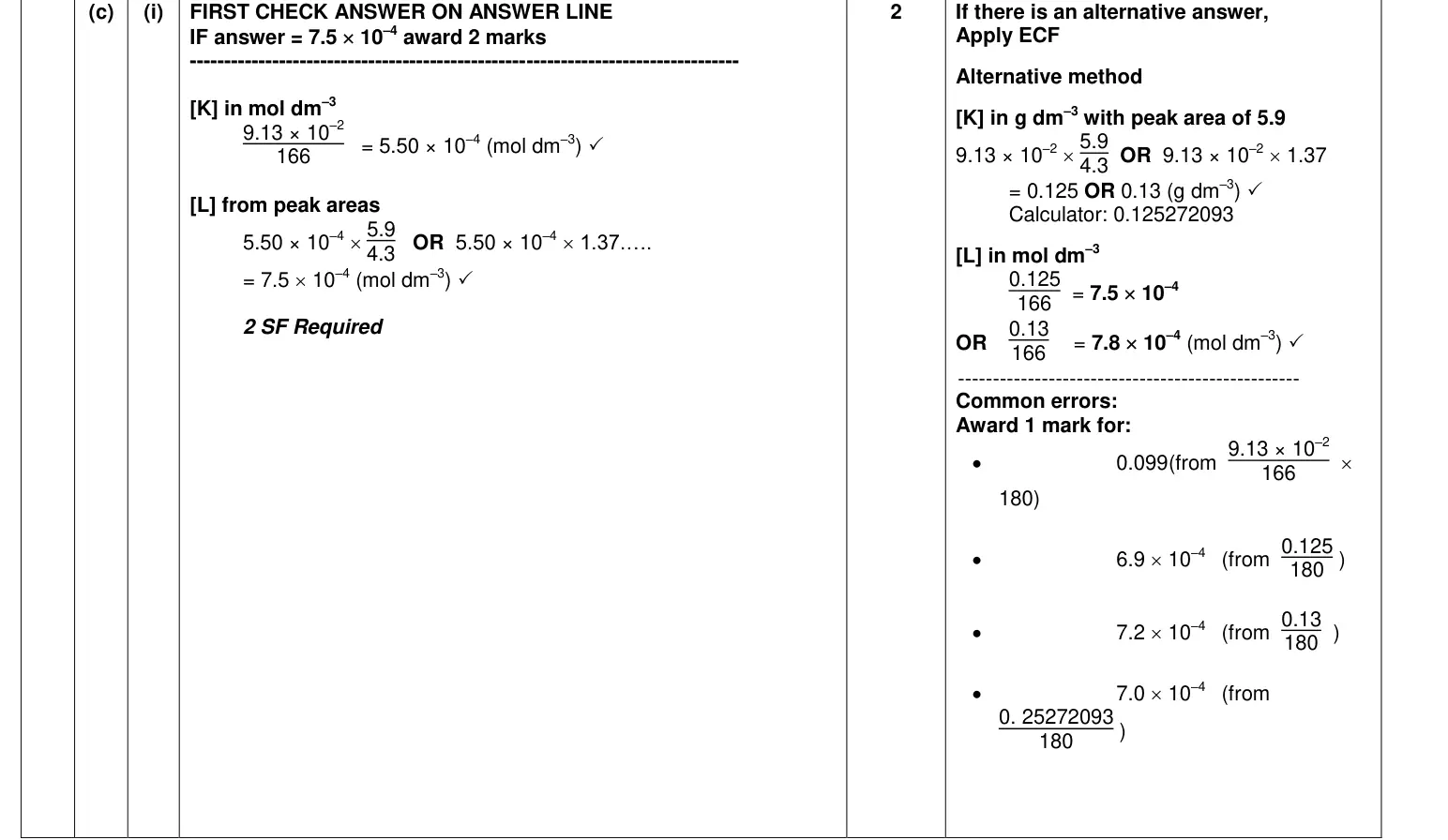
This question required candidates to apply their knowledge of gas chromatography and the mole to solve this problem. Most candidates recognised the need to use the relative peak areas to determine the relative proportion of M. Many also realised that division by the molar mass was required to ensure the final answer was given in mol dm–3. However, some used molar mass of M rather than K in this step, leading to an answer of 7.0 × 10⁻⁴ mol dm–3. Answer = 7.5 × 10⁻⁴ mol dm–3
Skills: M0.2 Use ratios, fractions and percentages; M1.1 Use an appropriate number of significant figures; M3.1 Translate information between graphical, numerical and algebraic forms
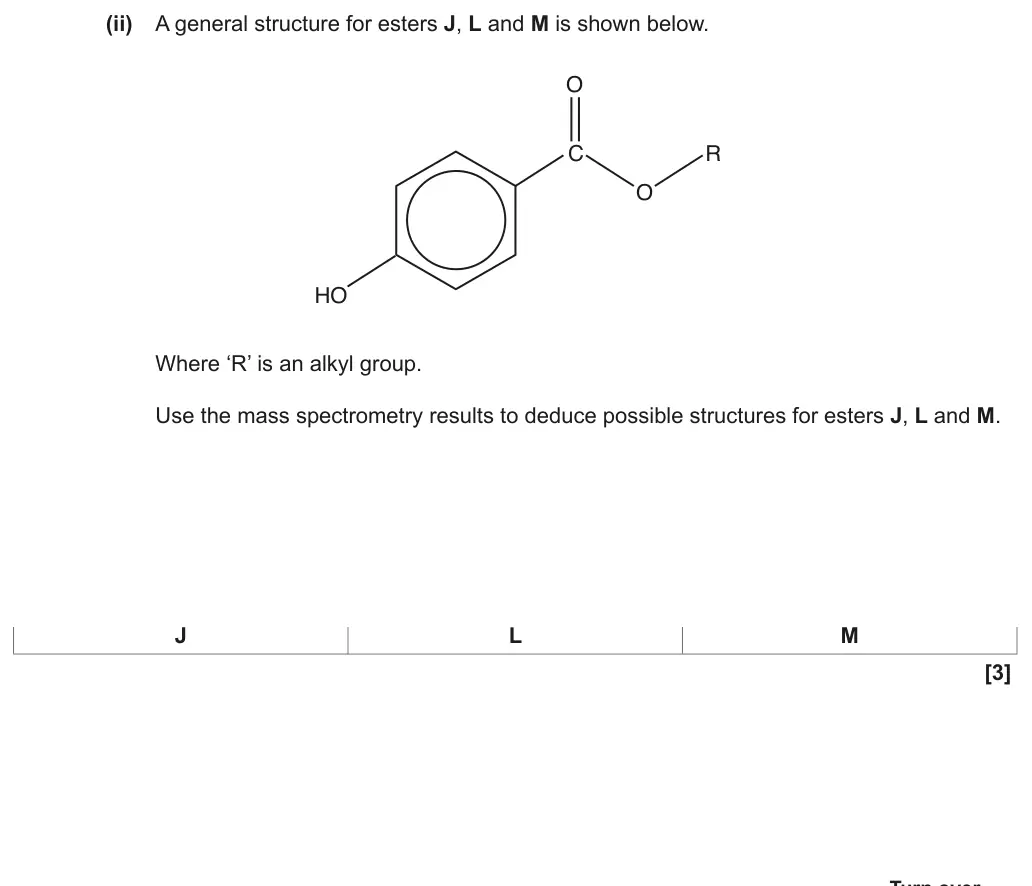
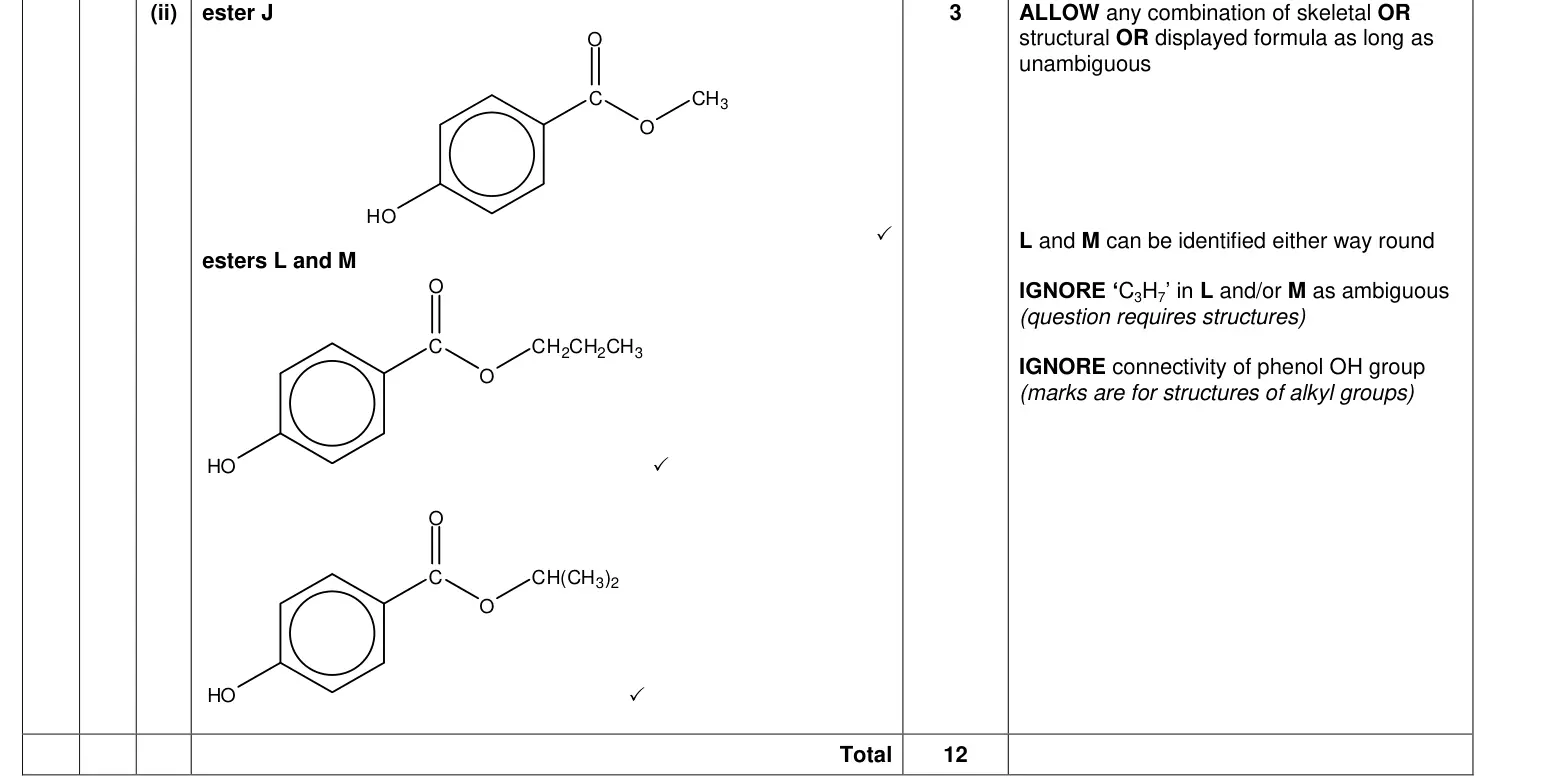
Examiners were encouraged by the number of good responses to this problem solving question. Most candidates achieved at least one mark in this part, often from a correct structure of J. Although many candidates deduced that the R group for both L and M consisted of 3 C atoms and 7 H atoms, only the highest ability candidates were able to join these correctly. A small but significant number of responses showed R groups that involved O atoms, despite the prompt that the R represented an alkyl group. Candidates are advised to read questions carefully.
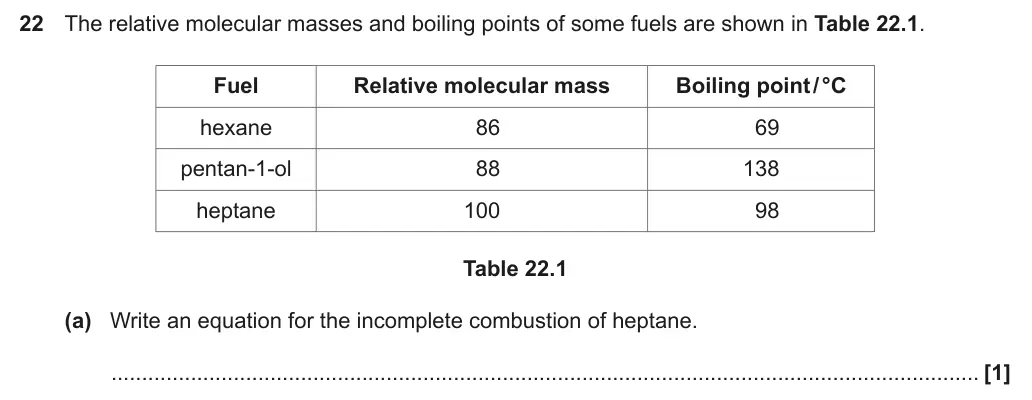
The majority of candidates were able to provide a correct equation for the incomplete combustion of heptane.
Skills: M0.2 Use ratios, fractions and percentages
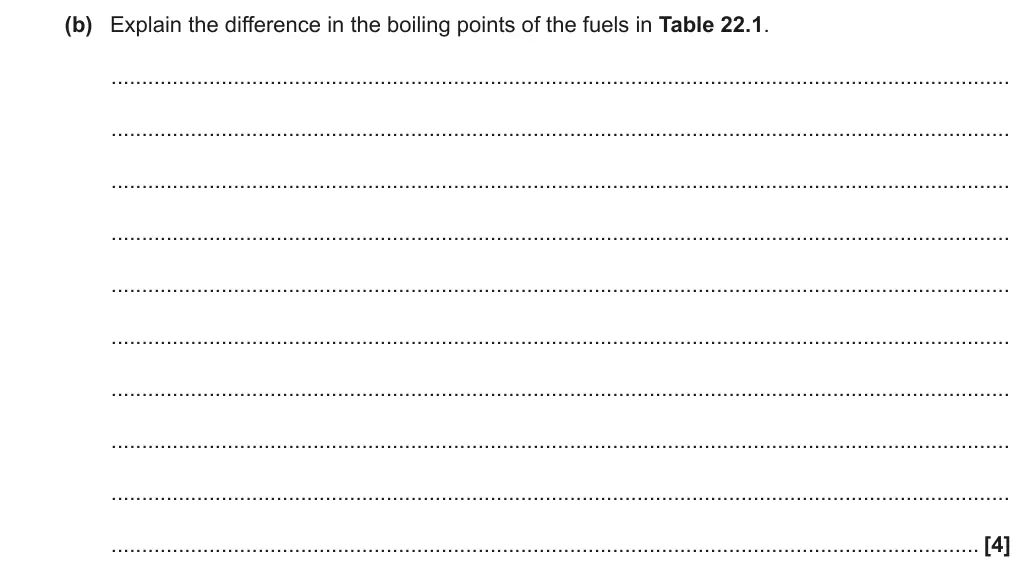
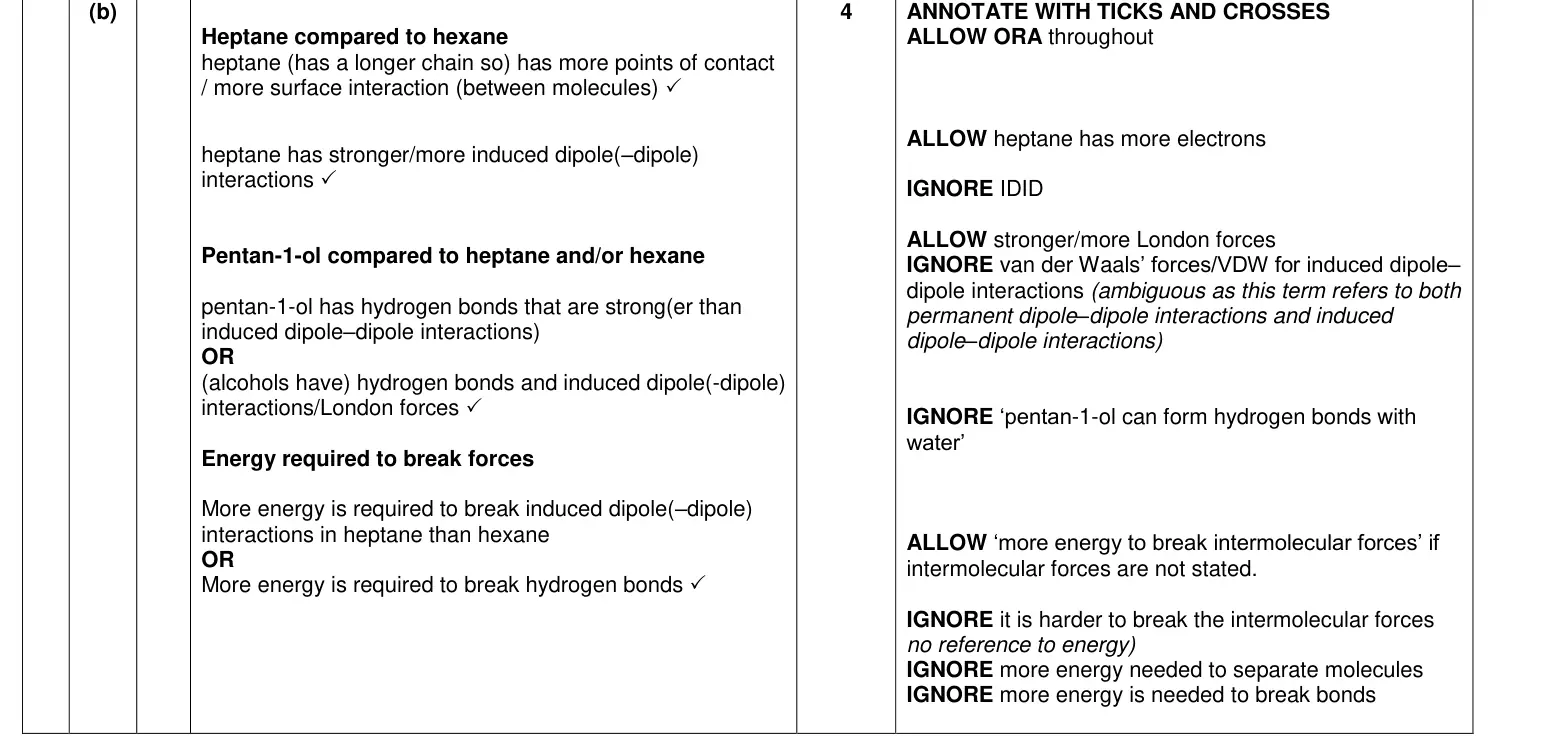
This question was answered well with most candidates scoring three or four marks. Examiners were impressed by the number of responses that accurately referred to induced dipole-dipole interactions or London forces rather than van der Waals’ forces, which is ambiguous. Some responses lacked detail, as demonstrated in Exemplar 10. This response attributes the higher boiling point of pentan-1-ol to the amount energy required to break hydrogen bonds. However, it does not refer the relative strength of this type of interaction. Consequently, the first paragraph only scores marking point four and not marking point three. The higher boiling point of heptane compared to hexane is explained by a correct comparison of the induced dipole-dipole interactions present in these compounds, so marking point two was achieved. However, the justification for the difference in intermolecular forces lacks precision. Candidates should be encouraged to focus on surface contact or surface interaction between molecules rather than referring to surface area alone.
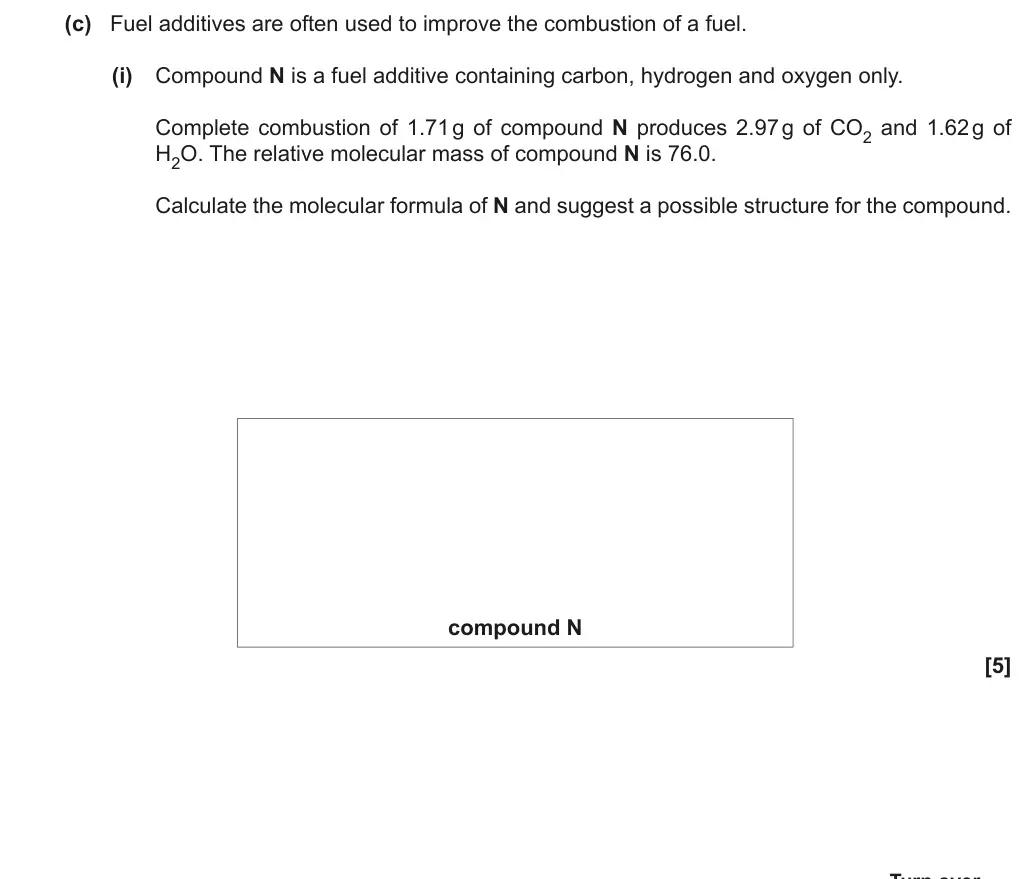
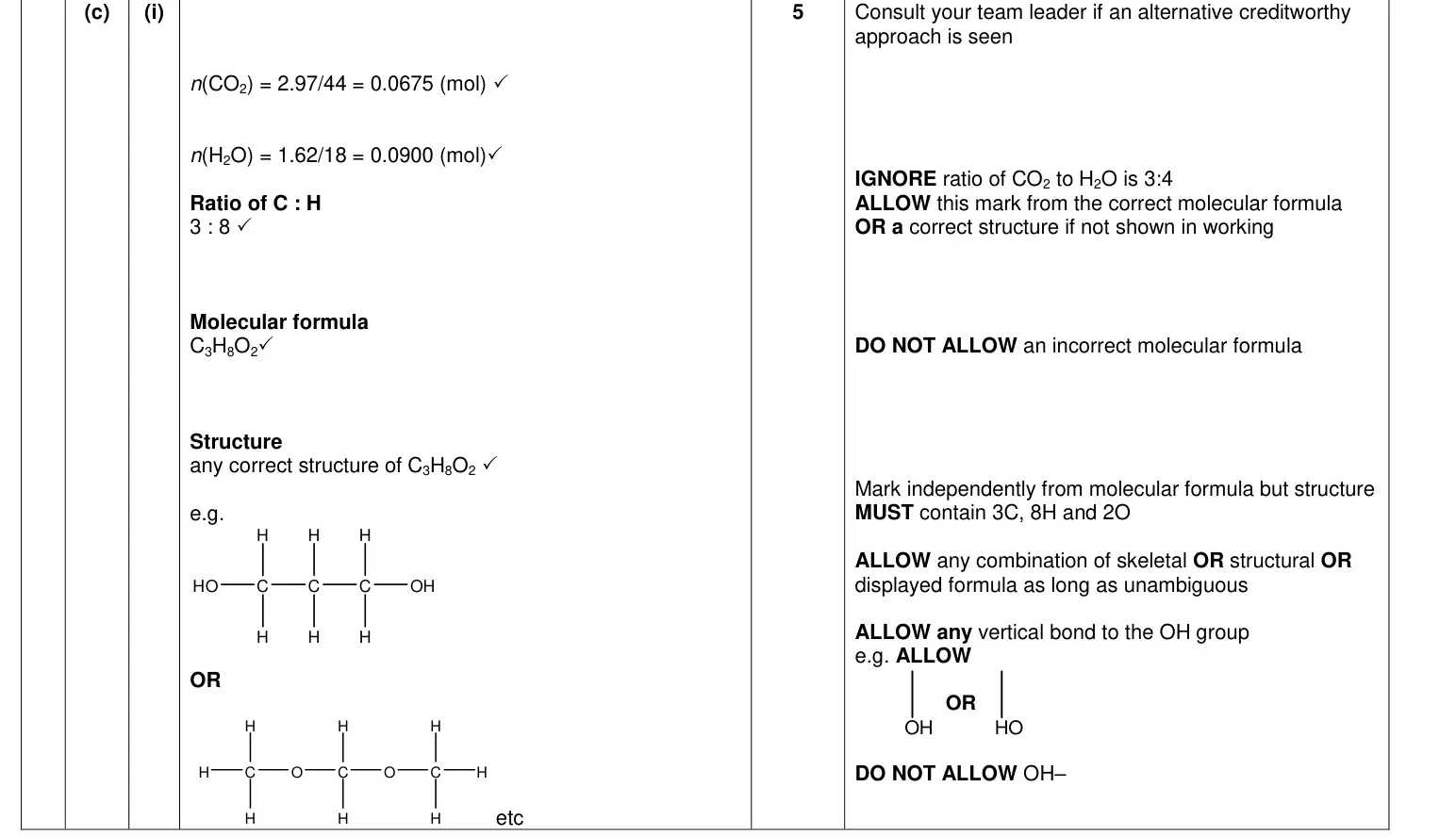
The majority of candidates approached this problem by initially calculating the number of moles of CO2 and H2O produced. Many candidates were able to process these amounts to deduce the molecular formula for N, as shown in Exemplar 11. Alternate approaches were seen, but with much less frequency. This response is logically presented with clear working demonstrating the candidate’s approach. In the first part the candidate determines the amount, in moles, of carbon dioxide and water produced. This response uses the number of moles of N to deuce the molar ratio of CO2 to H2O. Other candidates obtained this by dividing the moles of carbon dioxide by the moles of water. The candidate uses a balanced equation to deduce the molar ratio of C to H in N; this is an excellent strategy that is worth highlighting to future candidates. The working on the right hand side shows how the amount of O in compound N is determined. It is a shame that the structure suggested has one H atom missing, as this omission has prevented full marks from being credited. Candidates are encouraged to check structures carefully to ensure that all atoms are drawn with the correct number of bonds.
Skills: M0.2 Use ratios, fractions and percentages; M2.2 Change the subject of an equation
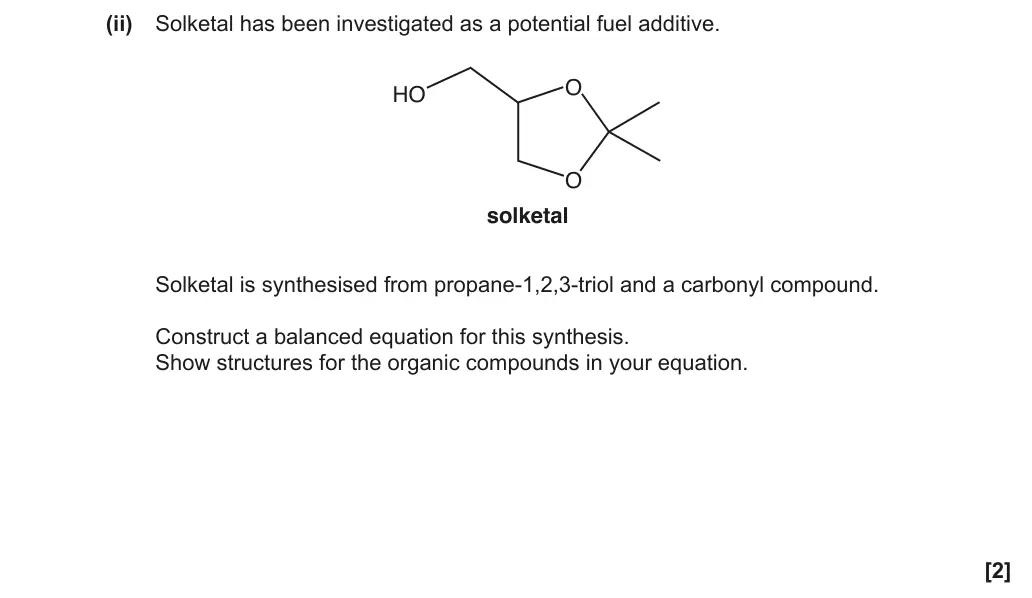
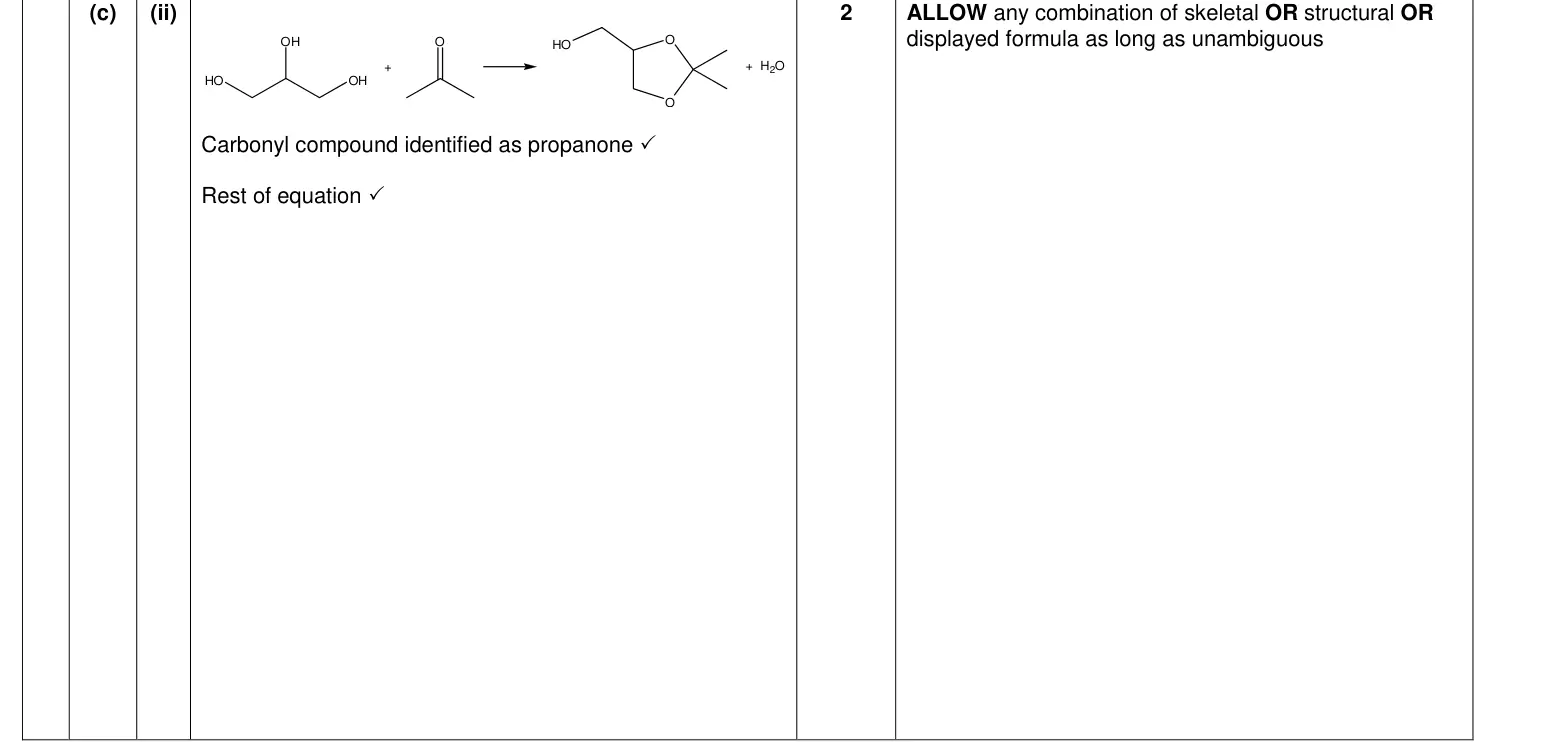
Many candidates found this demanding question very difficult. Some were able to deduce that propanone was the carbonyl compound in the reaction. Only the most able recognised that water was a by-product of this reaction.
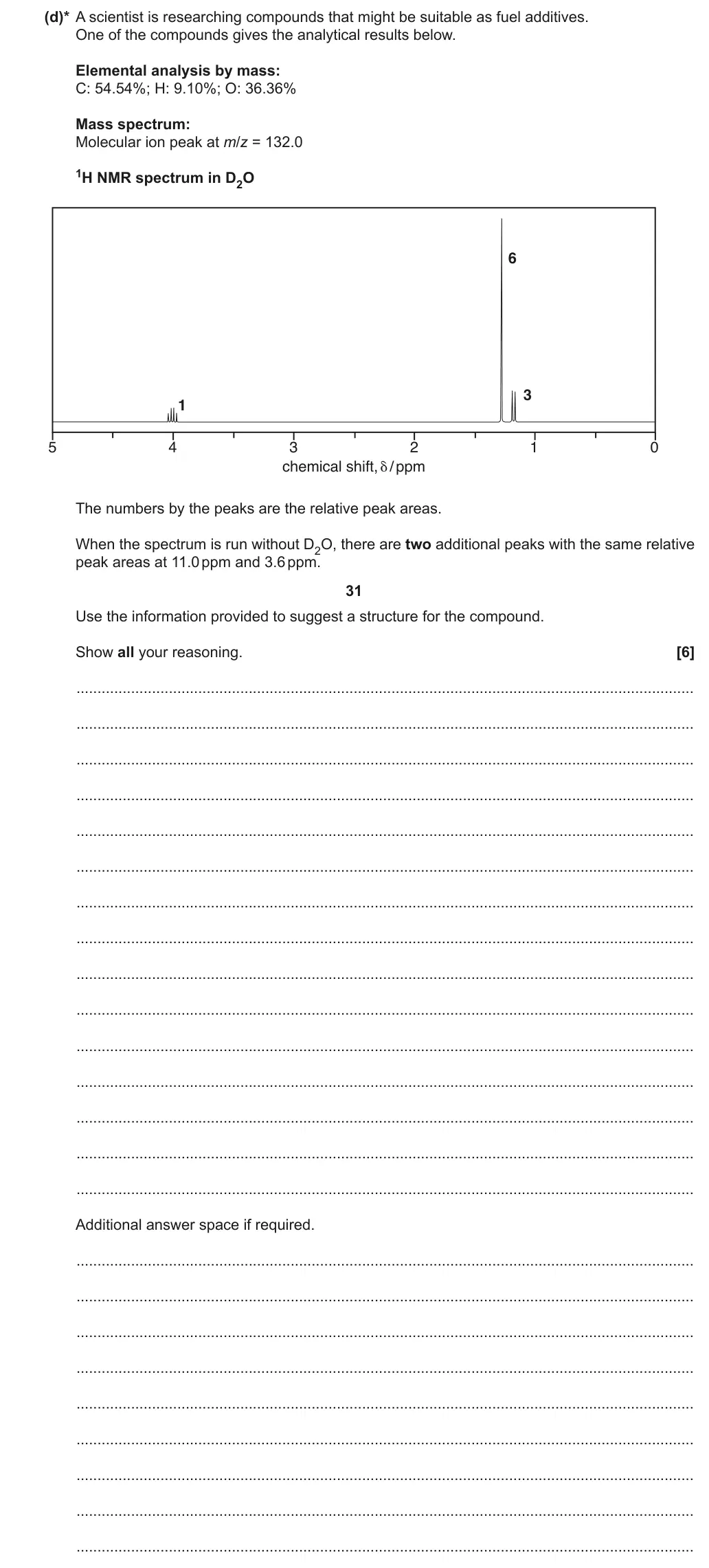
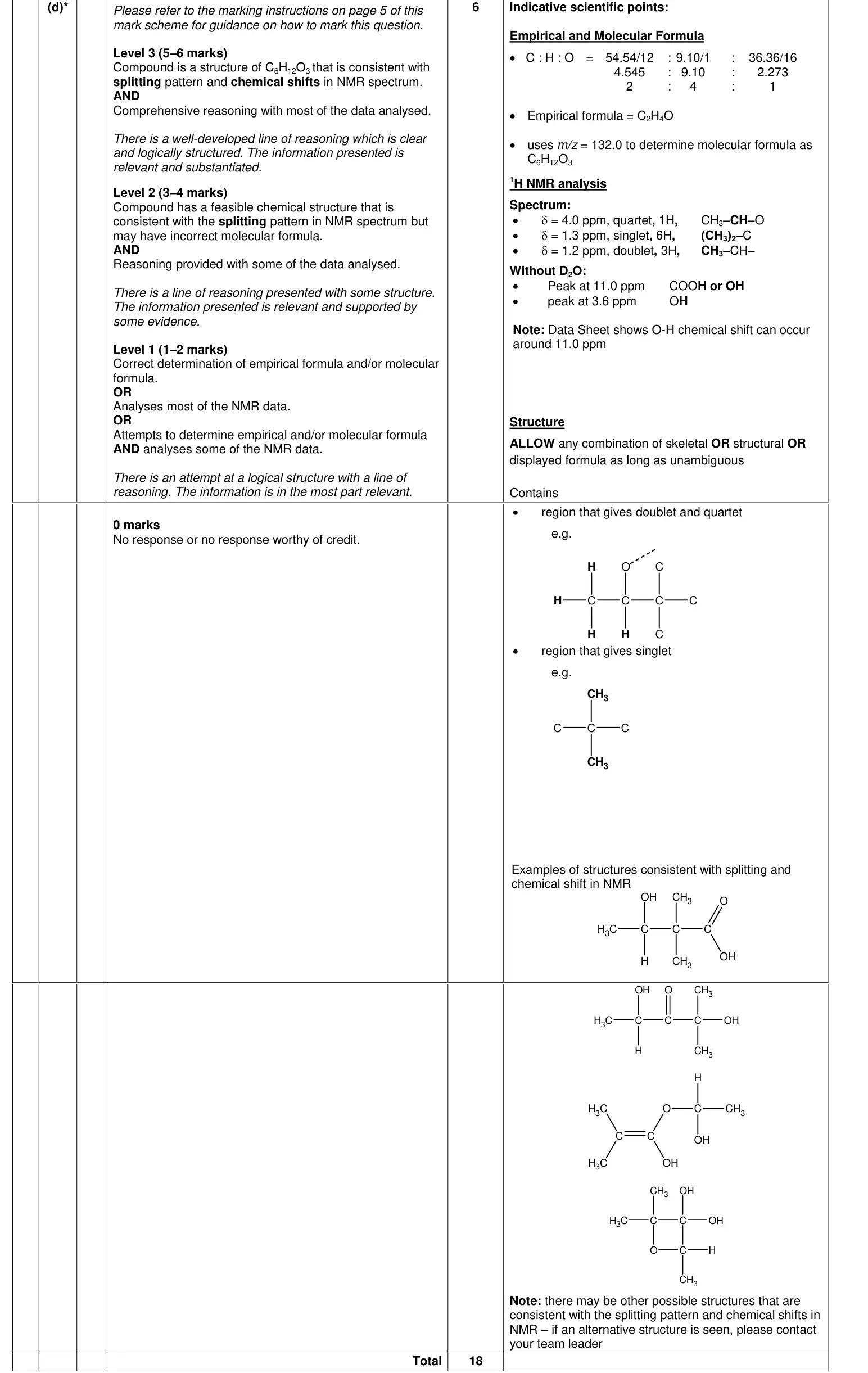
Most candidates were able to determine the empirical and molecular formula of the unknown compound. A number of excellent and clear response were seen, where the NMR data was explained, including interpretation of the additional peaks observed without D2O. However many candidates were unable to suggest a structure that matched their NMR interpretation. Some candidates used the quartet, doublet and singlet to suggest a structure that would give rise to this splitting pattern, but which was not consistent with the chemical shifts, see Exemplar 12. Such responses received a level 2 mark (3-4). Stronger responses were able to use all the data to suggest a correct structure. The most common was CH3CH(OH)C(CH3)2COOH although other viable structures, including CH3CH(OH)COC(CH3)2OH, were also seen. Examiners were impressed with the problem solving ability shown by candidates and a significant proportion of responses were credited six marks. This logically presented Level 2 response uses the elemental analysis and mass spectrum data to determine the correct empirical and molecular formula of the unknown compound. The peaks in the NMR spectrum are analysed in detail, with a clear explanation of the splitting patterns. A comment about the two additional peaks observed when the spectrum is run without D2O is also provided. The response concludes with a structure of C6H12O3 that would show a singlet, doublet and quartet in its 1H NMR spectrum. However, this structure is not consistent with the chemical shift values shown in the spectrum provided. In particular this structure would produce a quartet between 2.0–2.9 ppm, rather than at 4.0 as in the spectrum shown. Consequentially this response does not achieve Level 3. When tackling questions of this type candidates are advised to check that a proposed structure would produce peaks in the correct region of the NMR spectrum to ensure it is totally consistent with the data analysed. Copyright acknowledgements Section A, Q9 © SDBS, National Institute of Advanced Industrial Science and Technology. Reproduced by kind permission of SDBS. Section A, Q12 © SDBS, National Institute of Advanced Industrial Science and Technology. Reproduced by kind permission of SDBS.
Skills: M0.2 Use ratios, fractions and percentages; M3.1 Translate information between graphical, numerical and algebraic forms
Want a paper marked and gone through with you? Message us.