June 2019: Paper 3, Unified chemistry

70 marks · 33 question parts · Paper, mark scheme and report on OCR's site · Have OCR's Data Sheet beside you

Question by question

QTopicMarksAOType
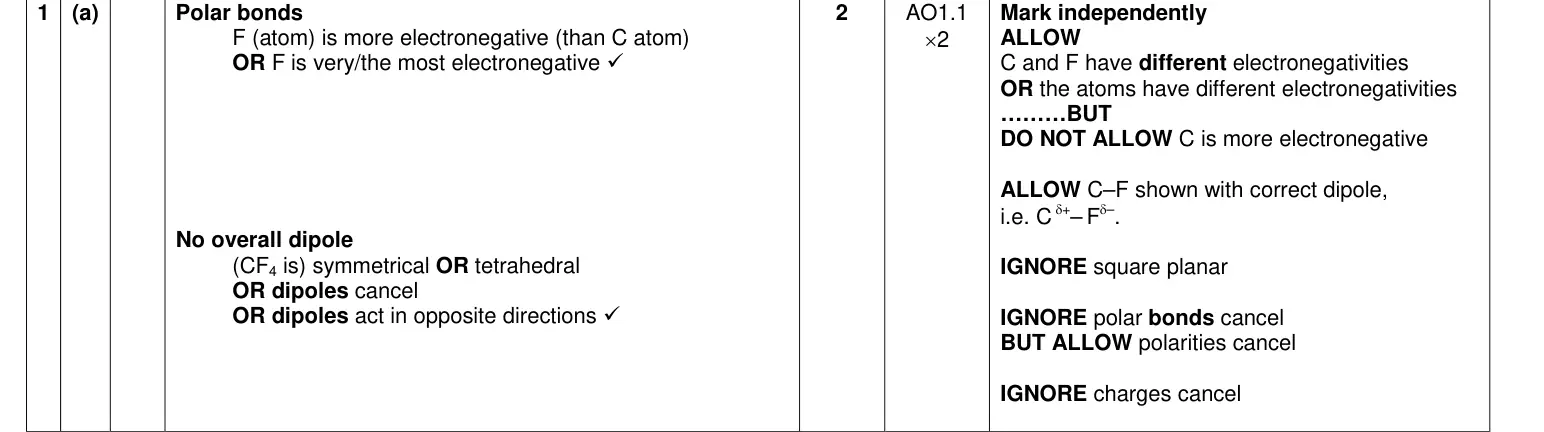
1(a) Bonding, structure and shapes of molecules 2AO1Short answer
1(b) Atomic structure and isotopes 1AO1Short answer
1(c) Equilibrium constants Kc and Kp 1AO2Calculation
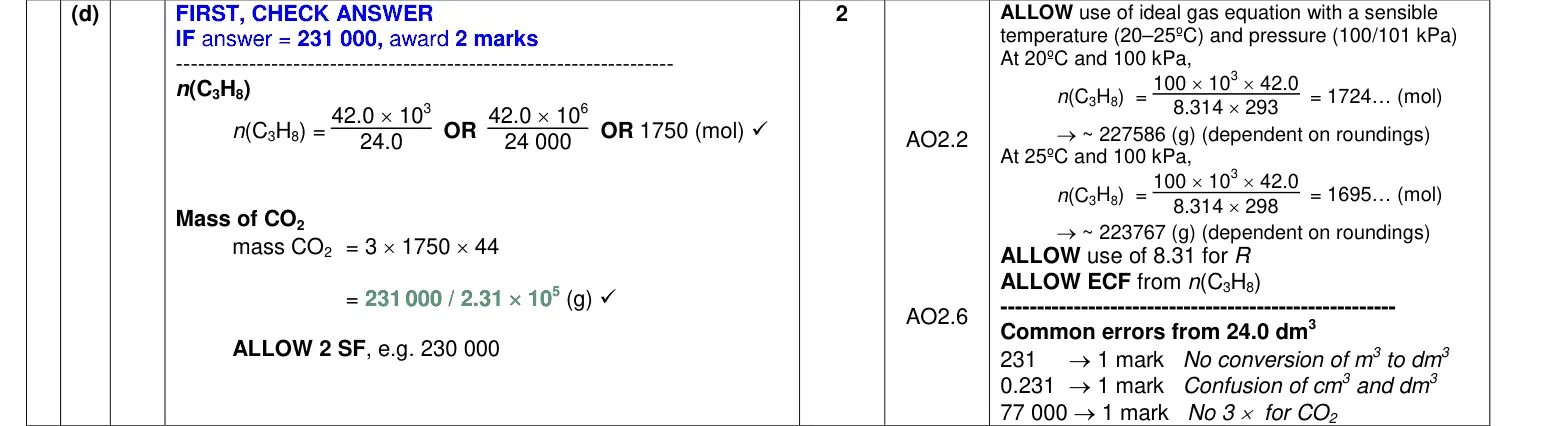
1(d) Amount of substance (moles) 2AO2Calculation
1(e) Acids, bases, pH and buffers, Rates: orders, rate equations and the Arrhenius equation 1AO2Calculation
1(f) Amount of substance (moles) 2AO2Calculation
2(a) Formulae and equations, Acids, bases, pH and buffers 1AO1Equation writing
2(b) Carboxylic acids, esters and acyl chlorides, Acids, bases, pH and buffers 1AO2Short answer
2(c) Alcohols 1AO2Equation writing
2(d) Amount of substance (moles) 3AO1, 2Calculation
2(e) Organic synthesis (Module 6), Practical techniques and apparatus (PAGs) 2AO3Short answer
3(a)(i) Formulae and equations 1AO2Equation writing
3(a)(ii) Practical techniques and apparatus (PAGs) 1AO3Short answer
3(a)(iii) Practical skills: planning, analysis and evaluation 2AO3Short answer
3(a)(iv) Amount of substance (moles) 2AO2Calculation
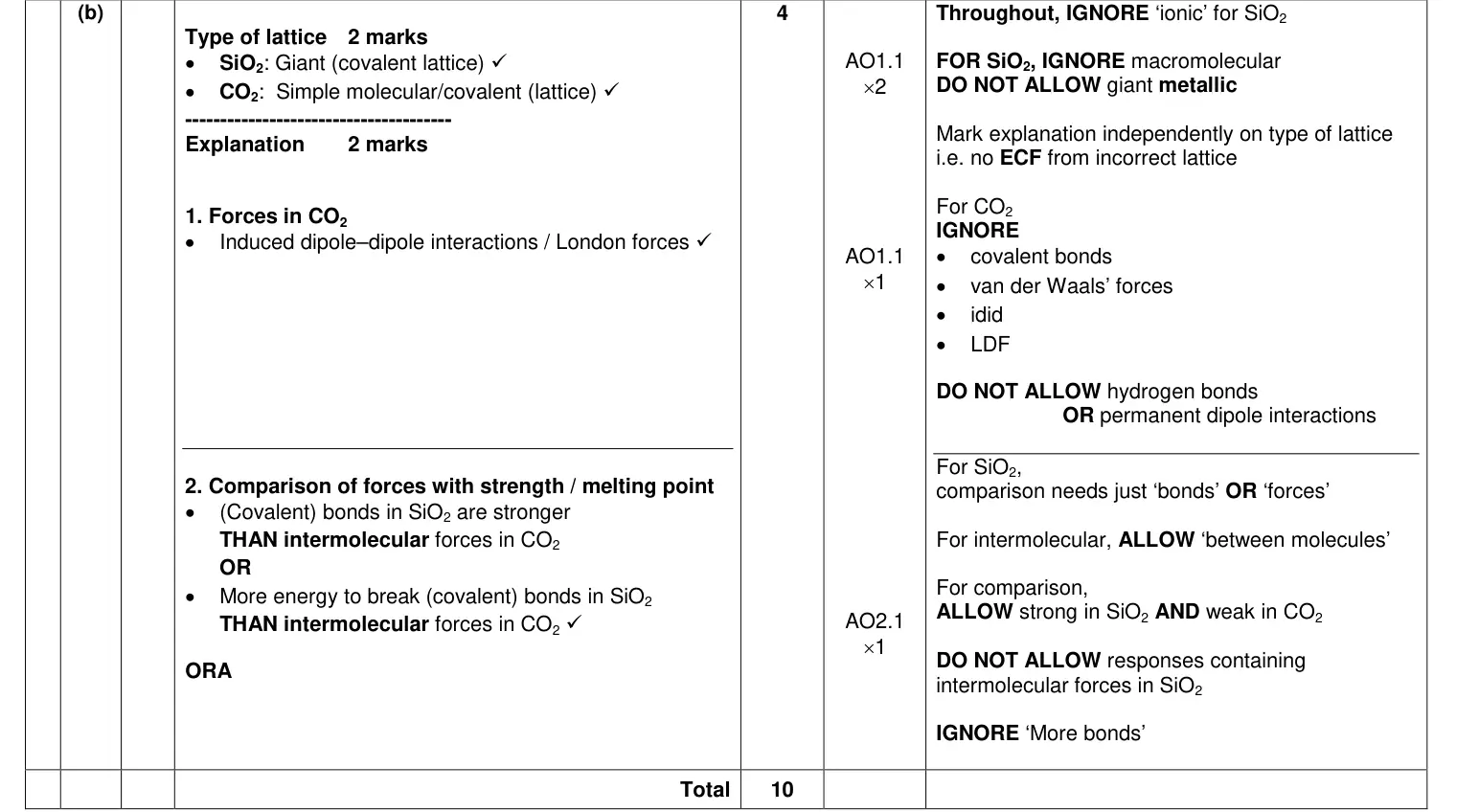
3(b) Periodicity and ionisation energy, Bonding, structure and shapes of molecules 4AO1, 2Short answer
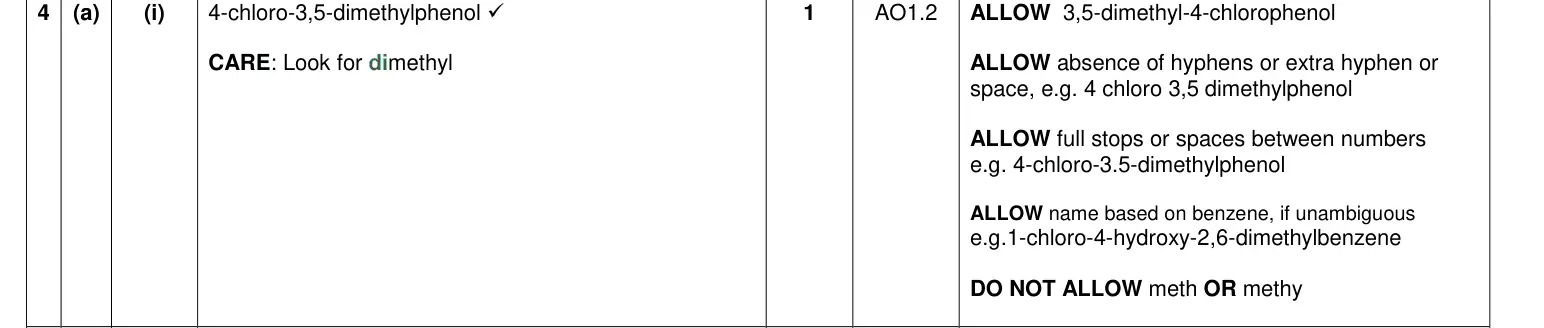
4(a)(i) Aromatic compounds: benzene and phenol 1AO1Short answer
4(a)(ii) NMR spectroscopy and combined techniques 1AO2Short answer
4(a)(iii) Aromatic compounds: benzene and phenol, Chromatography and tests for functional groups 2AO1, 2Short answer
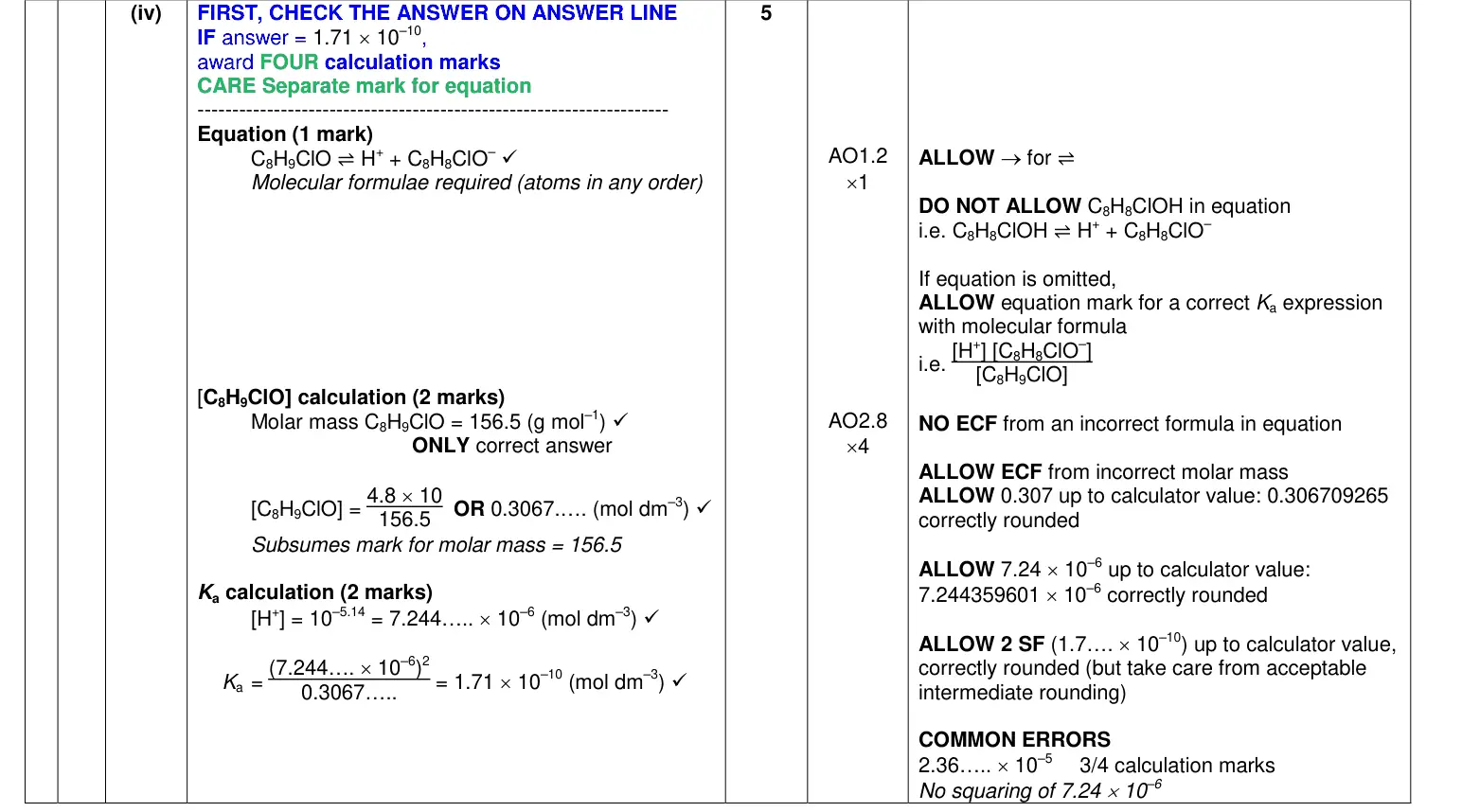
4(a)(iv) Acids, bases, pH and buffers, Amount of substance (moles) 5AO1, 2Calculation
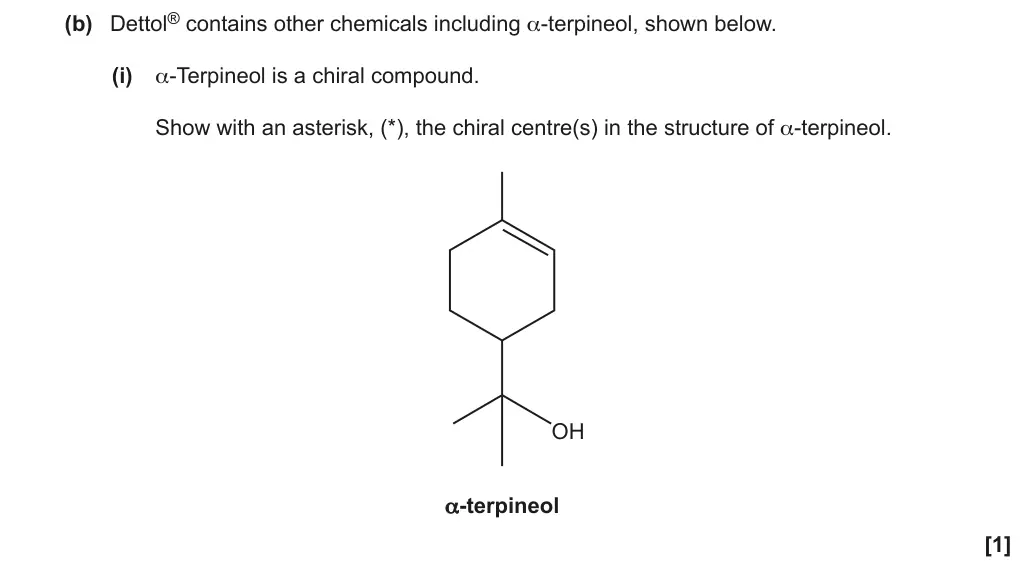
4(b)(i) Amino acids, amides and chirality 1AO2Drawing / labelling
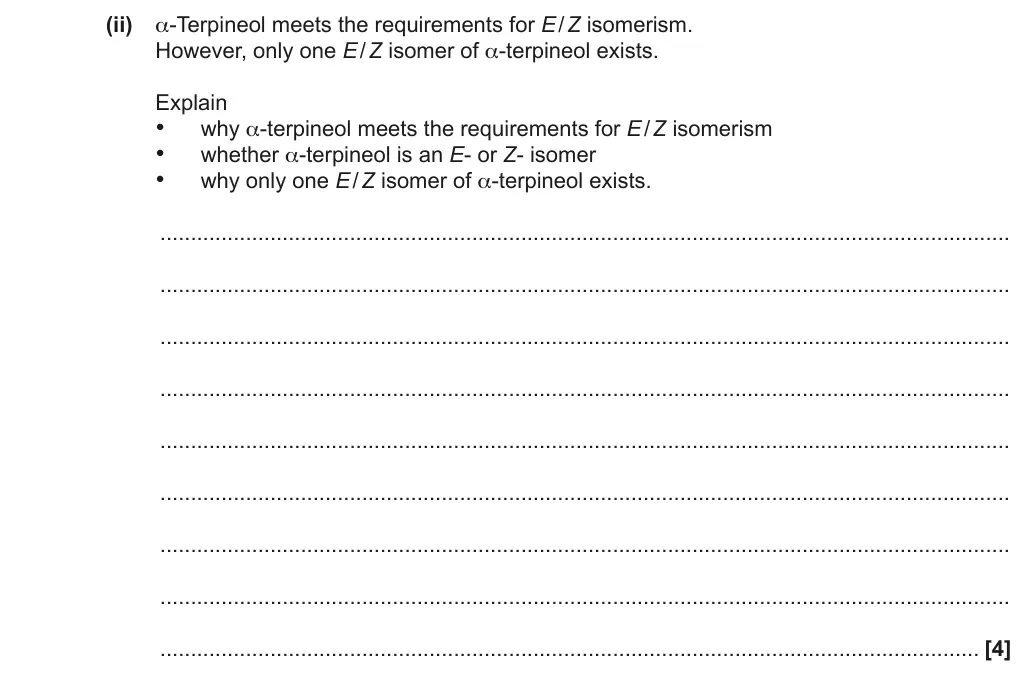
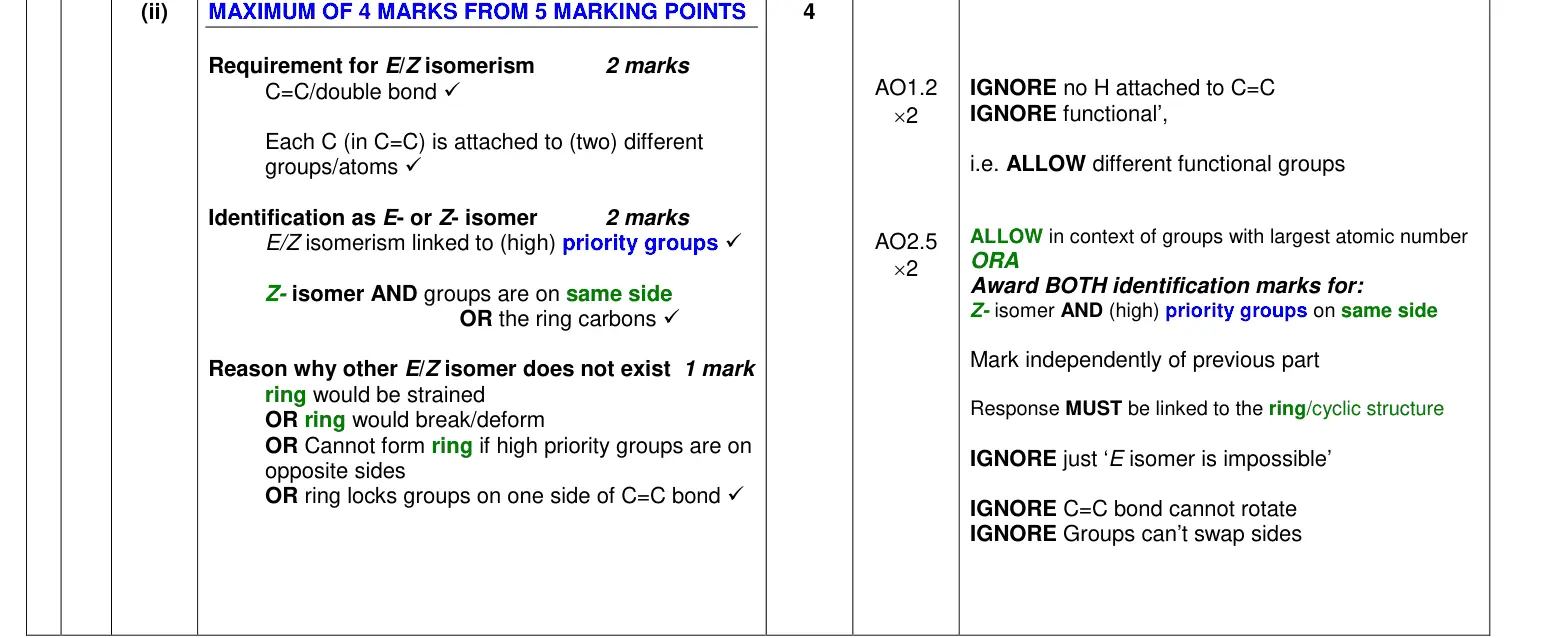
4(b)(ii) Alkenes 4AO1, 2Short answer
4(b)(iii) Organic synthesis (Module 6), Alkenes, Alcohols 4AO3Structure / isomer
5(a)(i) Enthalpy changes and Hess’ law, Amount of substance (moles), Lattice enthalpy and Born–Haber cycles 6AO3Level of response
5(a)(ii) Practical skills: planning, analysis and evaluation 1AO2Calculation
5(b) Entropy and free energy 4AO2Calculation
5(c)(i) Bonding, structure and shapes of molecules 1AO1Short answer
5(c)(ii) Bonding, structure and shapes of molecules 1AO3Structure / isomer
6(a)(i) Transition elements, Atomic structure and isotopes 2AO3Short answer
6(a)(ii) Redox and oxidation numbers 1AO3Short answer
6(a)(iii) Transition elements, Redox titrations and electrode potentials 1AO3Equation writing
6(a)(iv) Redox titrations and electrode potentials, Transition elements 2AO3Equation writing
6(b) Amount of substance (moles), Formulae and equations 6AO1, 3Level of response

The questions

1(a)1(b)1(c)1(d)1(e)1(f)2(a)2(b)2(c)2(d)2(e)3(a)(i)3(a)(ii)3(a)(iii)3(a)(iv)3(b)4(a)(i)4(a)(ii)4(a)(iii)4(a)(iv)4(b)(i)4(b)(ii)4(b)(iii)5(a)(i)5(a)(ii)5(b)5(c)(i)5(c)(ii)6(a)(i)6(a)(ii)6(a)(iii)6(a)(iv)6(b)
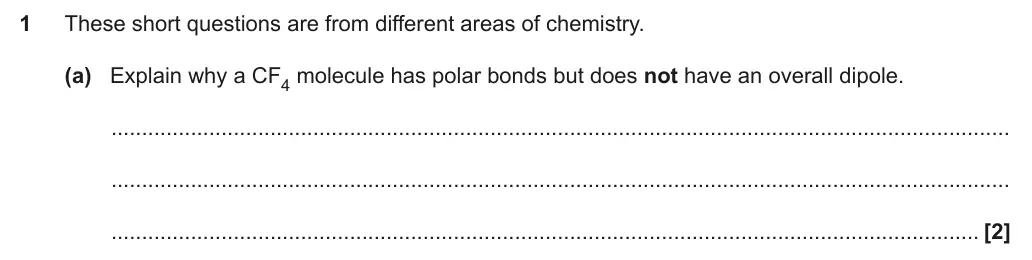
June 2019 · Paper 3 · Q1(a) 2 marks AO1 Short answer Easy bonding and structure
1 These short questions are from different areas of chemistry.
(a) Explain why a CF4 molecule has polar bonds but does not have an overall dipole.
...................................................................................................................................................
...................................................................................................................................................
.............................................................................................................................................. [2]
June 2019 · Paper 3 · Q1(b) 1 mark AO1 Short answer Medium atomic structure and isotopes
(b) Explain why a small proportion of molecules in water have a relative molecular mass of 20.
...................................................................................................................................................
...................................................................................................................................................
.............................................................................................................................................. [1]
June 2019 · Paper 3 · Q1(c) 1 mark AO2 Calculation Medium equilibrium constants
(c) What is the partial pressure of O2 (in Pa) in a gas mixture containing 21% O2 by volume and
with a total pressure of 1.0 × 10⁵ Pa?
partial pressure of O2 =  .................................................... Pa [1]
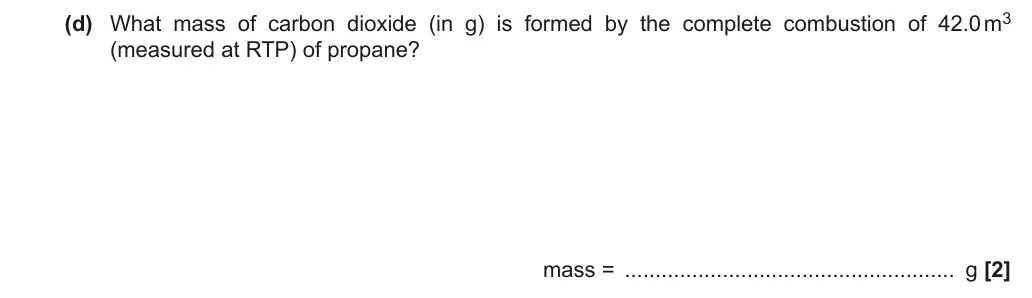
June 2019 · Paper 3 · Q1(d) 2 marks AO2 Calculation Hard amount of substance
(d) What mass of carbon dioxide (in g) is formed by the complete combustion of 42.0 m3
(measured at RTP) of propane?
mass =  ...................................................... g [2]
June 2019 · Paper 3 · Q1(e) 1 mark AO2 Calculation Hard acids bases and buffersrate equations
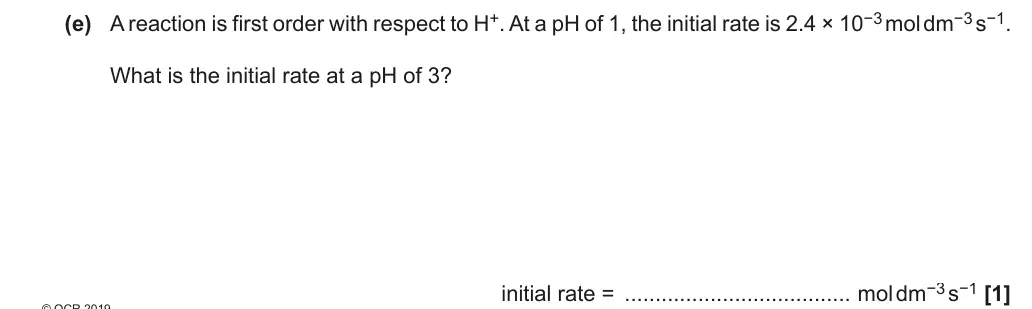
(e) A reaction is first order with respect to H+. At a pH of 1, the initial rate is 2.4 × 10⁻³ mol dm−3 s−1.
What is the initial rate at a pH of 3?
initial rate =  ..................................... mol dm−3 s−1 [1]
June 2019 · Paper 3 · Q1(f) 2 marks AO2 Calculation Hard amount of substance
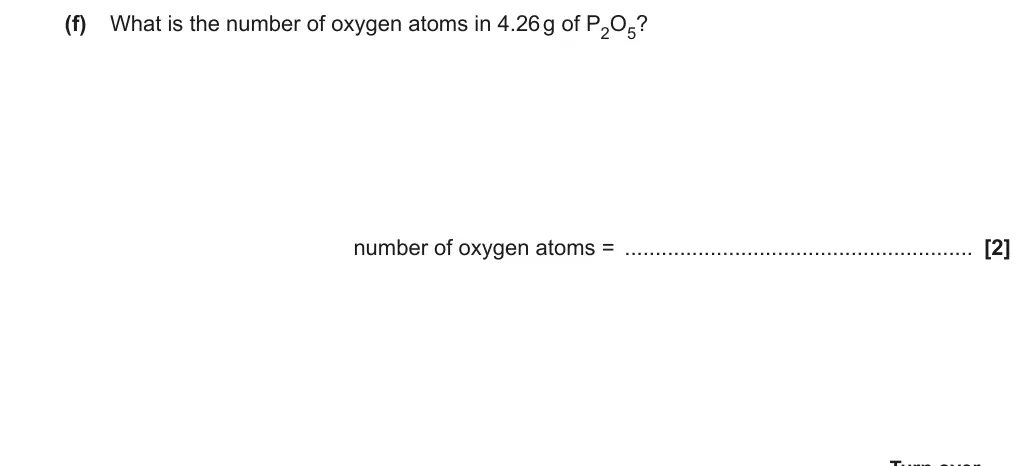
(f) What is the number of oxygen atoms in 4.26 g of P2O5?
number of oxygen atoms =  ......................................................... [2]
June 2019 · Paper 3 · Q2(a) 1 mark AO1 Equation writing Medium formulae and equationsacids bases and buffers
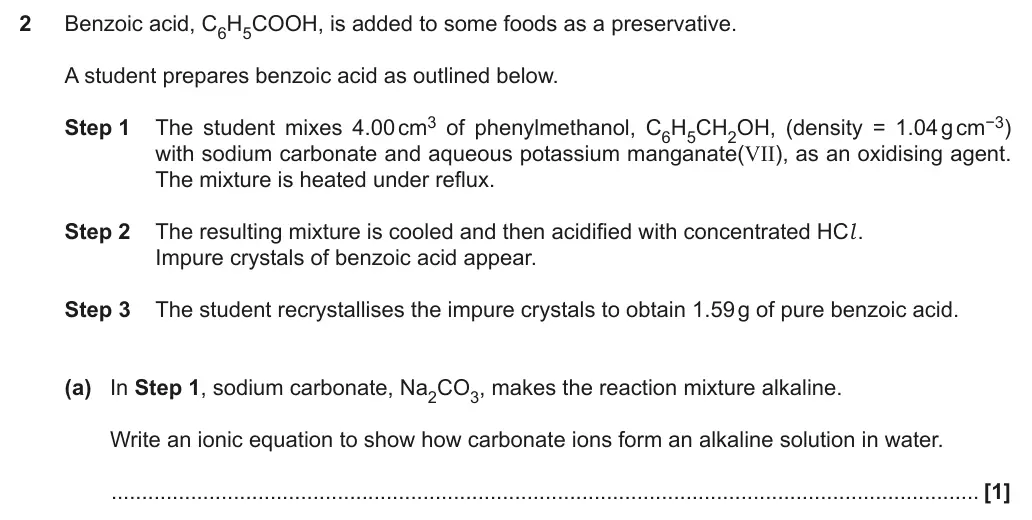
2 Benzoic acid, C6H5COOH, is added to some foods as a preservative.
A student prepares benzoic acid as outlined below.
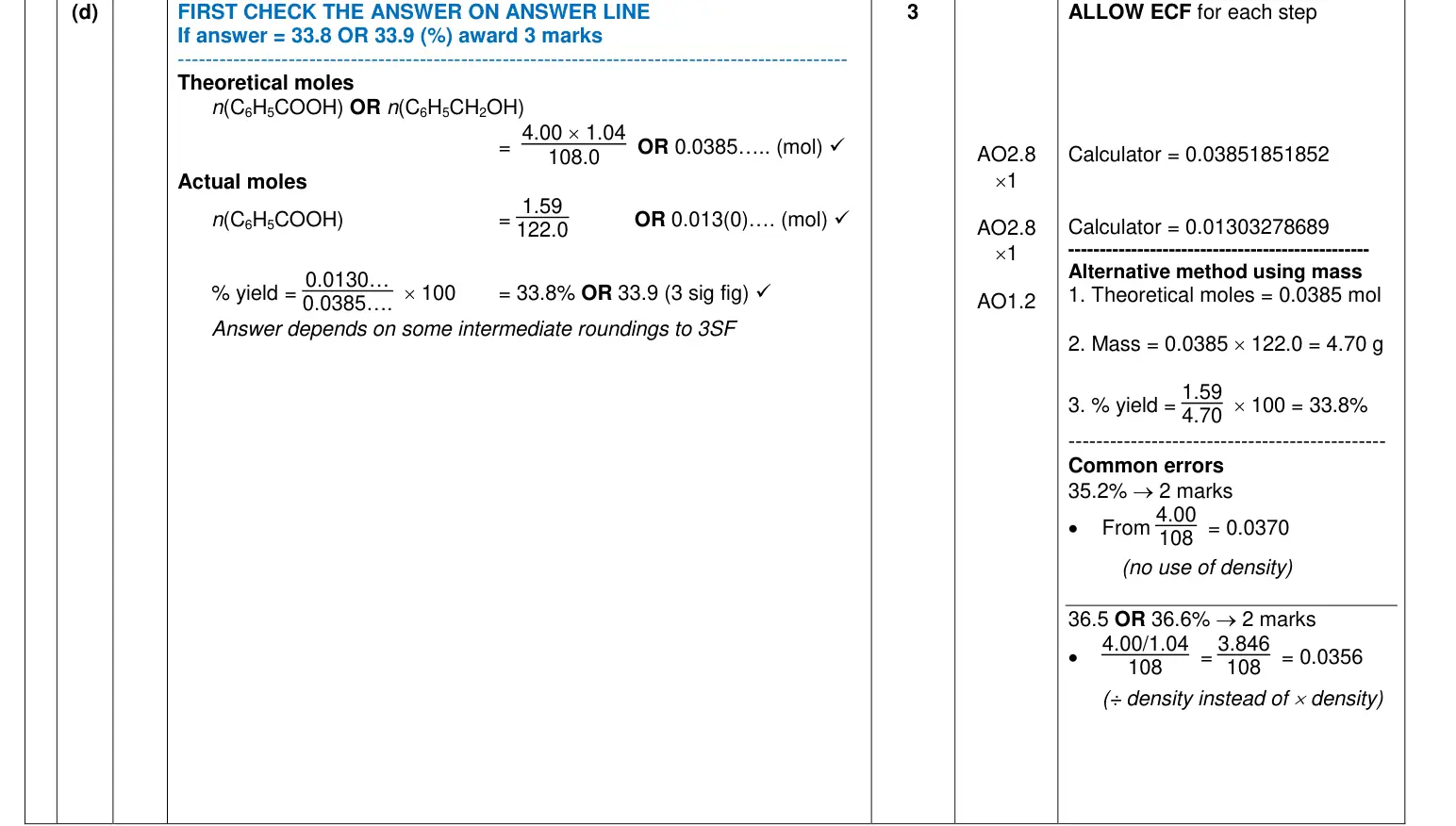
Step 1 The student mixes 4.00 cm3 of phenylmethanol, C6H5CH2OH, (density = 1.04 g cm−3)
with sodium carbonate and aqueous potassium manganate(VII), as an oxidising agent.
The mixture is heated under reflux.
Step 2 The resulting mixture is cooled and then acidified with concentrated HCl .
Impure crystals of benzoic acid appear.
Step 3 The student recrystallises the impure crystals to obtain 1.59 g of pure benzoic acid.
(a) In Step 1, sodium carbonate, Na2CO3, makes the reaction mixture alkaline.
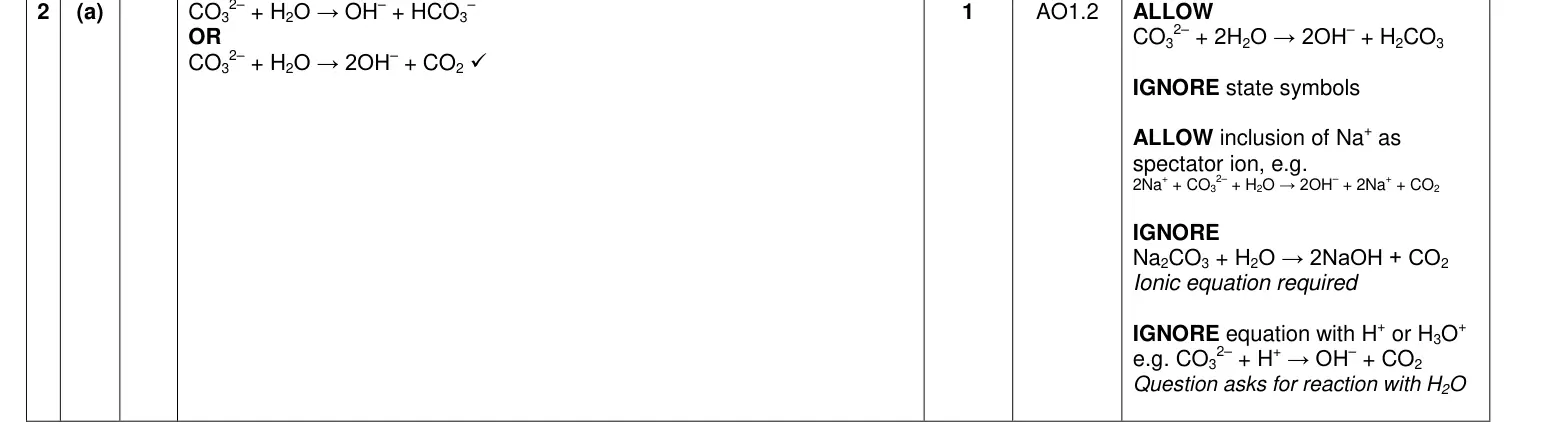
Write an ionic equation to show how carbonate ions form an alkaline solution in water.
.............................................................................................................................................. [1]
June 2019 · Paper 3 · Q2(b) 1 mark AO2 Short answer Hard carboxylic acids and estersacids bases and buffers
Earlier part of question 2 that this part usesEarlier part of June 2019 Paper 3 question 2
(b) In Step 2, explain why the mixture must be acidified so that crystals of benzoic acid appear.
...................................................................................................................................................
...................................................................................................................................................
...................................................................................................................................................
.............................................................................................................................................. [1]
June 2019 · Paper 3 · Q2(c) 1 mark AO2 Equation writing Hard alcohols
Earlier part of question 2 that this part usesEarlier part of June 2019 Paper 3 question 2
(c) Write the overall equation for the preparation of benzoic acid from phenylmethanol.
Use [O] for the oxidising agent.
.............................................................................................................................................. [1]
June 2019 · Paper 3 · Q2(d) 3 marks AO1, 2 Calculation Medium amount of substance
Earlier part of question 2 that this part usesEarlier part of June 2019 Paper 3 question 2
(d) Calculate the percentage yield of benzoic acid.
Give your answer to 3 significant figures.
percentage yield =  ...................................................... % [3]
June 2019 · Paper 3 · Q2(e) 2 marks AO3 Short answer Medium organic synthesispractical techniques
Earlier part of question 2 that this part usesEarlier part of June 2019 Paper 3 question 2
(e) In Step 3, describe how the student can recrystallise the impure crystals to obtain pure
benzoic acid.
...................................................................................................................................................
...................................................................................................................................................
...................................................................................................................................................
...................................................................................................................................................
...................................................................................................................................................
...................................................................................................................................................
...................................................................................................................................................
.............................................................................................................................................. [2]
June 2019 · Paper 3 · Q3(a)(i) 1 mark AO2 Equation writing Hard formulae and equations
3 This question is about elements and compounds in Group 14 (Group 4) of the periodic table.
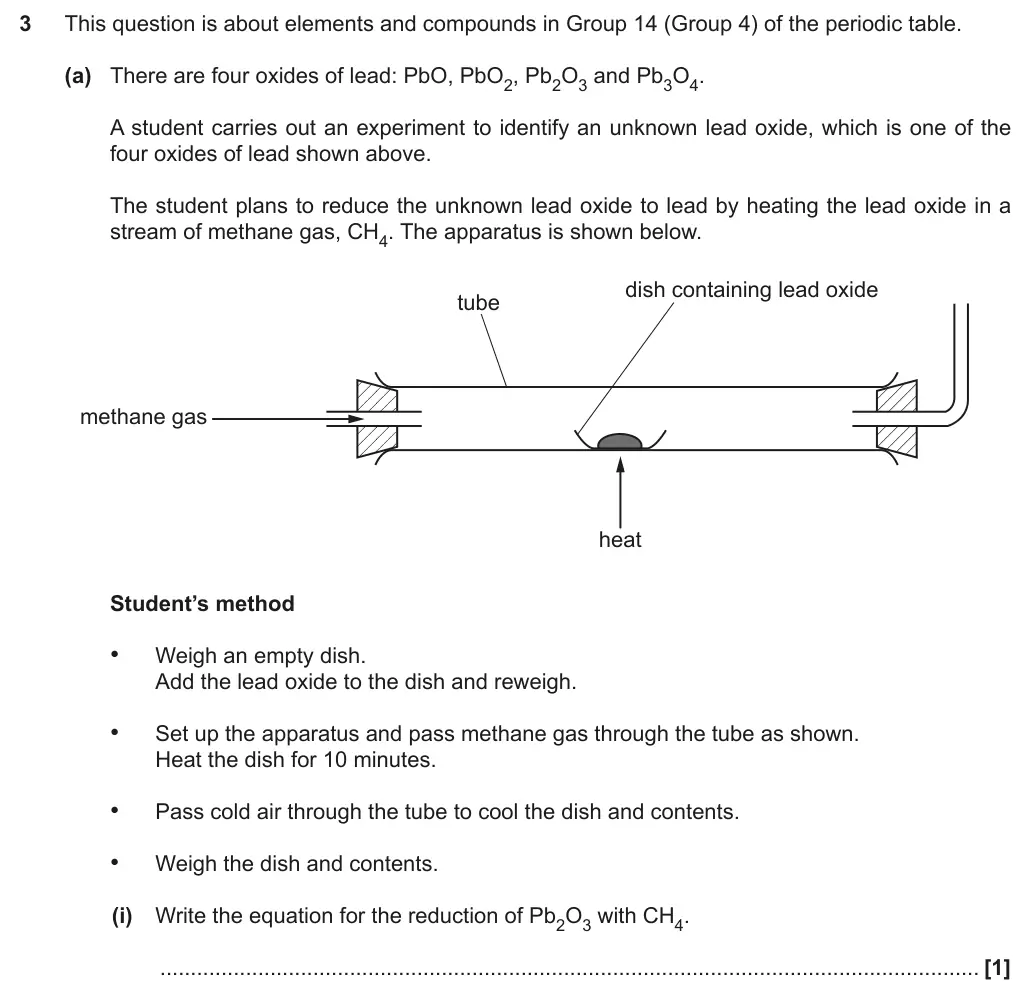
(a) There are four oxides of lead: PbO, PbO2, Pb2O3 and Pb3O4.
A student carries out an experiment to identify an unknown lead oxide, which is one of the
four oxides of lead shown above.
The student plans to reduce the unknown lead oxide to lead by heating the lead oxide in a
stream of methane gas, CH4. The apparatus is shown below.
dish containing lead oxide
tube
methane gas
heat
Student’s method
• Weigh an empty dish.
Add the lead oxide to the dish and reweigh.
• Set up the apparatus and pass methane gas through the tube as shown.
Heat the dish for 10 minutes.
• Pass cold air through the tube to cool the dish and contents.
• Weigh the dish and contents.
(i) Write the equation for the reduction of Pb2O3 with CH4.
...................................................................................................................................... [1]
June 2019 · Paper 3 · Q3(a)(ii) 1 mark AO3 Short answer Medium practical techniques
Earlier part of question 3 that this part usesEarlier part of June 2019 Paper 3 question 3
(ii) The student uses safety glasses and a lab coat.
State, with a reason, one other important safety precaution the student should take when
carrying out this experiment.
...........................................................................................................................................
...........................................................................................................................................
...................................................................................................................................... [1]
June 2019 · Paper 3 · Q3(a)(iii) 2 marks AO3 Short answer Medium practical skills
Earlier part of question 3 that this part usesEarlier part of June 2019 Paper 3 question 3
(iii) The student was not sure that all the oxygen had been removed from the lead oxide.
Suggest two modifications that the student could make to their method to be confident
that all the oxygen had been removed. Explain your reasoning.
1  ........................................................................................................................................
...........................................................................................................................................
2  ........................................................................................................................................
...........................................................................................................................................
[2]
June 2019 · Paper 3 · Q3(a)(iv) 2 marks AO2 Calculation Easy amount of substance
Earlier part of question 3 that this part usesEarlier part of June 2019 Paper 3 question 3
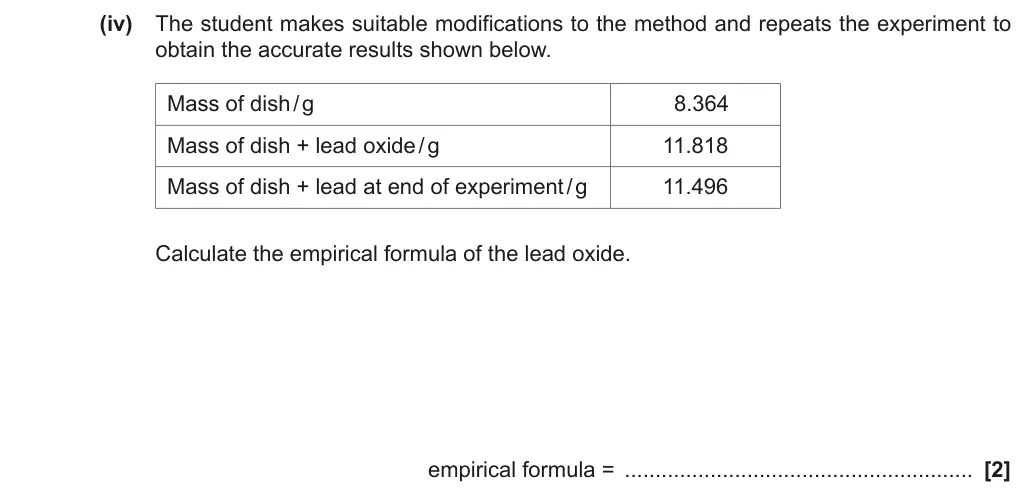
(iv) The student makes suitable modifications to the method and repeats the experiment to
obtain the accurate results shown below.
Mass of dish / g 8.364
Mass of dish + lead oxide / g 11.818
Mass of dish + lead at end of experiment / g 11.496
Calculate the empirical formula of the lead oxide.
empirical formula =  ......................................................... [2]
June 2019 · Paper 3 · Q3(b) 4 marks AO1, 2 Short answer Hard periodicitybonding and structure
(b) SiO2 and CO2 are oxides of other Group 14 (Group 4) elements.
Solid SiO2 melts at 2156 °C. Solid CO2 melts at −56 °C.
Suggest the type of lattice structure in solid SiO2 and in solid CO2 and explain the difference
in melting points in terms of the types of force within each lattice structure.
Structure in SiO2(s)  ...................................................................................................................
Structure in CO2(s)  ...................................................................................................................
Explanation  ...............................................................................................................................
...................................................................................................................................................
...................................................................................................................................................
.............................................................................................................................................. [4]
June 2019 · Paper 3 · Q4(a)(i) 1 mark AO1 Short answer Easy aromatic compounds
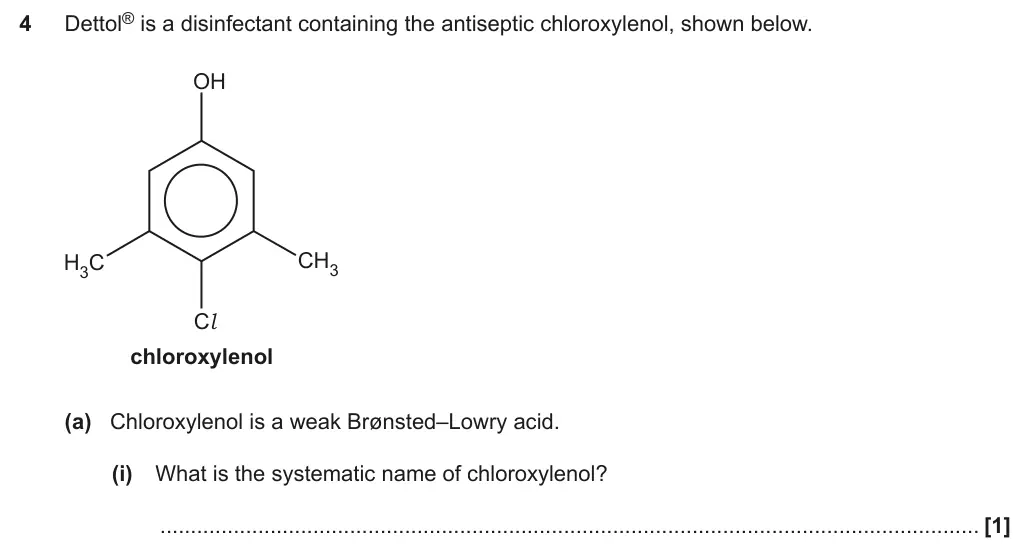
4 Dettol® is a disinfectant containing the antiseptic chloroxylenol, shown below.
OH
H3C CH3
Cl
chloroxylenol
(a) Chloroxylenol is a weak Brønsted–Lowry acid.
(i) What is the systematic name of chloroxylenol?
...................................................................................................................................... [1]
June 2019 · Paper 3 · Q4(a)(ii) 1 mark AO2 Short answer Medium nmr spectroscopy
Earlier part of question 4 that this part usesEarlier part of June 2019 Paper 3 question 4
(ii) Predict the number of peaks in a 13C NMR spectrum of chloroxylenol.
...................................................................................................................................... [1]
June 2019 · Paper 3 · Q4(a)(iii) 2 marks AO1, 2 Short answer Hard aromatic compoundschromatography and functional group tests
Earlier part of question 4 that this part usesEarlier part of June 2019 Paper 3 question 4
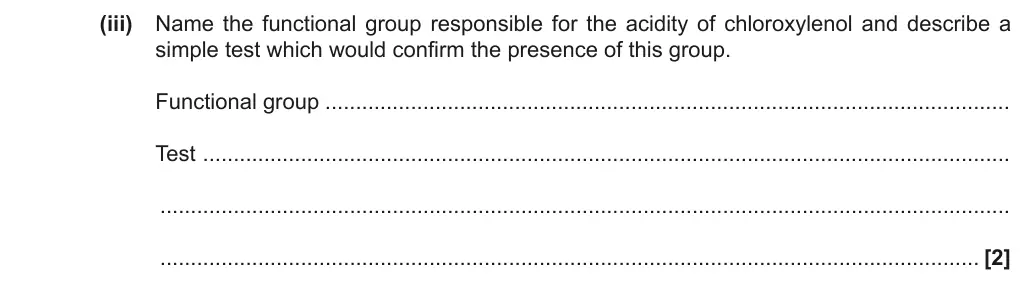
(iii) Name the functional group responsible for the acidity of chloroxylenol and describe a
simple test which would confirm the presence of this group.
Functional group ................................................................................................................
Test  ....................................................................................................................................
...........................................................................................................................................
...................................................................................................................................... [2]
June 2019 · Paper 3 · Q4(a)(iv) 5 marks AO1, 2 Calculation Medium acids bases and buffersamount of substance
Earlier part of question 4 that this part usesEarlier part of June 2019 Paper 3 question 4
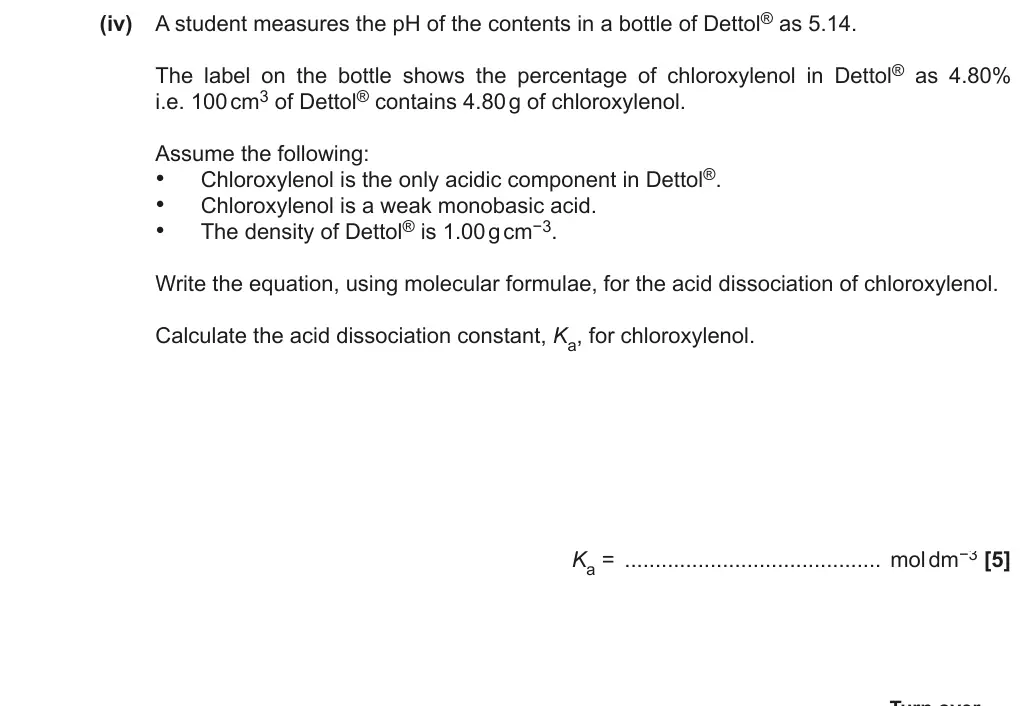
(iv) A student measures the pH of the contents in a bottle of Dettol® as 5.14.
The label on the bottle shows the percentage of chloroxylenol in Dettol® as 4.80%
i.e. 100 cm3 of Dettol® contains 4.80 g of chloroxylenol.
Assume the following:
• Chloroxylenol is the only acidic component in Dettol®.
• Chloroxylenol is a weak monobasic acid.
• The density of Dettol® is 1.00 g cm−3.
Write the equation, using molecular formulae, for the acid dissociation of chloroxylenol.
Calculate the acid dissociation constant, Ka, for chloroxylenol.
Ka =  .......................................... mol dm−3 [5]
June 2019 · Paper 3 · Q4(b)(i) 1 mark AO2 Drawing / labelling Medium amino acids amides and chirality
(b) Dettol® contains other chemicals including α-terpineol, shown below.
(i) α-Terpineol is a chiral compound.
Show with an asterisk, (*), the chiral centre(s) in the structure of α-terpineol.
OH
α-terpineol
[1]
June 2019 · Paper 3 · Q4(b)(ii) 4 marks AO1, 2 Short answer Hard alkenes
Earlier part of question 4 that this part usesEarlier part of June 2019 Paper 3 question 4
(ii) α-Terpineol meets the requirements for E / Z isomerism.
However, only one E / Z isomer of α-terpineol exists.
Explain
• why α-terpineol meets the requirements for E / Z isomerism
• whether α-terpineol is an E- or Z- isomer
• why only one E / Z isomer of α-terpineol exists.
...........................................................................................................................................
...........................................................................................................................................
...........................................................................................................................................
...........................................................................................................................................
...........................................................................................................................................
...........................................................................................................................................
...........................................................................................................................................
...........................................................................................................................................
...................................................................................................................................... [4]
June 2019 · Paper 3 · Q4(b)(iii) 4 marks AO3 Structure / isomer Medium organic synthesisalkenesalcohols
Earlier part of question 4 that this part usesEarlier part of June 2019 Paper 3 question 4
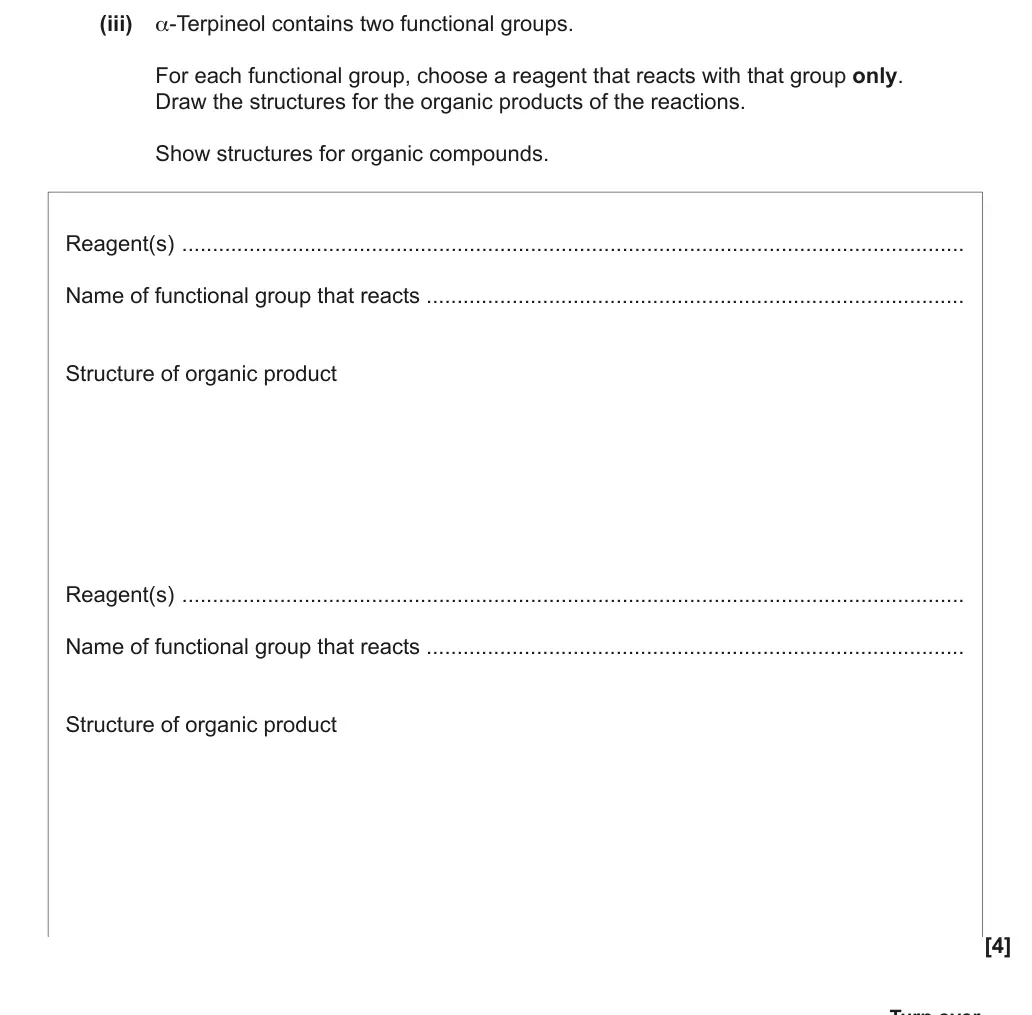
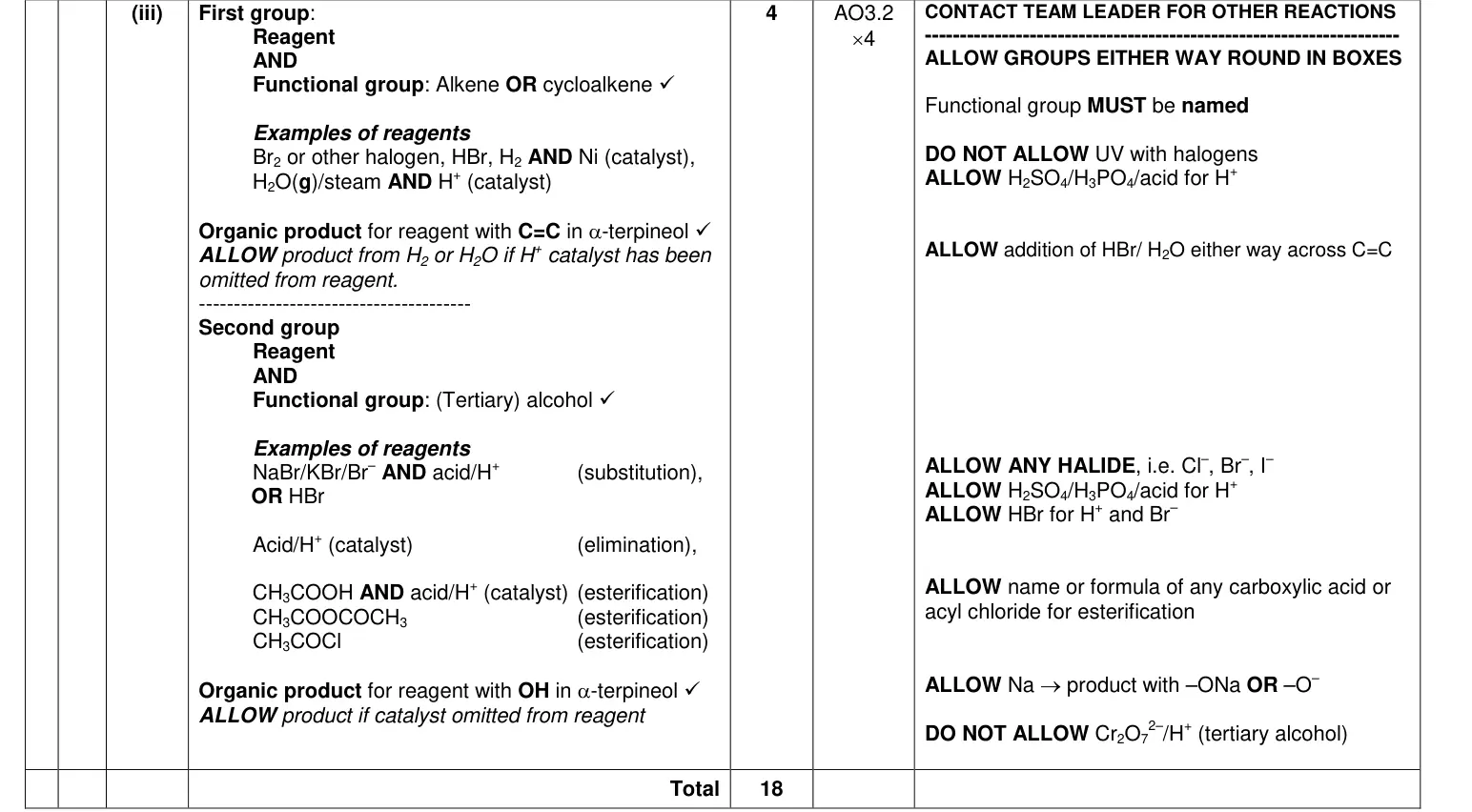
(iii) α-Terpineol contains two functional groups.
For each functional group, choose a reagent that reacts with that group only.
Draw the structures for the organic products of the reactions.
Show structures for organic compounds.
Reagent(s)  ................................................................................................................................
Name of functional group that reacts ........................................................................................
Structure of organic product
Reagent(s)  ................................................................................................................................
Name of functional group that reacts ........................................................................................
Structure of organic product
[4]
June 2019 · Paper 3 · Q5(a)(i) 6 marks AO3 6-mark level of response Hard enthalpy changesamount of substancelattice enthalpy
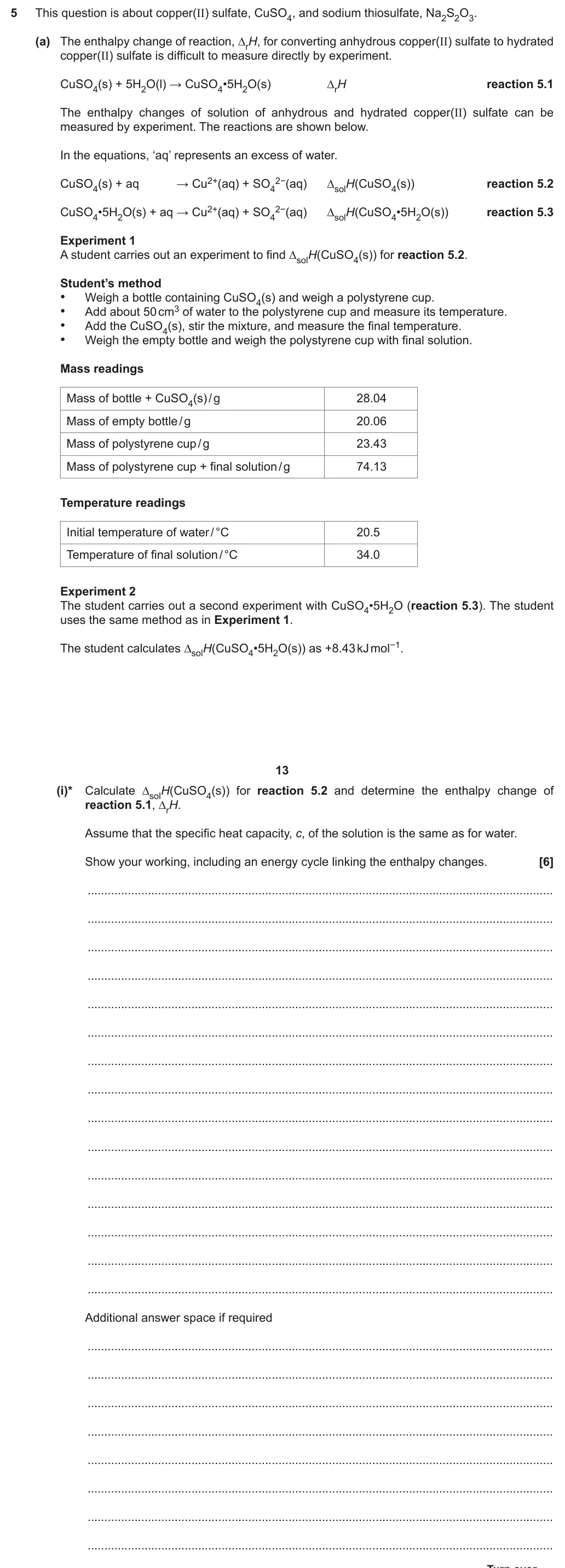
5 This question is about copper(II) sulfate, CuSO4, and sodium thiosulfate, Na2S2O3.
(a) The enthalpy change of reaction, ∆rH, for converting anhydrous copper(II) sulfate to hydrated
copper(II) sulfate is difficult to measure directly by experiment.
CuSO4(s) + 5H2O(l) → CuSO4•5H2O(s) ∆rH reaction 5.1
The enthalpy changes of solution of anhydrous and hydrated copper(II) sulfate can be
measured by experiment. The reactions are shown below.
In the equations, ‘aq’ represents an excess of water.
CuSO4(s) + aq → Cu2+(aq) + SO4 2−(aq) ∆solH(CuSO4(s)) reaction 5.2
CuSO4•5H2O(s) + aq → Cu2+(aq) + SO4 2−(aq) ∆solH(CuSO4•5H2O(s)) reaction 5.3
Experiment 1
A student carries out an experiment to find ∆solH(CuSO4(s)) for reaction 5.2.
Student’s method
• Weigh a bottle containing CuSO4(s) and weigh a polystyrene cup.
• Add about 50 cm3 of water to the polystyrene cup and measure its temperature.
• Add the CuSO4(s), stir the mixture, and measure the final temperature.
• Weigh the empty bottle and weigh the polystyrene cup with final solution.
Mass readings
Mass of bottle + CuSO4(s) / g 28.04
Mass of empty bottle / g 20.06
Mass of polystyrene cup / g 23.43
Mass of polystyrene cup + final solution / g 74.13
Temperature readings
Initial temperature of water / °C 20.5
Temperature of final solution / °C 34.0
Experiment 2
The student carries out a second experiment with CuSO4•5H2O (reaction 5.3). The student
uses the same method as in Experiment 1.
The student calculates ∆solH(CuSO4•5H2O(s)) as +8.43 kJ mol−1.
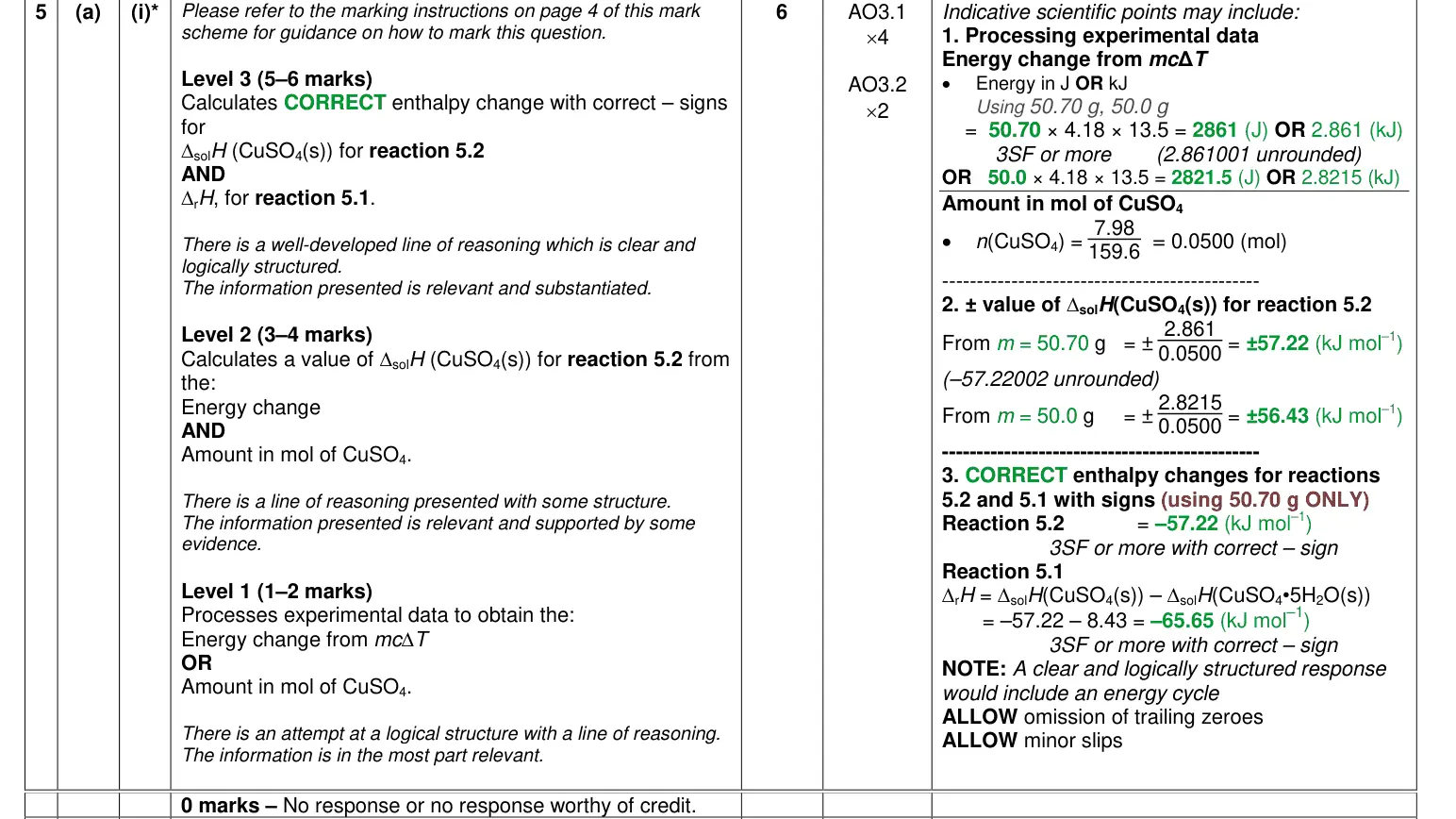
(i)* Calculate ∆solH(CuSO4(s)) for reaction 5.2 and determine the enthalpy change of
reaction 5.1, ∆rH.
Assume that the specific heat capacity, c, of the solution is the same as for water.
Show your working, including an energy cycle linking the enthalpy changes. [6]
...........................................................................................................................................
...........................................................................................................................................
...........................................................................................................................................
...........................................................................................................................................
...........................................................................................................................................
...........................................................................................................................................
...........................................................................................................................................
...........................................................................................................................................
...........................................................................................................................................
...........................................................................................................................................
...........................................................................................................................................
...........................................................................................................................................
...........................................................................................................................................
...........................................................................................................................................
...........................................................................................................................................
Additional answer space if required
...........................................................................................................................................
...........................................................................................................................................
...........................................................................................................................................
...........................................................................................................................................
...........................................................................................................................................
...........................................................................................................................................
...........................................................................................................................................
...........................................................................................................................................
June 2019 · Paper 3 · Q5(a)(ii) 1 mark AO2 Calculation Medium practical skills
Earlier part of question 5 that this part usesEarlier part of June 2019 Paper 3 question 5
(ii) The thermometer had an uncertainty in each temperature reading of ± 0.1 °C.
The student calculates a 20% uncertainty in the temperature change in Experiment 2.
Calculate the temperature change in Experiment 2.
temperature change =  .................................................... °C [1]
June 2019 · Paper 3 · Q5(b) 4 marks AO2 Calculation Medium entropy and free energy
(b) The standard enthalpy change of reaction, ∆rH  o , and the standard free energy change, ∆G  o ,
for converting anhydrous sodium thiosulfate to hydrated sodium thiosulfate are shown below.
Na2S2O3(s) + 5H2O(l) → Na2S2O3•5H2O(s) ∆rH  o  = –55.8 kJ mol−1
∆G  o  = –16.1 kJ mol−1
Standard entropies are given in the table.
Compound S  o  / J K−1 mol−1
Na2S2O3•5H2O(s) 372.4
H2O(l) 69.9
Determine the standard entropy, S  o , of anhydrous sodium thiosulfate, Na2S2O3(s).
Give your answer to 3 significant figures.
S  o  =  ....................................... J K−1 mol−1 [4]
June 2019 · Paper 3 · Q5(c)(i) 1 mark AO1 Short answer Medium bonding and structure
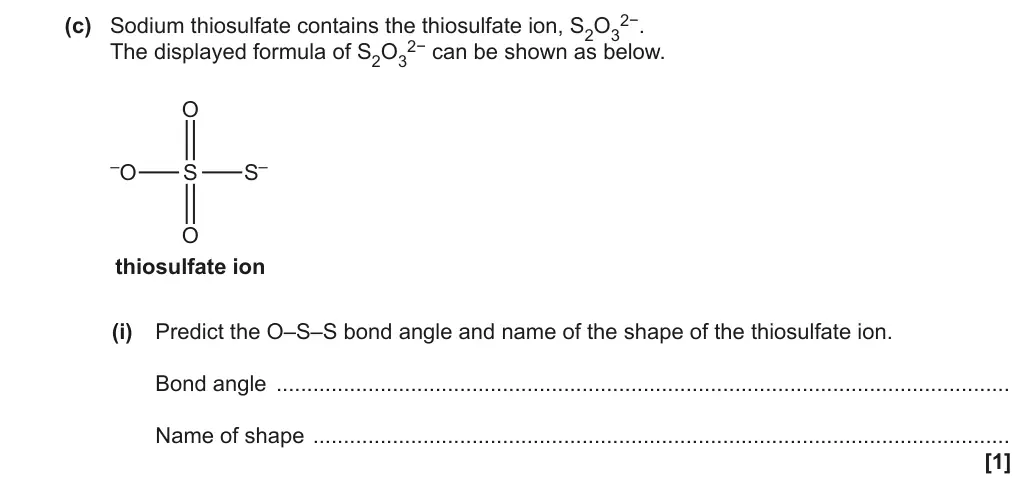
(c) Sodium thiosulfate contains the thiosulfate ion, S2O3 2−.
The displayed formula of S2O3 2− can be shown as below.
O
–O S S–
O
thiosulfate ion
(i) Predict the O–S–S bond angle and name of the shape of the thiosulfate ion.
Bond angle  ........................................................................................................................
Name of shape  ..................................................................................................................
[1]
June 2019 · Paper 3 · Q5(c)(ii) 1 mark AO3 Structure / isomer Medium bonding and structure
Earlier part of question 5 that this part usesEarlier part of June 2019 Paper 3 question 5
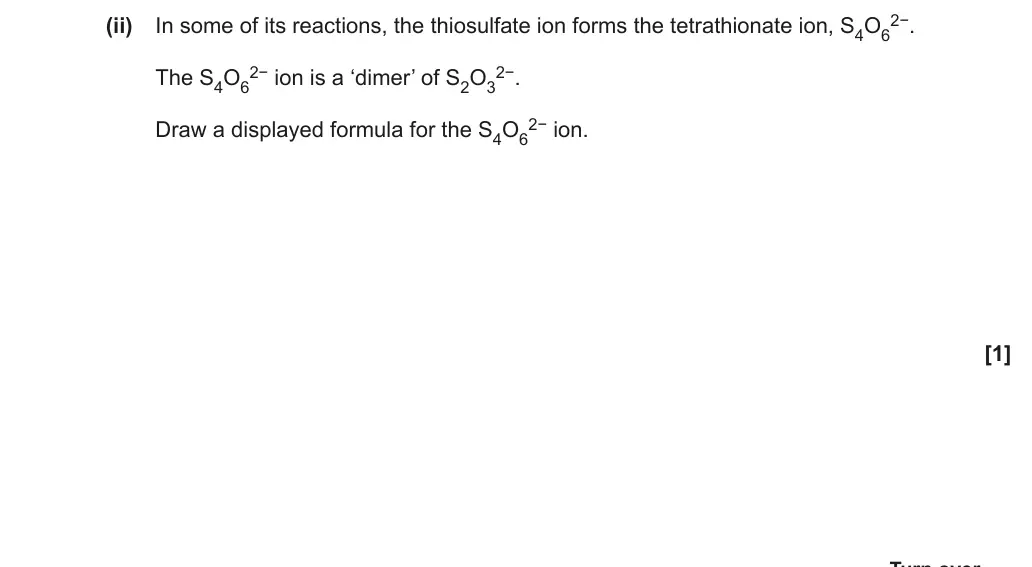
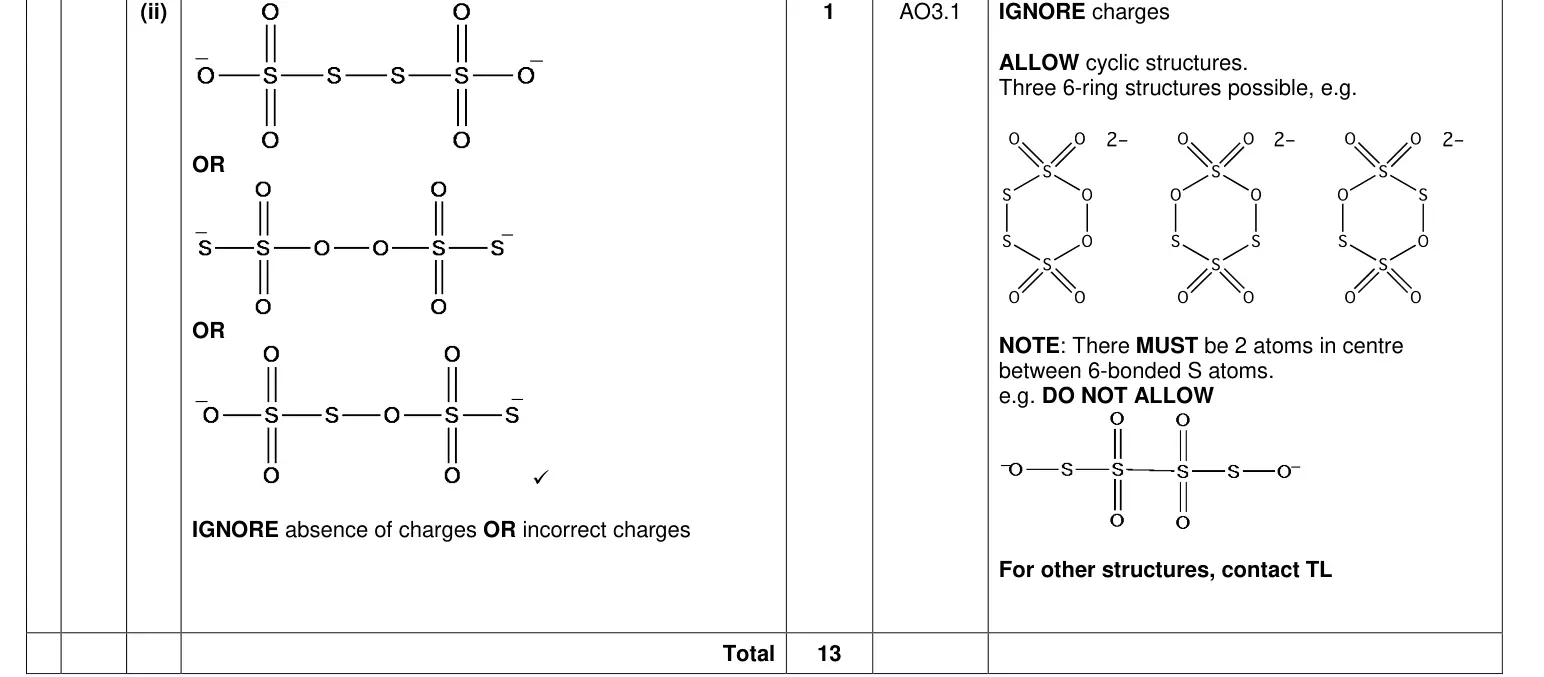
(ii) In some of its reactions, the thiosulfate ion forms the tetrathionate ion, S4O6 2−.
The S4O6 2− ion is a ‘dimer’ of S2O3 2−.
Draw a displayed formula for the S4O6 2− ion.
[1]
June 2019 · Paper 3 · Q6(a)(i) 2 marks AO3 Short answer Medium transition elementsatomic structure and isotopes
6 This question is about reactions of iron compounds.
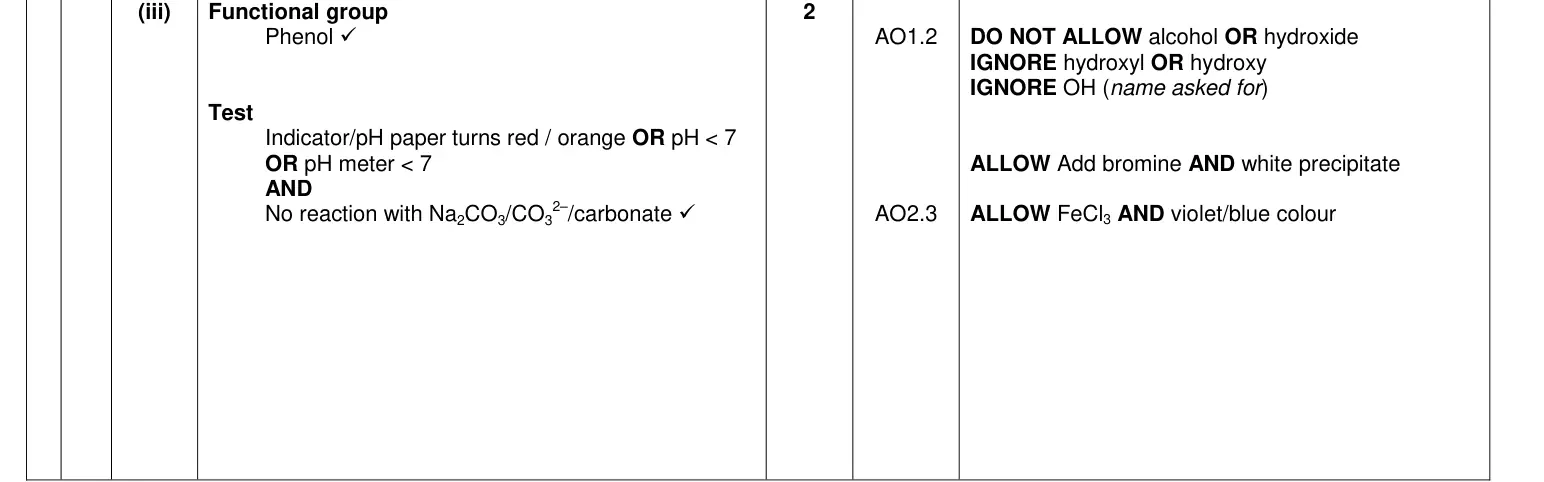
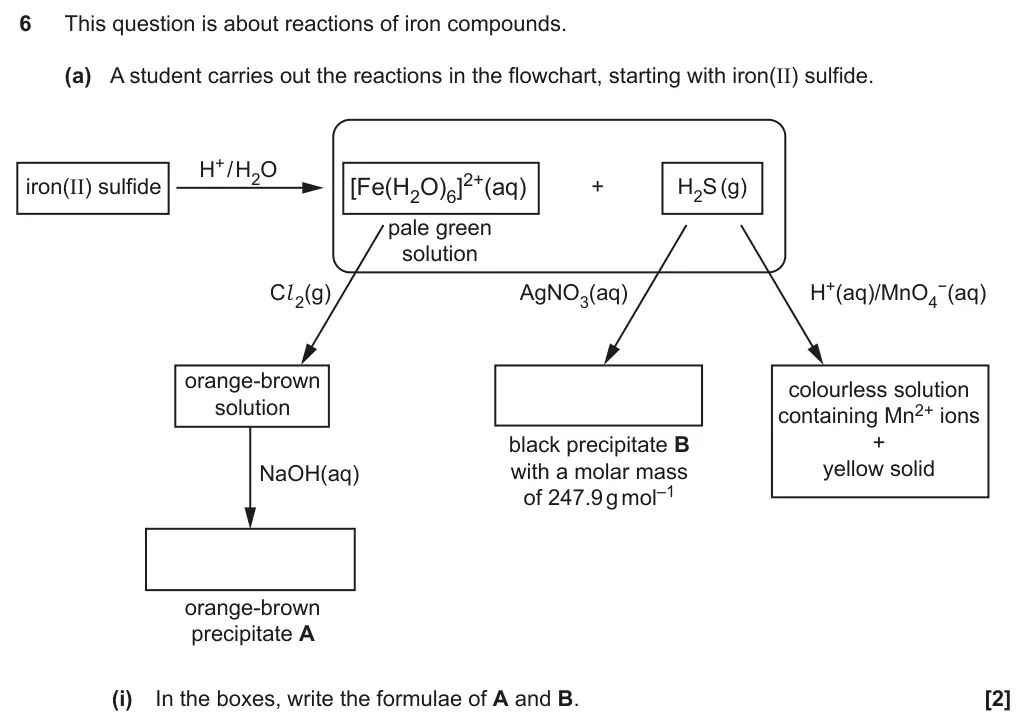
(a) A student carries out the reactions in the flowchart, starting with iron(II) sulfide.
H+ / H2O
iron(II) sulfide [Fe(H2O)6]2+(aq) + H2S (g)
pale green
solution
Cl 2(g) AgNO3(aq) H+(aq)/MnO4 −(aq)
orange-brown
colourless solution
solution
containing Mn2+ ions
black precipitate B +
NaOH(aq) with a molar mass yellow solid
of 247.9 g mol–1
orange-brown
precipitate A
(i) In the boxes, write the formulae of A and B. [2]
June 2019 · Paper 3 · Q6(a)(ii) 1 mark AO3 Short answer Medium redox
Earlier part of question 6 that this part usesEarlier part of June 2019 Paper 3 question 6
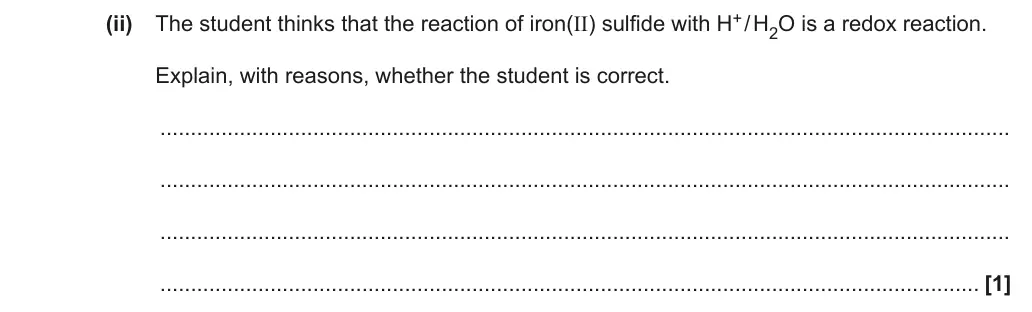
(ii) The student thinks that the reaction of iron(II) sulfide with H+ / H2O is a redox reaction.
Explain, with reasons, whether the student is correct.
...........................................................................................................................................
...........................................................................................................................................
...........................................................................................................................................
...................................................................................................................................... [1]
June 2019 · Paper 3 · Q6(a)(iii) 1 mark AO3 Equation writing Hard transition elementsredox and electrode potentials
Earlier part of question 6 that this part usesEarlier part of June 2019 Paper 3 question 6
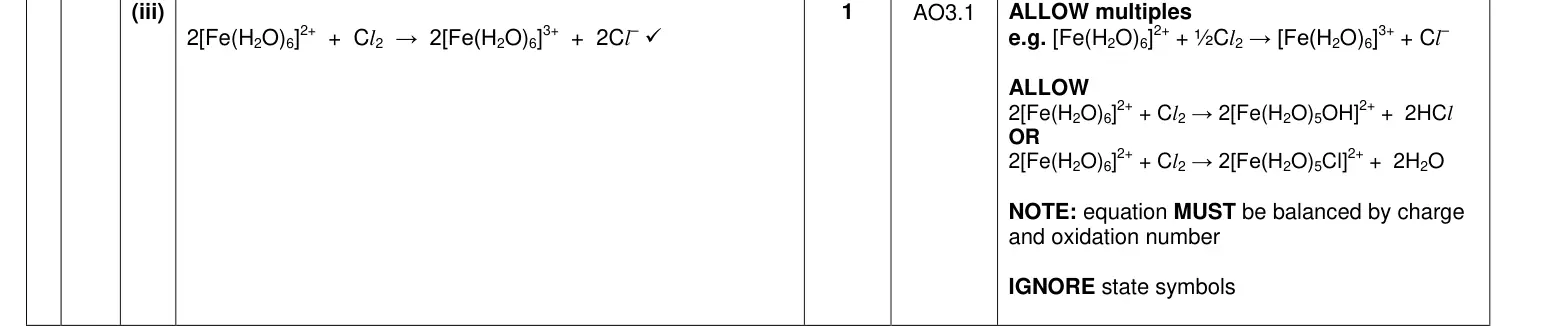
(iii) Write the equation for the reaction of [Fe(H2O)6]2+(aq) with Cl 2(g).
...................................................................................................................................... [1]
June 2019 · Paper 3 · Q6(a)(iv) 2 marks AO3 Equation writing Hard redox and electrode potentialstransition elements
Earlier part of question 6 that this part usesEarlier part of June 2019 Paper 3 question 6
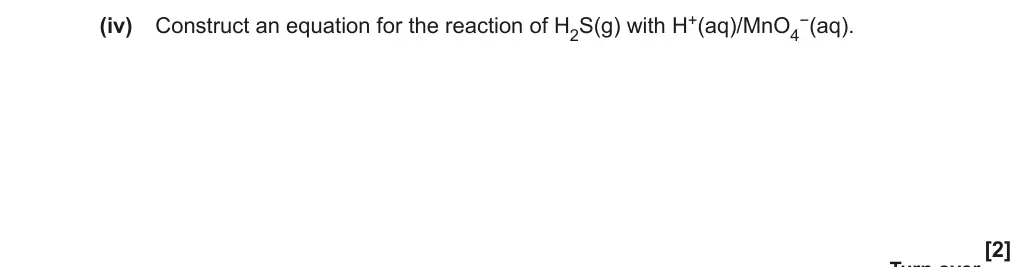
(iv) Construct an equation for the reaction of H2S(g) with H+(aq)/MnO4 −(aq).
[2]
June 2019 · Paper 3 · Q6(b) 6 marks AO1, 3 6-mark level of response Hard amount of substanceformulae and equations
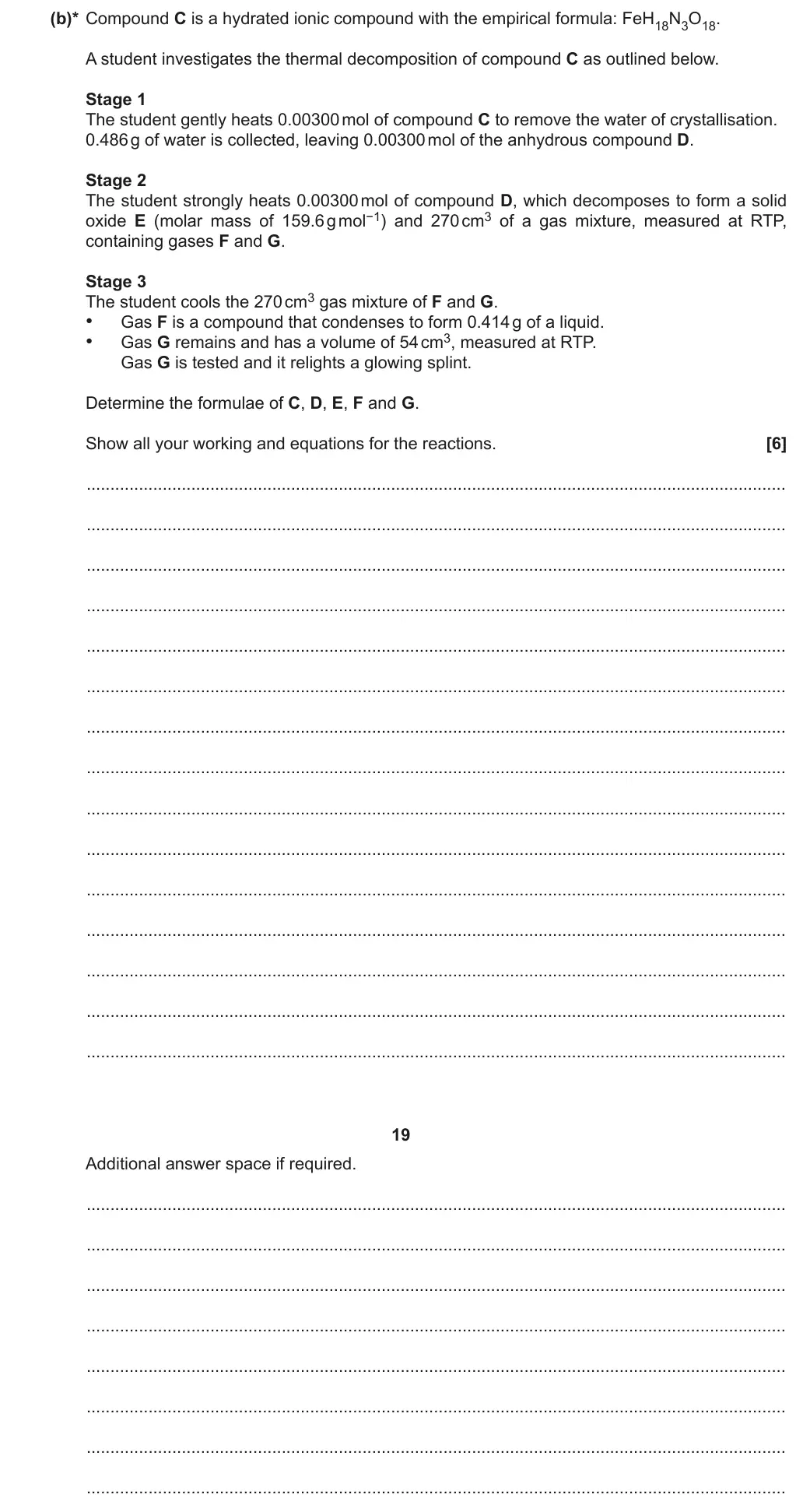
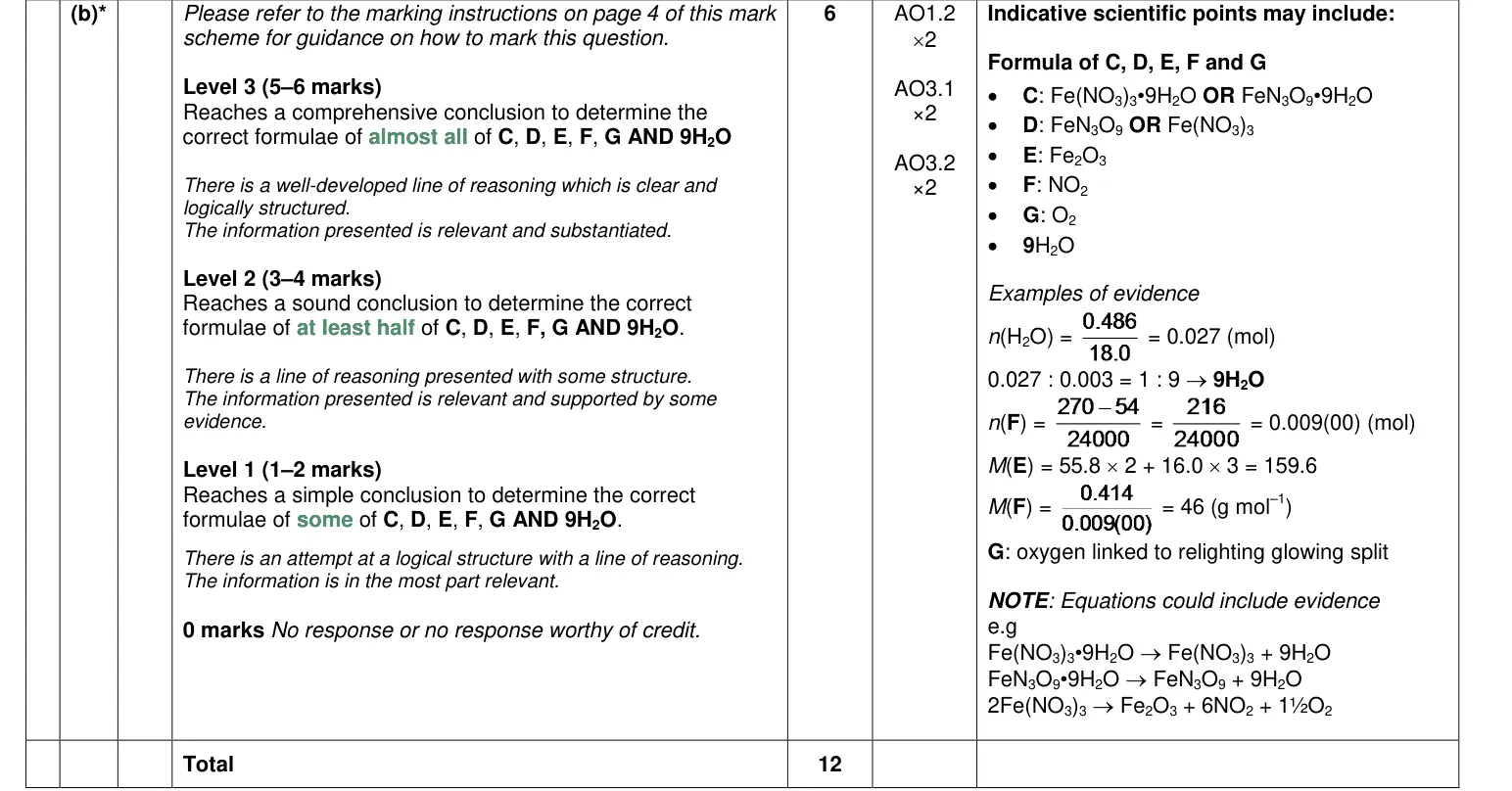
(b)* Compound C is a hydrated ionic compound with the empirical formula: FeH18N3O18.
A student investigates the thermal decomposition of compound C as outlined below.
Stage 1
The student gently heats 0.00300 mol of compound C to remove the water of crystallisation.
0.486 g of water is collected, leaving 0.00300 mol of the anhydrous compound D.
Stage 2
The student strongly heats 0.00300 mol of compound D, which decomposes to form a solid
oxide E (molar mass of 159.6 g mol−1) and 270 cm3 of a gas mixture, measured at RTP,
containing gases F and G.
Stage 3
The student cools the 270 cm3 gas mixture of F and G.
• Gas F is a compound that condenses to form 0.414 g of a liquid.
• Gas G remains and has a volume of 54 cm3, measured at RTP.
Gas G is tested and it relights a glowing splint.
Determine the formulae of C, D, E, F and G.
Show all your working and equations for the reactions. [6]
...................................................................................................................................................
...................................................................................................................................................
...................................................................................................................................................
...................................................................................................................................................
...................................................................................................................................................
...................................................................................................................................................
...................................................................................................................................................
...................................................................................................................................................
...................................................................................................................................................
...................................................................................................................................................
...................................................................................................................................................
...................................................................................................................................................
...................................................................................................................................................
...................................................................................................................................................
...................................................................................................................................................
Additional answer space if required.
...................................................................................................................................................
...................................................................................................................................................
...................................................................................................................................................
...................................................................................................................................................
...................................................................................................................................................
...................................................................................................................................................
...................................................................................................................................................
...................................................................................................................................................

Work with an OCR chemistry tutor

Want a paper marked and gone through with you? Message us.

Prefer email? Send an enquiry

If you are under 18, please include a parent's contact details. Enquiries go to enquiries@chemistryaleveltutor.com and are deleted once handled. All tutoring is online.